Ohio
What comes next for Ohio’s teacher pension fund? Prospects of a ‘hostile takeover’ are being probed


COLUMBUS, Ohio (AP) — A battle is under way for the future of Ohio’s $94 billion teacher pension fund, as would-be reformers’ attempts to deliver long-promised benefits to retirees with the help of an aggressive investment firm touting an untested AI-driven trading strategy face intense scrutiny.
The eyes of Wall Street and the half-million members of the State Teachers Retirement System of Ohio are on the state as the drama unfolds. A special meeting has been called for Thursday of a board nearly paralyzed by infighting whose executive director is on long-term leave over misconduct allegations he denies.
Years of tension at the fund came to a head on May 8, when Republican Ohio Gov. Mike DeWine announced that he had come into possession of an anonymous 14-page memo and other documents containing “disturbing allegations” about the STRS board and was handing them over to authorities.
Republican Attorney General Dave Yost launched an investigation the next day into what he called the fund’s “susceptibility to a hostile takeover by private interests.” He followed up with a lawsuit seeking to unseat two reform-minded board members — Wade Steen and Rudy Fichtenbaum — for backing a plan to turn over $65 billion, or roughly 70% of STRS assets, to a fledgling investment firm called QED. The outfit is co-run by two people, one a former deputy Ohio treasurer, out of a condo in suburban Columbus.
“This isn’t monopoly money; it’s hard-earned income that belongs to teachers,” Yost said in launching his probe. “There is a responsibility to act in their best interests.”
The Ohio Retirement for Teachers Association, a retiree watchdog group, says Steen and Fichtenbaum have been unfairly targeted. The group defends reformers’ push for change as a fight against years of opaque management and greed.
Teachers, who are generally ineligible for Social Security and so rely heavily on the fund in retirement, are particularly upset at the dearth of cost-of-living adjustments and market losses that the fund has seen over the years, even as STRS investment professionals have collected large bonuses. They have called for more transparency into the fund’s investment and pay practices.
“We’ve been calling for an investigation for years,” said Robin Rayfield, the association’s executive director. “So our response to them would be, ‘Where you been?’”
Rayfield said public education in Ohio will be “fully politicized” if DeWine and Yost succeed in shutting down STRS reformers. He described it as the third leg of a stool that also includes approval of a universal school voucher program in last year’s state budget and the transfer of K-12 education oversight from Ohio’s independent state school board into DeWine’s Cabinet. An ongoing lawsuit challenges the latter as unconstitutional.
“Governor DeWine has done more to ruin public education than all the other governors combined,” he said.
The nearly $6 trillion U.S. public pension sector has increasingly swapped stocks for riskier actively-managed alternative investments, such as hedge funds and private equities, in recent years — a trend that David Draine, the Pew Charitable Trust’s principal researcher on public sector retirement systems, says demands the type of transparency that the Ohio reformers have sought.
“As public pensions are taking on both risky and complicated assets, it’s important that they’re being transparent about those investments: what the returns are on their performance, what they’re paying for them, and what the risks are,” he said.
However, detractors say putting the shadowy QED in charge of STRS investments brings even greater danger.
Aristotle Hutras, former director of the Ohio Retirement Study Council, a legislative oversight committee, believes the governor is rightly trying to protect STRS from reformers’ rosy AI-fueled visions for improving the fund, which he dubs “magical thinking.”
“STRS has survived a world war, a major depression, a major recession and a worldwide pandemic, and still paid benefits,” said Hutras, a Democrat. “This notion of QED, and essentially steering a contract, in my humble opinion, is the most serious threat to STRS’s solvency in the last 96 years.”
The fund’s then-board chair issued a statement after DeWine’s referral saying that STRS was cooperating, but reassuring beneficiaries that the fund was safe, secure, well-run and in “sound financial position.”
Among claims in the 14-page memo, whose murky origins one board member said should be investigated, is that QED’s Jonathan Tremmel approached STRS in 2020 with assertions that the fund was improperly calculating performance, benchmarks and investment costs. “He also claimed to have AI-based trading strategies that would fix STRS’s ‘problems,’” the memo said.
Leaders rejected Tremmel’s initial pitch because of QED’s lack of professional registrations, clients or track record. His business partner, Seth Metcalf, who served under former Republican Ohio Treasurer Josh Mandel, returned to STRS asking that QED be given a second look.
Around that time, the memo’s authors contend, Steen, Fichtenbaum and two other then-board members began raising almost identical questions about STRS performance to QED’s and started working behind the scenes to get an affiliated company, OhioAI, pension fund business. The metadata on some letters and memos showed they originated with Tremmel or Metcalf.
The Federal Trade Commission began cautioning businesses around that time to proceed cautiously with automated tools that might have biased or discriminatory impacts. Last year, the commission took its warnings further, putting companies on notice that false or unsubstantiated claims about what AI could do for their clients could lead to enforcement actions.
Neither Metcalf nor Tremmel returned calls seeking comment on their statements to STRS. In his lawsuit, Yost told the court, “The owner of this shell company continues to peddle to STRS a secretive and untested investment scheme while his own condominium is in foreclosure.” The attorney general accuses Steen and Fichtenbaum of ”backdoor ties” to QED.
Steen denies Yost’s claims, including that $65 billion was ever on the table. He argues that reaction to his persistent questioning of STRS’s practices proves that he’s struck a nerve.
“He’s hiding behind litigation that’s defamatory, it’s not true,” Steen said after the board’s May 15 meeting. “I thought there was going to be a fair, impartial investigation. I guess this might be the fastest investigation ever done in Ohio history. But we’re going to defend this vigorously. None of it’s true. It’s all false.”
DeWine called it a “huge red flag” when Aon, a nationally respected consulting firm that had been enlisted to help address management and fiscal performance issues, abruptly exited its contract with the pension fund earlier this month.
“The unstated implication is that the governance issues at STRS are so concerning that Aon could not continue its contract in good faith,” DeWine said in a statement. A spokesperson for Aon declined comment.
STRS reformers have not backed down. Now in control of a majority of votes on STRS’s 11-member board, they pushed ahead during the board’s May meeting to oust rival leadership and elect Fichtenbaum, an emeritus Wright State University economics professor, as board chair.
Many of the retired teachers in attendance applauded after the coup. Nearby was a poster with a different STRS acronym: “Stealing Teachers’ Retirement Savings.”
“It’s needed to happen for years,” said Lee Ann Baughman, 82, who taught elementary school in suburban Columbus for 32 years. “It’s been hard for these retirees. A lot of them have a part-time job, and they’re old, and it’s been very hurtful not to get what they were promised.”





First Brands closing corporate office in Cleveland, three other Ohio facilities amid bankruptcy. Its CEO is facing federal fraud charges

More incentives? Higher prices? What car buyers can expect in 2026
Auto industry experts predict car sales will be flat compared with 2025.
A major auto parts supplier is laying off more than a thousand workers and closing four facilities around Ohio, including its corporate offices in Cleveland.
First Brands, whose founder and former CEO is facing charges in multi-billion dollar fraud scheme, notified the state in late February of its intent to permanently close the facilities by April 30. The layoffs created by these closures are also permanent, according to the Worker Adjustment and Retraining Notification Act notices filed with Ohio Job and Family Services.
The company — which supplies Fram oil filters and Anco wiper blades, among others — filed for Chapter 11 bankruptcy in September 2025. In January, First Brands had started winding down some of its operations in North America while seeking a buyer, according to Reuters. However, several potential buyers “have suddenly and unexpectedly withdrawn or narrowed their bids” according to one of the recent WARN notices.
Which facilities are closing? And how many jobs are being lost? Here’s what to know.
First Brands closing four Ohio locations, cutting more than 1,200 jobs
According to WARN notices, First Brands is closing the following facilities:
- Corporate Office, 127 Public Square, Suite 5300, Cleveland. In the first round of layoffs here, 146 workers were cut on Feb. 23, according to a WARN notice sent that date. A second notice dated Feb. 27 for this address advises that the facility will close on April 30, and the remaining 110 workers will be laid off.
- FRAM facility, 851 Jackson St., Greenville. According to a WARN notice sent Feb. 27, this facility will close April 30 and 302 jobs will be lost.
- TMD facility, 1441 N. Maule Road, Tiffin. All 407 employees will be terminated when this facility is permanently closed on April 30, according to a Feb. 27 WARN notice.
- TMD facility, 515 E. Gypsy Lane Road, Bowling Green. First Brands will also close this facility on April 30, laying off 302 workers, according to another Feb. 27 WARN notice.
In total, First Brands is laying off 1,267 workers in these four closures.
Indictment alleges Cleveland auto supplier CEO, VP defrauded lenders. Both plead not guilty
First Brands Group founder and former CEO Patrick James and his brother, Edward, a senior vice president, are accused of defrauding lenders out of billions of dollars before the auto parts supplier fell into bankruptcy according to an indictment made public Jan. 29 in Manhattan federal court.
The nine-count indictment includes charges of running a continuing financial crimes enterprise, bank fraud, wire fraud and money laundering conspiracy. Both pleaded not guilty on Feb. 4, Reuters reports. A trial is set in July. Both could face decades in prison if convicted.
Prosecutors said the defendants “perpetrated a series of fraudulent schemes” against First Brands’ lenders and financing partners, Reuters reported, including allegedly inflating invoices, double- and triple-pledging loan collateral, falsifying financial statements and concealing substantial liabilities.
“It is very much Mr. James’ intent to go into court and proclaim his innocence,” said Scott Hartman, a lawyer for Patrick James, according to Reuters.
Patrick James and Edward James are Malaysian-born U.S. citizens.
Seth DuCharme, a lawyer for Edward James, told Reuters that his client is not going to “run off to Southeast Asia where he allegedly has all this money.”
What is First Brands Group? Company filed for bankruptcy in September
First Brands, founded in 2013, was one of the world’s largest suppliers of auto parts such as brakes, filters and lighting systems, according to Reuters. It had $5 billion in sales last year.
Prosecutors say First Brands borrowed billions to finance its growth. Those loans were secured by inventory and physical assets like plants and equipment. Reuters reports that this left First Brands vulnerable to cash flow issues and dependent on its access to the capital from those loans.
The company filed for bankruptcy in September 2025. Patrick James stepped down as CEO that October, according to Crain’s Detroit Business.
Ohio
2026 NFL mock draft 6.0: Ohio State defenders rise after stellar combines; edge rushers dominate first round

With the 2026 NFL scouting combine in the books, this year’s NFL Draft class is becoming clearer.
While the quarterbacks and wide receivers got the most attention at the combine, it was a group of defensive prospects that stood out this past week in Indianapolis. Specifically, Ohio State edge rusher Arvell Reese and linebacker Sonny Styles put together a fantastic series of workouts to move into the top three of our latest mock draft. But there were plenty of other defenders who stood out. This mock draft is littered with them in a deep overall class of defensive linemen and defensive backs.
Advertisement
In this mock draft, Yahoo Sports’ Nate Tice makes the odd-numbered picks, and Charles McDonald makes the even.
More 2026 NFL mock drafts: 5.0 | 4.0 | 3.0 | 2.0 | 1.0
1. Las Vegas Raiders — Fernando Mendoza, QB, Indiana
Don’t overthink it. Barring some unforeseen path the Raiders take this offseason, Mendoza looks like the signal-caller of the future in Las Vegas. Mendoza checks a lot of boxes at QB, especially his overall size as Mendoza not only stands 6-foot-5 but weighed in at a strong 236 pounds in Indianapolis. And his sense of timing, ability to throw on the move, and willingness to push the ball are a great match for Klint Kubiak’s offense that constantly asks quarterbacks to work inside and outside of the pocket and into tight spots over the middle of the field. The Raiders’ skill position talent already has strong, young playmakers (maybe one more outside receiver would be nice!) who can help ease Mendoza’s transition to the next level.
Advertisement
2. New York Jets — Arvell Reese, LB/EDGE, Ohio State
Some players who split time between two positions are “tweeners” who don’t really excel at either spot. A very small number of players who play two spots put up elite performances at both. Reese fits into the latter. He’s a true front-seven weapon who should excel wherever his future team puts him. He can cover, play the run and rush the passer, making him a rare and versatile linebacker prospect at the top of the draft. The Jets’ defense was so bad that someone who can plug multiple spots depending on the situation is exactly what they need.
3. Arizona Cardinals — Sonny Styles, LB, Ohio State
Styles’ strong season had him already moving up draft boards, and an even stronger showing in Indianapolis only added rocket fuel to his rise. Styles’ range and smarts as an off-ball linebacker allow him to impact the run and pass, but he also has the length and strength to hold up as an edge rusher for snaps as well. The redbirds could look at offensive line here, too, but Styles’ ability to be a steadying force and impact player, with versatility thrown in, makes sense for any type of defense and franchise. But the Cardinals need stuff to build around. Plus there’s a nice bonus of it being an interesting fit for coordinator Nick Rallis’ knuckleball defense.
Advertisement
4. Tennessee Titans — Rueben Bain Jr., Edge, Miami
Tennessee started rebuilding its defense in Robert Saleh’s image by swapping T’Vondre Sweat for the Jets’ Jermaine Johnson. Now Saleh can continue to build what his best Jets defenses had: premier defensive line depth. Adding Bain, who would be a perfect fit in Saleh’s defense, would give the Titans a heavy-handed player on the edge who has high-end athleticism to negate any arm-length issues his frame should bring up. Jeffery Simmons and Bain would be … a pain.
5. New York Giants — Francis Mauigoa, OL, Miami
While there are other offensive tackles who are (spoilers for the next pick!) shooting up draft boards, the Giants go for Mauigoa. He could be the short-term and long-term answer for the Giants at right tackle or right guard. Mauigoa is a clean prospect with good hand usage and a strong build who can help the Giants’ offensive line from dipping after an underrated strong performance in 2025 (especially when Andrew Thomas was on the field). Perhaps he doesn’t have overwhelming athleticism. Still, he’s a player who allows the Giants to always have their best five offensive linemen on the field.
Advertisement
6. Cleveland Browns — Monroe Freeling, OT, Georgia
This is a big-time jump for Freeling, but he has all the traits NFL teams drool over for offensive tackle prospects in terms of size and athleticism. The Browns, who are facing the potential losses of the vast majority of their offensive line to free agency, will need to completely rebuild that unit — which is a bit overdue, but not to this severity. Freeling gives Cleveland a dart throw to have strong left tackle play if he continues his trend of rapid improvement over the past year.
Texas Tech edge rusher David Bailey helped his draft stock with a strong performance at the combine. (Photo by Lauren Leigh Bacho/Getty Images)
(Lauren Leigh Bacho via Getty Images)
7. Washington Commanders — David Bailey, EDGE, Texas Tech
As tempting as it will be to add an offensive player of some kind here, with tasty options at offensive line, wide receiver, tight end and running back, the Commanders instead add firepower to a defense that has to get faster, younger and just straight up better. Bailey is an explosive pass rusher who is constantly attacking offensive tackles. He will never be a strong run defender, but he has long arms (measured at 33 ¾ inches at the combine) and has improved in that area. Bailey is the exact type of talent injection this defense needs.
Advertisement
8. New Orleans Saints — Carnell Tate, WR, Ohio State
Tyler Shough will be getting a chance to show he can be the long-term quarterback this year, so shoring up the wide receiver room should be a priority. New Orleans is a bit thin in terms of premier skill talent after a few years of erosion, but Shough’s emergence gives them the ability to burn this pick on Tate, who should immediately step in as a legitimate starting option alongside former Buckeye Chris Olave.
9. Kansas City Chiefs — Jeremiyah Love, RB, Notre Dame
WHHHEEEEE! The Chiefs have a few needs they could address here, but I think an offensive skill player of some sort is the way to go. And why not go with Love, one of the best overall players in this draft and a walking, talking explosive play who could boost a run game that has been hyper-efficient the past few seasons, but has had the same explosiveness as a wet firecracker. Love behind a Chiefs offensive line that could end up being one of the league’s better units and in an Andy Reid screen game has me salivating.
10. Cincinnati Bengals — Caleb Downs, S, Ohio State
Cincinnati needs defense. Downs is arguably the best player in the draft. Whoever is the top defensive player available here, the Bengals should take him without thinking much about it. Downs’ position is the only reason he’s available here as safeties tend to slide down the board relative to their consensus rankings.
Advertisement
11. Miami Dolphins — Mansoor Delane, CB, LSU
Zone cornerback, meet zone coverage-calling head coach. Delane gets how to play the cornerback position. He’s smart and has a great feel for playing high-low concepts, with the quickness and burst to make plays on the football. He doesn’t have ideal length or top-end athleticism, but he gives the Dolphins and new head coach Jeff Hafley a young CB with pedigree to build around.
12. Dallas Cowboys — Jermod McCoy, CB, Tennessee
Dallas needs to keep plugging away at the holes in its secondary and can get a high-upside prospect in McCoy here to get a corner who can take advantage of Dallas’ defensive line talent. McCoy has excellent ball skills and can be a more steady player than the boom-bust talents that occupied this secondary in the past.
Advertisement
[Watch Yahoo Sports Network]
13. Los Angeles Rams (via Falcons) — Kenyon Sadiq, TE, Oregon
After dipping their toes in the Oregon tight end waters last draft with Terrance Ferguson in the second round and supercharging their multi-tight end looks, the Rams take the plunge with Sadiq. Yes, the Rams could add to their defensive backfield here, among other positions, but Sadiq would further weaponize a Rams offense that asks its skill players to do a bit of everything around the formation. Sadiq would give Sean McVay another field stretcher and yards-after-catch option while still deploying heavy bodies, with some grit as a blocker as a nice bonus. Sadiq would not only help the Rams for 2026, but he also shores up the position long-term for the Rams as they have several pending tight end free agents in 2027.
14. Baltimore Ravens — Vega Ioane, G, Penn State
Baltimore needs to add more high-end offensive line talent and Ioane may wind up being the only first-round caliber player on the interior this year. He perfectly fits the power running that Lamar Jackson and Derrick Henry have thrived with and is athletic enough to have versatility for new coordinator Declan Doyle as he begins to install his offense in Baltimore.
Advertisement
15. Tampa Bay Buccaneers — Keldric Faulk, DL/Edge, Auburn
Faulk has an ideal build for a classic defensive end and fits the type of defensive ends that Todd Bowles has deployed in the past (Logan Hall, William Gholston). Faulk is young and still developing as a pass rusher, but he can be a needle-moving run defender right out of the gate as he polishes the rest of his game. Faulk’s versatility to move across the defensive line helps him fit in any type of scheme, but is a clean fit in Bowles’ defense. A strong option to help out for 2026, but a swing at something more for the Bucs while picking in the middle of the first.
16. New York Jets (via Colts) — Avieon Terrell, CB, Clemson
Another player for the broken Jets’ defense. Like his older brother A.J., a Pro Bowl cornerback for the Falcons, Avieon didn’t have the most explosive day at the combine (his 34-inch vertical ranked among the bottom third of CBs and his 10-feet, 3-inch broad jump was also in the lower tier in this group) but he still has the profile of a starting outside cornerback in the NFL, which is still an incredibly valuable thing to find. That works here for the Jets.
Advertisement
17. Detroit Lions — Caleb Lomu, OT, Utah
While Giovanni Manu is still interesting to me, Lomu gives the Lions their Taylor Decker succession plan (and insurance for the 2026 season). Lomu has to continue to get stronger, but he has light feet, clean hand usage and the overall athleticism to stay on the left side and be a plus-blindside protector. Lomu has just turned 21, so a redshirt year under offensive line coach/run game coordinator Hank Fraley while continuing to add to his frame could make this a perfect player-team fit for a franchise that seems like it’s about to start transitioning to phase 2 of the Dan Campbell tenure.
18. Cleveland Browns (via Vikings) — Spencer Fano, OT, Utah
The Browns jump up here in the draft to grab the falling Fano, giving them two offensive tackles in the first round of this draft. Freeling and Fano could grow into a formidable OT duo for the Browns and when a team has so few offensive linemen under contract with a restrictive salary cap situation, the draft is the best way to go.
Advertisement
19. Carolina Panthers — CJ Allen, LB, Georgia
The Panthers could look to help out their trenches on both sides of the ball here, but they sorely need impact defensive players. Allen can be that solidifying force in the front seven who could help this defense finally step out of the doldrums. Allen’s intelligence, quickness, and overall two-way ability would help the Panthers shore up against the run and pass, while also having some blitzing juice to fit into coordinator Ejiro Evero’s defensive funkiness.
20. Dallas Cowboys (via Packers) — Cashius Howell, Edge, Texas A&M
Another dip on defense, this time the Cowboys add to their defensive end rotation with the speedy Howell. He’s similar to some of the players they already have on the roster, but this is a decent enough range and he would benefit from a strong room of defensive tackles.
Advertisement
21. Pittsburgh Steelers — Makai Lemon, WR, USC
I go back and forth with what kind of second wide receiver I would want to see in Pittsburgh in Mike McCarthy’s offense and across from DK Metcalf. While I’m personally higher on Denzel Boston than Lemon, I think Lemon’s quickness and route-running ability from the slot is actually a good fit for what I think McCarthy is going to want in his offense that has typically featured a steady heaping of quick-hitting passing plays. Lemon would also give Pittsburgh more yards-after-catch ability and a different flavor than Metcalf and the Steelers’ jumbo-size tight end room.
22. Los Angeles Chargers — Peter Woods, DL, Clemson
The Chargers go pure value here and take Woods, who was slotted as a top pick prior to the season. Woods has all the upside in the world to be an impact player on the interior and still flashed strong skills in a down year for the entire Clemson program. Woods would be a great young talent for the Chargers to add with the emerging Tuli Tuipulotu on the edge.
Advertisement
23. Philadelphia Eagles — Max Iheanachor, OT, Arizona State
When picking for the Eagles under general manager Howie Roseman, defaulting to a pick in the trenches isn’t the worst bet. And something I agree with! Especially with long-time right-side stalwart Lane Johnson contemplating retirement seemingly on a weekly basis and other question marks potentially emerging along the rest of the Eagles’ line. I’m high on Iheanachor, who is a great athlete in a large frame, and I think he has more polish to his game than the “project” label he gets despite being a latecomer to football. And this might end up as his floor when April comes.
24. Minnesota Vikings (via Browns) — Caleb Banks, DT, Florida
After flipping down with the Browns, the Vikings take a big swing at defensive tackle with Banks. He isn’t a finished product, but he’s a lot more polished than most designated projects and was incredibly disruptive in the three games he played this season. His movement skills and footwork are incredibly rare at 6-foot-6, 330, but he struggles to finish plays off the penetration he creates. Brian Flores would be a great coach to land with in regards to fixing that and the Vikings would have the chance for the elite interior talent this defense has been missing.
25. Chicago Bears — Kayden McDonald, DT, Ohio State
Left tackle is very live here for Chicago, but the Bears must look to add beef to their defensive interior. And what better person to add beef than someone with the last name McDonald. McDonald has good bulk and is a strong run defender who actually racks up tackles rather than just plodding in the middle with his quick feet and ability to consistently shed his block. He is just an average pass rusher, but can help shore up a run defense that was prone to leaks in 2025.
Advertisement
26. Buffalo Bills — Denzel Boston, WR, Washington
The Bills clearly have a big need at wide receiver and can take another swing on a wide receiver early in the draft. Boston had 1,600 yards and 20 touchdowns over the past two seasons and profiles as someone who has a chance to be a big-bodied wide receiver who has a bit more skills than players the Bills currently have.
27. San Francisco 49ers — Blake Miller, OT, Clemson
The 49ers’ run game lost some venom last season despite a Herculean effort from Christian McCaffrey. Perhaps this is the season that Kyle Shanahan and John Lynch add some pedigree to their offensive line. The 49ers paid Colton McKivitz and he’s under contract for a couple of more seasons, but Miller projects to be a tier or two better than McKivitz at right tackle. Miller’s agility makes him a good fit for a Shanahan offense. He played only the right side in college, but he has the athleticism and length to give the left side a shot in case the 49ers need a Trent Williams insurance/succession plan, too.
Advertisement
28. Houston Texans — Kadyn Proctor, OT, Alabama
Offensive line help arrives for the Texans, who take one of the biggest players in the draft who has a wide range of potential outcomes. Proctor is talented, but his play was a bit inconsistent this season and he’s a bit of an outlier in weight, at 370 pounds in-season for the Crimson Tide. Still, he’s an immense talent and is worth the swing at this point.
29. Los Angeles Rams — Brandon Cisse, CB, South Carolina
NOW is when the Rams add to their defensive backfield, this time with Cisse, who my friend Derrik Klassen from The Athletic described as “a safety playing the cornerback position.” I think Cisse needs to improve in his game recognition, but he has the feistiness and explosiveness to help out somewhere, whether it’s on the outside or with a move into the slot (the Rams loved their dime personnel packages under d-coordinator Chris Shula). His scrappiness and tackling ability will give him fans.
Advertisement
30. Denver Broncos — Akheem Mesidor, Edge, Miami
Another pass rusher for the Broncos because that’s what we do with teams at the bottom of a mock draft. Mesidor showed he can put heat on the quarterback on the edge and the interior of Miami’s defensive line, registering 12.5 sacks in the Hurricanes’ run to the national championship game. Pro Football Focus gave him a 92.5 pass rush grade, which is third among edge rushers. His PFF run defense score was 88.3, which ranked in the 91st percentile.
31. New England Patriots — KC Concepcion, WR, Texas A&M
The Patriots could go offensive line, but they need to add explosiveness to their pass catcher corps. Hello, KC Concepcion! While DeMario Douglas has been able to contribute big plays from the slot, Concepcion could provide the type of yards after catch and downfield ability that would give Drake Maye an explosive option to work with (along with the improved Kayshon Boutte and explosive, but raw, Kyle Williams).
Advertisement
32. Seattle Seahawks — Colton Hood, CB, Tennessee
Seattle may have a bit of a shakeup in its cornerback room this offseason, so adding another cost-controlled, long-term deal in the room might make sense. Hood had a great workout in Indianapolis — Next Gen Stats ranked his athletic score fourth among cornerbacks at the combine — and was a productive player on the ball for the Vols’ pass defense.

Footage shows people run from Riverfront Live after shooting
Cincinnati police say nine people were injured after a mass shooting at Riverfront Live on March 1, 2025.
Enquirer media partner Fox 19
Nine people were injured after a shooting broke out at Riverfront Live on Cincinnati’s East Side early Sunday.
The shooting was reported about 1 a.m. March 1 at the Kellogg Avenue music venue on the border of East End and Linwood, according to Cincinnati Interim Police Chief Adam Hennie.
Dozens flooded out from inside the venue in a panic as gunshots rang out, according to a neighboring business’ surveillance camera footage obtained by Enquirer media partner Fox 19.
Eight of the people shot were taken to University of Cincinnati Medical Center and one person was brought to Good Samaritan Hospital, Hennie said.
One person at UC Medical Center is in critical condition, according to hospital spokeswoman Heather Chura-Smith. Five people are in stable condition and two have been treated and released, she said.
The status of the person at Good Samaritan Hospital is unknown. Hospital staff declined to provide an update on the person’s status.
An event was in progress at the venue, Hennie said, but he did not say what it was. A description on the venue’s website lists it as a “nightlife concert venue.”
Mayor Aftab Pureval called the shooting “unconscionable” in a statement.
This story will be updated.

Supreme Court blocks redrawing of New York congressional map, dealing a win for GOP

Oregon Dems block effort to alert ICE before illegal immigrant murderers are released

Terrifying moment caught on camera as road collapse suddenly swallows vehicles at busy intersection

Jasmine Crockett campaign reportedly kicked Atlantic writer out of rally for being a ‘top-notch hater’

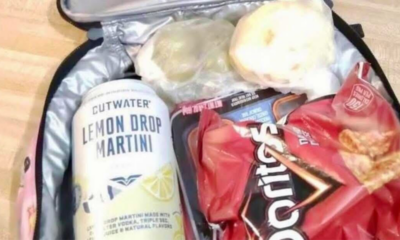
Atlanta-area police blast parents over vodka martini packed in school lunch: ‘That is NOT apple juice’

Florida High School Football Rankings: Top 25 teams – Oct. 21

Cleary's 21 help Le Moyne down Central Connecticut State 69-64 in OT

How old is Bo Nix? What to know about Oregon quarterback ahead of 2024 NFL Draft

99th annual Pony Swim held in Virginia

Indiana Members Credit Union announced as new anchor tenant at Bottleworks District
Supreme Court blocks redrawing of New York congressional map, dealing a win for GOP

Map: Earthquake Shakes Central California

Gas prices could jump as Middle East tensions threaten global oil supply

Pakistan calls troops, orders 3-day curfew as 24 killed in pro-Iran rallies

US says Kuwait accidentally shot down 3 American jets
-

 World5 days ago
Exclusive: DeepSeek withholds latest AI model from US chipmakers including Nvidia, sources say
-

 Massachusetts5 days ago
Mother and daughter injured in Taunton house explosion
-

 Denver, CO5 days ago
10 acres charred, 5 injured in Thornton grass fire, evacuation orders lifted
-

 Louisiana1 week ago
Wildfire near Gum Swamp Road in Livingston Parish now under control; more than 200 acres burned
-

 Technology1 week ago
YouTube TV billing scam emails are hitting inboxes
-

 Politics1 week ago
OpenAI didn’t contact police despite employees flagging mass shooter’s concerning chatbot interactions: REPORT
-

 Technology1 week ago
Stellantis is in a crisis of its own making
-

 News1 week ago
World reacts as US top court limits Trump’s tariff powers