Ohio
Ohio taxpayers sent families $966 million for private school tuition: Capitol Letter


Rotunda Rumblings
School work: The Ohio Department of Education and Workforce said that as of Aug. 7, the state has shelled out $966.2 million for private school scholarships for the school year that just ended. The General Assembly expanded one of the five voucher programs to include upper-income Ohioans and its participation has ballooned from 23,272 participating students in the 2022-2023 school year to 89,770 students last year. Numbers will be finalized in October, Laura Hancock reports.
Let’s make a deal: FirstEnergy on Monday signed an agreement with Attorney General Dave Yost’s office on Monday to pay $20 million to avoid prosecution on state charges over the House Bill 6 scandal, as well as to drop FirstEnergy from Yost’s HB6-related civil lawsuit. As Jeremy Pelzer reports, the agreement means the Akron-based utility will pay a total of just $250 million, plus an expected $100 million regulatory fine, to skirt charges for its role in the largest bribery scandal in Ohio history; consultants previously warned the company it could face up to $3.8 billion in fines if it was indicted.
Job qualifications: U.S. Sen Sherrod Brown, a Cleveland Democrat, has introduced legislation that would make it easier for workers who lack four-year college degrees to get federal government jobs, Sabrina Eaton reports. The “Federal Jobs for STARs Act” that he introduced with U.S. Sen. Tammy Baldwin, a Wisconsin Democrat, would remove unnecessary educational requirements from federal civil job postings on USAJOBS.com.
Failed investment: An indoor agriculture startup called AppHarvest that U.S. Sen. JD Vance invested in and publicly pitched “not only failed as a business after pursuing rapid growth, but also provided a grim job experience for many of the working-class Kentuckians” the Cincinnati Republican vowed to help, CNN reports. The rise and fall of the company, which declared bankruptcy last year, and Vance’s role in it, cuts against his image as a champion for the working class — an image that helped catapult him to the top of the Republican ticket as Donald Trump’s running mate.
Red meat: Although the speech Vance’s wife, Usha, delivered to last month’s GOP convention praised her husband for adapting to her vegetarian diet despite being a “meat and potatoes kind of guy,” the vice-presidential candidate is not a vegetarian and has frequently appears in photos “alongside all manner of plated flesh”, the Los Angeles Times clarifies. Only 4% of Americans identify as vegetarians, according to a recent Gallup poll. And these days, there’s little doubt: In popular American culture, vegetarianism often is perceived as “liberal, wimpy and feminine,” a food studies professor told the publication.
Speaking of red meat: A Washington Post fact check has evaluated a trio of claims that Vance made about Democratic presidential candidate Kamala Harris, including a claim that she “wants to take away your ability to eat red meat,” and found them to be false. Other false claims it examines are Vance’s contention that Harris wants to take away gas stoves and his insistence that Harris has said it’s reasonable not to have children over climate change.
It pays to advertise: The National Republican Senatorial Committee canceled its fall cable ad reservations totaling more than $700,000 in the Ohio Senate race between Brown, the Democratic incumbent, and GOP challenger Bernie Moreno, Washington Examiner reports. According to AdImpact, NRSC canceled its full cable reservation in one of the most competitive races in the country in which ads were set to run between Aug. 31 and Election Day. In a social media post, the GOP Senate campaign arm said it still regards Ohio as a top pickup opportunity but believes its money can be more efficiently spent on hybrid ads.
Delayed again: For those anticipating an order over whether the state’s six-week “heartbeat” abortion ban is constitutional, the wait goes on. First, Hamilton County District Court Judge Christian Jenkins gave himself a deadline for the order on May 20. Then he pushed it to June 25. Then he pushed it to Tuesday. And on Tuesday, he pushed his deadline to Aug. 29. The state has been prohibited from enforcing the heartbeat law for 22 months, meaning women can obtain abortions past six weeks. But abortion clinics and doctors want Jenkins to weigh the law against the new abortion rights amendment that voters passed last November and strike down the law for good. Ohio Attorney General Dave Yost agrees the ban is no longer constitutional but thinks other parts of the law should stand.
New job: Lee Strang, a University of Toledo law professor who was a driving force behind the legislature creating five new “intellectual diversity centers” at a handful of universities, was hired to lead one of them. Strang will be executive director of the Salmon P. Chase Center for Civics, Culture and Society at Ohio State University. Strang was also the leader of the University of Toledo’s intellectual diversity center, and has testified to the legislature on a number of issues, including in favor of the special election last year that was intended to foil the abortion rights amendment, Ohio Capital Journal’s Megan Henry reports.
Lobbying Lineup
Five organizations lobbying on House Bill 103, which would establish a K-12 social studies task force to implement the American Birthright standards by the conservative Civics Alliance. The bill hasn’t had any hearings since June 13, 2023.
1. Cleveland Metropolitan School District
2. Ohio Council of Churches
3. Ohio Federation of Teachers
4. Buckeye Association of School Administrators
5. Warren City Schools
Birthdays
State Rep. Thomas Hall
Grace Flajnik, legislative aide to state Rep. Justin Pizzulli
Straight From The Source
“Any application question or line item requesting an applicant’s race or ethnicity was removed from all materials provided to application readers or other individuals participating in admissions decisions.”
-A section of Ohio State University’s website, as reported by Ohio Capital Journal’s Megan Henry, who looked at how Ohio’s universities are treating affirmative action after the U.S. Supreme Court struck down race-based admissions policies last summer.
Capitol Letter is a daily briefing providing succinct, timely information for those who care deeply about the decisions made by state government. Subscribe to get Capitol Letter in your email box each weekday for free.



The most recent basketball season might be over for Ohio State, but in the modern era of college basketball, what happens off the court is almost just as chaotic as what happens on it. The main culprit for this is the transfer portal, and on Sunday, Ohio State’s offseason seems to have gained some traction.
According to a report, Ohio State forward Devin Royal plans to enter the transfer portal after three seasons with the Buckeyes, perhaps ending a career that began with high expectations and finished with a strong junior season. The 6-foot-6, 230-pound Pickerington Central product leaves with one season of eligibility remaining after appearing in 96 of 102 games at Ohio State.
Royal arrived in Columbus as a consensus four-star recruit and Ohio’s Mr. Basketball in 2023, becoming the 12th player in Ohio State basketball history to earn that honor. At Pickerington Central, he helped lead the program to a state title-game appearance in each of his final two seasons and earned first-team All-Ohio recognition as a junior and senior.
As a freshman in 2023-24, Royal played in 33 of 36 games and averaged 4.7 points and 2.4 rebounds per game, emerging as more of a threat as the season progressed. He had a nice sophomore leap, starting 27 games and averaging 13.7 points and a team-best 6.9 rebounds per game while shooting 52.5 percent from the floor. Royal delivered a breakout season with six 20-point games, three double-doubles, and a career-high 31 points and 15 rebounds against Valpo. He followed that with another solid season in 2025-26, starting all 32 games he played and averaging 13.7 points, 5.7 rebounds, and 1.6 assists per game.
Royal’s potential departure is a significant roster move because he developed into one of Ohio State’s most reliable interior scorers and rebounders. Ohio State finished No. 8 in the Big Ten this season, with a record of 21-13 and 12-8 within the conference. However, with the arrival of 5-star forward Anthony Thompson, his starting spot would seem to be very much in jeopardy.
For the Buckeyes, it may close the book on a homegrown player who went from top in-state recruit to everyday starter in three years. As of now, there aren’t any suitors known, but as all of this becomes more official, we’ll bring you further news.
Contact/Follow us @BuckeyesWire on X (formerly Twitter) and like our page on Facebook to follow ongoing coverage of Ohio State news, notes, and opinion. Follow Sunny on X:@thesunnyv

COLUMBUS, Ohio (WCMH) — Ohio artist David Griesmyer said the colorful, resilient Cuba he’s frequented looked different his most recent trip as the island nation continues under a U.S.-induced blackout.
“To see the whole nation just plunge into darkness, it was odd,” Griesmyer said. “But then to see all the grandmas holding up battery powered lights in the dark and seeing children kicking a makeshift ball down the streets through the city, everybody was outside talking … It didn’t stop them. They’re there. There’s a fire inside of that. But it was dark. It was dark.”
The darkness was brought on by an American fuel blockade that has created a nationwide blackout and brought the tourism industry to a screeching halt. President Donald Trump has commented about a possible takeover of Cuba, where residents are living without power, heat or clean water.
The issue is front of mind for 60 Ohio artists, business and government leaders who traveled to the Havana Bienal last year, a prestigious international art festival. Ohio artists with close ties to the Cuban art scene want Ohioans to think about Cuba’s people, not its politics, as the blackout goes on.
“They are so resilient,” Michael Reese, Columbus art consultant, said. “And I just believe tomorrow’s going to be better because if they don’t go down the rabbit hole, they’ll never get out. So they just push on.”
The U.S. has maintained an economic embargo on Cuba since the 1960s, when Cuba became the center of a Cold War confrontation between two superpowers. In 1962, the Soviet Union attempted to deploy nuclear weapons to Cuba, which sits 90 miles away from the southern tip of the U.S. The attempt led to the 16-day Cuban Missile Crisis, considered the closest the Cold War came to using nuclear arms.
Cuba has been under U.S. embargo since, but the situation turned dire in January when the U.S. cut off access to Venezuela, Cuba’s main oil supplier. The U.S. has also blocked fuel and product deliveries from trading partners like Mexico.
In capital city Havana, home to 2 million people, residents are living without ways to keep food cold or operate water treatment plants. Residents can only cook using charcoal grills and have no internet access. Ohio documentarian Tariq Tarey is making a film about the Cuban people and said outside Havana, resources are scarcer.
“It is literally dark ages. Water scarce, internet is gone for weeks on end. Horse and buggy is the only thing that’s moving,” Tarey said. “It is dire. It’s absolutely dire.”
It had already been difficult to get items before the blackout. The coalition who attended the Bienal each brought a second suitcase stuffed with necessities to give away. Tarey recalled visiting a Cuban clinic and noting medical equipment that read “Made in East Germany,” a nation that has not existed for 36 years.
Columbus City Councilmember Lourdes Barrosa de Padilla was among those who traveled to the Bienal last year, accompanied by her mother and daughters. Barrosa de Padilla’s parents fled Fidel Castro’s regime in Cuba, and she showed her daughters the small village her parents grew up in. Now, family tells her conditions are difficult.
“The challenge is that there’s not petroleum, there’s not cash. You cannot run a generator either,” Barrosa de Padilla said, adding a cousin had just three hours of power for a week due to the blockade.
Griesmyer was in Havana in mid-March and said the streets were empty of the thousands of tourists he’d grown used to seeing. While there, he watched the city go dark. He also witnessed an afternoon where Elon Musk used StarLink technology to temporarily give everyone in Cuba free Internet.
“This was history,” Griesmyer said. “And one of the people said to me, ‘Yes, we want electricity, but we want the freedom to be able to communicate and to to talk to people and know what’s going on.’ Because that’s scarier than not having electricity, just to not know.”
Starlink is not officially permitted to be used in Cuba, and Cuban officials allege Musk is breaking U.S. trade restrictions by providing free internet. Cuban officials are also worried about possible aggression from the U.S. as Trump threatens military intervention.
“I do believe I’ll be … having the honor of taking Cuba,” Trump said in mid-March. “Whether I free it, take it – think I could do anything I want with it. You want to know the truth. They’re a very weakened nation right now.”
Barrosa de Padilla said Trump’s threats to take over Cuba are complicated. She said the people of Cuba know their current government isn’t working, but feels American intervention in other countries’ governments is not putting America First.
While visiting Cuba, Barrosa de Padilla’s mother died from a heart attack. Barrosa de Padilla said her mother took her final breath in the homeland she loved, surrounded by the poverty she fled.
“It was a beautiful end to my mother’s story because she died in her hometown with her sister, her last living sibling,” Barrosa de Padilla said. “And the place where she first opened her eyes, she closed.”
Reese and Griesmyer said despite the darkness, lack of resources and uncertainty, the people of Cuba believe things will get better. Griesmyer said neighbors share the food he brings to the island so everyone can eat. He said people are dancing through the darkness.
There is much more to the story of Ohio, art, life and Cuba. See the full story on Sunday Briefing at 10 a.m.
Ohio
No. 9 Penn State men’s lacrosse stays perfect in Big Ten play, beats No. 6 Ohio State on the road

Penn State notebook | Men’s lacrosse coach Jeff Tambroni talks UNC loss, upcoming Ohio State matchup
Penn State is trying to build momentum as it has entered Big Ten play. The squad has won thr…
Submit a Letter to the Editor
If you’re interested in submitting a Letter to the Editor, click here.
Submit
Send Letter to the Editor
googletag.cmd.push(function() {
googletag.display(‘ad-1563088’);
});

What to Know about NASA’s Artemis II Moon Mission

The iconic South African theater that took on apartheid

All the latest in AI ‘music’

US allows Russian oil tanker to reach Cuba amid blockade as Trump says island ‘has to survive’

Dem senator warns deportation could let Virginia woman’s illegal immigrant killer ‘escape accountability’

Florida High School Football Rankings: Top 25 teams – Oct. 21

How old is Bo Nix? What to know about Oregon quarterback ahead of 2024 NFL Draft

Cleary's 21 help Le Moyne down Central Connecticut State 69-64 in OT

99th annual Pony Swim held in Virginia

Indiana Members Credit Union announced as new anchor tenant at Bottleworks District
Dem senator warns deportation could let Virginia woman’s illegal immigrant killer ‘escape accountability’

Newsletter: G7 ministers to hold talks on war’s economic fallout
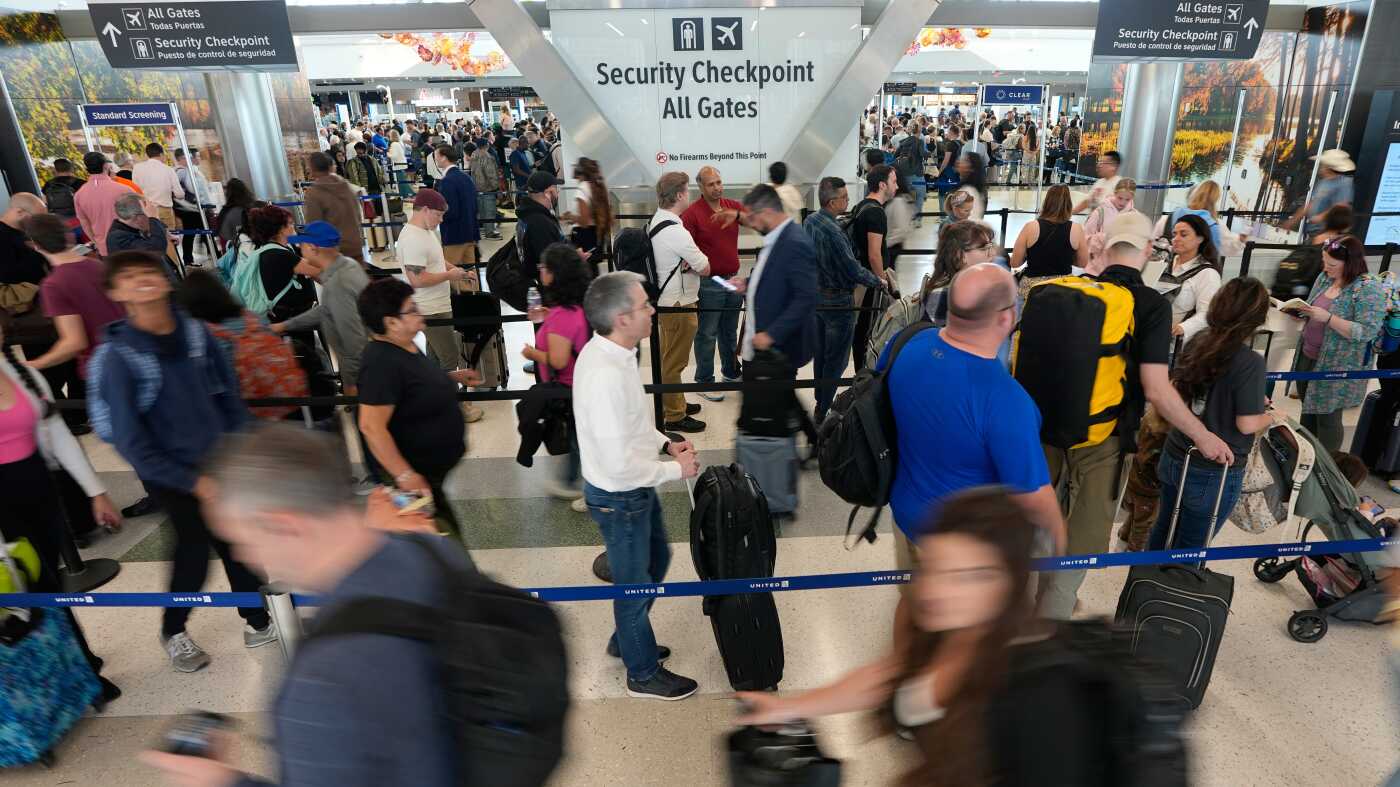
ICE officers could remain at airports after TSA workers are paid

Scathing report claims nation’s oldest labor union ‘betrayed’ MAGA members through ‘shocking’ spending

Republican US lawmaker demands Congress vote on any Iran troop deployment
-

 Sports1 week ago
IOC addresses execution of 19-year-old Iranian wrestler Saleh Mohammadi
-

 New Mexico1 week ago
Clovis shooting leaves one dead, four injured
-

 Miami, FL4 days ago
Jannik Sinner’s Girlfriend Laila Hasanovic Stuns in Ab-Revealing Post Amid Miami Open
-

 Tennessee6 days ago
Tennessee Police Investigating Alleged Assault Involving ‘Reacher’ Star Alan Ritchson
-

 Minneapolis, MN4 days ago
Boy who shielded classmate during school shooting receives Medal of Honor
-

 Politics1 week ago
Schumer gambit fails as DHS shutdown hits 36 days and airport lines grow
-

 Science1 week ago
Record Heat Meets a Major Snow Drought Across the West
-

 Technology1 week ago
YouTube job scam text: How to spot it fast