Ohio
Ohio State misses out on another 4-star edge rusher target


Ohio State has struck out on another key edge-rushing target with the news that 4-star 2026 defensive end KJ Ford has verbally committed to the Florida Gators over the Buckeyes. It’s unfortunately news that continues the trend of Ohio State not being able to land several of its priority edge rushers in the 2026 class, and a bit of a continuation over the last couple of years.
Out of Duncanville, Texas, Ford is ranked as the No. 15 edge rusher and 116th overall prospect in the 2026 class according to the 247Sports composite rankings. Ford chose the Gators over OSU and Texas A&M.
So far in the 2026 recruiting cycle, Larry Johnson and Ohio State have missed out on other priority defensive end targets Luke Wafle (USC), Carter Meadows (Michigan) and Landon Barnes (Ole Miss). They do have one high-profile edge rusher with the commitment of Khary Wilder, but the number of targets available that Ohio State would love to land on the edge is dwindling fast.
The Ohio State football 2026 recruiting class still sits with 21 commitments in the class, one that is currently inside the top ten. As any more significant news on the recruiting side of things becomes available, we’ll bring it to you.
Contact/Follow us @BuckeyesWire on X (formerly Twitter) and like our page on Facebook to follow ongoing coverage of Ohio State news, notes and opinion. Follow Phil Harrison on X.



COLUMBUS, Ohio — In August 2019, police in Bexley, Ohio, responded to a report of a “domestic dispute” at the home of Dr. Amy Acton.
Acton — then the director of the state’s Department of Health, now a Democratic candidate for governor — pulled a mirror off the wall, “shattering the glass” when she “became upset” because she felt her husband “was antagonizing her,” according to a police report. She told officers she had been drinking, had taken an unknown amount of prescription drugs and was about to drive away in her car before her husband, who also told police he had been drinking, talked her out of it, the report stated.
A medic dispatched to check on Acton recommended that she go to the hospital, but Acton “refused,” according to the police report. Police determined that there was no evidence of physical violence between Acton and her husband, only a “verbal argument over her extended work hours.”
Months later, Acton would become one of Ohio’s most visible leaders as the state battled Covid, advising and appearing almost daily alongside Gov. Mike DeWine as they issued stay-at-home orders and shared the latest case numbers. Acton’s time in the spotlight brought her doting admirers, as well as vicious critics. And as the lone Democrat serving in a Republican governor’s Cabinet, she quickly became a prospect for elected office herself after resigning her post in June 2020.
Acton, 60, is likely to face Republican Vivek Ramaswamy, a biotech entrepreneur who has been endorsed by DeWine and President Donald Trump, in the general election.
Her campaign on Friday disputed and sought to clarify several elements of the police report. Acton and her husband had returned home from dinner, where she had one drink, according to the campaign’s written response for this article. During a “verbal disagreement regarding her long work hours,” Acton “bumped into a wall hanging which fell,” the campaign said. She then went to bed and was asleep when police arrived, according to the campaign.
Officers were dispatched to the home at 9:45 p.m., according to the police report, which does not indicate how they were alerted to the incident.
Acton’s campaign said that she was not “intoxicated” at any point during the evening and that the prescription medications referenced in the police report were ones that she had taken regularly for years.
The campaign also disputed that there was any reason for Acton to go to a hospital, asserting that any “harm, injury, or impairment” would have been noted in the police report.
Police officials in Bexley, a Columbus suburb, did not respond to a request for comment for this article.
“Amy Acton worked around the clock on behalf of Ohioans while serving as Health Director,” Acton spokesperson Addie Bullock said in an emailed statement that also criticized Ramaswamy and his policy proposals “as Ohioans continue to reject him and his cost-raising scams.”
The 2019 incident at Acton’s home has, until now, not been reported publicly. It also was not something widely known, if it was known at all, inside the DeWine administration. The governor, according to his spokesperson, was not happy to learn of the matter for the first time from NBC News.

“Prior to your inquiry, Governor DeWine was unaware of both the 2019 incident and associated police report involving Dr. Acton,” the spokesperson, Dan Tierney, wrote in an emailed response to questions. “The Governor holds his staff to the highest standards of conduct. Given that the allegations in the report are deeply troubling, Governor DeWine would have expected Dr. Acton to have at that time promptly disclosed this to him, and he is very disappointed that it did not occur.”
DeWine has in the past been largely praiseful of Acton. His backing of Ramaswamy, 40, came relatively late and reluctantly, after the governor unsuccessfully tried to draft Lt. Gov. Jim Tressel, a former Ohio State football coach, into the primary.
Ohio has trended more decisively Republican, having elected only one Democratic governor in the last 36 years. Reliable, independent polling has been scarce, but several surveys have shown a close race, raising Democrats’ hopes for an upset.
Acton’s performance as health director has stood out as a major storyline in the race. Fox News recently retracted an article by its OutKick sports affiliate that accused Acton of hectoring social media users for ignoring social distancing guidelines. The tweets had come not from Acton, but from an account spoofing her.
The episode was an example of how Acton’s candidacy has reignited debate over the pandemic shutdowns that she advised DeWine to implement. She became a target for right-wing activists and protesters, some of whom reportedly wielded guns and signs scrawled with antisemitic messages outside the Statehouse in Columbus and outside her home. Acton, who is Jewish, downplayed that scrutiny as a factor in her resignation in June 2020, saying at the time that her decision would afford her more time to spend with her family.
DeWine, riffing on the “not all heroes wear capes” cliché, described Acton as a “hero” who wears a “white coat” when announcing her departure. Acton stayed with the administration for several more weeks, serving as a health adviser before officially leaving in August 2020.
Later in 2020, after Acton gave an interview to The New Yorker, the magazine reported that she had begun to “worry that she might be forced to sign health orders that violated her Hippocratic oath to do no harm.”
As a first-time candidate for elected office, Acton has leaned less on the high-profile role she had as DeWine’s top health adviser and more on her personal narrative. She emphasizes how she grew up poor in Youngstown, a difficult childhood marked at times by hunger and homelessness.
After receiving her medical license in 1994, Acton practiced as a pediatrician and later earned a master’s degree in public health at Ohio State University. She was the final Cabinet director DeWine named in 2019. Those close to DeWine at the time emphasized how he had been deliberate in identifying a qualified health care professional for the job rather than rewarding a career bureaucrat or political loyalist.
It was a move that initially seemed to pay off in the early days of Covid. DeWine’s daily televised briefings, often with Acton at his side, became appointment viewing in Ohio. Acton herself became a household name, so beloved that one company printed T-shirts in her honor.
While the Republican base vilified DeWine and Acton for their initially aggressive pandemic management, both remained popular in broader circles. Democrats tried to recruit Acton to run for an open Senate seat in 2022 — an option she strongly considered but decided against. That same year, DeWine cruised to re-election, helped by Democrats and independents who appreciated his handling of Covid.
Republicans fighting to hold onto the governor’s mansion after the term-limited DeWine leaves office have branded Acton as a quitter.
“What did Amy Acton do when the legislature began pushing back? Amy Acton quit,” state Senate President Rob McColley told an audience in January after being introduced as Ramaswamy’s running mate for lieutenant governor. “Ohio needs a businessman, not a bureaucrat. Ohio needs a creator, not a quitter. Ohio needs a visionary, not a victim. Ohio needs somebody who’s going to focus on affordability, not somebody who’s going to put in lockdown policies that are going to raise our prices.”
Though DeWine has endorsed Ramaswamy, he also has attempted to inoculate Acton from pandemic-related criticism.
“The decisions that were made during COVID, they were my decisions, so no one should blame someone else if they don’t like it,” DeWine told Columbus’ NBC affiliate in December. “The buck stops with me.”

BARNESVILLE, Ohio — Blue and green Donate Life flags are flying at several Ohio Valley hospitals this month as health care workers and supporters work to raise awareness about organ, eye and tissue donation.
WVU Medicine Barnesville Hospital hosted a flag-raising ceremony Thursday in honor of National Donate Life Month. The event aimed to raise awareness of organ, eye and tissue donation.
In addition to the ceremony, an educational table and a pinwheel garden will be on display at Barnesville Hospital throughout the month. The displays are intended to give visitors a chance to learn more about organ donation and to honor donor heroes.

A proposed Ohio law and U.S. Supreme Court decision could overturn Cincinnati’s ban on conversion therapy, raising concerns about the return of a discredited and harmful practice.
Just over 10 years ago, Cincinnati City Council voted to ban conversion therapy in the city. For those who are unfamiliar, conversion therapy is a discredited practice aiming to “cure” patients of their homosexuality. This is at best useless pseudoscience and at worst a dangerous abuse of children.
It proved especially dangerous in 2014 when a transgender teenager in Cincinnati named Leelah Alcorn died by suicide, which she said was in part caused by the conversion therapy she was forced to endure. Conversion therapy is completely ineffective and has already killed at least one Cincinnatian. Unfortunately, many conservatives are arguing that the practice should be protected.
State Representatives Gary Click and Josh Williams have introduced a bill in the Ohio Statehouse that would ban cities from regulating conversion therapy, which would overturn Cincinnati’s ban and bring back this harmful practice. Even more broadly, the U.S. Supreme Court’s ruling in Chiles v. Salazar seems likely to ban states and cities from regulating conversion therapy.
Turning back the clock
To be clear, these bans leave religious expression untouched. People can still speak out against homosexuality or say whatever they want about LGBTQ rights. These bans target therapy, not religious practices. I believe there can be sensible regulations on therapy to ensure that providers are not doing anything harmful to their patients, in the same way that there are regulations on what medical services a doctor can provide.
The actions by the Ohio GOP and the Supreme Court show that some want to turn the clock back and take away any rights that LGBTQ people have fought for over the past few decades. Gay rights opponents will try to soften their language and say they are just focused on transgender surgeries for minors or fairness in sports, but promoting this practice shows their problem is with gay people in general.
No matter how much you repeat it, you can not “pray the gay away.” Trying to force gay people back into the closet only results in tragedy.
Ben Kelly lives in Over-the-Rhine. A graduate of Northern Kentucky University, he works in government and is active in Democratic politics. Kelly worked with the National Suicide Prevention Hotline from 2019-2022.
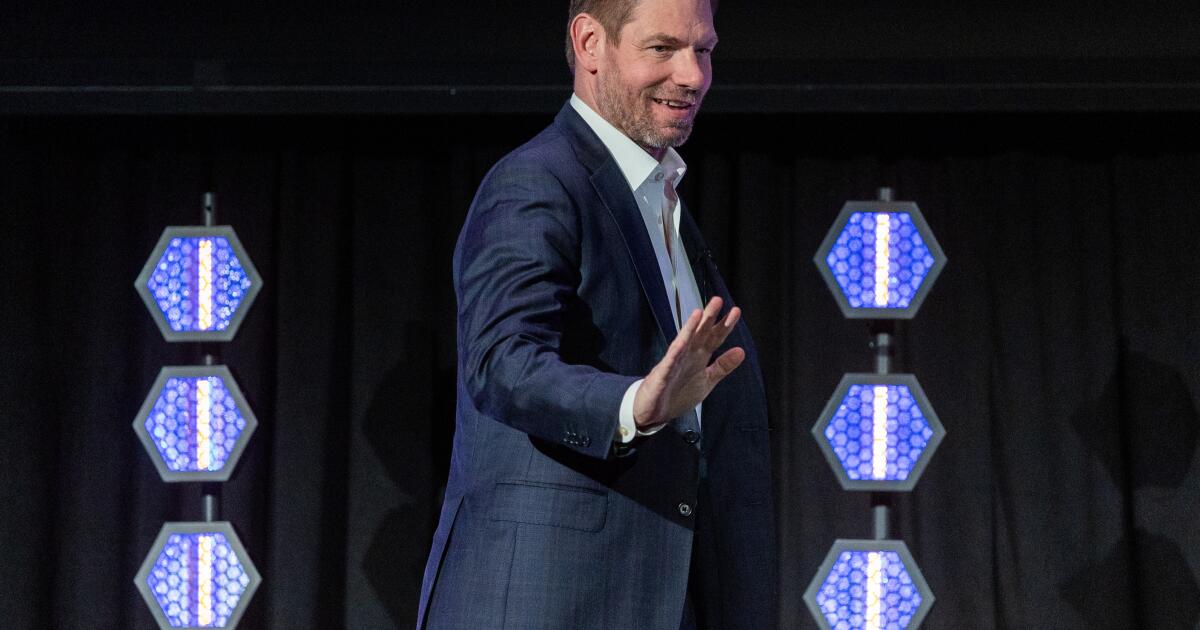
Pressure grows for Swalwell to exit governor’s race, criminal inquiry launched

Artemis II astronauts safely splash down off San Diego coast after historic moon mission
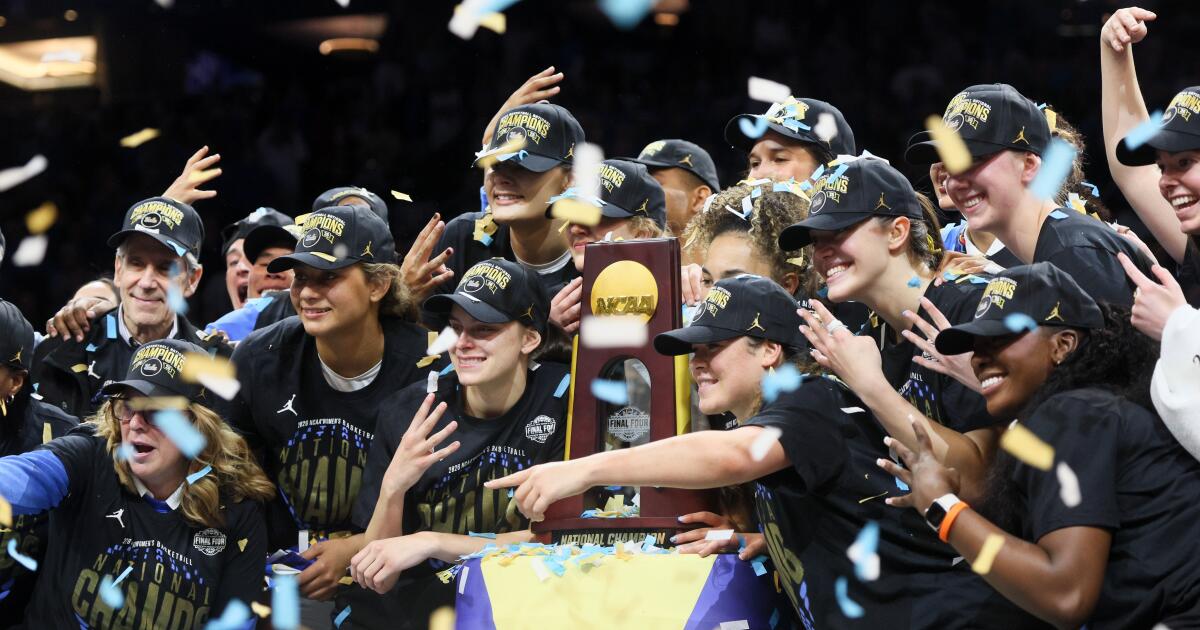
Letters to Sports: Celebrating UCLA’s inspiring national title win

Pope Leo urges world leaders to reject war and negotiate peace

Manhattan DA’s office to investigate Swalwell sexual assault allegation

Florida High School Football Rankings: Top 25 teams – Oct. 21

How old is Bo Nix? What to know about Oregon quarterback ahead of 2024 NFL Draft

Cleary's 21 help Le Moyne down Central Connecticut State 69-64 in OT

99th annual Pony Swim held in Virginia

Indiana Members Credit Union announced as new anchor tenant at Bottleworks District
Pope Leo urges world leaders to reject war and negotiate peace
Manhattan DA’s office to investigate Swalwell sexual assault allegation

NASA’s Artemis II mission in 20 minutes

Trump adversary running for Senate borrows his filibuster playbook

Russian propaganda unit targets Hungary’s elections
-

 Atlanta, GA7 days ago
1 teenage girl killed, another injured in shooting at Piedmont Park, police say
-

 Movie Reviews1 week ago
Vaazha 2 first half review: Hashir anchors a lively, chaos-filled teen tale
-

 Georgia4 days ago
Georgia House Special Runoff Election 2026 Live Results
-

 Pennsylvania5 days ago
Parents charged after toddler injured by wolf at Pennsylvania zoo
-

 Arkansas1 day ago
Arkansas TV meteorologist Melinda Mayo retires after nearly four decades on air
-
 Milwaukee, WI5 days ago
Potawatomi Casino Hotel evacuated after fire breaks out in rooftop HVAC system
-
 Entertainment1 week ago
Inside Ye’s first comeback show at SoFi Stadium
-

 Indianapolis, IN1 week ago
Fighting Illini begin Final Four preparations in Indianapolis