North Dakota
UND is on the case – UND Today


While North Dakota’s workforce shortage is serious, it’s also the kind of problem that UND can and will help solve, as today’s Special Edition of UND Today makes clear
By Tom Dennis
Editor, UND Today
We are so lucky to live in North Dakota.
True, there’s a distinct lack of oceanfront views, and even the state Tourism Department once sponsored a tongue-in-cheek billboard that read, “North Dakota Mountain Removal Project completed.” But while North Dakotans know all about their state’s comparative weaknesses in scenery, they’re also aware — and rightly proud — of its exceptional strengths.
Here’s one:
Problems have solutions here. That very much includes the state’s workforce shortage, the issue that Gov. Kelly Armstrong campaigned on and ranks among the top concerns of the state Legislature.
And with that in mind, this Special Edition of UND Today is dedicated to the proposition expressed in the headline: UND is on the case.
Don’t misunderstand; the workforce shortage is an extremely serious issue. Earlier this year, the U.S. Chamber of Commerce released its Worker Shortage Index, an interactive map that “shows which states are suffering the most.”
In two and only two of the states, the crisis is listed as “Most Severe.” They are North Dakota and South Dakota, and while North Dakota’s index of 0.47 is slightly better than South Dakota’s 0.43, it still means North Dakota has only 47 available workers for every 100 open jobs.
In other words, ours is the second-worst workforce-shortage in America.
But think of it this way: Compared with high crime rates, poorly performing schools, frightful levels of homelessness and similar modern complaints, a workforce shortage is an enviable problem for a state to have. That’s because it’s much less intractable than those other concerns — and smart policymaking can make a difference.
That’s already happening, and UND is proud to be playing a part. For example, and as one of the stories in today’s Special Edition reports, the new STEM Complex and proposed Health Professions Collaborative Facility are designed to not only increase the number of graduates in those essential fields but also boost those graduates’ effectiveness and productivity once the new pros are on the job.
Elsewhere on campus, UND students already are being prepared to meet real-world challenges and bolster North Dakota’s STEM workforce development, as another of today’s stories reports. A third story describes North Dakota 85, the School of Medicine & Health Science’s initiative to raise to 85 percent the number of North Dakota residents enrolled in the school’s physician and physician-assistant programs.
And our story today about UND’s extensive online programs describes how, as the story puts it, “distance learning has long been a strategic tool for strengthening North Dakota’s workforce, extending UND’s reach and generating economic benefits statewide.”
As mentioned, UND is on the case.
In September, we published a Special Edition of UND Today titled, “Ten Years Later: The University’s Road to Record Recovery.” UND is enjoying record enrollment at the moment, the series noted. How did that growth come about?
In particular, what were the decisions — some of them very difficult, involving budget cuts and program closures — during the state’s financial crunch in 2016-17, that helped set UND up for its current enrollment success? How have state support, infrastructure improvements, research spending and other recent trends factored in?
Today, we’re extending that outlook to offer thoughts about the next 10 years. And because the state’s workforce shortage is top-of-mind for the elected leaders of North Dakota, it’s top-of-mind at the University of North Dakota, too.
The stories in today’s Special Edition explain how.
Thank you for reading UND Today, and your interest in and support of UND! Feel free to contact me at tom.dennis@UND.edu with any comments or questions.
Don’t miss the full series …
>> UND is on the case. While North Dakota’s workforce shortage is serious, it’s also the kind of problem that UND can and will help solve.
>> The North Dakota magnet of online education. UND’s online programs keep North Dakotans rooted and thriving in-state, while drawing people and positive attention from far and wide.
>> STEM U: New buildings promise to engineer student success. How UND’s STEM Complex and proposed Health Professions Collaborative Facility will grow key components of the state’s workforce.
>> STEM U: How UND educates the workforce of the future. Workforce preparation takes place in labs, classrooms and the Alaskan Arctic, among other locations across UND and beyond.
>> Growing our own physicians and physician assistants. With ND85, UND hopes to raise the number of North Dakota residents enrolled in M.D., P.A. programs at its School of Medicine & Health Sciences.
>> VIDEO: How UND is leading the way in STEM. The deans of UND’s College of Engineering & Mines and College of Arts & Sciences join President Andy Armacost for a conversation about STEM training.
More from Author




North Dakota
Local North Dakota health units to recognize National Public Health Week with statewide walking event

BISMARCK — In recognition of
National Public Health Week
, all 28 local public health units across North Dakota will participate in “Stroll N Roll North Dakota,” a statewide walking event designed to promote physical activity and social connection. Local public health units are inviting community members to lace up their walking shoes and move together.
“Stroll N Roll North Dakota” will take place throughout the day on Wednesday, April 8. Individuals of all ages and abilities are encouraged to participate at a time that works best for them. Walking, biking, rollerblading and the use of wheelchairs, strollers or other mobility devices are all welcome. While there is no minimum time requirement, adults are encouraged to aim for 30 minutes of activity, consistent with recommendations from the American Heart Association. This statewide event is sponsored by the
North Dakota State Association of City and County Health Officials
(ND SACCHO), a group that helps coordinate local public health efforts across the state.
Each year, National Public Health Week takes time to celebrate the impact of public health and highlight priority issues that can improve the nation’s well-being. The theme for 2026 is “Ready. Set. Action!” and will focus on how the work of public health improves the lives of residents, provides safeguards for families and strengthens communities. “Stroll N Roll North Dakota” complements this message by promoting physical activity, which supports heart health, mental health, chronic disease prevention and social connection.
Contact your local public health unit at
https://www.ndsaccho.org/local-public-health-units/
for details.
Participants are encouraged to share photos and use the hashtag #StrollNRollND on social media.

BISMARCK — The North Dakota Supreme Court heard arguments on Thursday, April 2, over a lawsuit challenging voter-approved
term limits for state lawmakers.
The lawsuit, filed in late January, claims the Legislature violated the state constitution when it passed a resolution creating a ballot measure during the 2025 session, just four years after voters approved term limits.
In 2022, North Dakota residents approved capping term limits to eight years in the House and eight years in the Senate. Supporters of the original amendment say it included a clause barring the Legislature from making constitutional changes to term limits.
“Those term limits may only be altered by a measure proposed by the people rather than the Legislative Assembly. And yet a few years later, the Legislative Assembly is doing what they are prohibited from doing,” said Zachary Wallen, lawyer for the petitioners.
Tanner Ecker / The Bismarck Tribune
During the 2025 session, lawmakers narrowly approved an amendment that would allow them to decide in which chamber they want to serve their 16 years. That plan requires voter approval.
“The people are voting on this, they have an opportunity to speak their voice on this,” said Brian Schmidt, lawyer for the North Dakota Legislature.

Tanner Ecker / The Bismarck Tribune
Justice Jon Jensen questioned whether a second vote was appropriate. “The public did speak on this. The public spoke on it when it passed the original constitutional amendment and they said ‘Legislature, you don’t even get to propose a change.’ They have already spoken on it. You want a second shot, or a second bite at the apple, not a first one, a second,” Jensen said.

Tanner Ecker / The Bismarck Tribune
A central question is whether the Supreme Court has the authority to issue an opinion in the case before the amendment process is complete.
“This court has said it will not pass (judgment) on the constitutionality of a proposed amendment until that process is complete. The process is not complete yet,” Schmidt said.
The Secretary of State’s office wants the Supreme Court to issue an opinion by the end of June so the office has enough time to prepare for the general election in November.
Grand Forks County Commissioner Terry Bjerke and former Minot Republican Sen. Oley Larsen filed the lawsuit.

Tanner Ecker / The Bismarck Tribune

Matt Henson is an Emmy award-winning reporter/photographer/editor for WDAY. Prior to joining WDAY in 2019, Matt was the main anchor at WDAZ in Grand Forks for four years.

IRVINE, Calif. — Collin Boltz had an elevated role on the Dickinson Mavericks during the 2025-26 season. He was playing more minutes and set career highs across the board with 11 points (five goals, six assists) in 22 games.
But he was only scratching the surface once his season ended in mid-February. Boltz was getting ready to compete at the 2026 Chipotle-USA Hockey Youth Tier II 16U National Tournament for Team North Dakota.
It was a week-long tournament in Irvine, Calif., and he helped the program win its third Tier II 16U 1A title after cruising past Team Wyoming 9-0 in the championship game back on Sunday, March 29.
It was the third time in the state’s history that it took home a national championship trophy.
“At the beginning, we were kind of nervous. The semi-final game was [we won] 4-2 and the team that we played in the championship beat them by three,” Boltz said. “So we were thinking that they were going to be a little better. But once we got that first goal, we just hammered them.”
Courtesy / Collin Boltz
USA Nationals is one of the biggest youth hockey tournaments in the country, ranging from players ages 14 and under, all the way to the prep level for both boys and girls. All national teams hold tryouts in May and the final roster is made up of some of the best players in the state in both the east and west regions.
“That was a team that I’ve wanted to try out for a long time, and my parents finally let me try out,” Boltz said. “I wanted to see competition from other places and maybe get some exposure, and just play more hockey.”
Boltz tried out for the Tier I team, but didn’t make the final roster. However, he earned a spot on the Tier II squad and played a critical bottom-six role. One of the first things he noticed was how the pace of play was much slower than high school.

Courtesy / Collin Boltz
In five games, he tallied two points (one goal, one assist) and played heavy minutes as a third-line winger. His goal came against the Portland Jr. Winterhawks on March 27 in a dominant 8-0 victory. North Dakota was a very deep team with lots of scoring depth, and that was one of the biggest keys to winning the championship.
“It was great. We played well the whole time. We won every game. It was kind of nice because there was only one game a day, so you had the rest of the time to play on the beach or something,” Boltz said. “Just getting to travel around to new places, playing [against] different kids and playing with different kids too.”
The best aspect of Boltz’s game has always been his hard and heavy shot. That’s what caught the eyes of the coaching staff and why he was selected as one of 20 members to make the team. But he’s not afraid to go in the corners and play the body to get the puck.
“When he hits the net, there’s a good chance it goes in, and then he plays a pretty heavy game too down in the corners and when he’s attacking the puck,” Team North Dakota head coach Jared Cowden said. “His play style definitely caught the eyes of a few people who were on the evaluating staff.”
Dickinson has had a few players compete at nationals. Former Dickinson High defenseman Kaeden Krieg played for Team North Dakota Tier I 16U back in 2023. It meant a lot to Boltz to be the lone representative of his team and school.
“It’s pretty cool. But I think I have a feeling that some of our players, if they tried out, they could probably be on the team too,” Boltz said.
Now heading into his junior season, Boltz is hoping to use this experience to take another step in his development.
“I think it just helps you realize my competition and what I need to do to be better than the other kids that I play,” Boltz said. “It just tells me how much more I need to train during the summer.”

Jacob Cheris covers a variety of high school and college sports. A graduate of Penn State University’s class of 2023, with a degree in broadcast journalism, he covered Penn State Men’s Hockey for three years. Jacob also covers Big Ten Hockey for College Hockey News.

Constitutional amendment needed to curb influence of money in politics

Milwaukee Bucks games won’t be on TV in the same place next season

Man shot at Atlanta convenience store overnight, police say

Minneapolis proposes honoring fallen officer Jamal Mitchell with street naming

HBCU All-Star Game celebrates sports and civil rights in Indianapolis

Florida High School Football Rankings: Top 25 teams – Oct. 21

How old is Bo Nix? What to know about Oregon quarterback ahead of 2024 NFL Draft

Cleary's 21 help Le Moyne down Central Connecticut State 69-64 in OT

99th annual Pony Swim held in Virginia

Indiana Members Credit Union announced as new anchor tenant at Bottleworks District

Video: Trump Struck Iran. Now Farmers Are Paying the Price.

What B-52 bombers bring to Iran fight — and what it means for the war now

Podcast: Hungary elects: what is at stake and who is likely to win?
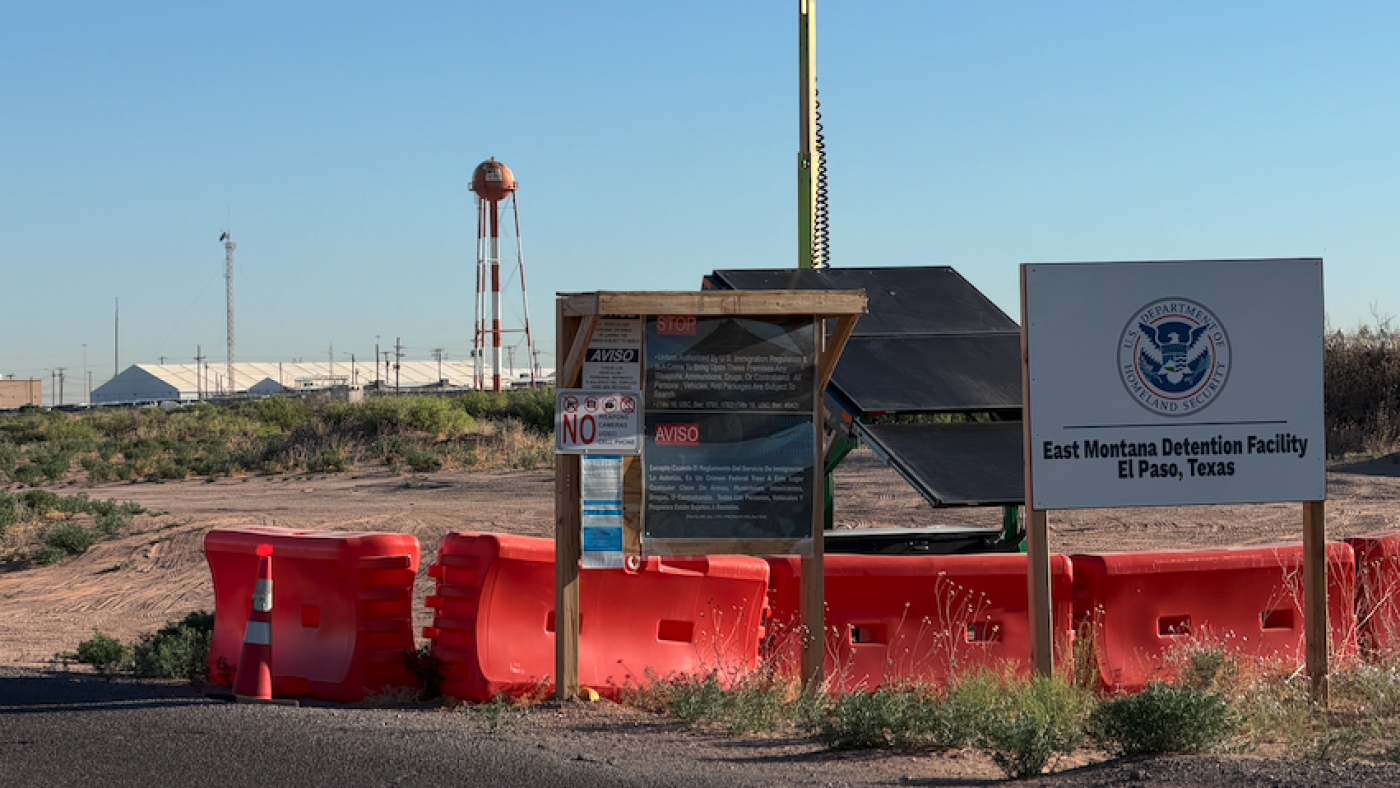
ICE detention deaths are on a record pace. One Texas facility bears the brunt

GOP rails against ‘s— sandwich’ deal as all eyes turn to House to end DHS shutdown
-

 Culture1 week ago
Wil Wheaton Discusses ‘Stand By Me’ and Narrating ‘The Body’ Audiobook
-

 South-Carolina5 days ago
South Carolina vs TCU predictions for Elite Eight game in March Madness
-

 Miami, FL1 week ago
Jannik Sinner’s Girlfriend Laila Hasanovic Stuns in Ab-Revealing Post Amid Miami Open
-

 Culture1 week ago
What Happens When We Die? This Wallace Stevens Poem Has Thoughts.
-

 Minneapolis, MN1 week ago
Boy who shielded classmate during school shooting receives Medal of Honor
-

 Vermont5 days ago
Skier dies after fall at Sugarbush Resort
-

 Education1 week ago
Video: Transgender Athletes Barred From Women’s Olympic Events
-

 Politics5 days ago
Trump’s Ballroom Design Has Barely Been Scrutinized