North Dakota
Bemidji postal concerns lead to district-wide USPS audit in Minnesota and North Dakota


BEMIDJI, Minn. — After reports of mail delays and poor working conditions at the United States Postal Service gained local and national attention in November, with a special focus on the Bemidji Post Office, the USPS Office of the Inspector General has announced that an audit will be performed on the Minnesota-North Dakota Postal District.
The Bemidji office first gained attention when its rural mail carriers put on
a symbolic strike in mid-November,
protesting 12-hour days and what they described as an influx of Amazon packages that were prioritized over other mail deliveries.
This story gained the attention of national news outlets, and the offices of U.S. Sens. Amy Klobuchar and Tina Smith held
a listening session in Bemidji
where residents shared their experiences and former postal employees testified to poor labor conditions that caused several people
to quit or take early retirement.
Madelyn Haasken / Bemidji Pioneer
This led the senators, along with other Minnesota representatives, to call on the USPS Office of the Inspector General to conduct a full audit of the Minnesota-North Dakota Postal District.
“For years, I have been raising the concerns of Minnesotans to the Postal Service, and they repeatedly insist that everything is fine,” Smith said. “This audit will provide a much-needed, unbiased review of postal service in Minnesota.”
This audit was officially announced by the OIG in its report of a similar investigation into mail services around St. Paul.
“(Those reports) just verified everything we’ve been hearing across the state,” Klobuchar said. “They’re going to do this same in-depth review in Bemidji, in Blackduck, in other areas across our state, and I think what (the OIG) found makes them believe that there are going to be other problems.”
These reviews will be published as a part of a district-wide report that’s expected in late spring, and what Klobuchar hopes will address ongoing constituent concerns.
“In Bemidji, we know the issue of the Amazon packages and the concerns there, the workforce issues,” she said. “We just need to get this under control.”
The review will examine the postal service’s processing, logistics and delivery networks and will include observations of several post offices and mail processing plants as well as interviews with employees.
Alongside the examination of northern Minnesota’s postal service, the investigation will also audit several North Dakota locations, including offices in Mandan, Minot and Bismarck.
The results of the audit will come with a detailed list of issues and recommendations, which district management will have a chance to agree with and implement.
“When a report is issued, the postal service responds to each (OIG) recommendation, and if there is agreement, it provides a corrective action plan with a date of planned implementation,” explained Tara Linne, the OIG’s director of communications.
These corrective actions are evaluated and closed by the OIG once they have been resolved. If the postal service disagrees with or does not act on a recommendation, another process is followed.
“(If there’s disagreement) we work toward an agreement by elevating discussions between USPS and OIG management,” Linne said. “Any recommendations that the postal service does not act on remain open and are reported to Congress until a resolution is achieved.”
For the current and former postal workers whose efforts helped gain widespread attention, the audit is welcome news.
“This is the whole reason we started our endeavor with the symbolic strike,” shared Dennis Nelson, a former rural carrier who helped organize the efforts and resigned in December because of the working conditions. “We needed public officials to get involved with this.”
While the audit is only examining the Minnesota-North Dakota district, Nelson believes the issues with the postal service are likely nationwide.
“I suspect that these issues are not unique to our district. It’s systemic,” he said. “(This audit) has been a long time coming.”

Courtesy / Dennis Nelson
As for the changes he hopes to see, Nelson wants to see a less hostile working environment that treats its employees with respect. He also wants to see significant efforts made in hiring and an examination of rural carriers’ pay systems.
Importantly, he also wants to have a better system for reporting problems. Nelson explained that while he worked for the Post Office the narrative was that the OIG was something to be feared rather than an institution to reach out to for help.
“We were told to fear the OIG and that if they showed up we were in trouble — that we did something wrong and they would be investigating us,” he said. “It never occurred to anybody to contact the OIG or that they might be the people who could help us.”
While Nelson may no longer work for the Bemidji Post Office, he hopes that this audit will mark the first step toward progress and making the postal service an improved institution.
“The whole idea was to get this thing rolling and make it a better place for everybody,” he said. “It’s too little and too late for those of us who had to endure it, but if all the changes come about that I hope, then the whole thing will be worth it.”



North Dakota
Local North Dakota health units to recognize National Public Health Week with statewide walking event

BISMARCK — In recognition of
National Public Health Week
, all 28 local public health units across North Dakota will participate in “Stroll N Roll North Dakota,” a statewide walking event designed to promote physical activity and social connection. Local public health units are inviting community members to lace up their walking shoes and move together.
“Stroll N Roll North Dakota” will take place throughout the day on Wednesday, April 8. Individuals of all ages and abilities are encouraged to participate at a time that works best for them. Walking, biking, rollerblading and the use of wheelchairs, strollers or other mobility devices are all welcome. While there is no minimum time requirement, adults are encouraged to aim for 30 minutes of activity, consistent with recommendations from the American Heart Association. This statewide event is sponsored by the
North Dakota State Association of City and County Health Officials
(ND SACCHO), a group that helps coordinate local public health efforts across the state.
Each year, National Public Health Week takes time to celebrate the impact of public health and highlight priority issues that can improve the nation’s well-being. The theme for 2026 is “Ready. Set. Action!” and will focus on how the work of public health improves the lives of residents, provides safeguards for families and strengthens communities. “Stroll N Roll North Dakota” complements this message by promoting physical activity, which supports heart health, mental health, chronic disease prevention and social connection.
Contact your local public health unit at
https://www.ndsaccho.org/local-public-health-units/
for details.
Participants are encouraged to share photos and use the hashtag #StrollNRollND on social media.

BISMARCK — The North Dakota Supreme Court heard arguments on Thursday, April 2, over a lawsuit challenging voter-approved
term limits for state lawmakers.
The lawsuit, filed in late January, claims the Legislature violated the state constitution when it passed a resolution creating a ballot measure during the 2025 session, just four years after voters approved term limits.
In 2022, North Dakota residents approved capping term limits to eight years in the House and eight years in the Senate. Supporters of the original amendment say it included a clause barring the Legislature from making constitutional changes to term limits.
“Those term limits may only be altered by a measure proposed by the people rather than the Legislative Assembly. And yet a few years later, the Legislative Assembly is doing what they are prohibited from doing,” said Zachary Wallen, lawyer for the petitioners.
Tanner Ecker / The Bismarck Tribune
During the 2025 session, lawmakers narrowly approved an amendment that would allow them to decide in which chamber they want to serve their 16 years. That plan requires voter approval.
“The people are voting on this, they have an opportunity to speak their voice on this,” said Brian Schmidt, lawyer for the North Dakota Legislature.

Tanner Ecker / The Bismarck Tribune
Justice Jon Jensen questioned whether a second vote was appropriate. “The public did speak on this. The public spoke on it when it passed the original constitutional amendment and they said ‘Legislature, you don’t even get to propose a change.’ They have already spoken on it. You want a second shot, or a second bite at the apple, not a first one, a second,” Jensen said.

Tanner Ecker / The Bismarck Tribune
A central question is whether the Supreme Court has the authority to issue an opinion in the case before the amendment process is complete.
“This court has said it will not pass (judgment) on the constitutionality of a proposed amendment until that process is complete. The process is not complete yet,” Schmidt said.
The Secretary of State’s office wants the Supreme Court to issue an opinion by the end of June so the office has enough time to prepare for the general election in November.
Grand Forks County Commissioner Terry Bjerke and former Minot Republican Sen. Oley Larsen filed the lawsuit.

Tanner Ecker / The Bismarck Tribune

Matt Henson is an Emmy award-winning reporter/photographer/editor for WDAY. Prior to joining WDAY in 2019, Matt was the main anchor at WDAZ in Grand Forks for four years.

IRVINE, Calif. — Collin Boltz had an elevated role on the Dickinson Mavericks during the 2025-26 season. He was playing more minutes and set career highs across the board with 11 points (five goals, six assists) in 22 games.
But he was only scratching the surface once his season ended in mid-February. Boltz was getting ready to compete at the 2026 Chipotle-USA Hockey Youth Tier II 16U National Tournament for Team North Dakota.
It was a week-long tournament in Irvine, Calif., and he helped the program win its third Tier II 16U 1A title after cruising past Team Wyoming 9-0 in the championship game back on Sunday, March 29.
It was the third time in the state’s history that it took home a national championship trophy.
“At the beginning, we were kind of nervous. The semi-final game was [we won] 4-2 and the team that we played in the championship beat them by three,” Boltz said. “So we were thinking that they were going to be a little better. But once we got that first goal, we just hammered them.”
Courtesy / Collin Boltz
USA Nationals is one of the biggest youth hockey tournaments in the country, ranging from players ages 14 and under, all the way to the prep level for both boys and girls. All national teams hold tryouts in May and the final roster is made up of some of the best players in the state in both the east and west regions.
“That was a team that I’ve wanted to try out for a long time, and my parents finally let me try out,” Boltz said. “I wanted to see competition from other places and maybe get some exposure, and just play more hockey.”
Boltz tried out for the Tier I team, but didn’t make the final roster. However, he earned a spot on the Tier II squad and played a critical bottom-six role. One of the first things he noticed was how the pace of play was much slower than high school.

Courtesy / Collin Boltz
In five games, he tallied two points (one goal, one assist) and played heavy minutes as a third-line winger. His goal came against the Portland Jr. Winterhawks on March 27 in a dominant 8-0 victory. North Dakota was a very deep team with lots of scoring depth, and that was one of the biggest keys to winning the championship.
“It was great. We played well the whole time. We won every game. It was kind of nice because there was only one game a day, so you had the rest of the time to play on the beach or something,” Boltz said. “Just getting to travel around to new places, playing [against] different kids and playing with different kids too.”
The best aspect of Boltz’s game has always been his hard and heavy shot. That’s what caught the eyes of the coaching staff and why he was selected as one of 20 members to make the team. But he’s not afraid to go in the corners and play the body to get the puck.
“When he hits the net, there’s a good chance it goes in, and then he plays a pretty heavy game too down in the corners and when he’s attacking the puck,” Team North Dakota head coach Jared Cowden said. “His play style definitely caught the eyes of a few people who were on the evaluating staff.”
Dickinson has had a few players compete at nationals. Former Dickinson High defenseman Kaeden Krieg played for Team North Dakota Tier I 16U back in 2023. It meant a lot to Boltz to be the lone representative of his team and school.
“It’s pretty cool. But I think I have a feeling that some of our players, if they tried out, they could probably be on the team too,” Boltz said.
Now heading into his junior season, Boltz is hoping to use this experience to take another step in his development.
“I think it just helps you realize my competition and what I need to do to be better than the other kids that I play,” Boltz said. “It just tells me how much more I need to train during the summer.”

Jacob Cheris covers a variety of high school and college sports. A graduate of Penn State University’s class of 2023, with a degree in broadcast journalism, he covered Penn State Men’s Hockey for three years. Jacob also covers Big Ten Hockey for College Hockey News.

CT’s top Latin and Caribbean restaurants of 2026, according to Connecticut Magazine

The real differences between Aldi, Lidl and Trader Joe’s in Delaware

Video shows Backstreet Boys star Brian Littrell in heated dispute at Florida home

Tyson Foods to shut down Georgia prepared food plant, laying off 168 employees

State bills would raise tax on pricey Hawaii home sales | Honolulu Star-Advertiser

Florida High School Football Rankings: Top 25 teams – Oct. 21

How old is Bo Nix? What to know about Oregon quarterback ahead of 2024 NFL Draft

Cleary's 21 help Le Moyne down Central Connecticut State 69-64 in OT

99th annual Pony Swim held in Virginia

Indiana Members Credit Union announced as new anchor tenant at Bottleworks District

Video: Trump Struck Iran. Now Farmers Are Paying the Price.

What B-52 bombers bring to Iran fight — and what it means for the war now

Podcast: Hungary elects: what is at stake and who is likely to win?
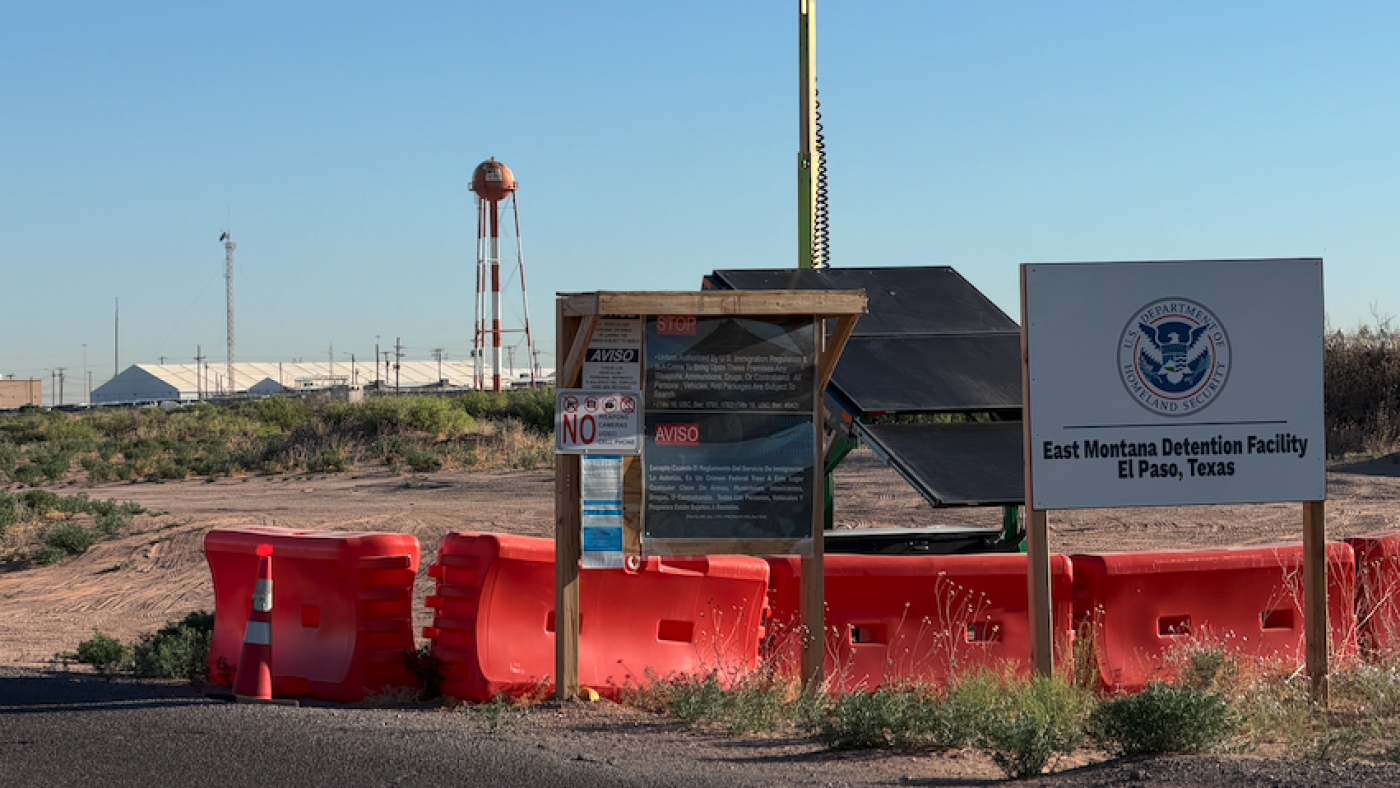
ICE detention deaths are on a record pace. One Texas facility bears the brunt

GOP rails against ‘s— sandwich’ deal as all eyes turn to House to end DHS shutdown
-

 South-Carolina5 days ago
South Carolina vs TCU predictions for Elite Eight game in March Madness
-

 Culture1 week ago
Wil Wheaton Discusses ‘Stand By Me’ and Narrating ‘The Body’ Audiobook
-

 Miami, FL1 week ago
Jannik Sinner’s Girlfriend Laila Hasanovic Stuns in Ab-Revealing Post Amid Miami Open
-

 Culture1 week ago
What Happens When We Die? This Wallace Stevens Poem Has Thoughts.
-

 Minneapolis, MN1 week ago
Boy who shielded classmate during school shooting receives Medal of Honor
-

 Vermont5 days ago
Skier dies after fall at Sugarbush Resort
-

 Education1 week ago
Video: Transgender Athletes Barred From Women’s Olympic Events
-

 Politics5 days ago
Trump’s Ballroom Design Has Barely Been Scrutinized