Lifestyle
John Mayall, tireless and influential British blues pioneer, has died at 90


English blues singer John Mayall performs with his band The Bluesbreakers, on the stage of the Miles Davis Hall during the 42nd Montreux Jazz Festival in Montreux, Switzerland, on July 7, 2008.
Sandro Campardo/AP/Keystone
hide caption
toggle caption
Sandro Campardo/AP/Keystone
LONDON — John Mayall, the British blues musician whose influential band the Bluesbreakers was a training ground for Eric Clapton, Mick Fleetwood and many other superstars, has died. He was 90.
A statement on Mayall’s Instagram page announced his death Tuesday, saying the musician died Monday at his home in California. “Health issues that forced John to end his epic touring career have finally led to peace for one of this world’s greatest road warriors,” the post said.
He is credited with helping develop the English take on urban, Chicago-style rhythm and blues that played an important role in the blues revival of the late 1960s. At various times, the Bluesbreakers included Eric Clapton and Jack Bruce, later of Cream; Mick Fleetwood, John McVie and Peter Green of Fleetwood Mac; Mick Taylor, who played five years with the Rolling Stones; Harvey Mandel and Larry Taylor of Canned Heat; and Jon Mark and John Almond, who went on to form the Mark-Almond Band.
Mayall protested in interviews that he was not a talent scout, but played for the love of the music he had first heard on his father’s 78-rpm records.
“I’m a band leader and I know what I want to play in my band — who can be good friends of mine,” Mayall said in an interview with the Southern Vermont Review. “It’s definitely a family. It’s a small kind of thing really.”
A small but enduring thing. Though Mayall never approached the fame of some of his illustrious alumni, he was still performing in his late 80s, pounding out his version of Chicago blues. The lack of recognition rankled a bit, and he wasn’t shy about saying so.
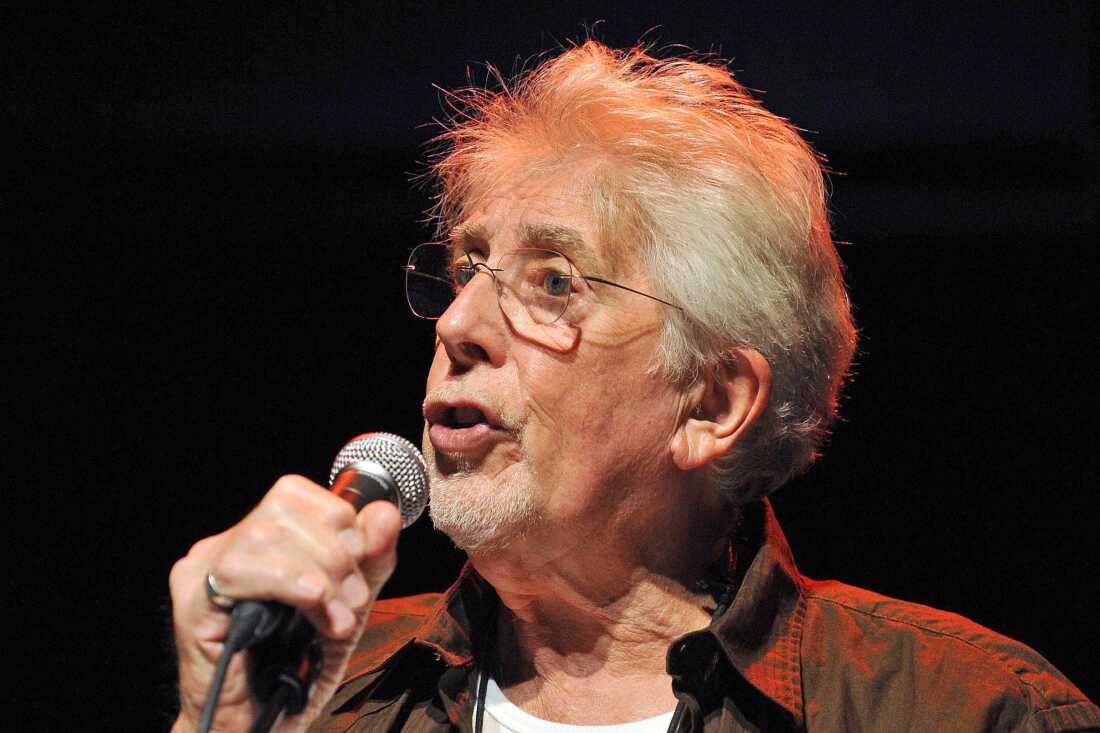
English blues singer John Mayall performs with his band The Bluesbreakers, on the stage of the Miles Davis hall during the 42nd Montreux Jazz Festival in Montreux, Switzerland, on July 7, 2008.
Sandro Campardo/AP/Keystone
hide caption
toggle caption
Sandro Campardo/AP/Keystone
“I’ve never had a hit record, I never won a Grammy Award, and Rolling Stone has never done a piece about me,” he said in an interview with the Santa Barbara Independent in 2013. “I’m still an underground performer.”
Known for his blues harmonica and keyboard playing, Mayall had a Grammy nomination, for “Wake Up Call” which featured guest artists Buddy Guy, Mavis Staples, Mick Taylor and Albert Collins. He received a second nomination in 2022 for his album “The Sun Is Shining Down.” He also won official recognition in Britain with the award of an OBE (Officer of the Order of the British Empire) in 2005.
He was selected for the 2024 Rock & Roll Hall of Fame class and his 1966 album “Blues Breakers With Eric Clapton,” is considered one of the best British blues albums.
Mayall once was asked if he kept playing to meet a demand, or simply to show he could still do it.
“Well, the demand is there, fortunately. But it’s really for neither of those two things, it’s just for the love of the music,” he said in an interview with Hawaii Public Radio. “I just get together with these guys and we have a workout.”
Mayall was born on Nov. 29, 1933 in Macclesfield, near Manchester in central England.
Sounding a note of the hard-luck bluesman, Mayall once said, “The only reason I was born in Macclesfield was because my father was a drinker, and that’s where his favorite pub was.”
His father also played guitar and banjo, and his records of boogie-woogie piano captivated his teenage son.
Mayall said he learned to play the piano one hand at a time — a year on the left hand, a year on the right, “so I wouldn’t get all tangled up.”
The piano was his main instrument, though he also performed on guitar and harmonica, as well as singing in a distinctive, strained-sounding voice. Aided only by drummer Keef Hartley, Mayall played all the other instruments for his 1967 album, “Blues Alone.”
Mayall was often called the “father of British blues,” but when he moved to London in 1962 his aim was to soak up the nascent blues scene led by Alexis Korner and Cyril Davies. Mick Jagger, Keith Richards and Eric Burdon were among others drawn to the sound.
The Bluesbreakers drew on a fluid community of musicians who drifted in and out of various bands. Mayall’s biggest catch was Clapton, who had quit the Yardbirds and joined he Bluesbreakers in 1965 because he was unhappy with the Yardbirds’ commercial direction.
Mayall and Clapton shared a passion for Chicago blues, and the guitarist later remembered that Mayall had “the most incredible collection of records I had ever seen.”
Mayall tolerated Clapton’s waywardness: He disappeared a few months after joining the band, then reappeared later the same year, sidelining the newly arrived Peter Green, then left for good in 1966 with Bruce to form Cream, which rocketed to commercial success, leaving Mayall far behind.
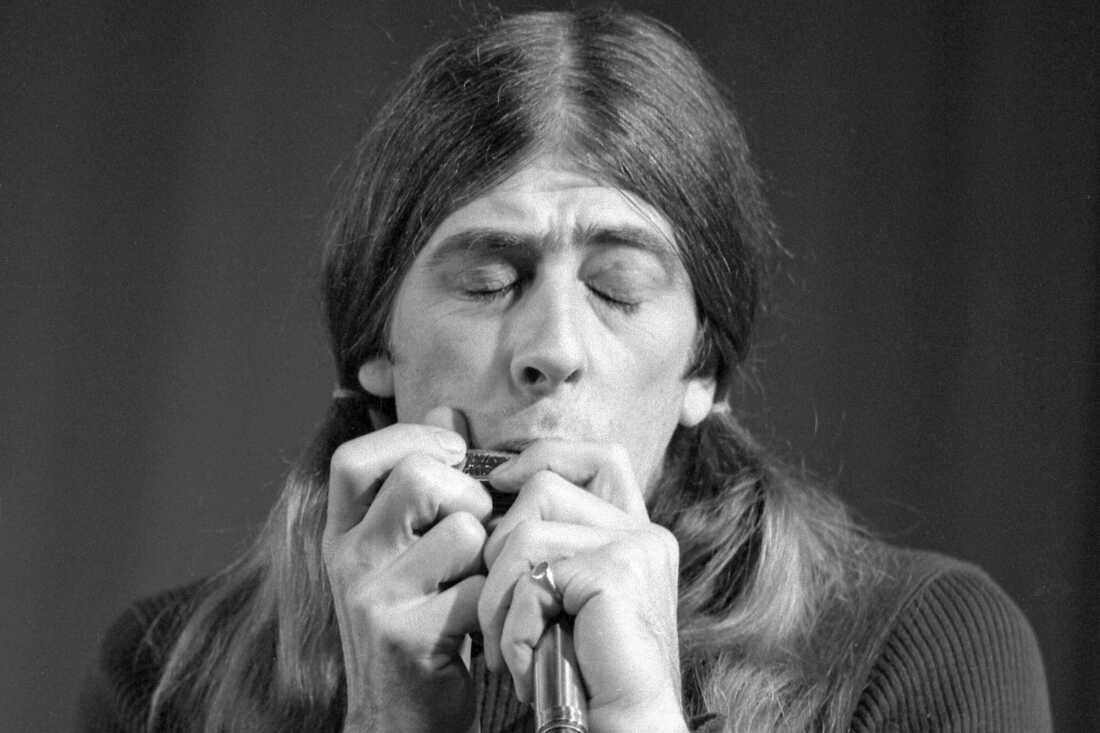
British Blues pioneer John Mayall performs with this band the Bluesbreakers at the Deutsche Museum in Munich, West Germany, on Jan. 21, 1970.
Claus Hampel/AP
hide caption
toggle caption
Claus Hampel/AP
Clapton, interviewed for a BBC documentary on Mayall in 2003, confessed that “to a certain extent I have used his hospitality, used his band and his reputation to launch my own career,”
“I think he is a great musician. I just admire and respect his steadfastness,” Clapton added.
Mayall encouraged Clapton to sing and urged Green to develop his song-writing abilities.
Mick Taylor, who succeeded Green as a Bluesbreaker in the late 1960s, valued the wide latitude which Mayall allowed his soloists.
“You’d have complete freedom to do whatever you wanted,” Taylor said in a 1979 interview with writer Jas Obrecht. “You could make as many mistakes as you wanted, too.”
Mayall’s 1968 album “Blues from Laurel Canyon” signaled a permanent move to the United States and a change in direction. He disbanded the Bluesbreakers and worked with two guitars and drums.
The following year he released “The Turning Point,” arguably his most successful release, with an atypical four-man acoustic lineup including Mark and Almond. “Room to Move,” a song from that album, was a frequent audience favorite in Mayall’s later career.
The 1970s found Mayall at low ebb personally, but still touring and doing more than 100 shows a year.
“Throughout the ’70s, I performed most of my shows drunk,” Mayall said in an interview with Dan Ouellette for Down Beat magazine in 1990. One consequence was an attempt to jump from a balcony into a swimming pool that missed — shattering one of Mayall’s heels and leaving him with a limp.
“That was one incident that got me to stop drinking,” Mayall said.
In 1982, he reformed the Bluesbreakers, recruiting Taylor and McVie, but after two years the personnel changed again. In 2008, Mayall announced that he was permanently retiring the Bluesbreaker name, and in 2013 he was leading the John Mayall Band.
Mayall and his second wife, Maggie, divorced in 2011 after 30 years of marriage. They had two sons.



Lonnie Bunch III is the 14th Secretary of the Smithsonian. He’s pictured above in September 2017.
J. Scott Applewhite/AP
hide caption
toggle caption
J. Scott Applewhite/AP
In a memo addressed to staffers sent Tuesday, the secretary of the Smithsonian, Lonnie G. Bunch III, defended the institution after the White House issued a 162-page report that characterizes the National Museum of American History as a place which has become “subject to institutional capture by a radical, activist ideology that is fundamentally opposed to telling the noble, honest story of the great country we know and love.”
In his email, which NPR has obtained, Bunch wrote in part: “While there will always be room for improvement, this report is not a fair characterization of the work and totality of the National Museum of American History. At the Smithsonian, our work is driven by scholarship, accuracy and an uncompromising commitment to tell the fullness of America’s story. As public servants and the keepers of this institution, we are charged with helping a nation find understanding, hope and clarity and as part of that duty, we are dedicated to excellence, reflection and growth.”

He continued: “We remain focused on what grounds us: a steadfast commitment to scholarship, nonpartisanship, independence, accuracy and integrity. For nearly 180 years, the Smithsonian has worked alongside partners across government — from the White House to Congress to our governing Board of Regents — guided by our enduring mission to increase and diffuse knowledge. That purpose remains: to pursue knowledge with rigor and to serve the American public with clarity and care.”
The White House report was issued on July 4 by the Domestic Policy Council under the title “Saving America’s Story: How Ideological Capture at the Smithsonian Institution’s National Museum of American History Erases Our Heritage.”

The council faults the National Museum of American History on a multitude of fronts, saying it underemphasized the Founding Fathers and early colonial and Revolutionary history; was not sufficiently celebratory of the country’s 250th anniversary; and that it engaged in “anti-white,” “illegal alien” and transgender activism.
It also accuses the museum of trying to “indoctrinate” teachers and students through its exhibitions, programming and teaching resources.
In the report, the council also specifically criticizes museum director Anthea Hartig, who has led the National Museum of American History since 2019 and is concurrently the president of the Organization of American Historians, calling her “an activist advancing an ideological agenda contradictory to the museum’s founding purpose of fostering patriotism.”
The Trump administration has made the Smithsonian museums one of its primary targets in its efforts to reshape cultural narratives to align with its viewpoints. In August 2025, the White House requested a “comprehensive internal review” of eight Smithsonian museums, including the National Museum of American History, following an executive order issued by President Trump in March 2025 in which he called for the removal of “improper ideology” from the Smithsonian’s offerings.
According to the Smithsonian’s charter, all of its 21 museums, 14 education and research centers, and the National Zoo are meant to be run independently of the federal government. The Smithsonian is overseen by Bunch and a board of regents, which includes Vice President Vance, Supreme Court Chief Justice John Roberts and other members appointed by Congress.
In an interview with NBC’s Meet the Press on Sunday, Bunch spoke about the Smithsonian’s 250th anniversary special exhibition at the Smithsonian Castle, which is called “American Aspirations.”
He told NBC: “It’s really important for people to understand that America is much an ideal as it is a place, that it’s a series of aspirations that have really shaped who this country is. And so for me, what is so powerful is to say, ‘Let us honor the words of Thomas Jefferson and the founders, but let us use those to challenge us to be better.’”
Jennifer Vanasco edited this story.

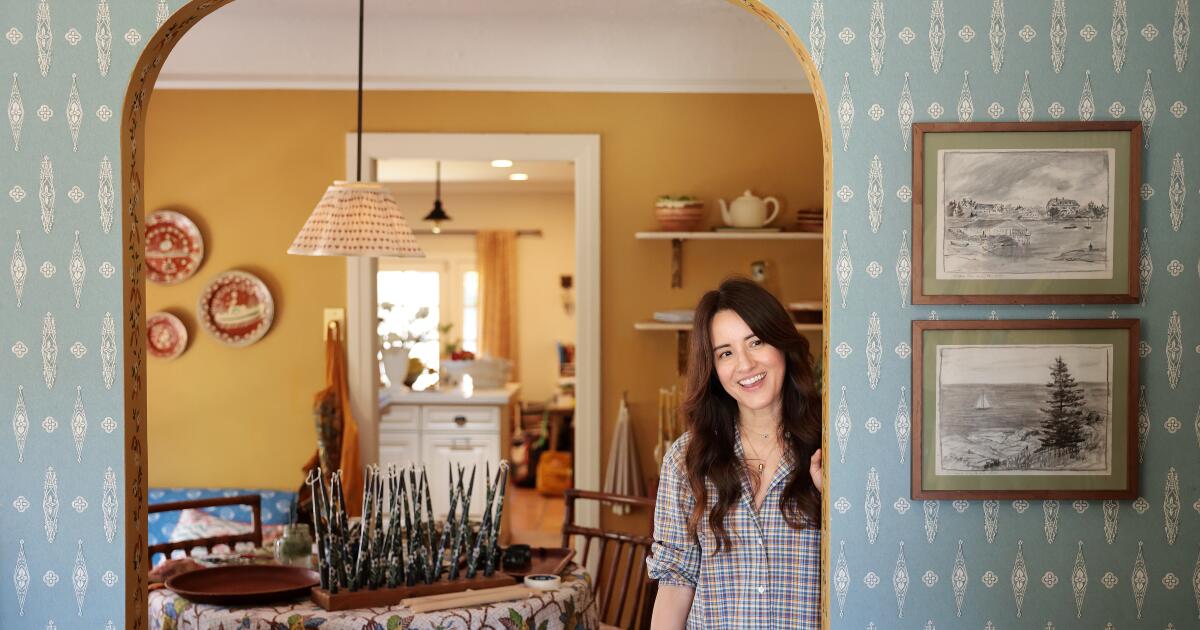
It was after the death of her son, Laith, that Esme Saleh decided to become a folk artist.
She had always been creative, experimenting with watercolors and learning to sew and embroider at a young age.
“I had a creative inkling,” she said, “but I never pursued it.”
Everything changed on Aug. 17, 2013.
In this series, we highlight independent makers and artists, from glassblowers to fiber artists, who are creating original products in and around Los Angeles.
When Saleh was nine months pregnant, she woke up with stomach pains and presumed she was in labor. She and her husband, Nasim, immediately went to the hospital, where doctors checked her and put the baby on a heart monitor. Saleh’s blood pressure was high, however, and the baby’s heart rate kept dropping. After about an hour, his heartbeat stopped. Doctors rushed her in for an emergency C-section, but it was too late. Laith did not survive.
Saleh lost a tremendous amount of blood and developed postpartum HELLP syndrome, a dangerous form of preeclampsia, but doctors were able to stabilize her.
When she woke up, the first thing she asked was, “How’s my baby?”

After losing her son in 2013, Esme Saleh left her job as a television producer. Since then, she has sold her hand-painted candles to local designers in Los Angeles and to LVMH in Paris.
“Aug. 17, 2013, was the most difficult day of my life, and Aug. 22 was the second most difficult, the day we drove home with an empty car seat,” she said of her and her husband’s new reality.
They named their son Laith Finn Saleh.
“His first name means ‘lion’ in Arabic. His middle name is an ode to Huckleberry Finn — sharp wit, kind heart, strong moral compass — all the attributes he’s imparted on us in spirit,” said Saleh, 45.
After such a devastating loss, she found it difficult to trust the world again. “It was hard to trust anything,” she said. “The medical system. Myself. It made me realize the fragility of bringing anything to life. We take so much for granted.”
So after years of working as a television producer, Saleh left broadcast journalism and leaned into her creative spirit.
She grew up in San Diego. Her mother was raised on a farm in Mexico, and her father moved from Tijuana to Los Angeles to be near her mother, who started working for a family in Sherman Oaks at 16. They eventually settled in San Diego, where Saleh’s father, now a church deacon, worked as a car salesman.


“The word Mystic has also become a driving force of what this journey means to me,” Saleh says. “A magical, otherworldly journey that has led me to some beautiful friendships, projects and unlimited well of curiosity. When I paint each pair of candles, it feels like I’m imparting a piece of that magic.”
“He always wanted to be a weatherman on TV,” she said, explaining how he hoped to get his big break on television by doing a weather report from the car lot.
Saleh wanted to be a broadcast journalist as her father had. After graduating from San Diego State, she interned in the sports department at CBS affiliate KFMB-TV although she didn’t know much about sports. She enjoyed sharing information with people, learned how to write plays of the week and felt she had found the right career.
But during a summer class at Mesa College, she started to think journalism might not be for her.


Saleh’s home is filled with her artwork. “My home expresses a lot of the things that I do,” she says. “If it works here, then I feel like I can put it out in the world.”
“I’m an empath — a sensitive soul — so when I was reading news about death and destruction, my eyes could not lie,” she said. Her professor told her, “This may not be your thing.” But when she arranged flowers on camera, she really came alive. She decided to work behind the scenes as a producer.
Her professor helped her get her first network news job in 2003, and she moved to Los Angeles, working on hard news and entertainment coverage.
After losing Laith a decade later, she couldn’t keep doing red-carpet interviews and acting like everything was fine. “It all felt so different, superficial and hard,” she said. “I felt like there was a bigger purpose out there for me. It’s in the small things that we find the big things.”
She started by painting folk art-inspired invitations for a friend’s baby shower. She painted delicate flowers, oranges and leaves on glass, leather and even lampshades. She created a logo. “I was just trying to say yes to things that were really scary,” she said. “Laith gave me the courage to do that.”

“I was just trying to get out of hole,” Saleh says of taking up painting after her son died.
Her first son, she said, became “a catalyst for painting.”
Then, at the first Thanksgiving during the COVID-19 pandemic when people could gather again, she had a light-bulb moment. “I was setting the table and didn’t have flowers or anything to add to decorate, so I thought, ‘I have these candles. I’m going to paint them and make them fancy,’ ” she said.
Her guests were impressed.
As time went on, painting taper candles helped her find joy again, and others noticed too.
“The one thing I hear when people pick up a pair of my candles is, ‘This makes me so happy. It makes me feel like there’s life here,’ ” she said.
1

2

3

1. Saleh sometimes leads painting workshops where participants can decorate items like ornaments and lampshades.
2. Leather napkin rings Saleh has painted for Nathan Turner. 3. Saleh’s hand-painted candles retail for approximately $42 to $50.
One of the hardest parts of losing a child “is that you’re not just grieving the person, you’re grieving the future you imagined with them,” said Chicago-based grief specialist Carla Harvey. “A lifetime of love suddenly has nowhere to go. Creating art doesn’t erase grief, but it can become a way to carry it.”
Saleh created her brand Mystic by Esme in 2021, but it took her some time before she could gather the courage to try to sell them.
When she brought a shoebox full of samples to Nickey Kehoe, the L.A. store agreed to carry her candles. “I was beside myself,” Saleh said.
“Her candles were absolutely beautiful, and she had a fantastic spirit that made selling them a no-brainer,” said interior designer Todd Nickey, co-founder of Nickey Kehoe.

Saleh gets a surprise kiss from her dog Olive while painting candles at her dining room table.
Saleh viewed her new side project as a way to earn extra money for piano lessons for her 11-year-old son Linus, who is an entrepreneur like his mother. “I felt proud painting the candles while he was in lessons in the next room,” she said. “It became this circular economy, and it led to bigger opportunities for me.”
Last year, luxury conglomerate LVMH commissioned Saleh to paint 465 pairs of candles, or 930 candles in total, for its Chaumet jewelry brand. The collection was unveiled at an elaborate event at the Abbaye des Vaux de Cernay, just outside Paris.
“It was fun,” Saleh said about the process, which took six months from conception to delivery. “I felt like I was dressing my candles up for a party.”
Always a hard worker, which she attributes to being a first-generation child of immigrant parents, Saleh has now created a candle collection for Pierce and Ward in Los Feliz, leather napkin holders for interior designer Nathan Turner and pomegranate wrapping paper for Olive Ateliers. The candles retail between $42 to $50 for a pair, and recently, she developed a handsome pewter candle shaver that will be released in the winter.

Her dining room can sometimes feel like “an assembly line,” Saleh says.

Saleh holds a pair of candles she has embellished with florals.
Occasionally, she leads painting workshops, and she loves helping others tap into their creativity. The most meaningful one for her was an ornament workshop attended by several victims of the 2025 Los Angeles wildfires. “Without saying anything, we understood each other,” she said. “I understood that they were trying to create memories.”
Saleh knows what it means for things not to last — “impermanence,” she calls it — whether it is homes, candles or life itself.
She paints every day in the art-filled dining room of her home (unless it’s Little League season), surrounded by her family, candles and her two dogs, Lennon and Olive. ”Painting is like meditation,” she said. “You can sit in your dining room and tune everything out and just be in the moment.”

Even the family’s summer bucket list receives an artistic flourish.

An arch inside Saleh’s home receives a personalized touch.
She knows painting candles isn’t new, but she believes her motivation and the care she puts into each candle makes them special beyond their looks.
She has learned to look at the world that way, that painting in her dining room has offered her healing and joy, that she can trust herself and her body, that continuing to be inspired by her two boys — “one in spirit and the other here on Earth” — means that Laith will always be with her.
Many people think healing means moving on, said grief specialist Harvey, but “it’s really about finding ways to move forward while keeping the people we love woven into our lives. That’s what I see in her candles, not an ending, but an ongoing relationship with her son.”
“I feel like my son is channeling through this medium,” Saleh said, her voice breaking as she painted a taper. “He’s whispering to me, ‘Mom, this is your path.’ That has been my driving force. We’re going to grow this together.”
Lifestyle
Terry Tempest Williams on why women with big ideas get labeled ‘crazy’ : Wild Card with Rachel Martin
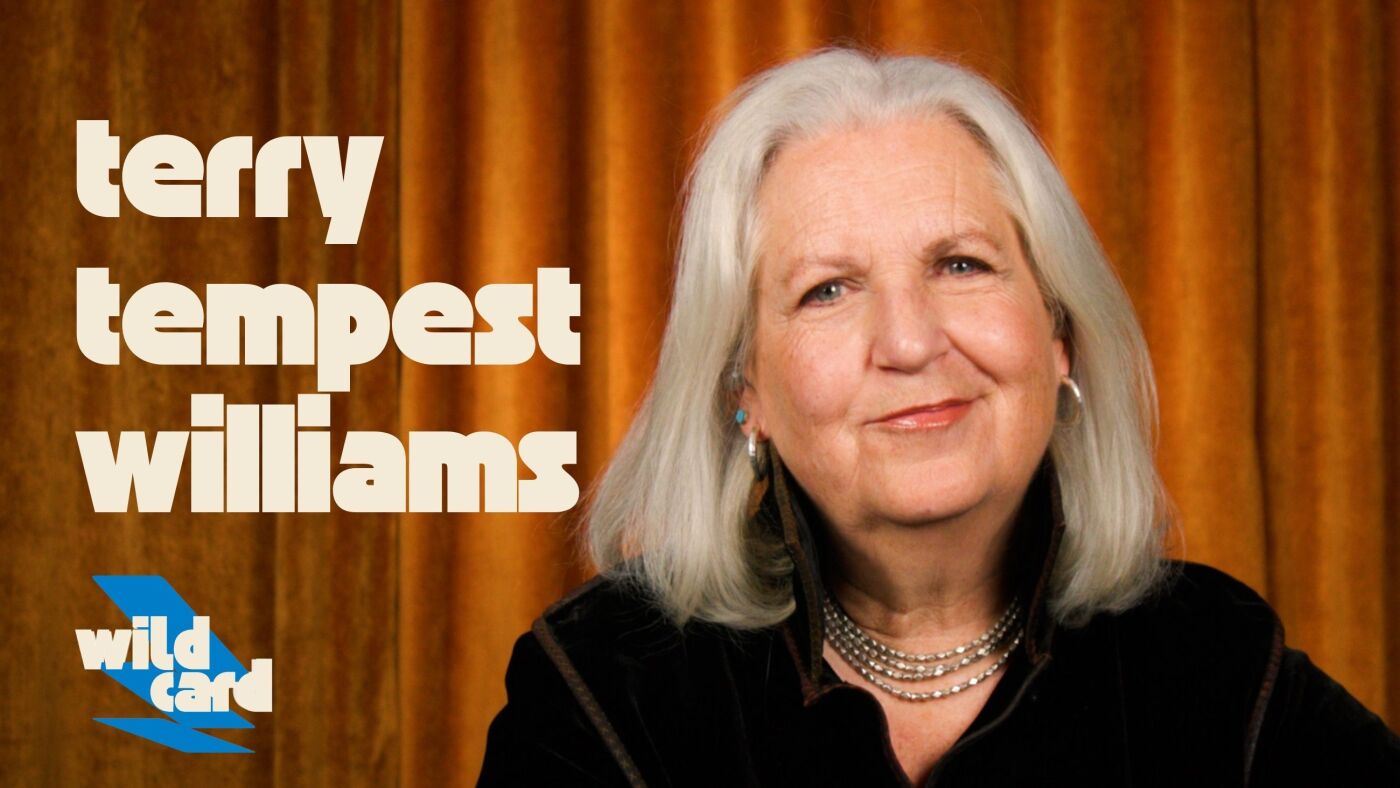
A note from Wild Card host Rachel Martin: I met Terry Tempest Williams about 25 years ago at a writer’s conference in Yosemite Valley. I was a young reporter who was there to do a story about how literature was addressing climate change and she made such a huge impression on me. I had never heard someone talk about the natural world the way Terry did and she had a spiritual depth I hadn’t encountered in my life at that point.
To this day, Terry’s writing always reorients me towards what is good, what is beautiful, and what is true. Her newest book is called “The Glorians.”
-

 Oklahoma3 minutes ago
Every Oklahoma State Cowboys’ College Football 27 Preseason Player Rating
-

 Oregon8 minutes ago
Illicit massage businesses shut down in Washington County
-
Pennsylvania15 minutes ago
Man arrested over alleged antisemitic threats to Gov. Josh Shapiro | The Jerusalem Post
-

 Rhode Island18 minutes ago
Aquatic Weed Treatments Planned for 2 RI Ponds, 1 Lake
-

 South-Carolina23 minutes ago
South Carolina Lottery Pick 3, Pick 4 results for July 9, 2026
-

 South Dakota30 minutes ago
Iverson Ford Welcomes the 2027 Ford Expedition to Drivers Across Eastern South Dakota
-

 Tennessee33 minutes ago
Tennessee Highway Patrol holds open house at Jackson district office
-

 Texas45 minutes ago
Longhorns Daily News: Texas coach Steve Sarkisian named among Dodd Trophy watch list

