Connect with us

Midwest

Negro League stadiums, including historical Rickwood Field, you can visit

Published

on

Negro League stadiums, including historical Rickwood Field, you can visit

The Negro National League was founded in 1920 during a time of segregation in the United States. 

The league gained traction through the 1930s and ’40s. In 1944, Jackie Robinson, who played for the Negro League, became the first player in the modern era to join MLB, playing for the Brooklyn Dodgers. 

After that, many more stars from the Negro League were invited to MLB.

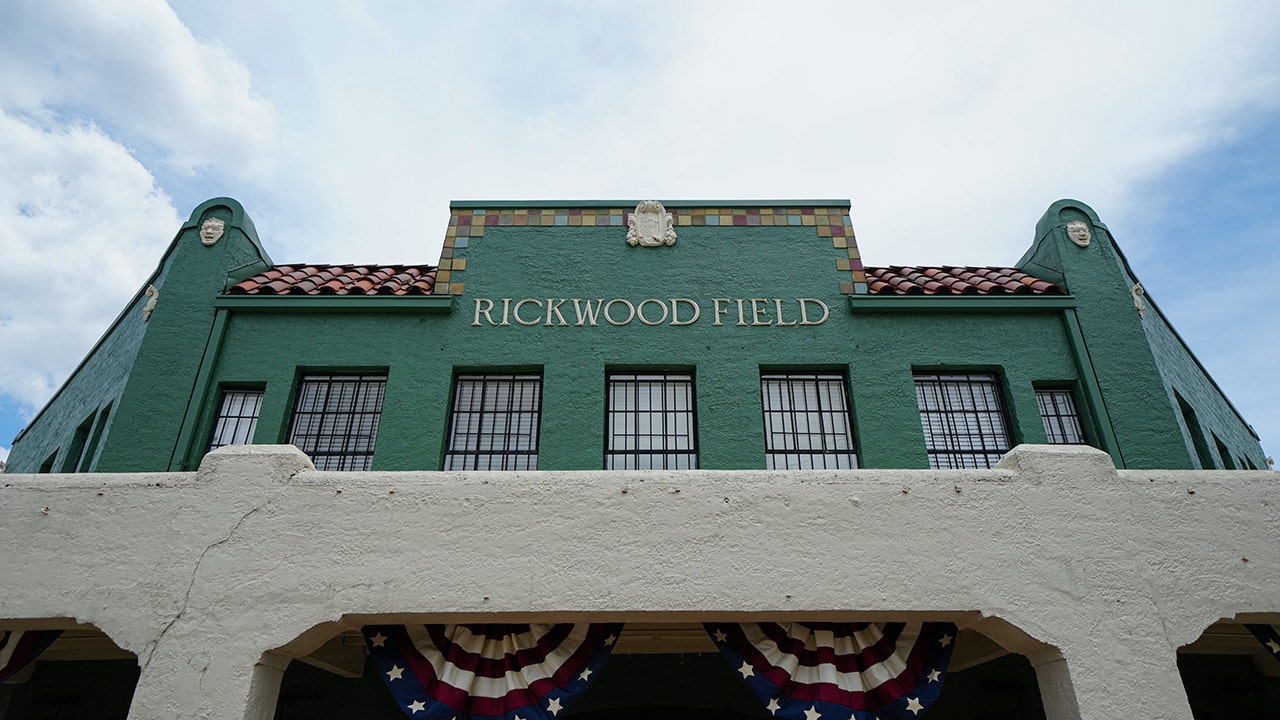
Rickwood Field is one of few fields used in the Negro leagues that are still functional today. (Daniel Shirey/MLB Photos via Getty Images)

LEGENDS OF THE DIAMOND WHO WILL NEVER BE FORGOTTEN IN BASEBALL HISTORY

Advertisement

Today, many of the stadiums used in the Negro League no longer exist, though there are some that have remained. Numerous fields have been renovated and are still used today for local events. 

One field that is still in use is Rickwood Field in Birmingham, Alabama. This field was home to the Birmingham Black Barons, the team Willie Mays, who died on June 18, 2024, played on before joining the New York Giants.

Rickwood Field is the oldest professional ballpark in the United States, according to the Associated Press.

HISTORY OF MLB: FROM EARLY BASEBALL BEGINNINGS TO MONUMENTAL MOMENTS

Read on to learn about the stadiums around the country that used to be home fields of teams in the Negro leagues.

Advertisement
  1. Downs Field – Austin, Texas
  2. Hamtramck Stadium – Hamtramck, Michigan
  3. J.P. Small Stadium – Jacksonville, Florida
  4. Rickwood Field – Birmingham, Alabama
  5. Bush Stadium – Indianapolis
  6. League Park – Cleveland
  7. Hinchliffe Stadium – Paterson, New Jersey

1. Downs Field – Austin, Texas

Downs Field in Austin, Texas, is currently used by the Huston-Tillotson Rams College baseball team, according to MLB.com. 

The Austin Black Senators called this field their home park beginning in 1927, according to Visit Austin.

Pitcher Satchel Paige was one of many prominent players in the Negro leagues. (Getty Images)

Today, the park is full of murals by local artists that honor the many prominent players, like Willie Wells, Satchel Paige, Buck O’Neil and Smokey Joe Williams, who played baseball on the field, according to Visit Austin.

2. Hamtramck Stadium – Hamtramck, Michigan

This stadium in Hamtramck, Michigan, has gone through changes to bring it to what it is today. 

MEET BASEBALL’S NEW GOAT, JOSH GIBSON, AFTER NEGRO LEAGUES’ STATES ADDED TO MLB

Advertisement

Many thought this stadium had disappeared from existence, but a researcher named Gary Gillette discovered that Hamtramck Stadium had been confused with the nearby Keyworth Stadium, according to MLB.com. 

This stadium was built in the 1930s and was the home field of the Detroit Stars and the Detroit Wolves of the Negro leagues, according to the stadium’s website.

What had become a rotting and weed-infested field is now fully functional once again. The stadium reopened in 2022 after a $3 million rehabilitation, according to the source. 

3. J.P. Small Stadium in Jacksonville, Florida

J.P. Small Stadium, previously known as Durkee Field and Barrs Field, among others, was home to the Jacksonville Red Caps.

NEARLY 100 PAIRS OF BROTHERS IN MLB WHO WERE ALSO TEAMMATES, INCLUDING SOME SETS OF TWINS

Advertisement

The field was renovated multiple times over the years. Since 1932, it has been owned by the city. In 2006, a Negro leagues exhibit was added to the property. 

Today, the stadium is used for baseball games as the home field of Stanton College Prep and Edward Waters University. The stadium underwent renovations in 2024, slated to be finished in July.

4. Rickwood Field – Birmingham, Alabama

Rickwood Field first opened in Birmingham, Alabama, in 1910.

Rickwood Field is the oldest baseball field in the United States. (Universal Images Group via Getty Images)

For many years, Rickwood was the home field of the Birmingham Black Barons, where players like Paige, Mays and many others, such as Dan Bankhead, the first African-American pitcher to play in MLB, took the field.

Advertisement

The final Negro League World Series was played on this field in October 1948, according to MLB.

Rickwood Field is still operational today.

5. Bush Stadium – Indianapolis

Bush Stadium in Indianapolis first opened its doors in 1931. Although the field is no longer a setting for baseball games, a unique renovation allowed tenants to live on the property full of history. 

This stadium, which was called Perry Field when it opened, was the home field of the Indianopolis ABC’s and Clowns during the 1930s and 1940s, according to MLB.com. 

After many years of no use, Stadium Lofts opened in 2013. The lofts surround the historic field, providing views for residents of the field below.

Advertisement

6. League Park – Cleveland

Cleveland is where you can find League Park, the backdrop of the Cleveland Buckeyes’ 1945 Negro World Series win.  

MLB STADIUMS ACROSS US: HOW MANY BALLPARKS HAVE YOU VISITED?

When the ballpark was built in 1891, the Cleveland Spiders and then the Blues played there, according to MLB.com. 

This stadium is still in use today, hosting local baseball games and other events. Here you can also find the Heritage Baseball Museum. 

7. Hinchliffe Stadium – Paterson, New Jersey

Head over to Hinchliffe Stadium in New Jersey to see the former home field of the New York Black Yankees.

Advertisement


The New York Cubans and Newark Eagles were other teams who played there.

Hinchcliffe Stadium began its most recent renovations in 2021. (Bruce Bennett/Getty Images)

The stadium has been renovated since its original construction in 1932 and is now the home field of the New Jersey Jackals. The team is part of the Frontier League, an MLB Partner League, according to MLB.

The Jackals played their first game at the stadium in 2023.

Advertisement

Read the full article from Here

Continue Reading
Click to comment

Leave a Reply

Your email address will not be published. Required fields are marked *

This site uses Akismet to reduce spam. Learn how your comment data is processed.

Detroit, MI

Best barbershop in Metro Detroit: Finalists for this year’s Vote 4 The Best

Published

on

Best barbershop in Metro Detroit: Finalists for this year’s Vote 4 The Best


Voting on finalists open from June 22 through July 20

No description found

What is the barbershop in Metro Detroit? We’ve got our finalists for this year’s Vote 4 The Best category for best barbershop.

Here are this year’s finalists:

  • Andino’s Barbershop in St. Clair Shores

  • Bennies Barbershop in Trenton

  • Chivalry Barber Co. in Royal Oak

  • The Garage Cuts and Coffee in Plymouth

  • Walter T’s Grooming Company in Waterford Township

We received more than 16,700 nominations across our 80 Vote 4 The Best categories this year. Each category was then narrowed down to five finalists.

Advertisement

Click here to view the full list of finalists.

Now that nominations are over, voting on finalists can begin. Voting is open from June 22 through July 20, and you can vote for each category once per day during that time.

Click here to vote for finalists in all 80 categories.


Source link

Continue Reading

Milwaukee, WI

South Milwaukee homeowner fights city order to remove year-round skeleton display

Published

on

South Milwaukee homeowner fights city order to remove year-round skeleton display


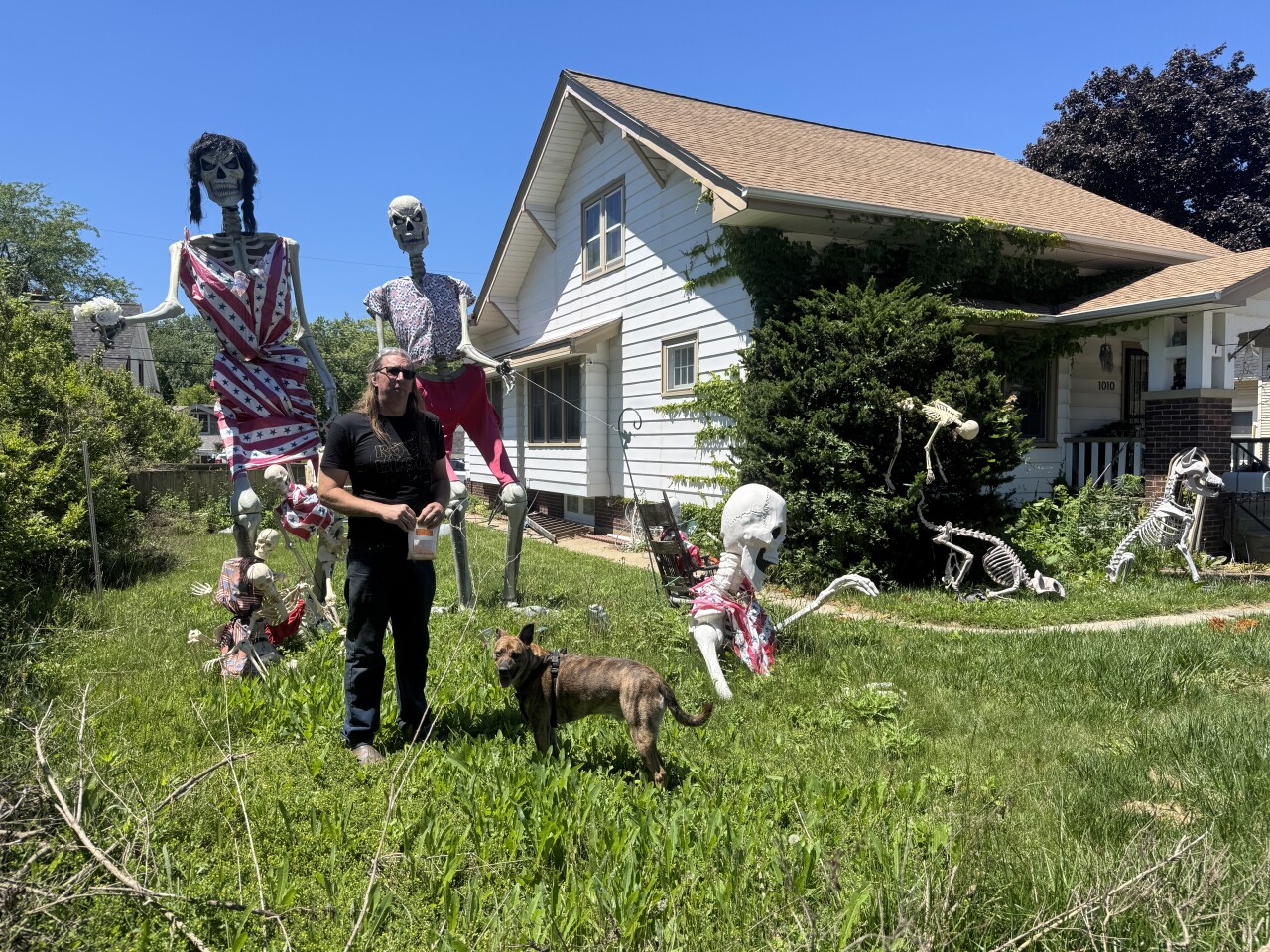
SOUTH MILWAUKEE, Wis. — A South Milwaukee homeowner is pushing back after the city ordered him to take down his year-round skeleton display, calling it a violation of property maintenance codes.

Sean Oster and his wife have maintained the display — featuring skeletons named Hector and Henrietta along with other decorations— for nearly two years, dressing them up for holidays, sports events, and other occasions.

Mike Beiermeister

The display in Sean’s front yard.

The display has drawn attention from neighbors and passersby, with some saying it has become part of the neighborhood’s character.

Advertisement

Watch: South Milwaukee homeowner fights city order to remove year-round skeleton display

South Milwaukee homeowner fights city order to remove year-round skeleton display

“It’s like an expression of the owner’s passion… and I think it’s cool they can use their lawn that way,” neighbor Jeremy Payment said.

Advertisement
Jeremy Payment

Mike Beiermeister

Jeremy Payment lives in the neighborhood and enjoys the display.

Last month, Oster received a letter from the city of South Milwaukee describing the skeletons as Halloween decorations being displayed outside the appropriate time of year and ordering him to remove them by July 7.

Under the city’s property maintenance code, yards must be kept free of anything considered an “unreasonable blighting influence,” which the city says can include displays left up out of season. The notice also flagged an inoperable vehicle on the property. Each violation could result in fines of up to $500 per day if not corrected by the deadline.

Oster says he understands part of the city’s concern.

“They have a few points… I’ve got a couple collector cars… I understand those shouldn’t be out,” Oster said.

Advertisement
Sean in his yard

Mike Beiermeister

Sean in his yard

He plans to move the cars into the garage and clean up the yard, but says the skeletons are staying.

“I don’t think it’s hurting anybody. It’s literally a victimless crime,” Oster said.

Oster also had a message for whoever filed the complaint.

“Live with it… more people like it than hate it. And if we’re enforcing this, then we should go around and take down Christmas lights that are up year-round,” Oster said.

Advertisement

The city administrator did not respond to a request for comment.

This story was reported on-air by a journalist and has been converted to this platform with the assistance of AI. Our editorial team verifies all reporting on all platforms for fairness and accuracy.


Let’s talk:

Hey there! At TMJ4 News, we’re all about listening to our audience and tackling the stuff that really matters to you. Got a story idea, tip, or just want to chat about this piece? Hit us up using the form below. For more ways to get in touch, head over to tmj4.com/tips.


It’s about time to watch on your time. Stream local news and weather 24/7 by searching for “TMJ4” on your device.

Advertisement

Available for download on Roku, Apple TV, Amazon Fire TV, and more.


Report a typo or error // Submit a news tip


Source link

Continue Reading

Minneapolis, MN

After raising money for immigrant families, Minneapolis adult store asks community for help

Published

on

After raising money for immigrant families, Minneapolis adult store asks community for help


After spending months helping immigrant families weather the economic fallout of federal immigration enforcement operations in the Twin Cities, Smitten Kitten is asking the community for help sustaining itself.

The adult retail store in Minneapolis’ Lyn-Lake neighborhood issued a public plea for community financial support. 

The strain comes after months of directing staff and volunteer time, resources and fundraising efforts toward mutual aid work that supported immigrants during Operation Metro Surge. 

The store became one of the most visible community aid hubs after the federal operation began. Following the killing of Renee Good, Smitten Kitten began collecting groceries, diapers, toilet paper and other essentials. 

Advertisement

“Nothing is going to change unless we’re going to do something,” said Anne Lehman, Smitten Kitten social media manager and mutual aid advisor. 

The store also helped direct efforts toward rent relief for immigrants facing heightened uncertainty and economic hardship. 

“People had been hiding out since October. They’re going to need things like diapers, toilet paper and water.” Lehman said. “We ended up opening our store as a donation drop-off stop.”

Community support quickly exceeded expectations. 

“It felt like every fifteen minutes someone was pulling up in an SUV that just came from Costco,” Lehman said. “As soon as we got it, it would be gone because of how great the need was.”

Advertisement

Lehman said that the attention also created safety concerns for staff and visitors. 

“We had to move where our stuff was because U.S. Immigration and Customs Enforcement had caught on to what we were doing and tried to intimidate us,” said Lehman. 

In response, the store decided to move its operations elsewhere and began to focus on raising money for necessities. According to Lehman, the establishment raised hundreds of thousands of dollars for various needs. 

The operation, in part, ended by mid-February, and federal presence in Minnesota diminished. As things began to wind down, so did cash flow at Smitten Kitten. 

“There were a lot of weeks where we were cutting it close on payroll,” said Lehman. 

Advertisement

In a social media post, Lehman asked the community to come help support the store by asking for donations, asking people to shop at their store or online. 

“We are asking for help, but also all of these things that we’re pouring all of our energy into is not going away,” said Lehman. “If we want to continue doing mutual aid, we have to have a solid foundation of our business as well.”


Source link

Continue Reading
Advertisement

Trending