Nebraska
Walt Radcliffe's friends say lobbyist was part of State Capitol’s ‘fabric' • Nebraska Examiner


LINCOLN — It was 1979, and a college freshman was searching the State Capitol for lobbyist Walt Radcliffe, who was scheduled to speak to young leaders from the University of Nebraska-Lincoln.
Eventually, the freshman, Scott Moore, caught up with Radcliffe, who posed a profane question to the student that was something like, “What the heck am I supposed to say to these kids?”
“I knew right then that this was someone I was going to like,” said Moore, who went on to become a state senator, Nebraska Secretary of State and later, a top executive at Union Pacific.
Stories like that, and many more, circulated across the state as word spread about the death of Radcliffe, 77, on Thursday afternoon.
Work spanned 10 governors
A Lincoln native whose work spanned 10 governors, Radcliffe was the undisputed dean of the statehouse lobbying corps. He had his own padded bench in the Capitol Rotunda.
His firm, Radcliffe Gilbertson & Brady, annually ranked among the state’s top in annual revenue.
He also served as a valuable — and engaging — font of institutional knowledge about the Legislature for lawmakers and governors as such knowledge was disappearing due to term limits.
His storytelling was legendary, as were his counsel and history lessons for lawmakers and others.
“He really cared about the institution,” said Patrick O’Donnell, the former clerk of the Legislature and a long-time friend who met Radcliffe in a UNL fraternity. “The Legislature had a big loss today.”
“Nobody knew the legislative process better than him,” said Lynn Rex, executive director League of Nebraska Municipalities. She said Radcliffe was a mentor to her and many other lobbyists.
Former State Sen. John Stinner, who chaired the budget-writing Appropriations Committee, said Radcliffe once gave him valuable advice on how to tap into a state health care fund to help close a monumental $1 billion shortfall in the budget.
“He was extremely helpful in many instances,” Stinner said. “I’m going to miss him.”
Part of the place
U.S. Rep. Mike Flood, R-Neb., a former speaker of the Legislature, said “people probably think we were too close to Walt as a lobbyist.”

“But he was bigger than a lobbyist,” Flood said. “He was just part of the fabric of the Legislature.”
A graduate of UNL and the NU College of Law, Radcliffe liked to point out that he worked only a couple of miles from where he grew up.
His first jobs at the Capitol were as a legislative page and a proofreader. He later served as an assistant clerk of the Legislature and as legal counsel to the Judiciary and Banking Committees, and as chief legal counsel in the clerk’s office.
Radcliffe’s lobbying career began in 1977 as a partner with former State Sen. David Tews. He purchased the firm a couple of years later, which became Radcliffe and Associates before the latest name change.
He continued to lobby this spring, though his trips to his bench — which for a time had its own Twitter account — became less frequent.
“He was a people person. That job was his lifeblood,” said Korby Gilbertson, a long-time associate at the firm. “We always knew he’d work until he couldn’t, because that’s what he did.”
Known for NU advocacy
His firm long represented the University of Nebraska, fighting for its programs and funding. But Radcliffe also represented liquor, tobacco and gambling clients because, Gilbertson said, he “wasn’t afraid of a good battle.”

In addition, Radcliffe also lobbied free-of-charge for entities opposed to the death penalty, and, his friends said, was genuinely interested in helping the state, and its institutions, do well.
Moore said that Radcliffe’s greatest skill as a lobbyist was his ability to boil down complicated subjects into simple terms. He worked long hours and was a good listener and storyteller, he said, who didn’t seek to “poach” clients from other lobbyists and was very clear where his clients stood.
”He was a man of integrity,” Moore said. “That’s why people respected him, and why he got so many things passed.”
Former Gov. Dave Heineman described Radcliffe as “very professional, very knowledgeable and a very straightforward lobbyist.”
“I enjoyed working with him,” Heineman said.
Petition work got him in trouble
Radcliffe briefly got in trouble in 1986, when he was indicted for hiring and paying petition circulators seeking to get an issue on the statewide ballot to allow a state lottery. But the charge was dismissed on appeal. Paying petition circulators is now legal and commonplace in the state.

Radcliffe received a liver transplant in 1999, but in recent years battled other health issues. Gilbertson said he entered hospice care on Thursday morning after battling an infection for several days. He died hours later from kidney failure and other health issues.
Flood said he spent many hours in Radcliffe’s office across the street from the Capitol as a young state senator and later as speaker, listening and learning about past lawmakers and speakers.
“It wasn’t like he was telling me what to do in a certain situation, but he’d say, ‘We had this same problem, and this is what a past speaker did,’ and how it worked or didn’t work,” Flood said.
“While he was an advocate, he wanted the Legislature to look good, too.”
Funeral arrangements are pending.
YOU MAKE OUR WORK POSSIBLE.



NEBRASKA CITY, Neb. (KOLN) – A piece of Underground Railroad history is reopening on Juneteenth after severe flooding forced it to close seven years ago.
The Mayhew Cabin offered shelter to people escaping slavery before the Civil War. Visitors can now walk through the same doors they did.
Family history connects to cabin
Darryl Hogan, president of the Mayhew Cabin Foundation, shares how his family escaped slavery in 1859.
“There was a slaveholder who held my third great-grandmother and a few other of the escaped slaves who had passed away, and they were going to be sold as property,” Hogan said from Canada. “So it was almost, in either a death sentence or a worse imprisonment than they had already had.”
The Mayhew family and abolitionist John Brown offered strangers a chance for freedom.
“En route, one of the enslaved people was pregnant and gave birth. So they are affectionately known as the 12 who passed through here,” said Doug Kreifels, board treasurer.
Cabin’s history dates to 1855
The Mayhew Cabin is one of Nebraska’s oldest structures, built in 1855 as the home of Allen B. Mayhew and his wife Barbara Ann. Barbara’s brother, John Kagi, lived there briefly as well.
Kagi helped abolitionist John Brown lead the enslaved people from Missouri to the cabin, as they escaped to Canada.
Flood damage closed site for seven years
Kreifels grew up learning about the cabin’s history.
“I remember when I went through that cabin and that cave and what an impact it had on me,” he said.
A flood in 2019 closed the site for seven years.
“And not only did it reach… as high as this overfill. I mean, it came up over the bank and flooded into the museum as well and caused some damage there,” Kreifels said.
Community effort restores cabin
The Mayhew Cabin Foundation restructured its board and used community grants to recruit Butch Bovier, a historical craftsman.
“Collectively, I think we bring a lot of skill sets together and goodwill,” said Robert Nelson, vice president of the board.
“They bring their dreams to me and I make them happen,” Bovier said.
Bovier helped restore the cabin.
“And that was kind of neat because what we did 20 years ago held up very well. In fact, it held up a lot better than we thought,” he said.
The team worked on the cottonwood logs.
“The logs are this wide, you don’t replace it because that much is bad. So we used a modern product to do some of that. In some cases, we just scraped it smooth,” Bovier said.
The team partially restored John Brown’s Cave. The cabin was moved to its current location in the 1930s from its original site. The owner at the time dug a tunnel-like system that leads to the ravine.
“It’s a tool that we use to help educate everyone who might have an interest in understanding what it might have been like for an enslaved person seeking freedom,” Kreifels said.
Volunteers make reopening possible
The Mayhew Cabin and John Brown’s Cave would not be able to open without the hard work of volunteers. For months, volunteers cleaned up the site and helped Bovier fix the cabin logs, cave and roof. One of them is Jason Hein, who moved to Nebraska City from California. Hein was looking for an opportunity to volunteer in the community and stumbled upon a Facebook post asking for extra hands to help at the Mayhew Cabin. His workplace Burr Farms donated machinery and services toward the efforts.
“You know, we don’t want things falling off the map. We want it to be there for future generations,” Hein said.
“And since that weekend, I’ve been out here Saturdays and Sundays every week. If there isn’t a whole bunch of hands trying to get something done, it’s not going to get done,” he said.
Volunteers have been preparing to reopen the site for more than three months.
“So, I mean, we’ve just literally been here, you know, cutting down trees or trimming trees and then people kind of walking by and seeing and asking, hey, what are you up to?” Nelson said.
The cabin will reopen on Juneteenth.
“And, it was just a matter of this is something that we need to do as a community. Let’s just do it and, make the world a little bit better place,” Hogan said.
Lane Trail and ‘Bloody Kansas’
The Mayhew Cabin was part of the Lane Trail on the Underground Railroad. At the time, the Kansas-Nebraska Act was formed and pro-slavery and abolitionists fought to sway the public toward their beliefs, giving it the nickname “Bloody Kansas.” Abolitionists in southeast Nebraska aided these efforts and helped slaves escape on the Lane Trail.
“It’s an incredible building, but it’s kind of the launch. It was seen as the southern terminus of the Army of the North marching into Kansas, but then also kind of the beginning of the Underground Railroad,” Nelson said.
Nelson, a former Omaha World Herald journalist, researched the Lane Trail extensively. He grew up in Falls City, Nebraska and found out his family has a history of aiding abolitionists.
“The successful fight to stop (slavery), based in Nebraska, or by the people who are involved with this Underground Railroad, is the reason the South secedes. They can’t expand anymore. You know, putting up the wall of Kansas really is what starts the Civil War. So that idea that’s that that’s the Civil War before the Civil War, and Nebraska played a big part of it. I think is a story that’s lost,” Nelson said.
Work remains on the site. The nonprofit wants to repair the museum building and other historic buildings on the property.
Juneteenth event details
A Juneteenth event starts at 7 p.m. Friday at the Mayhew Cabin in Nebraska City. People will have the opportunity to hear speeches from Butch Bovier, Robert Nelson and Darryl Hogan. The event is open to the public and free. There is outdoor seating, but people are welcome to bring lawn chairs. Live music will be provided by West Street Wranglers.
Refreshments will be served at the Hidden Falls Cave Event Center. The Mayhew Cabin is located at 2012 4th Corso in Nebraska City. Questions can be directed to Doug Kreifels at (402) 209-4060.
Click here to subscribe to our 10/11 NOW daily digest and breaking news alerts delivered straight to your email inbox.
Copyright 2026 KOLN. All rights reserved.
Nebraska
Nebraska’s governor doesn’t carry a state-issued phone. Critics call it an abuse of state disclosure laws. – Flatwater Free Press

For more than two years, Nebraska Gov. Jim Pillen did not make or take a single call on his cellphone while on the clock as the state’s chief executive — at least none that there is any record of, according to his office’s top attorney.
After the Flatwater Free Press filed a public records request for call logs from Pillen’s cellphone dating back to September 2023, the governor’s general counsel said no such records exist.
“Governor Pillen does not have a state-issued mobile phone,” the lawyer, Michael J. Donley, said in an email earlier this month — more than four months after Flatwater filed the request.
The revelation marks Pillen’s latest step to shield his communications from public view. He broke with more than 30 years of gubernatorial practice by not releasing a public schedule in March 2023, just two months into his first term. And in August of that year, his office refused to release four of his emails in response to a public records request, citing “executive privilege” — a justification that does not exist in Nebraska’s public records laws.
“I don’t email, I don’t text,” the first-term Republican governor said in response to criticism from Democratic lawmakers over his refusal to release the emails. “Texting when it’s for anything other than logistics, I don’t do.”
His decision not to carry a state-owned cellphone makes him the first governor in at least 20 years not to do so — and, advocates say, amounts to an attempt to circumvent state law.
“It’s absurd to think that simply moving his business to a private cellphone means that none of those records are available to the public,” said Gavin Geis, the director of Common Cause Nebraska, a transparency-in-government watchdog group. “That’s just an abuse of the whole public records process.”
Flatwater sought the records after the online news outlet the Nebraska Examiner reported in January that Pillen had steered the Nebraska Department of Economic Development to award a $2.5 million no-bid emergency contract to a lobbyist who had joined Pillen on state trips to South Korea and Japan.
Flatwater also requested emails between Pillen’s chief of staff, Dave Lopez, and former state economic development officials, including one who told the Examiner that Lopez had provided input on the state’s contract with Julie Bushell, the lobbyist. That portion of Flatwater’s request, which covered an 11-day period last July, also yielded no records, according to the Governor’s Office.
Under Nebraska law, “all records and documents, regardless of physical form, of or belonging to this state” or local governments are a matter of public record — meaning Nebraskans have the right to examine them, with exceptions allowed for investigative police records, personal information, trade secrets and a host of other sensitive documents. The law does not explicitly say whether records from public officials’ personal devices or private email accounts are subject to the law, but prior attorneys general have held for decades that they are.
Pillen’s office repeatedly claimed that Flatwater’s request sought “a record which does not exist” but declined to elaborate. Laura Strimple, a spokeswoman for the governor, said Pillen’s office “is transparent, follows the law, and has diligently responded to the countless public records requests we receive, including several from your outlet.”
“If you choose to publish this non-story, your outlet will have demonstrated once again that it is more interested in political hits and sensationalism than news that matters to hardworking Nebraskans,” Strimple said in an email.
She did not respond to follow-up questions about whether the governor has ever used his phone for state business and whether his office would consider those calls a matter of public record.
Full statement from Gov. Pillen’s spokesperson
After Pillen’s general counsel said records of the governor’s cellphone calls don’t exist, Flatwater sought to understand whether Pillen’s office believes that records of public business stored on private devices are not a matter of public record, an interpretation breaking with decades of precedence. The attorney, Michael J. Donley, said his initial claim “was more limited than how (Flatwater) characterized it,” but did not respond to follow-up questions seeking clarification.
In response to more emails seeking clarity, Pillen’s spokeswoman, Laura Strimple, said:
“If you want a response beyond what we have already told you, then you’ll print in full that:
- Governor Pillen’s administration is transparent, follows the law, and has diligently responded to the countless public records requests we receive, including several from your outlet.
- As we have repeatedly informed you, your public records request asked for a record which does not exist. We have fulfilled the parameters of your request with that answer.
- If you choose to publish this non-story, your outlet will have demonstrated once again that it is more interested in political hits and sensationalism than news that matters to hardworking Nebraskans.”
State law also requires Pillen’s office to maintain a file of all letters it sends denying records requests, and for that file to be made available to any person on request. Donley did not respond to multiple Flatwater requests to review the file, in conflict with the law.
Reporters often use the state’s public records law to find out who government officials are communicating with via phone, email and text.
In 2013, the Omaha World-Herald used call logs obtained under the law to reveal Nebraska’s then-lieutenant governor, Rick Sheehy, had made 2,300 phone calls on his state-issued phone to four women other than his wife, one of whom told the paper she had a four-year affair with Sheehy. He resigned a day after The World-Herald contacted him about its findings.
Such probes have historically not been limited to communications stored on state-owned devices.
In 1997, then-Attorney General Don Stenberg issued an opinion declaring that “public records need not be in the physical possession of an agency to be subject to disclosure under state records acts.”
Lawyers in then-Attorney General Jon Bruning’s office cited Stenberg’s opinion in 2012 when the office determined that members of the Gage County Board of Supervisors were obliged to turn over emails from their private accounts in response to a request from the Beatrice Daily Sun, which sought emails between the board and the county’s medical director, who had resigned.
In 2015, lawyers in then-Attorney General Doug Peterson’s office directed Omaha Mayor Jean Stothert, a Republican, to turn over texts she had sent on her personal phone to City Council members. “It seems to us that the records at issue here are those pertaining solely to the City’s business,” Peterson’s office wrote. “There is no right of privacy for matters that are not private.”
The Nebraska Association of County Officials, a nonprofit that serves and lobbies for all 93 of the state’s counties, tells its members the same. A presentation from the organization’s 2025 annual conference warned that text messages dealing with the public’s business “will be considered a public record.”
A spokeswoman for Mike Hilgers, Nebraska’s current attorney general, declined to say how he advises state agencies on public records stored on private devices. Neither Bruning nor Peterson, both Republicans, returned phone calls seeking comment.
Max Kautsch, a Kansas-based First Amendment rights and open government attorney who also practices law in Nebraska, said Pillen “is gambling that there will be no political consequence from narrowly construing the law.”
“In Nebraska, there is a collective hunch that public officials cannot conduct the public’s business on private devices,” he said. “But the governor wants to push back on what the consensus is on the law. The Legislature should make his obligation clear.”
Courts and attorneys general in other states have largely agreed. A 2014 study from Oklahoma State University found that courts and attorneys general in 18 states had addressed access to public records on private devices. In 15 of those states, authorities held that such records were open to public inspection.
That interpretation isn’t universal. Kentucky’s Supreme Court recently zagged, ruling 4-2 in April that public officials don’t have to disclose records of government business conducted on their private phones.
David Cuillier, director of the Joseph L. Brechner Freedom of Information Project at the University of Florida, called the Kentucky case “an outlier,” not the start of a trend. “At least I hope not — because it’s ludicrous to say that government employees and officials can do government business secretly just by using their own laptop or cellphone or Gmail or Yahoo account,” he said. “That defeats the whole purpose of public records laws.”
In Nebraska, Pillen’s decision to eschew a state-issued phone marks a break with at least two decades of precedent.
Former Republican Govs. Pete Ricketts, who preceded Pillen, and Dave Heineman, who served from 2005 to 2015, confirmed to Flatwater that they had state-owned mobile phones that they used for state business. Heineman, who served as lieutenant governor under Gov. Mike Johanns, said he believed Johanns had one, too.
Johanns, who was governor from 1999 until 2005, did not return emails seeking confirmation. Nor did former Gov. Kay Orr, who served one term as governor starting in 1987.
Former Gov. Ben Nelson said he may have been Nebraska’s first governor to carry a mobile phone after his election in 1990. The technology was in its infancy, and mobile phones were so big that a state trooper carried it for him, he recalled.
The Democrat couldn’t remember ever receiving a public records request for his call logs, he said. He took more heat from reporters over his public appearance schedule — something for which Pillen was criticized in 2023 for not making available to the press, breaking with more than three decades of practice.
Nelson faced a different kind of criticism, he said. He recalled a reporter asking about the frequent weekend hunting trips detailed on his calendar.
“The people of Nebraska — they’re telling me they want less government, so I’ve been trying to give it to them,” Nelson recalled saying.
The room filled with laughter, and the reporter who had asked about the trips looked sheepish, Nelson said.
“But the point is,” he said, “she knew my whereabouts.”
Nebraska
Nebraska Dept. of Agriculture proposes ban on food and beverages containing any amount of THC

LINCOLN, Neb. — A public hearing Thursday drew strong opposition to proposed rules that would label food adulterated and illegal if it contains any amount of THC and its derivatives, potentially decimating Nebraska’s hemp and CBD industry.
The regulations would affect products like gummies, beverages and oral tinctures. Over 490 people wrote in opposition to the new regulations, while only three supported them.
The rule changes stem from an executive order issued by Gov. Jim Pillen in January requiring state agencies to review laws regarding the use of synthetic THC in food and beverages. The order was made to align with federal law coming in November 2026, which bans synthetic THC products and limits total THC concentrations in hemp products to not exceed 0.4 milligrams per container.
The proposed Nebraska rule goes beyond that federal standard.
“I would say it’d be similar other than it does say no THC. It is zero THC,” said Andrew Bish, chief operating officer of Bish Enterprises. “It’s not we are deferring to the federal government standard and aligning with the federal government standard. It is, in fact, a different standard.”
Fifteen speakers testified during the hearing, with many calling for the Department of Agriculture to regulate the industry rather than enforce outright bans.
“I respectfully urge the department to pursue a balanced science-based approach that protects public safety, targets specific problems, strengths and standards where necessary and holds bad actors accountable without unnecessarily eliminating access to products that may Nebraskans find valuable and beneficial,” said Dr. Andrea Holmes, a professor of chemistry at Doane University.
Many who testified were shop owners who said the regulations would result in major business losses and reduced state revenue.
“In 2025, we pay over $1 million in sales tax. We expect to be over $1.3 million in 2026,” one speaker from The Cannabis Factory said. “We’re not opposed to regulation, or oversight, or even additional taxation.”
The Department of Agriculture will review comments and decide if any changes need to be made. If not, the regulations go to the attorney general and the governor for approval.
The regulations include a carve out for the medical cannabis acts, meaning people with medical cannabis cards could get prescriptions that would not be affected by this proposed regulation change.
Click here to subscribe to our 10/11 NOW daily digest and breaking news alerts delivered straight to your email inbox.
Copyright 2026 KOLN. All rights reserved.
-
 Entertainment36 seconds ago
At the Fonda, Jane Remover’s violent yearning heralds a new kind of stardom
-
 Lifestyle3 minutes ago
Beer, with a twist? SoCal dads find solidarity through an unexpected activity
-
 Politics9 minutes ago
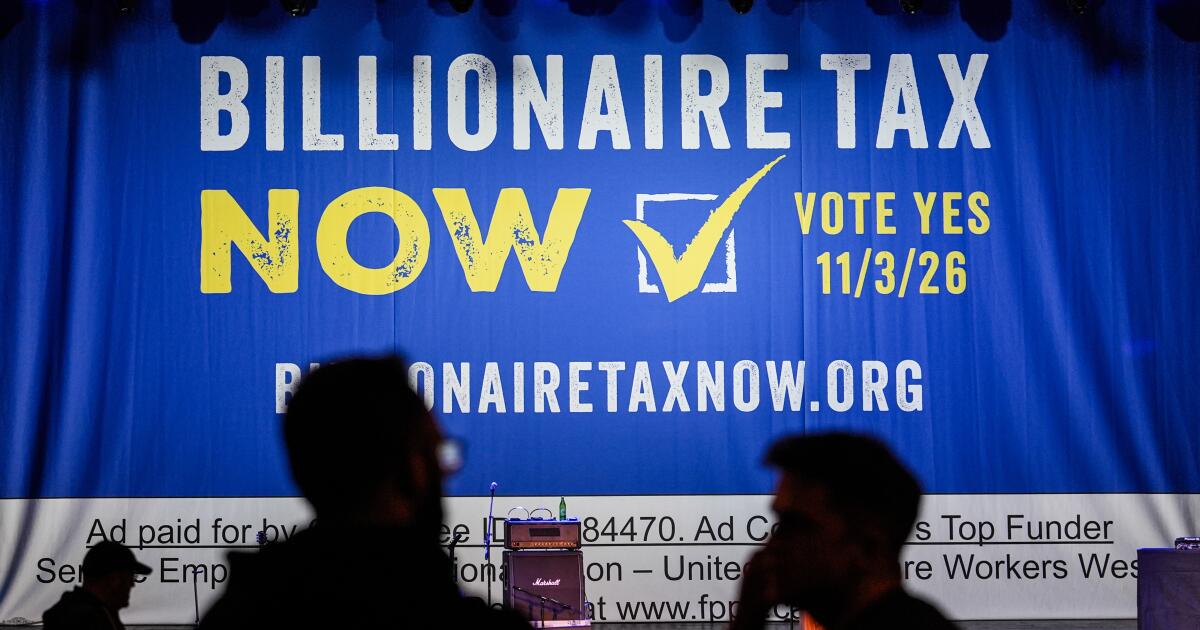
Billionaire tax proposal faces hurdles as it moves closer to November ballot
-
 Science16 minutes ago
Here’s why the Lincoln Memorial Reflecting Pool went green so fast
-
 Sports19 minutes ago
Shohei Ohtani out of Dodgers’ lineup vs. Orioles for birth of his second child
-

 World31 minutes ago
Lebanese influencer organises World Cup event amid Israel’s attack on Leban
-
 News54 minutes ago
Air Force One, gifted to Trump from Qatar, arrives at Joint Base Andrews
-

 New York2 hours ago
Video: Fans Show Up to the Parade in Their Best Knicks-Themed Attire

