Nebraska
Nebraska CIO on Preparing for Future Talent, Tech Needs


Nebraska officials have spent 2025 focused on laying the groundwork to advance IT talent pipelines, AI implementation and more in 2026 — and on reducing IT costs while doing so.
State CIO Matthew McCarville was tapped to lead Nebraska IT in 2024, in part with the goal of delivering cost savings to taxpayers. He views diversity, in a broad sense, as a mindset through which to find new technology solutions and talent.
Nebraska IT is in a position to modernize now, McCarville said, and that is in part a result of IT work in recent years. When he came to the state, systems were almost entirely on-premise mainframe. Since his arrival, work has begun to get the state off mainframe and into a cloud environment in the next calendar year; a vendor selection is expected in January. That will be key to state adoption of emerging technologies like AI.
“[The cloud environment] enables us to leverage all of that data in a new way we’ve never been able to before,” he said, explaining that using AI on an on-premise mainframe is “cost-prohibitive.” Now, state data can be used more effectively, enabling predictive analytics and AI in a cost-effective way.
The other piece of the AI puzzle is the skillset needed to implement it effectively. In Nebraska, roughly one-third of full-time employees qualified for retirement about a decade ago, according to McCarville, so the talent question is a high priority.
The state has a Data and AI Center of Excellence in Omaha, which enables officials to launch an internship initiative as an early talent pipeline for people who may not have worked with state government. The internship is expected to launch “full-bore” in January, and the first-ever statewide IT apprenticeship program is expected to arrive in 2026.
The apprenticeship program is GI Bill-qualified, so its funding will support the state’s collaboration with educational entities to train exiting military members — and the broader public — on AI, data and cybersecurity. The program is also intended to encourage people to stay in Nebraska.
These initiatives, McCarville said, aim to help the state address modernization needs while dealing with a soon-to-retire workforce, cost-effectively.
Part of modernization is implementing a mindset shift to one that is more forward-looking, he said. For example, rather than remaining entrenched in vendor agreements created 20 years ago, state IT is diversifying its ecosystem and moving away from such long-term relationships.
Diversifying vendors does require knowledge about more products, but it better positions the state to tackle new projects by being able to work with the lowest-cost provider. This shift is not a critique of previous vendors, McCarville said, but reflects meeting modern needs.
The state launched its first Joint Security Operations Center in 2024, powering a whole-of-state model through which state IT officials serve all 93 counties and their cities, plus more than 250 K-12 supporting organizations, governor’s cabinet agencies, and non-cabinet boards, agencies and commissions.
“So, we are building a kind of ‘Field of Dreams’ for cyber,” said McCarville of the state’s approach — creating the infrastructure in an effort to attract organizations to participate.
There has been much discussion of potential changes at the federal level that could affect state cybersecurity funding, but McCarville said state cybersecurity must rely on sustainable funding sources — and federal funding is not always that. He said he views federal funding as an “added bonus” for state cybersecurity.
Although the state is investing in IT, doing so in a cost-efficient way is a priority to address budget constraints. The state Legislature is facing a $471 million deficit in the annual budget, and the governor has established a goal for cabinet agencies to cut $500 million a year over the next two years.
The Nebraska Office of the CIO (OCIO) is in a unique position because rather than receiving a general fund appropriation, agencies pay for its services from general funds they receive. Still, OCIO is reducing its rates and expenses to offer them discounts — cutting $2.5 million in annual recurring overhead so far, with the goal of reaching $13 million. This was not mandated, but is OCIO’s way of helping the state address the deficit.
“Cutting dollars in IT doesn’t always end up having an added benefit,” McCarville said. “But we are trying very hard in modernization, which typically costs more money, to lower our expenses — but yet modernize and do all of these initiatives at the same time.”



Parts of California and Arizona were under extreme heat warnings again Saturday while sweltering summerlike weather even stretched as far north as Nebraska just a day into spring.
Temperatures at or above 100 degrees Fahrenheit (37.7 C) were forecast in the Southwest, closing a remarkable week of record-breaking heat. Experts say April, May and June are likely to be hotter than normal almost everywhere in the U.S.
Win Marsh said the heat was a reason to return home early to Utah after she and her husband, Stephen, hiked 170 miles (273 kilometers) over two weeks in Arizona, starting at the Mexico border. Their goal was to complete more than 800 miles (1,287 kilometers) on the Arizona Trail.
“We know our limits,” Marsh, 63, said Saturday. “We can’t hike when our bodies can’t cool down. There’s no shade out there, and water sources are drying up. … We promised our kids we wouldn’t do sketchy stuff. We’re not out there for a search-and-rescue event.”
The National Weather Service predicted 100 degrees (37.7 C) in Tucson, Arizona. The Yuma Desert, a desert community in southwestern Arizona, was headed toward 105 degrees (40.5 C), a day after reaching 112 (43.3 C) — a record for the highest March temperature in the United States.
Two places in Southern California also hit that temperature Friday. Experts say triple-digit days typically arrive by May, not March.
In the Midwest, temperatures exceeding 90 (32.2 C) were predicted across Nebraska, followed by a big drop to the 50s and 60s Sunday. A red flag warning was posted, which means a higher risk for wildfires. Parts of Texas were also at 90 or higher Saturday.
“This heat is likely to break many long-standing records from over a century ago across the area,” the National Weather Service in Omaha, Nebraska, said.
All evacuation orders were lifted in areas affected by Nebraska’s Cottonwood and Morrill fires, which have burned more than 1,200 square miles (3,118 square kilometers) for days but are largely contained, the state Emergency Management Agency said. The areas are dominated by range and grassland.
March’s heat would have been virtually impossible without human-caused climate change, according to a report Friday by World Weather Attribution, an international group of scientists who study the causes of extreme weather events.
Nebraska
Vanderbilt braces for a ‘road game’ in NCAA Tournament as Nebraska fans flood Oklahoma City

OKLAHOMA CITY (AP) — Vanderbilt coach Mark Byington expects a hostile environment when the Commodores play Nebraska on Saturday in the second round of the NCAA Tournament.
Byington is well aware of how Nebraska’s fans flooded Oklahoma City’s Paycom Center for a first-round game. A sea of red witnessed history on Thursday as Pryce Sandfort led the fourth-seeded Cornhuskers (27-6) to a 76-47 victory over Troy for their first-ever tournament win.
Byington said his fifth-seeded Commodores (27-8) will need to stay connected and lean on their experience to deal with the atmosphere. The arena is just a six-hour drive from Nebraska’s campus in Lincoln, and Cornhusker fans took advantage by creating a caravan down Interstate 35.
“I think it’s neutral by name only,” Byington said. “This is going to be a road game. I heard reports. They said it was even better than the home games in Nebraska — the noise, the environment.”
Nebraska entered March Madness as the only team from a power conference without an NCAA Tournament win. Now, the loyal fanbase wants more. Nebraska guard Sam Hoiberg believes the crowd could be more intense on Saturday.
“I think it’s going to be maybe even louder, because people are going to be off work and come down for the weekend,” he said. “Yeah, we fully expect to have another amazing crowd, but you can’t rely on that to win a game. You have to still execute and focus on the game plan.”
Vanderbilt, which rallied to defeat McNeese in the first round on Thursday, has faced tough environments this season, and things have not gone well. The Commodores played Southeastern Conference road games against NCAA Tournament teams Texas, Arkansas, Missouri, Kentucky and Tennessee and came out of those contests with a 1-4 record.
Big Red shenanigans
Hoiberg addressed a Nebraska fan jumping into the Bricktown Canal in downtown Oklahoma City on Thursday night.
“I saw one guy jumped in the canal last night,” he said. “Yeah, they (Nebraska fans) took over. It’s almost like they didn’t want the day to end, you know? That was fun to see all that stuff, although I’m guessing he got in a little bit of trouble for doing that.”
‘Better and better’
VCU has kept winning since mid-February, including a run through the Atlantic 10 Tournament to get a bid to March Madness and set up its massive comeback from 19 down to beat sixth-seeded North Carolina in overtime. And coach Phil Martelli Jr. had a clear message about what could be ahead for his 11th-seeded Rams (28-7) entering Saturday’s second-round game against Illinois.
“What I told those guys is every time you win in March, the wins feel better and better and better as you go along,” Martelli said. “Last night felt pretty good. Winning the championship felt good. Last night felt a little bit better.
“I told them, if you want to feel a pretty sweet feeling, you go get No. 2 tomorrow.”
That said, the pressing challenge is stopping an offense ranked No. 1 in KenPom’s adjusted offensive efficiency by averaging 131.7 points per 100 possessions.
“One thing I know about these guys is they’ve responded to every challenge and they’ll be ready to go,” Martelli said.
The third-seeded Fighting Illini (25-8) faced the least drama of any winner in Thursday’s four first-round games in Greenville, South Carolina. Illinois advanced with a 105-70 win against Penn after shooting 50% and making 15 of 36 3s (.417), while the Illini dominated the glass (48-25) with their size.
“We have so many versatile players on the team that we kind of spaced the floor, and we were able to pick the defense apart with our skill,” guard Andrej Stojakovic said.
This is Illinois’ sixth consecutive NCAA bid. The Illini have failed to reach the second weekend in four of the previous five years, the outlier being a run to the Elite Eight two years ago before falling to UConn on the Huskies’ romp to a second straight national title.
Another Cinderella run?
VCU looks to add to its long history of tournament upsets.
Illinois is a 10 1/2-point against VCU, favorite according to BetMGM. But VCU has a long history of pulling shockers during March Madness.
In 2011, the 11th-seeded Rams got all the way to the Final Four, defeating No. 3 seed Purdue and No. 1 seed Kansas along the way. In 2007, No. 11 seed VCU knocked off No. 6 Duke in the first round. In 2012, No. 12 VCU defeated No. 5 Wichita State in the first round.
Almost home
Houston is one win from going back home for the Sweet 16.
The Cougars (29-6) will face Texas A&M (22-11) in the second round Saturday in Oklahoma City. If they win, they would then need two wins at the Toyota Center in Houston — just a few miles from campus — to return to the Final Four.
The Cougars have fought the urge to look ahead from the moment the brackets were announced. They looked focused when they rolled past Idaho 78-47 in the first round on Thursday.
They’ll face a tough Aggies team that defeated Saint Mary’s 63-50 on Thursday.
___
AP Sports Writer Aaron Beard contributed from Greenville, South Carolina.
___
AP March Madness bracket: https://apnews.com/hub/ncaa-mens-bracket and coverage: https://apnews.com/hub/march-madness

LINCOLN, Neb — Nebraska picked up two second-team All-America honors as the 2026 NCAA Swimming and Diving Championships moved into its final stretch, with Abby Baxter and Gena Jorgenson earning the awards during prelim sessions.
Jorgenson, a senior distance swimmer, earned second-team All-America recognition in the 500 freestyle with a 14th-place finish. It was a career best in the event and her fourth All-America title.
Jorgenson’s time of 4:38.77 also stood as a school record. She had broken the previous record just weeks earlier at the 2026 Big Ten Championships, lowering her time by 0.38 from 4:39.15.
The format for All-America recognition has also changed. Until this year, swimmers could compete in the evening session for the B finals. Now, places nine through 16th are awarded honorable mentions in the All-America category.
On the 3-meter springboard, Baxter scored 312.15 to finish 11th. The junior from Coppell, Texas, finished 20th at nationals last year with a score of 290.45. Her 11th-place finish marked the best showing for a Nebraska diver in the event since Abi Knapton placed 15th at the 2019 NCAA Championships.
In the 50 freestyle prelims, Hungarian swimmer Beatrix Tanko posted a 22.36. Tanko set the school record at the Hawkeye Invite in November, swimming a 22.17 for a second-place finish. Seeded 46th, Tanko moved up to 39th in the event.
Nebraska’s NCAA Championship competition will continue with Kelsey Clairmont in the platform dive to conclude her time at Nebraska. Tanko is also set to swim the 100 freestyle to wrap up her inaugural championships.
The meet is streaming on ESPN+. Prelims begin at 9 a.m. CT, with diving trials starting at 11:15 a.m. CT. Finals resume at 5 p.m. Results can also be followed on MeetMobile.

Martial arts star Chuck Norris dies at 86

Halide co-founder is suing former partner Sebastiaan de With for taking source code to Apple

Trump proven right on Iran’s long-range missile capability as regime targets US-UK base, experts say

Trump gives Iran 48-hour ultimatum to reopen Strait of Hormuz or face strikes on power plants

Top 5 states with the highest number of safe hospitals, according to new report

Florida High School Football Rankings: Top 25 teams – Oct. 21

How old is Bo Nix? What to know about Oregon quarterback ahead of 2024 NFL Draft

Cleary's 21 help Le Moyne down Central Connecticut State 69-64 in OT

99th annual Pony Swim held in Virginia

Indiana Members Credit Union announced as new anchor tenant at Bottleworks District
Trump gives Iran 48-hour ultimatum to reopen Strait of Hormuz or face strikes on power plants

Macron pushes tougher EU digital action ahead of key votes
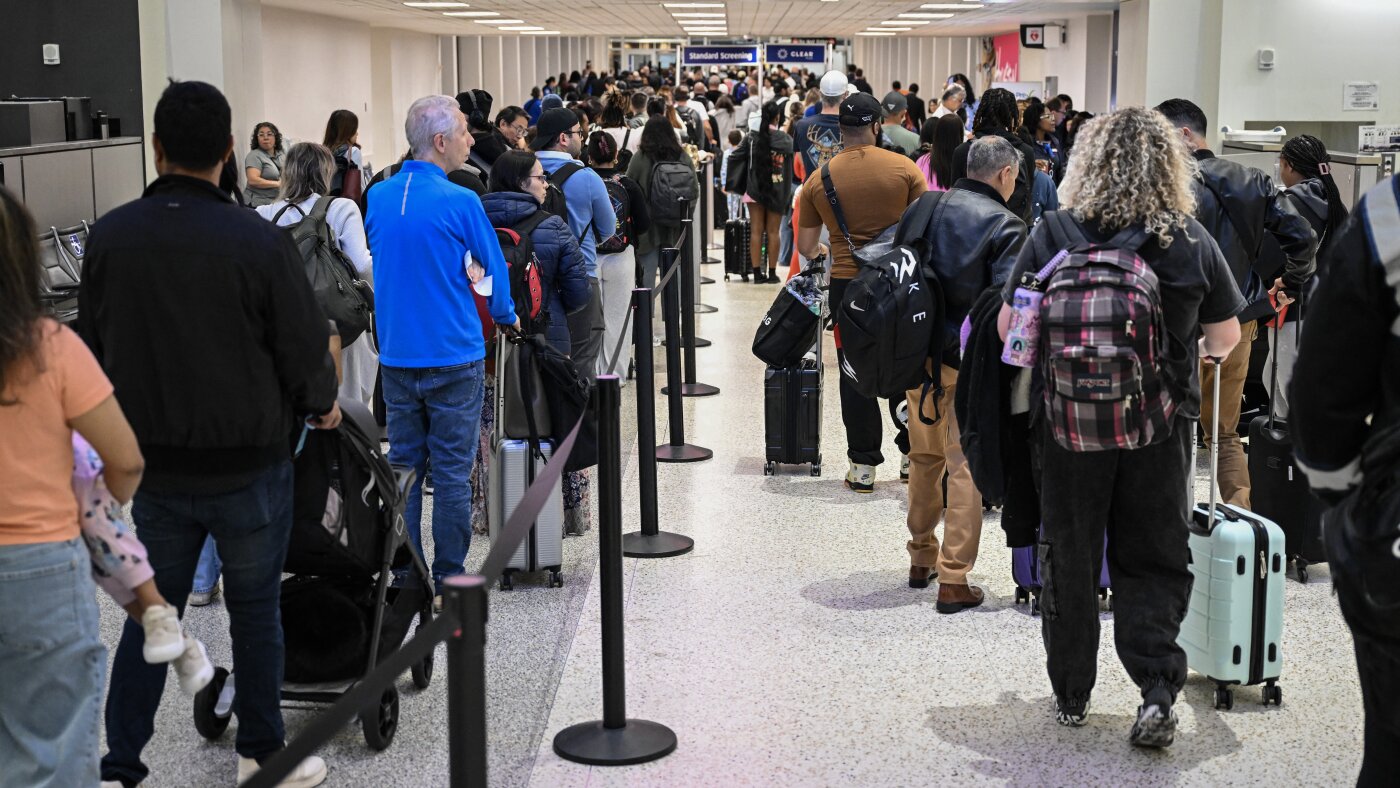
Airport security lines are long. Here’s what to know if you’re flying

Schumer gambit fails as DHS shutdown hits 36 days and airport lines grow

Iranian ballistic missile explodes near Israeli nuclear plant
-

 Detroit, MI3 days ago
Drummer Brian Pastoria, longtime Detroit music advocate, dies at 68
-

 Oklahoma1 week ago
Family rallies around Oklahoma father after head-on crash
-

 Nebraska1 week ago
Wildfire forces immediate evacuation order for Farnam residents
-

 Georgia6 days ago
How ICE plans for a detention warehouse pushed a Georgia town to fight back | CNN Politics
-

 Alaska7 days ago
Police looking for man considered ‘armed and dangerous’
-

 Minnesota1 week ago
Many with Minnesota ties make Forbes list of world’s richest people
-
 Science1 week ago
Federal EPA moves to roll back recent limits on ethylene oxide, a carcinogen
-
 Science1 week ago
H5N1 bird flu spreads to sea otters and sea lions along San Mateo coast, wildlife experts say