Missouri
Missouri lawmakers look to expand doula program based on early success


In the past year, Christian King, a doula based in Kansas City, has supported more than 40 mothers enrolled in Medicaid through their pregnancy, birth and postpartum.
In that role, she helps educate and support families about birth and babies, but her work also takes on a more nontraditional approach.
When one mother’s water was shut off at four weeks postpartum, King helped her find reconciliation services to turn the utilities back on. When another mom couldn’t afford car repairs, King found an organization in Raytown that provided financial assistance. She helped one client secure a car seat from the local health department and another fill her closet with baby clothes.
King, 35, hopes that soon, “just like going to the dentist and going to the eye doctor, obtaining a doula and having a doula present is also one of those things that you just have to have on your team as part of services for maternity.”
Doulas do not deliver babies. They advocate for the physical and mental wellbeing of mothers and their families.
For the past 15 months in Missouri, anyone enrolled in Medicaid while pregnant and postpartum can have a doula by their side for free. Now, a group of bipartisan lawmakers are hoping to expand the program in an effort to continue combating the state’s poor infant and maternal outcomes.
“The statistics tell a devastating story of the lives lost that could’ve been saved if we put in the proper measures,” said state Sen. Barbara Washington, a Democrat from Kansas City who proposed one iteration of the legislation. “There are third-world countries that have better maternal mortality rates than we do.”
The bill is estimated to cost around $300,000. While substantial amid a predicted state budget shortfall, state Rep. Becky Laubinger, a Republican from Park Hills who also filed legislation to expand the program, said she believes the long-term savings of having fewer Missourians who require medical attention will make up for the cost.
On average, 70 women die each year in Missouri during childbirth or in the first year postpartum. Of those deaths, 80% are deemed preventable.
In Missouri, women on Medicaid were seven times more likely to die within a year of pregnancy than women on private insurance, according to a 2024 report published by the state’s Pregnancy-Associated Mortality Review that looked at women who gave birth between 2017 and 2021. A 2023 March of Dimes report gave Missouri a D- for preterm births, and also pointed to doulas as a solution.
In fall 2024, the Missouri Department of Social Services issued an emergency rule authorizing Medicaid to reimburse doula services, citing “an immediate danger to the public health, safety or welfare of pregnant women in Missouri.”
Since the program’s inception, there have been about 625 participants insured through Medicaid who accessed doulas during their pregnancy and postpartum, said Baylee Watts, a spokeswoman for the Department of Social Services. As of this month, 108 doulas were enrolled in the program.
“The department is encouraged by the level of engagement so far,” Watts said in a statement. “And views the doula benefit as an important component of broader efforts to improve maternal health outcomes across Missouri.”
Legislation filed by state Rep. Tara Peters, a Rolla Republican, has moved the farthest this year, clearing committee in February as part of a sweeping health care bill. Her bill seeks to increase the number of covered doula visits from six to 16.
The average out-of-pocket cost for a doula in Missouri is about $1,500, according to the Missouri Doula Association.
“I’ve just noticed how much extra care a doula can provide, especially for women in high need situations,” said Laubinger. “Doulas can provide some great education and support for people who maybe don’t have the extra support.”
This support can also look like serving as an interpreter between medical professionals and pregnant people, navigating insurance, ensuring access to nutritious food or coordinating transportation to medical appointments.
Laubinger, who previously served as executive director of Monarch Family Resource Center in Farmington, said expanding the number of covered visits can be particularly helpful for women who experience postpartum depression in the year after giving birth.
Her legislation, like Peters’, expands the number of reimbursable visits from six to 16, and includes access to doulas for prenatal, birth, postpartum and lactation support.
She said the legislation also hopes to correct some issues doulas have had getting full reimbursement after being in the room for a scheduled c-section, listed as a scheduled surgery, a classification she said muddled the reimbursement process.
The Department of Social Services previously said the reimbursements could lead to savings for the state in the coming years, including by potentially reducing the Cesarean rate. Watts said it’s too early to get an accurate look at this result.
Laubinger said doulas can be a lifesaving set of eyes and ears in homes where women experience domestic violence, a leading cause of pregnancy-associated deaths in Missouri.
“The doula birth worker can also have a voice in those situations and see what’s going on outside of that medical office,” she said. “And maybe be able to provide some rescuing relief from dangerous situations for mom.”
To be eligible, doulas must be credentialed and certified through a national or Missouri-based doula training organization. From there, they will be added to a list of eligible doulas overseen by the Missouri Community Doula Council.
Sandra Thornhill, a social justice doula who has advocated in Jefferson City for better legislation for doulas, said it was beautiful to see this policy issue reach across the aisle. And she was happy to see some of the proposals pushing for increased visits, especially in postpartum.
She said it’s not a question of if doulas should be reimbursed, but of how the state honors the traditional practices and values of doulas in that process. She is wary of any policies that place community health workers under medical or state authority. Instead she hopes to see more collaborative models.
”My concern is not with recognizing doulas in the Medicaid policy, but with how the bill structures authority and governance over that work,” said Thornhill, who describes herself as a womb warrior and policy griot. “The question is whether the policy structure strengthens community birth workers or will it place unnecessary burden or medical authority that doesn’t reflect the roots of the work.”
But she said the progress made in acknowledging and supporting doula’s work in the past few years is striking, especially as many doulas live “birth to birth” as they struggle to pay the bills.
Prior to the state’s Medicaid reimbursement plan, The Independent spoke with several doulas who spoke of giving up wages to help families in need for free as they navigated growing their families.
“They do it because they love their people and their community so much that they’re willing to make this great sacrifice,” Thornhill said. “ However, it is not healthy. And it is not fair for the community to have to suffer like that when there are resources available to change that. But again, those resources cannot come with a slap on the wrist. They cannot come with a backlash of ‘now you’re under our thumb.’”
A representative with America’s Health Insurance Plans voiced opposition to Washington’s bill in a committee hearing last month.
“We are very concerned about issues with education, standardization and making sure doulas are all on the same page and we know exactly how they’ve been trained,” he said. “There seems to be some resistance out there and a lot of independence within the organizations.”
Washington’s legislation also seeks to ensure health benefit plans offer coverage for midwifery services. She said this is especially crucial in rural parts of the state, where families don’t have access to nearby hospitals with maternity wards.
“Currently, our law does not explicitly require private health plans to cover midwifery. This would close that loophole,” Washington said, adding that this change would shift power back to patients to choose their own provider, especially in rural communities “where the hospitals are closing at alarming rates.”
This story was first published at missouriindependent.com.




KSHB 41 News anchor Caitlin Knute is interested in hearing from you. Send her an e-mail.
—
A Missouri lawmaker hopes legislation filed this year will help to eliminate single-use plastics from the state’s parks.
Earlier this year, Rep. Colin Wellenkamp (R – 105th District) filed House Bill 3193, legislation that would phase out single-use plastics like plastic silverware, bags, foam takeout containers, and plastic water bottles from Missouri state parks and historic sites.
If approved, it would apply to the concession stands and any gift or retail shops in those state parks.
Missouri lawmaker works to remove single-use plastics from state parks
“So, at least we can keep plastic waste out of these pristine, ecologically significant and historically important places,” Wellenkamp told me.
The legislator admits this is just small step in addressing what he and environmentalists see as a bigger problem.
KSHB
In Missouri, there’s actually a law that bans cities and municipalities from banning single-use plastics.
Wellenkamp’s initial bill sought to overturn that preemptive ban, something environmental groups have been pushing for.
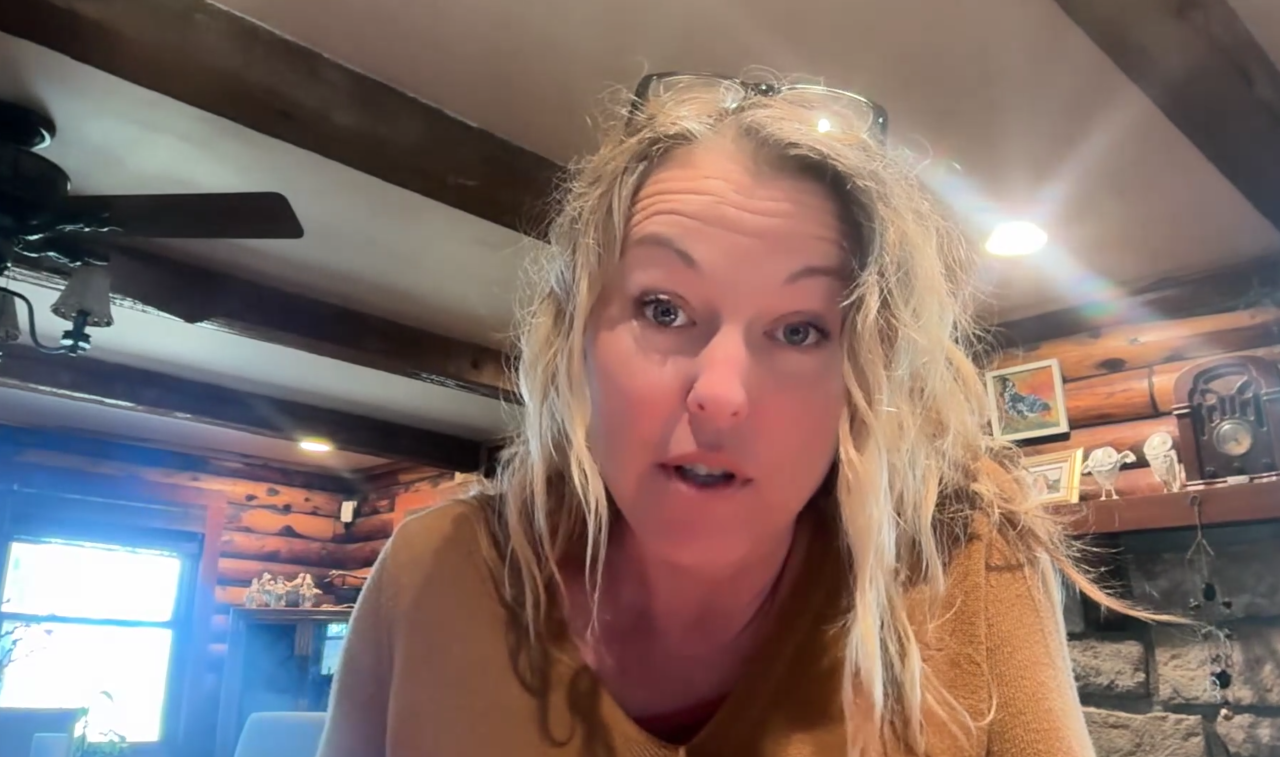
“It just basically gets us back to square one in terms of local control, and municipalities being able to do something about it if they want to,” Missouri River Bird Observatory’s Dana Ripper told me.
KSHB
But that part was eventually dropped from House Bill 3193 in order to get a hearing, scheduled for Monday, April 13, at the State Capitol in Jefferson City.
“I think removing the preemption, the preemptive ban on bans that exists today statewide, is going to be a larger, more time-consuming conversation,” Wellenkamp said. “I’m up for doing that. I am ready to begin and have that debate, I’m ready to begin to go down that road. I just think it’s going to take some time to get there. But, there are things we can do right now that maybe don’t take as much time, and that’s really what I’m trying to achieve in the near term.”
In order to further support Wellenkamp’s bill and push other lawmakers to support a reversal of Missouri’s preemptive ban on banning single-use plastics, the Missouri River Bird Observatory and Stream Teams United are hosting a free workshop open to this weekend.
It offers the public a chance to learn more about plastic pollution in the environment and how to best combat it.
Chase Lucas/KSHB
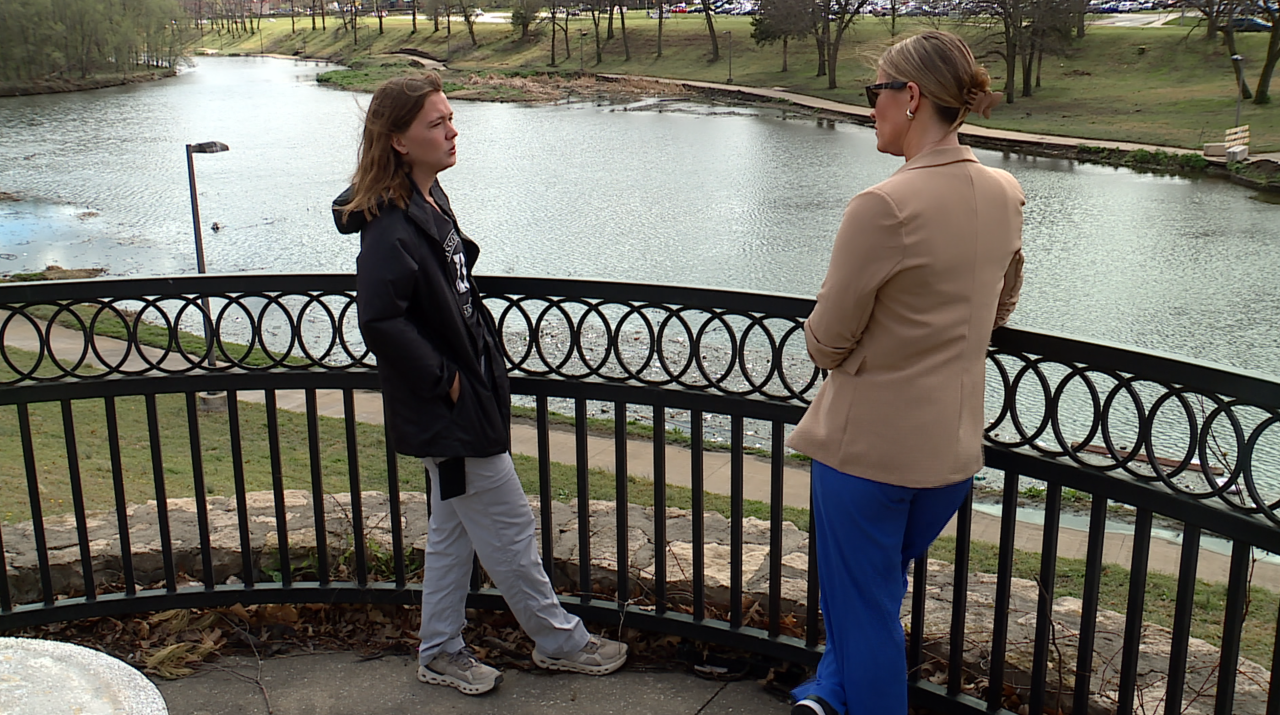
“We will give attendees a background about the entire plastic pollution situation, its history. We’ll talk about effective community action and outreach,” Ripper told me. “And then we’ll talk about some of the things that communities can really do, locally, to sort of get a handle on this problem that they’re concerned about.”
The workshop runs from 11 a.m. to 2:30 p.m. on Saturday, April 11, at the Mid-America Regional Council, 600 Broadway Boulevard, Kansas City, Missouri. A link to register is available.
—


Take two steps into the Missouri Statehouse this session and the words “income tax” will inevitably come up.
Takeaways
- Proposed legislation would reduce the state’s top tax rate by 0.01% for every $20 million in revenue that exceeds the previous year’s collection, adjusted annually for inflation. In exchange, the General Assembly would be granted broad authority to change sales taxes without additional voter approval.
- Although Missouri has remained solidly middle of the pack for economic and population growth, supporters say eliminating income tax would help make Missouri more attractive to businesses. Eight other states without income taxes consistently rank higher for economic growth.
- But, Missouri’s dependence on income tax revenue is much greater than other states’, making up roughly 65% of state revenue. Missouri also lacks the natural resources or tourism that other states have, meaning sales taxes would likely have to be increased to help offset the lost dollars.
That’s because the General Assembly is debating House Joint Resolutions 173 & 174. The resolutions propose gradually eliminating the state’s income tax. It would also authorize the legislature to offset any losses by expanding the sales tax base or rate.
The proposal states that if net revenue collections exceed fiscal year 2027’s collections by $20 million or more, it would trigger a one-hundredth of a percentage point reduction in the state’s top tax rate. Those targets would be adjusted for inflation. Once the rate dips below 1.4%, the rate is instead zero.
The state’s top tax rate currently is 4.7% on any income that exceeds $9,191.
The legislation’s target date to get rid of the income tax is 2032. Once it’s eliminated, the state would not be allowed to reinstate an income tax in the future.
In exchange, the legislature would have broad authority for the next five years to increase sales tax rates or expand the base of goods and services that could be taxed without approval from voters.
Currently, the legislature is limited by the Hancock Amendment to $144.4 million in what new fees or taxes could generate without needing voter approval. Due to a 2016 amendment, it also cannot expand the sales tax base beyond what was already subject to it before 2015.
If it passes both chambers, voters will still need to approve the measure at the ballot in November.
The legislation has drawn stakeholders from across the state. During a Senate committee public hearing on April 1, so many people showed up to testify on the legislation, for and against, that they spilled into the hallway where they waited to be called in.
Starkly opposing narratives were heard.
On one hand, advocates say eliminating the tax will encourage economic growth, increased savings and more government transparency. On the other hand, opponents say it would add the burden of an increased sales tax on people least able to afford it.
The outcome is far from straightforward.
Sarah Narkiewicz, director of the Low Income Taxpayer Clinic at Washington University in St. Louis, said that while there is some merit to the plan, change inevitably brings some downsides.
“The idea is that by reducing the income tax, you’re going to bring in industry, you’re going to increase jobs, people are going to have more economic spending power,” Narkiewicz said. “The downside in this case is that in order to eliminate the revenue from the state income tax, which is about 60% to 70% of the state’s general revenue budget, we have to come up with that money from somewhere else, or we have to drastically cut services, or both.”
A boost to economic growth
Many of the arguments for the proposal center around boosting economic growth and making sure Missouri stays competitive.
Advocates have pointed to the success of the nine states without an income tax as reasons for Missouri to consider this path and as models on how to do so responsibly. Those states are Alaska, Florida, Nevada, New Hampshire, South Dakota, Tennessee, Texas, Washington and Wyoming. Washington does impose capital gains taxes on those that earn more than $1 million a year.
In 2024, Missouri ranked 36th in the nation for state gross domestic product per capita, according to Statista. All nine states without an income tax ranked higher.
Since 2010, Missouri’s net population has increased by 0.31%, Pew research found. The states without an income tax had a net population increase greater than Missouri’s.
Proponents are confident that the proposed plan will not throw off the state’s budget because it uses revenue triggers to implement income tax cuts.
“That phased approach has worked very well in preventing shortfalls through the cuts,” said state Sen. Curtis Trent, a Republican representing Barton, Dade, Greene and Webster counties who is the bill handler on the Senate side.
“Of course, this is a replacement policy, and so there are guardrails we think are sufficient to make sure there’s no drop in the budget, because that’s certainly not the intent.”
The bill only authorizes the legislature to make changes to the sales tax and does not directly affect it yet.
Sen. Ben Brown, a Republican representing Franklin, Gasconade, Osage and Warren counties, said that if the proposals were the only pieces of legislation to pass, the rate would likely continue to tick down on its own with current revenue growth.
The added language allowing for sales tax adjustments could helps speed up the income tax elimination process and simplify the tax code by reconsidering exemptions, said Elias Tsapelas, the director of state budget and fiscal policy at the libertarian Show-Me Institute. The institute testified in favor of the legislation.
“If the legislature wants to do it faster, modernizing the state’s sales tax base is going to be something that speeds it up,” Tsapelas said.
There are multiple ways in which that can be done.
One way is by expanding the base of what can be taxed. One example would be taxing subscriptions on digital services since their prevalence in consumer spending has grown significantly.
“For instance, I’m looking at a document I have up in Microsoft Word,” Tsapelas said. “Ten years ago, we might have went and purchased a disc of Microsoft Word, and I would have paid the sales tax on it. Now, I get it from Microsoft, and it’s technically software as a service, so I don’t pay sales tax on it.”
Another option is raising the sales tax rate on the goods and services already being taxed. It is estimated that the state sales tax rate would have to be raised to somewhere between 12% and 15% if the base is not expanded at all.
Legislators have said that is unlikely that will be the case. Brown told The Beacon he didn’t believe the assumption that the sales tax rate would increase significantly would come true. Trent, in an interview with Missouri Independent, said the highest rate voters would accept is about 6%.
The end result would likely be a mix of rate increases and an expansion of the base.
Brown acknowledged that it would be up to future legislators to withstand requests for industry-specific exemptions in order for any sales tax changes to succeed as intended.
“Financial situations can vary from year to year, and that’s something that’s going to take a great amount of agreement and compromise on. … And I think the only way it happens is if the legislature as a whole can stay very disciplined as to keep that sales tax rate either below where it is now or somewhere relatively close to where it is now.”
‘An odd duck’
Missouri is in a unique position compared to other states that have eliminated their income tax.
“I don’t think there are any states that have completely gone from a system where income tax is the primary source of revenue to eliminating the income tax, at least not in a very, very long time,” Narkiewicz said. “Tennessee just eliminated it, but it was a very small percentage. It wasn’t a true income tax. We’re kind of in a brave new world, and it’ll be interesting.”
Tennessee has often been referenced as the state most similar to Missouri in terms of economic makeup.
Income tax made up about 2% of Tennessee’s revenue when it began eliminating its income tax in 2016, largely because it had never taxed earned income and instead only taxed interest and dividends.
In comparison, income tax makes up roughly 65% of Missouri’s state revenue. The state has already forecast lower revenue for future fiscal years while debating the budget.
States that have eliminated the state income tax also have other industries like natural resources, gambling and tourism that make up the bulk of revenue.
“The argument … is that if Missouri cuts this income tax, we’ll be just like these other states and be economically successful,” Narkiewicz said. “We’re a little bit of an odd duck there. We don’t have a lot of the advantages that these other states have.”
Eliminating state income tax typically comes with tradeoffs in other areas, Narkiewicz said, with one being in the form of higher sales taxes. Tennessee has the second-highest combined state and local sales tax rate in the country, according to the Tax Foundation. Missouri ranks 12th.
Wesley Tharpe, the senior adviser for state tax policy at the Center on Budget and Policy Priorities, said forgoing the income tax revenue also means less money for things like education, affordable housing and transportation.
Those factors can come back to bite states when a business considers the totality of what a state has to offer before moving there.
“The track record of other states is that both individuals and businesses and investors are not looking narrowly at one specific attribute when they’re thinking about where to live or to work or to start a business,” Tharpe said. “They’re going to be looking at the whole package of what a state offers. Taxes are certainly going to be one thing that any rational person or a company takes into consideration, but they’re also going to be thinking about the local quality of life.”
Some business lobbying groups have stepped forward in opposition, saying Missouri is already an attractive place to do business and the proposal doesn’t protect businesses from paying sales taxes on materials used for goods that would also be subject to sales tax.
Missouri is not the only state contemplating income tax eliminations either, meaning it could become a race to the bottom with other states.
“If every state cuts down their income tax, then what does Missouri have to offer that is going to make it stand out in terms of the actual cost for eliminating state income tax and potentially expanding the sales tax base?” Narkiewicz said.
The proposal still faces several key votes and the ballot box before the impacts materialize. It will be heard next on Monday by the Senate Committee for Fiscal Oversight, where it will need approval before heading to the full Senate floor.
Related

If you need help with the Public File, call (713) 778-4745
At KPRC, we are committed to informing and delighting our audience. In our commitment to covering our communities with innovation and excellence, we incorporate Artificial Intelligence (AI) technologies to enhance our news gathering, reporting, and presentation processes. Read our article to see how we are using Artificial Intelligence.

Jazz lose by winning in the ‘Tanking Super Bowl’ — but optimism reigns as team imagines possibilities for next season
VT Lottery Mega Millions, Gimme 5 results for April 10, 2026

‘Don’t Fairfax Me’: How Virginia’s largest county became center of antiredistricting campaign – WTOP News

Report: Wisconsin transfer John Blackwell down to six schools, not two
Trump promised to cut electric costs in half. In energy-rich West Virginia, bills now top mortgages

Florida High School Football Rankings: Top 25 teams – Oct. 21

How old is Bo Nix? What to know about Oregon quarterback ahead of 2024 NFL Draft

Cleary's 21 help Le Moyne down Central Connecticut State 69-64 in OT

99th annual Pony Swim held in Virginia

Indiana Members Credit Union announced as new anchor tenant at Bottleworks District

Trump adversary running for Senate borrows his filibuster playbook

Russian propaganda unit targets Hungary’s elections

WATCH: Artemis II astronauts splash down on Earth

Swalwell’s former female staffer drops bombshell allegations of sexual assault, exposing himself: report

NASA’s Artemis II prepares for splashdown on Earth
-

 Atlanta, GA6 days ago
1 teenage girl killed, another injured in shooting at Piedmont Park, police say
-

 Education1 week ago
Video: Toy Testing with a Discerning Bodega Cat
-

 Movie Reviews1 week ago
Vaazha 2 first half review: Hashir anchors a lively, chaos-filled teen tale
-

 Georgia4 days ago
Georgia House Special Runoff Election 2026 Live Results
-

 Pennsylvania5 days ago
Parents charged after toddler injured by wolf at Pennsylvania zoo
-

 Arkansas20 hours ago
Arkansas TV meteorologist Melinda Mayo retires after nearly four decades on air
-
 Milwaukee, WI5 days ago
Potawatomi Casino Hotel evacuated after fire breaks out in rooftop HVAC system
-
 Entertainment1 week ago
Inside Ye’s first comeback show at SoFi Stadium