Missouri
Missouri bill would loosen child labor law by removing work permit requirements • Missouri Independent


A push to eliminate Missouri’s requirement for children under 16 to obtain official work permits before they can begin a job could be debated by the House this week.
In order to work in Missouri, 14 and 15 year olds must obtain a certificate issued by their school, with information from their prospective employer about the details of the job as well as parental consent and age verification.
The child’s school, or if they are homeschooled, a parent, must review that information to ensure it’s in line with state laws that restrict the kind of work children can do and their hours. Once the school issues the certificate, a copy is filed with the Missouri Department of Labor and Industrial Relations.
Children under 14 are generally not permitted to work and those 16 and older aren’t subject to the same restrictions.
The bill, sponsored by Republican state Rep. Dave Hinman of O’Fallon and a similar one sponsored by state Sen. Nick Schroer of Defiance, would eliminate the formal work permit process. Instead of being overseen by schools and the state labor agency, the only requirement would be that a parent sign a permission slip for the child’s employer.
Proponents have characterized schools’ role in the process as unnecessary and outdated, and said parents should have the largest role.
“With discussions with our superintendent and other folks around here,” Hinman said in an interview with The Independent this week, “we felt it was better that the parents make that decision instead of schools being the ones that sign off on it.”
Hinman’s bill was voted out of committee in March, and he hopes the full House will debate it before session ends — perhaps as early as this week. The Senate version of the bill was heard in committee earlier this month and hasn’t been voted out yet.
The bill is about “empowering employers and youth,” Schroer said in a committee hearing earlier this month.
“While easing the regulations, this legislation also prioritizes parental involvement by mandating signed permission slips…ensuring that parents are informed and involved in their child’s work activities” Schroer said.
Arkansas passed a similar law last year eliminating youth employment permits, though it didn’t include the parental permission slip piece. It faced opposition from child advocacy groups and others, who worried it would remove a layer of oversight protecting child workers in a time when child labor violations have gained attention nationally for being on the rise.
Proponents have insisted that the bill won’t affect child labor violations because businesses will still be required to comply with state and federal law.
In Missouri, the legislation has flown largely under the radar: No one testified in opposition during hearings on the bill the last two years. A handful of individuals submitted written opposition.
John Fliter, an associate professor of political science at Kansas State University, who studies child labor, said in an interview with The Independent that certificates are an important safeguard for children.
“We need to be careful because at the same time that [some states are] doing this, weakening restrictions, we’re seeing an increase in child labor violations and some really bad cases over the last few years,” he said.
The certificates, Fliter added, produce a record of employers acknowledging they will follow the law, and allow schools to play a “supervisory role” and ensure children are “not working to the detriment of their education.”
State Sen. Doug Beck, a Democrat from Affton, asked during a committee hearing earlier this month how the state could be sure employers were still doing things like age verification if the government wouldn’t be allowed to require permits to oversee the process.
“Where’s the enforcement on this bill exactly?” Beck asked. “…Where’s the accountability?”
“I think the accountability is with the parents and the business owners,” Schroer replied.
Schools’ role

Earlier versions of the House bill included language to extend the hours in the day children are allowed to work, but that’s since been removed because the sponsor found out it conflicts with federal law.
Children under 16 are legally required to be off work by 7 p.m. during the school year.
The reason Hinman initially filed the bill was because he wanted to push that time back, after he was approached by a restaurant owner in his district who was struggling with staffing those later hours.
“I’d like to see that time adjusted hopefully, up till eight o’clock, nine o’clock. Just to give a little bit more time for those businesses,” he said.
Now, the bill includes a provision that those restrictions apply “unless a later time is allowed by federal law,” which Hinman said is intended so Missouri can automatically change its law if the federal government does.
When he started looking into these laws, Hinman found it “an odd thing that the school district did that,” referring to the certification requirements, which led him to look at a bill filed last year and incorporate some of its language.
Youth work permits aren’t federally mandated but the majority of states require them.
Thirty-four states require youth work permits. The details vary, including whether they’re issued by a state agency or schools and what ages are included.
State Rep. Holly Jones, a Republican from Eureka, said in the committee hearing that she “hates” that schools are the ones who sign off on certificates.
“I really don’t love the schools having so much power over families and students,” she said.
A similar bill last year, sponsored by Sen. Andrew Koenig, a Manchester Republican, didn’t gain momentum, clearing a Senate committee but never being debated by the full chamber.
A Washington Post investigation last year found the Florida-based conservative think tank, Foundation for Government Accountability, and its lobbying arm, the Opportunity Solutions Project, has been behind the push to roll back certain child labor protections in state legislatures.
“States should be allowing their teenagers to decide, with their parents, to get a job — not the government,” an issue paper published by Foundation for Government Accountability last year said. The paper characterized the issue as pitting “parents vs. educators and regulators.”
That group played an important role in Arkansas’ elimination of work certificates, the Post reported, and in Missouri, a lobbyist for Opportunity Solutions Project, James Harris, sent Koenig’s staff draft legislation last year before he filed it. Hinman said Harris didn’t approach him with the language.
Harris was the first one to testify in the committee hearings this year. In the House hearing, he said his first job as a teen helped him when he was a “law breaker” youth.
“I look back at that job and I learned so much,” Harris said.
“…Part of this is to help businesses be able to have more of a workforce for people to work,” Harris said during a later discussion about how pushing back the 7 p.m. restriction could cause businesses to worry about breaking federal law and not bolster their workforce.
Neither Harris nor the Foundation for Government Accountability responded to interview requests.
Other support has come from business groups including the Missouri Chamber of Commerce, Missouri Retailers and Missouri Grocers Association.
The legislation was voted out of committee on party lines. Democrats opposed it.
Hinson said in an interview with The Independent that while he’s not optimistic it will pass this year — with just three weeks left in session — he is hopeful it will come to the floor and that discussion will help improve the bill for next year.
“I would love to have the opportunity to have a full discussion with everybody on the floor, both sides of the aisle and see what the thoughts are so next year if we need to make corrections to the bill, that we can make it an even better bill,” Hinman said. “…[The legislation] is one of my priorities.”
‘One more set of eyes’
Maura Browning, spokesperson for Missouri’s Department of Labor and Industrial Relations said the agency can’t comment on pending legislation.
But speaking broadly about how the state oversees child work requirements, labor department officials said they rely on the current licensing practice and see it as a tool to help ensure kids don’t enter hazardous work or take on excessive hours.
The required form is just one page. In it, the child’s prospective employer must provide the specific job duties, hours and an acknowledgment they will abide by state law. Schools verify a child’s age and can review their grades.
Todd Smith, who directs the Division of Labor Standards within the state labor department, said schools help identify when the descriptions employers submit should be flagged as hazardous.
Kids under 16 aren’t allowed to do certain jobs, like operating a meat slicer or handling any hot oil or grease.
“We will enforce whatever the legislature passes, obviously, but in a perfect world, I think it’s important to have that education piece to share with employers,” Smith said in an interview with The Independent.
Missouri issued over 10,000 youth employment licenses last year.
Patrick Watkins, who works as the wage and hour section manager in the state labor department, said going through the school “gives us one more set of eyes to look at those hazardous job descriptions.”
Watkins added that in the current process the employer “agrees that they understand our restrictions, but more importantly, they have to fill in exactly what job duties the child will be performing and we catch a lot of hazardous titles just in that reveal alone.”
Child advocacy and social justice organizations reached by The Independent said they are not taking a position on the bill because they are deciding to stay out of the issue or are simply not up to speed on the legislation.



Missouri
Missouri bill that would split Jackson County and Kansas City gets little support from lawmakers

A Missouri House committee had its first hearing this week on a proposed constitutional amendment that would split Kansas City and Jackson County upon approval by voters.
The legislation is nicknamed “Jackxit,” a nod to Brexit, the withdrawal of the United Kingdom from the European Union in 2020.
Republican state Rep. Mike Steinmeyer is sponsoring the bill. He said eastern Jackson County voters feel underrepresented in the county government, and this legislation would give them the power to change that.
At the hearing, committee members listened to Steinmeyer’s presentation of the bill before asking questions and sharing their thoughts.
Democratic state Rep. Bridget Walsh Moore compared what the bill proposes to “The Great Divorce” that saw the legal separation of the city of St. Louis from St. Louis County in 1876.
Several committee members criticized a part of the bill that says if it’s signed into law, the question of whether to split the county in two would appear on the Missouri ballot every 10 years.
Moore called it a “never-ending clause.”
“There’s a provision that says every 10 years this has to go back on the ballot, whether you like it or not,” Moore said. “And we’re going to keep voting on it, until you vote the way we think you should.”
Democratic state Rep. Jeff Hales said the bill’s language suggests the question would reappear on the ballot every 10 years until it’s approved by voters.
“Why does it end when it’s approved if the importance and the value here is giving the voters of Jackson County a right to weigh in on their charter and their government?” Hales said.
Steinmeyer said that clause exists to give Jackson County voters the opportunity to weigh in on their form of government.
“It gives them the right to speak and say we want change, or we want to abolish and start over,” Steinmeyer said. “That’s all we’re asking for.”
Democratic state Rep. Ashley Aune questioned how the ballot question would protect the right of voters. Steinmeyer said it protects their right to vote and be heard, specifically on their governance.
Lobbyist Shannon Cooper testified on behalf of the city of Kansas City, the Greater Kansas City Chamber of Commerce and the Civic Council of Greater Kansas City. He said during a public comment period that the bill was “the most befuddling piece of legislation” that he’s had to testify for or against.
Cooper brought up the historic recall election of County Executive Frank White Jr. and said the recall showed the system Steinmeyer is trying to fix with this bill can work.
“If the voters are not happy, they can deal with their problems,” Cooper said. “They’ve proven that in the last year.”
No action was taken on the bill, and it is not yet scheduled for a future hearing.
Missouri
Kansas City, Missouri, City Council voted Thursday to approve the city’s $2.6 billion budget for 2026-27
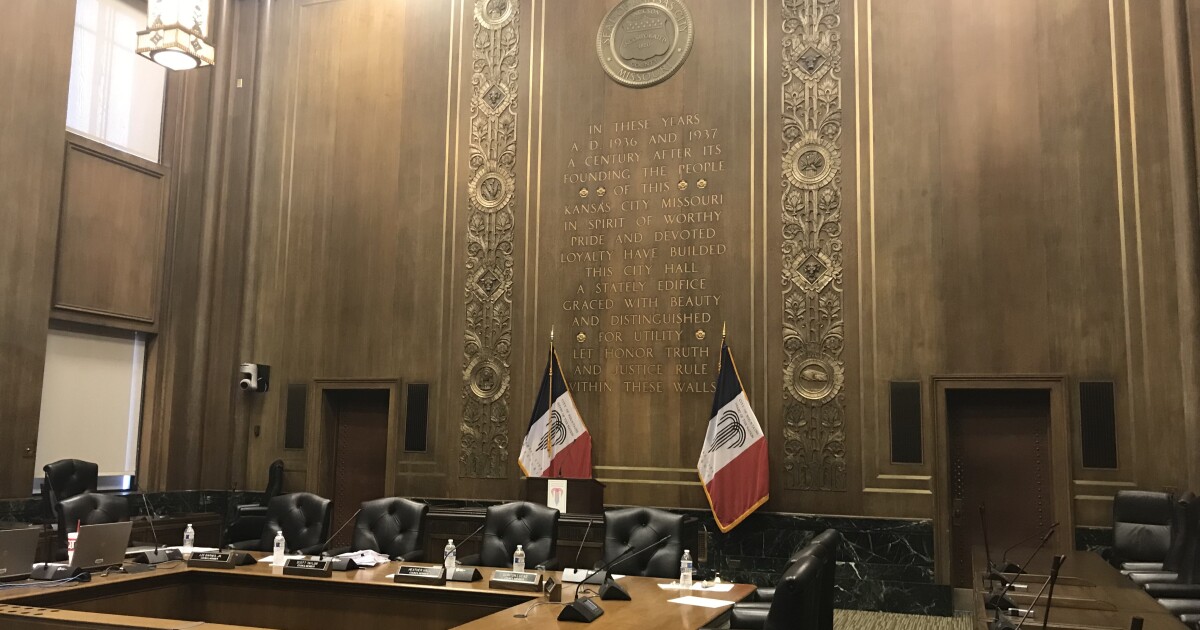
KANSAS CITY, Mo. — The Kansas City, Missouri, City Council voted Thursday to approve a $2.6 billion budget for the city’s fiscal year of 2026-27.
The budget includes $744 million in spending for public safety, including $26.3 million for a new Department of Community Safety and $4.2 million to hire 50 new KCMO Police Department officers, along with 10 call takers and 10 dispatchers.
“Our budget respects the strong fiscal foundation the taxpayers have helped Kansas City build, maintaining a rainy-day fund of over $200 million, increasing road resurfacing, hiring more public safety and city workers, and investing in all Kansas City neighborhoods,” Mayor Quinton Lucas said in a news release from the city. “In a city that can walk and chew gum, we are proud to welcome the world while delivering strong basic services for Kansas City’s families.”
The council voted to spend $83.8 million for the Kansas City Area Transportation Authority to provide bus services, but the KCATA may have to make cuts in bus services even with a $6 million boost in funding from the city.
In addition, the council approved spending $39.4 million for citywide street resurfacing and $1.5 million for tearing down dangerous buildings.
“This budget reflects a collaborative effort across the city, and provides a clear path for Kansas City to keep moving forward with discipline, accountability and a focus on service,” City Manager Mario Vasquez said in the news release. “Thank you to the council for its thoughtful deliberation and input in crafting this budget.”
More information on the fiscal year 2026-27 budget can be found on the city’s website.
—
The Missouri Lottery offers several draw games for those aiming to win big.
Here’s a look at March 25, 2026, results for each game:
Winning Powerball numbers from March 25 drawing
07-21-55-56-64, Powerball: 26, Power Play: 4
Check Powerball payouts and previous drawings here.
Winning Pick 3 numbers from March 25 drawing
Midday: 3-2-0
Midday Wild: 7
Evening: 0-0-5
Evening Wild: 5
Check Pick 3 payouts and previous drawings here.
Winning Pick 4 numbers from March 25 drawing
Midday: 2-6-3-9
Midday Wild: 4
Evening: 9-5-6-8
Evening Wild: 1
Check Pick 4 payouts and previous drawings here.
Winning Cash Pop numbers from March 25 drawing
Early Bird: 07
Morning: 09
Matinee: 04
Prime Time: 14
Night Owl: 07
Check Cash Pop payouts and previous drawings here.
Winning Show Me Cash numbers from March 25 drawing
12-14-22-26-28
Check Show Me Cash payouts and previous drawings here.
Winning Powerball Double Play numbers from March 25 drawing
35-38-41-43-62, Powerball: 08
Check Powerball Double Play payouts and previous drawings here.
Feeling lucky? Explore the latest lottery news & results
Are you a winner? Here’s how to claim your lottery prize
All Missouri Lottery retailers can redeem prizes up to $600. For prizes over $600, winners have the option to submit their claim by mail or in person at one of Missouri Lottery’s regional offices, by appointment only.
To claim by mail, complete a Missouri Lottery winner claim form, sign your winning ticket, and include a copy of your government-issued photo ID along with a completed IRS Form W-9. Ensure your name, address, telephone number and signature are on the back of your ticket. Claims should be mailed to:
Ticket Redemption
Missouri Lottery
P.O. Box 7777
Jefferson City, MO 65102-7777
For in-person claims, visit the Missouri Lottery Headquarters in Jefferson City or one of the regional offices in Kansas City, Springfield or St. Louis. Be sure to call ahead to verify hours and check if an appointment is required.
For additional instructions or to download the claim form, visit the Missouri Lottery prize claim page.
When are the Missouri Lottery drawings held?
- Powerball: 9:59 p.m. Monday, Wednesday and Saturday.
- Mega Millions: 10 p.m. Tuesday and Friday.
- Pick 3: 12:45 p.m. (Midday) and 8:59 p.m. (Evening) daily.
- Pick 4: 12:45 p.m. (Midday) and 8:59 p.m. (Evening) daily.
- Cash4Life: 8 p.m. daily.
- Cash Pop: 8 a.m. (Early Bird), 11 a.m. (Late Morning), 3 p.m. (Matinee), 7 p.m. (Prime Time) and 11 p.m. (Night Owl) daily.
- Show Me Cash: 8:59 p.m. daily.
- Lotto: 8:59 p.m. Wednesday and Saturday.
- Powerball Double Play: 9:59 p.m. Monday, Wednesday and Saturday.
This results page was generated automatically using information from TinBu and a template written and reviewed by a Missouri editor. You can send feedback using this form.

Trump to sign emergency order to pay TSA agents as Augusta airport preps for golf week

50 years of DC Metro: A look back in photos

WKYC Channel 3

Austin’s Star Is Still Shining Bright: Venture Funding To City’s Startups Hits All-Time High

How To Watch: Michigan vs Alabama in NCAA Tournament Sweet 16

Florida High School Football Rankings: Top 25 teams – Oct. 21

How old is Bo Nix? What to know about Oregon quarterback ahead of 2024 NFL Draft

Cleary's 21 help Le Moyne down Central Connecticut State 69-64 in OT

99th annual Pony Swim held in Virginia

Indiana Members Credit Union announced as new anchor tenant at Bottleworks District

Video: Will ICE Change Under Its New Leader?

DHS shutdown breakthrough comes at cost for Republicans as funding fights nears end

Rubio joins crucial G7 talks as Iran war set to dominate second day

A surprise resignation could open the door for an independent to win a Montana Senate seat

Video: Savannah Guthrie Says She Believes Her Mother Was Taken for Ransom
-

 Detroit, MI1 week ago
Drummer Brian Pastoria, longtime Detroit music advocate, dies at 68
-

 Science1 week ago
How a Melting Glacier in Antarctica Could Affect Tens of Millions Around the Globe
-
 Science1 week ago
I had to man up and get a mammogram
-

 Movie Reviews1 week ago
‘Youth’ Twitter review: Ken Karunaas impresses audiences; Suraj Venjaramoodu adds charm; music wins praise | – The Times of India
-

 Sports6 days ago
IOC addresses execution of 19-year-old Iranian wrestler Saleh Mohammadi
-

 New Mexico5 days ago
Clovis shooting leaves one dead, four injured
-
 Business1 week ago
Disney’s new CEO says his focus is on storytelling and creativity
-

 Texas1 week ago
How to buy Houston vs. Texas A&M 2026 March Madness tickets