Minnesota
Why Jordan Mason is a perfect addition to the Minnesota Vikings’ backfield


The Vikings aren’t messing around when it comes to fixing a running game that has struggled during the first three years of the Kevin O’Connell era.
Last week, they brought back Aaron Jones on a two-year extension before he could hit free agency, then upgraded the interior of their offensive line by signing former Colts standouts Ryan Kelly and Will Fries. And on Saturday night, they went out and acquired running back Jordan Mason from the 49ers, landing an underrated player who is the perfect complement to Jones in their backfield.
The Vikings traded a 2026 sixth-round pick and a pick swap this year (No. 160 overall for No. 187 overall) to San Francisco for Mason. Because they got a 2026 sixth-rounder from the Texans in Thursday’s Ed Ingram trade, they essentially traded Ingram (a player who was no longer in their plans) and moved down just 27 spots in this year’s draft to land Mason, who is reportedly signing a two-year deal with the Vikings with over $7 million guaranteed and a maximum value of $12 million.
This is an outstanding move from GM Kwesi Adofo-Mensah that really solidifies an excellent 1-2 punch in the Vikings’ backfield, which should do wonders for young quarterback J.J. McCarthy and the entire offense. Minnesota could still draft a running back in April, but that’s no longer a significant need, which will allow Adofo-Mensah and company to take a true best player available approach with the team’s selections.
Mason, a former undrafted free agent who turns 26 in March, could be a multi-year fixture at running back for the Vikings moving forward. He broke out last year with 789 rushing yards, 91 receiving yards, and three touchdowns for the 49ers, stepping in as their lead back while Christian McCaffrey was injured. Across a three-year career, he’s averaged 5.3 yards per carry. But the box score numbers don’t tell the whole story of how effective Mason was last season.
Jordan. Mason.#SFvsSEA on Prime Video — NFL (@NFL) October 11, 2024
Also streaming on #NFLPlus pic.twitter.com/5ZLYZPEh0x
Last year, Derrick Henry led NFL running backs with 1.77 rush yards over expected per attempt, a Next Gen Stats metric that attempts to measure how much yardage a back gains on a given play relative to what you’d expect based on the blocking and other factors. Saquon Barkley was second at 1.62 RYOE per attempt. In third place, at 1.38, was Mason. Only two other players (Chuba Hubbard and Jerome Ford) were above 1.0 in that statistic.
Mason generated his production despite facing eight-plus defenders in the box 33.3 percent of the time, according to NGS. Gus Edwards and Derrick Henry were the only other backs to see at least eight defenders stacked in the box on at least 33 percent of their rush attempts. Pro Football Focus charted Mason with 3.35 yards generated after contact per attempt, which was tied for 12th-best among the 72 running backs who had at least 50 carries last season.
Jordan Mason – vastly underrated
He faced the highest rate of stacked boxes in the NFL and ranked 3rd in rushing yards over expectation per attempt behind Saquon Barkley and Derrick Henry in 2024. https://t.co/NJiTYjbaOD pic.twitter.com/42qOllFddF — SFdata9ers🏈📊 (@sfdata9ers) March 11, 2025
Mason brings a blend of explosiveness, power, vision, and agility to the Vikings’ offense. He has a quick first step with the ball, but he also plays with great contact balance, which allows him to shed tacklers and continue gaining yardage. He’s a bigger back who is listed at 5’11”, 223 pounds, which is part of why he’s such a good complement to Jones (5’9″, 208). He runs with a very physical style and is a much more dynamic version of previous Vikings power backs like Alexander Mattison and Latavius Murray.
Was really impressed with Jordan Mason in the Vikings’ game against the 49ers. He runs so hard. Here are a number of plays where he did a great job after contact. pic.twitter.com/ZlK6NnYmgn
— Matt Fries (@FriesFootball) September 17, 2024
The Vikings have particularly struggled to run the ball in short-yardage situations and in the red zone, and Mason should help quite a bit in those areas. He only has 14 career receptions, but he’s capable in that regard. His size also helps him in pass protection, which is important in O’Connell’s offense.
Jones had a career-high 306 touches for over 1,500 yards from scrimmage last season, but he was at his best during his Packers career when paired with a powerful back like Jamaal Williams or A.J. Dillon. The Vikings will have the classic thunder and lightning backfield dynamic in 2025. Mason could potentially even see more playing time than Jones on early downs if he’s able to maintain his incredible efficiency from last season. Adding Mason also gives the Vikings insurance in case Jones has to miss any time. The 30-year-old veteran played in all 17 games last season, but not without getting banged up on a couple occasions.
The Vikings could’ve waited until the draft and grabbed a running back to round out their backfield. But they don’t have many picks, and rookies at any position are always a bit of an unknown. Instead, they went out and got a proven option who had some of the best advanced metrics among all running backs in the NFL last season — and for a pretty low price in both trade compensation and future salary. That’s good business from Adofo-Mensah and the Vikings, whose offense is looking rather scary heading into next season.
Stay up to date on all things Vikings by bookmarking Minnesota Vikings On SI, subscribing to our YouTube channel, and signing up to receive our free Vikings newsletter.

Minnesota
Wildfire smoke from Canada and Minnesota pushes further into US, engulfing DC in eerie haze

NEW YORK (AP) — Millions of people in the Great Lakes, Northeast and Mid-Atlantic states muddled through another day of unhealthy air from uncontrolled wildfires on Friday, as smoke enveloped the nation’s capital in a gloomy, eerie haze.
Air quality warnings were expected to remain in effect through Saturday across a wide swath of the U.S., but there’s potential for temporary relief with rains and storms forecast over a chunk of the affected region over the weekend.
The smoky conditions won’t be gone anytime soon, though, as fires burn unchecked across a remote region of Canada, cautioned Bob Oravec, a lead forecaster at the National Weather Service based in Maryland. Wildfires in a wilderness area in Minnesota are also contributing to the smoke.
“The source of the smoke is going to continue on for certainly a week, probably,” he said. “So in some form, there’s going to be smoke that gets transported from the fires downstream, and it’s just going to depend upon which way the wind’s blowing as to where the smoke is going to affect the most.”
On Friday, communities in Minnesota, Michigan and Illinois closest to the Canadian border and the Boundary Waters Canoe Area Wilderness in Minnesota again registered some of the worst air quality in the world, according to IQAir, an air quality monitoring website.
Not far behind them was Washington, D.C., where the thick smoke created eerie scenes. The Washington Monument, the Lincoln Memorial and other national landmarks could be seen enveloped in a thick, orange-hued haze in the morning.
“Wow that Canadian smoke haze is no joke,” Stewart Verdery, a former assistant secretary at the U.S. Department of Homeland Security, wrote on X as he shared a panorama of D.C. at sunrise. “Almost nothing visible – no sun, no monuments, no Reagan Airport.”
Air in and around Washington was expected to go from bad to worse as the day progressed, reaching “very unhealthy” and potentially “hazardous” levels on the air quality index, regional officials said.
People, particularly those with heart or lung disease, older adults and children, were urged to limit or avoid going outside as much as possible until air quality improved.
There was also concern in the New York City area about how the foul air might impact the World Cup final match between soccer powerhouses Spain and Argentina at MetLife Stadium in New Jersey on Sunday.
Oravec said winds will continue pushing the wildfire smoke east in the U.S., though conditions should be better on game day Sunday than on Saturday.
Just a day earlier, a thick haze tinged with orange and yellow darkened skies across several states and partly obscured Manhattan’s skyline.
Officials from New York, New Jersey, Pennsylvania and other Northeast states distributed free K95 face masks, canceled outdoor programming and opened libraries and other public buildings as cooling centers where people could get a respite from the sooty air.
As Friday progressed, air quality measures improved from “unhealthy” to “moderate” in some places in and around New York City.
A strong sun broke through a thin veil of smoke, and large chunks of clear blue sky were visible across much of the region by Friday afternoon.
Saturday brings a high chance of thunderstorms across much of the Northeast and mid-Atlantic, which will help dampen the bad air.
How long the reprieve lasts depends on what happens hundreds of miles north, as some 100 wildfires burn without end in sight, largely in the Ontario area in Canada. In the U.S., officials have closed the Boundary Waters while battling multiple fires.
Long-term exposure to smoky conditions can complicate existing health problems and lead to chronic and deadly issues, including respiratory illness, cardiovascular and neurological diseases and premature death.


See how the bald eagle’s story shows its enduring symbolism
As the U.S. celebrates 250 years, the bald eagle endures as North America’s native sea eagle and national bird.
The common loon, Minnesota’s state bird, is more closely related to a penguin than a duck.
Despite loons predominantly living in the northern hemisphere and penguins mostly living in the southern hemisphere, researchers consider them to be genetic cousins. Taxonomic analyses placed them in an evolutionary cluster tracing back 40 million to 50 million years ago, along with herons and pelicans.
While loons and ducks share habitat on Minnesota lakes, they aren’t close relatives. Ducks are closer cousins to geese and swans.
After sharing a common ancestor, penguins and loons developed distinct characteristics. Loons can fly, but struggle to move on land; penguins can’t fly, but waddle on land. Penguins use flipper-like wings to swim; loons use webbed feet for underwater propulsion.
They have some similar features, however, including dense bones to help dive underwater and their tuxedo coloring.
MinnPost partners with Gigafact to produce fact briefs — bite-sized fact checks of trending claims. Read our methodology to learn how we check claims.

Fires in the past burned more frequently in western Canada, but recent years have seen that trend migrate eastward, with large fires now burning in Ontario, Quebec and Atlantic provinces, Prof Chasmer said, leading to more noticeable smoke in densely populated cities like Toronto and New York.
-
 Politics4 minutes ago
Trump escalates election attacks, threatens California over voter data
-
 Science11 minutes ago
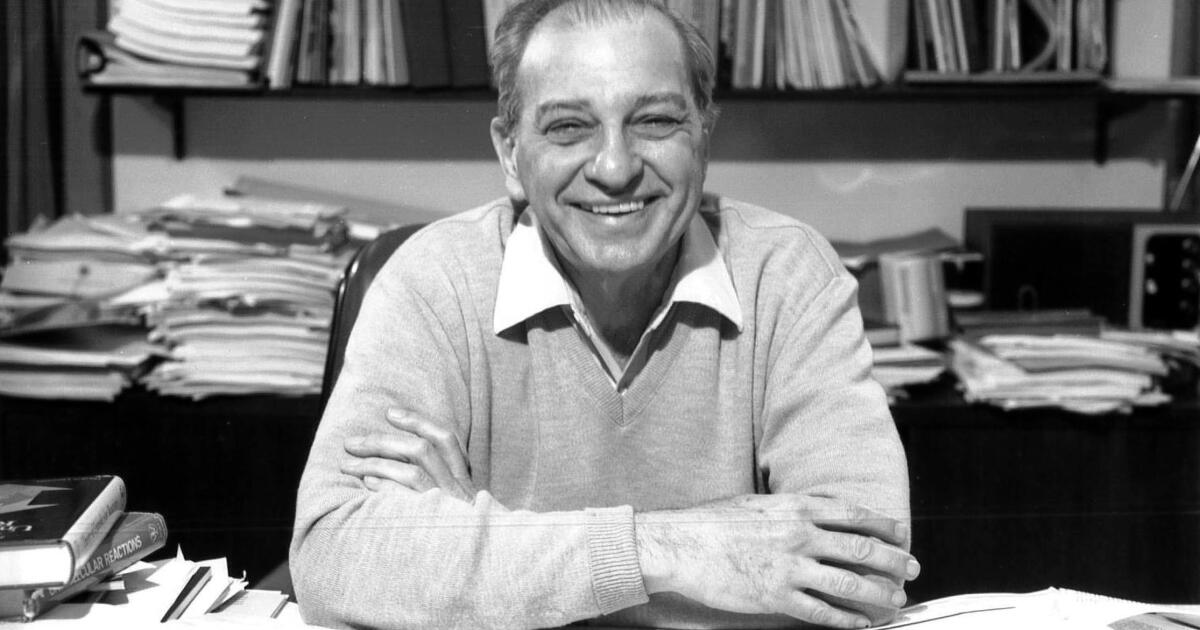
Rudolph Marcus, Caltech chemist who won Nobel Prize, dies at 102
-
 Sports17 minutes ago
Commentary: With Will Smith out indefinitely, Dodgers need to trade for a catcher
-

 World29 minutes ago
Mandela Day: What his legacy means in today’s South Africa
-
 News59 minutes ago
ICE shared Medicaid data it wasn’t supposed to have with Palantir
-

 Los Angeles, Ca3 hours ago
‘Moana’ is a triumph for Pacific Islander representation on the big screen
-

 Detroit, MI3 hours ago
Five shot during funeral at Detroit church
-

 San Francisco, CA3 hours ago
San Francisco Giants Announce Intriguing Roster Move Ahead of Mariners Series

