Minnesota
Minnesota Strikes Show Growing Militancy Among Food Workers


It wasn’t such a merry Christmas for grocery store management in central Minnesota. Five hundred grocery workers in the Brainerd Lakes area walked out on an unfair labor practice strike, deserting five stores between December 22 and 25.
Management tried to keep the stores running, but workers said they turned into disaster zones. Why did two Cub Foods stores, two Super Ones, and a SuperValu find themselves on Santa’s naughty list last year? United Food and Commercial Workers (UFCW) Local 663 charges management with interrogation, surveillance, intimidation, and bargaining in bad faith.
Those misdeeds included infiltrating a WhatsApp group chat for workers and stationing “loss prevention” employees — who normally focus on catching shoplifters — near the store exits to intimidate workers out of participating in walkouts leading up to the strike.
The union’s top bargaining demand is a raise. Wages have been stagnant a long time and lag behind what grocery workers are making a few hours south in the Twin Cities. Part-time wages are especially uncompetitive; turnover is high.
The strike made waves in Brainerd Lakes, a metro area of thirty thousand. It “really united workers at our store,” said Doug Olson, who has worked at Baxter Cub Foods for seventeen years. “Men and women, part-time, full-time, people of all different political beliefs. It’s really heartening to see the unity we’ve had.”
Olson works on the clean team, sometimes called the courtesy or maintenance team. They wipe up spills, clean the bathrooms, take out the garbage, bag groceries, and shovel snow — and get paid on a lower scale than other grocery workers. The union is fighting to eliminate the separate pay scale and bring clean-team workers up to par.
Management hasn’t budged since the Christmas strike, refusing to put more money on the table even after its attorney admitted it can afford the union’s proposal. But the workers may be equally stubborn. On January 18, they voted to reject management’s latest proposal by 84 percent, laying the groundwork for another potential strike.
“I believe this contract could make or break this store,” said Olson, who would like to retire from Cub one day. “Things are just going to get worse and worse otherwise. We really need to win this one.”
It’s the first time in recent memory that there are buttons, walkouts, and raised expectations in Brainerd. Vigorous contract fights are the exception, rather than the rule, in the UFCW. That’s one of the chief complaints of the burgeoning UFCW reform movement anchored by Washington State’s Local 3000, the union’s largest local with fifty thousand members.
Four hundred Local 3000 members at Macy’s went on a three-day strike over Thanksgiving, and they were out on strike again as this story went to press. In 2022 the local spearheaded an ambitious coordinated bargaining effort with seven other UFCW locals representing one hundred thousand Kroger workers in Western states.
Local 663, which represents seventeen thousand members across Minnesota, did not support the proposals put forward by the reform group Essential Workers for Democracy at the UFCW international convention last April, which were backed by Local 3000 and a handful of other reform-minded locals.
But the union underwent a major shift at the beginning of 2023 when its former organizing director Rena Wong became president. She was voted in by the executive board to complete the term of the previous president, who had stepped down.
Before Wong, the union had conservative leaders for decades. “The union leadership failed us,” said Olson. “They were more interested in labor peace and getting along with the owners than in helping us secure better wages and benefits. They would settle for whatever management offered them. They just rolled over, over and over again.” That labor peace has now been decisively broken. Last spring, thirty thousand Cub Foods workers in the Twin Cities launched a contract campaign, voting to strike thirty-three stores.
When they threatened to strike all the stores over Easter — one of the biggest grocery-shopping holidays — management caved. The workers won raises of $2.50–$3.50 an hour and got rid of the lower pay scale for the clean team.
This success built an appetite among stewards and members to bring the same kind of organizing and militancy to the local’s other contract fights, according to Paul Kirk-Davidoff, a steward at Seward Community Coop in Minneapolis. “A base for continued change in the union came from the contract campaign at Cub,” he said. “It convinced a lot of people.”
Workers at Lunds & Byerlys stores, and then at Kowalski’s, mounted strike threats over the summer, winning raises of up to $4 over two years. In October, workers at Seward Community Coop won even higher raises of at least $6.50 over three years, as well as the right for cashiers to sit in chairs.
The new leadership has encouraged a new spirit of activism, taking a more open approach and bringing more rank-and-file workers onto the negotiating team — whereas the role of workers in the union used to be more like “window dressing,” Olson said. The energy has spread to Local 663’s fights for first contracts — workers struck last summer at four Half Price Books stores, jointly organized with Local 1189 — and to its members in meatpacking, the UFCW’s other traditional core sector.
Workers at the Hormel Foods plant in Austin‚ Minnesota — the site of the bitterly fought 1985 strike that pitted then Local P-9 against the international union itself — won a contract in October with record raises of $3–$6, as part of national negotiations across five plants. Workers at the Austin plant had voted to reject a “final offer” from the company, and hundreds marched through town in a Labor Day show of force.
The resistance at Hormel has been a bright spot for the UFCW in meatpacking, a sector where union density has fallen precipitously, once-reigning master contracts have been all but dismantled, and the workforce, largely immigrants and workers of color, is notoriously exploited.
Case in point: coming up next is Local 663’s contract fight with the chicken processor Tony Downs Foods, in Madelia, southwest Minnesota. The employer was fined $300,000 last year for employing children as young as thirteen to operate meat grinders, forklifts, and ovens.



Minnesota
Vikings EVP of Football Ops Rob Brzezinski joins ‘The Insiders’ to outline team’s draft plans

Minnesota Vikings Executive Vice President of Football Operations Rob Brzezinski pulls up a chair alongside NFL Network Insider Ian Rapoport and Tom Pelissero to chat about some of the ideas floating around in the Vikings’ front office ahead of the 2026 NFL Draft.

UNDATED (WJON News) — The calendar turns to April on Wednesday, but that doesn’t mean we’re done with wintry weather just yet.
The National Weather Service in the Twin Cities says two rounds of accumulating snow are possible this week.
The first is on Thursday – mainly across central and southern Minnesota and western Wisconsin. The chance of snow on Thursday is 90 percent. We could see three inches or more of snow.
The second this weekend – mainly across central and northern Minnesota and western Wisconsin. The chance of snow on Saturday is 80 percent. We could see one to three inches of snow.
So far this season, St. Cloud has officially had 38.3 inches of snow, which is 4.4 inches below normal. At this same time last season, St. Cloud had 27.7 inches of snow.
LOOK: These Color Photos Vividly Capture the Everyday Moments of Life in the ’50s and ’60s
Think you know the ‘50s and ‘60s? Spoiler alert: They were filled with colors you might never expect.
Gallery Credit: Stephen Lenz

Suing Fleet Farm
New evidence videos obtained by the FOX 9 Investigators reveal how guns initially sold by Fleet Farm to illegal straw buyers repeatedly surfaced at crime scenes across the Twin Cities.
MINNEAPOLIS (FOX 9) – New evidence videos obtained by the FOX 9 Investigators reveal how guns initially sold by Fleet Farm to illegal straw buyers repeatedly surfaced at crime scenes across the Twin Cities.
Unrecovered firearms an ‘ongoing public safety threat’
Timeline:
Minnesota Attorney General Keith Ellison filed a civil lawsuit against Fleet Farm in 2022, one year after the mass shooting at the Truck Park Bar in St. Paul. A firearm initially sold by Fleet Farm was recovered at the scene and traced to convicted straw buyer Jerome Horton Jr.
“There were clear signs that we found that we believe that Fleet Farm should have known – and they sold them the gun anyway,” Attorney General Keith Ellison told the FOX 9 Investigators in a recent interview.
Fleet Farm has denied any wrongdoing and over the past three years, the company has repeatedly tried to get the state’s lawsuit thrown out, arguing it was shielded from liability by a federal law which generally insulates the gun industry from civil litigation.
Why you should care:
The FOX 9 Investigators tracked at least 46 guns that were sold by Fleet Farm stores in Minnesota to straw buyers – someone who illegally purchases a firearm for another individual, often on behalf of criminals.
Eight of those guns were recovered at various crime scenes across the Twin Cities, including from criminals on the streets of Minneapolis, to a loaded handgun found by a six-year-old boy, to the scene of a deadly mass shooting in St. Paul.
However, the vast majority of those 46 Fleet Farm guns have not been recovered. In September, federal Judge John Tunheim said those unrecovered firearms “pose an ongoing public safety threat to Minnesotans.”
The gun industry’s ‘unprecedented form of immunity’
Dig deeper:
Fleet Farm leaned on a federal shield law known as the Protection of Lawful Commerce in Arms Act – also known as PLCAA – in its attempts to get Minnesota’s lawsuit dismissed.
“The gun industry enjoys a pretty unprecedented form of immunity,” said Adam Skaggs, chief counsel for the Giffords Law Center. “The immunity law imposes hurdles, obstacles to being able to hold the gun companies accountable in court the way, for example, the opioid industry has been held accountable through civil litigation.”
The PLCAA can be traced back to when major cities like Chicago filed a wave of lawsuits against the gun industry in the 1990s.
“It was kind of the successor to big tobacco litigation,” said Indiana University law professor Jody Madeira.
What they’re saying:
Major gun companies like Colt Manufacturing called on Congress for help. They testified on Capitol Hill about having to defend themselves against “a multitude of lawsuits.”
“To blame Colt for the criminal misuse of firearms that are lawfully manufactured and sold is unjust,” said Colt Manufacturing Company’s Carlton Chen during a congressional hearing in 2003. “It is also threatening to our very existence.”
Gun rights advocates like Richard Pearson, who leads the Illinois State Rifle Association, said the federal immunity law was needed because of “frivolous lawsuit after frivolous lawsuit” that were trying to drain the money out of the gun companies.
Piercing the gun industry’s shield law
The backstory:
Congress passed the PLCAA with bipartisan support, but there were exceptions built into the law that have allowed cities and states – like Minnesota – to sue gun companies.
“They intended it to be a shield for lawful conduct, not for unlawful conduct,” Madeira said.
One of those exceptions includes when there are allegations of lawbreaking involving how firearms are marketed and sold.
In a 2023 ruling, a federal judge found Minnesota’s lawsuit was “not preempted” by PLCAA and could move forward.
A jury trial in federal court was scheduled for April 2026 until Fleet Farm agreed to settle the case for $1 million and agreed to reform the way the company sells and tracks gun sales across its stores.
“We condemn gun violence and remain committed to partnering with law enforcement and community leaders to help keep our communities safe,” Fleet Farm said in a statement after the settlement.
“I wanted to put the case in front of 12 Minnesotans and see what they thought, but you know, it is also responsible to settle cases when the offer is right,” Ellison said.
“What it does mean is if you’re selling guns in the State of Minnesota, you better obey the law – if I can show that you knew or should have known that you were selling to a trafficker, I’m suing you.”
What’s next: Minnesota also has a pending civil lawsuit against Glock – one of the largest gun manufacturers in the world. A trial in that case is tentatively scheduled for next year.

‘Hannah Montana’ still straddles the best of both worlds : Pop Culture Happy Hour

Another Starlink satellite has inexplicably exploded

Iran’s internet blackout hiding strike damage and suppressing dissent, Israeli officials say

Fugitive illegal alien convict on the run after attempting to strike ICE officer with vehicle: DHS

Selena Gomez says she was ‘misdiagnosed’ before receiving bipolar diagnosis

Florida High School Football Rankings: Top 25 teams – Oct. 21

How old is Bo Nix? What to know about Oregon quarterback ahead of 2024 NFL Draft

Cleary's 21 help Le Moyne down Central Connecticut State 69-64 in OT

99th annual Pony Swim held in Virginia

Indiana Members Credit Union announced as new anchor tenant at Bottleworks District
Fugitive illegal alien convict on the run after attempting to strike ICE officer with vehicle: DHS

EU to urge Israel to scrap death penalty bill as ‘grave regression’
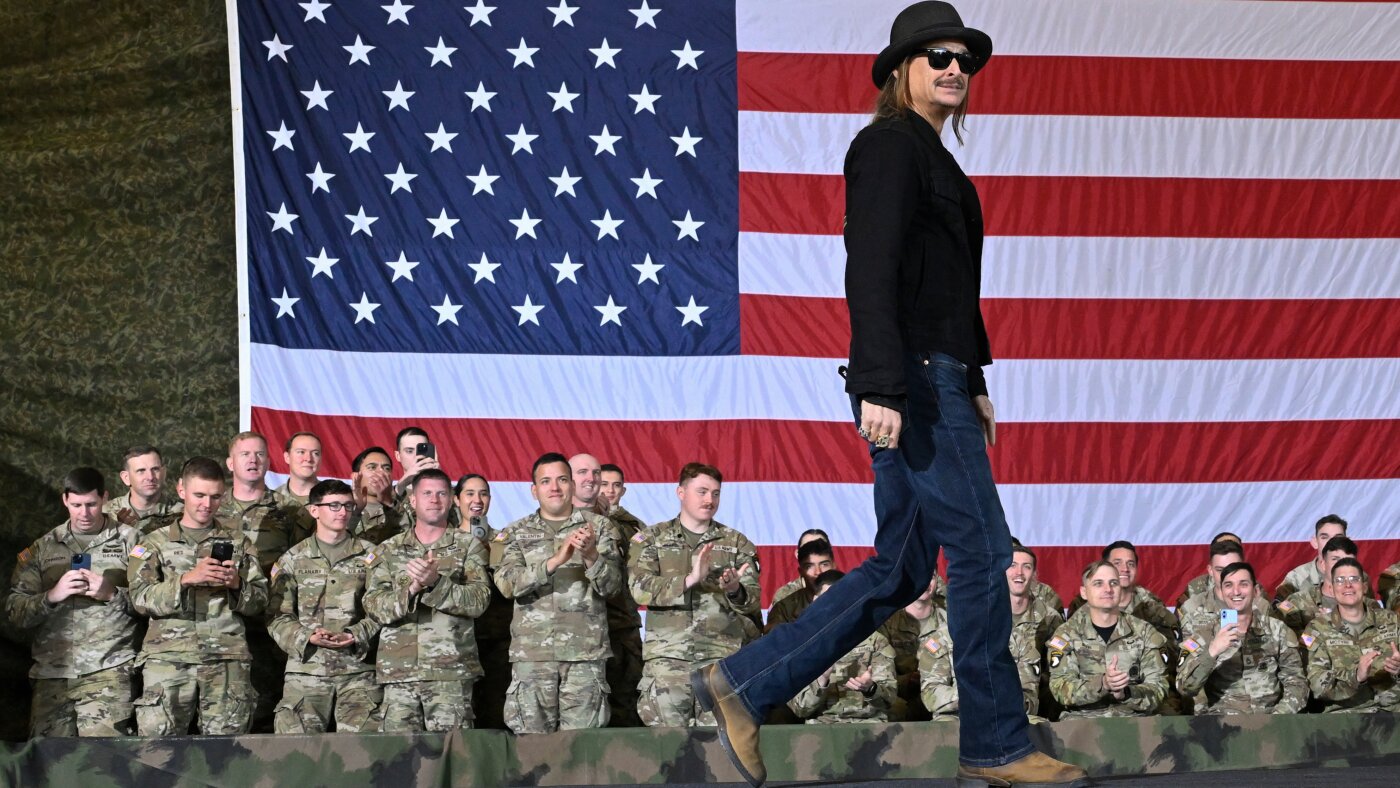
Army reviewing after helicopters hovered alongside Kid Rock’s swimming pool as he saluted

Emanuel pushes back on ‘straight White man’ question, says ideas matter most in 2028

French police make two more arrests over foiled attack on Bank of America
-

 Sports1 week ago
IOC addresses execution of 19-year-old Iranian wrestler Saleh Mohammadi
-

 Miami, FL5 days ago
Jannik Sinner’s Girlfriend Laila Hasanovic Stuns in Ab-Revealing Post Amid Miami Open
-

 South-Carolina2 days ago
South Carolina vs TCU predictions for Elite Eight game in March Madness
-

 New Mexico1 week ago
Clovis shooting leaves one dead, four injured
-

 Politics1 week ago
Schumer gambit fails as DHS shutdown hits 36 days and airport lines grow
-

 Minneapolis, MN5 days ago
Boy who shielded classmate during school shooting receives Medal of Honor
-

 Tennessee1 week ago
Tennessee Police Investigating Alleged Assault Involving ‘Reacher’ Star Alan Ritchson
-

 Science1 week ago
Record Heat Meets a Major Snow Drought Across the West