Minnesota
67 Minnesota waterways, likely more, impacted by too much de-icing salt


WEST ST. PAUL, Minn. — In the Twin Cities metro, an estimated 365,000 tons of salt is applied to our roads each year. To put that in perspective, that’s how much the Empire State Building in New York City weighs.
In fact, 67 waterways — from Lake Como to Minnehaha Creek — have made the list of Minnesota waterways damage by chloride.
Thompson Lake in West St. Paul has made the list for the past ten years.
Brook Asleson with the Minnesota Pollution Control Agency said 13 bodies of water have been added to the list since two years ago.
“This is a pretty big jump,” said Asleson.
While the Minnesota Pollution Control Agency says that salt has impaired at least 67 waterways in our state, the actual number is believed to be higher, since only about 10% of bodies of water have been tested.
Minneapolis neighborhood associations encourage residents to use less or no salt this winter
Waterways are considered impaired when one teaspoon of salt is found within five gallons of water.
The big culprit: De-icing salts.
“De-icing salts did come up as the number one source of chloride,” said Asleson.
The problem is that chloride is toxic to fish, insects and plants. It kills the smallest insects and impacts fish reproduction and growth. Once the salt is there, it’s too late, there’s no way to remove it, either.
“While it’s not a health risk or a hazard for us, most people don’t want to drink salty tasting water,” said Asleson.
MPCA is fighting back, by educating plow drivers and other winter maintenance professionals through their Smart Saltier certification program and by educating those at home.
“We recommend that you use about one mug of salt for about 10 sidewalk squares,” said Asleson.
The key here is to only use what you need, with the hope of keeping our precious waters pristine.
“Reducing a little bit of salt can go a long way to protecting our water resources,” said Asleson.
For a list of all impaired waterways, including those impacted by chloride, click here.



Heavy smoke from several large wildfires blazing in Canada and Minnesota is expected to engulf large swaths of the Midwest and Northeast U.S. this week, exposing millions of people to dangerous air pollution.
Over 100 wildfires currently are burning in Canada and winds are carrying the smoke southeast. Warnings about dangerous, unhealthy air extended Wednesday from Minnesota through Toronto and into New York. Unusually hot summer temperatures were expected too.
The best advice is to stay indoors to avoid both the smoke and the extreme heat, said Tyler Hasenstein, meteorologist with the National Weather Service in Chanhassen, Minnesota.
“Those two things coinciding with each other is not good from a health perspective,” he said.
Rangers try to get thousands of campers out of remote Minnesota wilderness
In far northeastern Minnesota, rangers were trying to warn people that the Boundary Waters Canoe Area Wilderness was closed Tuesday because about 17 fires caused by lightning more than a week ago were spreading through the vast wilderness accessible primarily by canoe.
Rangers estimated anywhere from 6,000 to 10,000 people were inside the 1.1-million-acre wilderness, which is almost the size of Delaware, Superior National Forest spokesperson Joy VanDrie said.
“It’s an arduous job,” VanDrie said of rangers and campers having to canoe for hours or even carry their boats over land to evacuate.
No injuries or deaths have been reported. Rangers were going through every lake and waterway and officials estimated they had about 90% of the people out Wednesday.
Campers rescued this week said skies quickly darkened from smoke and they could feel the heat as they paddled or were taken by boat to safety.
Jan Bailey was camping with her husband, daughter, son-in-law, two grandchildren and three dogs when they noticed wispy smoke on the horizon. Two hours later, they could see a raging firestorm. A paddleboarder with a satellite phone fled to their campsite and they called forestry rangers who sent a boat to rescue them and others.
“We had fire on both sides of us at that time,” Bailey told Minnesota Public Radio. “So we’re just weaving between the lakes. It’s a little smoky. Campsites are going up.”
Even the Canadian Air Force pitched in. They rescued two groups of youth campers Wednesday who had crossed the border. One group was stuck on an isolated sandbar, Minnesota Gov. Tim Walz said.
VanDrie didn’t know when the area might reopen. Minnesota officials said some fires in the Boundary Waters will be allowed to burn indefinitely but will be monitored to ensure they don’t threaten people or property.
Severe drought and heat have led to a busy wildfire season
Dan Westervelt, associate professor at Columbia University’s Climate School, said severe drought conditions combined with heat in Canada and the U.S. have created “a perfect storm for really dry conditions to provide a lot of fuel for these wildfires to burn.” Research shows warming temperatures from burning coal, oil and gas are making fires more frequent and intense.
High levels of fine particulate matter in the air from wildfire smoke may be unhealthy for sensitive groups, such as children and people with heart or lung conditions. The particulates can cause shortness of breath, coughing, dizziness or fatigue and aggravate heart and lung diseases and other chronic health issues.
Experts suggest wearing a N95 mask if you have to be outside and keeping your indoor air cleaner by closing windows and running an air purifier or air conditioner.
It’s been a particularly busy and deadly fire season in the U.S. About four dozen large fires are currently burning across 15 states, from Minnesota and North Carolina to Colorado, Utah, Idaho, Oregon and California, according to the National Interagency Fire Center.
Prolonged drought and record-low snowpack levels combined to make conditions ripe for rapid fire growth. More than 16,800 people are assigned to fighting blazes across the county. The fires have burned over 5,678 square miles (9,138 square kilometers) — more than the size of Yellowstone and Grand Canyon national parks combined, the agency said.
Comparison view of clear vs. smoky conditions in Larsen, Wisconsin:
Smoke spreads as officials warn wildfires could burn for months
In Minnesota, officials warned large fires could burn for months. In Minneapolis, the high Wednesday was expected to be 96 degrees F and temperatures above 90 F were expected the rest of the week.
“It could well be we’re having significant fires throughout the summer until we have snow. Snow would be a good thing,” said Patty Thielen, director of the state Department of Natural Resources.
Officials in Michigan and Wisconsin warned residents about air quality issues that could last for days and the problems extended even to Maine, where residents were reporting a yellowish and brownish color in the sky.
The most intense smoke could spread as far south as Washington, D.C., by midday Thursday.
___
Associated Press writers Susan Montoya Bryan and Jeffrey Collins contributed to this report.
Minnesota
Minnesota conviction review unit demise dashes hopes of some incarcerated people, their families

At a press conference at the state Capitol Tuesday, Mary Riley holds up a photo of her son, Adrian Riley, whose case was being looked at by the state’s conviction review unit before the unit shut down earlier this month. Riley and other families are calling for the full funding and reopening of the unit.
Cait Kelley | MPR News


CDC warns of rise in cyclosporiasis cases. Here’s what to know.
Cyclosporiasis cases are rising across the U.S. as officials warn about contaminated produce and symptoms.
After an outbreak of cyclosporiasis, a gastrointestinal disease, U.S. Sen. Amy Klobuchar is speaking up.
The Minnesota senator is urging the Centers for Disease Control and Prevention and the U.S. Food and Drug Administration to reinstate funding and staffing for federal and state food safety programs to fight the current cyclosporiasis outbreak.
Cyclosporiasis is an illness caused by eating contaminated food or drinking contaminated water and can lead to severe diarrhea, dehydration, fatigue and other health issues. So far across the country, Klobuchar states, nearly 2,800 cases and 87 hospitalizations linked to this outbreak have been confirmed.
“I write to urge the Centers for Disease Control (CDC) and Food and Drug Administration (FDA) to restore funding and staffing cuts made by the administration to federal and state food safety programs,” wrote Klobuchar. “As a currently uncontrolled large foodborne outbreak across the country continues, cuts to these programs are impacting our nation’s ability to prevent, detect, and contain foodborne illnesses and protect public health.”
Klobuchar said last year the administration made reporting of foodborne illnesses caused by the parasite cyclospora optional when it cut the CDC FoodNet program’s tracking of 10 pathogens, refering to the administration’s layoffs of federal public health employees.
“More recently,” the senator wrote, “the administration terminated Congressionally-appropriated Public Health Infrastructure Grants and Preventive Services Block Grants, which pay for state health department staff, laboratory capacity, diagnostics, tracking, and surveillance.”
What is cyclosporiasis?
The outbreak of cyclospora is putting health officials on alert as cases of the foodborne illness continue to be investigated across the United States. The illness is caused by the microscopic parasite, which can contaminate fresh produce and cause days, or even weeks, of severe gastrointestinal illness.
Unlike many foodborne illnesses, cyclospora is most often linked to fresh fruits and vegetables that are eaten raw, including leafy greens, herbs and berries. Investigators are working to determine the exact source of the current outbreak while tracing where contaminated food may have been distributed.
The CDC states on its website that local, state and federal public health authorities are investigating several clusters of cases in more than one state.
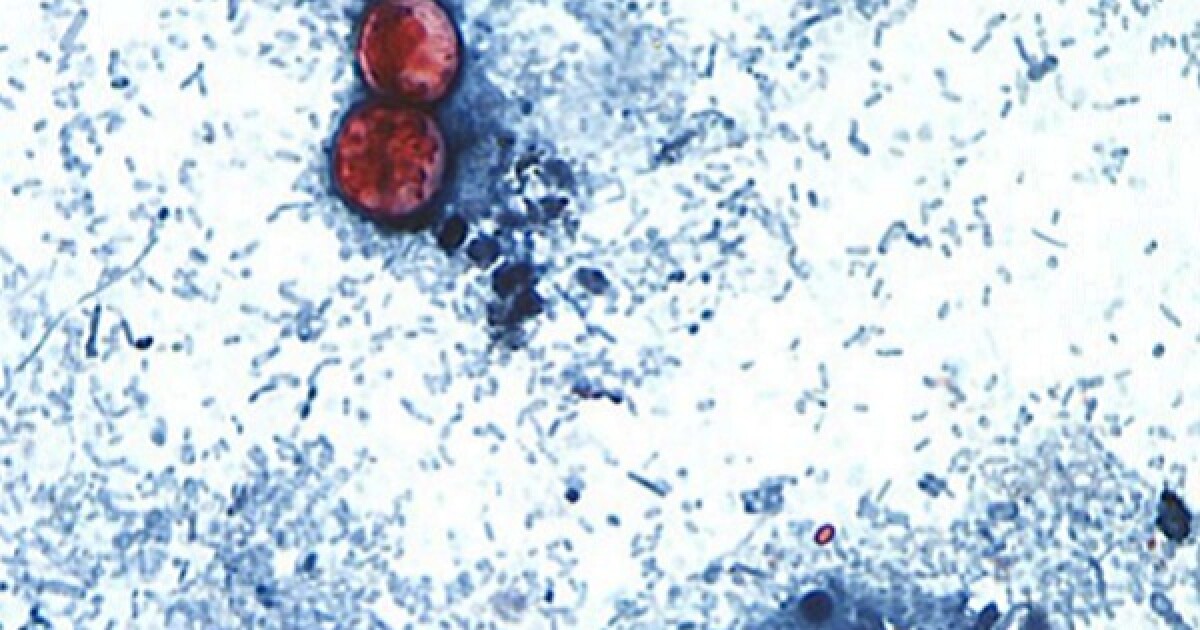
Cyclosporiasis is an illness caused by a tiny, single-celled parasite called Cyclospora cayetanensis, according to the U.S. Food and Drug Administration.
It is a protozoan parasite that is so small, it can only be seen with a microscope. It can infect humans when they eat food or drink water that’s been contaminated with fecal matter.
How many cyclosporiasis cases in Minnesota?
Although several states have reported illnesses tied to the current outbreak, Minnesota is one of the states that was identified in 2019 and 2020 with an outbreak; however, there is not a significant number of outbreak-related cases as of now.
As of July 9, according to CDC data, Minnesota has recorded fewer than 10 cases. The largest outbreaks have been reported in states such as Michigan, New York, Texas, Louisiana and Connecticut.
The CDC website states as of July 13, 1,645 cases were reported in people who acquired cyclosporiasis in the U.S. There were 141 hospitalizations, with 34 states reporting. These people became sick after eating food in the U.S. and had not traveled outside the country within two weeks of becoming ill.
What foods can carry cyclosporiasis?
Fresh produce is the food most commonly linked to cyclosporiasis outbreaks. Foods associated with infections include bagged salad mixes, romaine lettuce, spinach, basil, cilantro, parsley, raspberries, blackberries, snow peas, sugar snap peas, and other fresh fruits and vegetables eaten raw. Contaminated water used to irrigate crops or wash produce is often the source of contamination, according to the FDA.
How to prepare food to avoid cyclosporiasis
The safest option is to cook leafy greens, cilantro, basil, green onions, snow peas and raspberries after carefully washing them under clean, running water. Heating food to 158 degrees or higher kills the parasite.
If you must eat raw, fresh produce, the Centers for Disease Control suggests:
- Washing hands with soap and water before and after handling or preparing food.
- Avoiding prewashed bagged lettuce or salad mixes. Instead, buy a whole head of lettuce. Throw away the outer two or three layers of leaves and thoroughly wash the inner leaves under running water.
- Thoroughly washing herbs, such as cilantro and basil, under running water. Separate the leaves as you wash them.
- Trimming the root end and removing the outer layer of green onions, which also are known as scallions. Once that’s done, wash them thoroughly under running water.
- Considering using frozen raspberries, rather than fresh, to reduce risk. The fruit’s bumpy surface makes raspberries especially difficult to clean. The parasite can hide in its tiny crevices. Freezing may reduce the risk, but the health department warns it does not guarantee the fruit won’t be contaminated.
- Rubbing the surface of snow peas while washing them under running water.
- Washing all fresh produce under clean running water, even if you plan to peel it. Scrub firm fruits and vegetables, such as melons and cucumbers, with a clean produce brush and cut away any damaged or bruised areas before preparing and eating.
- Refrigerating cut, peeled or cooked fruits and vegetables as soon as possible.
- Washing and sanitizing utensils and surfaces before and after handling food. Wash and sanitize display cases and refrigerators where fresh produce is stored along with cutting boards, surfaces and utensils used to prepare, serve or store fresh produce.
What caused previous cyclosporiasis outbreaks?
In the past, outbreaks in the United States and Canada have been tied to bagged salad mixes and kits, such as pre-cut lettuce blends with romaine, iceberg, red cabbage and carrots; fresh cilantro, basil, raspberries, snow peas and green onions.
Among them were outbreaks identified:
- In 1997, when more than 1,000 people in the U.S. and Canada were sickened by contaminated raspberries imported from Guatemala.
- In 2005, when people got sick after eating basil imported from Brazil, Peru, Mexico and Costa Rica.
- In 2018, when lettuce served at McDonald’s restaurants was the source of a multistate outbreak of cyclosporiasis infections.
- In 2019, when more than 2,400 people in 37 states and the District of Columbia became ill after eating imported basil from Mexico.
Klobuchar leads efforts on food safety
Klobuchar has led other efforts to improve food safety, particularly by reducing harmful heavy metals in baby food and children’s products. In 2024, Klobuchar introduced the Baby Food Safety Act of 2024 to limit the levels of harmful heavy metals allowed in commercial food for infants and toddlers. In 2009, Klobuchar led the bipartisan Food Safety Rapid Response Act to help agencies detect and investigate food safety outbreaks, which was signed into law as part of the Food Safety and Modernization Act of 2012. Her legislation also established eight food safety centers of excellence, including the Minnesota Integrated Food Safety Center of Excellence.
-

 Michigan2 minutes ago
University of Michigan’s David C. Miller chosen to succeed Jeff Balser as Vanderbilt Health’s President and CEO and Dean of Vanderbilt University School of Medicine
-

 Massachusetts8 minutes ago
Massachusetts Broadband Institute distributes devices to underserved communities
-

 Minnesota14 minutes ago
Smoke from wildfires in Minnesota and Canada exposes millions to dangerous air quality
-

 Mississippi20 minutes ago
How permanent daylight saving time would impact Mississippi
-
 Missouri26 minutes ago
Missouri reports 43 cases of parasitic infection that’s sickened thousands nationwide
-

 Montana32 minutes ago
Governor Gianforte Announces Montana Ranks as Top 10 State for Job Growth
-

 Nebraska38 minutes ago
Roanoke County teen heads to national rodeo finals in Nebraska
-

 Nevada44 minutes ago
Nevada’s modern boomtowns are these fast-growing cities, study said

