Minneapolis, MN
Doctor who grew up in the Cedar-Riverside area of Minneapolis wants to open an opioid clinic


Plans for opioid treatment center in Cedar-Riverside neighborhood
Dr. Sadik Ali is passionate about helping those fighting opioid addiction.
“For me, it’s very personal,” he said. “I have family members who’ve been affected by this. I have relatives that have died from an overdose. That’s when it hit home for me.”
Ali, an internal medicine specialist who works in Mankato but grew up in Cedar-Riverside, wants to open what he calls the ‘Model C’ center on a property along 20th Avenue South.
“We call this ground zero,” he declared. “This is the epidemic; the epicenter of substance use disorder in our community. It’s tearing it apart. It’s an existential crisis.”
Ali says he’s investing his life savings into the project.
Its estimated cost — more than $34 million.
The goal is to open a 31-bed detox unit; a clinic that would dispense medication for opioid use disorder for 300 people initially — and later twice that. There would also be a counseling facility that would place about 16 people on an abstinence recovery track.
“I feel there’s not enough we can do on the prevention side to educate people just how deadly and how bad this problem is,” Minneapolis Police Chief Brian O’Hara told Ali during a Zoom meeting. “You’re talking about trying to help people that are affected in these groups trying to keep people alive. That keeps getting worse each year.”
City data shows 244 opioid-related deaths in 2022.
That’s about triple the number from 2017.
O’Hara says treatment, not arrests, is the solution for those fighting addiction.
“For people who are addicted and who are suffering through all this, their answer to their problem is not going to be in handcuffs,” O’Hara noted. “We’re not going to be able to arrest our way out of people who are addicted.”
He told Ali he should engage with local elected officials and the public to keep them updated about the project.
Ali says he’s trying to get funding from grants and other sources, but says for now, money for the center is coming out of his own pocket.
He notes he’s still waiting for the required licenses from the Drug Enforcement Administration, the state and federal regulators.
Ali says he hopes to open the first stages of the clinic sometime in May.
“This is something that wakes me up every morning and gives me a purpose,” he declared. “It’s about saving lives and making a difference in our community.”



A major traffic shift will start on one of Minnesota’s busiest highways Wednesday morning.
Eastbound lanes of Interstate 394 between Louisiana Avenue in St. Louis Park and downtown Minneapolis will be down to two lanes, with no EZ-Pass options. That means getting from the west metro to downtown Minneapolis could be tricky. Officials say drivers should expect increased traffic around St. Louis Park through the fall.
The change comes as westbound I-394 fully reopens after several months of construction, plus a return-to-normal entry to westbound I-394 from westbound Interstate 94 after the Lowry Hill Tunnel.
Crews have been working on the $67 million project since July 2025 to repair and restore more than 30 bridges across the 394 corridor.
While eastbound drivers are finding fewer lanes, westbound drivers are finding freedom
Nathan Bowie with the Minnesota Department of Transportation says construction has been going well and while the reopening of the westbound lanes marks an important milestone, the work is far from over.
“We understand that construction can be an inconvenience. It can be frustrating,” Bowie said. “We’re really asking folks to be patient, plan ahead, give yourself some extra travel time.”
The project also includes several ramp closures, including eastbound I-394 ramps at Penn and Cedar Lake avenues and the connection to westbound I-94.
Bryn Mawr resident Dan Spengler said he’s noticed more drivers shifting to neighborhood streets to avoid backups and expects that to only get worse.
“I believe in what they’re doing, but they need to manage the neighborhoods better because people are driving through the neighborhood with nowhere to go, so they are speeding through neighborhoods,” Spengler said.
Bowie says crews will be putting on signs in neighborhoods where traffic is expected to swell, reminding folks of the speed limit.
Businesses along I-394, like Good Day Cafe, are also feeling the squeeze
“We’d like to have all the roads open, yes,” said manager Jamie Flynn. “I mean, right now we’re very fortunate, for like I said, the guests and sort of the people that know to come here that have been for years and years.”
The new traffic pattern is expected to stay in place through November. Officials want drivers to follow posted detours and pay attention to ensure a smooth transition.
More information about the project is available on the Minnesota Department of Transportation’s website.
Minneapolis, MN
Man sentenced to federal prison for armed robberies of St. Paul bank, Minneapolis Walgreens

A 26-year-old man was sentenced this week to 2 ½ years in federal prison for robbing a Walgreens in Minneapolis, then a St. Paul bank the next day.
Korey Maurese Hale of Minneapolis pleaded guilty in U.S. District Court of Minnesota to one count of armed bank robbery in connection with the June 2024 hold ups.
Hale used the same .22-caliber Mossberg rifle in both robberies, making off with about $200 from Walgreens at Chicago Avenue and 43rd Street and approximately $1,833 from BMO Bank at Snelling and Randolph avenues, according to his January plea agreement. St. Paul police arrested Hale near the bank shortly after the heist.
In an interview with a St. Paul police investigator, Hale said people were trying to kill him and voices in his head made him rob the bank, according to initial charges filed in Ramsey County District Court.
Hale was civilly committed as mentally ill and chemically dependent in September 2024. Eight months later, he was ordered to undergo a federal psychiatric and psychological examination, which found his medication treatment was effective and he was competent to stand trial, Assistant U.S. Attorney Matthew Forbes wrote in a presentencing memo.
Hale’s sentencing Monday at the federal courthouse in St. Paul includes five years of supervised release following incarceration.
“Once released, if Hale continues to take his medications, continues to receive mental health treatment, and stays away from controlled substances, he will dramatically reduce his risk of recidivism,” Forbes wrote in the memo. “A five-year term of supervision will best ensure that the federal crimes in this case are Hale’s last.”

New analysis shows how misconduct allegations have been handled in the Minneapolis Police Department a week after an ACLU report found that concerns over policing tactics have continued. FOX 9’s Soyoung Kim has the latest.
-
 Alabama5 minutes ago
Mac Jones asked who was his craziest teammate at Alabama
-

 Alaska12 minutes ago
Climate Change Is Helping an Invasive Predator Wreak Havoc on Iconic Alaskan Fish
-

 Arizona15 minutes ago
Arizona man pleads guilty after illegally living in forest for years among ‘1,000lbs of trash’
-

 Arkansas20 minutes ago
Army names intelligence facility for Arkansas Tech graduate
-

 California27 minutes ago
How California Effectively Legalized an Open-Air Sex Market
-

 Colorado29 minutes ago
Julian Lewis Says Deion Sanders’ Colorado ‘Wasn’t Really Looking at Defenses Much’ Last Season
-
 Idaho35 minutes ago
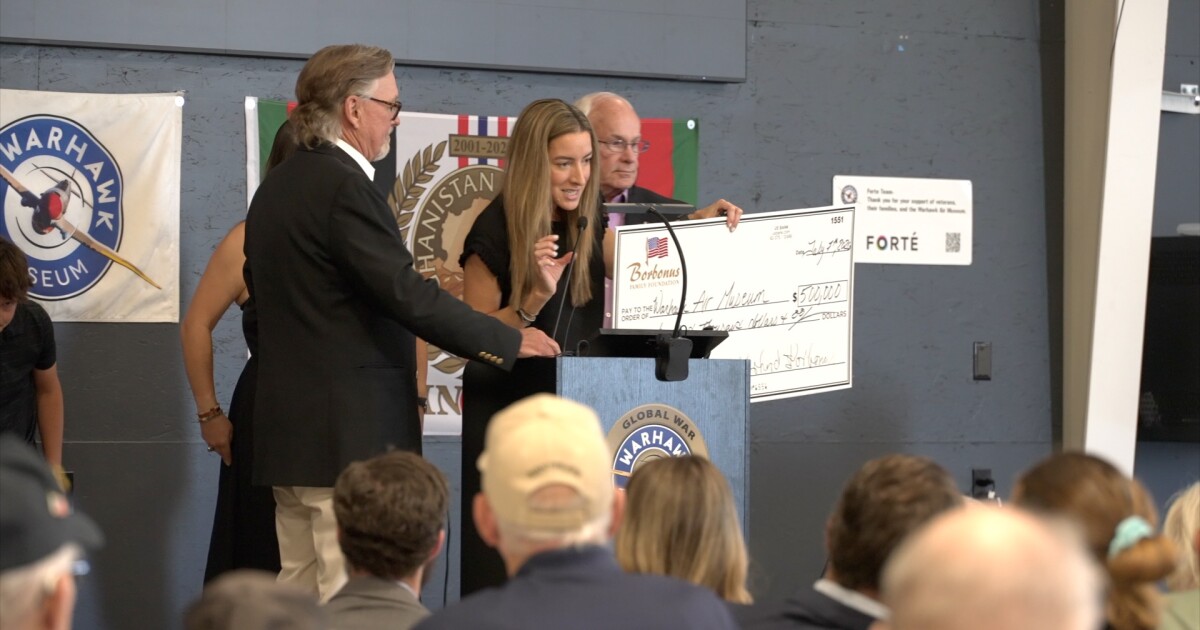
Warhawk Air Museum receives $500K grant honoring fallen Idaho soldier
-

 Connecticut35 minutes ago
Several beaches closed to swimming due to potential bacteria in the water

