Milwaukee, WI
Here’s a guide to Milwaukee’s Layton Park neighborhood


Located on the city’s south side, Layton Park is one of more than 75 distinct neighborhoods in Milwaukee.
Working-class Poles and Germans arrived in the late 19th century, but now, the largely residential neighborhood is about three-quarters Latino. Home to just over 8,200 residents, Layton Park is one of Milwaukee’s most populated neighborhoods.
The neighborhood and its surrounding area are known for their vibrant Latin American and Caribbean influences, ample outdoor recreation opportunities and beloved, hidden-gem restaurants.
Here’s what to know about and check out in Milwaukee’s Layton Park neighborhood.
More: Here’s a guide to Milwaukee’s Tippecanoe and Town of Lake neighborhoods
More: What to know about Milwaukee’s Brewers Hill neighborhood
More: Here’s a guide to Milwaukee’s lower east side neighborhood
Where is Milwaukee’s Layton Park neighborhood?
Neighborhood boundaries in Milwaukee are not completely set in stone and may differ depending on who you ask.
However, most sources define Layton Park’s boundaries as W. Becher Street at the north and W. Cleveland Ave. or W. Kinnickinnic River Parkway at the south, and S. 35th Street at the west and W. Forest Home Avenue and S. 27th Street at the east.
An earlier definition in the 1970 “Metropolitan Milwaukee Fact Book” defined the neighborhood’s boundaries as “Lincoln Ave. from 16th St. to 24th St., Becher St. from 24th St. to 35th St., and Howard Ave. from 16th St. to 35th St.,” according to UW-Milwaukee’s Encyclopedia of Milwaukee. Today, this area includes Layton Park, Forest Home Hills, Southgate, Southpoint and parts of the Jackson Park, Morgandale, and Polonia neighborhoods.
Layton Park was a Polish neighborhood in the 1800s
In 1849, Englishman John Layton purchased land now bounded by Lincoln Avenue, Forest Home Avenue, and 31st Street, wrote Jim Nelsen, Golda Meir School social studies department chair, for the Encyclopedia of Milwaukee. When Layton arrived, the area was home to white farmers and Native Americans. Layton and his son Frederick are the neighborhood’s namesake and shaped much of it, building a farm, residence and inn.
In 1885, the Laytons sold their land, and it was subdivided for houses, Nelsen wrote. Working-class Polish residents, as well as some Germans and other northern Europeans, made up the majority of the neighborhood’s residents by the turn of the century.
The neighborhood’s Polish roots are still evident in a lot of nearby places: Pulaski High School, Pulaski Park and Pulaski Indoor Pool, just to name a few. Many things in the area are named “Pulaski” after General Casimir Pulaski, a Polish hero of the American Revolution, Nelsen explained.
“He actually didn’t speak more than probably a few words of English, but he was an officer during the time of the American Revolution and fought on the American side,” Nelsen said. “So, for a lot of Polish residents here back like 100, 150 years ago, there was this big concern of, ‘We want to be American right away, but we also want to be Polish. So, what can we do to be proud Polish-American? Oh man, there’s this American-Polish patriot!’”
Layton Park has been home to Maynard Steel Casting since World War I. From 1951 to 1999, the neighborhood was also the site of Southgate Shopping Center, Milwaukee’s first shopping mall. Leon’s Frozen Custard, currently Milwaukee’s second-oldest custard stand, popped up on 27th Street in 1942.
Latino immigrants, mainly from Mexico, began settling in Layton Park and much of the rest of Milwaukee’s south side in large numbers in the mid-to-late 20th century.
“Latinos were able to settle successfully alongside the Poles because they shared so many traits in common,” wrote anthropologists at Urban Anthropology Inc. in their “190 Milwaukee Neighborhoods” project entry on Layton Park. “These included the Catholic faith, the focus on the Madonna figure, polka music traditions, similarities in childrearing and eldercare practices, and an entrepreneurial spirit.”
Today, Layton Park is home to a vibrant, majority-Latino community
Today’s Layton Park neighborhood is largely residential. Nelsen said its reasonably priced homes attract first-time homeowners and immigrants. As of 2020, Layton Park is about 75% Latino.
The main commercial corridors in the neighborhood are along Lincoln Avenue and W. Forest Home Avenue. Many restaurants and small auto repair businesses line these streets. Nelsen said Layton Park attracts job-seekers with lots of opportunities in retail, restaurants and at Aurora St. Luke’s Medical Center, one of the neighborhood’s biggest employers.
Kevin Solis is the senior outreach and engagement manager for VIA Community Development Corporation. He works with residents of Layton Park ― and the nearby Burnham Park and Silver City neighborhoods ― on civic engagement: voting, providing public comment at the mayor’s budget hearing and organizing neighborhood projects.
Solis said Layton Park’s Latino culture is on display in the neighborhood’s food offerings.
“We can see it, not only in the restaurants that are available, but there are grocery stores that cater a lot to our community,” he said. “This makes the community feel more like home.”
Solis cited El Rey Foodmart on Burnham Street and Cermak Fresh Market on Miller Parkway, both just north of Layton Park’s official boundaries, as examples. El Rey is a Milwaukee-based Central and South American specialty food store chain, while Cermak specializes in a variety of cultural foods from across the globe, including Latin American cuisine.
Layton Park’s Latino culture is also evident in the nearby churches, such as Our Lady Queen of Peace Parish, which offers Mass in Spanish multiple times a week as well as other Latino Catholic traditions like Quinceañeras and Spanish-speaking faith groups.
What to eat, see and do in and around Milwaukee’s Layton Park neighborhood
Nelsen recommends Mazos Hamburgers, 3146 S. 27th St. The small diner has been around since 1934.
“Most people drive past and don’t realize it’s there,” he said. “But, if you’re just looking for a hole-in-the-wall type place with home-cooked food with reasonable prices, it’s not a bad place at all to get a burger.”
One neighborhood favorite is Tu Casa Mexican Restaurant and Bar, 3710 W. Lincoln Ave. The restaurant promises “The tastes of Mexico, the feelings of home” on its website, and the menu features Mexican favorites well-known in the U.S., like tacos and enchiladas, as well as authentic dishes and seafood that some Milwaukeeans may be less familiar with.
Another spot to check out is Neveria Las Maravillas, 2908 W. Lincoln Ave. The shop serves traditional Mexican ice cream in a wide variety of flavors, as well as elotes, fruit and drinks.
Layton Park and the surrounding area are also a hub for food trucks.
“If you walk around, you’ll for sure bump into a food truck,” Solis said. “And I will guarantee that it will have something delicious for you.”
One truck he recommends is Mexicano Express, 3301 W. Burnham St. A Puerto Rican food truck, Sabor Divino, just opened a brick-and-mortar location at 3300 W. Lincoln Ave.
Just east of Layton Park’s official boundary is the Forest Home Cemetery and Arboretum. The 200-acre cemetery was established in 1850 and is the burial site of many “beer barons, industrialists, mayors, governors, senators and families who have made significant contributions to, and helped to build, Milwaukee,” the cemetery says on its website. A list of notable people buried at Forest Home can be found on its website.
The cemetery offers self-guided and public summer tours. It also hosts a Día de los Muertos festival and 5K, as well as a Halloween event called “Spirits of the Silent City,” where professional actors portray famous Milwaukeeans buried in the cemetery and guide visitors on an educational, after-dark tour. The cemetery is also an arboretum, where people can enjoy walking and cycling trails, birdwatching and 2,600 trees of over 100 labeled species.
The Kinnickinnic Sports Center, 3070 S. 20th St., is also nearby. It features an archery range, basketball court, baseball and softball diamonds, trails and a playground.
Solis also recommends the recently renovated Burnham Playfield, 1755 S. 32nd St., which now has a splash pad, playground, soccer fields and basketball courts.
New to the neighborhood? Here’s how to access Milwaukee services
Tell us about your Milwaukee neighborhood. We want to hear from you!
What makes your Milwaukee neighborhood special to you? Do you have any photos in the neighborhood you’d like to share? Share more at bit.ly/MKE_Neighborhoods.



Milwaukee, WI
Travelers see shorter lines at Milwaukee Mitchell despite the ongoing partial government shutdown

MILWAUKEE — Despite a partial government shutdown causing long TSA lines at airports across the country, travelers at Milwaukee Mitchell airport are experiencing short wait times ahead of spring break.
John Wahlen and his colleague Joe Orendorf were coming back home from North Carolina and prepared for a much different scene.
“We were remarkably surprised that it was as easy as it was,” Wahlen said.
Brendyn Jones/TMJ4
A national TSA spokesperson told TMJ4 that over 3,450 TSA officers called out across the country on Thursday. The national call-out rate was at 11.83% percent, the highest since the shutdown began.
While the TSA could not provide specific numbers for Milwaukee Mitchell, the airport was not in the top-10 for call-out rates.
The highest percentages of call-offs came from much larger airports, including George Bush Intercontinental in Houston at 44 percent, Atlanta at almost 41 percent, and Baltimore at 37 percent.
“We were in smaller airports, Raleigh-Durham, I think we waited for two people, and one of them was him,” Orendorf said.
Watch: Travelers see shorter lines at Milwaukee Mitchell despite the ongoing partial government shutdown
Travelers see shorter lines at Milwaukee Mitchell despite the ongoing partial government shutdown
A spokesperson for Milwaukee Mitchell told TMJ4 that around 11,000 people are expected this Friday and Saturday, and next Friday and Saturday as spring break travel peaks.
President Trump signed an executive order to pay TSA agents, meaning a resolution may be on the horizon. Travelers, including Selena Mauricio, said they are thankful for the agents who are still showing up.

Brendyn Jones/TMJ4
“Their jobs aren’t easy, and I commend the ones that still come to work, definitely,” Mauricio said.
This story was reported on-air by Brendyn Jones and has been converted to this platform with the assistance of AI. Our editorial team verifies all reporting on all platforms for fairness and accuracy.
Let’s talk:
Hey there! At TMJ4 News, we’re all about listening to our audience and tackling the stuff that really matters to you. Got a story idea, tip, or just want to chat about this piece? Hit us up using the form below. For more ways to get in touch, head over to tmj4.com/tips.
It’s about time to watch on your time. Stream local news and weather 24/7 by searching for “TMJ4” on your device.
Available for download on Roku, Apple TV, Amazon Fire TV, and more.
Report a typo or error // Submit a news tip
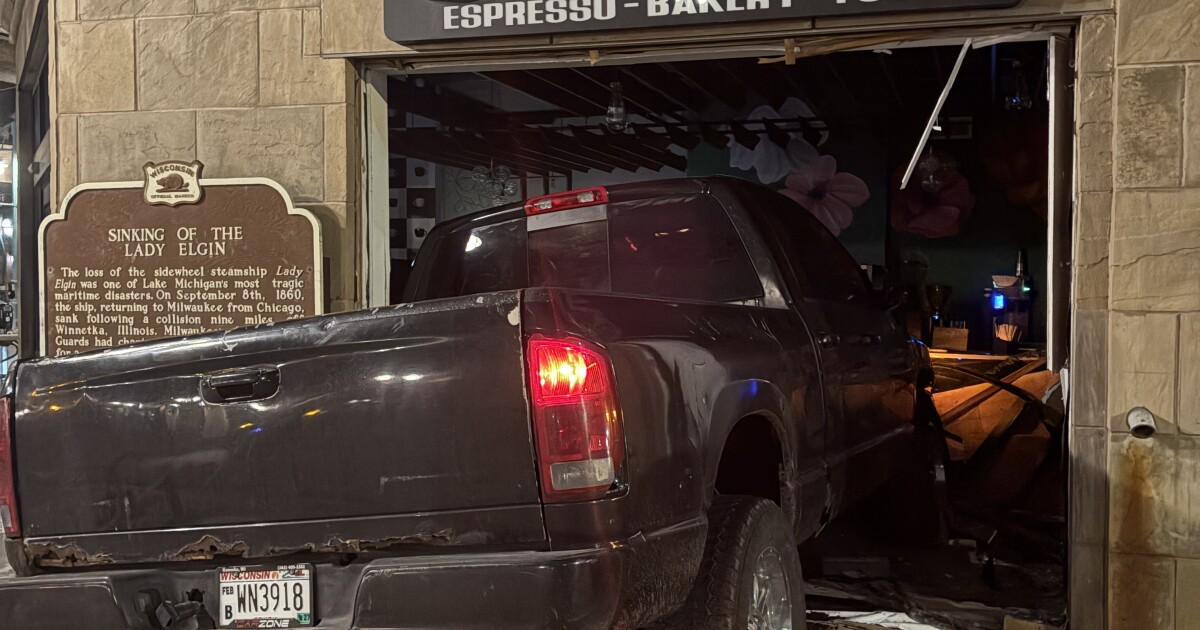
MILWAUKEE — A truck drove through the Grace Coffee Co. in Milwaukee’s Historic Third Ward on early Friday morning, the owners announced in a social media post.
Due to the extensive damage that was done, the coffee shop will be closed until further notice.
TMJ4
“We’re incredibly grateful no one was hurt, and we’ll keep you updated as we begin repairs,” the coffee shop said in the post.
TMJ4 reached out to the Milwaukee Police Department but have yet to hear back.
Let’s talk:
Hey there! At TMJ4 News, we’re all about listening to our audience and tackling the stuff that really matters to you. Got a story idea, tip, or just want to chat about this piece? Hit us up using the form below. For more ways to get in touch, head over to tmj4.com/tips.
It’s about time to watch on your time. Stream local news and weather 24/7 by searching for “TMJ4” on your device.
Available for download on Roku, Apple TV, Amazon Fire TV, and more.
Report a typo or error // Submit a news tip

MPS cuts face backlash
Milwaukee Public Schools plans about 200 layoffs to close a $46 million budget gap, but union leaders say cuts could impact student safety while district leaders say no classroom teachers will be eliminated.
MILWAUKEE – Milwaukee Public Schools is planning to cut roughly 200 positions next school year as the district works to close a multi-million-dollar budget gap — but there’s disagreement over which roles will be impacted.
What we know:
District leaders say the goal is to close a roughly $46 million shortfall, prompting changes that Superintendent Brenda Cassellius says are necessary.

Milwaukee Public Schools said about 201 staff members will be impacted. District leaders say no classroom teachers, counselors or social workers will be cut — something the teachers’ union disputes.
FREE DOWNLOAD: Get breaking news alerts in the FOX LOCAL Mobile app for iOS or Android
The reductions stem from a previously approved plan to eliminate about 260 non-classroom roles. The final number dropped after retirements and existing vacancies. The Milwaukee Board of School Directors approved that plan on March 9.
What they’re saying:
“We have a $50 million deficit, we are for sure not going to be able to do business the same way that we’ve been able to do business,” Cassellius said. “Change is just hard. It’s just hard. And every single one of our employees is so important.”
But some educators say the cuts go too far.
“MTEA is setting up a distress signal. We are talking about our teachers, art teachers, music teachers, physical education teachers, counselors — things that the voters of referendum of Milwaukee actually voted for,” said Ingrid Walker-Henry, president of the Milwaukee Teachers’ Education Association. “Staffing is being cut to the extent that they are concerned about student safety.”
Cassellius acknowledged the uncertainty and asked school leaders for patience.
“We just have to for sure know our budget situation, where we’re at with that after these cuts are made in order to make those decisions,” she said. “So I’m asking my principals, be patient with us.”
By the numbers:
The district outlined the 201 affected positions as:
- 70 central office roles
- 62 educators with a teaching license but not assigned to one classroom
- 59 assistant principals
SIGN UP TODAY: Get daily headlines, breaking news emails from FOX6 News
MPS says the savings will support new class size guidelines, including:
- 18 students per teacher in K3
- 20 students per teacher in K4
- 22 students per teacher in K5
Milwaukee Public Schools (MPS)
District leaders say no students will be asked to leave a school to meet class size guidelines. Officials say they are working with schools that may not have space or that require larger classes based on specific programs.
What’s next:
Milwaukee Public Schools plans to present its proposed 2026–27 budget to the Milwaukee Board of School Directors in May.
The Source: Information in this post was provided by Milwaukee Public Schools and prior FOX6 coverage.

Morrisey: Growth of Alcon in Cabell County is evidence of good times ahead for WV

Wyoming teen discovers rare and ancient megalodon shark tooth off Florida coast

Where Will the Cryptocurrency XRP Be in 10 Years? | The Motley Fool

New Funding Models Needed As Global Health Faces Growing Financial Strain – Health Policy Watch

I’m a fitness writer and these are the 44 best deals I’ve found in the Amazon Big Spring Sale

Florida High School Football Rankings: Top 25 teams – Oct. 21

How old is Bo Nix? What to know about Oregon quarterback ahead of 2024 NFL Draft

Cleary's 21 help Le Moyne down Central Connecticut State 69-64 in OT

99th annual Pony Swim held in Virginia

Indiana Members Credit Union announced as new anchor tenant at Bottleworks District

Dem senators dodge crucial question on illegal alien accused of killing Chicago college student

EU Parliament unblocks key political hurdle in digital euro talks

Man arrested in plot to firebomb Palestinian activist’s home after undercover op

WATCH: Senate hearing goes silent after Angel Father confronts top Dem over daughter’s death

US diplomat Marco Rubio denounces settler violence, tolls in Hormuz strait
-

 Detroit, MI1 week ago
Drummer Brian Pastoria, longtime Detroit music advocate, dies at 68
-

 Movie Reviews1 week ago
‘Youth’ Twitter review: Ken Karunaas impresses audiences; Suraj Venjaramoodu adds charm; music wins praise | – The Times of India
-

 Sports7 days ago
IOC addresses execution of 19-year-old Iranian wrestler Saleh Mohammadi
-

 New Mexico5 days ago
Clovis shooting leaves one dead, four injured
-
 Business1 week ago
Disney’s new CEO says his focus is on storytelling and creativity
-

 Tennessee5 days ago
Tennessee Police Investigating Alleged Assault Involving ‘Reacher’ Star Alan Ritchson
-

 Technology6 days ago
YouTube job scam text: How to spot it fast
-

 Texas1 week ago
How to buy Houston vs. Texas A&M 2026 March Madness tickets