Milwaukee, WI
Dozens of traffic calming projects coming to Milwaukee in 2024


MILWAUKEE – Construction season will be here before you know it, and this year in the City of Milwaukee, that construction will include dozens of projects aimed at both combating reckless driving and growing a network of protected bike lanes on city streets.
Gathered at the soon-to-be Harley Park at 38th and Highland, where an already-existing stretch of PBLs will be extended west from 35th to 20th Streets, Milwaukee Mayor Cavalier Johnson reiterated his goal to have a protected bike lane network of 50 miles in the city by 2026. “Milwaukee’s roads WILL be safer” Johnson said Tuesday. “Is it ambitious? Absolutely it is, but it is a cause worthy of all of our endeavors.”
While the implementation of PBLs is presented as a method to combat reckless driving, Mayor Johnson says he also hopes they serve the purpose of making the city a more attractive place to live for young professionals.
“They’ll fall in love with the city and its amenities first, before they decide to take a job or settle down or what-not” Johnson told WTMJ’s Vince Vitrano during an event held by Walker Media Agency Monday, referring to young workers. “That’s why I talk about this protected bike lane network. It’s certainly got an application in terms of reckless driving, but that’s a bonafide amenity that’s become very, very popular in cities across the United States.”
READ MORE: Milwaukee continues to build its protected bike lane network
As you might have seen from my X thread on the unveiling yesterday, I was curious to know what the cost comparison is for the post-concrete island combination being utilized across the city versus a complete concrete separator method. City Engineer Kevin Muhs explained to me the individual posts cost between 80 to 100 dollars each, while the islands are around 6,000 dollars apiece. Muhs did not have a cost estimate for how much a concrete-separated bike lane would cost per city block, but in Denver the Colorado Department of Transportation in 2022 estimated the cost of one mile of one-way protected bike lanes to be around 300,000 dollars.
Of the projects on tap for 2024, there are 18 intended to improve access for students riding their bikes to school as part of the Safe Routes to School partnership between the Wisconsin Bike Federation and Milwaukee Public Schools. According to the Wisconsin Department of Transportation, the programs encourage children in grades K-8 to walk and bike to school by creating safer walking and biking routes.
SRTS Program Manager with the bike fed Michael Anderson tells me that warmer winters like the one we’re seeing this year encourage people to take two wheels during a window in time when biking is usually not feasible for most. “Any year, there are days in January and February where anyone can come out and ride, and even with our current infrastructure people have been riding year-round in Milwaukee” Anderson tells WTMJ. “We’re going to have more and more of these warm days, but that makes Milwaukee a more year-round climate where walking and biking to school isn’t so much of an obstacle.”
A handful of other PBL variations have been utilized across the city, perhaps most notably on North Avenue, where concrete planters have been installed by the East Side Business Improvement District. However, these planters have faced scrutiny from both cyclists and residents for the debris left behind when they are struck by cars. A post on the East Side Neighborhood Facebook page showed one stretch of North Avenue where a planter had been destroyed:

PREVIOUS COVERAGE: A push for pedestrian safety on Milwaukee’s East Side
As for whether or not the planters will be removed, Muhs acknowledged that while they are being damaged “at a relatively high rate, planters are better than people”. Other options may be considered for the stretch of road in partnership with the B.I.D.
Some PBL projects have already been completed; the most recent on Walnut Street between 12th and 20th Streets opened late last year, and includes bike lanes separated from the main road by a grass terrace.
TOP STORIES FROM THE WTMJ NEWSROOM:
LISTEN: Decision Wisconsin – Changing the status quo in 2024 with Sherwin Hughes



MILWAUKEE – The clock is ticking in the fight between ICE and Milwaukee. The federal Department of Justice gave Milwaukee until Friday to respond.
Law enforcement mask ban
The backstory:
In April, Milwaukee passed an ordinance that bans all law enforcement from wearing masks. There are exemptions for health or safety reasons. Those breaking it can face a fine of up to $10,000.
Supporters said it was part of what they called “ICE Out Milwaukee.” It was clear from debate, they were targeting immigration agents.
FREE DOWNLOAD: Get breaking news alerts in the FOX LOCAL Mobile app for iOS or Android
The U.S. DOJ sent the mayor and city attorney a letter on July 10. It says the federal government will not comply. It tells the city to respond by this Friday, July 17, that it will not enforce the ban against federal agents.
One Milwaukee nonprofit leader critical of ICE responded to the situation.
“I look at the federal government’s threats to Milwaukee as analogous to David versus Goliath,” said Emilio De Torre of the Milwaukee Turners at Turner Hall. “David was doing the right thing in the face of of violence and oppression, and Milwaukee’s doing the right thing too. If a person is proud of what they’re doing, if they know that what they’re doing is legal and justified, then they don’t need to be a coward and hide behind a mask.”
U.S. DOJ ultimatum
What we know:
The U.S. Department of Justice letter was signed by an assistant attorney and also Brad Schimel, who leads the U.S. attorney’s office in Eastern Wisconsin.
It says the mask ordinance is unconstitutional by breaking the U.S. Constitution’s supremacy clause.
“This Mask Ban endangers federal officers and undermines federal law enforcement operations,” the letter also states. “The consequences are severe. Protecting the personal identities of federal officers and their families is especially critical in part due to the increasingly common threats of targeted harassment, tracking, interference, and assaults on federal agents for simply doing their jobs.”
SIGN UP TODAY: Get daily headlines, breaking news emails from FOX6 News
Several Milwaukee groups held a vigil and protest against ICE on Wednesday, July 15 in Burnham Park. That included Milwaukee Turners, the Milwaukee teachers’ union and Voces de la Frontera. They are criticizing recent deaths.
Portions of this article were formatted using A.I. FOX6’s Jason Calvi and an editor reviewed it for accuracy and tone prior to publishing.
The Source: Information in this story was gathered from the U.S. Department of Justice, and Emilio De Torre, the Milwaukee Turners, along with Milwaukee’s ordinance on law enforcement masks.

The City of Chicago has awarded a $3 million Community Development Grant for the redevelopment of the former Grace’s Furniture building at 2618 N. Milwaukee. Planned by Bluestar Properties and Marc Realty, the building was built in 1914 as a storage warehouse and sits within the Logan Square Boulevards District.
2618 N. MilwaukeeGoogle Maps
With K2 Studio serving as the architect, the existing structure will be converted into a four-story health club with a ground floor restaurant and cafe. Set to be known as Logan Square Athletic Club, the health club will be operated by Chicago Athletic Clubs.
The redevelopment will rehabilitate the existing brick facade along N. Milwaukee Ave while creating a new brick facade on the south elevation.
2618 N. MilwaukeeK2 Studio
The $11 million development will be supported in part by the $3 million Community Development Grant, which is funded through the city’s Housing and Economic Development bond.
According to Block Club Chicago, the project is expected to begin construction in Fall 2026 with construction expected to last for one year, with the gym set to open in late 2027.

The Holton Street Bridge nearly ready to reopen after a rehab project
The Holton Street Bridge in Milwaukee is nearly ready to reopen after a rehabilitation project. A public reopening ceremony on will take place on July 16.
A teen was shot in Milwaukee on the afternoon of July 14, and the Milwaukee Police Department is asking the public for information about the incident.
Police said a 16-year-old was shot in the 2700 block of North 44th Street around 4:23 p.m., according to a news release. The circumstances leading up to the shooting remain under investigation.
Milwaukee police are looking for unknown suspects.
Anyone with information is asked to contact the Milwaukee Police Department at 414-935-7360 or, to remain anonymous, contact Crime Stoppers at 414-224-TIPS or submit a tip through the P3 Tips app.
Adrienne Davis is a general assignment and breaking news reporter for the Milwaukee Journal Sentinel. Got any tips or stories to share? Contact Adrienne at amdavis@gannett.com. Follow her on X at @AdriReportss.
-

 World5 minutes ago
WATCH: Russian soldier thrown through air as Soviet-era helicopter gun spins out of control
-

 Politics11 minutes ago
Lindsey Graham’s final act reverberates in Senate as sister is urged to “keep pedaling”
-

 Health17 minutes ago
Is lettuce still safe to eat amid Taco Bell illness probe? Doctors answer
-

 Sports23 minutes ago
Marcello Hernández roasts Jake Paul, Tiger Woods and Bill Belichick in ESPYS monologue
-

 Technology29 minutes ago
You paid for it. So why is your device showing ads?
-
 Business35 minutes ago
Paramount shareholder lawsuit accuses Ellisons of corruption
-
 Entertainment41 minutes ago
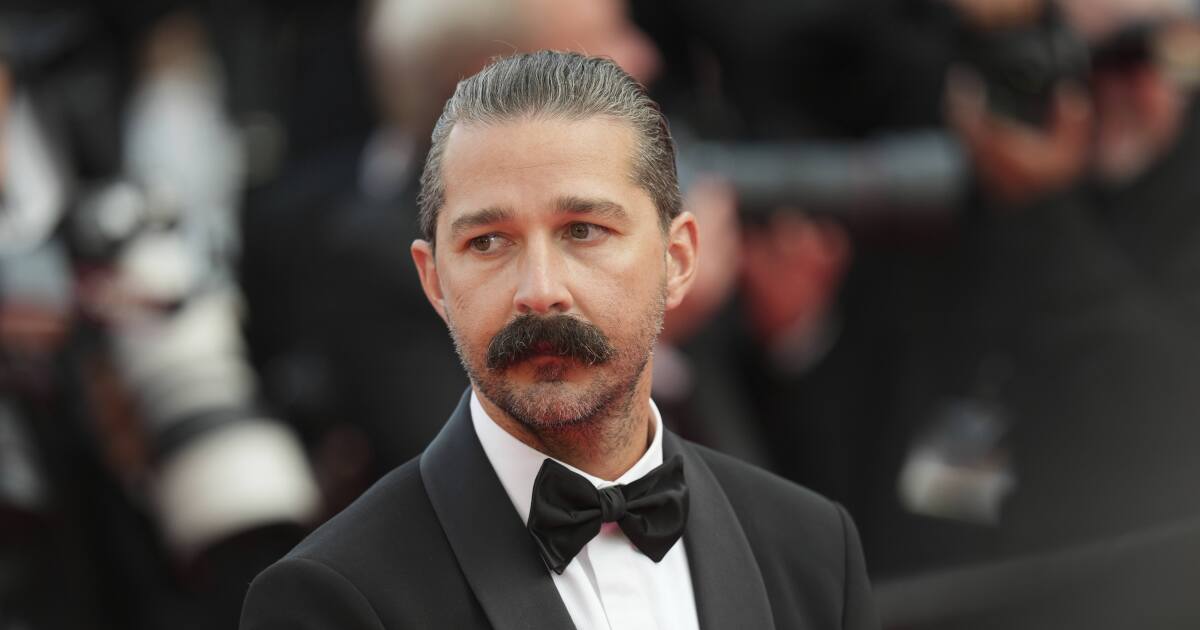
‘You’re scaring my people.’ Shia LaBeouf’s alleged stalker arrested after posting viral video
-
 Politics53 minutes ago
Californians back Becerra and reject AI data centers by big margins, poll finds

