Milwaukee, WI
Attorney James Hall Jr. was a stalwart for civil rights in Milwaukee for decades


Hall took on some of Milwaukee’s most significant civil rights and discrimination cases over his career. He also co-founded the mentoring program 100 Black Men of Milwaukee.
James Hall Jr. is being remembered as a quiet but powerful force for civil rights and youth development in Milwaukee for decades. Hall died Jan. 1 after a battle with cancer. He was 69.
Former NAACP Milwaukee Branch President Fred Royal said Hall’s work as a lawyer, along with volunteer efforts on many city boards and committees, helped improve the lives of the disadvantaged in the city.
“He was a quiet force, but man, he was powerful,” Royal said.
In September, the Social Development Foundation presented Hall with its “Don Sykes Legacy Award” for his commitment to impoverished people.
One of the many highlights of the gala was a “Legacy Times” newspaper listing Hall’s accomplishments and commitment to Milwaukee and African Americans in southeastern Wisconsin.
During his acceptance speech, Hall, the son of a peanut farmer in Smithfield, Va., said the Social Development Commission was essential to him moving to Milwaukee in 1978.
“Working with SDC provided a tremendous opportunity for me. I owe a great debt to Milwaukee for providing a landscape where I could focus on civil rights matters. Each of us has a role to play as organizers, change-makers, and visionaries,” Hall said.
“We must not view the challenges as intractable,” he added. “If we remain true and committed to the mission, we can transform our city, county, state, and beyond.”
When Hall was honored, Royal was one of hundreds in attendance.
“I’ve known James for 20 years and never knew everything he accomplished. He’s been committed to fighting for civil rights his entire life. I’m just happy he could receive his flowers while he could enjoy them,” Royal said.
At Hall’s gala, his Kappa Alpha Psi Fraternity brother, Ron Richards, spoke of Hall’s work as a change agent. During the 1970s, Hall paired members of his fraternity with high school students who wanted to become lawyers and provided campus tours and insight on the requirements needed to enter the profession.
After Hall graduated from the University of Virginia Law School, he moved to Milwaukee. He joined the law firm of Charne, Clancy & Taitelman in June 1979, where his focus was civil rights and discrimination.
Hall worked on Milwaukee school desegregation case
Years before Hall moved to Milwaukee, another attorney, Lloyd Barbee, was in a fight over racial segregation in Milwaukee Public Schools, as Black students were often bused to white-majority schools but taught in separate classrooms.
Barbee filed a lawsuit against the Milwaukee School Board and would go on to win the case in 1976. A judge ordered MPS to desegregate but dealt with many appeals and new trials over the next several years.
Hall would work with Barbee in that process, and the men would devise a plan to desegregate Milwaukee schools. Over the next decades, Hall participated in a number of other high-profile court cases.
In the 1990s, he would serve as co-counsel in the landmark class-action redlining suit the Milwaukee NAACP brought against American Family Insurance, resulting in a $16 million settlement.
Hall represented Black firefighters in their discrimination lawsuit against the Milwaukee Fire Department. He challenged the Wisconsin Voucher Program and provided legal counsel to other clients, including the Milwaukee Area Technical College, City of Milwaukee Ethics Board, City of Milwaukee Pension Board, and SDC. In 2011, he served as president of the local NAACP chapter.
He also counseled the City of Minneapolis on programs to benefit American Descendants of Slaves.
“He was such an excellent and skilled attorney and one of the most gracious gentlemen you would ever want to meet,” said retired Milwaukee attorney William Lynch.
Lynch worked with Hall for years, and the two served on the board of the American Civil Liberties Union of Wisconsin.
“He’s one of the most intelligent men I’ve ever met, but I think the thing I loved the most about him was his generosity and care for those in need. He cared,” Lynch said.
Attorney Celia Jackson, who first met Hall in the mid-1970s when they both attended Hampton Institute, which would later become Hampton University, said Milwaukee was the perfect place for Hall to work because it allowed him to take on the challenges many others would run away from.
Jackson said Hall wanted to change the statistics here when it came to discrimination and segregation, and he knew we could be better. While many know Hall for his work in the courtroom, he was equally committed to Black youth.
Idea for 100 Black Men of Milwaukee came at lunch
Hall was co-founder of 100 Black Men of Milwaukee, an organization committed to the intellectual development of youth. The organization lives by the motto, “What they see is what they’ll be.”
The idea for 100 Black Men of Milwaukee came to Hall when he was having lunch with several women in the city. The women wanted to know if he could gather men to mentor kids by showing them alternatives to the negative images many encountered in their lives.
After the luncheon, Hall got on the phone and reached out to other men in the city, including Oshiyemi Adelabu, Bill Rogers, Tony Courtney, and Greg Williams. A few months later, 100 Black Men Milwaukee was incorporated.
“That’s who James was. He was a problem solver, and he was not one to stand by when he saw a problem and not do something about it,” Jackson said.
Hall met the love of his life on a vacation trip to London
Hall loved to travel in his free time, and on a vacation to London, he bumped into the woman who would later become his wife.
Pauline Hall said her sister persuaded her to attend a Halloween Party 1995. After making the rounds at several events, Pauline’s sister convinced her to go to one more spot when she met a “charming gentleman.”
James Hall introduced himself, and they hit it off perfectly. He gave her his card and told her he wanted to stay in contact. The two called each other weekly and visited one another every three months or so for three years.
In 1998, the couple got married in Virginia.
“He was my best friend and so kind and good to me. He was a gentleman. He cared for the disadvantaged, but he also cared for animals. He believed every living thing deserved to live,” Pauline Hall said.
When groundhogs were digging holes and causing problems, and people wanted to kill them, Pauline joked that Hall, in true lawyer fashion, delivered a case for the groundhogs to live.
Hall’s brother, Warren G. Hall, called his brother his idol.
“James was studious and smart, and because he was ten years older than me, he paved the way,” Warren Hall said.
Hall said family folklore has it that his brother was driving the tractor on the family’s peanut farm at the age of four while sitting on their father’s lap. In high school, James Hall sped around in a yellow Dodge Charger RT with mag wheels; he was also in a garage band called ‘Everyday People,’ playing the keyboard while wearing an Afro and dashiki.
In school, Warren Hall faced the pressure of living up to the academic success of his brother, whom all the teachers loved.
“They would tell me, ‘I know who your brother is. He was so smart.’ So, it was pressure for me to succeed,” he said.
Despite their age difference, the two remained close, even attending the same college. Warren credits his brother for getting him to move to the Midwest. Warren moved from Minnesota to Milwaukee a decade ago and said it was his best decision because it allowed him to spend valuable time with his brother and sister-in-law.
“I moved seven minutes away from him; my brother was the best brother anyone could ever have. James deserves every accolade received because he did so much for so many, and he will be missed,” he said.
A gathering to honor James Hall Jr. will be held Tuesday, Jan. 8, from 10 to 11 a.m. at Mt. Zion Baptist Church, 2207 N. 2nd Street. A memorial service will follow at 11 a.m. A funeral service on Jan. 13 at Emmanuel Baptist Church in Smithfield, Va.
Email James Causey at jcausey@jrn.com; follow him on X@jecausey.



Milwaukee Police Department (MPD)
MILWAUKEE – A shooting in Milwaukee on Wednesday, July 8 left one person wounded.
11th and Locust
What we know:
According to the Milwaukee Police Department, a 23-year-old was shot around 6:30 p.m. near 11th and Locust.
The victim arrived at the hospital for treatment.
The circumstances leading up to the shooting are under investigation.
FREE DOWNLOAD: Get breaking news alerts in the FOX LOCAL Mobile app for iOS or Android
MPD tips
What you can do:
Milwaukee police are seeking information to identify a suspect in connection with this incident.
Anyone with information is asked to contact Milwaukee police at 414-935-7360 or to remain anonymous, contact Crime Stoppers at 414-224-TIPS or P3 Tips.
The Source: The information in this post was provided by the Milwaukee Police Department.

Milwaukee community members gathered at pop-up events across the northwest side Wednesday as part of “Peace on Every Block,” a week of activities aimed at building community, mentorship and sharing resources for violence prevention.
The week is organized by Advance Peace Milwaukee, Milwaukee Community Cross Roads and Milwaukee County Department of Health and Human Services.
“We want to see everybody win, and that’s the whole theme about it, about healing, coming together, stopping the violence,” Desilynn Smith of Uniting Garden Homes said.
Lorenzo Davis of Advance Peace said the northwest side was a deliberate focus for the effort.
“Because this is where the gun violence is happening, and we’re trying to end the gun violence in the city of Milwaukee. We really want to do what’s best for Milwaukee,” Davis said.
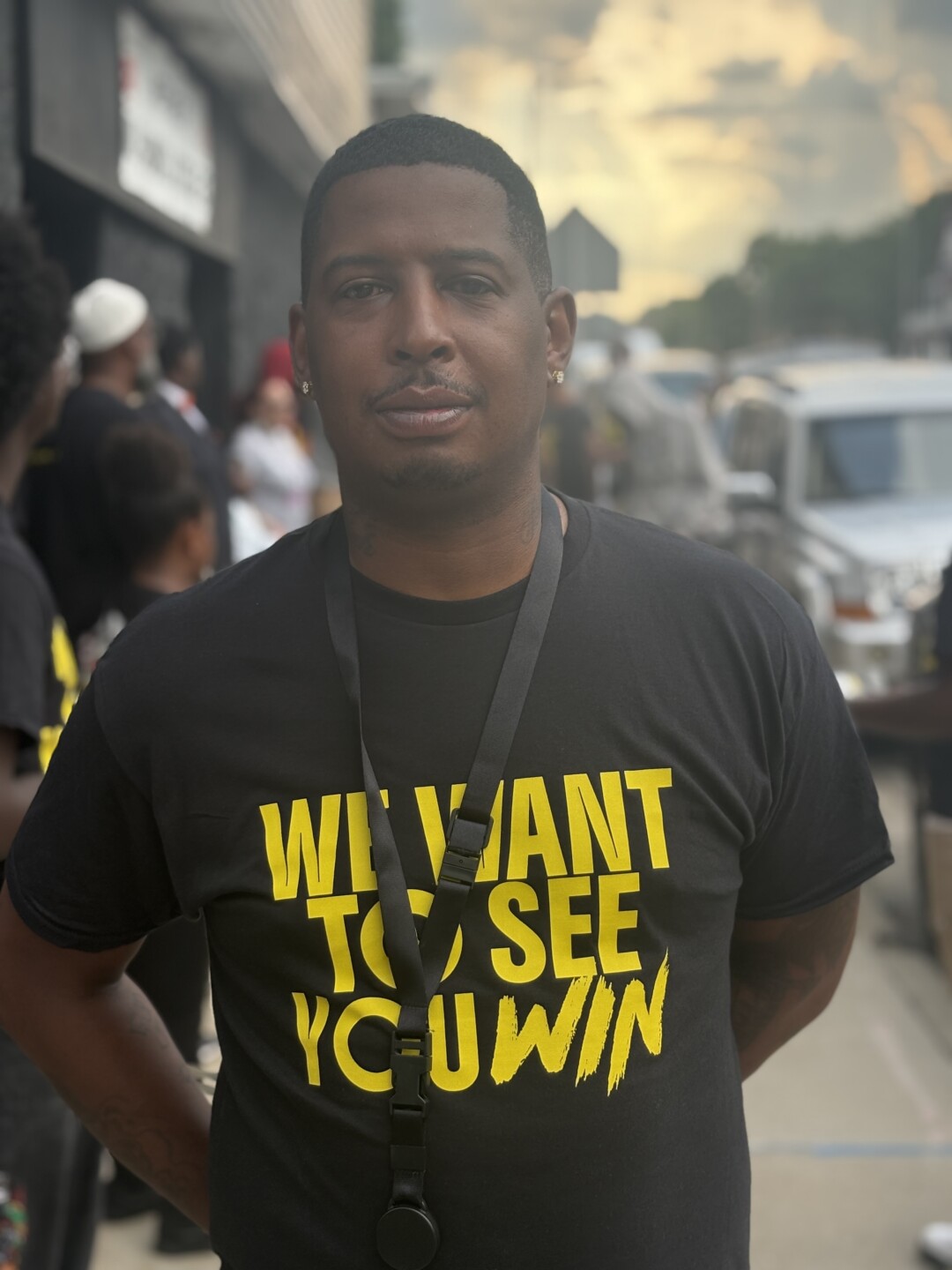
The Milwaukee Police Department reported a 30 percent drop in homicides during the first half of 2026 compared to the same period last year. But community members say that progress doesn’t always reflect what people are experiencing on the ground.
Watch: ‘Peace on Every Block’ brings Milwaukee community together to fight gun violence
‘Peace on Every Block’ brings Milwaukee community together to fight gun violence
“The data doesn’t lie, that’s true, but when it’s like every day we’re hearing about a shooting, or we’re so connected to it, and so many people connected to it, it just doesn’t appear that way,” Smith said.
The events come as Milwaukee has seen several violent deaths in recent days. 42-year-old Kristy Syed was found shot to death on Milwaukee’s south side.
The Medical Examiner’s Office also identified 19-year-old Savannah Lynn, who was killed after gunfire broke out following a fight on the Fourth of July.
Nine-year-old Jade Riser died after a shooting that happened near East Burleigh Street last Thursday.
Smith said healing is central to any lasting change.
“If we don’t heal, we can’t stop anything, because violence is actually the secondary emotion that is really driven off a lot of pain,” Smith said.
Davis said the young people in these neighborhoods are ready for something better.
“They want to see a better inside Milwaukee. They want to see a better chance for Milwaukee, and they want to do something better for themselves. So, these kids out here, we promote peace with them, and we’re going to back them, and we want to see them win,” Davis said.
Let’s talk:
Hey there! At TMJ4 News, we’re all about listening to our audience and tackling the stuff that really matters to you. Got a story idea, tip, or just want to chat about this piece? Hit us up using the form below. For more ways to get in touch, head over to tmj4.com/tips.
It’s about time to watch on your time. Stream local news and weather 24/7 by searching for “TMJ4” on your device.
Available for download on Roku, Apple TV, Amazon Fire TV, and more.
Report a typo or error // Submit a news tip

MILWAUKEE — Former Milwaukee County Judge Hannah Dugan won’t serve prison time or probation and has been fined $5,000, a judge determined on Wednesday during her sentencing hearing.
It comes after a jury found her guilty of obstruction last year for helping an immigrant evade federal agents.
During the hearing, Dugan’s defense team called two character witnesses to the stand to speak on her behalf, including Rev. Gregory J. O’Meara, who is also a Marquette University Law School faculty member, and Janine Geske, the retired director of the Andrew Center for Restorative Justice and a law professor at Marquette.
“Hannah models what it means to be a Christian,” O’Meara said.
Dugan herself also spoke for the first time since the case against her began.
She told U.S. District Judge Lynn Adelman that she tried to “maintain a courtroom with the decorum and safety the public deserves.”
Dugan added her actions on April 18, 2025, when the incident occurred, were “not done with any malicious intent or to advance any personal interest.”
Wrapping up her remarks, Dugan said to the court she has been cast as a scofflaw and a hero, but considers herself neither of those things.
“I am a public servant who’s just trying to do my job,” Dugan said, adding that she has had to retire from public life due to threats against her and her family.
A prosecutor then acknowledged that “she has experienced collateral damage because of her conduct,” but said “judges can’t choose to disregard the law.”
Prosecutors argued that Dugan’s actions amounted to an “abuse of trust” and asked the court’s sentence to reflect that.
Adelman then spoke, saying Dugan made a bad decision and that he doesn’t believe prison is necessary.
“This is a few minutes of conduct for someone who has dedicated her life to public service,” the judge said. “It’s a marked deviation from an otherwise law-abiding life.”
He also noted that Dugan’s actions didn’t stop the ICE agents from arresting the defendant outside the courthouse.
In April of last year, federal agents showed up at the Milwaukee County Courthouse to arrest Eduardo Flores-Ruiz, who had reentered the country illegally. On that particular day, he was appearing before Dugan’s courtroom for a state battery case.
Dugan confronted the federal agents in a hallway outside the courtroom and directed them to the chief judge’s office. Following that, she helped Flores-Ruiz and his attorney out a private jury door. Agents eventually caught up to him outside the courthouse.
Dugan was later arrested and charged for her part in the incident, and she was found guilty of obstruction last December; she was acquitted on her concealment charge.
Her lawyers argued during her trial that President Donald Trump’s administration sought to “crush” Dugan in an effort to ensure judicial compliance with the ICE strategy of targeting immigrants as they showed up for court hearings.
Dugan resigned the Milwaukee County circuit judgeship she had held for nine years in January amid threats of impeachment from Republican state lawmakers who labeled her an activist judge. In her resignation letter, she said her prosecution threatened “the independence of our judiciary.”
Republican U.S. Rep. Tom Tiffany, who has the backing of Trump in his race for governor, urged authorities to “lock her up” in a social media post following her conviction.
-
 Business3 minutes ago
California soccer fans sue StubHub after it fails to deliver expensive World Cup tickets
-
 Entertainment6 minutes ago
Lucas Museum to give free annual passes to South L.A. neighbors, host community preview day
-
 Lifestyle11 minutes ago
Meow Wolf taps famed L.A. animation house for its new Los Angeles venue
-
Politics18 minutes ago
Column: Trump decries ‘communism’ while his government takes ownership of companies
-
 Science21 minutes ago
‘I’d rather my house burn down than get cancer’: Herbicide use upends California’s fight to save forests
-
 Sports26 minutes ago
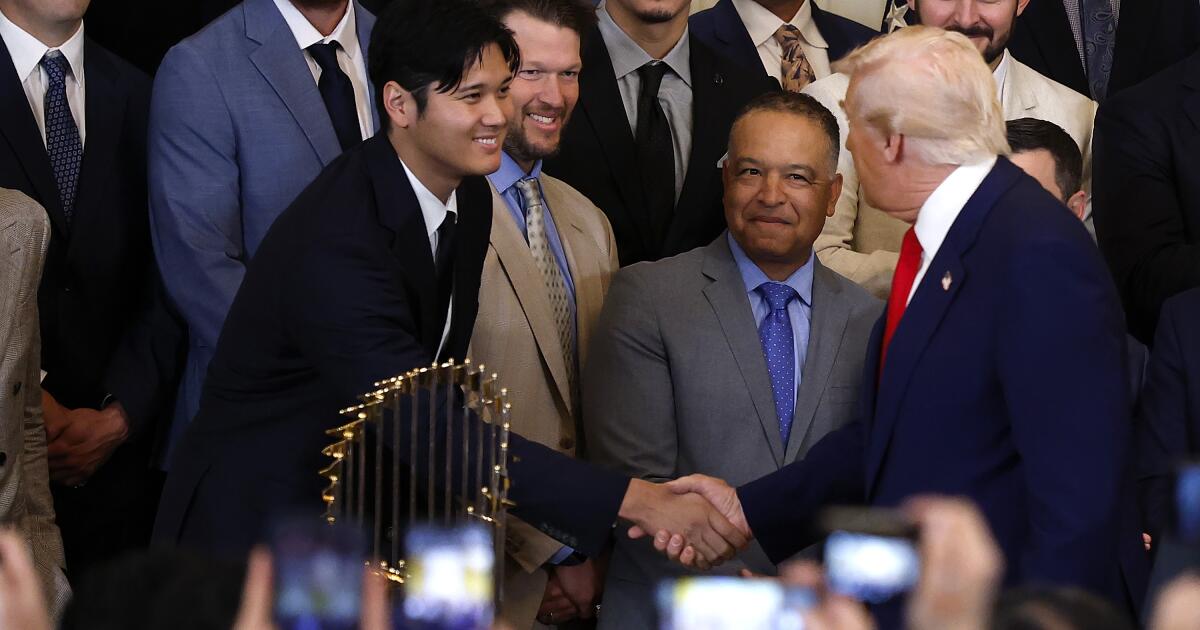
Dodgers scheduled to visit White House in late July to celebrate 2025 World Series win
-

 World36 minutes ago
Former US Olympian pleads not guilty in DC reflecting pool vandalism case
-
 News1 hour ago
Former Olympian pleads not guilty in reflecting pool vandalism charges


