Michigan
Michigan medical students fight to make climate change part of curriculum

- Worsening air quality and warmer, stormier weather in the Great Lakes region caused by climate change are threatening human health
- Michigan medical students are pushing for curriculum changes to address these health threats
- As a result, more medical schools are teaching future doctors about climate change
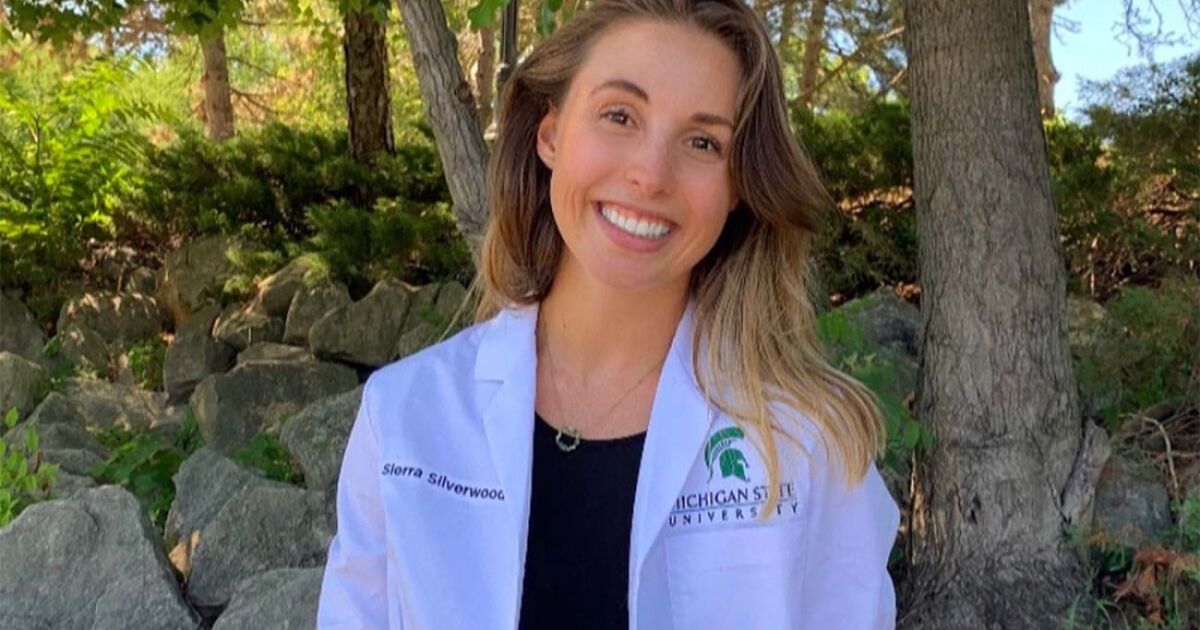
Climate change is no longer a “backburner” issue for medical students like Sierra Silverwood. It’s essential to understanding human health when new and greater health threats are emerging because of climate change.
The collaborative’s five newsrooms — Bridge Michigan, Circle of Blue, Great Lakes Now and the Narwhal — are funded by the Charles Stewart Mott Foundation.
But integrating climate topics into an already “packed medical education” isn’t easy, said Michigan State University fourth-year medical student Silverwood.
Despite the challenge, future doctors across Michigan and the nation are taking their education into their own hands — creating climate health curricula and calling on faculty to integrate the material into their programs.
“We’re starting to see how (climate change) impacts our patient care,” said Silverwood. “I think that’s really gotten individuals inspired to take action.”
‘The face of the climate crisis’
This story is part of a series by the Great Lakes News Collaborative that connects the region’s changing climate and abundant water to human health.
The collaborative’s five newsrooms — Bridge Michigan, Michigan Public, Circle of Blue, Great Lakes Now and the Narwhal — are funded by the Charles Stewart Mott Foundation.
The urgency of climate health education for medical students is more apparent than ever with a dangerous heat wave hitting the Midwest this week.
Climate change is making these extreme heat waves hotter and more frequent.
In the Great Lakes region, average annual temperatures increased 2.3 degrees Fahrenheit since 1951 and are expected to rise several more degrees this century.
Along with extreme heat, flooding, wildfire smoke, air pollution and vector-borne diseases like Lyme disease are sending people to hospitals, sometimes killing people.
A 2019 study by U-M researchers estimated that the number of emergency room visits in Michigan caused by extreme precipitation may increase to 220 per year by 2070 from 170 historically. Deaths from extreme heat may increase to 240 from 33 per year in the same period.
“Health is the face of the climate crisis,” said Dr. Lisa DelBuono, founder and president of Michigan Clinicians for Climate Action, which is why doctors need to be trained to recognize climate threats to better treat their patients.
But practicing doctors may be hesitant to acknowledge the environmental factors causing their patients to get sick because climate change was highly politicized — or maybe not talked about at all — while they were in medical school, said DelBuono.
A recently retired diagnostic pathologist herself, DelBuono understands these doctors’ concerns but thinks the health threats are too big to ignore.
“If they’re not prepared for what’s coming down the pike, then they’re not going to be able to do their job,” she said.
Current medical students are facing this reality, which is why they’re pushing for the integration of climate health topics in their curriculum.
Preparing for a changing future
Efforts on the campus of the University of Michigan and Michigan State University are examples of how that can work.
Medical students at University of Michigan took action in 2019, forming White Coats for Planetary Health (WCPH), a group of 12 to 15 medical students pushing for increased education about climate health in their curriculum.
In 2022, the group successfully created a health and climate-change elective for third and fourth-year medical students.
The elective prepares students to recognize environmental impacts on health, such as how air pollution affects lung health and the relationship between extreme rainfall and water-related illnesses such as E. coli infections.
Medical student Andrea McGowan, co-chair of education and curriculum for White Coats for Planetary Health, said the course is “pretty popular among students,” even though it’s not required.
“Med students like to be prepared,” said McGowan, “and a lot of students are starting to recognize that (climate change) might impact what they see in the clinic.”
U-M professor and WCPH mentor Alexander Rabin told students about the dozens of patients he saw last summer with breathing problems because of wildfire smoke.
Seeing and hearing about those impacts is motivating students to advocate for change, said Rabin.
Rabin got involved in climate advocacy when he was a medical student in 2018, and said students are “the lifeblood” of climate health advocacy.
“They’re politically engaged, and they’re worried about their future,” he said.
What’s next for student advocacy
Students are continuing to advocate for climate health education at their schools.
U-M students earned a big win with the inclusion of the climate health elective, but they aren’t stopping there.
Medical student McGowan said the next step for WCPH is to fully integrate climate health into the existing four-year curriculum.
For example, during a class about cardiovascular health and heart disease, students might watch a video lesson about how extreme heat can affect patients with existing heart conditions.
WCPH students are teaming up with faculty across the country to create such educational videos in partnership with Climate Resources for Health Education (CRHE), a global professional-led climate health initiative.
With summer break in full swing, McGowan said she’s not sure when the videos will be done, but the completed videos will be free and available on CRHE’s website.
Other medical schools in the region are also working towards integrating climate health into their curriculum.
MSU College of Human Medicine is close to adding a climate change course to its program, said Silverwood, who is working with the MSU curriculum committee to cement the change.
Silverwood said the course would be a required introduction to climate change. From there, students can pursue research about climate health topics that interest them, like climate impacts on cancer or environmental justice.
Without specialized climate health courses at MSU, students will likely have to search for educational material about topics of interest from outside organizations.
CRHE is one such resource. Along with new climate health video material, the initiative provides 44 courses complete with learning objectives, slide decks and facilitator guides.
CRHE says all its resources are “evidence-based, expert-reviewed,” free and open-access.
In addition to CRHE, Medical Students for a Sustainable Future (MS4SF), a global, student-run climate health advocacy group, provides free educational resources like webinars and lectures on its website.
The group also organizes research opportunities and training programs centered on the link between climate and health, which medical students can apply for.
Silverwood is the curriculum co-chair for MS4SF. She said the students who founded the organization in 2019 were “pioneers” in climate health advocacy, and since then, MS4SF has been crucial to driving change in medical schools across the country.
Efforts to integrate climate health into medical school curricula are fairly new — much of CRHE material is only two years old. Many medical schools, like U-M and MSU, have begun reforming their curricula, but others haven’t made any progress.
In fact, the American Medical Association found that 45 percent of U.S. medical schools don’t require climate health as a topic in their courses in 2022.
Medical students wanting to propose curriculum reform at their schools can use MS4SF’s curriculum guide, which takes students through writing a letter to their curriculum committee to create syllabi for climate health courses.
Many schools still have a long way to go, but Silverwood said student efforts are only growing.
MS4SF’s regional chapters are starting to work together to push nationwide climate health education reform, said Silverwood.
“I feel like the organization is gaining a lot of momentum,” she said. “We’re excited to find new and better ways to facilitate curriculum integration for students.”


DETROIT – A major banking merger is reshaping the financial landscape in Michigan — and customers need to take action before the changes take effect.
Fifth Third Bank completed its acquisition of Comerica, and beginning Sept. 8, Comerica customers will transition onto Fifth Third’s systems. The switch affects everything from mobile banking to direct deposits.
What Comerica customers need to do
Steve Davis, regional market president for Michigan, said the transition is designed to be straightforward for most customers.
“For the most part, what our customers are going to need to do is on September 8th, they’re going to log in to the Fifth Third app or their website, create a new user ID, a new password, and they’re good to go,” Davis said. “Their debit card, their ATM, their direct deposit information, all their ACHs — that’s all going to transfer over for them.”
To help customers prepare, welcome packets will be mailed in August walking through every step of the process. The bank says it is also staffing up to handle an expected surge in questions.
“It’s an all hands on deck to make sure that we can exceed customer expectations,” Davis said.
Customers looking for additional information can visit Fifth Third’s Better Together page.
Branch closures, but more options overall
The $10.9 billion all-stock deal — finalized in October — comes with significant changes to the branch network. More than 70 locations are slated to close as part of the merger.
The bank says it is working to relocate affected employees or help them find other opportunities. And while the closures mark a loss for some communities, Davis says the combined network ultimately gives customers more options.
“If you’re in the tri-county of Southeast Michigan — like Livingston, Macomb, Wayne, etc., we’re going to be number one in terms of branches there,” Davis said. “In the City of Detroit, we’re going to be number one in terms of branches there, so for our customers on average it’s a much better thing than a worse thing.”
Will Comerica Park be renamed?
Perhaps no question has captured more public attention than the fate of Comerica Park — the downtown Detroit ballpark that is home to the Detroit Tigers.
Could it become Fifth Third Park? That answer isn’t ready yet.
“We’re evaluating everything — we’ll decide something in the offseason,” Davis said. “It’s really cool that people care so much about Comerica Park and what it’s meant to them.”
Copyright 2026 by WDIV ClickOnDetroit – All rights reserved.

Lansing — Republican candidates for governor and Democratic contenders for the U.S. Senate will square off in a series of televised debates this week, giving voters across Michigan their best chances yet to compare the political hopefuls.
At 7 p.m. Tuesday, the Grand Rapids NBC affiliate WOOD-TV will host a televised statewide debate featuring the three Democrats running for the U.S. Senate: former Wayne County health official Abdul El-Sayed of Ann Arbor, state Sen. Mallory McMorrow of Royal Oak and U.S. Rep. Haley Stevens of Birmingham.
Then, at 7:30 p.m. Wednesday, WJBK-TV (Fox 2 Detroit) will host a debate for the three Republican candidates for governor: former Attorney General Mike Cox of Livonia, U.S. Rep. John James of Shelby Township and businessman Perry Johnson of Bloomfield Hills. The next night, WOOD-TV, which has been using the phrase “debate week” to promote the upcoming events, will host another debate with the three GOP gubernatorial hopefuls at 7 p.m. Thursday.
The string of forums will provide voters a chance to hear from people who want to be the state’s future leaders, said David Dulio, a political science professor at Oakland University.
“Any opportunity that voters have to hear directly from candidates in an unfiltered, uncontrolled, uncurated environment is good,” Dulio said.
The debates will come about four weeks before the Aug. 4 primary election, and many Michigan residents have absentee ballots available to them.
Michigan’s governor, Democrat Gretchen Whitmer, can’t run again because of term limits. Meanwhile, the state has an open U.S. Senate seat because Gary Peters, D-Bloomfield Township, decided against seeking reelection.
Many Democrats said they believe the race for their party’s nomination to replace Peters could be tight. If that’s the case, the televised debate on Tuesday could be important, said Adrian Hemond, CEO of the Lansing-based political consulting firm Grassroots Midwest.
“A marginal difference is a big difference in a close race,” Hemond said of the potential impact of the debate.
Who’s running to be Michigan’s governor?
The three remaining GOP candidates for governor, Cox, James and Johnson, are all expected to participate in the debates this week.
James has avoided most of the primary forums that have been organized. James ran unsuccessfully for the U.S. Senate in 2018 and 2020 before winning in 2022 his U.S. House seat that represents a portion of Macomb County as well as Rochester and Rochester Hills.
President Donald Trump endorsed James to be Michigan’s next governor on June 22.
Johnson has dominated the TV airwaves this year, shelling out millions of dollars of his own money to promote his bid. He made his fortune developing quality controls for the auto industry. He is running on eliminating the state’s 4.25% personal income tax, which currently generates more than $13 billion in revenue annually.
Cox, who was Michigan’s attorney general from 2003 through 2010, has worked as a lawyer with The Mike Cox Law Firm.
The Democratic side has two candidates for governor: Secretary of State Jocelyn Benson of Detroit, and Genesee County Sheriff Chris Swanson of Fenton.
Benson is viewed as the favorite to be the Democratic gubernatorial nominee in part because of her slew of endorsements, including that of the United Auto Workers union. She didn’t participate in a June 4 primary debate organized by Fox 2.
Who’s running for the U.S. Senate in Michigan?
Michigan’s Democratic U.S. Senate primary has gained the national spotlight as a test of how the party’s voters might be leaning after the 2024 presidential election.
El-Sayed, a progressive candidate who ran unsuccessfully for governor eight years ago, has said he wants to build an economy that works for working people, provide guaranteed health care coverage and protect clean air and water.
He’s often clashed with Stevens, who’s been a member of the U.S. House since 2018. Stevens has said she wants to focus on combating rising costs and protecting personal freedoms and entitlement programs like Social Security.
McMorrow was first elected to the state Senate in 2018. Her campaign website vows that she will root out corruption, protect rights and keep tax dollars working at home instead of funding wars.
The Republican nominee will be former U.S. Rep. Mike Rogers of White Lake, who ran unsuccessfully for the U.S. Senate in 2024.
How to watch the debates
The WOOD-TV debates on Tuesday and Thursday will be carried by CBS Detroit in the Detroit area, WBSF in the Flint area, WLAJ in the Lansing television market, WWTV in the Traverse City area, WJMN in the Marquette area and WBKB in the Alpena area.
The Wednesday night Fox 2 Detroit debate will be streamed on its website. The first 30 minutes of it will be televised on Fox 2 during The Pulse’s regular time slot, hosted by anchor Roop Raj, who is moderating the debate.
cmauger@detroitnews.com
Michigan
3 dead after vehicle collides with semitruck on Interstate 94 in Wayne County, Michigan State Police say

Three people are dead after a vehicle hit the back of a semitruck on Interstate 94 in Southeast Michigan late Friday, state officials said.
The Michigan State Police responded to the crash on eastbound I-94 near Michigan Avenue in Wayne County around 11:44 p.m. Investigators said the semitruck was stopped in traffic due to flooding when it was struck by the vehicle.
Three passengers in the vehicle that crashed into the semi died at the scene, according to the state law enforcement agency, and the driver was taken into custody.
The ages of the individuals involved in the collision have not yet been disclosed by officials.
As of Saturday afternoon, the investigation into the incident is ongoing.
-

 South Dakota8 minutes ago
One child dead following Hughes County fatal crash
-

 Tennessee20 minutes ago
Wild ride for temperatures: A look at Middle Tennessee’s first major heat wave of 2026
-

 Texas23 minutes ago
Riley Greene homers and triples for 4 RBIs as Tigers top Texas Rangers 6-3
-
 Utah28 minutes ago
Utah’s Venezuelan community gathers to honor victims, aid survivors after deadly earthquakes
-

 Vermont35 minutes ago
Vermont State Police seek missing Rutland man
-

 Virginia38 minutes ago
Way-Too-Early 2026 Virginia Tech Football Preview and Prediction: Week 12, @ Miami
-

 Washington43 minutes ago
Weather Alert: Storms move into DMV area
-

 Wisconsin50 minutes ago
3 fires in southeastern Wisconsin tied to improper fireworks disposal

