Midwest
Leaders in creation of Arctic vault that protects millions of seeds win World Food Prize

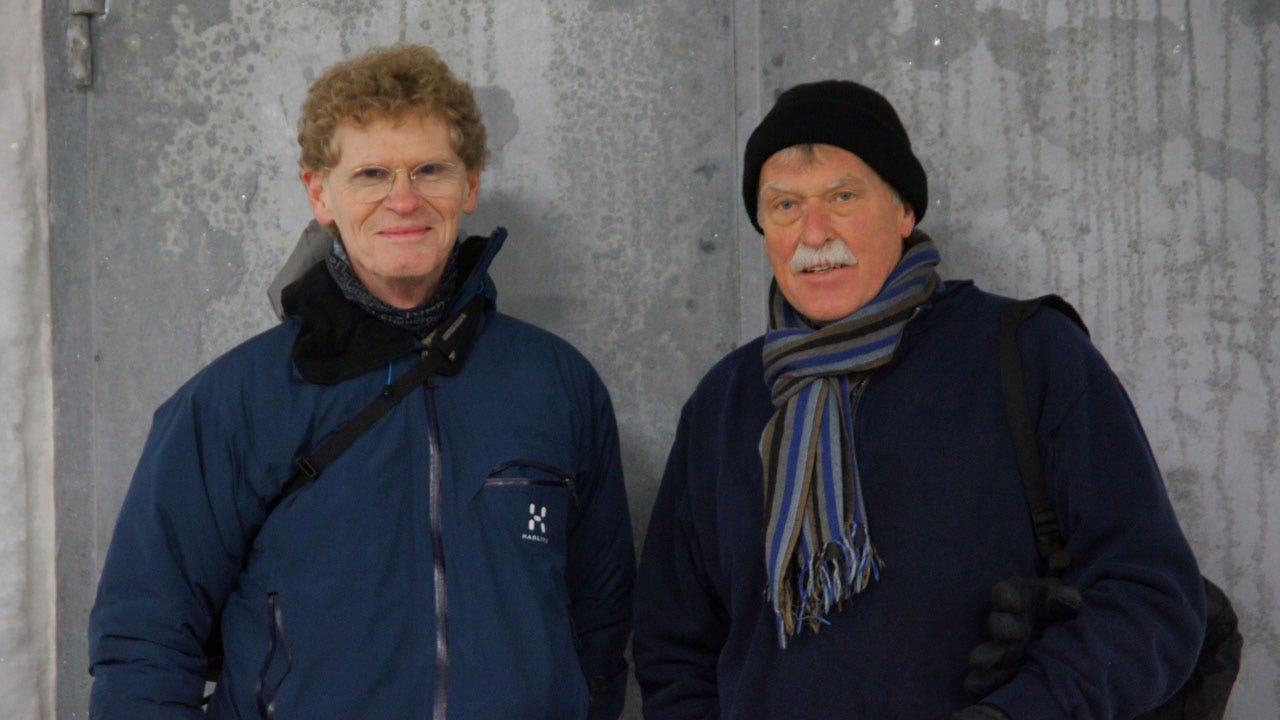
- Cary Fowler and Geoffrey Hawtin, two men who led the effort to create the Svalbard Global Seed Vault, will receive the 2024 World Food Prize.
- The vault opened in 2008 and now holds 1.25 million seed samples from almost every country in the world.
- Fowler and Hawtin hope their selection as World Food Prize laureates will enable them push for additional funding of seed bank endowments around the world.
Two men who were instrumental in the “craziest idea anyone ever had” of creating a global seed vault designed to safeguard the world’s agricultural diversity will be honored as the 2024 World Food Prize laureates, officials announced Thursday in Washington.
Cary Fowler, the U.S. special envoy for Global Food Security, and Geoffrey Hawtin, an agricultural scientist from the United Kingdom and executive board member at the Global Crop Diversity Trust, will be awarded the annual prize this fall in Des Moines, Iowa, where the food prize foundation is based. They will split a $500,000 award.
The winners of the prize were named at the State Department, where Secretary of State Antony Blinken lauded the men for their “critical work to advance global crop biodiversity and conserve over 6,000 varieties of crops and culturally important plants, which has had a direct impact in addressing hunger around the world.”
SECOND ARCTIC ‘DOOMSDAY’ VAULT WILL STORE THE WORLD’S DATA
Fowler and Hawtin were leaders in an effort starting in 2004 to build a back-up vault of the world’s crop seeds at a spot where it could be safe from political upheaval and environmental changes. A location was chosen on a Norwegian island in the Arctic Circle where temperatures could ensure seeds could be kept safe in a facility built into the side of a mountain.
The Svalbard Global Seed Vault opened in 2008 and now holds 1.25 million seed samples from nearly every country in the world.
Fowler, who first proposed establishing the seed vault in Norway, said his idea initially was met by puzzlement by the leaders of seed banks in some countries.
Cary Fowler, left, and Geoffrey Hawtin are shown on Feb. 24, 2014, at the Svalbard Global Seed Vault in Norway. (World Food Prize Foundation via AP)
“To a lot of people today, it sounds like a perfectly reasonable thing to do. It’s a valuable natural resource and you want to offer robust protection for it,” he said in an interview from Saudi Arabia. “Fifteen years ago, shipping a lot of seeds to the closest place to the North Pole that you can fly into, putting them inside a mountain — that’s the craziest idea anybody ever had.”
Hundreds of smaller seed banks have existed in other countries for many decades, but Fowler said he was motivated by a concern that climate change would throw agriculture into turmoil, making a plentiful seed supply even more essential.
Hawtin said that there were plenty of existing crop threats, such as insects, diseases and land degradation, but that climate change heightened the need for a secure, backup seed vault. In part, that’s because climate change has the potential of making those earlier problems even worse.
“You end up with an entirely new spectrum of pests and diseases under different climate regimes,” Hawtin said in an interview from southwest England. “Climate change is putting a whole lot of extra problems on what has always been significant ones.”
Fowler and Hawtin said they hope their selection as World Food Prize laureates will enable them push for hundreds of millions of dollars in additional funding of seed bank endowments around the world. Maintaining those operations is relatively cheap, especially when considering how essential they are to ensuring a plentiful food supply, but the funding needs continue forever.
“This is really a chance to get that message out and say, look, this relatively small amount of money is our insurance policy, our insurance policy that we’re going to be able to feed the world in 50 years,” Hawtin said.
The World Food Prize was founded by Norman Borlaug, who received the Nobel Peace Prize in 1970 for his part in the Green Revolution, which dramatically increased crop yields and reduced the threat of starvation in many countries. The food prize will be awarded at the annual Norman E. Borlaug International Dialogue, held Oct. 29-31 in Des Moines.
Read the full article from Here


A stretch of Interstate 94 in Minneapolis has reopened after a fatal crash closed it for hours Wednesday morning.
The Minnesota State Patrol said the crash occurred on westbound I-94 near Interstate 35W around 2:30 a.m. The patrol said the crash was fatal, but did not say how many people or vehicles were involved.
The Minnesota Department of Transportation said the road was cleared just before 6:15 a.m., and a WCCO crew at the scene saw traffic moving through.
This story will be updated.

SPEEDWAY, Ind. — Checkout time came early Tuesday night for Drake Edwards at The Dirt Track at Indianapolis Motor Speedway.
Edwards drove from the fourth starting spot to the lead on lap 7 and never trailed thereafter to win the 30-lap Stoops Star Spangled Showdown feature in his No. 40D Chase McDermand Racing/GR8 Company – Rexroad Racing/Spike/Speedway Toyota machine.
It was the second career USAC NOS Energy Drink Midget National Championship victory for Edwards, from Peoria, Arizona.
“It’s pretty surreal,” Edwards said. “Very cool to be standing here. I knew there was a shot coming to the smaller tracks, but I felt pretty solid all night long. So, I think it’s really cool.”
Kevin Thomas Jr. finished a distant second in the No. 14 4 Kings Racing car on the 1/5-mile dirt oval, followed by pole sitter Gavin Miller in the No. 97 Keith Kunz-Curb-Agajanian Motorsports entry. Zach Wigal was fourth in the No. 1 Pat O’Dell car, with BC39 rookie Jake Swanson rounding out the top five in the No. 14K 4 Kings Racing entry.
The 30-lap feature was the climax of the opening night of the two-night BC39 Presented by Avanti Windows & Doors, which will culminate in a 39-lap feature paying $20,039 to win Wednesday night on the track inside turn three of the storied IMS asphalt oval.
There were only two suspenseful moments for Edwards, 23, the 2024 USAC Western States Midget Rookie of the Year.
The first came on lap six when Edwards, charging toward the front, drove into the rear of teammate Briggs Danner in the No. 40x Chase McDermand Racing car in a duel for second place behind Miller. Edwards continued, but Danner spun and triggered a caution period.
“First and foremost, I want to apologize to Briggs,” Edwards said.
On the lap-seven restart, Edwards drove under Miller in turns three and four to take a lead he never surrendered despite multiple caution periods.
Edwards stretched the lead to 4.2 seconds over Thomas – a huge gap on a short track – by lap 22 as he could place his car on any spot of the dirt oval and find speed almost at will.
“I was just watching him up there,” Thomas said of Edwards. “Honestly, I was enjoying the show. I know he’s pretty talented, but I was like, ‘There ain’t no way he makes 30 laps without a crash.’ It’s pretty remarkable, and they had a great race car. He did a phenomenal job.”
Leading by approximately four seconds, Edwards rocketed around thick lapped traffic on the high line of the oval in the last 10 laps. But Thomas’ prediction of possible calamity for Edwards almost came true with three laps to go in the second dramatic moment on his drive to victory lane.
Edwards approached a lapped car that changed lines in turn three and four, and he had to slow quickly to avoid a collision. But Edwards safely avoided that near-miss and cruised to the victory in a car owned by McDermand, who picked up his only career USAC National Midget win during a 2024 BC39 preliminary feature, but cruelly lost a BC39 championship night victory with less than two laps remaining that same weekend when his car got hung up in ruts in turn four while leading.
“I didn’t know where to go half the time,” Edwards said. “But luckily, we made it through there pretty good, and I felt like I got through them all right.”
Edwards took over the lead from Miller with a turn three slider on lap seven, and it was all Edwards from there as he led the final 24 circuits of the 30-lap feature to earn the K & N Filters Clean Air award.
It’s been quite some time since you could last call Jake Swanson a Rookie. But tonight, in his first career BC39 appearance, he raced to a superb fifth-place result.
USAC NOS Energy Drink National Midget Championship, The Dirt Track at Indianapolis Motor Speedway, Speedway, Indiana, June 30, 2026
K1 RACEGEAR FIRST HEAT: (8 laps, passing points, starting positions in parentheses) 1. Kevin Thomas Jr. (#14 4 Kings) (3), 2. Drake Edwards (#40D McDermand) (6), 3. Ethan Mitchell (#19m Bundy Built) (1), 4. Kaylee Bryson (#11 Abacus) (5), 5. Alex Midkiff (#05 Midkiff) (4), 6. Joel Myers Jr. (#19H Hayward) (7), 7. Adam Taylor (#7T ATM) (2). NT
TJ FORGED SECOND HEAT: (8 laps, passing points, starting positions in parentheses) 1. Jacob Denney (#67 Kunz/Curb-Agajanian) (1), 2. Justin Grant (#87 CBI) (6), 3. Hayden Reinbold (#19AZ Reinbold-Underwood) (7), 4. Logan Julien (#3N O’Dell) (4), 5. Alex Sewell (#32A Tessier) (5), 6. Jake Robinson (#5u Trifecta) (2), 7. Devon Dobie (#23 Dobie) (3), 8. Austin Wood (#27 Horn) (8).
K & N FILTERS THIRD HEAT: (8 laps, passing points, starting positions in parentheses) 1. Kale Drake (#4 RMS) (2), 2. Gavin Miller (#97 Kunz/Curb-Agajanian) (8), 3. Brecken Reese (#20Q Reese) (1), 4. Drew Sherman (#19 Reinbold-Underwood) (3), 5. Frank Flud (#81F Rosenboom) (5), 6. Jeffrey Abbey (#8B Miller) (6), 7. Cameron Hagin (#33 RayPro) (4), 8. Jason Tessier (#32J Tessier) (7). 1:42.351
INDY POWERSPORTS FOURTH HEAT: (8 laps, passing points, starting positions in parentheses) 1. Bradley Cox (#45 Mason) (3), 2. Briggs Danner (#40x McDermand) (7), 3. Wesley Smith (#5p Rossi-Petty) (1), 4. Adyn Schmidt (#19x Cox) (5), 5. Gunnar Setser (#43 Arnold) (8), 6. Karter Sarff (#7u Trifecta) (4), 7. Brandon Carr (#98K Kunz/Curb-Agajanian) (6), 8. Matt Lux (#5L Lunsford-Lux) (2). 1:43.029
K1 RACEGEAR FIFTH HEAT: (8 laps, passing points, starting positions in parentheses) 1. Steven Snyder Jr. (#89 CBI) (2), 2. Jake Swanson (#14K 4 Kings) (5), 3. J.J. Yeley (#3J Rossi-Petty) (3), 4. Colton Robinson (#67K Kunz/Curb-Agajanian) (6), 5. Jonathan Beason (#36 Rosenboom) (8), 6. Josh Hodge (#35 Hodge) (7), 7. Tyler Watkins (#7w Watkins) (1), 8. Mack Leopard (#40L McDermand) (4). 1:44.058
TJ FORGED SIXTH HEAT: (8 laps, passing points, starting positions in parentheses) 1. Cannon McIntosh (#71K Kunz/Curb-Agajanian) (1), 2. Ricky Thornton Jr. (#1R Rossi-Petty) (8), 3. Kade Taylor (#T21 Mounce-Stout) (2), 4. Daison Pursley (#86 CBI) (6), 5. Cody Weisensel (#20w Burrington) (7), 6. Eric Heydenreich (#32 OMR-Rase) (5), 7. Christian Miller (#8XL Miller) (4), 8. Robert Carson (#99K Carson) (3).
K & N FILTERS SEVENTH HEAT: (8 laps, passing points, starting positions in parentheses) 1. Cale Coons (#63 Dooling/Curb-Agajanian) (2), 2. Jakeb Boxell (#54 4 Kings) (3), 3. Kyle Cummins (#3G Styres) (6), 4. Logan Seavey (#57 Abacus) (8), 5. Rylan Gray (#22H Gray) (7), 6. Riley Kreisel (#19K Cox) (5), 7. Cooper Miller (#8L Miller) (4), 8. Kyle Jones (#7TX Engler) (1). 1:44.150
INDY POWERSPORTS EIGHTH HEAT: (8 laps, passing points, starting positions in parentheses) 1. Justin Peck (#3p Rossi-Petty) (2), 2. Zach Wigal (#1 O’Dell) (6), 3. Zach Daum (#5D Taylor) (5), 4. Wout Hoffmans (#14J Rosenboom) (3), 5. Dodge Carlbert (#1m Montgomery) (4), 6. Cord Kisthardt (#21K Kisthardt) (7), 7. Chris Hartman (#35s Hodge) (1). 1:46.835
C MAIN: (10 laps, top 4 transfer to the semis, starting positions in parentheses) 1. Brandon Carr (1), 2. Cooper Miller (4), 3. Mack Leopard (9), 4. Kyle Jones (11), 5. Adam Taylor (5), 6. Cameron Hagin (2), 7. Christian Miller (3), 8. Tyler Watkins (7), 9. Jason Tessier (6), 10. Chris Hartman (8), 11. Matt Lux (10), 12 Austin Wood (12). 2:10.762
FIRST FIVE STAR BODIES SEMI: (12 laps, top 4 transfer to the feature, starting positions in parentheses) 1. J.J. Yeley (5), 2. Kyle Cummins (1), 3. Gunnar Setser (4), 4. Kaylee Bryson (6), 5. Drew Sherman (10), 6. Colton Robinson (3), 7. Karter Sarff (16), 8. Brandon Carr (17), 9. Wesley Smith (8), 10. Alex Sewell (11), 11. Joel Myers Jr. (13), 12. Alex Midkiff (12), 13. Mack Leopard (18), 14. Rylan Gray (9), 15. Ethan Mitchell (7), 16. Eric Heydenreich (15), 17. Cord Kisthardt (14), 18. Jakeb Boxell (2).
SECOND FIVE STAR BODIES SEMI: (12 laps, top 4 transfer to the feature, starting positions in parentheses) 1. Zach Daum (2), 2. Jonathan Beason (4), 3. Logan Seavey (1), 4. Brecken Reese (7), 5. Daison Pursley (3), 6. Wout Hoffmans (10), 7. Adyn Schmidt (6), 8. Frank Flud (11), 9. Riley Kreisel (15), 10. Kyle Jones (18), 11. Cody Weisensel (8), 12. Logan Julien (9), 13. Dodge Carlbert (12), 14. Kade Taylor (5), 15. Cooper Miller (17), 16. Jeffrey Abbey (14), 17. Josh Hodge (13), 18. Jake Robinson (16).
FEATURE: (30 laps, starting positions in parentheses) 1. Drake Edwards (4), 2. Kevin Thomas Jr. (7), 3. Gavin Miller (1), 4. Zach Wigal (6), 5. Jake Swanson (9), 6. Justin Peck (14), 7. Hayden Reinbold (10), 8. Cannon McIntosh (16), 9. Zach Daum (18), 10. Jacob Denney (15), 11. Gunnar Setser (21), 12. Justin Grant (5), 13. Kale Drake (11), 14. Briggs Danner (3), 15. Jonathan Beason (20), 16. Steven Snyder Jr. (12), 17. Kaylee Bryson (23), 18. Colton Robinson (26-P), 19. J.J. Yeley (17), 20. Brecken Reese (24), 21. Cale Coons (13), 22. Jakeb Boxell (25-P), 23. Bradley Cox (8), 24. Ricky Thornton Jr. (2), 25. Logan Seavey (22), 26. Kyle Cummins (19).

Jacob deGrom pitched seven strong innings and the Texas Rangers took advantage of a bone-headed play by Cleveland rookie outfielder Cooper Ingle on Tuesday night to beat the Guardians 4-2 and extend their winning streak to six games.
DeGrom (7-5) allowed a two-run homer to Kyle Manzardo in the first before turning dominant. The right-hander gave up a leadoff single in the second before retiring 18 of the next 19 batters, improving to 4-0 in June.
Joc Pederson hit a two-run homer and Josh Jung added a solo shot as the AL West-leading Rangers improved to 7-2 on their road trip.
They got a big assist in the seventh inning when Ingle, making just his second major league start in the outfield, lost track of the number of outs and tossed a live ball into the stands, allowing the Rangers to take a 3-2 lead.
With a runner at second and one out, Ingle caught a routine fly ball hit by Rangers left fielder Alejandro Osuna for the second out. Thinking it was the third out, Ingle looked at the ball in his glove before throwing it over the protective netting to fans.
The umpires immediately ruled the ball was dead, and Ezequiel Duran was awarded home plate.
Pederson connected for his 14th homer — and 11th since May 26 — off Tanner Bibee (2-9) to tie it 2-all in the third.
Jung’s ninth homer made it 4-2 in the eighth.
Manzardo gave the Guardians a 2-0 lead in the first with his 10th homer.
Rangers shortstop Corey Seager was pulled before his at-bat in the first inning because of back discomfort. The five-time All-Star missed 19 games earlier this season with back spasms.
-

 Atlanta, GA6 minutes ago
Conference offers safe space for gay men to unpack the stigmas, challenges of adoption and surrogacy
-

 Minneapolis, MN8 minutes ago
Westbound I-94 reopens in Minneapolis after fatal crash
-

 Indianapolis, IN14 minutes ago
Edwards Checks Out At Indianapolis – SPEED SPORT
-

 Pittsburg, PA15 minutes ago
Analysis: Here’s why the Pittsburgh Symphony’s budget just jumped by $7 million to $42 million
-

 Augusta, GA21 minutes ago
Augusta’s role in the American Revolution: An underdog story 250 years in the making
-

 Washington, D.C23 minutes ago
Looking for indoor July 4 plans in DC? Try these America250 exhibits
-

 Cleveland, OH29 minutes ago
Rangers capitalize on costly Guardians mistake, extend winning streak to six
-

 Austin, TX36 minutes ago
Apptronik opens robot training hub in Austin, Texas and debuts Apollo 2

