Kansas
KBI history offers ample reasons for Kansans to scrutinize Marion raid investigation • Kansas Reflector


The Kansas Bureau of Investigation misled the public in two of its most high-profile cases, with the truth emerging only decades after those cases were closed. That history should reinforce skepticism of special prosecutors’ interpretation of KBI files in the raid on the Marion County Record newspaper.
The only reason the public learned what the KBI really knew about the murders Truman Capote documented in “In Cold Blood” and who killed Nick Rice on the streets of Lawrence in 1970 was because those cases’ raw investigative files eventually saw the light of day.
Those records proved that the KBI hid crucial facts that would have revealed the truth about high-profile crime victims. The only way to be sure history doesn’t repeat itself is for the agency to fully disclose files related to the Marion investigation for every charge the report says can’t be brought.
Clutter conundrum
“In Cold Blood” relates the 1959 murders of four members of the Clutter family in a western Kansas farmhouse and how the killers were brought to justice by the KBI.
The KBI provided Capote “first-class service” to help him to write his manuscript, including exclusive access to investigative files such as the “diary of 16-year-old Nancy Clutter — her final entry logged only moments before two strangers invaded her home … and murdered her, her brother and her parents.”
With the KBI’s help, Capote was able to describe the crime and motivations of the killers and victims in vivid detail, leading to international fame for him, acclaim for the KBI agents credited with apprehending the suspects, and the advent of the true crime genre.
According to “In Cold Blood,” once the two killers realized that $10,000 they had hoped to steal was not on the premises, they murdered the family in frustration. In the decades that followed the book’s publication in 1965, thanks to the KBI’s world-famous messenger, the public had little reason to question the motive behind the Clutter killings.
But the way Capote describes the murders indicates the killers took their time, which runs counter to the notion that they were robbers fueled by random rage. This dichotomy has “invited conjecture” since “In Cold Blood” was published “about what Capote left out of the story,” in the words of Forensic Files Now.
Even so, the public may never have been able to challenge or verify the KBI’s version had the state of Kansas, at the KBI’s insistence, not filed a misguided lawsuit in 2012 seeking “to prevent the publication of investigative files related to the murders. “
The revelations in that case, which ended in 2019 only after the Kansas Court of Appeals affirmed an award of attorney fees against the state for more than $168,000, included KBI investigative reports documenting a meeting between three men in Cimarron, a town near the Clutter home, about an hour after the murders.
According to images of KBI investigative files included in 2019’s “Every Word is True,” a book detailing the records the KBI sought to suppress, two of the three men matched the descriptions of Perry Smith and Richard Hickock, who were convicted of the Clutter murders. And Hickock would go on to suggest in his memoir, written before he was executed in 1965 and which the KBI also sought to suppress through its lawsuit, that the Clutters were the victims of a contract killing.
“We were running short on time,” Hickock wrote. “It was almost two o’clock and our meeting with Roberts was about an hour away. We didn’t want to miss that. Five thousand bucks is a lot of dough.”
This information may not be enough, on its own, to definitively conclude why the Clutters were killed. But the lengths the KBI went to try to suppress the evidence in an ultimately futile attempt to maintain the integrity of its robbery-gone-wrong narrative is curious. Why would it be worth going to such lengths to keep the public from learning about something that happened so long ago?
Ultimately, without the raw investigative files, Capote’s account would have remained unchallenged, and the public would never have had such a clear reason to question whether investigators should have dug deeper.
Revising Rice
On July 20, 1970, in a tragic event that effectively ended the era known as the “Days of Rage” in Lawrence, local police fired on dozens of students and others demonstrating near the University of Kansas campus, leaving 18-year-old bystander Nick Rice dead. No one was ever held criminally responsible for his death.
But after Nick’s brother obtained the raw investigative files as a result of an open records request, the Lawrence Times reported in 2021 that within three hours of Nick’s death, the KBI had “a tacit admission of guilt from an officer who was involved in the incident: Jimmy Joe Stroud.”
(Editor’s note: The author represented Nick’s brother in obtaining the KBI’s raw investigative files.)
KBI agents had learned shortly after arriving in Lawrence that Stroud had told the Douglas County district attorney that Stroud “believed that he might have shot the dead boy.”
The KBI also had access to excerpts of transcripts of interviews the DA conducted with officers responding to the protest when Nick died, including Stroud.
Stroud’s first statement that appears on the transcript is: “You got me on a spot.”
Moments later, he said: “Let me ask a question. Am I to be charged with shooting the man?”
The transcripts further show that another officer believed Stroud “could have hit” Nick because he “heard him say ‘I shot at him.’ ”
The KBI was privy to all this information as part of its investigation into Nick’s death. And while the attorney general and the KBI director produced a report a month after he was killed intended in part to close the book on the ordeal, it had this to say about cause of death: “We cannot demonstrate that he was killed by a police bullet. We cannot demonstrate he was not killed by a police bullet.”
When confronted with questions about that explanation at a press conference held in conjunction with issuing the report, the attorney general quoted the document rather than offer any additional insight.
Making matters worse, the files Nick’s brother obtained show that less than a week after Nick was killed, the KBI knew a Lawrence police officer had “tampered with” the only bullet found at the scene when he “pocketed it and took it home rather than following proper evidentiary procedures.”
Still, the agency chose to keep the public, as well as Nick’s family, in the dark about the role Lawrence police played in his death.
When reached last week for comment, KBI communications director Melissa Underwood declined to say whether the agency’s willingness to keep the public in the dark in two of the agency’s most important cases had any bearing on public confidence in the special prosecutors’ report on Marion, or whether the public would benefit from disclosure of the raw investigative files.
KBI should disclose Marion-related records
Without the KBI’s files, it would be impossible to corroborate Hickock’s claims that he was the Clutters’ hit man or explain who killed Nick.
Keeping such crucial information from the public prevented Kansans, for decades, from making informed decisions about whether to trust law enforcement.
Once again, this time by filing a single charge for conduct taking place only after the raids and declining to bring any others, law enforcement is asking the public to trust its version of the facts in a high-profile case. But given the decades it took to the public realize what really happened to the Clutters and Rice, as well as the absence of criminal accountability for anything that happened leading up to the Marion raids, the only way to engender public confidence in the special prosecutors’ report is for the KBI to disclose investigative files related to every charge that was not filed. With cases involving pre-raid conduct effectively closed, such disclosures would not affect any ongoing matters.
The public deserves nothing less than full disclosure as it continues to grapple with what happened in Marion on Aug. 11, 2023.
Max Kautsch focuses his practice on First Amendment rights and open government law. Through its opinion section, the Kansas Reflector works to amplify the voices of people who are affected by public policies or excluded from public debate. Find information, including how to submit your own commentary, here.



Kansas
Salvador Perez attended the Ecaudor-Curaçao match at Arrowhead. So did other royals — from the Netherlands

KANSAS CITY, Mo. (AP) — Kansas City Royals captain Salvador Perez, along with teammates Starling Marte and Carter Jensen, attended Saturday evening’s World Cup match at Arrowhead Stadium.
So did some other royals!
King Willem-Alexander and Queen Maxima of the Netherlands began Saturday by cheering the Dutch past Sweden in Houston.
The monarchs ended the day by watching Curacao make some history against Ecuador in Kansas City.
The small island nation of Curacao is a constituent country within the Kingdom of the Netherlands, and that makes King Willem-Alexander and Queen Maxima the heads of state. So, after a quick flight north Saturday, the royal couple dutifully swapped out their bright orange scarves of Het Oranje Legioen they wore to their earlier match with bright blue ones for The Blue Wave.
Curacao, the smallest World Cup team in population and size, made its tournament debut last Sunday in a 7-1 loss to Germany. But it bounced back from that defeat to earn a 0-0 draw with La Tri and earn its first-ever point in the tournament.
“It is an extra-special World Cup because we have both the Netherlands and Curacao,” Willem-Alexander told RTL-TV. “So we have twice as many teams to cheer for. A great opportunity to cheer on both the Blues and the Oranges. All in all, it will be a special World Cup for me with two teams, and I naturally hope they go extremely far.”

The Netherlands moved one step closer to the World Cup knockout round after a 5-1 win over Sweden.
Brian Brobbey and Cody Gakpo scored two goals apiece to help coach Ronald Koeman’s team bounce back from a disappointing draw in its opener and move atop Group F. The Netherlands concludes group play against Tunisia on Thursday in Kansas City.
Curacao is still alive, too, after Eloy Room made 15 saves — one off the World Cup record — to earn a draw with Ecuador. It concludes Group E play on Thursday against the Ivory Coast in Philadelphia at the same time Ecuador is playing Germany in New York.
It is quite rare for sitting monarchs to come through the area. Queen Ann of Romania attended the dedication of the Liberty Memorial, which is where Kansas City is holding its World Cup FanFest, in the 1920s, while King Gustav XVI of Sweden made a stop in the small Kansas town of Lindsborg when he was passing through the Midwest in the 1970s.
Copyright 2026 The Associated Press. All rights reserved.
Kansas
1 man dies after being shot June 9 in Kansas City, Missouri; police working to identify person of interest
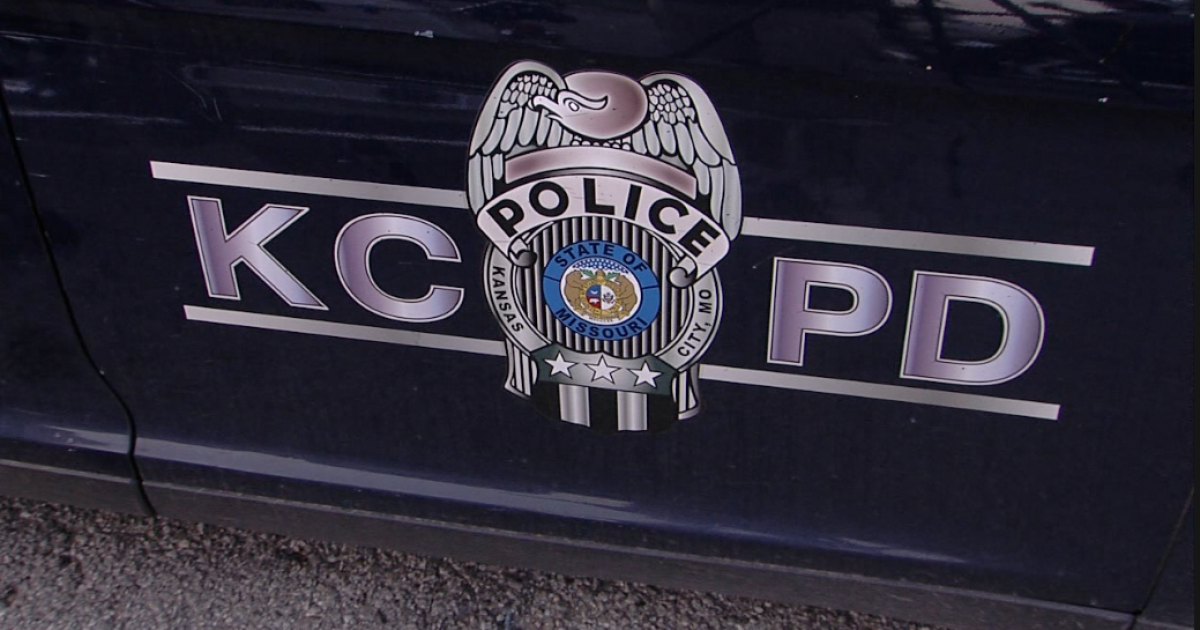
KANSAS CITY, Mo. — The Kansas City, Missouri, Police Department is working to identify a person(s) of interest in a June 9 shooting that led to the death of one victim.
Police were called around 6 a.m. on June 9 to the area of Independence and Monroe avenues in Kansas City, Missouri.
Responding officers found an unresponsive man behind a residence in that area. He was transported to the hospital for life-threatening injuries, per KCPD.
Police were notified Friday night that the shooting victim died.
KCPD said Saturday “detectives have made headway identifying subject(s) of interest.”
Anyone with information on the incident is encouraged to call KCPD Homicide detectives directly at 816-234-5043 or the Greater Kansas City Crime Stoppers Tips Hotline at 816-474-8477.
—
If you have any information about a crime, you may contact your local police department directly. But if you want or need to remain anonymous, you should contact the Greater Kansas City Crime Stoppers Tips Hotline by calling 816-474-TIPS (8477), submitting the tip online or through the free mobile app at P3Tips.com. Depending on your tip, Crime Stoppers could offer you a cash reward.
Annual homicide details and data for the Kansas City area are available through the KSHB 41 News Homicide Tracker, which was launched in 2015. Read the KSHB 41 News Mug Shot Policy.
Kansas
1 man killed, 5 others wounded in mass shooting Friday night near East 19th and Vine streets in KCMO

KANSAS CITY, Mo. — One person was shot to death and five others were wounded by gunfire Friday night in the 18th and Vine Historic District in Kansas City, Missouri.
Police said officers were in the area of East 18th Street and Paseo about 10:30 p.m. when they heard gunshots.
The officers moved to East 19th Street between the Paseo and Vine Street to check for shooting victims, according to a police department news release.
They found one man who had been shot and was unresponsive, along with two women who had been shot.
The man was declared dead at the scene.
One of the women suffered serious gunshot wounds and the other woman suffered non life-threatening wounds, according to the police department news release.
Officers at the shooting scene were notified three more shooting victims from the same area had been taken to a hospital by a private vehicle.
An adult male and female were reported in stable condition late Friday, while a second adult male suffered critical gunshot wounds, according to police.
Police said their preliminary investigation revealed the victims were standing on 19th Street between Vine and Paseo when people began shooting in several directions.
All the shooting victims were hit by gunfire in that area, according to police.
No word on what led to the mass shooting and at least one murder.
This is a developing story and will be updated when new information is available.
—
If you have any information about a crime, you may contact your local police department directly. But if you want or need to remain anonymous, you should contact the Greater Kansas City Crime Stoppers Tips Hotline by calling 816-474-TIPS (8477), submitting the tip online or through the free mobile app at P3Tips.com. Depending on your tip, Crime Stoppers could offer you a cash reward.
Annual homicide details and data for the Kansas City area are available through the KSHB 41 News Homicide Tracker, which was launched in 2015. Read the KSHB 41 News Mug Shot Policy.
-

 Dallas, TX2 minutes ago
Redesign debate intensifies as Dallas convention center faces costly delays
-

 Miami, FL7 minutes ago
‘An insane memory’: New World Cup super hero plays in Miami but not with Messi
-

 Boston, MA14 minutes ago
FAA investigates close call between two aircraft at intersecting runways at Boston Logan International Airport | CNN
-

 Denver, CO17 minutes ago
Proposed September 2026 Service Changes
-

 Seattle, WA22 minutes ago
Seattle gets a heat wave and rain storm in the same week? – Emerald City Weather Blog
-

 San Diego, CA29 minutes ago
Photos: Cooper Family Foundation’s Juneteenth celebration
-

 Milwaukee, WI32 minutes ago
Carin León, Summerfest’s first regional Mexican music act, draws new visitors to Milwaukee
-
Atlanta, GA37 minutes ago
Atlanta sees great value in Swain at No. 23,

