Kansas
Kansas raising death benefits for families of killed workers in ‘truly necessary’ overhaul • Kansas Reflector


TOPEKA — The state is set to bolster benefits for families of workers who have been killed and for workers who have been permanently disabled, marking change for the first time in more than a decade.
Kansas workers will see the effects of the change in little more than a month, following the passage of legislation overhauling what have been some of the lowest workers’ compensation rates in the country.
Senate Bill 430, a bipartisan law formed after vigorous negotiations with business and labor groups, will go into effect July 1. Lawmakers sent the bill to the governor in March, and she signed it April 11. Gov. Laura Kelly held a second ceremonial signing Wednesday to reiterate the law’s importance, surrounded by lawmakers, labor groups and members of the National Guard.
Kelly estimated the last meaningful updates to workers’ comp happened 13 years ago, and it took 24 years of work before that to achieve change.
“I remind you of this so we all truly appreciate how big a deal this really is,” Kelly said.
A family of a worker killed on the job will receive up to $500,000 in death compensation benefits, up from the previous cap of $300,000. For a worker with an injury resulting in a permanent and total disability, benefits will be capped at $400,000, up from $155,000. Compensation benefits for a temporary total disability will go from the previous cap of $130,000 to $225,000. The benefits will also undergo cost-of-living adjustments starting in 2027.
“The bill’s language is the result of countless hours of effort by representatives of injured workers, industry, and the state to craft much-needed and meaningful updates to the Kansas Workers Compensation Act,” said Anton Andersen, a defense attorney and director for the Kansas Self Insurer’s Association.
Other changes include extending workers’ compensation coverage to those in the Kansas National Guard and decreasing the Social Security retirement offset for certain disability benefits.
“This legislation is a significant step in achieving a balance between the needs of workers and the realities of the business world,” said Kansas Department of Labor Secretary Amber Shultz. “We are proud to play a part in the creation of a more fair and equitable system.”
SB 430 also allows for the settlement of workers’ compensation cases without a formal court hearing and limits use of independent medical examinations, among other provisions.
“It has been way too long since we have revised our worker compensation laws,” Kelly said in an interview after the signing. “This was absolutely necessary. We were one of the states with the lowest workers’ compensation of any state in the country.”



Kansas
Salvador Perez attended the Ecaudor-Curaçao match at Arrowhead. So did other royals — from the Netherlands

KANSAS CITY, Mo. (AP) — Kansas City Royals captain Salvador Perez, along with teammates Starling Marte and Carter Jensen, attended Saturday evening’s World Cup match at Arrowhead Stadium.
So did some other royals!
King Willem-Alexander and Queen Maxima of the Netherlands began Saturday by cheering the Dutch past Sweden in Houston.
The monarchs ended the day by watching Curacao make some history against Ecuador in Kansas City.
The small island nation of Curacao is a constituent country within the Kingdom of the Netherlands, and that makes King Willem-Alexander and Queen Maxima the heads of state. So, after a quick flight north Saturday, the royal couple dutifully swapped out their bright orange scarves of Het Oranje Legioen they wore to their earlier match with bright blue ones for The Blue Wave.
Curacao, the smallest World Cup team in population and size, made its tournament debut last Sunday in a 7-1 loss to Germany. But it bounced back from that defeat to earn a 0-0 draw with La Tri and earn its first-ever point in the tournament.
“It is an extra-special World Cup because we have both the Netherlands and Curacao,” Willem-Alexander told RTL-TV. “So we have twice as many teams to cheer for. A great opportunity to cheer on both the Blues and the Oranges. All in all, it will be a special World Cup for me with two teams, and I naturally hope they go extremely far.”

The Netherlands moved one step closer to the World Cup knockout round after a 5-1 win over Sweden.
Brian Brobbey and Cody Gakpo scored two goals apiece to help coach Ronald Koeman’s team bounce back from a disappointing draw in its opener and move atop Group F. The Netherlands concludes group play against Tunisia on Thursday in Kansas City.
Curacao is still alive, too, after Eloy Room made 15 saves — one off the World Cup record — to earn a draw with Ecuador. It concludes Group E play on Thursday against the Ivory Coast in Philadelphia at the same time Ecuador is playing Germany in New York.
It is quite rare for sitting monarchs to come through the area. Queen Ann of Romania attended the dedication of the Liberty Memorial, which is where Kansas City is holding its World Cup FanFest, in the 1920s, while King Gustav XVI of Sweden made a stop in the small Kansas town of Lindsborg when he was passing through the Midwest in the 1970s.
Copyright 2026 The Associated Press. All rights reserved.
Kansas
1 man dies after being shot June 9 in Kansas City, Missouri; police working to identify person of interest
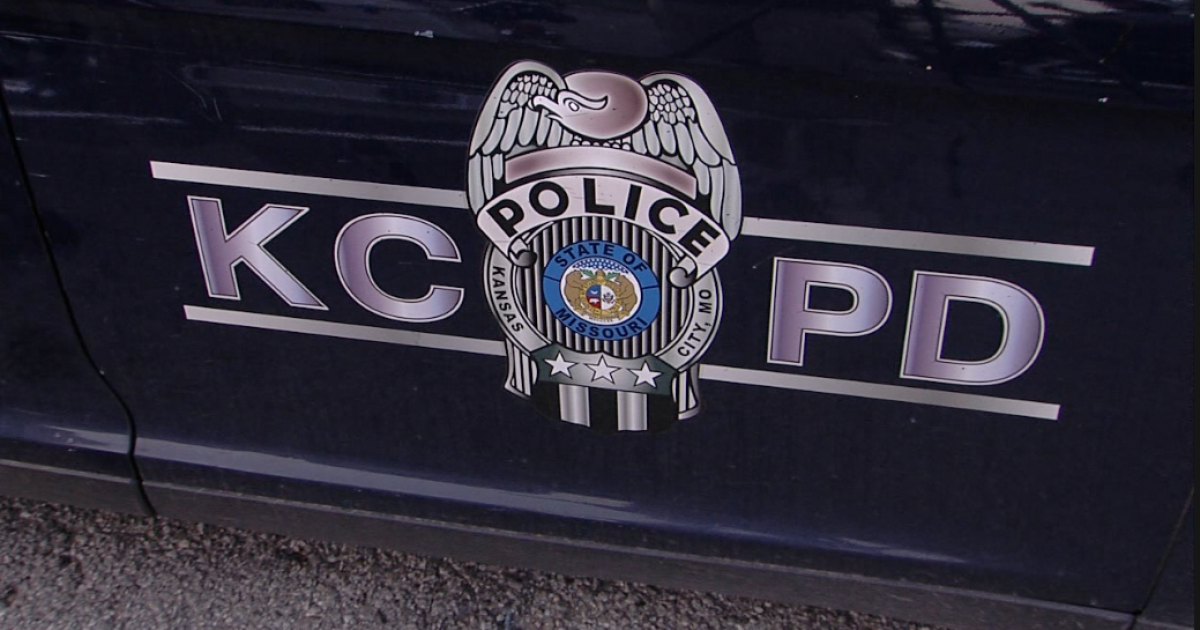
KANSAS CITY, Mo. — The Kansas City, Missouri, Police Department is working to identify a person(s) of interest in a June 9 shooting that led to the death of one victim.
Police were called around 6 a.m. on June 9 to the area of Independence and Monroe avenues in Kansas City, Missouri.
Responding officers found an unresponsive man behind a residence in that area. He was transported to the hospital for life-threatening injuries, per KCPD.
Police were notified Friday night that the shooting victim died.
KCPD said Saturday “detectives have made headway identifying subject(s) of interest.”
Anyone with information on the incident is encouraged to call KCPD Homicide detectives directly at 816-234-5043 or the Greater Kansas City Crime Stoppers Tips Hotline at 816-474-8477.
—
If you have any information about a crime, you may contact your local police department directly. But if you want or need to remain anonymous, you should contact the Greater Kansas City Crime Stoppers Tips Hotline by calling 816-474-TIPS (8477), submitting the tip online or through the free mobile app at P3Tips.com. Depending on your tip, Crime Stoppers could offer you a cash reward.
Annual homicide details and data for the Kansas City area are available through the KSHB 41 News Homicide Tracker, which was launched in 2015. Read the KSHB 41 News Mug Shot Policy.
Kansas
1 man killed, 5 others wounded in mass shooting Friday night near East 19th and Vine streets in KCMO

KANSAS CITY, Mo. — One person was shot to death and five others were wounded by gunfire Friday night in the 18th and Vine Historic District in Kansas City, Missouri.
Police said officers were in the area of East 18th Street and Paseo about 10:30 p.m. when they heard gunshots.
The officers moved to East 19th Street between the Paseo and Vine Street to check for shooting victims, according to a police department news release.
They found one man who had been shot and was unresponsive, along with two women who had been shot.
The man was declared dead at the scene.
One of the women suffered serious gunshot wounds and the other woman suffered non life-threatening wounds, according to the police department news release.
Officers at the shooting scene were notified three more shooting victims from the same area had been taken to a hospital by a private vehicle.
An adult male and female were reported in stable condition late Friday, while a second adult male suffered critical gunshot wounds, according to police.
Police said their preliminary investigation revealed the victims were standing on 19th Street between Vine and Paseo when people began shooting in several directions.
All the shooting victims were hit by gunfire in that area, according to police.
No word on what led to the mass shooting and at least one murder.
This is a developing story and will be updated when new information is available.
—
If you have any information about a crime, you may contact your local police department directly. But if you want or need to remain anonymous, you should contact the Greater Kansas City Crime Stoppers Tips Hotline by calling 816-474-TIPS (8477), submitting the tip online or through the free mobile app at P3Tips.com. Depending on your tip, Crime Stoppers could offer you a cash reward.
Annual homicide details and data for the Kansas City area are available through the KSHB 41 News Homicide Tracker, which was launched in 2015. Read the KSHB 41 News Mug Shot Policy.
-

 San Francisco, CA34 seconds ago
San Francisco celebrates Black freedom at weekend Juneteenth parade: ‘We’re all people’
-

 Dallas, TX4 minutes ago
Redesign debate intensifies as Dallas convention center faces costly delays
-

 Miami, FL9 minutes ago
‘An insane memory’: New World Cup super hero plays in Miami but not with Messi
-

 Boston, MA16 minutes ago
FAA investigates close call between two aircraft at intersecting runways at Boston Logan International Airport | CNN
-

 Denver, CO18 minutes ago
Proposed September 2026 Service Changes
-

 Seattle, WA24 minutes ago
Seattle gets a heat wave and rain storm in the same week? – Emerald City Weather Blog
-

 San Diego, CA31 minutes ago
Photos: Cooper Family Foundation’s Juneteenth celebration
-

 Milwaukee, WI34 minutes ago
Carin León, Summerfest’s first regional Mexican music act, draws new visitors to Milwaukee

