Kansas
Kansas anti-abortion groups celebrate legislative wins. What that means for patients.


Anti-abortion advocates are celebrating legislative victories in Kansas, where Republican lawmakers successfully passed measures that will force abortion patients to report more information to state officials, make it easier to prosecute people for coercing someone to get an abortion and allot more money to anti-abortion counseling centers.
“Now is the time to utilize these new tools and get to work helping women and saving as many babies from the profit-driven abortion industry as possible,” Jean Gawdun, director of government relations for the anti-abortion group Kansans for Life, said in a news release.
Abortion remains legal in Kansas until 22 weeks gestation after voters in 2022 overwhelmingly rejected a proposed constitutional amendment that would have enabled lawmakers to ban it.
The state already restricts abortion in a number of ways, including requiring minors to get parental consent and limiting which health care providers can offer the procedure. Several other restrictions, like a 24-hour waiting period, are on hold due to an ongoing court case.
But the new laws — passed by Republicans overriding vetoes from Democratic Gov. Laura Kelly in the final days of lawmaking — will expand those restrictions.
Emily Wales, president and CEO of Planned Parenthood Great Plains Votes, said they’re designed to stigmatize reproductive health care.
“Under the new laws, patients will be confused, resources will be squandered, and people will be interrogated about their reasons for seeking care,” she said in an emailed statement. “We know and trust people to make decisions that are best for them, free from unnecessary burdens, shame, and government coercion.”
Advocates say ‘abortion coercion’ law misses the mark
One law will make it easier to prosecute someone for coercing someone to get an abortion, creating a new felony punishable by up to 25 years in prison. The measure was a priority of anti-abortion groups, who say they frequently talk to women who feel pressure to get abortions from partners, family members and sometimes doctors.
“For too many women, the right to choose abortion has become the duty to have an abortion for the benefit of other people,” Gawdun said during a legislative hearing.
But organizations that help victims of domestic violence say they’re disappointed lawmakers rejected calls to broaden the law to address other types of reproductive coercion, like tampering with someone’s birth control or pressuring them into becoming pregnant.
Those types of coercion have shown up more frequently in Kansas Coalition Against Sexual and Domestic Violence executive director Michelle McCormick’s work.
“It was much more frequent, in my experience, that a victim or survivor was being pressured into either having children when they wouldn’t want to or having their chosen form of birth control hidden from them,” she said in an interview.
Amanda Meyers, director of the Wichita Family Crisis Center, said abusers sometimes force their partners to have children with them out of a desire to permanently tether them to the other person. She noted that pregnancy is often a particularly dangerous time for victims of domestic violence.
“Probably less than a handful of times have I seen (abortion coercion) arise with my clients,” she said, “but reproductive coercion or coercion around family planning is happening in 90 to 99% of the cases.”
Democratic Rep. Jo Ella Hoye introduced an amendment to address those concerns in a House committee. The Republican-led committee initially approved it, but the amendment was omitted from the Senate version of the bill that lawmakers eventually passed.
McCormick called it a missed opportunity.
“While we were hopeful that the Legislature would have taken the opportunity to address all tactics of reproductive coercion that survivors of domestic and sexual violence experience (those not addressed in this bill or current Kansas law), we are appreciative to those Legislators who responded to to our concerns, asked thoughtful questions, and showed their support for addressing reproductive coercion,” she said in an email.
In a note accompanying her veto of the bill, the governor said she agrees that no one should be coerced into getting an abortion, but said she was concerned with what she described as the bill’s vague language.
“This overly broad language risks criminalizing Kansans who are being confided in by their loved ones or simply sharing their expertise as a health care provider,” Kelly said.
Lawmakers overrode her veto 28-10 in the Senate and 85-40 in the House. In a news release following the votes, Republican House leadership called her veto “negligent” and said they were “proud to stand together against abuses such as sex trafficking and sexual abuse that accompany abortion coercion.”
New questions for abortion patients
Starting July 1, Kansas abortion providers must begin asking patients why they’re getting an abortion, whether they’ve recently experienced domestic violence and information about their current living situation. Providers must then give that information to the state health department, which will publish it in a biannual report.
Officials currently publish an annual report about abortion statistics that includes demographic information about patients’ age, race, marital status and county of residence.
During legislative hearings, proponents of the law said the expanded information would help lawmakers and nonprofit organizations, including anti-abortion counseling centers, better understand why people get abortions in Kansas. They could then, they argued, provide more resources that might reduce abortion rates.
But opponents said the questions are intrusive and serve no medical purpose.
“Voters do not want politicians getting between doctors and their patient by interfering in private medical decisions,” Kelly wrote about her veto of the law last month. “There is no valid medical reason to force a woman to disclose to the legislature if they have been a victim of abuse, rape, or incest prior to obtaining an abortion.”
Lawmakers had just enough votes to override Kelly’s veto — 27-10 in the Senate and 84-41 in the House.
“The Governor’s unreasonable fear of this data collection is nothing but a roadblock to helping serve these vulnerable women better,” Republican House leadership said in a statement.
Wichita-based abortion provider Trust Women denounced the veto override.
“This means that patients from Kansas, Texas, Oklahoma, Arkansas, and Missouri who come to our clinics for care will be subjected to a round of invasive questions that have the potential to hurt their healthcare experience and invade their personal privacy,” the clinic said in a social media post.
Money for anti-abortion groups
Lawmakers also passed measures that will help fund anti-abortion counseling centers by renewing a $2 million annual grant and allotting up to an additional $10 million per year through a sweeping tax credit that will reimburse donors for up to 70% of their charitable contributions to the centers.
The centers, often called “crisis pregnancy centers” or “pregnancy resource centers,” provide free resources like baby supplies and parenting classes to people with unwanted pregnancies. Proponents say they’re a lifeline for pregnant mothers facing financial hardship.
But critics say they sometimes mislead vulnerable women and spread disinformation designed to dissuade them from getting abortions. Health experts say they also sometimes encourage women to obtain unproven medical treatments like “abortion pill reversal,” which major medical groups denounce. (Last year Kansas lawmakers passed a law requiring all doctors to inform abortion patients about the treatment, but a judge temporarily blocked it.)
In a line-item veto, Kelly struck down the $2 million contract renewal. She also vetoed the tax credit law, saying in a statement that it’s inappropriate to direct tax dollars to the “largely unregulated” centers. Lawmakers overrode both actions.
Abortion bills that didn’t pass in Kansas legislative session
Some abortion-related proposals died, including bills that would require Kansans to have an obstetric ultrasound prior to getting an abortion. Kansas already has a law requiring this, but a judge temporarily blocked it due to a lawsuit that alleges the law — which also imposes a 24-hour waiting period and requires providers to give patients information designed to discourage them from getting an abortion — is unconstitutional.
Lawmakers failed to pass bills that would restrict abortion providers from purchasing liability insurance from a state fund and allow children injured during a failed abortion to sue the abortion provider.
Two bills that would ban abortion in nearly all cases were introduced, but did not progress.
Backers say such proposals are symbolic because they would almost certainly violate the Kansas Constitution.
Last week, lawmakers passed a bill that would enable pregnant women to collect child support beginning at conception, a key goal of state and national anti-abortion groups. Reproductive rights groups lobbied against the proposal, raising concerns it could strengthen a legal concept known as “fetal personhood” in Kansas — something legal experts say could lead to future restrictions on abortion, in vitro fertilization and other reproductive health care.
Kelly is expected to veto it, and it’s unclear whether Republicans will have the time — or votes — to override her. The regular legislative session is over, but lawmakers will need to return to the Statehouse for a special session in the coming weeks to pass a tax bill.
Rose Conlon reports on health for KMUW and the Kansas News Service.



Kansas
Kansas City barbecue pitmaster Arthur Lee Sr. killed in hit-and-run crash while riding his scooter

KSHB 41 reporter La’Nita Brooks covers stories providing solutions and offering discussions on topics of crime and violence. She also covers stories in the Northland. Share your story idea with La’Nita.
—
Kansas City barbecue pitmaster Arthur Lee Sr. was killed in an early morning hit-and-run crash while riding his scooter March 21.
Kansas City barbecue pitmaster Arthur Lee Sr. killed in hit-and-run crash
Lee was turning left from Dr. Martin Luther King Jr. Boulevard onto Eastwood Trafficway when a car ran a red light and hit him. A small memorial now grows at the intersection.
Chris Morrison
“Devastated. Everybody’s hurt, it was really unexpected,” his son Arthur Lee Jr. said. “I loved him to death. My dad was like my best friend.”
Lee was well known in the barbecue community, working as a pitmaster at Gates Bar-B-Q for the past eight years after spending two decades at Arthur Bryant’s Barbeque.
“He loved working at Gates,” Rose Qualls, Lee’s sister-in-law, said. “He was always making us slabs and turkey sandwiches.”
Chris Morrison

The morning of the incident, Lee was preparing to move into a new home with his wife and children, getting ready for a fresh start before a tragic end.
“He was really special, you know. He was one of a kind and everybody that he was around just loved him,” Qualls said. “It’s just a sad situation.”
Lee was 60 years old. His family said while his life was cut short, his flame will burn forever.
“My sister, she is really going through it, we all are,” Qualls said. “And I’m here for her, whatever she needs, when she need a shoulder to cry on, I’m here.”
Courtesy of Arthur Lee Jr.
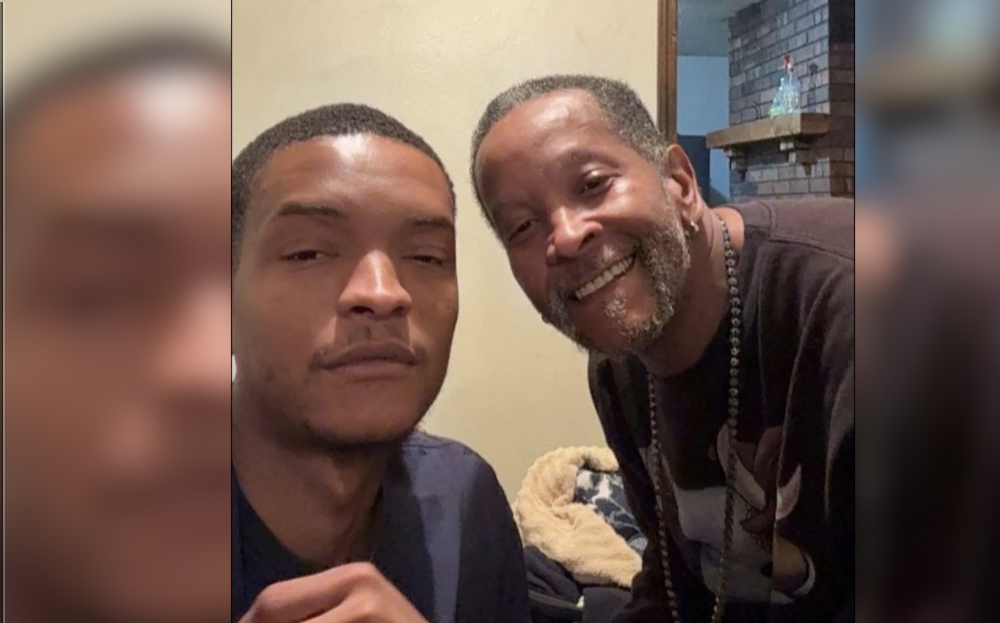
The family is pleading for answers and for the driver, who fled the scene, to come forward.
“I would pray that they would have some type of compassion, some type of heart, possibly turn themselves in,” Lee Jr. said.
This story was reported on-air by a journalist and has been converted to this platform with the assistance of AI. Our editorial team verifies all reporting on all platforms for fairness and accuracy.
—


WICHITA, KAN. – A Kansas man was sentenced to 120 months in prison for selling methamphetamine to an undercover police officer, according to the United State’s Attorney.
According to court documents, Wayne F. Fleming, 41, of Wichita pleaded guilty to one count of distribution of a controlled substance.
In May 2021, Fleming sold drugs multiple times to an undercover officer with the Wichita Police Department. Testing by the Sedgwick County Regional Forensic Science Center showed the total amount Fleming sold to the officer to be more than 200 grams of pure methamphetamine.
“Mr. Fleming was federally indicted in 2021, but before a plea agreement was reached, Mr. Fleming went to state prison to serve time for offenses unrelated to the federal case,” said U.S. Attorney Ryan A. Kriegshauser. “The Department of Justice doesn’t forget. Not long after his release from a state prison, Mr. Fleming is now an inmate in a federal prison.”
The Wichita Police Department investigated the case.

LEAVENWORTH, Kan. (KCTV) – A Kansas inmate will spend more time behind bars after a dispute over an extra slice of pizza turned physical.
Leavenworth County Attorney Todd Thompson announced on Wednesday, March 25, that Wyatt C. Parnell, 42, an inmate at Lansing Correctional Facility, was sentenced to 16 additional months.
Prosecutors indicated that the sentence is the result of an attempt to assault a corrections officer during a December 2019 dining hall confrontation.
What Happened
Court records noted that the incident happened around 6:30 p.m. on Dec. 26, 2019 – the day after Christmas – in the facility’s maximum-security dining room.
According to prosecutors, Parnell entered the dining hall, picked up a dinner tray and grabbed an extra slice of pizza from a separate tray.
A corrections officer repeatedly ordered him to put the tray down and leave the area; however, court documents revealed that Parnell refused.
When the officer moved to retrieve the tray and again ordered Parnell to leave, prosecutors said he yanked the tray away and threw it on the floor.
Parnell then tried to push past the officer to reach the serving line for another tray, according to court records.
The officer reported that they attempted to detain Parnell, but he resisted, leading to a physical fight.
The Charges & Sentence
Court records indicated that Parnell pleaded no contest to attempted aggravated battery. His new sentence will run consecutively – meaning it is added to the sentence he is already serving.
“Correctional facilities rely on order and compliance to maintain safety for both staff and inmates,” Thompson said. “This sentence reflects the seriousness of disregarding lawful commands and engaging in behavior that puts others at risk.”
Parnell’s Criminal History
Corrections records show that Parnell was already serving time for:
- Kidnapping
- Aggravated battery
- Two counts of criminal threat
Prison records also show a lengthy disciplinary history, including violations for:
- Contraband possession
- Fighting
- Threats
- Lewd acts
- Entering restricted areas
Copyright 2026 KCTV. All rights reserved.

FKA twigs sues ex-boyfriend Shia LaBeouf over ‘unlawful’ NDA

LAPD chief backed cops who shot at author, Weezer bassist’s ex; commission overruled him

What European Luxury Can Learn From American Fashion

Bill Maher on getting the Mark Twain Prize for humor: ‘Like an Emmy, except I win’

Prep sports roundup: Redondo Union takes down No. 1 Mira Costa in boys volleyball

Florida High School Football Rankings: Top 25 teams – Oct. 21

How old is Bo Nix? What to know about Oregon quarterback ahead of 2024 NFL Draft

Cleary's 21 help Le Moyne down Central Connecticut State 69-64 in OT

99th annual Pony Swim held in Virginia

Indiana Members Credit Union announced as new anchor tenant at Bottleworks District

Rubio joins crucial G7 talks as Iran war set to dominate second day

A surprise resignation could open the door for an independent to win a Montana Senate seat

Video: Savannah Guthrie Says She Believes Her Mother Was Taken for Ransom

Stefanik grills University of Michigan leader on lack of audit after string of Chinese national arrests

Photos: More than one million displaced by Israel’s evacuations in Lebanon
-

 Detroit, MI1 week ago
Drummer Brian Pastoria, longtime Detroit music advocate, dies at 68
-

 Science1 week ago
How a Melting Glacier in Antarctica Could Affect Tens of Millions Around the Globe
-

 Movie Reviews1 week ago
‘Youth’ Twitter review: Ken Karunaas impresses audiences; Suraj Venjaramoodu adds charm; music wins praise | – The Times of India
-
 Science1 week ago
I had to man up and get a mammogram
-

 Sports6 days ago
IOC addresses execution of 19-year-old Iranian wrestler Saleh Mohammadi
-

 New Mexico4 days ago
Clovis shooting leaves one dead, four injured
-

 Texas7 days ago
How to buy Houston vs. Texas A&M 2026 March Madness tickets
-

 Tennessee3 days ago
Tennessee Police Investigating Alleged Assault Involving ‘Reacher’ Star Alan Ritchson