Kansas
Homegrown Jayhawk stars ready to shine at Big 12 Tournament in Kansas City


LAWRENCE, Kan. (KCTV) – As Kansas women’s basketball prepares to enter the postseason at the Big 12 Tournament in Kansas City, they’ll be led by two Overland Park natives who have been two of the most electrifying players to watch in the country this year.
Junior guard S’Mya Nichols and freshman forward Jaliya Davis have played integral roles in the recent growth of the program. Both cite the desire to help grow the Jayhawks into something special as reasons for committing there.
“Where we wanted to take Kansas women’s basketball, I wanted to be a part of that growing evolution,” Nichols told KCTV5.
“We [my family] were also really big Jayhawk fans. We came to a lot of games,” Davis said about her childhood.
The two were both 5-star recruits in high school, and their commitments marked historic recruiting victories for the KU women’s basketball program.
First came Nichols in the Class of 2023, picking KU over Tennessee and Oklahoma.
“I genuinely wanted to go to Kansas,” she said.
Then Davis became the highest-rated player to ever commit to KU as part of the Class of 2025.
“When you go back to S’Mya Nichols being a local, Kansas City, Overland Park product, a nationally respected player, Jaliya was really the next one that was very important for the Jayhawks to keep home,” said head coach Brandon Schneider.
Now as a junior, Nichols has established herself as one of the most consistent scorers and physical guards in the nation.
But it’s the Shawnee Mission West’s alum’s leadership that defines her legacy in Lawrence.
“The team leader, the quarterback,” Coach Schneider described Nichols. “I think oftentimes the player that everybody looks up to off the court.”
“I mean it means everything. Knowing that I’m important to the team, and that they see me as that as well,” said Nichols with a smile.
Both Nichols and Davis were recruited by the Jayhawks for years, going all the way back to seventh grade.
“Well, we offered her in middle school,’ Coach Schneider said with a laugh about Davis.
“Oh he put in a lot of work,” laughed Davis. “I mean, obviously, seventh grade, that’s a long time.”
It was that dedication from Coach Schneider that led her to choose the Jayhawks over Texas, South Carolina, Baylor, and Oklahoma – where he dad played ball.
“I think it really was the relationship we had and grew. He was always there, every single one of my games,” Davis said about Schneider.
After just one practice as teammates, Nichols voiced a big belief about Davis into existence – and it’s probably going to come true.
“I saw her first practice, and I sent her a text, and I’m like ‘I think you can win Freshman of the Year’, and I still stand by that,”
Davis is averaging 21.0 points per game, and has been named the Big 12 Freshman of the Week for eight weeks in a row. That sets a power conference all-time record.
“I think it’s really cool. I mean obviously it’s a team effort, they’re always looking for me,” Davis said about her historic accomplishment.
“Just a phenomenal stretch of basketball for her, and so well deserving,” said Coach Schneider.
Now these two homegrown stars are at the forefront of a late-season push to earn a bid to the NCAA Tournament. Right now, CBS Sports bracketology has them as a ‘First Four Out’ team.
But a few wins in the Big 12 Tournament could certainly help seal their invite to the big dance.
“Obviously we’re not in the position that we were hoping to be in, but I think we can make the most out of it, and get to where we want to be,” Davis said about the opportunity at hand in the Big 12 Tournament in Kansas City.
The Overland Park kids are especially fired up about starting the postseason in their own backyard.
“I have a big support system. So I bet my family will take a big chunk of that area during that tournament,” Davis laughed.
“I remember being younger, and the College Basketball Experience is right next door. So I felt like at one moment that was the big stage, when I got to play my little AAU tournaments in there. And then all of a sudden I’m literally in T-Mobile Center on the actual big stage, so it’s pretty cool,” said Nichols.
The Jayhawks are the 11-seed in the Big 12 Tournament, and will face 14-seed UCF in the first round on Wednesday at 8:00 p.m.
Copyright 2026 KCTV. All rights reserved.



The Kansas Lottery offers several draw games for those aiming to win big.
Here’s a look at July 10, 2026, results for each game:
Winning Mega Millions numbers from July 10 drawing
02-39-44-46-56, Mega Ball: 23
Check Mega Millions payouts and previous drawings here.
Winning Pick 3 numbers from July 10 drawing
Midday: 4-0-8
Evening: 0-0-3
Check Pick 3 payouts and previous drawings here.
Winning 2 By 2 numbers from July 10 drawing
Red Balls: 01-03, White Balls: 02-08
Check 2 By 2 payouts and previous drawings here.
Winning Millionaire for Life numbers from July 10 drawing
14-42-46-47-57, Bonus: 05
Check Millionaire for Life payouts and previous drawings here.
Feeling lucky? Explore the latest lottery news & results
Are you a winner? Here’s how to claim your lottery prize
All Kansas Lottery retailers will redeem prizes up to $599. For prizes over $599, winners can submit winning tickets through the mail or in person at select Kansas Lottery offices.
By mail, send a winner claim form and your signed lottery ticket to:
Kansas Lottery Headquarters
128 N Kansas Avenue
Topeka, KS 66603-3638
(785) 296-5700
To submit in person, sign the back of your ticket, fill out a claim form, and deliver the form along with your signed lottery ticket to Kansas Lottery headquarters. 128 N Kansas Avenue, Topeka, KS 66603-3638, (785) 296-5700. Hours: 8 a.m. to 5 p.m., Monday through Friday. This office can cash prizes of any amount.
Check previous winning numbers and payouts at Kansas Lottery.
When are the Kansas Lottery drawings held?
- Powerball: 9:59 p.m. CT Monday, Wednesday and Saturday.
- Mega Millions: 10 p.m. CT Tuesday and Friday.
- Pick 3 Midday/Evening: 1:10 p.m. and 9:10 p.m. CT daily.
- 2 By 2: 9:30 p.m. CT daily.
- Lucky for Life: 9:38 p.m. CT daily.
- Lotto America: 9:15 p.m. CT Monday, Wednesday and Saturday.
- Super Kansas Cash: 9:10 p.m. CT Monday, Wednesday and Saturday.
- Millionaire for Life: 10:15 p.m. CT daily.
This results page was generated automatically using information from TinBu and a template written and reviewed by a Kansas editor. You can send feedback using this form.

WICHITA, Kan. (KSNW) — Two Kansas parents were charged Thursday in connection with the shooting deaths of their two children.
The Ellsworth County Attorney’s Office charged Aaron French and Makayla French of Brookville with four counts each of aggravated child endangerment.
On March 28, law enforcement responded to a home near Kansas Highway 141 and Avenue N near Kanopolis Lake.
A 5-year-old girl and an 8-year-old boy had been shot, according to the Kansas Bureau of Investigation. The 5-year-old was pronounced dead at the scene. The 8-year-old was taken to a Wichita hospital, where he died almost a week later.
The KBI said a young child in the home picked up a loaded, unsecured shotgun and shot the siblings.
Aaron French, 37, and Makayla French, 28, have been ordered to appear in court on July 28.
For more Kansas news, click here. Keep up with the latest breaking news by downloading our mobile app and signing up for our news email alerts. Sign up for our Storm Track 3 Weather app by clicking here. To watch our shows live on our website, click here.
KSHB 41 reporter Isabella Ledonne reports on stories in Overland Park, Johnson County and topics about government accountability. Share your story idea with Isabella.
—
Saturday marks the final FIFA World Cup 26 match in Kansas City with Argentina set to meet Switzerland on the pitch at Kansas City Stadium.
Kansas City to reduce bus transit frequency, extended hours after World Cup
Public transportation received a big boost during the World Cup.
Johnson County launched JOCO United, and according to leaders, the airport drop and ride service that was implemented for the tournament will stick around.
“It has been very smooth every time,” Johnson County resident Mariah Wickham said. “I’ve been up and down so many times.”
Kansas City, Missouri, also bumped up its transit options, but not all of the those will be sticking around once the final whistle blows.
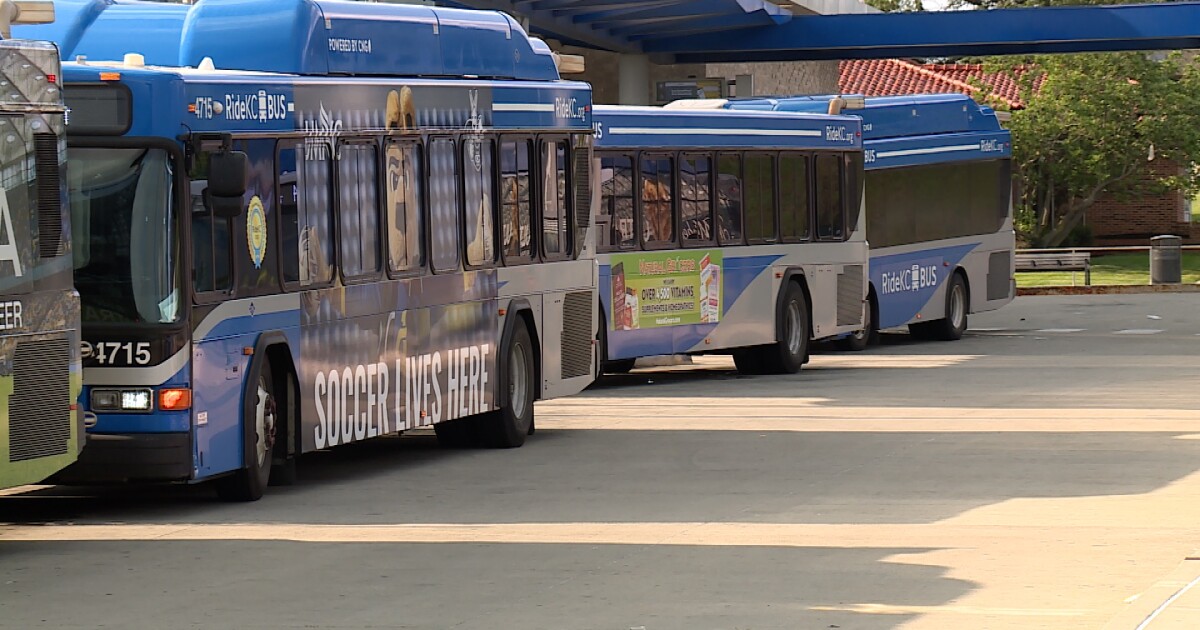
Tens of thousands of people have been using the airport link, streetcar and the buses to get around Kansas City. The city poured millions of dollars into building up its public transit infrastructure. The KCATA added more frequency to bus transit lines and the streetcar, pushing more fans to use public transportation during the tournament.
Brian Luton
“With the World Cup here, I was able to exercise using the streetcar more frequently and that was really fun,” Trish Luancing said. “It wold be nice to not have to drive everywhere and not have to worry about parking.”
But thousands have been relying on public transit for years, regardless of what event was in town.
“It’s been busier since the World Cup,” Jeffrice Jackson, a bus rider, said. “It’s been smooth sailing.”
The KCATA added streetcar ‘bus bridge’ links, extended bus service hours and increased frequency on East-West routes to link riders to the streetcar. It’s benefited both travelers and commuters.
Brian Luton
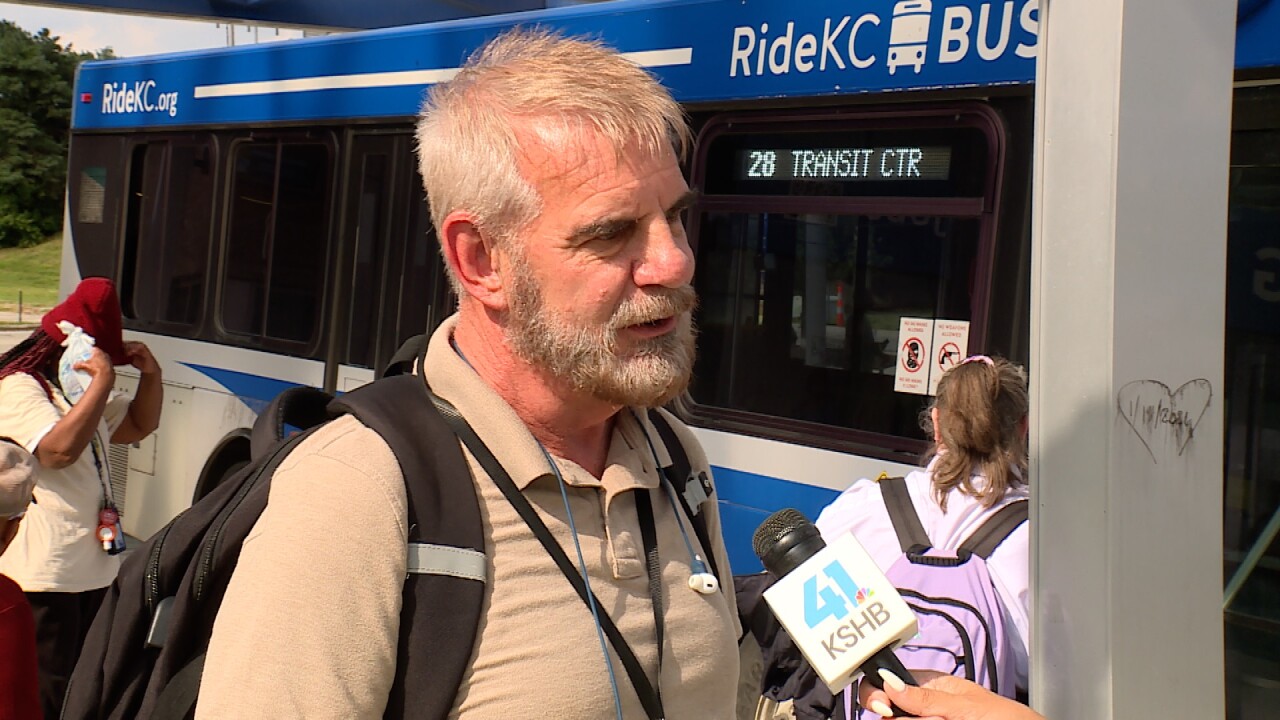
“[Service] has been more consistent with the World Cup than it was previously,” Jerry Breault, a rider said. “We were missing buses or routes because there weren’t enough drivers to drive that route.”
But the add-on’s stop on Sunday, July 12. If the transit authority can’t find more money, more than a dozen routes will be cut, potentially impacting more than 8,000 riders.
“It’s a little frustrating,” Breault said. “A lot of us rely on it just to get back and forth to work, to take care of our daily needs. It looks like we may be having to find alternatives and we’re not very happy about that.”
The KCATA will potentially suspend these weekday and weekend routes by September:
Weekday Route Eliminations:
- 9 – 9th Street, 365 average weekday ridership
- 21 – Cleveland Antioch, 512 average weekday ridership
- 23 – 23rd Street, 266 average weekday ridership
- 25 – Troost Local, 1,460 average weekday ridership
- 27 – 27th Street, 422 average weekday ridership
- 57 – Wornall, 411 average weekday ridership
- 71 – Prospect Local, 464 average weekday ridership
Weekend Route Eliminations:
- 9 – 9th Street, 349 average weekend ridership
- 21 – Cleveland Antioch, 312 average weekend ridership
- 23 – 23rd Street, 312 average weekend ridership
- 25 – Troost Local, 1,431 average weekend ridership
- 27 – 27th Street, 455 average weekend ridership
- 57 – Wornall, 595 average weekend ridership
- 71 – Prospect Local, 982 average weekend ridership
Bus fares came back earlier this summer to offset some of the operation costs, but many have reported issues with the free fare cards and eligibility.
“There’s always funding challenges with the KCATA,” Kansas City, Missouri, Mayor Quinton Lucas said. “How are the fare re-institutions working right now?”
Brian Luton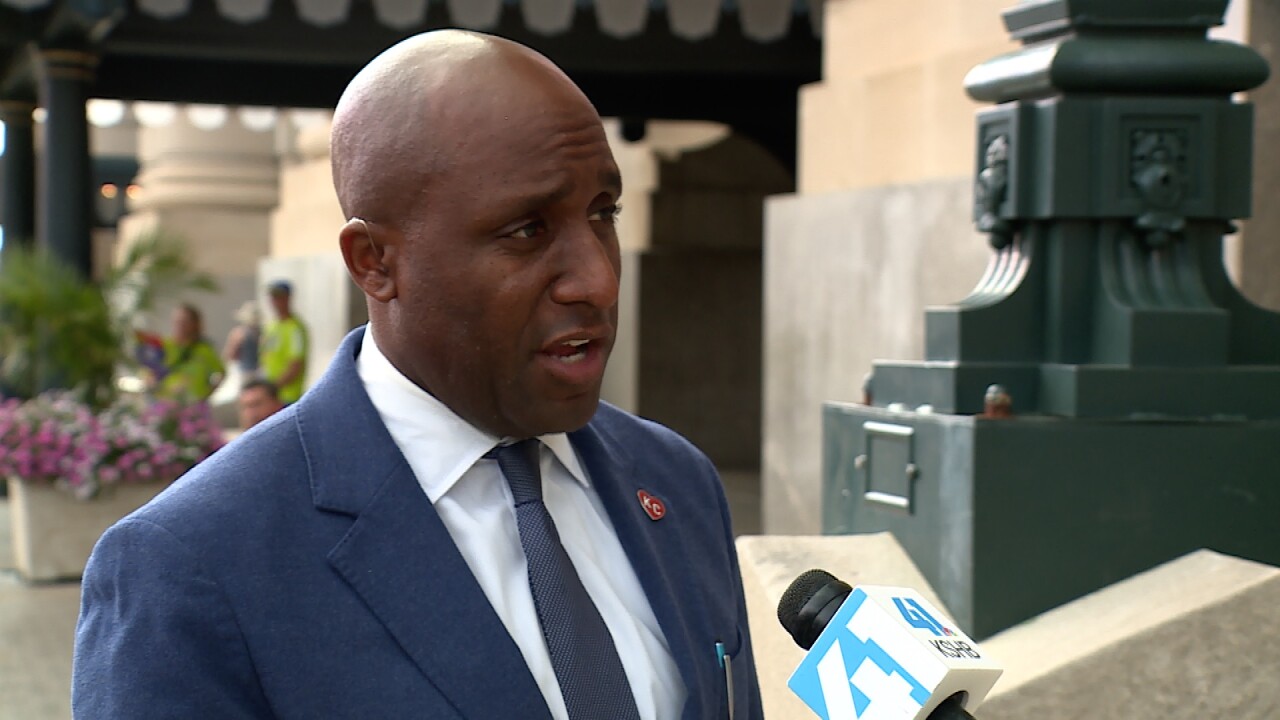
Mayor Lucas told KSHB 41 News Reporter Isabella Ledonne the transit improvements implemented for the World Cup “should continue,” and there are plans to talk with the KCATA commissioners to “make it work”.
“KCATA cannot just be Kansas City supported alone forever,” Mayor Lucas said. “Our approach and our preference is that the region got to see how much they would like [expanded service] during the World Cup. It was always intentional that if they liked it, maybe they would invest and maybe they would want this thing to go further.”
That’s good news to the thousands of daily riders.
Brian Luton
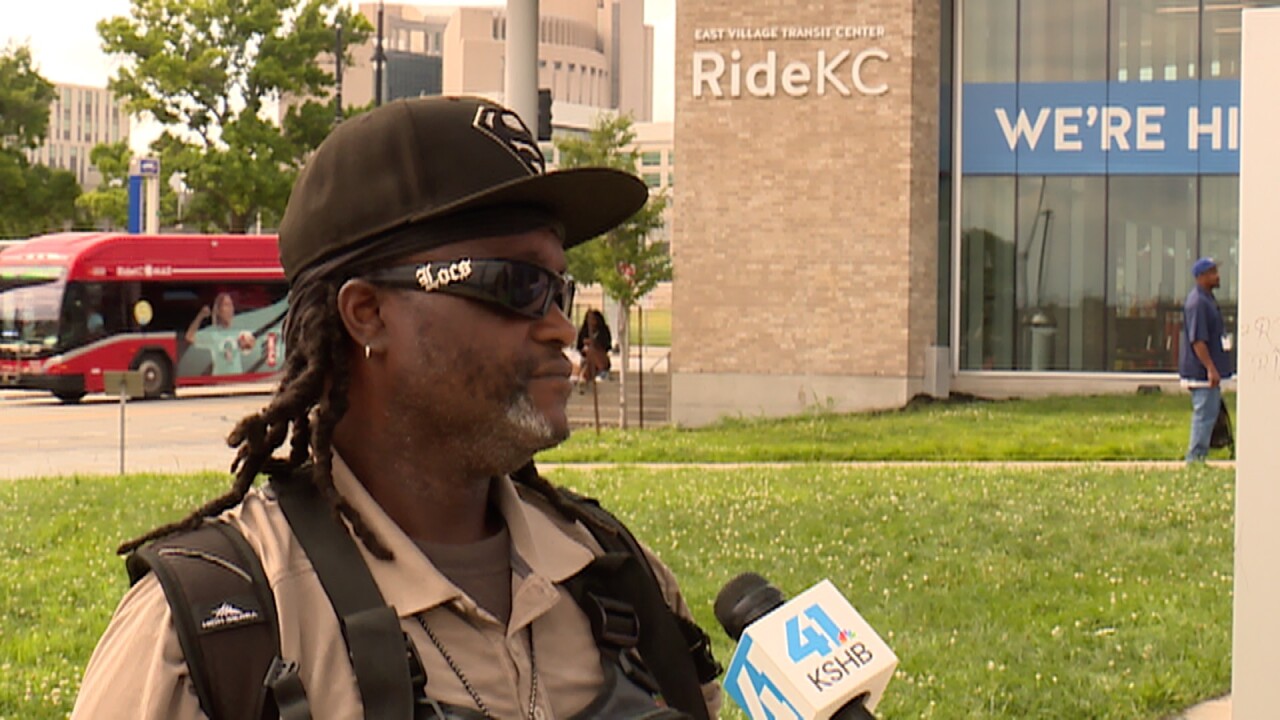
“I think it’s good because it helps people get around if they need to get around,” Jackson said.
The KCATA did not make themselves available for an interview.
—

-

 Washington1 minute ago
Chisholm’s homer keys 3-run 9th as the Yankees rally past Washington 5-3 – WTOP News
-

 Wisconsin4 minutes ago
Quiotepec en Wisconsin brings Oaxacan basketball fever to the Midwest
-

 West Virginia9 minutes ago
West Virginia DEP seeks details on Peoples Cartage fire cleanup, lawsuit filed on behalf of residents
-

 Wyoming16 minutes ago
Residents celebrate Wyoming Statehood Day by revealing their favorite thing about the Cowboy State
-
Crypto19 minutes ago
Trump’s crypto grift spins into its own industry
-

 Finance31 minutes ago
New changes to financial aid will be minor for UND students, bigger for loan borrowers in repayment
-

 Fitness34 minutes ago
The NHS has reignited the hybrid working debate – but WFH isn’t the health risk, this is
-

 Movie Reviews46 minutes ago
‘Only Beautiful Things to Look At’ Review: A Handsome but Muffled Portrait of State-Sanctioned Cruelty


