Indiana
Jaguars NFL draft: Indiana Pro Day set; who are top prospects?


The Indiana Pro Day has been announced. Here are the top 2026 NFL draft prospects for the Jacksonville Jaguars.
Pro Day season is nearly here for the Jacksonville Jaguars and their 2026 NFL draft prep.
A big one will reportedly be taking place on April 1st, when Indiana host their Pro Day in Bloomington.
According to Field Yates of ESPN, a “big NFL contingent” will be in attendance.
So, if the Jaguars’ organization is a part of that group, which prospects should they be focused on?
The Jaguars will be without a first-round pick in this year’s draft after moving up for Travis Hunter last April.
However, GM James Gladstone still maintains quite a bit of flexibility entering the 2026 NFL draft. In total, the Jaguars have 11 picks, giving Gladstone the ability to move around the draft board.
In addition to that, four of those picks are in the top 100, providing the Jaguars with the opportunity to add some immediate impact players.
Given the current construction of the roster, this feels like an offseason where the Jaguars could focus more heavily on the defensive side of the football.
With help from Pro Football Focus’ 2026 NFL draft big board, here are the top draft prospects from Indiana.
Top 2026 NFL draft prospects from Indiana
- QB Fernando Mendoza
- WR Omar Cooper Jr.
- CB D’Angelo Ponds
- WR Elijah Sarratt
- ED Mikail Kamara
- LB Aiden Fisher
- C Pat Coogan
- RB Roman Hemby
- RB Kaelon Black
- TE Riley Nowakowski



Jalen Rose moderated a panel discussion around players facing adversity coming back from injuries
Indiana Pacers star Jalen Rose moderated a panel discussion Friday with Indiana Fever guard Caitlin Clark and Kansas forward Darryn Peterson, a potential NBA lottery pick, on why prioritizing health is so critical.
Monique Billings is coming to the Indiana Fever on a multi-year deal, sources confirmed to IndyStar on Saturday.
Billings, an eight-year veteran forward, played with the Golden State Valkyries in 2025 after she was selected as the lone unrestricted free agent in the 2024 expansion draft. She played 26 games with eight starts in 2025, averaging 7.3 points and 4.5 rebounds per game.
She missed part of the Valkyries’ season with an ankle injury, missing all of August while she recovered. She has since fully recovered, playing in the final month of the WNBA season and participating in Unrivaled and the FIBA Qualifying Tournament in early 2026. Billings has recent history with some of Indiana’s core players, too: she played with Kelsey Mitchell on Hive BC in Unrivaled, then with Caitlin Clark at the FIBA Qualifying Tournament in Puerto Rico in March.
Buy 2026 Indiana Fever tickets!
This story will be updated.
Chloe Peterson is the Indiana Fever beat reporter for IndyStar. Reach her at capeterson@indystar.com or follow her on X at @chloepeterson67. Get IndyStar’s Indiana Fever and Caitlin Clark coverage sent directly to your inbox with our Caitlin Clark Fever newsletter. Subscribe to IndyStar’s YouTube channel for Fever Insiders Live.

INDIANAPOLIS (AP) — Tyrese Maxey scored 32 points, Paul George had 21 and the Philadelphia 76ers beat the Indiana Pacers 105-94 on Friday night to snap a three-game skid.
VJ Edgecombe scored 16 points, Kelly Oubre Jr. had 15 and Andre Drummond had 16 rebounds and 10 points for the Sixers (44-37), who maintained their eighth-place position in the Eastern Conference with one game remaining.
A year after they made it to Game 7 of the NBA Finals, Pacers (19-62) ensured they will finish with the second-worst record in the league.
Jarace Walker led Indiana with 17 points, followed by Quenton Jackson with 16 and Ethan Thompson with 15. Micah Potter had 13 points and 10 rebounds.
The Pacers went 14 of 50 from 3-point range, while the Sixers were 5 of 29. Indiana had 21 turnovers while the Sixers had just eight.
Philadelphia finished with a 64-28 advantage in points in the paint.
The Sixers led 58-51 at halftime. Indiana tied it twice in the third quarter, the last time at 64-all, before Philadelphia closed the quarter with a 25-13 stretch to take an 89-77 lead.
Philadelphia big man Joel Embiid, who averages 27 points, had an appendectomy on Thursday in Houston and was released from the hospital Friday. Coach Nick Nurse said the surgery went well, but there is no timetable for Embiid’s return.
Indiana was without coach Rick Carlisle, who missed his second consecutive game to attend his daughter’s sorority spring parents formal at the University of Virginia. He will return for Sunday’s season finale.
Up next
Sixers: Host Milwaukee on Sunday.
Pacers: Host Detroit on Sunday.

White House officials offered an Indiana Senate candidate potential government jobs and appointments in exchange for dropping out of the Republican primary election next month, according to recorded phone calls and text messages released Friday.
Alexandra Wilson is running to unseat state Sen. Greg Goode (R-Terre Haute) in Indiana Senate District 38. The other challenger, Vigo County Council member Brenda Wilson, has the endorsement of President Donald Trump.
Trump has backed candidates against Goode and other Indiana senators who voted against his call to redraw the state’s congressional maps mid-decade during the legislative session last year.
Alexandra Wilson released a collection of screenshots, voicemail transcriptions and recorded calls to reporters Friday. NBC News was the first to report on the files.
“Instead of considering the merits of my candidacy, the White House and Indiana leaders have spent countless hours trying to push me aside, including offers of potential employment in taxpayer-funded roles in exchange for my leaving the race,” Wilson said in a written statement. “They crossed a line, and Hoosiers deserve to know that.”
The files shared by Wilson show contact from Lt. Gov. Micah Beckwith, Gov. Mike Braun’s chief of staff Joshua Kelley, White House political director Matt Brasseaux and White House deputy chief of staff James Blair.
The calls and text messages appear to begin in early February, just after Wilson filed to run in the primary. Wilson shared call logs with WFYI but it’s not exactly clear what day each call was taken on.
When Brasseaux spoke with Wilson, he asked her to tell him about why she was running.
“I do not believe that Brenda is a good candidate,” she told Brasseaux on a call. “I don’t think she’s a good choice. I don’t, you know, I don’t think she’d be making quality choices for the local folks here.”
But Brasseaux then offered to contact what he described as the White House’s hiring office to find her a “landing spot.”
“Is that something that would be interesting to you? As far as employment?” Brasseaux asked.
Alexandra Wilson told him it would not.
In a statement sent to WFYI, White House press secretary Karoline Leavitt said “this is what the political team does.”
“They talk to candidates across the country. And it’s not, you know, again, it’s not coming from a place of malice. It is coming from a place of doing their jobs to report back to the president about what’s going on in these races.”
WFYI reached out to Lt. Gov. Micah Beckwith and Gov. Mike Braun’s office for comment, but did not immediately hear back.
In another call with White House deputy chief of staff James Blair, he raised concerns about there being two candidates with the last name Wilson in the race, noting that it could give the edge to incumbent Goode.
Blair also told Wilson that it would be difficult for Trump to “change streams” and endorse her after first endorsing Brenda Wilson.
“If we go the three way and there is no change,” Blair said. “I think this is going to be a really nasty race.”
Blair then asked Wilson where she stood on redistricting and whether he could get her to stand down from the race. Wilson again said she would not step down.
Blair then brought up Wilson’s arrest and asked how she would explain herself to voters.
At 19, Wilson was charged with resisting arrest by vehicle, Wilson’s attorney has said, which means she did not immediately pull over for officers.
Blair warned her that it “will for sure come up” with both Greg Goode and Senate President Pro Tem Rodric Bray “playing for keeps.”
Before ending the call Blair asked her how much in donations she could raise and whether she had a campaign team.
“I’ve got the support of the GOP chairman,” Wilson said.
That call was made in early February. By the end of that month, James Bopp, an attorney who says he supports Brenda Wilson, would be in front of the Indiana Election Commission challenging Alexandra Wilson’s right to appear on the ballot.
Bopp challenged Alexandra Wilson’s eligibility to appear on the ballot on the grounds that she was charged with a felony. The issue has twice deadlocked the Indiana Election Commission even though Alexandra Wilson says she never pleaded to a felony, and her attorney said the charge was pleaded down to a misdemeanor.
Alexandra Wilson has since had that case expunged from her record, but that hasn’t stopped James Bopp from repeatedly asserting she is a felon, something Wilson’s attorney has warned amounts to “defamation per se.”
The primary election is May 5.
Contact Government Reporter Benjamin Thorp at bthorp@wfyi.org

Remove your personal info from the web; stop it from coming back

Man charged with arson after setting fires inside Ontario Mills mall
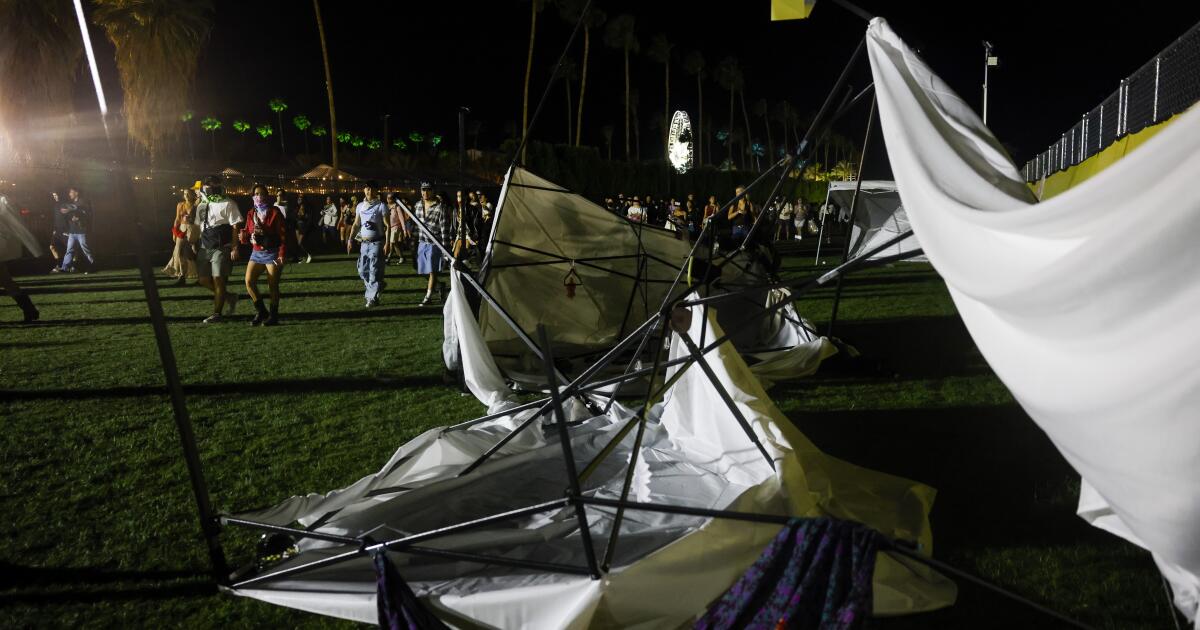
Coachella 2026: Violent winds disrupt festival, campgrounds

Are you truly infatuated with your co-worker, or do you just see them 40 hours a week?
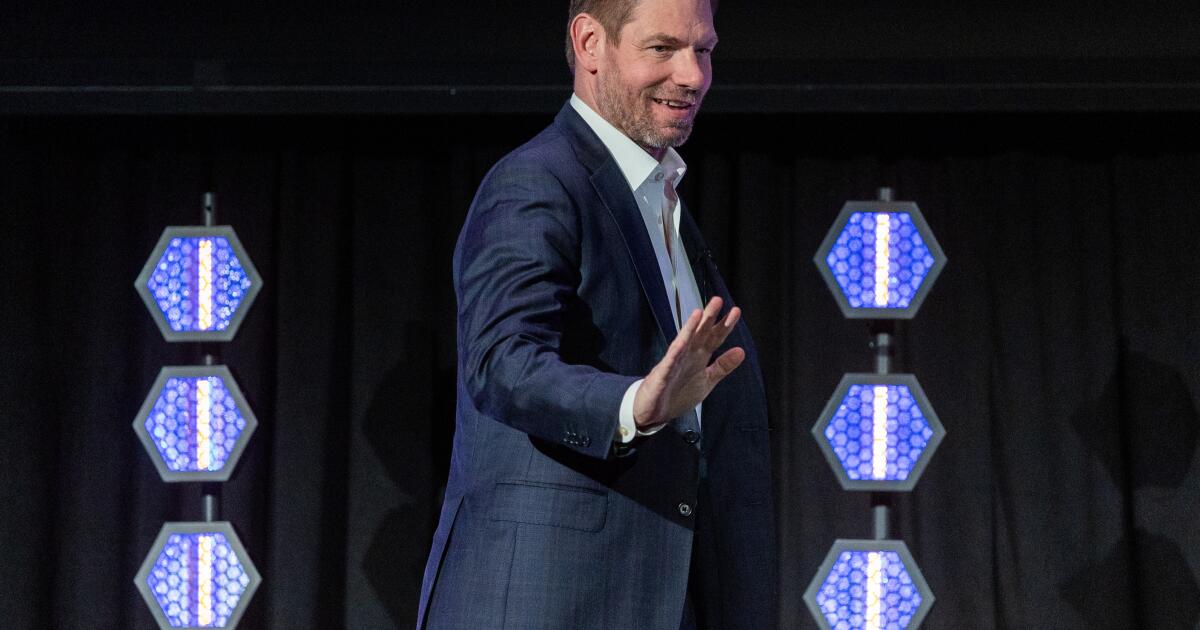
Pressure grows for Swalwell to exit governor’s race, criminal inquiry launched

Florida High School Football Rankings: Top 25 teams – Oct. 21

How old is Bo Nix? What to know about Oregon quarterback ahead of 2024 NFL Draft

Cleary's 21 help Le Moyne down Central Connecticut State 69-64 in OT

99th annual Pony Swim held in Virginia

Indiana Members Credit Union announced as new anchor tenant at Bottleworks District

Pope Leo urges world leaders to reject war and negotiate peace

Manhattan DA’s office to investigate Swalwell sexual assault allegation

NASA’s Artemis II mission in 20 minutes

Trump adversary running for Senate borrows his filibuster playbook

Russian propaganda unit targets Hungary’s elections
-

 Atlanta, GA7 days ago
1 teenage girl killed, another injured in shooting at Piedmont Park, police say
-

 Movie Reviews1 week ago
Vaazha 2 first half review: Hashir anchors a lively, chaos-filled teen tale
-

 Georgia4 days ago
Georgia House Special Runoff Election 2026 Live Results
-

 Pennsylvania5 days ago
Parents charged after toddler injured by wolf at Pennsylvania zoo
-

 Arkansas1 day ago
Arkansas TV meteorologist Melinda Mayo retires after nearly four decades on air
-
 Milwaukee, WI5 days ago
Potawatomi Casino Hotel evacuated after fire breaks out in rooftop HVAC system
-
 Entertainment1 week ago
Inside Ye’s first comeback show at SoFi Stadium
-

 Indianapolis, IN1 week ago
Fighting Illini begin Final Four preparations in Indianapolis