Indiana
A Group of Undersized, Overlooked Transfers Has Been Key to Indiana’s Success


One after another, six Indiana Hoosiers shook off pouring rain on their way into the Henke Hall of Champions at Memorial Stadium for one-on-one interviews with Sports Illustrated last week.
None was on time.
They were all early.
They were running on Cignetti Time, where being late is a foreign concept. That’s one element of the detail-oriented, habits-based standard set by first-year Indiana coach and immediate program savior Curt Cignetti. It’s a standard that has been transferred to Bloomington by the 13 Hoosiers who first learned it from him at their previous stop, James Madison University.
They are the program’s ministers of culture.
The six who sat down for interviews were all former Dukes. They relocated from Harrisonburg, Va., to the heart of the Midwest, from the Sun Belt Conference to the Big Ten, from competing in relative obscurity to becoming a national curiosity. They all have a few things in common, beyond punctuality:
Surprised to be 10–0? Why should they be when these same players were 10–0 last year, on their way to an 11–2 record? They were 8–3 the year before that, a roaring success after James Madison moved up from the FCS level to FBS. And the year before that, in 2021, they went 12–2 and reached the FCS playoff semifinals.
The Indiana players who were on Cignetti’s final three JMU teams are now 41–6 in college. Their .872 winning percentage compares favorably to players who have spent four years at Alabama (.846), Michigan (.849) and, yes, this Saturday’s Goliath opponent, Ohio State (.857).
Different school, different uniforms, different opponents, different level of attention and acclaim—same results.
“Winning was always the plan,” says linebacker Aiden Fisher, Indiana’s top tackler. “With the success we had at JMU it was like, why not continue that here?”
The shock comes from how easily it has translated. The Dukes of Hoosierland stand in direct refutation of the perceived talent gulf between the Power 4 conferences and the Group of 5. There is an eternal gulf of resources and exposure, to be sure, but not always in ability.
The national leader in passing yards per game is Cam Ward of the Miami Hurricanes, who started his college career at the FCS level at Incarnate Word. His ability translated up the ladder.
The national leader in rushing is Ashton Jeanty of the Boise State Broncos, who drew scant power-conference interest coming out of high school. He’s now considered a first-round NFL draft pick and might win the Heisman Trophy.
Anyone who doubted Shedeur Sanders’s ability to transition from FCS Jackson State to the power-conference Colorado Buffaloes has been properly silenced. The top receiver for the No. 1 Oregon Ducks, Tez Johnson, transferred in from a Sun Belt program, the Troy Trojans. Last year’s leading FBS rusher, Cody Schrader of the Missouri Tigers, came from Division II Truman University.
Indiana is the ultimate collective example, a team-wide triumph of transferrable talent that is assuredly unprecedented in the FBS ranks. It’s a football miracle to go from 3–9 to 10–0 in a single season with nearly half of the depth chart upgrading from lower levels.
Twenty-seven players transferred in to join Cignetti’s start-up, and 21 came from the G5 or FCS ranks (13 from JMU). The transfers fit the coach’s production-over-potential philosophy—older, experienced guys who had proven they could play college ball, regardless of what their recruiting rankings were coming out of high school.
Indiana’s quarterback, Kurtis Rourke, is a Canadian who had performed well for years with the Ohio Bobcats in the Mid-American Conference. He’s now No. 2 in the nation in pass efficiency. Its No. 3 tackler, Shawn Asbury II, made 93 tackles in 2023 at Old Dominion. Indiana’s third-leading player in tackles for loss, CJ West, is from Kent State.
But the vast majority of the key contributors who have elevated to the Big Ten—and elevated the Hoosiers within the Big Ten—are from James Madison. Four of Indiana’s top five tacklers are from JMU. So are its top three in sacks. The leading receiver is a JMU transfer, as are the Nos. 2 and 3 rushers.
Beyond Rourke, Indiana’s leading candidates for individual postseason honors were Dukes who have kept doing here what they were doing there. Fisher, who is tied for second in the Big Ten in tackles with 98, had 108 stops last year. Defensive end Mikail Kamara, has 15 tackles for loss and 9.5 sacks after producing 19 and 7.5, respectively, in 2023. The Harrisonburg-to-Bloomington pipeline has been a rich strike.
“The coaches told us, ‘Yo, we believe you could fit in the Big Ten,’” linebacker Jailin Walker says. “So we trusted their word. We came to the Big Ten and we got better. Bigger and stronger and better.”
It’s striking how many of the Dukes of Hoosierland are from the state of Virginia: Fisher is from Fredericksburg; Kamara from Ashburn; Walker from Richmond; running back Kaelon Black from Virginia Beach; leading receiver Elijah Sarratt from Stafford; defensive lineman Tyrique Tucker is from Norfolk; tight end Zach Horton and defensive tackle James Carpenter from Roanoke. And almost none were seriously recruited by the in-state Atlantic Coast Conference programs the Virginia Cavaliers and Virginia Tech Hokies.
“My family’s a big Virginia Tech family,” Horton says. “We still cheer for them today because that’s how we are. But not be able to get recruited by them or hear anything from them makes you play for a little bit more.”
“Oh yeah, it bothered me,” Fisher says. “It still does. But I think we’re sitting in a much better spot than they are right now.”
That’s inarguable. Virginia currently is 5–5 and hasn’t had a winning record since 2019. Virginia Tech also is 5–5, with a 34–37 record since ’19. If those schools had done a better job evaluating and recruiting their home state than Cignetti did at JMU, imagine how different things might look.
Cignetti, like his JMU transfers, arrived in Bloomington with a smoldering desire to prove himself. He was 62 years old and had won a ton of games at lower levels without getting a shot at a power-conference job. He got to the top late.
“I’ve always had a little bit of a chip on my shoulder,” Cignetti says. “Like the JMU guys who were wondering, ‘Why didn’t I get recruited by Virginia or Virginia Tech?’ You take that and there’s something about a championship culture, too, that brings out the best in people, versus maybe a place that’s struggling and guys aren’t around the best role models.”
Cignetti brought his role models with him, facilitating a quick overhaul. The mass exodus from Harrisonburg is a bit of a touchy subject at JMU, although the 8–2 Dukes have survived quite well under new coach Bob Chesney. But the players say Cignetti and his staff let them make their own decisions on whether to make the move to Indiana.
“It was kind of like the elephant in the room,” Horton says. “We all knew that we have the chance to prove something again and follow him over there. So we all kind of knew that once we get one person to go, that ball’s going to start rolling and that’s kind of what happened. And here we are now.”
Five JMU players visited Indiana together in December. James Madison has good G5 facilities and support staff, but not Big Ten facilities and staffing. That resonated.
“The resources here are different,” says running back Ty Son Lawton, Indiana’s No. 2 rusher and a seventh-year player who began his career at FCS program Stony Brook. “I’m not used to this kind of stuff.”
Fisher is believed to be the first JMU transfer to commit, starting the migration. By the national letter-of-intent signing period, Cignetti had secured enough transfer talent to utter his now-famous line, “Google me. I win.”
“In my heart, I knew we had flipped this roster,” he says.
Then his Dukes of Hoosierland flipped the locker room. A lot of players from the Tom Allen era didn’t stick around, but those who did were ready for a change. They embraced their new teammates, who gave them a crash course in the Cignetti Way.
“It was awesome,” Fisher says. “Not what we expected at all really. You come into the team meeting, and I’m thinking these guys are like, All right, new coach brought his own players. They’re going to act a certain way, we’re not going to take them in.
“So we got here and the first thing they’re like, ‘You guys want to go get dinner? You guys want to hang out?’ And they kind of caught me off guard how welcoming everybody was.”
Spring practice had its ups and downs, but Rourke says the team started to coalesce during summer workouts. Armed with a user-friendly schedule—which has become a source of College Football Playoff contention—a team full of winners was ready to win.
With confidence snowballing and wins piling up, Indiana has kept it going amid mounting hype and pressure. Now comes the ultimate proving ground—a playoff-caliber showdown with the blueblood Ohio State Buckeyes in their massive stadium. The Buckeyes are 30–0–1 against the Hoosiers since 1968 and are favored by two touchdowns Saturday.
College football has a perverse habit of eating its own feel-good stories. Embracing the underdog turns into deconstructing the underdog. The hater culture is strong in the sport, and Indiana is the subject of that now—the Hoosiers haven’t beaten anyone, the refrain goes, and will be exposed Saturday.
“We love it,” Fisher says. “We hear it every game. That team isn’t that good anyway. And we’ll go and blow somebody else out and they’re like, Oh, that was a fluke. I’m excited to hear what they say after the next one and see if they think [the Buckeyes] are nobodies as well. So I’m looking forward to it.”
What Indiana has done—and who has done it—to this point is one of the most unique accomplishments in college football history. It’s the biggest underdog story in the Big Ten since Northwestern rose up from decades of futility to win the league in 1995 and reach the Rose Bowl. But even that was a slow-build miracle—Gary Barnett was in his fourth season as coach. Transfer rules have clearly helped accelerate the timetable, but what Cignetti has done in a single year is without precedent.
For a bunch of JMU transfers who started their careers playing FCS football, then in the Sun Belt, running into the Horseshoe on Saturday will be the moment of their athletic lifetimes to date.
“Growing up, watching all these games, all these incredible players there, and getting the chance to play there in this type of game is pretty surreal,” says Carpenter, who walked on at JMU. “It’s a dream come true.”



INDIANAPOLIS (WISH) – The 2026 NCAA Division I Men’s Basketball Tournament’s Final Four is set.
Four teams have advanced to the Final Four and will compete for the national championship this upcoming weekend in Indianapolis.
The two national semifinal matchups will take place on Saturday. Tip times for the two games have been announced:
- 6:09 p.m. EDT – No. 3 seed Illinois vs. No. 2 seed UConn
- 8:49 p.m. EDT – No. 1 seed Michigan vs. No. 1 seed Arizona
The winners of Saturday’s games will then play in the National Championship Game on Monday, April 6.
Each game will take place inside Lucas Oil Stadium.

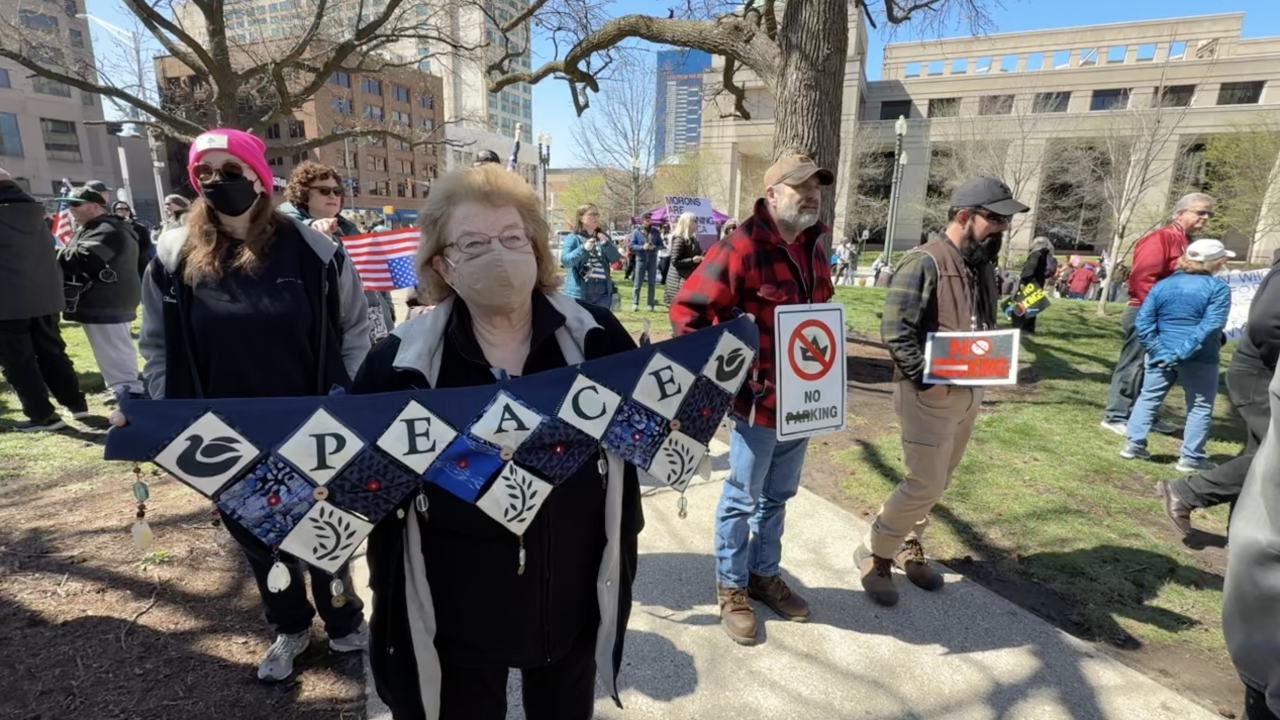
INDIANAPOLIS — Hundreds of Hoosiers gathered at the Indiana Statehouse Saturday morning as part of nationwide ‘No Kings’ events to voice their concerns about the current administration.
WATCH FULL STORY BELOW
Hundreds gather at Indiana State Capitol for ‘No Kings’ protest
“I’m out here today because what’s happening in our government is completely trash,” Donna Sipes told WRTV. “It’s wrong. We need to do something about it.”
“I’m tired of every single day when the TV comes on to see what stupid thing he’s done next,” Lindi Marti said.
WRTV
Attendees noted the growing popularity of the demonstrations.
“This is my fourth one to come to. I didn’t come to all of them when it was really cold, but I’m glad to see that they are getting a lot more people out here every time,” Marti added. “It seems like there’s more and more coming.”
Demonstrators highlighted specific foreign policy concerns, including the administration’s handling of the war in Iran.
“We’re bombing the heck out of them. We’re killing civilians,” Marti’s husband said. “We’re getting ready to send our Marines.”
WRTV
Others focused on the administration’s handling of immigration.
“That’s what I’m concerned about,” Reverend Kenny Little told WRTV. “Little kids, they’re taking them away from their family. And I’m just one of those people, I think everyone got rights.”
Indiana medical students also attended the rally to speak out against changes to the healthcare system.
“We’re really worried about the attacks on the health care system in general, but with Medicaid… current estimates range from anywhere from 325,000 to 450,000 Hoosiers will lose coverage by 2032,” Wade Catt said with concern.
WRTV
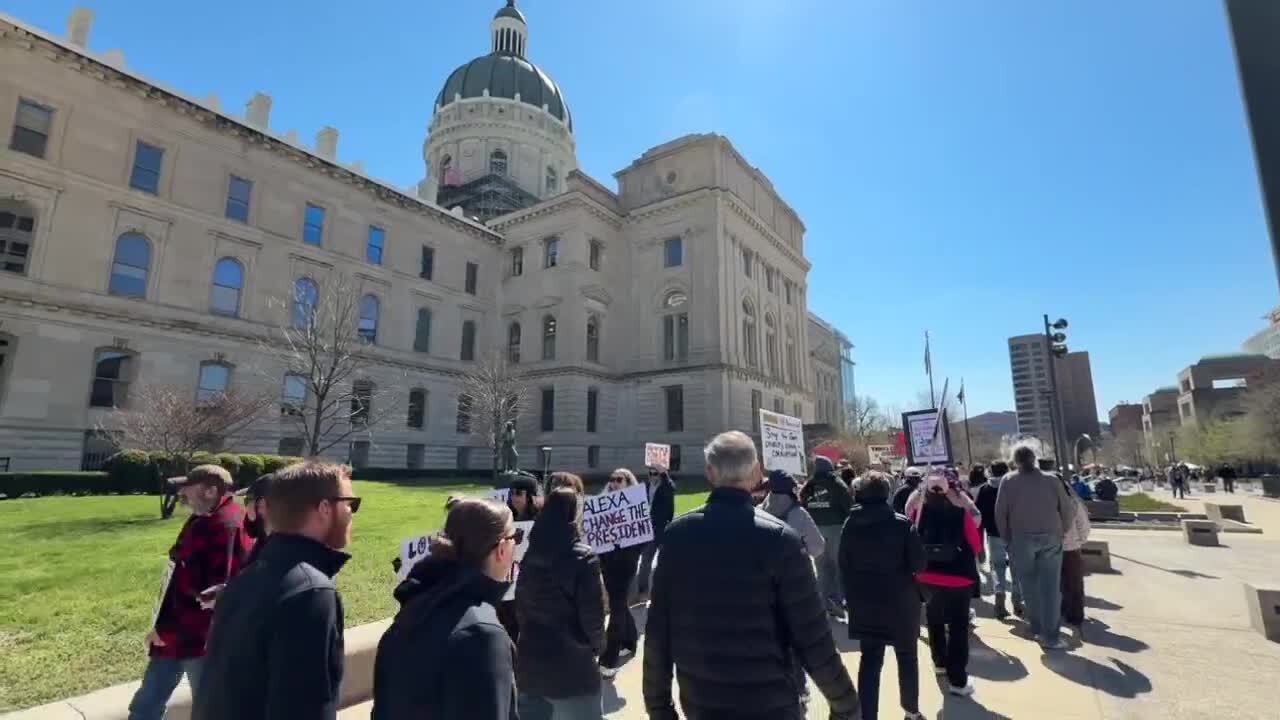
With midterm elections approaching later this year, attendees emphasized the importance of now taking action at the ballot box.
“If we don’t vote, then things are gonna not, they’re gonna stay the same,” a protester said.
Meanwhile, Indiana Lieutenant Governor Micah Beckwith says he’s happy to see Hoosiers exercise their First Amendment right to protest.
However, he takes issue with the idea that President Trump is acting like a king. Beckwith says the fact that people have the freedom to protest is proof that the president is not acting like a tyrant.
He acknowledges that bridging the gap between the sides is probably an uphill battle, but believes communication is key.
“I think when you sit down with people face to face, you’re confronted with humanity. There’s another human sitting across that table from you and talking to you. And so, all I have to say, I think that’s probably the thing I would encourage all Hoosiers to do is say, ‘Hey, if you don’t agree with somebody or if you don’t like somebody, why don’t you try grabbing coffee with them? And give it 30 minutes, and just see what happens.’ I bet most of the time people will walk away with a much softer heart and spirit towards that person before they came in,” Beckwith said.
Beckwith is currently on a 92-county tour of the state. He says all sides are welcome to attend his events.
__

INDIANAPOLIS (WISH) — Police say one “young man” is dead after a shooting at the 1200 block of Rue Rabelais at about 7:19 p.m. according to the Indianapolis Metropolitan Police Department.
That is near the intersection of 56th Street and Binford Boulevard.
Police say the victim was taken to Riley Hospital where he later died. Investigators say they are still working to identify the victim.
There was no known information about a suspect. Police did say that they believe this is a targeted incident.
There was no other information immediately available.
This story has been updated with information from the Indianapolis Metropolitan Police Department.

AI regulation clashing with business lobby in Louisiana

12 ways to celebrate spring in Maine, from openings to festivals

USC baseball takes two of three from Maryland to win another series

Hail, damaging winds possible late Monday, all day Tuesday for Southeast Michigan

‘That comes with a price tag’: How snow removal is busting town budgets – The Boston Globe

Florida High School Football Rankings: Top 25 teams – Oct. 21

How old is Bo Nix? What to know about Oregon quarterback ahead of 2024 NFL Draft

Cleary's 21 help Le Moyne down Central Connecticut State 69-64 in OT

99th annual Pony Swim held in Virginia

Indiana Members Credit Union announced as new anchor tenant at Bottleworks District

Video: Iran to Allow More Oil Ships Through Strait of Hormuz, Trump Says

Dem senator warns deportation could let Virginia woman’s illegal immigrant killer ‘escape accountability’

Newsletter: G7 ministers to hold talks on war’s economic fallout
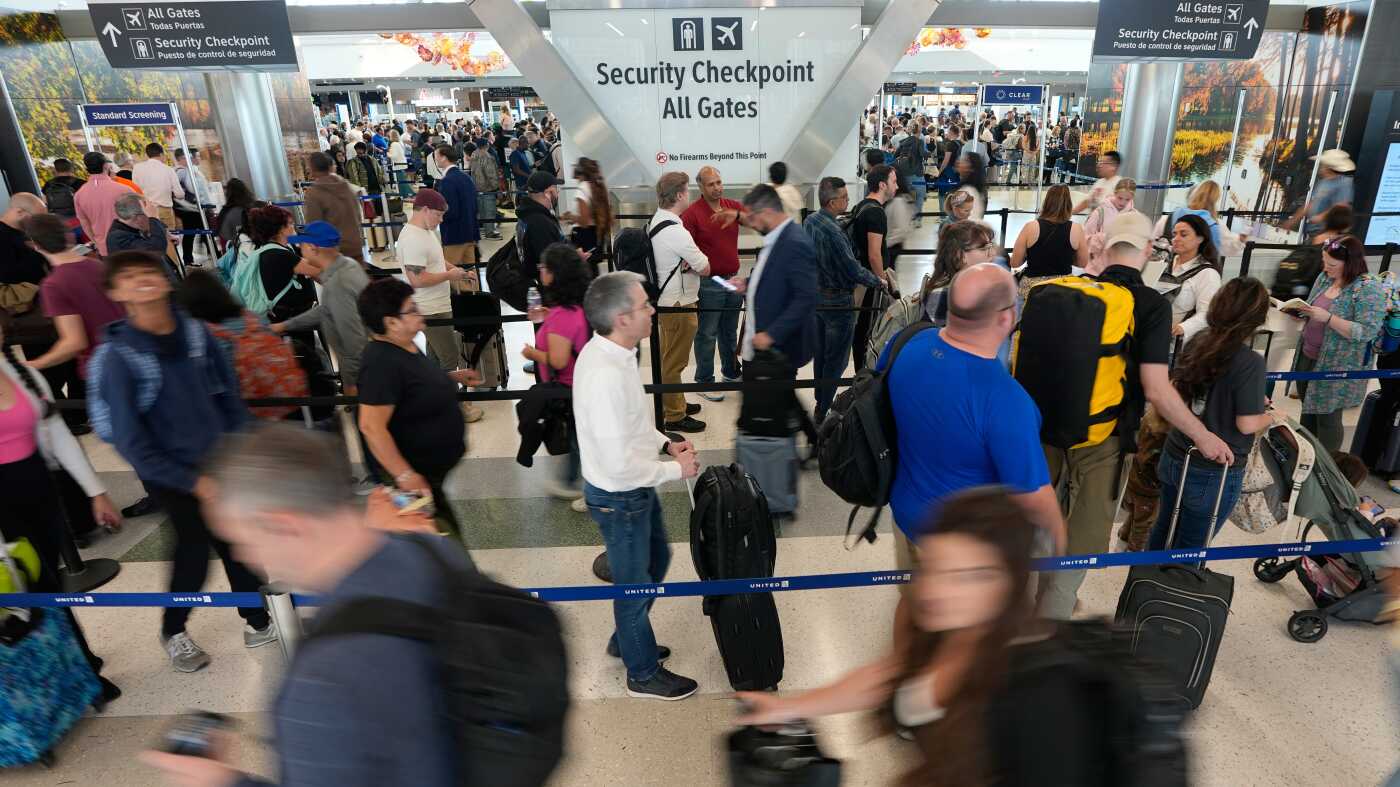
ICE officers could remain at airports after TSA workers are paid

Scathing report claims nation’s oldest labor union ‘betrayed’ MAGA members through ‘shocking’ spending
-

 Sports1 week ago
IOC addresses execution of 19-year-old Iranian wrestler Saleh Mohammadi
-

 Miami, FL4 days ago
Jannik Sinner’s Girlfriend Laila Hasanovic Stuns in Ab-Revealing Post Amid Miami Open
-

 New Mexico1 week ago
Clovis shooting leaves one dead, four injured
-

 Politics1 week ago
Schumer gambit fails as DHS shutdown hits 36 days and airport lines grow
-

 Tennessee7 days ago
Tennessee Police Investigating Alleged Assault Involving ‘Reacher’ Star Alan Ritchson
-

 Minneapolis, MN4 days ago
Boy who shielded classmate during school shooting receives Medal of Honor
-

 Science1 week ago
Record Heat Meets a Major Snow Drought Across the West
-

 Technology1 week ago
YouTube job scam text: How to spot it fast