Illinois
Women’s March Madness 2025: 35 players from Illinois who are part of the NCAA tournament


The NCAA women’s basketball tournament begins in earnest on Friday.
The women’s March Madness field of 68 includes just one team from Illinois, with the Fighting Illini of the Big Ten Conference joining their men’s team in the NCAAs.
But what about those athletes who played high school hoops in Illinois? We have you covered.
Below are the at least 35 NCAA women’s tournament players who are from Illinois, listed by conference starting with the Big Ten and the Missouri Valley, followed by other major conferences and mid-majors.
Big Ten
- Sydney Affolter, Iowa: 5-11 senior from Chicago Marist.
- Lenee Beaumont, Indiana: 6-1 sophomore from Lisle Benet.
- Jasmine Brown-Hagger, Illinois: 5-9 sophomore played part of her high school career at Joliet Catholic.
- Angela Dugalic, UCLA: 6-4 senior from Des Plaines Maine West.
- Kyle Feuerbach, Iowa: 6-0 senior from Sycamore.
- Emily Fisher, Maryland: 6-0 sophomore from Libertyville.
- Aaliyah Guyton, Iowa: 5-7 freshman from Peoria High.
- Amiah Hargrove, Nebraska: 6-2 freshman from Christopher
- Greta Kampschroeder, Michigan: 6-1 senior from Naperville North.
- Bri McDaniel, Maryland: 5-10 junior from Chicago Kenwood.
- Kendall Moriarty, Nebraska: 6-1 senior from Lisle Benet.
- Hayden Smith, Illinois: 6-6 freshman from Frankfort Lincoln-Way East.
- Mia Zenere, Illinois: 5-11 freshman played part of her high school career at Lincoln-Way Central.
Missouri Valley
- Katelyn Young, Murray State: 6-1 senior from Fithian Oakwood.
ACC
- Lorena Awou, NC State: 6-5 freshman from East Moline United.
- Sarah Cernugel, Notre Dame: 5-4 senior from Hinsdale Central.
- Jordan Wood, Duke: 6-4 sophomore from Mundelein Carmel.
Big 12
- Kenzie Hare, Iowa State: 5-9 junior from Bartlett.
- Sydney Harris, Iowa State: 6-1 junior from Edwardsville.
SEC
- Alyssa Latham, Tennessee: 6-2 sophomore from Homewood-Flossmoor.
- Aneesah Morrow, LSU: 5-1 senior from Chicago Simeon.
Mid-major
- Addie Budnik, Richmond: 6-2 senior from Highland Park.
- Taylor Charles, Princeton: 6-2 junior from Burlington Central.
- Peyton Gerdes, High Point: 6-0 freshman from Grayslake North.
- Anna Griffin, Arkansas State: 6-1 senior from Aurora Christian.
- Erin Houpt, San Diego State: 5-6 junior from Danville.
- Quincenia Jackson, Arkansas State: 6-1 junior from Decatur MacArthur.
- Lexi Kerstein, Vermont: 5-6 sophomore from Deerfield.
- Katie Krupa, Harvard: 6-1 junior from Morton.
- Annika Manthy, Richmond: 6-3 freshman from Arlington Heights Hersey.
- Jessie Ozzauto, Lehigh: 5-10 sophomore from Huntley.
- Zuri Ransom, Ball State: 5-10 freshman from Evanston.
- Maddy Saracco, Tennessee Tech: 5-10 sophomore played part of her high school career at Lombard Montini.
- Taris Thornton, Tennessee Tech: 6-0 senior played in high school at Willowbrook and Lombard Montini.
- Tessa Towers, Ball State: 6-5 junior from Batavia.



Increases funded by federal COVID aid have been made permanent, causing a fiscal problem.
Illinois needs to pull back on spending.
Since 2020, the state has gotten $15.6 billion in federal aid related to the COVID-19 pandemic. While that funding was temporary, Illinois has permanently increased what it spends.
That has caused a fiscal problem for the state, with projected budget deficits totaling nearly $21 billion during the next five years. Expenditures are forecasted to grow nearly 20% in that time, but revenues only 11% in that time.
These estimates could be off by billions because of changes such as reductions to federal benefits programs. Still, lawmakers should return spending to pre-pandemic norms. In response to the pandemic, Illinois expanded its budget by nearly $11 billion from fiscal years 2020 to 2023, a 27% increase.
Temporary federal aid supported much of that growth. Even though the emergency has passed, what was federal money now is covered by Illinois taxpayers.
For example:
1. “Environment and culture” spending, which encompasses the Illinois Art Council and Department of Natural Resources, grew 62% in just three years, rising from $61 million to $99 million. Had spending grown in line with the state’s nominal GDP growth, it would have risen only about 10% by 2023.
2. “Human service” spending, for departments such as the Department of Veterans Affairs and Human Rights, jumped from $6.6 billion in 2020 to $10.8 billion 2023, a 64% increase. Employee headcounts are up nearly 5,500 since 2020. If increases had tracked with nominal GDP growth, spending would be about $3.5 billion lower.
One way to rein in these increases is to enact a spending cap tied to that nominal GDP growth. Gov. J.B. Pritzker’s fiscal 2027 budget proposal of $56 billion, adds $880 million higher than the 2026 budget levels. With a spending cap in place, the state would need to cut $2 billion from the current proposal.
To help better manage its spending, Illinois should make more use of its Budgeting for Results Commission. Established in 2010, it can evaluate state programs, identify inefficiencies and ensure taxpayer money is tied to measurable outcomes.
The commission has been underutilized. Strengthening it would help lawmakers target waste and prioritize core services.
Other reforms would help establish fiscal stability. Read more in our report Illinois Forward 2027.

Sunday, April 5, 2026 10:24PM

CHICAGO (WLS) — Two people were injured in a Bishop Ford Freeway shooting on Chicago’s South Side early Sunday morning, Illinois State Police said.
ISP said troopers responded to northbound Interstate 94 near 115th Street in the city’s Pullman neighborhood just before 1:30 a.m.
ABC7 Chicago is now streaming 24/7. Click here to watch
Two people self-transported to a local hospital with injuries.
Traffic was being diverted off of northbound I-94 at 130th Street before all lanes reopened at 3:30 a.m., ISP said.
What led up to the shooting was not immediately clear.
ISP asked anyone with information to contact the Illinois State Police Zone 1 at (847) 294-4400 or email at ISP.CrimeTips@Illinois.gov. They say witnesses can remain anonymous.
Authorities did not immediately provide further information about the shooting.
INTERACTIVE SAFETY TRACKER Track crime and safety in your neighborhood
Copyright © 2026 WLS-TV. All Rights Reserved.

CHICAGO (WLS) — The I-Team reported in February that there were 164 operating data centers in Illinois, with dozens more in the works.
The city of Joliet recently voted to approve plans for a large data center.
That vote came after hours of public meetings, packed with people eager to weigh in. Joliet city leaders said it would bring tax revenue and financial benefits for the community.
Some residents expressed concerns about the potential environmental impacts.
But, what exactly is a data centers and why are some communities eager to attract them?; Why are so many people opposed to them?
“A data center is going to be a building that provides the space, the power and the infrastructure for everything that we do online today,” said Brad Tietz, the director of state policy for the Data Center Coalition. “So, when you look at where demand is going, for data, so everything we’re doing on the internet, the average household has 21 connected devices to it. We’re going to use twice the amount of data in the next five years than we’ve used in the last ten years.”
Part 2 – Our Chicago: Data Centers
When it comes to the types of jobs created by data centers, he says it depends on the size of the facility.
“There’s going to be technicians, service engineers, etcetera. The real value, especially for Illinois residents, is going to be on the construction side,” Tietz said.
In some communities considering data centers, residents are concerned about their water usage.
“The data center industry has been a large water user, historically, but by no means the largest compared to other industries. And if you look at how efficient the industry is getting, and I’ll remind you too, not every data center uses water. Some are actually using, especially in a colder climate like Illinois, the outdoor air temperature to help cool their facilities,” Tietz said.
Jen Walling is the Chief Executive Officer of the Illinois Environmental Council.
She wrote in Crain’s that “Big Tech” is coming to Illinois and that the state isn’t ready.
“We don’t have the guardrails in place that are going to be necessary to protect our environment, to keep our rates low, to protect our communities and most importantly, protect our water,” Walling said.
Part 1 – Our Chicago: Data Centers
She says the Alliance for the Great Lakes has put out a report where they’ve looked at water usage, and some data centers aren’t using much water.
“Some data centers are using up to five million gallons of water a day. These are huge water users, and they can be taking from different sources including Lake Michigan,” she explained.
“We’re also very concerned about air pollution and the energy usage, these are huge energy users,” Walling said.
She also explained the concerns for people living nearby.
“They need to be on with energy all the time. So, all of these facilities have backup diesel generators. And the residents in the [Aurora] community said that they could smell the methane gas that was being burned, the diesel gas that was being burned. And that’s particulate matter, it’s odor, so these communities face real consequences when something happens,” she said.
Copyright © 2026 WLS-TV. All Rights Reserved.

How a Family of 3 Lives on $25,000 in Corona, Queens

Trick Trick joined Waka Flocka onstage at ‘The Boys 4 Life Tour’ stop in Detroit – Detroit Metro Times

NFL Experts Continue to Link Former 49ers WR Back to San Francisco

What we learned in FC Dallas’ win vs DC United

Dolphins 7-Round 2026 NFL Mock Draft: Miami could catch the wave just right and get a monster draw in the top-50 picks

Florida High School Football Rankings: Top 25 teams – Oct. 21

How old is Bo Nix? What to know about Oregon quarterback ahead of 2024 NFL Draft

Cleary's 21 help Le Moyne down Central Connecticut State 69-64 in OT

99th annual Pony Swim held in Virginia

Indiana Members Credit Union announced as new anchor tenant at Bottleworks District

Trump threatens Iranian infrastructure over Strait of Hormuz | BBC News

GOP races to pass ICE, Border Patrol funding bill as priorities pile up, divisions emerge
Jet fuel crisis: Rationing triggered at four airports in Italy
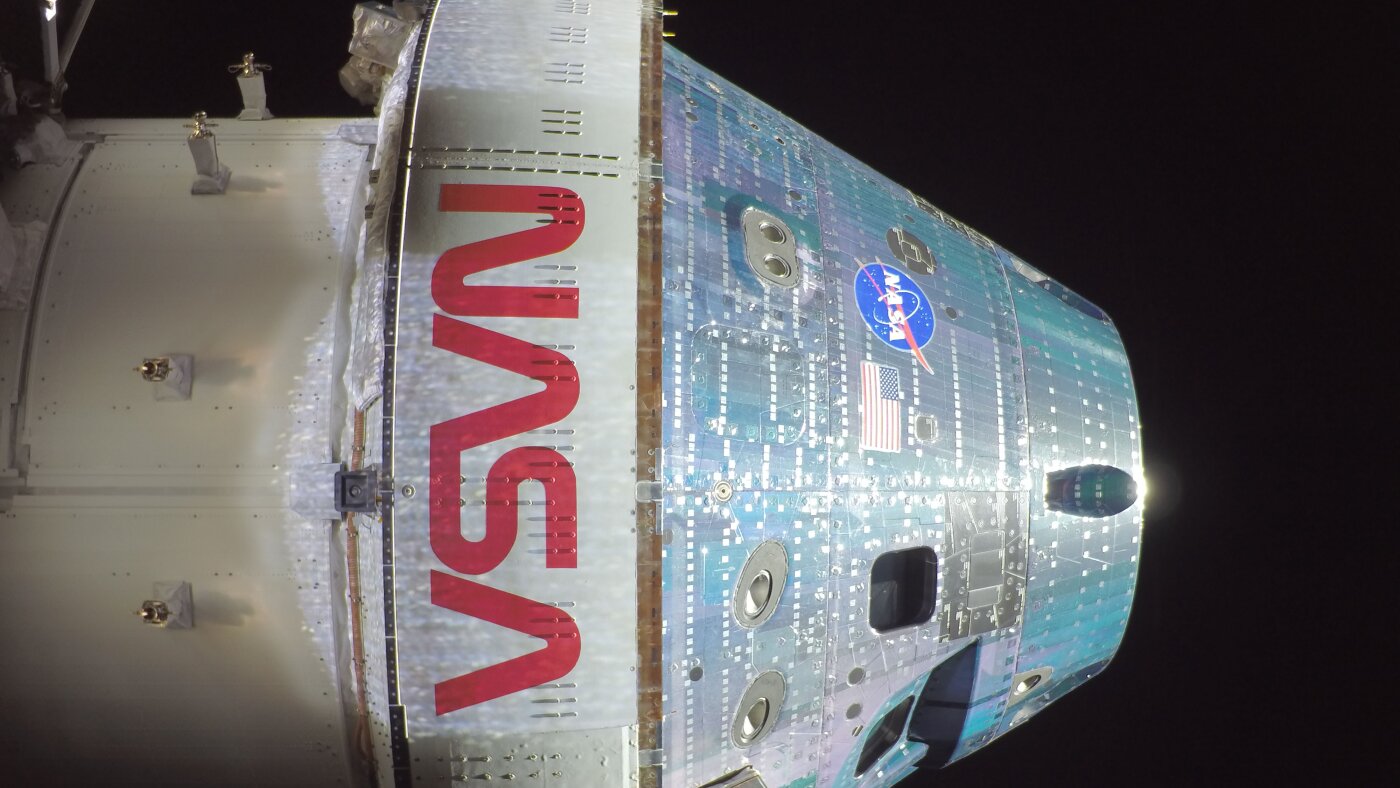
NASA’s Artemis II crew readies for Monday’s lunar flyby. Here’s what you need to know

Tax day is next week: Avoid these 5 common mistakes that can cost you money
-

 South-Carolina1 week ago
South Carolina vs TCU predictions for Elite Eight game in March Madness
-

 Atlanta, GA2 days ago
1 teenage girl killed, another injured in shooting at Piedmont Park, police say
-

 Vermont1 week ago
Skier dies after fall at Sugarbush Resort
-

 Movie Reviews4 days ago
Vaazha 2 first half review: Hashir anchors a lively, chaos-filled teen tale
-

 Politics1 week ago
Trump’s Ballroom Design Has Barely Been Scrutinized
-

 Atlanta, GA1 week ago
Fetishist ‘No Kings’ protester in mask drags ‘Trump’ and ‘JD Vance’ behind her wheelchair
-
 Entertainment4 days ago
Inside Ye’s first comeback show at SoFi Stadium
-

 Politics1 week ago
JD Vance says he was ‘obsessed’ with UFOs, believes aliens are actually ‘demons’