Illinois
Property-Tax Foreclosure Reform Gets Put Off By Illinois Legislators


This story was produced by Injustice Watch, a nonprofit newsroom in Chicago that investigates issues of equity and justice in the Cook County court system. Sign up here to get their weekly newsletter.”
In their end-of-session dash to pass a state budget, Illinois lawmakers put off consideration of proposed reforms to property tax sales and foreclosures.
That leaves Illinois the only remaining state where homeowners can face losing not just their homes but also all of the equity in them they’ve accumulated if their homes are foreclosed on for falling far behind on paying their property taxes.
Experts say it also means Illinois is out of step with a 2-year-old Supreme Court ruling that mandated that local governments give homeowners any money that’s left over after their homes are sold to pay off their tax debt and related fees and penalties.
More than 1,000 owner-occupied homes in Cook County have been taken in tax foreclosures since 2019, mostly in majority-Black communities, an investigation by Injustice Watch and the Investigative Project on Race and Equity published in May by the Chicago Sun-Times found.
Those homes had a fair-market value totaling $108 million, according to county assessments. The homeowners lost them over tax debts that collectively amounted to just a fraction of that — $2.3 million.
All of that equity went into the pockets of private investors, known as tax buyers, who paid the delinquent taxes at a government auction, then took ownership of the properties when homeowners didn’t repay them in time. The taxes owed often were several times less than what investors made selling the homes.
And hundreds more homeowners in Cook County are in the final stages of tax foreclosure and could end up losing all of their equity under the current system, court records show.
Legal experts and homeowner advocates say the system hits Black homeowners especially hard.
For decades, efforts to win reforms in Springfield have failed. Supporters have hoped they’d have better luck this year thanks largely to the Supreme Court’s ruling and several lawsuits filed in its wake by former homeowners seeking their lost equity.
The proposals this year — pushed by lawmakers including state Sen. Celina Villanueva, D-Chicago, and state Rep. Will Guzzardi, D-Chicago — would have put homes in tax foreclosure up for sale at a public auction instead of immediately transferring ownership to tax buyers. And then any proceeds exceeding the taxes owed would go back to homeowners.
“I’m frustrated that we weren’t able to resolve this problem this legislative session, but we made a lot of headway,” Guzzardi said.
Legislators did send Gov. JB Pritzker a stopgap measure that would pause interest charges on delinquent taxes starting in September and allow Cook County Treasurer Maria Pappas to postpone the tax sale this year.
More than 12,000 owner-occupied homes with delinquent property taxes had been set to go to auction this year, including nearly 3,000 homes owned by people 65 and older.
Pappas said her office will push for legislators to pass reform legislation when they return for their fall veto session.
Pappas wouldn’t would provide details about that legislation.
Advocates have long called for lawmakers to give homeowners more time to pay their delinquent property taxes, to let them pay in installments and to cut out private investors from the process altogether.
The temporary measures passed last week were to “give the state more time to find consensus,” a spokesperson for state Senate President Don Harmon, D-Oak Park, said.
Lawyers and lobbyists representing the biggest tax buyers didn’t respond to requests for comment.
“It boggles the mind that the state legislature would just keep kicking the can down the road, and you have a crisis on your hands,” said Rita Jefferson, an analyst with the Institute on Taxation and Economic Policy, a nonprofit that advocates for more equitable tax policies.
This article first appeared on Injustice Watch and is republished here under a Creative Commons Attribution-NoDerivatives 4.0 International License.



ROCHESTER, Minn. (FOX 9) – A man from Illinois is facing felony charges after police say he took part in a scheme that convinced a Rochester resident to hand over thousands of dollars in cash and nearly fell for a gold bar handoff.
Rochester phone scam
What we know:
According to a criminal complaint filed in Olmsted County District Court, police say the victim was contacted by phone and told he was under investigation for a crime. The caller convinced him to deliver $30,000 in cash to a man he met in person on June 17, 2026.
The victim was then pressured to arrange a second delivery — this time, 10 one-ounce gold bars — on June 23, 2026. Detectives worked with the victim to set up a controlled delivery using fake gold bars and a GPS tracker.
Charges state that the plan was for the victim to meet whoever arrived to pick up the package, while officers watched nearby. Surveillance officers saw a white SUV with Illinois plates circling the parking lot at 2711 Commerce Drive NW in Rochester.
The complaint states a man, later identified as Kiranbhai Kanubhai Vasava, got out, met the victim, gave the password and took the package. Officers followed the car as it left the scene. Detectives stop suspects and recover cash
Why you should care:
Police stopped the SUV near Eyota and searched it, finding $50,000 in cash, several cell phones, bank checks with Vasava’s name, and packaging materials similar to those used for the fake gold bars. The package with the GPS tracker and fake gold was missing, but officers later found the GPS device torn apart on the side of the highway.
The second man in the car, Hemendrasinh Pravinsinh Dabhi, told police he got a call from India about a package but claimed he knew nothing about it, saying, “he just drives.” Vasava also denied knowing what was happening.
Kiranbhai Vasava linked to Wisconsin case
The backstory:
The complaint states detectives linked Vasava to another similar case in Stevens Point, Wisconsin, where a bank customer was convinced to hand over $50,000 in cash to a driver in a white Honda SUV. Video from that incident showed Vasava receiving the package.
Police say this type of swindle involves convincing victims they are under investigation and must pay money or hand over valuables to clear their name. Detectives say the investigation involved coordination between local police and law enforcement in Wisconsin.
The Source: Criminal charges filed in Olmsted County Court.

OSWEGO, Ill. (WLS) — A Chicago-area man claimed a $1.3 million jackpot prize during an ordinary stop at a local gas station.
ABC7 Chicago is now streaming 24/7. Click here to watch
The newly-minted millionaire said he bought the ticket while stopping to buy a drink.
“‘Why not?’” the winner said. “I played a Quick Pick, and it turned out to be a lucky day.”
His ticket matched all five numbers in the Thursday, June 11 evening Lucky Day Lotto drawing. The winning numbers were 1-13-19-27-35.
The ticket was purchased at Oswego BP, located at 2791 US Highway 34.
Overjoyed, he wasted no time sharing the big news with his wife.
“She was thrilled,” he said. “It’s funny-I actually won a $45,000 prize playing this same game 15 years ago when it was called Little Lotto.”
The winner plans to use the prize money to buy a new house and secure his and his wife’s retirement.
For selling the, the Oswego BP will receive a bonus of $13,000.
Copyright © 2026 WLS-TV. All Rights Reserved.

-
 Business2 minutes ago
Newsom blesses Uber ballot measure truce — but fight over car crash lawsuits continues
-
 Entertainment5 minutes ago
La Cruz offers a musical memorial to Pulse shooting victims on Pride Month
-
 Politics17 minutes ago
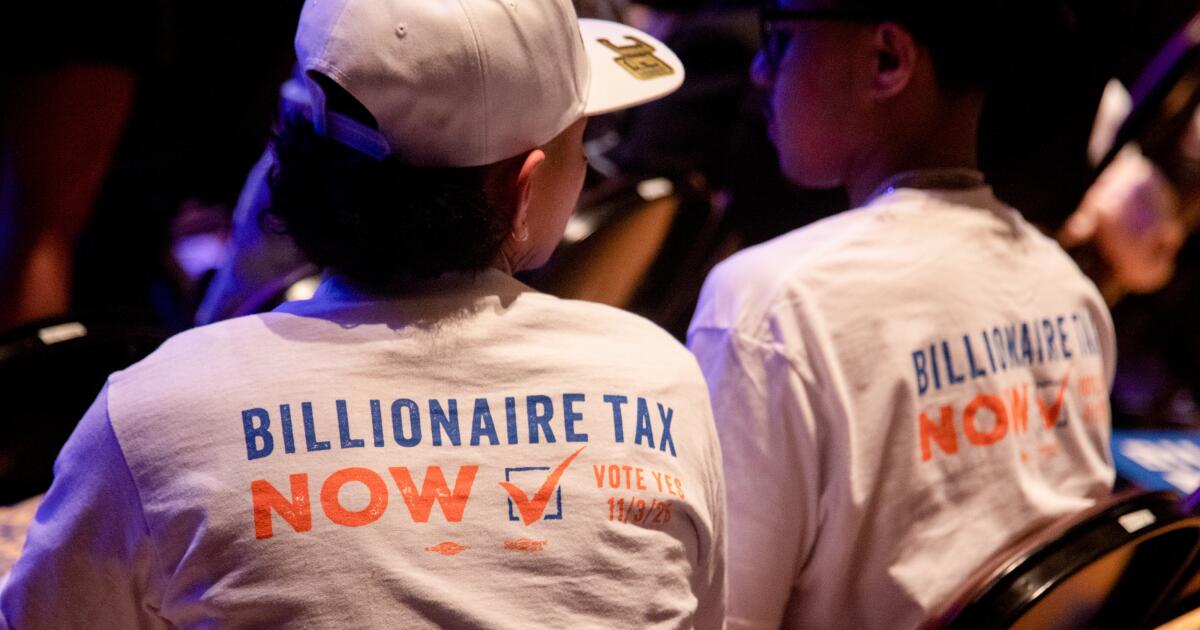
Controversial billionaire tax proposal will appear on November ballot
-
 Sports25 minutes ago
Shohei Ohtani is the first Dodger to be named 2026 All-Star
-

 World35 minutes ago
Who will control Africa’s AI infrastructure and at what cost
-
 News1 hour ago
The Supreme Court says the U.S. can turn away asylum seekers at the border
-

 Los Angeles, Ca2 hours ago
Jury says it is deadlocked in trial of man accused in Palisades Fire
-

 Detroit, MI3 hours ago
Scene active as police shoot, kill man on Detroit’s west side

