Cleveland, OH
MLB notes: Carlos Santana sold his Cleveland area house. A day later, the Guardians invited him home


The house in Bratenahl, Ohio, a suburb of Cleveland, had special meaning for Carlos Santana and his wife, Brittany. It was the first home Santana, a native of the Dominican Republic, purchased in the United States, back in 2012 after he signed his first multi-year deal. All four of the Santanas’ children were born in the Cleveland area.
Sentiment, though, goes only so far.
Last Monday, thinking he would never play in Cleveland again, Santana instructed a realtor to put the house on the market. A buyer quickly emerged. On Thursday, Santana signed papers completing the sale. And on Friday, as luck would have it, guess who called for the first time?
The Guardians, of course.
Santana, 38, played for Cleveland from 2010 to ‘17, and again in 2019 and ‘20. That night, he met in his Tampa apartment with his agent, Ulises Cabrera of Octagon, until 2 a.m., weighing final offers. The Seattle Mariners, Santana’s team in 2022, sought to reunite with him virtually the entire offseason, and were pushing for a resolution. Santana said both New York teams, Detroit and Arizona also were in the mix, while San Diego and Texas had asked him to wait.
The Mariners, according to sources briefed on the discussions, offered Santana a one-year deal with a player option for a second season, an extraordinary bid for a first baseman entering his age-39 season. But even though Santana’s home in Bratenahl was gone, he could not stay away.
On Saturday morning, he flew to Cleveland to retrieve some personal belongings from the house. Later that day, he agreed to a one-year, $12 million contract with the Guardians, turning down more guaranteed money from the Mariners, according to a source. His return to Cleveland only became possible when the Guardians recognized they could trade first baseman Josh Naylor to the Diamondbacks, a deal that transpired the same day.
“I cannot believe it,” Santana said. “It’s crazy.”
The 2025 season will be Santana’s 16th in the majors. He is coming off a year in which he produced a .749 OPS with the Minnesota Twins, his highest since 2019, and won his first Gold Glove. If he passes his physical on Monday, his $12 million salary will more than double the $5.25 million he earned last season. His deal also includes $1 million in incentives.
The Mariners, Santana said, were his initial priority. Seattle star Julio Rodríguez is one of his best friends, and pushed for him to return. But Santana first joined the Cleveland organization at the 2008 deadline, in a trade from the Los Angeles Dodgers for third baseman Casey Blake. He is beloved in both the clubhouse and community, and it is not out of the question he will one day enter the team’s Hall of Fame.
“I’m so happy coming back,” Santana said. “Cleveland has my respect. The fan base is one of the best. The coaching staff, they know me. Sandy Alomar, I’ve known him for a long time. I know (top executives) Chris (Antonetti) and Mike Chernoff. I know the owner, (Paul) Dolan. I have very good relationships with everyone in the office, in the organization. They love me, and I love it. I’m very excited.”
Santana’s family lives mostly in Kansas City, where he played in 2021-22. He also keeps a residence in Tampa so he can train in the winter. Yet for more than a decade, he held onto the house in Bratenahl, declining to sell it even after signing a three-year, $60 million free-agent contract with the Philadelphia Phillies in Dec. 2017.
A year later, the Phillies dealt him to the Mariners, and 10 days after that the Mariners sent him back to Cleveland. That, too, was a wild story. Santana had been planing to rent the Ohio home to his good friend, Edwin Encarnación – until Seattle and Cleveland traded them for each other.
Now Santana needs to find a new place in Cleveland, but compared to his final 24 hours as a free agent, that task will be relatively simple. His whirlwind through the open market, following his spin through the housing market, ended in a place he never thought he would never again call home.
Explaining the Guardians’ latest moves
Both teams that reached the American League Championship Series will open the season with new first and second basemen. The New York Yankees are simply replacing departing free agents. The Guardians’ moves were more jarring, but typical of the roster roulette low-revenue teams play.
The trade of Andrés Giménez to the Toronto Blue Jays enabled the Guardians to escape the remaining five years and $96.5 million on the second baseman’s contract. The trade of Naylor to the Arizona Diamondbacks, in combination with the Santana agreement, left the Guardians with a similar one-year financial commitment at first base, plus right-hander Slade Cecconi and the No. 72 overall pick in the 2025 draft. Cleveland now holds the 27th, 66th, 70th and 72nd selections.
Naylor, 27, is 11 years younger than Santana, and almost certainly would have departed as a free agent at the end of the 2025 season. Santana, thanks in part to his Gold Glove defense, produced the higher fWAR last season (3.0-2.3). As one of the team’s most beloved players in recent memory, he again will be a strong presence in the clubhouse, if less emotional than Naylor.
Cecconi, 25, was the 33rd overall pick out of the University of Miami in the 2020 draft, but has yet to establish himself in the majors, finishing last season with a 6.66 ERA in 77 innings. The Guardians are not sure whether he will start or relieve but believe he might benefit from working with their pitching group and competing in better pitchers’ parks than he did at Triple-A Reno and in Arizona. According to Statcast’s Park Factor, Chase Field was the second-most run-friendly environment in the majors last season, behind only Coors Field.
The Guardians have spent much of their offseason adding pitching, previously re-signing free-agent right-hander Shane Bieber to a two-year, $26 million contract, and acquiring righty Luis L. Ortiz as well as pitching prospects Josh Hartle and Michael Kennedy for infielder Spencer Horwitz. They also traded relievers Eli Morgan to the Chicago Cubs and Nick Sandlin to the Toronto Blue Jays.
Marlins flirting with CBA trouble
In early December, Evan Drellich and I detailed how the A’s need to add significant payroll this winter or else risk a grievance from the Major League Baseball Players Association. The Miami Marlins, who continued to tear down their roster Sunday with their trade of left-hander Jesús Luzardo to the Philadelphia Phillies, are treading on perhaps even more perilous ground.
Baseball’s collective bargaining agreement requires teams to carry a luxury-tax payroll more than one and a half times the amount they receive from local revenue sharing. A club in violation doesn’t automatically receive punishment but puts itself at greater risk of penalty if the union files a grievance.
The Marlins, like the A’s, are expected to be among the highest revenue-sharing recipients next year at roughly $70 million, if not more. Using that $70 million estimate, the Marlins’ luxury-tax payroll by the end of the season would need to be $105 million. Per FanGraphs, they currently are at $83 million. The A’s, following their additions of right-hander Luis Severino, lefty Jeffrey Springs and third baseman Gio Urshela, are at $90 million.
What’s amazing about the Marlins’ luxury-tax number is that approximately 45 percent of it is unrelated to their current roster. Two players no longer on the team’s 40-man, outfielder Avisaíl García and righty Woo-Suk Go, account for $15.25 million. Through 2027, the Marlins also are getting hit with a $3 million annual charge as part of their Giancarlo Stanton trade with the New York Yankees. And, like all teams, they are charged $17.5 million for player benefits and $1.67 million for their share of the pre-arbitration bonus pool.
Since the deadline, the Marlins have traded Luzardo, closer Tanner Scott, infielders Jake Burger, Jazz Chisholm Jr. and Josh Bell, left-hander Trevor Rogers, outfielder Bryan De La Cruz and relievers A.J. Puk, JT Chargois and Huascar Brazoban. The next to go, provided he makes a strong recovery from Tommy John surgery in the first half, should be right-hander Sandy Alcántara, whose 2025 salary is $17.3 million.
Wouldn’t it be something if the Marlins had to keep Alcántara because their luxury-tax payroll was too low? The average annual value of Alcántara’s five-year contract — the number used for luxury-tax calculations — is $11.2 million. Shedding the prorated portion of that amount at the deadline would drop the team’s luxury-tax number by roughly another $3.7 million.
Can’t wait to see how the Marlins raise payroll, with owner Bruce Sherman kicking and screaming. Like the A’s, they have little choice but to spend.
The Sandoval deal: A record of sorts
Patrick Sandoval had a 3.53 ERA from 2021-23 before posting a 5.08 ERA in 16 starts this year.(Robert Edwards / Imagn Images)
While no official records are kept, left-hander Patrick Sandoval’s two-year, $18.25 million deal with the Boston Red Sox is believed to be the largest guarantee ever awarded to a player who was non-tendered.
The Milwaukee Brewers retained righty Brandon Woodruff on a two-year, $17.5 million contract prior to 2024. The Chicago Cubs signed first baseman/outfielder Cody Bellinger to a one-year, $17.5 million deal — the highest AAV for a non-tender — prior to 2023.
With salaries for starting pitchers soaring, the curious part of the Los Angeles Angels’ decision to part with Sandoval is that they could have retained him over the next two seasons for perhaps $6 million less than he ended up getting from the Red Sox.
Sandoval, 28, projected to earn $5.9 million in arbitration in 2025, per MLB Trade Rumors. He is not expected to return from Tommy John surgery before the second half, so his raise in 2026 would have been minimal.
Perhaps Angels owner Arte Moreno didn’t want to pay a player who was hurt, something he has done regularly with Mike Trout and Anthony Rendon at higher salaries. Perhaps Moreno and general manager Perry Minasian are hellbent on winning this upcoming season and wanted to use the $6 million for other pursuits.
The Angels tried to trade Sandoval before the non-tender deadline, according to a rival executive who spoke with them. But the industry effectively called their bluff, daring them to offer Sandoval a contract. They did not.
Rangers bullpen: A work in progress
Slowly but surely, the Texas Rangers are rebuilding their bullpen.
Four of the Rangers’ six most frequently used relievers last season — David Robertson, José Leclerc, Kirby Yates and José Ureña — are free agents, as is Andrew Chafin, who arrived at the deadline. The team has responded by signing free-agent left-hander Hoby Milner to a one-year, $2.5 million contract, righty Jacob Webb to a one-year, $1.25 million deal and — in a move that could prove to be a steal — acquiring lefty Robert Garcia from the Washington Nationals on Sunday for first baseman Nathaniel Lowe.
Garcia, 28, finished with a 4.22 ERA in 59 2/3 innings last season, but his 29.9 percent strikeout rate and 6.4 percent walk rate contributed to a much lower expected ERA — 2.53, according to Statcast. He has five years of club control remaining as opposed to two for Lowe, who is projected to earn $10.7 million in arbitration this season with another raise coming through the process in 2026.
Re-signing Yates remains a priority for the Rangers. The team quickly identified a left-handed hitter to replace Lowe, reaching an agreement Sunday with free agent designated hitter Joc Pederson, according to league sources briefed on the discussions.
Around the horn
• Is it possible the availability of St. Louis Cardinals third baseman Nolan Arenado is clogging the market for free agent Alex Bregman?
The Cardinals, in their negotiations with the Houston Astros on an Arenado trade, were willing to include $5 million per season, leaving the Astros with approximately a three-year, $49 million commitment, sources briefed on the talks told The Athletic’s Katie Woo. Deferrals would have further lowered the present-day value of the Astros’ obligation if Arenado had not blocked the deal.
Arenado, who will play next season at 34, is three years older than Bregman. His OPS the past three seasons has dropped from .891 to .774 to .719. Bregman’s has fallen from .820 to .804 to .768. A team could bet on Arenado bouncing back, rationalizing he would be a better gamble than Bregman at a guarantee that could approach or exceed $200 million.
• A rival executive makes a good point about the Red Sox potentially pursuing either Bregman or Arenado:
If the Sox wish to move Rafael Devers off third base, why bother pursuing an external option when numerous internal options are available, or soon will be?
Those options include Trevor Story, who is under contract through 2027, as well as two prospects — Marcelo Mayer, who could wind up at shortstop or third; and Kristian Campbell, who seems more likely to land at second.
Of course, prospects are prospects, and Bregman, in particular, brings a special leadership intangible. But the Sox ranked ninth in the majors in runs last season. Their greater need remains pitching.
• First baseman Christian Walker, in moving from Chase Field to Houston’s renamed Daikin Park, is leaving the second-most run-friendly environment last season for the seventh.
Walker is so consistent, it shouldn’t affect him. His OPS+ the past three seasons was 25 percent above league average, 22 percent above and 21 percent above.
(Top photo of Carlos Santana with Cleveland in 2020: Ron Schwane/Getty Images)



CLEVELAND, Ohio (WOIO) – The 60th Annual Car Parts Warehouse I-X Piston Powered Auto-Rama wraps up this weekend, marking the last show at the longtime International Exposition (I-X) Center.
Organizers say 900 cars are parked for the event, featuring flashy cars and rebuilt classics.
Cleveland City Council approved plans last year to repurpose the event space for an unnamed private company. What replaces it, nobody is saying.
“Never miss, never miss,” said Jack Marino, who has attended many shows at the I-X Center. “It’s sad because it’s sort of a tradition to this area.”
Marino said he is worried about what Cleveland could lose when the building closes.
Show features diverse collection
“Anything that has a piston that makes it go is in the show. We even have a tank here that was built in 1964 when we were the Cleveland tank plant,” said Scott McGorty with the I-X Center.
George Conrad owns 221 cars and brought a few to the show, including a purple classic.
“Knowing this is possibly the last show, hopefully not. I wanted to bring an eclectic mix of really different things,” said Conrad.
Conrad said someone else started the build on the purple car and never finished it.
“Kind of a step child project to me. An older gentleman had purchased it and started the build and unfortunately he passed away,” said Conrad. “We took the project on, completely disassembled it and kind of restarted the whole thing. Three years, we don’t want to talk about the money.”
Conrad finished it just in time. There will not be another show according to the organizers of the autorama.
No replacement venue in sight
The I-X Center has hosted events for decades, including the garden show, the auto show, the boat show and the RV show. The city and the building’s owner have not released details on what comes next. Only that the expo space will close.
Organizers say no other building in Northeast Ohio is big enough to host the autorama.
“This show has always been about people as much as it is about cars,” said Steve Legerski, show manager for the I-X Piston Powered Auto-Rama. “For 60 years, families have grown up coming to this event together. Builders have debuted lifelong projects here.”
The event features hundreds of vehicles, specialty exhibits, competitions and a marketplace.
The final consumer show inside the Cleveland I-X Center begins Friday and runs through Sunday, March 29. The show is the 60th Annual Car Parts Warehouse I-X Piston Powered Auto-Rama.
Tickets are available at www.pistonpowershow.com and at all 23 Car Parts Warehouse retail locations.
The I-X Center was built in 1942 as the Cleveland Bomber Plant and was a manufacturing site for the B-29 bomber during World War II.
Later, it was known as the Cleveland Tank Plant and tanks and other military vehicles were built there.
Once the war ended, the center had several different uses before becoming the I-X Center in 1985.
Copyright 2026 WOIO. All rights reserved.

VERICA “VERA” DRAKSIC
OBITUARY
age 74, of Kirtland, OH, passed away peacefully February 26, 2026. Daughter of the late Mijat and Anna Kalac, Vera was born and raised in former Yugoslavia with her siblings Maria (deceased), Lucija (deceased), Nevenka, and Petar. As a young woman, Vera felt a calling to help others that drew her to the field of nursing. This developed into a life-long devotion to cooking and caring for family and friends that she took with her everywhere, from aiding residents at the Slovene Home for the Aged to her work with the Congregation of Blessed Sacrament. In the winter of 1971, Vera emigrated to the United States, settling in Cleveland where she started a family with Martin (deceased), her husband of 40 years. She was a loving mother to their two daughters, Anita (late husband Edgar), and Irena (husband Chris), and a devoted grandmother to her cherished grandson, Evan. Vera spent nearly every waking moment preparing foods for people she admired, including the delicious dishes of her homeland, like strudels, poticas and sarma. Around the holidays, she baked until every container she owned was filled with cookies; gifts for the dozens of people she considered family. If you needed Vera, you could always find her in a kitchen peeling a potato, chopping an onion, or kneading dough; all while stirring a simmering pot. Fueled by a love of people, hard work, strong coffee, and bread and butter, she somehow had time to get the job done with a story and a smile. They don’t make them like Vera anymore. Contributions may be made in memory of Vera to either Sisters of Mercy, Sisters of Notre Dame of the United States, St. Jude, or Doctors Without Borders. Mass of Christian Burial Friday, March 6, 2026, at Divine Word Catholic Church, 8100 Eagle Road, Kirtland, Ohio, 44094, at 10 AM. Burial following at All Souls Cemetery. Family will receive friends to pay tribute to and celebrate the life of Vera at THE ZEVNIK-COSIC FUNERAL HOME OF WILLOUGHBY HILLS, 28890 CHARDON ROAD (between Bishop Rd. and Rt. 91) Thursday, March 5, 2026, from 4 – 8 PM. Online obituary, guestbook, & order flowers at www.DeJohnCares.com.

CLEVELAND — Thousands of people braved the cold in downtown Cleveland for the third wave of “No Kings Day” demonstrations against the Trump administration.
This time, protestors said, the stakes are higher than ever.
Community members and activists joined at the Free Stamp in Willard Park and marched alongside Lakeside Avenue and around Cleveland Public Square on Saturday. Demonstrators said they’re rallying against the Trump administration’s escalation of federal immigration enforcement tactics and rocky global economy amid the country’s war with Iran.
Protestor Fidel Swain who served 15 years in the US Air Force. (Spectrum News 1/Tanya Velazquez)
U.S. Military Veteran Fidel Swain said he’s marching for the rights of all Americans.
“We’re really concerned with what’s going on in the country today as far as this current administration,” Swain said. “They all seem to not follow the principles and ideas of the working class and just most Americans, which is law, order.”
Northeast Ohio resident Charlotte Hartman also stood among the crowd of demonstrators. She said she attended the two previous No Kings Day protests in Strongsville.
Today, Hartman said, she’s standing in solidarity with all marginalized groups.

(L-R) Protestors Elaine Wheaton, Charlotte Hartman, and Michele Murphy. (Spectrum News 1/Tanya Velazquez)
“The way he treats people and minorities, the way he treats handicapped people … They don’t seem to be any care or concern for anybody,” Hartman said.
Hartman was joined by Elaine Wheaton, who said she hopes the demonstration will help unite Americans, despite ideological differences.
“We’re hoping that some of the people that voted for Trump before might be changing their mind,” Wheaton said. “He’s getting a little too overboard … I have no problem with Republican presidents like Reagan or Bush or whatever, but it’s not that he’s Republican. It’s just that he’s a bad human.”
The White House spokesperson Abigail Jackson sent a statement to Spectrum News dismissing Saturday’s protest. She wrote, “The only people who care about these Trump Derangement Therapy Sessions are the reporters who are paid to cover them.”
The first No Kings Day protest in June included around 5 million participants, while the second event in the fall drew in around 7 million people.
While speaking about the No Kings Day protests in October, Trump told Fox business that he’s “not a king.”
Oregon Lottery Pick 4 results for March 29

What you can do to lower your electric bill in Pennsylvania

This RI Garden Transforms Into a Fairy Wonderland

How to watch TCU vs. South Carolina women’s basketball Elite Eight: TV, streaming

Argus Leader First/Second Five: South Dakota’s best girls high school basketball players

Florida High School Football Rankings: Top 25 teams – Oct. 21

How old is Bo Nix? What to know about Oregon quarterback ahead of 2024 NFL Draft

Cleary's 21 help Le Moyne down Central Connecticut State 69-64 in OT

99th annual Pony Swim held in Virginia

Indiana Members Credit Union announced as new anchor tenant at Bottleworks District

Video: Iran to Allow More Oil Ships Through Strait of Hormuz, Trump Says

Dem senator warns deportation could let Virginia woman’s illegal immigrant killer ‘escape accountability’

Newsletter: G7 ministers to hold talks on war’s economic fallout
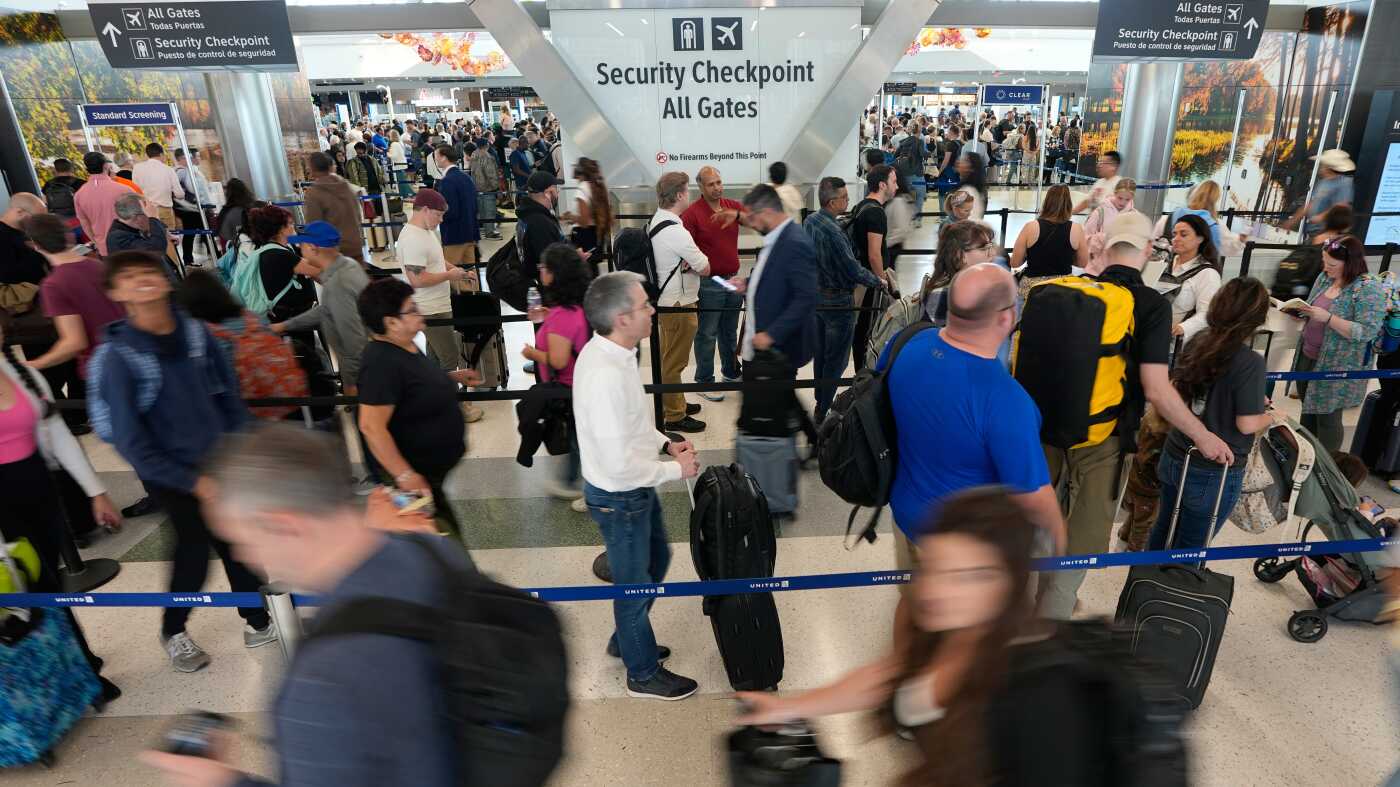
ICE officers could remain at airports after TSA workers are paid

Scathing report claims nation’s oldest labor union ‘betrayed’ MAGA members through ‘shocking’ spending
-

 Sports1 week ago
IOC addresses execution of 19-year-old Iranian wrestler Saleh Mohammadi
-

 Miami, FL4 days ago
Jannik Sinner’s Girlfriend Laila Hasanovic Stuns in Ab-Revealing Post Amid Miami Open
-

 New Mexico1 week ago
Clovis shooting leaves one dead, four injured
-

 Politics1 week ago
Schumer gambit fails as DHS shutdown hits 36 days and airport lines grow
-

 Tennessee7 days ago
Tennessee Police Investigating Alleged Assault Involving ‘Reacher’ Star Alan Ritchson
-

 Minneapolis, MN4 days ago
Boy who shielded classmate during school shooting receives Medal of Honor
-

 Science1 week ago
Record Heat Meets a Major Snow Drought Across the West
-

 Technology1 week ago
YouTube job scam text: How to spot it fast