Lifestyle
You might be suffering from AI brain fry : It’s Been a Minute


Does your brain feel fried by AI?
Illustration by NPR/ Source: EgudinKa/Shinpanu Thamvisead/Getty Images
hide caption
toggle caption
Illustration by NPR/ Source: EgudinKa/Shinpanu Thamvisead/Getty Images
Is AI in the workplace lightening your load…or frying your brain?
Researchers at Boston Consulting Group and the University of California, Riverside coined the term “AI brain fry” to describe “mental fatigue that results from excessive use of, interaction with, and/or oversight of AI tools beyond one’s cognitive capacity.” In other words, doing too much with A.I.
There’s something kind of comically tragic about the idea that these tools that were meant to lighten our loads seem to be doing the opposite for some. But beyond the psychic damage, there’s a lot in this brain fry idea that points to how we work with AI: for example, with all the managing it needs, is turning us all into bosses? And is this really the future of work?
Brittany is joined by John Herrman, tech columnist for New York Magazine, to get into the ins and outs of AI brain fry.
For more episodes about AI and modern life, check out:
Me and my partner don’t see eye-to-eye about AI. Now what?
The hard work of having “good taste”
You’re not broken – the job market is.
Support Public Media. Join NPR Plus.
Follow Brittany on Instagram: @bmluse
For handpicked podcast recommendations every week, subscribe to NPR’s Pod Club newsletter at npr.org/podclub.
This episode was produced by Liam McBain. It was edited by Neena Pathak. Our Supervising Producer is Barton Girdwood. Our VP of Programming is Yolanda Sangweni.



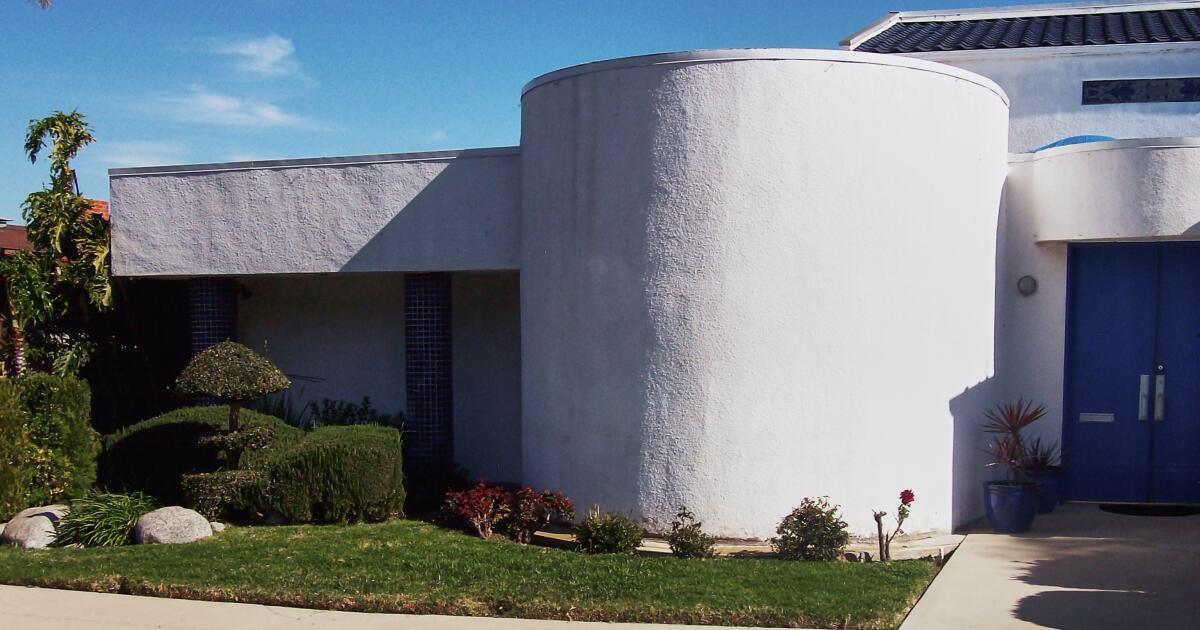
The first time Felema Yemaneberhan invited me over was maybe in 2025. I know it was sunny and warm, but I can’t figure out the season in L.A. from that. Pulling up to Felema’s home in Baldwin Hills Estates, the first thing I saw was a Japanese garden tucked on the right side of the home’s facade. The Black neighborhoods like Baldwin Hills Estates, Ladera Heights and View Park all sit hillside with some of the illest views in the city. Nah, like for real. The white curved walls offset with those two Miami Beach electric-blue mosaic columns, a single rose and an ADT home security sign took my eye. I didn’t even notice the facade was windowless until Felema said something.
The home was developed in 1983 by Edward and Lynn Edward Ivie, and designed and completed by Black builder and Cal Poly grad E. Michael White in 1985, who lived in the home with his family. Felema and her family moved in just five years later. As soon as she told me the crib was built by a brother I said, “Yo, is this some Black postmodernist architecture?”

Felema Yemaneberhan in front of her family home in Baldwin Hills.
I won’t assume y’all know what that postmodern design is. Emerging in the late ’60s and hitting its stride by the ’80s, postmodernism is defined as a reaction against that less-is-more, strict-type of modernism that came from Europe. Postmodernism reintroduced that playful, ornamental, whimsical design to everything from homes to shoes to pop culture.
So what is Black postmodernism then?
Walking into that long, blue-hued foyer with the marble floors, built-in planters and the spiral staircase that winds you through the home, left and right, mimics the feeling of descending these same hills. The speckled print on the walls behind the family bookshelf gives that Memphis design energy (or “Afro-Memphis” if y’all hip!). The home feels like a very intentional example of Black postmodernism. Playful, lived in, like a hug made from curved walls and different levels that guide you through the rooms.
I met Felema in 2020, online. She was one of the first Black architects I had ever met. She has designed homes and spaces in the U.S., Africa and Europe, and she has her own design studio, Felemaye, which she describes as “rooted in memory, material culture, and spatial intelligence.” In talking with Felema, it became immediately clear that she is super-knowledgeable about everything concerning the hood. She would tell me about where her family came from, the Eritrean capital, Asmara, and its complex history, rooted in years of Italian occupation and Art Deco infrastructure. In many ways, both subconsciously and intentionally, that Italian Art Deco city must have become the inspiration for not only Felema’s childhood home, but a profession that has driven her to really look at her neighborhood much differently.
A few days after the shoot, I chatted again with Felema. This time along with Rossen Ventzislavov, an educator who brought me out to Woodbury University last spring as a fellow to teach a one-of-a-kind semester on Black modernism in architecture, design and popular culture. All three of us share a focus on researching, archiving and documenting Black modernism and space. Yeah, it’s architecture and design, but it’s also everything from civic awareness to infrastructure, or what I’ve recently been calling, “us and the city.”
At the house with Felema, we looked through family photos, chatting with her sister Delina and playing with her son, Hyabna. She told us about this Amharic word tizita, that speaks to nostalgia, memory and longing. I saw it in her family’s decisions all through the house. Hers too. The crib looks exactly the same as it did in the ’90s. Her father’s mono bloc chair hasn’t moved from the spot it was last in since he passed. I wondered a lot about why her family chose this home in the first place.
— Jerald “Coop” Cooper

Walking into the long, blue-hued foyer with marble floors, and the spiral staircase that winds you through the home, left and right, mimics the feeling of descending the surrounding hills.
Jerald Cooper: To start off, tell us where we are right now.
Felema Yemaneberhan: We are in the heart of the city, 90008 to be exact. We are in a subdivision called Baldwin Hills, or Baldwin Hills Estates. South L.A.
JC: Tell us about the origin story of this space. How did your family end up here?
FY: The home was originally developed and designed between 1983-1985 by father and son Edward and Lynn Edward Ivie alongside structural engineer Ronald Greene. The project was then purchased and completed between 1987-1988 by E. Michael White. When White got the property, only a few rooms were finished. He worked with contractor Travis Randolph to design the interior architecture and finish the home before my family bought it in the late ‘80s. This property’s history represents a rare lineage of design across two distinct chapters. Every hand that shaped this home was Black, an intentional choice that documents a standard of excellence often omitted from the traditional architectural narrative.
My family looked at countless homes throughout Los Angeles, and they didn’t really feel moved by anything, until one day they stumbled upon this. My parents made the transaction immediately, because the house, the views and the intentionality of the way the space was designed just spoke to them both. They are design nerds. They value the preciousness of beauty, be it in a space or an object. They just wanted to make sure that their future family would live in a beautiful and serene place.
Rossen Ventzislavov: Could you tell us about the official designation of your house?
FY: If you’re familiar with the building tradition in Eritrea, it’s not a special or glamorous thing to title a house. So most houses are named after the family. For the purpose of creating a sense of anonymity for our family we call our home “Geza Ḥlmi.” “Geza” is equivalent to villa or casa. “Hil’mi” means dreams. So it’s more of an ode to the feeling, a space to dream.


“I was a dancer my whole life,” says Yemaneberhan. “So even in the way that the body moves, and the movement through the space, there’s compression and there’s release.”
RV: How does the house connect your African existence and your L.A. existence?
FY: We’re not as exotic as we might romanticize it. I’m very much an Angelena. I was born and raised in L.A., but actually, a lot of Eritreans, when they first meet my sister and myself, assume we were born back home. We were raised with English, but we didn’t speak English in this house. We didn’t mix with the diasporic children of Los Angeles. We went back to Eritrea every summer. My parents’ choice to settle down in Los Angeles had to do with climate. It was very important when you looked outside to feel as close to home as possible. This explains the cute parallels around, like the veranda. My parents used to dress us up in our traditional clothes and take photos of us in front of the bougainvillea or the jacaranda tree. If you look at the natural landscape in Eritrea, it’s the same exact atmosphere.
JC: Tell us about some of your earlier memories of the home.
FY: We have countless memories. We used to have pool parties up here with our cousins. We did every major event here, prom, homecoming, all the homies would come here and take photos across the different points of the house. My mom’s incredible cooking. Both sides of our family used to come here, and it was just a beautiful time. And you know, the people who had to come over here due to various reasons, often reminisce on what they had back home. I often wrestled with it as a young adult, if the past had actually been better than the present day. And I could fully, wholeheartedly say, yes, it was a beautiful, charmed childhood, and in a way this home sheltered us from a lot of the chaos that was going on in the ’90s here in L.A. The inner city, gang terror, it’s all not too far from here.
RV: What is the thrill for you living in this house as an architect?
FY: There are many undulations in the space. I was a dancer my whole life. So even in the way that the body moves, and the movement through the space, there’s compression and there’s release. The main atrium, or as I call it the “Hall of Mirrors,” is kind of compressed. Then there are the heights of the house, fluctuating greatly. I also like the specific corners and the way we have created unofficial wings. If you look at the facade, there’s absolutely no windows. So it is basically a house of secrets. There are specific times of day that I particularly love, and then there are other points when I don’t want to be here. I love this house at 10 o’clock because of the cantilever and the shadows. I have my coffee on the balcony, I relax, I write my emails. I don’t really particularly enjoy the house at night. There is a playfulness in the day and there’s a seriousness at night. I also like the idea of creating a permanence in the playfulness. I have a child, and I’m very much a child, and I think it’s a testament to the spirit of this home and my father’s spirit.


JC: One gets the sense that living here triggered your choice of profession? Is that true?
FY: Absolutely! My father had a tremendous influence in terms of my career choice. There’s a beautiful image that my uncle took of us at the kitchen table where I’m coloring. My uncle would say, “Color in the lines.” And my dad’s, like, “No, let her do what she wants to do.” If I wanted to be something, I’d find the proper avenues to make it happen. We didn’t watch TV growing up, there was always an activity. So from seventh grade on, I wanted to be an architect. Which is atypical. If you’re the child of an immigrant family, you go with specific professions. You’re a doctor, a lawyer, an engineer. It’s very rare to be in this field, in the creative arts. But I think it is a testament to my parents saying to me, “OK, you can do whatever you want, just be really good at it. Take all the honest steps, do the hard work, but just be free.” That freedom has allowed me to kind of come in and out of different subsets within architecture, and really handle my curiosity. Because every part of this house, now that I think about it, has had a point of activation of curiosity.
RV: Since Hood Century [a.k.a. Jerald Cooper] has brought us together, I have a question that is consistent with Coop’s own practice. He speaks of Black inhabitation as transformative living, a nexus between design and humanity. What does it mean to you?
FY: I think that architects and designers have to be anthropologists. What is precedence without the people? If anything, Coop studies people, studies groups of folks and systems, and how informal and formal systems of specific societies interact. What are the systems that have been put in place for these people, and what are the organic solutions that the people have made for themselves because they know that the system is not serving them?


“If it’s a well-designed building, you don’t have to do anything. You just have to steward and preserve.”
To your point, I think people feel compelled to make fundamental design moves like the blueness of this house. We put in the skylights this year because we were trying to protect the plants from light exposure and the rising heatwaves. And, if you can have simple and gentle conversations about the modifications, it’s important to consider the original design intent, but also what inhabitants do right in terms of respecting heritage, and what standards we’re using to evaluate their contribution. We have designers in the family and they would come here and give different suggestions. But my argument is, if it’s a well-designed building, you don’t have to do anything. You just have to steward and preserve.
JC: Talking about stewardship and preservation, tell us about your current indexing project of Black homes here in the neighborhood.
FY: The “90008 Index.” It’s an anthropological, architectural and sociological study of the people who’ve lived within the 90008 ZIP Code from 1950 to 2000. It’s important to study and establish provenance. My argument is that there are just as many, if not more, architecturally significant buildings on this side of town, and we need to study them. In the 2000s, the media cast this neighborhood as the Black Beverly Hills. And I’m trying to step back from the exclusive focus on financial affluence. I want to study the people, because there are everyday people who built and lived here. The subtitle I’m using for this project is “L.A.’s Last Enclave of Black Glory.” I want to establish legitimacy for the architects and contractors that created here. I want to honor the families, because the intentional inhabitation of these spaces was an act of resistance. These were some of the movers and shakers of Black foundation, of Black American society. The first of many things — the first person to join the L.A. Philharmonic as a brass player is here, the first judge. These were just really decent people who wanted to make a change in their respective industries. They could have chosen to live anywhere, but they chose to live amongst their own. There was a powerful sense of Black belonging within a larger landscape. I just want to be able to capture a moment that will not be replicated.
Jerald “Coop” Cooper is an artist and founder of Hood Century, a media agency researching, archiving and educating the masses on Black folks lived experience with the city, via architecture, design and popular culture.
Rossen Ventzislavov is a philosopher and cultural critic from Bulgaria who lives in Los Angeles and teaches at Woodbury University.

Words Jerald “Coop” Cooper and Rossen Ventzislavov
Photography Jerald “Coop” Cooper
Art director and editor Savannah Sinhal
Producer and photo editor/retoucher Randy Scott Hounkpe
Videographer Devin Williams

A portrait of singer Asha Bhosle, taken in Sydney, Australia in 2007.
Steven Siewert/Fairfax Media via Getty Images
hide caption
toggle caption
Steven Siewert/Fairfax Media via Getty Images

A portrait of singer Asha Bhosle, taken in Sydney, Australia in 2007.
Steven Siewert/Fairfax Media via Getty Images
One of the giants of the Indian movie and music industries has died. Asha Bhosle, who gave voice to hundreds of movie characters as a Bollywood playback singer, died Sunday at age 92. Her son Anand Bhosle confirmed her death to Indian media.
As a playback singer, Bhosle’s specialty was recording the songs used in movie scores for actresses to lip-sync on screen. In some ways, Bhosle’s career was the reverse image of that of her older sister, the equally famous playback singer Lata Mangeshkar.
While Mangeshkar earned her reputation singing the roles of chaste, virtuous heroines, Bhosle specialized in saucier characters, such as in one of her most famous songs, “Dum Maro Dum.” By Bhosle’s own reckoning, she recorded some 12,000 songs over a career that spanned about eight decades.
Bhosle boasted an incredibly flexible and powerful voice that could mesmerize audiences and that gave voice to generations of Indian actresses. Into her later years, she still showed remarkable vocal range.
And even if you never heard her sing, you might still recognize her name: it’s Asha Bhosle that the British band Cornershop was referencing in its 1997 hit, “Brimful of Asha.”
Bhosle was born Sept. 8, 1933 in Sangli, a city in the Indian state of Maharashtra. Her father, Deenanath Mangeshkar, was an accomplished actor and North Indian classical singer and actor in the Hindustani language. Bhosle was nine years old when he died and shortly afterward, she and her older sister, Lata — later known as Lata Mangeshkar — started down a path of acting and singing, in part to help support their mother and three other siblings.
The family moved from city to city, and ultimately landed in Bombay (now Mumbai), the center of India’s burgeoning film industry; the term “Bollywood” is a portmanteau of “Bombay” and “Hollywood.”
As a child and young teen, Bhosle performed in a string of movies, but at age 16 — against her family’s wishes — eloped with Ganpatrao Bhosle. The marriage caused something of a scandal, as he was not only almost twice her age, but also her sister Lata’s personal secretary. The couple parted ways acrimoniously in 1960, and Bhosle and Lata’s relationship was often notoriously rocky in the following decades.
In her early professional years, Bhosle often found herself performing in low-budget films. But she also started developing a niche by singing vampy roles as well. In the 1960s and early 1970s, for example, Bhosle frequently sang for the outré actress and sexy “item girl” Helen.
Over time, Bhosle developed collaborations with leading film song composers over several decades, including O.P. Nayyar, Ravi, Sachin Dev “S.D.” Burman and, most crucially, his son Rahul Dev “R.D.” Burman, whom she married in 1980. R.D. Burman, whose works’ amazing range included classical, disco, jazz, cabaret, balladic love songs and more, proved to be a perfect partner for Bhosle both professionally and personally. In later years, she was also a favorite of younger composers, including A.R. Rahman.
Aside from her film work, Bhosle sang a range of other material, including North Indian classical music, Hindu devotional songs and poetry. But her popularity as a playback singer, both within the Indian subcontinent and with audiences and artists abroad, continued for decades, unrivaled by anyone in Bollywood with the possible exception of her older sister. In 2000, the Indian film industry gave her its highest prize, the Dadasaheb Phalke Award; in 2008, the Indian government awarded her one of its highest civilian prizes, the Padma Vibhushan.
YouTube
Using honorifics with her name, India’s prime minister, Narendra Modi, wrote on X on Sunday: “I am deeply saddened by the passing of Smt. Asha Bhosle ji, one of India’s most renowned and versatile voices. Her unique musical journey spanning decades has enriched our cultural heritage and touched the hearts of countless people around the world.”
Last month, Bhosle released a collaboration with Gorillaz called “The Shadowy Light.” In an Instagram message posted by Gorillaz, Bhosle talked about her “life’s journey,” and about what will happen “when I get to the other side.”
“I shall attain moksha (ultimate freedom) wherein I shall become one of the thousands of sounds floating all around us. If you put some of them together, they form a beautiful tune,” she said.
“Therefore, I shall become one of those sounds, which shall eventually become a musical note in a beautiful song which shall be heard by several generations for thousands of years. This freedom to become one with nature is what awaits me on the other side of the river.”

In summer, it’s too hot. And in rain, the muddy dirt roads threaten to swallow your car.
But if you can hit Carrizo Plain National Monument on a spring day when the hills and grasslands are green and a few wildflowers remain in the meadows — well, you’re winning. And you’ll be seeing a lonely, raw corner of California that few people ever find.
The monument is about 38 miles long and 17 miles wide — hard to miss, you’d think. But it lies along the San Andreas fault in the usually dry hills between Bakersfield and Santa Maria, far from Interstate 5 or U.S. 101, about 170 driving miles northwest of Los Angeles.
Signs warn motorists what’s ahead in Carrizo Plain National Monument in San Luis Obispo County.
(Christopher Reynolds/Los Angeles Times)
Within the monument, most of the roads are gravel or dirt, and there is no drinkable water, no food, no gas and spotty cellphone coverage. The education center and two semi-primitive campgrounds feature vault toilets.
It’s almost perfect, in other words, for repelling crowds. Yet it’s pretty good as the centerpiece of an overnight road trip probing small towns and back roads of the western San Joaquin Valley and eastern San Luis Obispo County.
If you happen to arrive Friday, Carrizo staffers and volunteers will be celebrating the 25th anniversary of the monument, which was created from former ranch land under President Clinton. (Free tours and refreshments will be offered at the event, which takes place from 10 a.m. to 1 p.m. at the Guy L. Goodwin Education Center.) But next week might be greener, because rain on the plain is probable Saturday and Sunday.
For many visitors, Carrizo’s big draw is wildflowers. The grasslands and hillsides act as a vast, uncluttered canvas for their colors, which typically bloom in March and last through April. But every year is different, especially in this era of climate change. This year, after unusually heavy rains in February, Carrizo Plain erupted in a dramatic bloom in March, attracting several hundred visitors per day.

In Carrizo Plain National Monument on a spring day, the hills and grasslands were green and a few wildflowers remained in the meadows.
(Christopher Reynolds/Los Angeles Times)
By the time my wife and I arrived in the first days of April, the flowers were past their peak, but the hills were still green and many meadows popped with yellow, purple and blue. If I’m reading my wildflowers handbook right, these were tidy tips, Goldfields, Owl’s Clover, thistle sage, Valley Larkspur, coreopsis, phacelia and hillside daisies.
Meanwhile, the 3,000-acre Soda Lake, which lies dusty, crusty, dry and white in summer, still had some water in it. Imagine the salty lake beds of Mono Lake, the Salton Sea or Death Valley’s Badwater, but surrounded by green hills. It was startling — the opposite of an oasis in the desert.
To get there, we drove north on I-5 into the San Joaquin Valley, then veered west by way of State Routes 166, 33 and 58, pausing for gas at Maricopa (population: 984).
Within the monument, we rambled along Soda Lake Road, admiring windmills, an old ranch house now reserved for bats, and a few hills dotted with lazy cows. (The monument is run by the Bureau of Land Management, which allows grazing.)
Looking a little bit more closely, you realize that the monument is all but torn in two by the San Andreas fault. On Elkhorn Road, you remember that those mountains to the east (the Temblor Range) are slowly lurching to the southeast. Meanwhile the Caliente Range — those mountains just to the west — are lurching the opposite way. The “offset” is growing by about 1.5 inches per year — at least, until the next big quake.

A lone visitor stands at the edge of Soda Lake in Carrizo Plain National Monument.
(Christopher Reynolds/Los Angeles Times)
Slowly rolling through this scene, we spotted two critters scurrying along the roadside — fist-size creatures hopping on their back legs. These were probably giant kangaroo rats, a native species whose numbers have been growing since their listing as an endangered species in 1987.
We didn’t spot any blunt-nosed leopard lizards or San Joaquin Valley kit foxes (which eat giant kangaroo rats) but those species, too, are endangered and native to the area. Pronghorn antelope and Tule elk are out there, too, the experts say, along with California condors soaring overhead. We just saw crows, loitering on fence posts.
The Goodwin Education Center, the monument’s main gathering spot, is open Thursdays through Sundays, December through May. We looked at maps, got advice on where to go next and ate our sack lunches at a picnic table, marveling at those green slopes.

A San Joaquin kit fox is displayed at the Goodwin Education Center within Carrizo Plain National Monument.
(Christopher Reynolds/Los Angeles Times)
In this long valley, scientists have found signs of Native campsites up to 10,000 years old — a hint of how much wetter this area once was. Not far from the education center is a short hike to Painted Rock, a protected site that includes Native pictographs on a horseshoe-shaped sandstone formation. The red, black and white images go back 100-4,000 years. (We didn’t see them. From March through May, visitors can see the pictographs only on Saturday guided tours. From July 16 through February, visitors can book self-guided tours.)
After lunch we nosed around nearby Soda Lake, exited the north end of the monument, joined State Route 58 and headed west over a series of whoop-de-doos — those rises and falls in the road that will help you defy gravity, if you take them fast enough.
One of them, I realize now, was the San Andreas fault itself.
Through all of this, we saw no more than 15 or 20 people, cars included. Continuing from State Route 58, we joined State Route 41, watched oak trees and vineyards pop up and multiply, continued into Paso Robles and spent the night.
On the return trip we lingered for an hour or two in Santa Margarita (population: 1,149), checking out the Porch Cafe, the Barn (antiques) and the Giddy Up vintage goods and gift shop, which operates in a blue Quonset structure known as the Rainbow Hut.

Holli Rae owns and runs the Giddy Up vintage goods and gift shop on El Camino Real in Santa Margarita.
(Christopher Reynolds/Los Angeles Times)
“It’s just a sweet little town. So quiet,” said Holli Rae, a filmmaker and former Angeleno who opened the Giddy Up about two years ago. She moved north, she said, for “the nature, the animals, the deer, the birds. The creatures!”
Thanks to U.S. 101, we were home and grateful within three and a half hours.
Soon, we knew, summer will come and fry the Carrizo Plain until everything green is brown. Beginning June 1, in fact, the Goodwin Education Center will close for six months.
For a few more weeks, Angelenos, your window of opportunity is open.
If you go
Where to explore:
Check out the Carrizo Plain National Monument website or call the visitor center at (661) 391-6191. The recorded information line is (661) 391-6193. Also check the weather; most roads in the monument are dirt or gravel and can become impassable in rain.
Where to sleep:
Adelaide Inn, 1215 Ysabel Ave., Paso Robles; (805) 238-2770. This hotel, located near 24th Street and U.S. 101, includes a pool and children’s play area. Rates start at about $100.
River Lodge, 1955 Theatre Drive, Paso Robles; (805) 221-7377. This hotel, born as a motel in 1947, was reborn as a boutique property in 2024. It has 28 rooms, a patio restaurant (Ciao Papi) and an adult-only pool. It stands alongside U.S. 101, about 3 miles south of downtown Paso. Midweek rates often start at $149, often doubling on weekends.
Melody Ranch Motel, 939 Spring St., Paso Robles; (805) 238-3911. This is a throwback 1950s motel with a swimming pool, open May through September. From the start, it has had 19 rooms and a prime spot on Spring Street, the main artery of Paso Robles. Rates start at about $100. Most reservations are taken by phone, in person or through Expedia.
Where to eat:
Joe’s Place, 205 Spring St., Paso Robles; (805) 238-5637. Since 1995, this breakfast-and-lunch spot has been a local favorite for casual family meals.
The Porch Cafe, 22322 El Camino Real, Santa Margarita; (805) 438-3376. This all-day cafe (with beer and wine) stands along the main drag in sleepy little Santa Margarita.

The Punjabi Truck Stop Serving Wyoming’s Best Indian Food

FTX’s Alameda Moves $16 Million SOL in Ongoing Creditor Repayment

Financial Literacy Month aims to educate about smart money habits

Grip Strength Might Be the Most Overlooked Fitness Metric—Here’s How to Train It Right

https://www.youtube.com/watch?v=n1F4KGRknOU

Florida High School Football Rankings: Top 25 teams – Oct. 21

How old is Bo Nix? What to know about Oregon quarterback ahead of 2024 NFL Draft

Cleary's 21 help Le Moyne down Central Connecticut State 69-64 in OT

99th annual Pony Swim held in Virginia

Indiana Members Credit Union announced as new anchor tenant at Bottleworks District

Melania Trump’s Epstein remarks turn up the heat on DOJ, Acting AG Todd Blanche to do more
Newsletter: Cautious optimism in Brussels as Orbán ousted in landslide Hungarian opposition win
More than a quarter of private colleges are at risk of closing, a new projection shows

NYC mayor cites $180K racial wealth gap to justify taxes, police cuts

Abuse allegations against lead Democrat shake race for California governor
-

 Atlanta, GA1 week ago
1 teenage girl killed, another injured in shooting at Piedmont Park, police say
-

 Georgia6 days ago
Georgia House Special Runoff Election 2026 Live Results
-

 Arkansas3 days ago
Arkansas TV meteorologist Melinda Mayo retires after nearly four decades on air
-

 Pennsylvania7 days ago
Parents charged after toddler injured by wolf at Pennsylvania zoo
-
 Milwaukee, WI7 days ago
Potawatomi Casino Hotel evacuated after fire breaks out in rooftop HVAC system
-

 Technology1 week ago
Anthropic essentially bans OpenClaw from Claude by making subscribers pay extra
-

 Austin, TX5 days ago
ABC Kite Fest Returns to Austin for Annual Celebration – Austin Today
-

 Detroit, MI1 week ago
Puppy rescued after getting stuck on chimney in Detroit