Lifestyle
With 'Origin,' Ava DuVernay illuminates America's racial caste system


Ava DuVernay describes her new movie Origin, which is based on Isabel Wilkerson’s book Caste, as “a film about a woman in pursuit of an idea.”
Emma McIntyre/Getty Images for Academy Museum
hide caption
toggle caption
Emma McIntyre/Getty Images for Academy Museum

Ava DuVernay describes her new movie Origin, which is based on Isabel Wilkerson’s book Caste, as “a film about a woman in pursuit of an idea.”
Emma McIntyre/Getty Images for Academy Museum
When filmmaker Ava DuVernay first read Isabel Wilkerson’s 2020 book, Caste: The Origins of Our Discontents, she was so stunned, she reread it twice. The bestselling book draws a line between India’s caste system, the hierarchies of Nazi Germany and the historic subjugation of Black people in the United States.
“It took me a really long time to wrap my mind around the idea that there’s something underneath racism that’s called caste,” DuVernay says. “It doesn’t mean racism doesn’t exist. It means the foundation, the root, the origin, underneath is the very simple premise — someone has to be better than someone else.”
DuVernay was warned that Caste was too complex to adapt into a film but with each reading she felt a story emerge more clearly. Her new movie, Origin, centers on Wilkerson, played by Aunjanue Ellis-Taylor, as she explores how understanding the caste system can deepen our understanding of what Black people experience in America. DuVernay describes it as “a film about a woman in pursuit of an idea.”
The movie opens with a portrayal of the 2012 killing of 17-year-old Trayvon Martin at the hands of George Zimmerman. DuVernay says Wilkerson cited Zimmerman’s acquittal as the impetus behind the ideas she would write about in Caste.
“I remember when [Wilkerson] was sharing that with me, I thought, ‘Oh, wow, could [the film] open on that? Could the spark that sparked her spark the film?’” DuVernay says. “Trying to stay close to and honor her process, her life, her genius — I wanted to start where she started.”
DuVernay’s previous films include the historical drama Selma, about Martin Luther King Jr.’s 1965 march from Selma to Montgomery, Ala., and 13th, an Oscar-nominated documentary about mass incarceration. Her 2019 Netflix drama series, When They See Us, tells the story of the five young men who were falsely convicted in the 1989 Central Park jogger case.
DuVernay hopes that by releasing Origin in 2024 — an election year — the film will contribute to the country’s ongoing conversation about race and power.
“In order to do that, I believe we need new language. We need to become fluent in concepts and constructs that we currently are not,” she says. “And so it was very important to me that this film be made … and that it reached people while folks were considering the future of our country.”
Aunjanue Ellis-Taylor plays Caste author Isabel Wilkerson in Origin.
Atsushi Nishijima/Neon
hide caption
toggle caption
Atsushi Nishijima/Neon
Aunjanue Ellis-Taylor plays Caste author Isabel Wilkerson in Origin.
Atsushi Nishijima/Neon
Interview highlights
On reading Caste, and learning how Nazis were influenced and inspired by American racism
I’m an African American studies major, English major, UCLA. Read quite a bit – had not come across that bit of information that Nazis had been influenced by the blueprints of the American South segregation policies. That actually they had sent scholars and people to study it, to bring it back. So when I read it in her book, it was fascinating to me. But I had to go look at that stuff myself and read it myself.
It’s not widely known. And so there’s certainly scholarship out there other than Isabel Wilkerson’s that shares that information, but none that I’d ever heard of. So when I’m sitting there and I’m reading the actual notes, the actual transcriptions, the actual letters, it’s astounding. It’s very matter of fact. And in some spaces, the Germans are shocked and surprised and appalled by some of the things that were done in America and said, “That’s taking it a little too far.” … Really shocking. But certainly that’s a part of the book, and this is what I basically did is, all of the parts in the book where my jaw dropped, I put that in the movie.
The book burning scene in Origin was filmed in a square in Berlin in which the Nazis burned books in 1933.
Atsushi Nishijima/Neon
hide caption
toggle caption
Atsushi Nishijima/Neon
On filming a Nazi book burning scene in Germany
This was one of the sequences that I’m the most proud of. This film was made completely outside of the studio system. So it was made independently. And it was made by a small Black-woman-owned, Black-people-run company. It was me and my producing partner, Paul Garnes, and that was it. … And we found ourselves as two African American independent producers in Germany asking the city of Berlin to allow us to photograph and film a recreation of a book burning on the actual site where it happened. That was our request. And we got a “yes.”
So we shot this scene on Bebelplatz, and this is a square in which there is an actual monument to this book burning. And the monument is called the Empty Library, where you can look down into the ground. There’s a hole in the ground, a square in the ground, where you look down into rows and rows of white empty bookshelves to commemorate and symbolize the books that were burned. And so we recreated the whole book burning on that plaza, to stand there on that cobblestone and to know that that had happened in that place and that I was able to, with my comrades, tell the story to a modern audience so that that moment is not forgotten, and that moment is connected to experiences that we are having right now where we are — wherever in the world you are — the idea that ideas and imagination is at risk, the idea that books are dangerous, the idea that we can forget about our past lives by just taking them off the shelves.
On filming a scene in India with a Dalit man whose job requires him to remove human waste from public latrines by hand
This scene was one that was shocking to me, and learning about the fact that there are people to this day whose profession is that of manual scavenging. … I wanted to show and share what that looks like and what it takes for a human being to be required — expected — to degrade themselves to perform that service, just to eat, just to exist. …
And with these particular men, I wanted to find people who actually did that job. So what you are watching are men – that is what they do. That is how they live. And so I went to an advocacy group, and they had two men who were willing to perform the act on camera. … And of course, I’m not having any human being get in excrement. We created what was needed for the scene with oatmeal and food coloring. … I came to them and they came over to the set area and through a translator, I was describing what it was, and the man … looked at me and he said through the translator, “I think we should do it for real.” And his point was, people must know what is happening. Will this look real? They have to know. They need to see the truth, is what he was saying. And I promised him. And so it took a little convincing to have him go into the safe set.
On changing hierarchical language on the film set
[My cinematographer, Matt Lloyd, pointed out] when [you] look at a film set and a crew, there’s a hierarchy embedded in the very names in which we call each other by our titles, by our position titles. And we have A-cam and we have a B-cam … we have basically junior people and they’re all called these things. So as they come to the table, they’re already defined and they’re already told at that circular table who’s important. And so we try to break those down. And [our cinematographer] did an incredible job in his department of renaming everything. There was no first camera and second camera. There was an “east camera” and a “west camera.” And there were lots of little ways that we just tried to address and play with and push against this idea of caste, simply in the idea of how do we organize ourselves.
On awards season and if she cares about winning
I’m grappling with my own shame in the wanting, and I’m disappointed in myself that I am feeling that the film is not achieving those industry benchmarks. It is happening because of forces outside of my control. … It’s somewhat alarming to me … that it has hurt and it has surprised me how much I am hurt by the fact that Aunjanue Ellis-Taylor is not being recognized for that work. It breaks my heart. I feel that she should have every flower. This is how I feel for David Oyelowo and Selma. I felt like, what? Why? And as I’ve moved through the industry, I understand the why, but it doesn’t make it any [easier]. And so it really makes me lean more into the independence, more into, ‘What matters, Ava?’ What matters is there’s not a screening that I have for this film and a Q&A that I have for this film where someone does not walk up to me, lock eyes with me, touch my hand and tell me what it meant. Tell me what they got from it. Tell me what the hell they felt like. Nothing else matters.
On being a Black woman, and rising outside of her caste because of professional success
Having read the book many times, studied the book, made the film about the book, my understanding of it is this: While you and I may be sitting here and we might be successful in our careers, what it has taken for us to be in these spaces is a different trajectory than what has taken what our white male counterparts have gone through to be in their spaces. In addition to that, outside of this space, when we’re walking down the street, where we’re in the department store, when we’re in various spaces where our scholarship or careers or intellect is unknown, and we are seen only by our outward facing traits — it doesn’t matter, and we are not on the same footing. And that’s the way this society functions. And so that’s part of what her book, I believe, asked me as a reader to think about, is to really drill down into it and not allow ideas about it to kind of sit inside of soundbites and easy questions. But this is really insidious stuff that affects us all. And it’s an invitation to address it, explore it, think about it.
Lauren Krenzel and Seth Kelley produced and edited this interview for broadcast. Bridget Bentz, Molly Seavy-Nesper and Meghan Sullivan adapted it for the web.






Warner Bros. Discovery said Thursday that it prefers the latest offer from rival Hollywood studio Paramount over a bid it accepted from Netflix.
Bloomberg/Bloomberg via Getty Images/Bloomberg
hide caption
toggle caption
Bloomberg/Bloomberg via Getty Images/Bloomberg
The Warner Bros. Discovery board announced late Thursday afternoon that Paramount’s sweetened bid to buy the entire company is “superior” to an $83 billion deal it had struck with Netflix for the purchase of its streaming services, studios, and intellectual property.
Netflix says it is pulling out of the contest rather than try to top Paramount’s offer.
“We’ve always been disciplined, and at the price required to match Paramount Skydance’s latest offer, the deal is no longer financially attractive, so we are declining to match the Paramount Skydance bid,” the streaming giant said in a statement.
Warner had rejected so many offers from Paramount that it seemed as though it would be a fruitless endeavor. Speaking on the red carpet for the BAFTA film awards last weekend, Netflix CEO Ted Sarandos dared Paramount to stop making its case publicly and start ponying up cash.
‘If you wanna try and outbid our deal … just make a better deal. Just put a better deal on the table,” Sarandos told the trade publication Deadline Hollywood.
Netflix promised that Warner Bros. would operate as an independent studio and keep showing its movies in theaters.
But the political realities, combined with Paramount’s owners’ relentless drive to expand their entertainment holdings, seem to have prevailed.
Paramount previously bid for all of Warner — including its cable channels such as CNN, TBS, and Discovery — in a deal valued at $108 billion. Earlier this week, Paramount unveiled a fresh proposal increasing its bid by a dollar a share.
On Thursday, hours before the Warner announcement, Sarandos headed to the White House to meet Trump administration officials to make his case for the deal.

The meetings, leaked Wednesday to political and entertainment media outlets, were confirmed by a White House official who spoke on condition he not be named, as he was not authorized to speak about them publicly.
President Trump was not among those who met with Sarandos, the official said.
While Netflix’s courtship of Warner stirred antitrust concerns, the Paramount deal is likely to face a significant antitrust review from the U.S. Justice Department, given the combination of major entertainment assets. Paramount owns CBS and the streamer Paramount Plus, in addition to Comedy Central, Nickelodeon and other cable channels.
The offer from Paramount CEO David Ellison relies on the fortune of his father, Oracle co-founder Larry Ellison. And David Ellison has argued to shareholders that his company would have a smoother path to regulatory approval.
Not unnoticed: the Ellisons’ warm ties to Trump world.

Larry Ellison is a financial backer of the president.
David Ellison was photographed offering a MAGA-friendly thumbs-up before the State of the Union address with one of the president’s key Congressional allies: U.S. Senator Lindsey Graham of South Carolina, a Republican.
Trump has praised changes to CBS News made under David Ellison’s pick for editor in chief, Bari Weiss.
The chair of the Federal Communications Commission, Brendan Carr, told Semafor Wednesday that he was pleased by the news division’s direction under Weiss. She has criticized much of the mainstream media as being too reflexively liberal and anti-Trump.

“I think they’re doing a great job,” Carr said at a Semafor conference on trust and the media Wednesday. As Semafor noted, Carr previously lauded CBS by saying it “agreed to return to more fact-based, unbiased reporting.”

‘The Wire’ Star Bobby J. Brown
He’s Trapped Inside Barn Fire!!!
Listen To Dispatch Audio
Published
Broadcastify.com
Here’s the dispatch audio from the fatal barn fire that killed “The Wire” actor Bobby J. Brown … and you hear dispatchers saying he’s trapped in the building after trying to start an old Cadillac.
TMZ obtained the dispatch audio, which also reveals Bobby’s wife called for help. It sounds like a huge inferno, the barn is 50-feet-by-100 and — by the end of the call — it’s all up in flames.
We broke the story … Bobby died Tuesday from smoke inhalation. The deadly fire started after Bobby entered the barn to jump-start a car. His wife suffered severe burns trying to save him.
Bobby played Officer Bobby Brown on the hit HBO series “The Wire” … and his other credits include “Law & Order: SVU” and “We Own This City.”
He was 62.

Ryland Brickson Cole Tews in Hundreds of Beavers.
Hundreds of Beavers
hide caption
toggle caption
Hundreds of Beavers
The streaming service Tubi has become a repository for a wild assortment of movies, TV shows, and original properties. They’re all free to watch, provided you’re willing to sit through some ads. So we asked some Tubi-philes to recommend some great movies that you can find on the service: Hundreds of Beavers, Color Out of Space, Petey Wheatstraw, and Mambo Italiano.
Follow Pop Culture Happy Hour on Letterboxd at letterboxd.com/nprpopculture
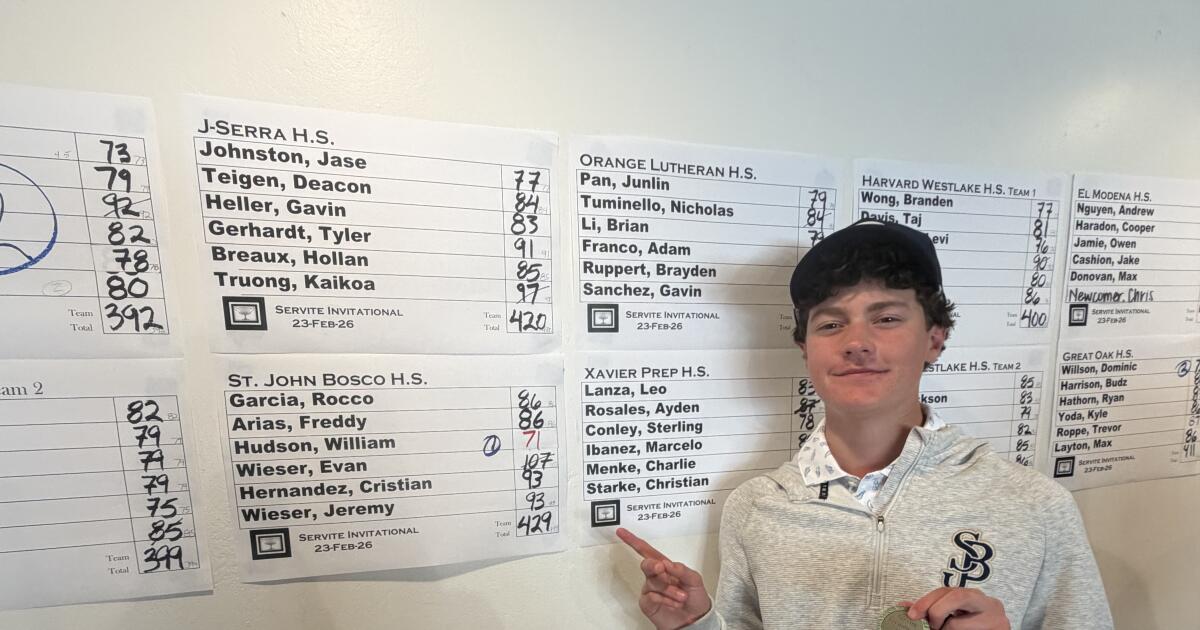
Prep talk: Freshman golfer William Hudson of St. John Bosco wins Servite Invitational

Has India’s influence in Afghanistan grown under the Taliban?

Bill Clinton to testify before House committee investigating Epstein links

Registered sex offender’s city council bid sparks fury as officials explore blocking his path

Kansas law invalidates transgender driver’s licenses and birth certificates

Florida High School Football Rankings: Top 25 teams – Oct. 21

Cleary's 21 help Le Moyne down Central Connecticut State 69-64 in OT

How old is Bo Nix? What to know about Oregon quarterback ahead of 2024 NFL Draft

99th annual Pony Swim held in Virginia

Indiana Members Credit Union announced as new anchor tenant at Bottleworks District
Has India’s influence in Afghanistan grown under the Taliban?
Bill Clinton to testify before House committee investigating Epstein links

Read Judge Schiltz’s Order

Vulnerable House Dem lashes out at Trump’s ‘racist’ SOTU challenge: ‘That was uncomfortable’

Italy calls for suspension of EU carbon market
-

 World1 day ago
Exclusive: DeepSeek withholds latest AI model from US chipmakers including Nvidia, sources say
-

 Massachusetts2 days ago
Mother and daughter injured in Taunton house explosion
-

 Montana1 week ago
2026 MHSA Montana Wrestling State Championship Brackets And Results – FloWrestling
-

 Oklahoma1 week ago
Wildfires rage in Oklahoma as thousands urged to evacuate a small city
-

 Louisiana4 days ago
Wildfire near Gum Swamp Road in Livingston Parish now under control; more than 200 acres burned
-

 Technology6 days ago
YouTube TV billing scam emails are hitting inboxes
-

 Denver, CO2 days ago
10 acres charred, 5 injured in Thornton grass fire, evacuation orders lifted
-

 Technology6 days ago
Stellantis is in a crisis of its own making