Lifestyle
Will Disneyland get an Avatar land? It's likely. Here's what else may be in store

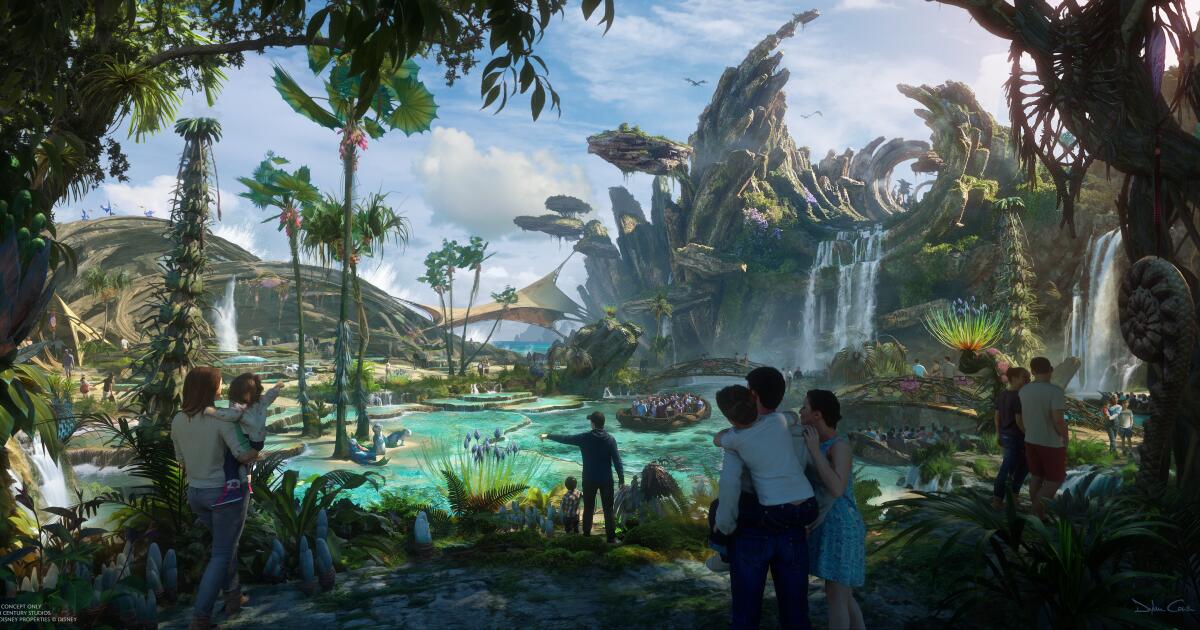
With the city of Anaheim unanimously voting to pass DisneylandForward, the Disneyland Resort will be forever changed.
Twice in the last 69 years, Disneyland has been significantly transformed. Four years after the park opened in 1959, Disneyland added its monorail, the Matterhorn Bobsleds and a submarine ride and expanded Autopia. It was a message that would begin to fulfill Walt Disney’s promise that Disneyland would never be completed.
More than that, however, it revealed that Disneyland would continue to look to the future. Disneyland in 1959 showed its guests possibilities — a transportation system in the monorail that could remake urban communities, a tease of the freeway system that would reshape travel and a glimpse at the sort of deep-sea excursions only a lucky few could witness. The Matterhorn, while inspired by the film “Third Man on the Mountain,” also was meant to be a transportive experience, to not only bring to Disneyland a new kind of thrill ride but give visitors a taste of international adventure.
Disneyland’s second reimagining came much later. In 2001 the Walt Disney Co. would open Disney California Adventure, the Grand Californian hotel and the Downtown Disney District. These additions would attempt to make Disneyland, the company’s original park, one that could, in theory, rival Florida’s Walt Disney World by becoming a resort that could demand multiday stays.
This expansion succeeded as well, but not overnight.
Dubbed DisneylandForward, the plan is not specific about what exactly Disneyland plans to build, but it asks Anaheim to relax zoning rules and give Disney flexibility to construct new rides, hotels and stores.
(DisneylandForward)
The original vision of Disney California Adventure proved to be lackluster, relying heavily on on-the-shelf rides and lacking emotion-driven experiences that take visitors out of their daily life. While the Grand Californian is a Craftsman-inspired triumph, Downtown Disney is in the midst of a transformation and is still attempting to outgrow its reputation as a home for chains and midtier eateries.
And now we’re entering a new era of possibilities, one that likely will look much different from the prior two. Modern Disney is centered on intellectual property — or IP, in corporate speak — rather than Walt-era idealism, and the most tantalizing prospects of DisneylandForward center on building around existing structures rather than erecting a new park.
With DisneylandForward, the company won the flexibility to redesign the resort. Zoning rules will be amended so that Disney can add new attractions alongside hotels on the west side of Disneyland Drive. These will, if they come to fruition, likely be extensions of Disneyland or Disney California Adventure rather than a third park. Additionally, a new shopping, dining and entertainment district can be created to the southeast on what is currently the Toy Story parking lot at Katella Avenue and Harbor Boulevard.
Company brass and the DisneylandForward materials have offered teases of what could be built. Most of these have centered on recent expansions at Disney’s international parks, such as the World of Frozen at Hong Kong Disneyland or Zootopia at Shanghai Disney Resort. There’s been little ideological talk about the future of Disneyland, as the focus has centered squarely on popular properties and franchises rather than the resort’s status as a cultural hub and gathering space.
But DisneylandForward came with a pledge. The Walt Disney Co. has promised to spend a minimum of $1.9 billion on Disneyland attractions, lodging, entertainment, shopping and dining in the next 10 years. That money can go quickly, with modern attractions costing sometimes in the high six figures, but the Walt Disney Co. also is in the midst of doubling down on its theme parks. Disney has guaranteed to spend $60 billion over the next 10 years in its experiences division, with at least half of that total dedicated to parks and resorts, according to a recent SEC filing.
It’s safe to say that the next 10 years will shape Disneyland for decades to come. While there’s much to be revealed, there are, perhaps, some safe bets. Here are a few educated guesses as to what to expect with an expanded Disneyland in the near term.
Get ready for Pandora
DisneylandForward materials reference everything from “Tangled” to “Peter Pan” to “Tron” as possible experiences that could come to Anaheim. One word, however, is missing, and it’s one that’s been regularly referenced by Disney brass in recent weeks: “Avatar.”
Disney CEO Bob Iger mentioned it at a recent shareholder meeting, even sharing the “Avatar” concept art, which was referred to as “inspirational artwork.” Josh D’Amaro, chairman of Disney Experiences, wrote in a blog post after the shareholder event that further news on Disneyland-related attractions such as the “Avatar” experience was tied to the approval of DisneylandForward.
“We are excited about the stories our guests could experience at Walt’s original theme park destination after approval of DisneylandForward — including the chance to experience all-new Avatar adventures with a visit to Pandora,” D’Amaro wrote. And last night in Anaheim, Disneyland Resort President Ken Potrock again teased “Avatar” at the DisneylandForward hearing and vote. Finally, one of Disney’s most respected theme park creatives even posted the “Avatar” concept art on Instagram, expressing the hope of sharing more on the project in the future.
Consider a large-scale “Avatar”-inspired land all but a done deal, and the art shared for Disneyland isn’t an exact replica of Florida’s Pandora — The World of Avatar, which resides in that coast’s Animal Kingdom park. Now where to put it? Expect Pandora to be bound for Disney California Adventure. There’s been speculation that it could replace the area currently served by water ride Grizzly River Run or move into a largely vacant slot of Hollywood Land, but neither is ideal. The latter requires a rerouting of the monorail, and Grizzly River Run remains a popular attraction.
Here’s betting it’s positioned in one of the DCA expansion areas near the Pixar Place Hotel, as that would allow the company to give the James Cameron property a plethora of space, especially if Disney must hide a large show building behind an illusion of floating mountains.
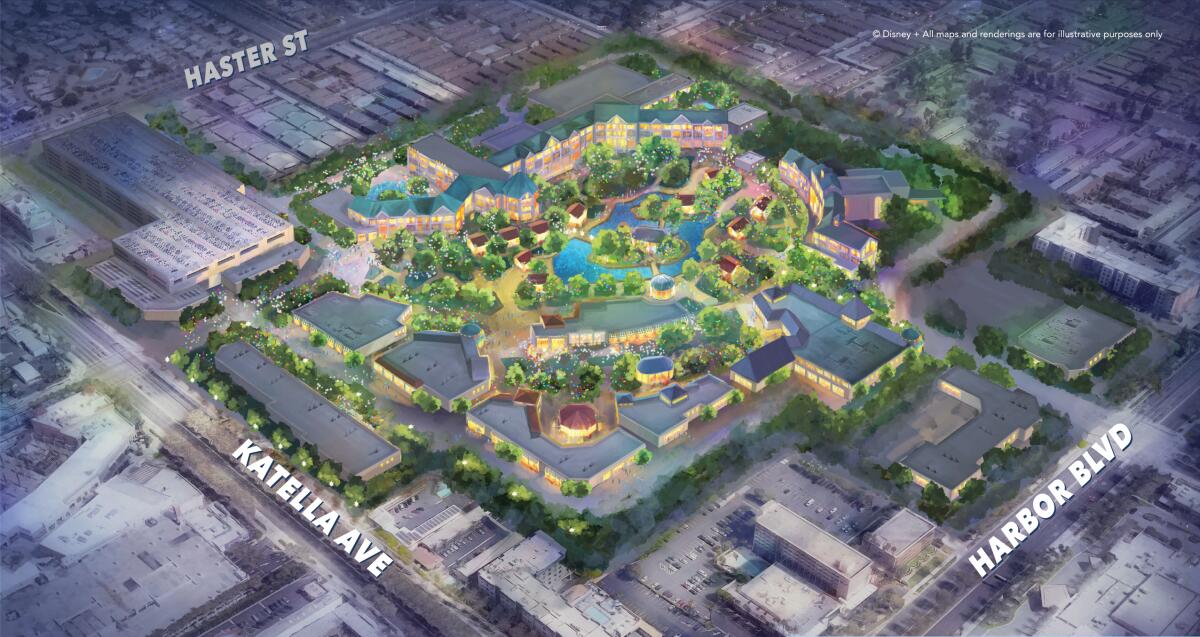
DisneylandForward concept art for a potential dining and entertainment district on the current location of the Toy Story Lot.
(Walt Disney Co.)
Expect more hotel options
With Disneyland lacking the acreage of Florida’s Walt Disney World, hotel prices in Anaheim are at a premium. Rooms for the recently revamped Pixar Place Hotel — Anaheim’s “budget” option — can routinely top $500 per night. More hotel space is needed, and if Disneyland goes all-in on “Avatar,” expect lodging and more entertainment options to follow close behind. Disney has long touted development of the Toy Story Lot as prime space for hotel, dining and entertainment modeled after Florida’s Disney Springs district.
The DisneylandForward materials mention the land as “the perfect location to cater to locals, conventioneers, hotel and Disneyland Resort guests with restaurants, hotels, live music, shopping, ticketed shows and theme park experiences.” A new proposed parking structure to the north would solve the parking issue, and Disney has done extensive research on this already, as it was part of an earlier, pre-pandemic planned development known as the “Eastern Gateway.”
Walkways to and from the new parking structure would connect the current resort to the new entertainment area. And while fans may want Disney to rapidly fill the available space with theme park attractions, if the resort is planning to increase capacity it’s first going to need a spot for those guests to park. Additionally, Iger at a recent media event said the company likely would hold back some of its theme park funds so the organization could move on the popularity of new films or franchises.
“We actually have a fairly good idea in the near term of what’s being built, but we’re purposefully not going to allocate it all,” Iger said. “Because who knows? In five years we can end up with a giant hit movie — think ‘Frozen’ — that we may want to mine essentially as an attraction, or a hotel or restaurant in our parks. So you want to maintain some flexibility.”
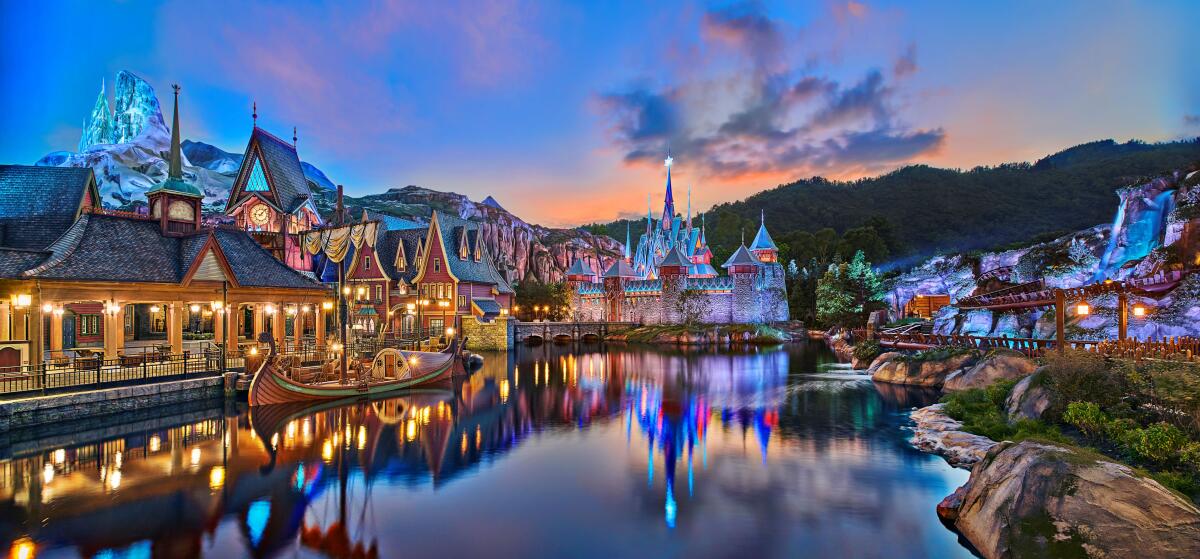
The World of Frozen recently opened at Hong Kong Disneyland. A “Frozen” experience has been teased as a possibility for Disneyland as part of DisneylandForward.
(Walt Disney Co. )
What about ‘Frozen’s’ Arendelle? Or a ‘Coco’-themed experience?
Beyond “Avatar,” which seems a sure thing as it’s been mentioned by Iger on multiple occasions, any future aspects of DisneylandForward become pure speculation. But a couple of franchises may have higher priority than others.
Disney now has a “Frozen” attraction in Walt Disney World, a land in Hong Kong and experiences in the works for Disneyland Paris and Tokyo DisneySea. Walt Disney Imagineering, the company’s secretive arm devoted to theme park experiences, clearly has done the work on bringing “Frozen” to life in physical spaces, and it stands to reason that expansions to the original Disneyland Park, with its fairy-tale feel, would go more of a Fantasyland-inspired route.
What’s more, re-creating Arendelle in the expansion plots located near the Disneyland Hotel would give Disney the opportunity to construct a second castle, as any extensive changes to park centerpiece Sleeping Beauty Castle are prohibited due to structural limitations. The enduring popularity of “Frozen” seems relatively assured at this point, so bringing the franchise to Disneyland is far from a risk.
But if the company opts to create something unique for Southern California rather than importing Hong Kong’s World of Frozen or Shanghai’s Zootopia, one franchise that seems to be routinely brought up by executives is “Coco.” When mentioning blue-sky concepts last year year at an investor event in Florida, D’Amaro teased “Coco” as a key film that has yet to be properly explored in the Disney parks.
Potrock again mentioned “Coco” in an op-ed in the Orange County Register touting the benefits of DisneylandForward, writing that the initiative could pave the way for “the chance to celebrate Dia de Los Muertos in a ‘Coco’-themed experience.” Disney California Adventure, of course, is home to a Dia de Los Muertos celebration that does center a short “Coco” show, and the property seems especially ripe for Southern California and our heavily Latino communities. That makes it an opportunity to give Disneyland an unique land not found in other parks while also tapping into the region’s diverse fan base. Walt’s original park deserves no less as it looks ahead to closing out its first century.


Once rivals on the tennis court, Martina Navratilova, left, and Chris Evert have become close friends in retirement. They are pictured above at the French Open in 1986.
Trevor Jones/Getty Images Europe
hide caption
toggle caption
Trevor Jones/Getty Images Europe
Chris Evert and Martina Navratilova were the most successful women’s tennis champions of their generation. Both were 18-time Grand Slam tournament winners — and each other’s greatest rivals.
Evert, a Florida native, became a tennis star in her teens. Navratilova was born in communist Czechoslovakia, and emerged as a player after Evert was established. They first faced off during a match in Akron, Ohio, in 1973, when Evert was 18, and Navratilova was 16. Evert won, but Navratilova left an impression.
“I remember thinking to myself, holy cow, when this young girl gets into better shape, she is going to be a force to be reckoned with,” Evert says. “She had so much talent. Her hands were quick, she had a big first serve, she had a big forehand, and she just was so powerful.”

Two years later, on the day she lost a semifinals match to Evert at the U.S. Open, Navratilova defected to the U.S. In the years that followed, her tennis game improved. Though she and Evert had initially been friendly, the friendship cooled as their rivalry heated up.
“Playing Chris was difficult because how can you not like Chris? What’s not to admire?” Navratilova says. “She was like the epitome of cool.”
The new Netflix documentary Chris & Martina: The Final Set tells the story of how Evert and Navratilova re-established their friendship and how they both faced cancer in retirement. Evert was diagnosed with ovarian cancer in 2021; Navratilova was diagnosed with throat and breast cancer in 2022.
“I can’t get away from her,” Evert jokes. “We had a 15-year career, and then we got cancer at the same time. It really is freaky, but I always say: If I want someone to be in the trenches with me, it’s Martina because she has been so supportive and so understanding.”

Navratilova agrees: “We have such a level of trust that we know whatever we say to each other, it stays there. We give each other the best advice we know how to. And there is no ulterior motive, no playing games.”
At the time that this interview was taped, Evert and Navratilova were both in remission from cancer. But late last week, Evert disclosed she’d recently been diagnosed with a recurrence of ovarian cancer.

“We know whatever we say to each other, it stays there,” Martina Navratilova says of her friendship with Chris Evert.
Netflix
hide caption
toggle caption
Netflix
Interview highlights
On supporting each other through cancer
Evert: There are a lot of phone calls between us. … I don’t cook, but Martina would bake bread for me, and her wife Julia would cook, make some chicken soup. … I got a lot of food from Martina. She got a necklace from me.
Navratilova: I get jewelry from Chris, she gets food from me.
Evert: Martina’s and my relationship — because we’ve had one for 50 years — is not the type where we have to talk to each other every day to maintain the closeness. I always knew she was there. She always knew I was there if we needed to talk, and that was that.
On the weakness they experienced with cancer
Navratilova: Chris’ diagnosis and treatment was much more life-threatening than mine, percentage wise, but my treatment was more difficult physically. … I was in New York for seven weeks and I literally sat on a yoga mat, maybe half an hour of the seven weeks, and did some stretching. I couldn’t even do the down dog pose because I would have fallen down. I had absolutely zero strength left.
Evert: The chemo kicked my butt, let’s put it that way. … It left me very weak, very, very weak. After chemo I would have three or four days of intense nausea and I just would feel tingling in my body and it just wasn’t nice. I didn’t have the energy. To walk six blocks was a big deal for me. And it was foreign. You know, it felt like it wasn’t my body, for sure.
On watching the old footage of their matches together for the documentary
Navratilova: For me, it was fun watching with Chris, because we had different reactions to what happened on the court. But what impressed me is how well we played with those wooden rackets. Because you know what? Those rackets are not easy to play with. But you try to put yourself in there physically, what it was like, mentally, what it is like. And it’s like, “Oh, I should have gone down the line,” or, “I can’t believe I missed that shot.” Or “Chris, you had such a great pass.” It was amazing. So it was impressive. … I wish I could still have that six-pack, but anyhow.

Evert: I remember feeling genuinely happy for her. I remember it was her first Wimbledon. That’s always been her dream since she defected. Her family couldn’t be there to watch her. She was all alone. And I just was happy for it. And I knew that this was gonna be one of many for her to win.
On defecting to the U.S. in 1975 when she was 18 years old
Navratilova: I was thrilled to be in the States. I always loved American cars. And when you ordered a ham sandwich, you got, like, two inches of ham and two slices of bread. Whereas growing up, you had thick bread and one slice of ham. So I thought I was in heaven. And it was $2.30 for that sandwich. I still remember it. I couldn’t believe how much ham I was getting.
Lauren Krenzel and Nico Gonzalez Wisler produced and edited this interview for broadcast. Bridget Bentz, Molly Seavy-Nesper and Beth Novey adapted it for the web.


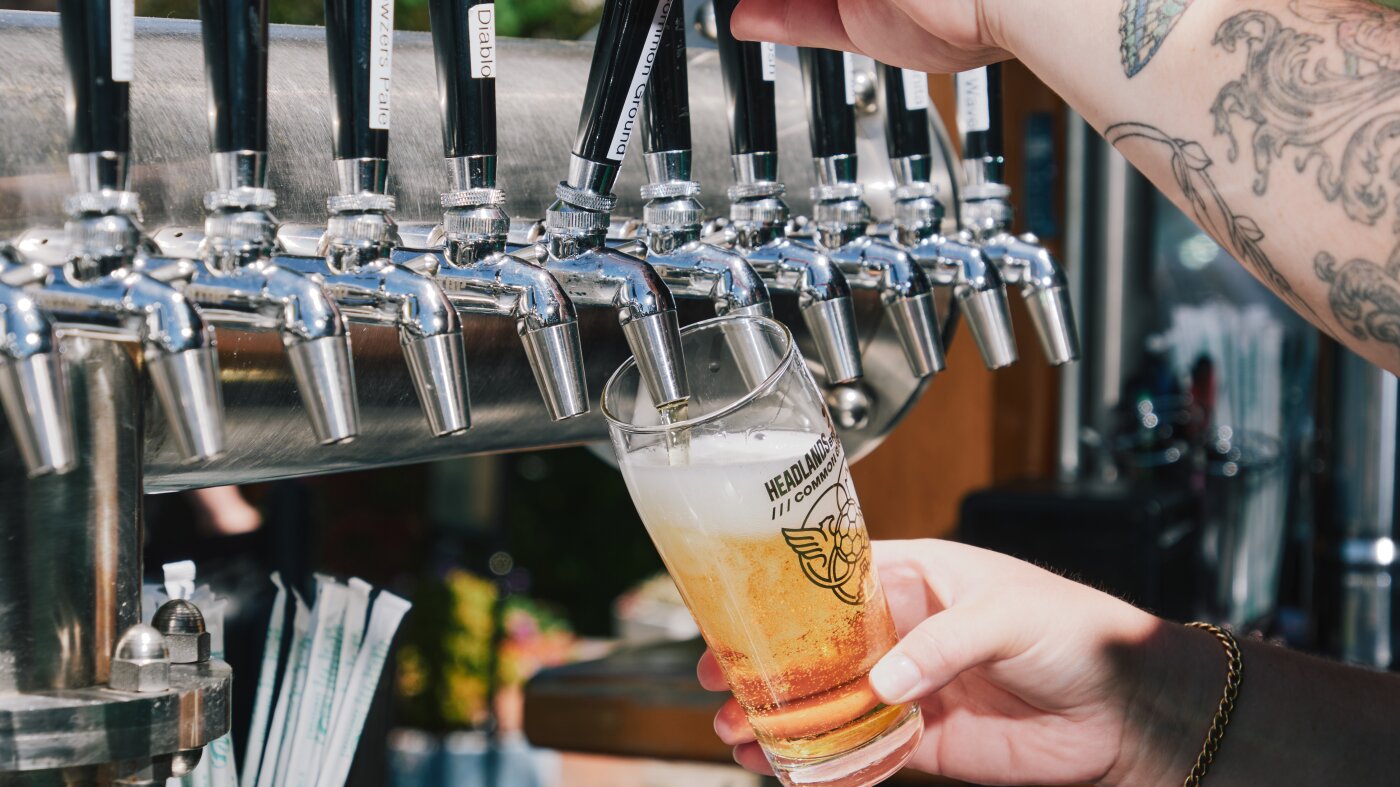
Headlands Brewing launched its World Cup-themed beer Common Ground ahead of the first World Cup game in June.
Justin Gellerson for NPR
hide caption
toggle caption
Justin Gellerson for NPR
The British betting company William Hill predicts that soccer fans will throw back more than 5 million pints of beer in stadiums and fan zones during this year’s World Cup. And that number doesn’t even account for the millions of pints being poured in bars as fans tune in to the global soccer event.
But while international soccer crowds are focusing on goals and penalties, a trio of craft breweries from the tournament’s three host nations are using the tournament to brew something increasingly rare: cross-border solidarity.

A shared recipe with local spin
The collaboration began months ago over a flurry of video chats and emails. The beermakers at Rey Árbol Brewing Co. in Mexico, Headlands Brewing in the United States, and Cabin Brewing Co. in Canada set out to design a single, unified recipe representing the brewing traditions of all three nations.
“It’s a Mexican lager,” said Alejandro Gomez, founder of Rey Árbol.
“That’s like a West Coast IPA,” said Ryan Frank, chief operating officer and brewmaster for Headlands.
“And up in Canada, most of our beers are hop driven,” said Haydon Dewes, co-founder of Cabin. “So we thought, let’s go for a dry-hopped Mexican lager.”
While all three breweries share the exact same recipe, each is giving the final product a distinct local spin, including unique, regionally designed labels. A four-pack of the U.S version costs $15.99. Frank said Headlands has produced about 130 cases of the limited-run brew.
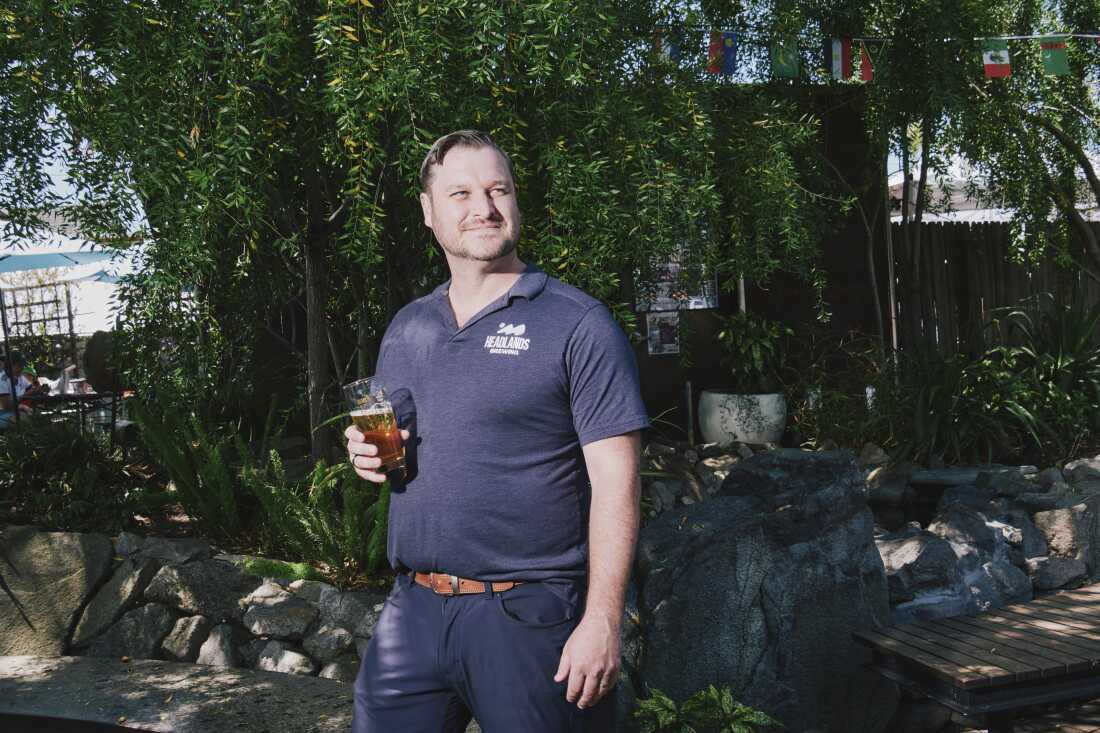
Headlands Brewing COO and brewmaster Ryan Frank drinks a Common Ground beer in Berkeley, Calif., on June 11.
Justin Gellerson for NPR
hide caption
toggle caption
Justin Gellerson for NPR
For the brewers, however, the project is less about marketing and more about connection: They named the multinational beer “Common Ground.”
“When I go to California or Canada, they will treat me like family,” Gomez said.
“It makes the world feel so much smaller,” said Dewes.
“It’s about building bridges and knowing what’s important in life,” said Frank. “And for us, that’s soccer and beer.”
Geopolitical friction in the taproom
The official rhetoric surrounding World Cup 2026 mirrors the brewers’ optimism, with promotional materials promising a tournament where billions are “united as individuals, united as billions.”
Yet this idealistic messaging stands in sharp contrast to a prickly geopolitical reality. Tensions between the U.S., Mexico and Canada have mounted over trade tariffs and auto manufacturing standards as the three nations renegotiate long-standing trade agreements.
The independent brewers behind Common Ground are feeling that friction firsthand through the rising costs of aluminum cans and raw ingredients.
“There are 15% tariffs slapped on any European-grown hops, which are really critical to some of our core brands,” Frank said.

Headlands Brewing brewmaster Ryan Frank and CEO Austin Sharp share a Common Ground beer in Berkeley, Calif., ahead of the first World Cup game on June 11.
Justin Gellerson for NPR
hide caption
toggle caption
Justin Gellerson for NPR
The political discord hasn’t just been confined to trade boards.
When signing an executive order to establish a White House Task Force for the World Cup in March 2025, President Trump suggested that cross-border hostilities might actually benefit the tournament. “Oh, I think it’s gonna make it more exciting,” the president said.
A bittersweet reminder
Tension on the soccer field is one thing; between nations, it’s another.
“It’s true that when it comes to the actual soccer, we’ve developed a very healthy, vibrant rivalry between the three countries,” said Andrés Martinez, the author of The Great Game: A Tale of Two Footballs and America’s Quest to Conquer Global Sport and co-director of Arizona State University’s Great Game Lab, which studies the intersection of sports, media and geopolitics. “But we’re also linked together in this very symbiotic relationship.”
Martinez said that when the U.S., Canada and Mexico initially launched their collaborative bid to host the World Cup back in 2017, the political climate was warmer.
“It was meant to showcase these tight bonds that had developed between the three countries,” Martinez said.

The makers of Common Ground used a shared recipe, but all created their own distinct packaging for the beer: Canada’s Cabin Brewing Co.; Mexico’s Rey Árbol Brewing Co.; the United States’ Headlands Brewing.
Cabin Brewing Company, Rey Árbol Brewing Company, Headlands Brewing
hide caption
toggle caption
Cabin Brewing Company, Rey Árbol Brewing Company, Headlands Brewing
But relations have soured since then, making cross-border business collaborations like Common Ground an anomaly rather than the norm for this tournament.
“To see craft beers across the three countries coming together like this, it’s a bittersweet reminder of what we were hoping to see a lot more of,” Martinez said.
Finding the real common ground
If trade wars and political posturing are looming large in Washington, D.C., Ottawa and Mexico City, they feel a world away at Headlands Brewing’s busy North Berkeley location.
As fans gathered to watch a crucial match between Mexico and South Africa at the start of the tournament, the sunny patio erupted into cheers and shrieks of “Goal!” when Mexico found the back of the net.

Headlands Brewing hosts a screening of the first World Cup game on June 11 in Berkeley, Calif.
Justin Gellerson for NPR
hide caption
toggle caption
Justin Gellerson for NPR
Hovering over a pint of the collaborative brew, soccer fan Roberto Mandujano reflected on the cross-border experiment.
“Three different ways, three different taste buds come together to make something cool,” he said.
When asked about the underlying political tensions between the host nations, Mandujano shrugged off the discord.
“We live in a world where everyone wants to make everything political,” Mandujano said. “But I think we’re all here for soccer. So I guess that’s the common ground.”
-

 World3 minutes ago
DR Congo says 1,307 Ebola cases confirmed, including 377 deaths
-
 News28 minutes ago
Michigan governor threatens to pull troops from D.C. if used for Trump task force
-

 New York2 hours ago
Metropolitan Diary Challenge Day 2: How to Write Your N.Y. Story
-

 Los Angeles, Ca2 hours ago
Company has weeks to complete cleanup of Boyle Heights warehouse fire, officials announce
-

 Detroit, MI2 hours ago
18 New Kid-Friendly Places That Opened in Metro Detroit in 2026 (So Far!)
-

 San Francisco, CA2 hours ago
Anza expedition celebrates 250th anniversary in San Francisco
-

 Dallas, TX2 hours ago
Preston Hollow residents oppose proposed $800 million mixed-use development in Dallas, survey reveals
-

 Miami, FL3 hours ago
Bradley Beal to Miami Heat rumors draw skepticism

