Lifestyle
What is it like to live in an L.A. hotel? Here’s a glimpse

This story is part of Image’s April issue, “Reverie” — an invitation to lean into the spaces of dreams and fantasy. Enjoy the journey.
On the afternoon of Sunday, Feb. 25, I drive to West Hollywood to spend a night at a hotel. I want to imagine what it would be like to live in one. There is too much noise in my head, and I am trying to clear it. I keep picturing a clean, fresh hotel room, a kind of blank slate — a chance to start anew, step into another life. I decide to keep a time log and write a diary entry for the 19 hours I am about to spend living out this experiment.
3:10 p.m.
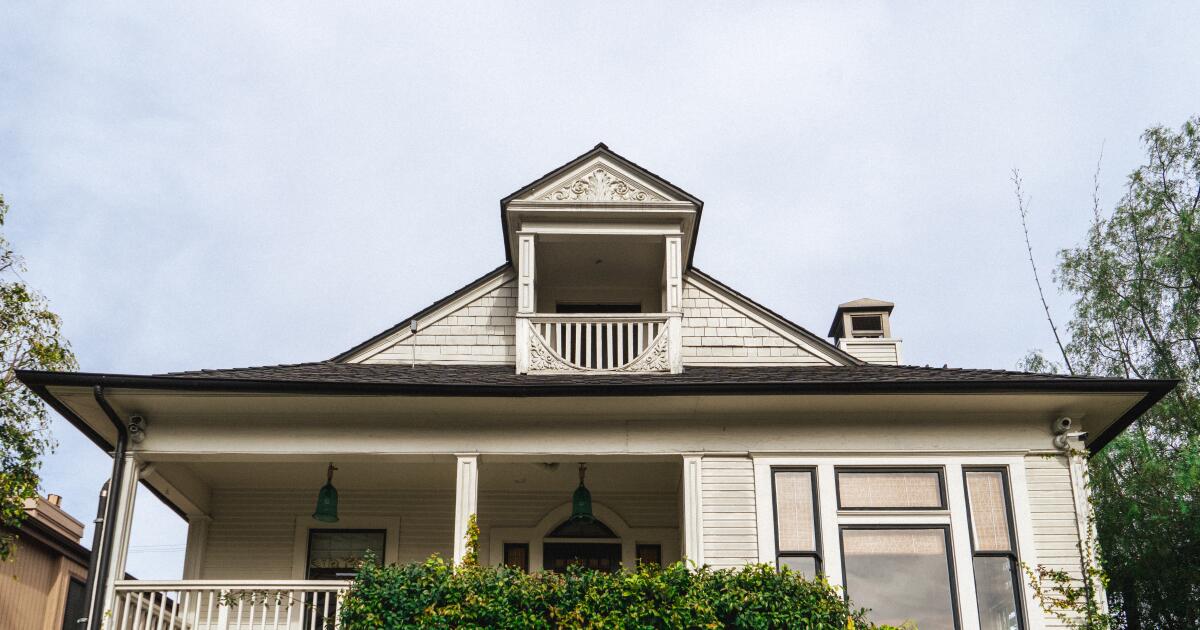
I arrive at the hotel. It is called Hotel 850 SVB, a name that I have a hard time remembering and sometimes call SVB 850 when I tell friends. One of them observes that it sounds like a vaccine. SVB stands for San Vincente Boulevard. The hotel is a white wooden house covered in green vines. In the early 1900s, it housed railroad workers who were building a railroad between Hollywood and Santa Monica boulevards. In 2018, hotelier Jeff Klein, the same owner of the Sunset Tower Hotel and the private club San Vicente Bungalows, opened Hotel 850 SVB, a hotel he has described as having “a soul, like a beautiful home.”
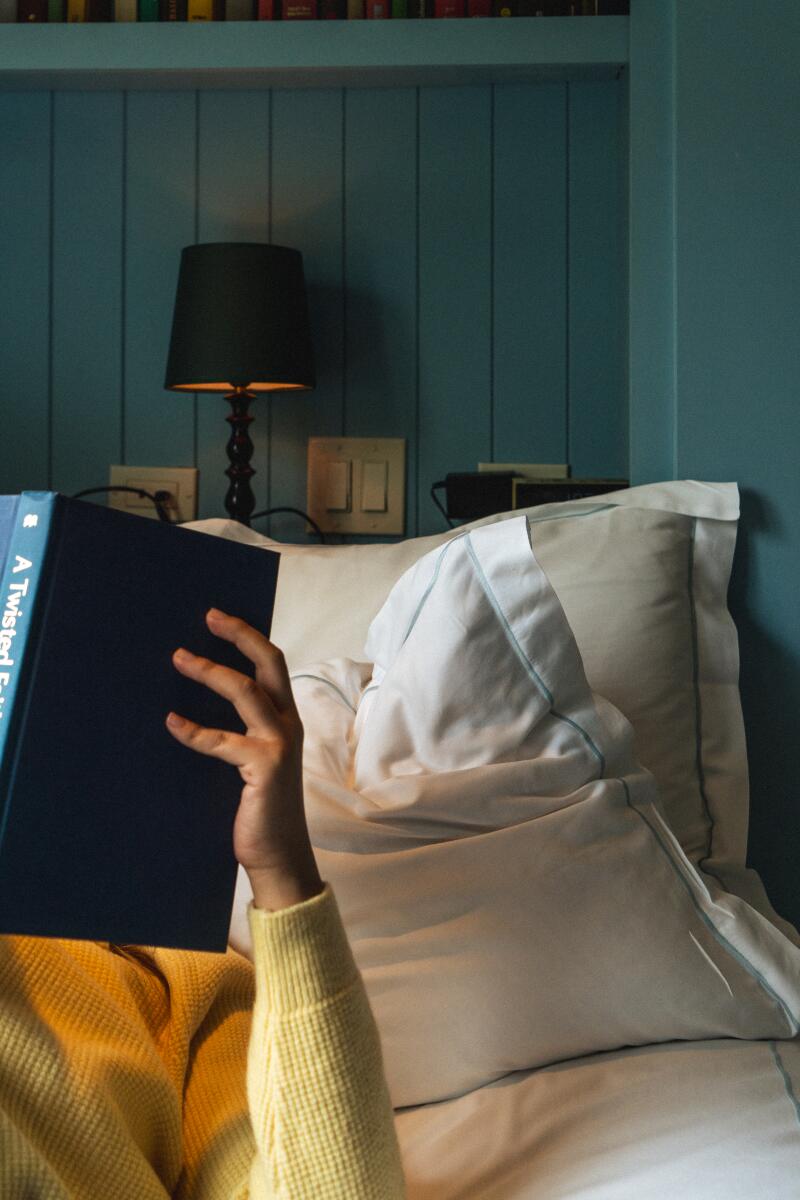
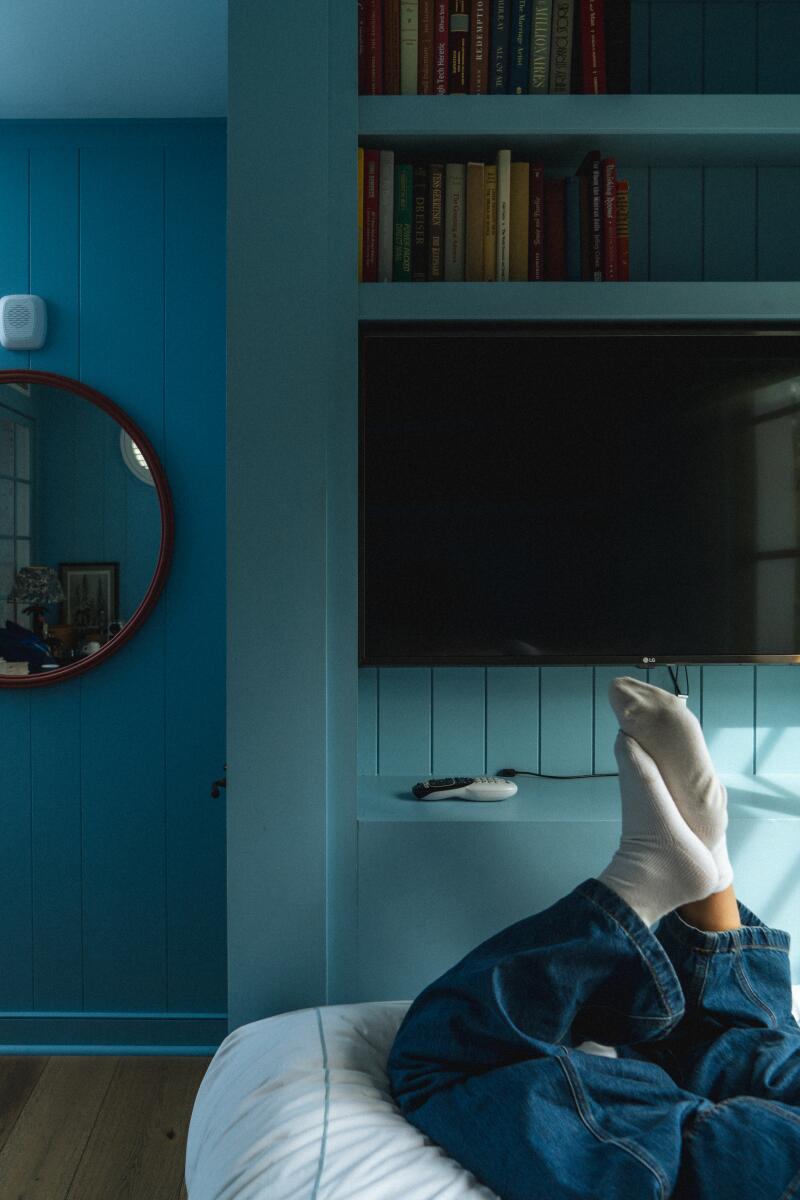
A bellman named Winston checks me in. He welcomes me to “Hotel 850.” I have booked the Carriage Room, inspired by the carriage houses designed to fit single horse-drawn carriages. It’s the room that books up fastest, perhaps because it is the cheapest, but it is also the most charming, with its walls all painted blue and bookshelves framing the bed.
When I walk into my 200-square-foot room, I take off my shoes and put on the white hotel slippers. The things I encounter in the room give me ideas and expand the possibilities of what I can do: do yoga before bed on the blue mat, iron my shirts (which I never do), drink a bottled 1934 Cosmo for $18, read books with names like “The Millionaires.” Maybe it’s all that blue or the circular window, but when I lie on the bed, I feel like I’m on a ship.
4 p.m.
I realize it sounds silly to say I’m living in a hotel for less than 24 hours. Most people who’ve claimed to live in hotels have done so for at least a few months or often years. In this town, those people are often actors who come to stay for transient periods of time for film productions or simply like the luxuries of a hotel. Marilyn Monroe lived on and off at the Beverly Hills Hotel ; a TikTok video says the hotel still sprays her suite, 1A, with Chanel No. 5 to summon her scent. Elizabeth Taylor lived for a year at the Hotel Bel-Air. Robert De Niro, Keanu Reeves and Lindsay Lohan all lived at Chateau Marmont. Lohan was staying at the Chateau while playing the role of Taylor in “Liz & Dick” when she was apparently forced out by hotel management after 57 days for not paying her bill of $46,350.04. I prefer a story I find in the Daily Mail that says Katharine Hepburn checked into Chateau Marmont with a luggage of men’s clothes, “wearing an eye patch.”
4:45 p.m.
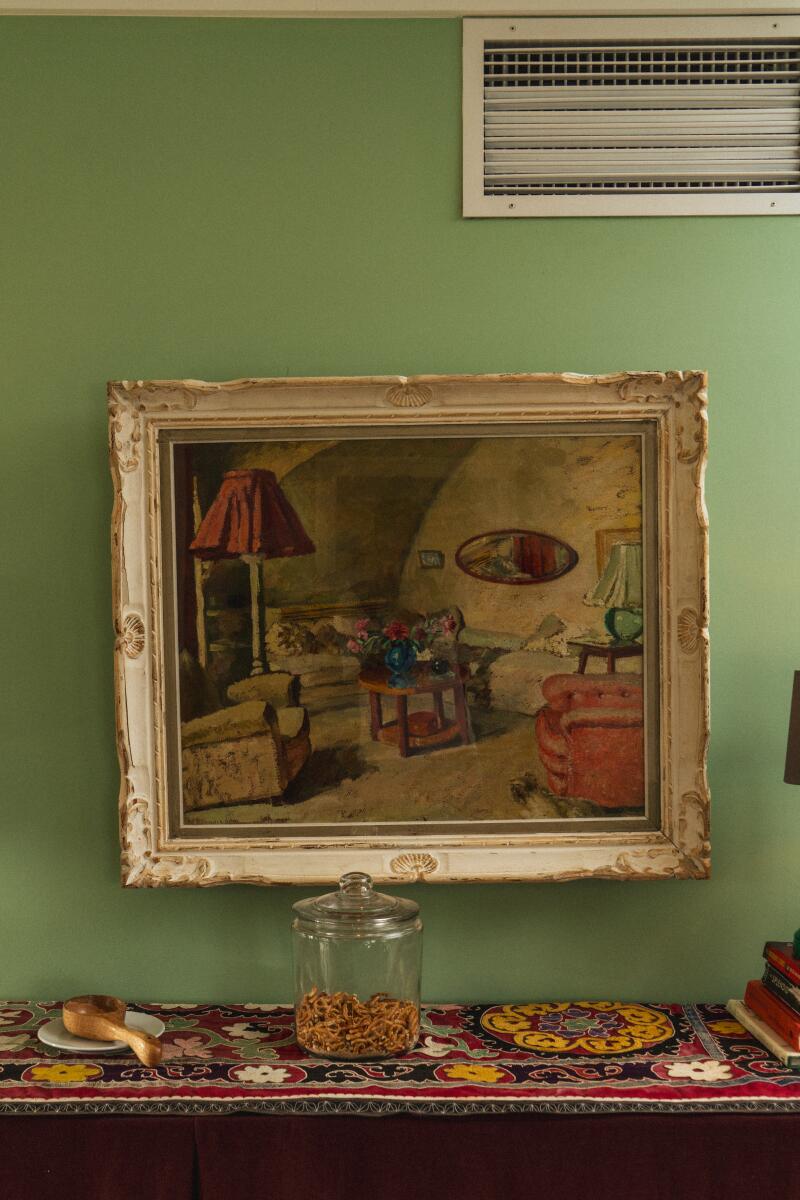
I walk out to the hotel lounge area, which is on the same floor as my room, in my slippers. The lounge is more like a living room, with mismatched couches, Louis Armstrong playing in the background, and a glass jar with pretzels for the taking. Any time a guest exits their room and comes to the lounge to grab a water or sit on the patio, I say hello. I receive a few smiles from these strangers but never hear their voices in exchange. I think I see an actor I recognize. I Google: older white actor who wears round glasses. Pictures of John Lennon populate.
A housekeeper wearing a baby-pink dress says hello and asks me how I am. She elegantly lays out the complimentary happy hour drinks on the dining room table that’s already adorned with a vase of purple orchids. After she is finished, I take an authentic Bavarian beer from the metal bucket filled with ice. I flip through Variety magazine. Four sips in, I’m given the illusion of suddenly being on vacation. I am relaxed, charmed by the chair to my right covered in a print of violet flowers.
The hotel guests here are not like those I read about who lived at famed hotels. They are not like the ones at the Chelsea Hotel in New York who were bohemian, wrote songs and plays, did drugs in the bathrooms and started fires. “They just let anybody in over there, that hotel is dangerous,” Andy Warhol wrote in his diary about the Chelsea Hotel in October 1978, “it seems like somebody’s killed there once a week.”
A hotel is a house where you can misbehave (or at least give in to what you wouldn’t do) and indulge in the out of the ordinary. Ideally this doesn’t involve killing someone. The classic example is the “Eloise” books, where a 6-year-old girl lives at the Plaza Hotel and drinks Champagne and gin, wears furs, eats meringue glacée and watches TV with a parasol “in case there’s some sort of glare.” (Eloise might have been based on Liza Minnelli, who lived in hotels with her mother, Judy Garland.) Maybe it’s because I’m 33, or because Hotel 850 is made to look like an eccentric aunt’s house, but rather than dreaming of debauchery, I’m looking at the red striped armchair and imagining what it would look like in my living room. I’m imagining the day I have walls tall and big enough to hold a vintage poster like the one in the room. I’m in a hotel, playing house.
5:25 p.m.
The truth is I did live in a hotel once. When my family moved from Brazil to Miami when I was 14 years old, we lived at the Sonesta Hotel for three months. I made new friends in high school by inviting them over for slumber parties that involved ordering movies on demand and room service. Aside from that, there was nothing too remarkable about the experience, and after a while, we got tired of the bland furniture.
I think I would get less tired of the furniture here. The designer, Rita Konig, deliberately resisted “beige and boring” hotel aesthetics. In my room — because it is now my room — there is a table lamp with a giraffe for a base. It is a lamp that Konig replicated from her own home.
6 p.m.
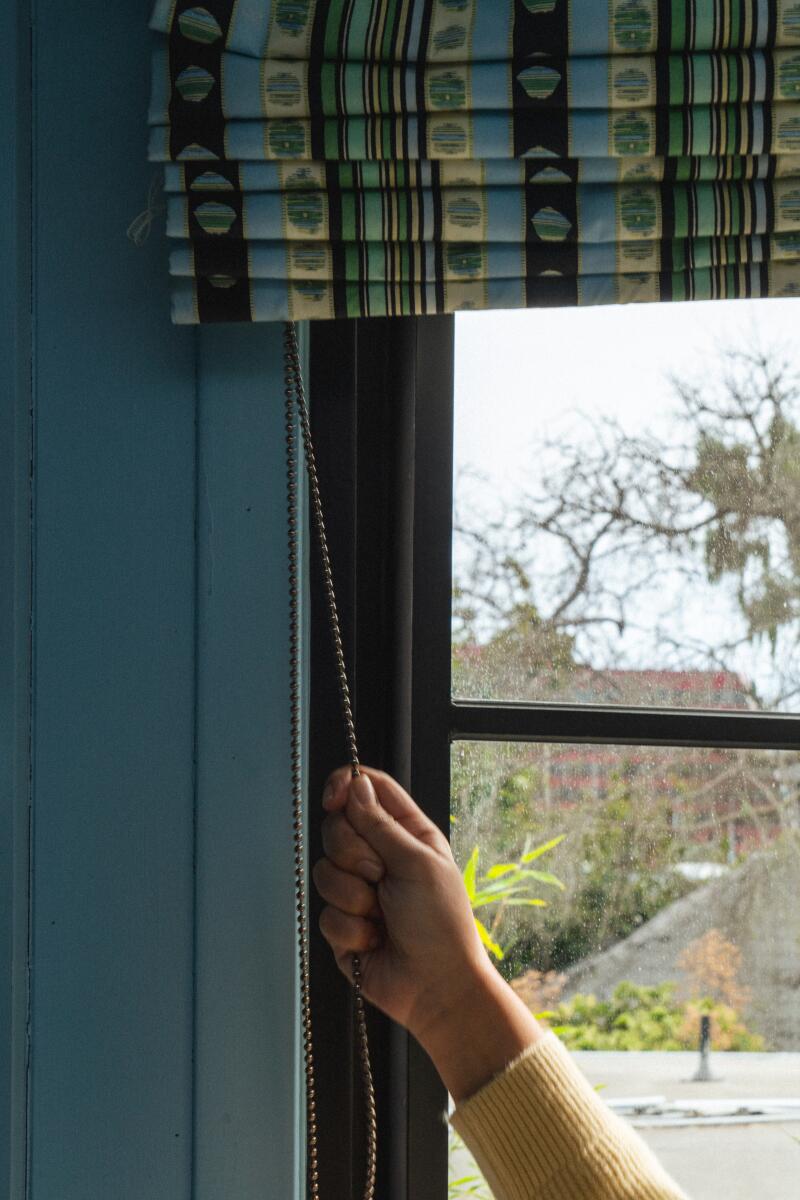
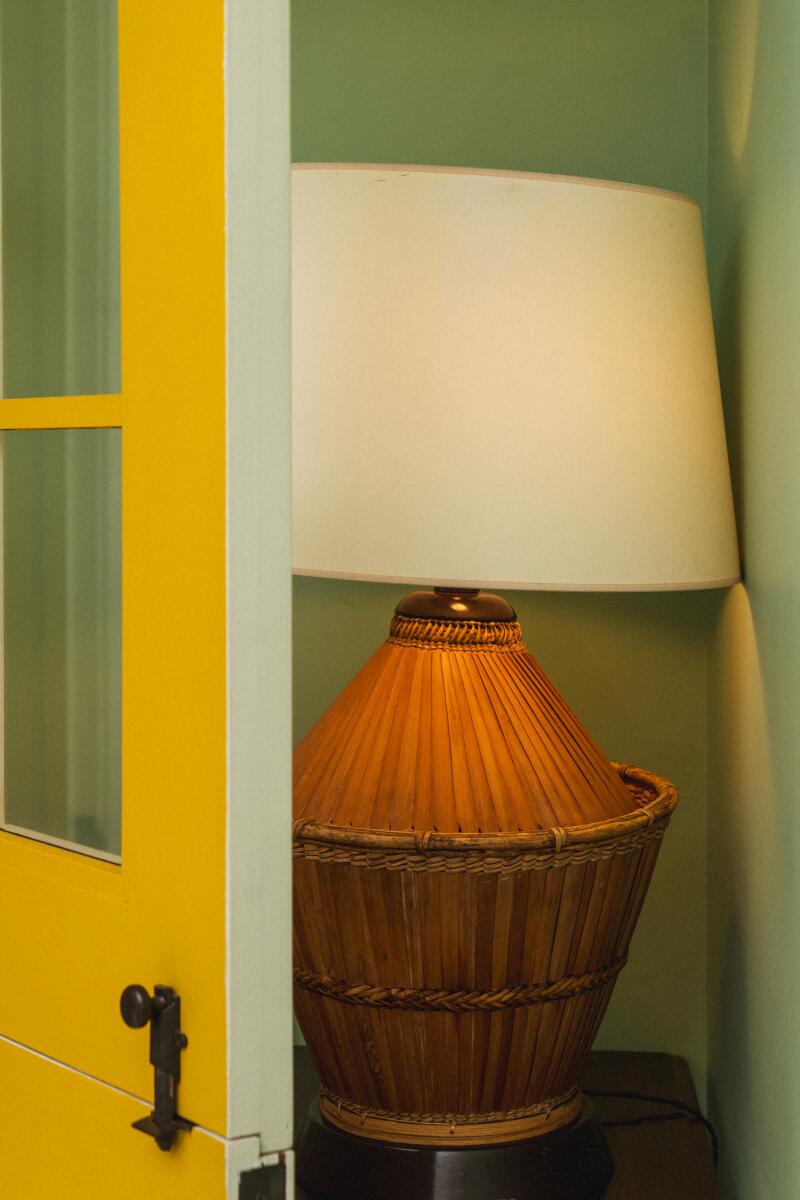
In the days leading up to my stay at Hotel 850, I read “The Hotel” by Sophie Calle, a book documenting the week the artist spent working as a chambermaid at a hotel in Venice, Italy. Each time she cleans a room, she fusses through the guests’ belongings and photographs them: a stethoscope and rosary on the bedside table, a torn-up postcard, a lobster claw under the bed sheets, a pair of black heels in the trash, white underwear hanging to dry and diaries detailing “excellent lasagna,” hot baths, small bridges and good soup. She lets the objects speak for themselves but admits when she is “bored” by her findings.
I go back to my room to get ready to leave for dinner. I imagine what Calle would see and fixate on: that I brought three pens in different colors (green, pink and blue), that I color-coordinate them in my agenda (“dry cleaning” is in blue, “pick up pie” is in green, “6:30 p.m. massage” is in pink), and that I use hand cream that’s a blend of mandarin, lime, geranium and rosemary. She would note that I wear contacts, comb my hair in the shower and take thyroid medication. I want her to be interested in me but I don’t think she would be.
8 p.m.
I end up, unintentionally, at another hotel for dinner, where the bartender explains to me that the red, green and white dollops on the flatbread represent the Lebanese flag. Later, I eat Meyer lemon ice cream and share the sidewalk with one of those delivery robots for restaurants; it outpaces me. It is Sunday in WeHo, which is to say, it might as well be Saturday, and a bar is playing a techno remix of “Respect.”
When I come back to my room, I write this diary entry as if I am a tourist, registering my evening in L.A. When you’re traveling and staying at a hotel, every detail becomes important and worth recording. Life is finally observed and savored.
8:30 p.m.
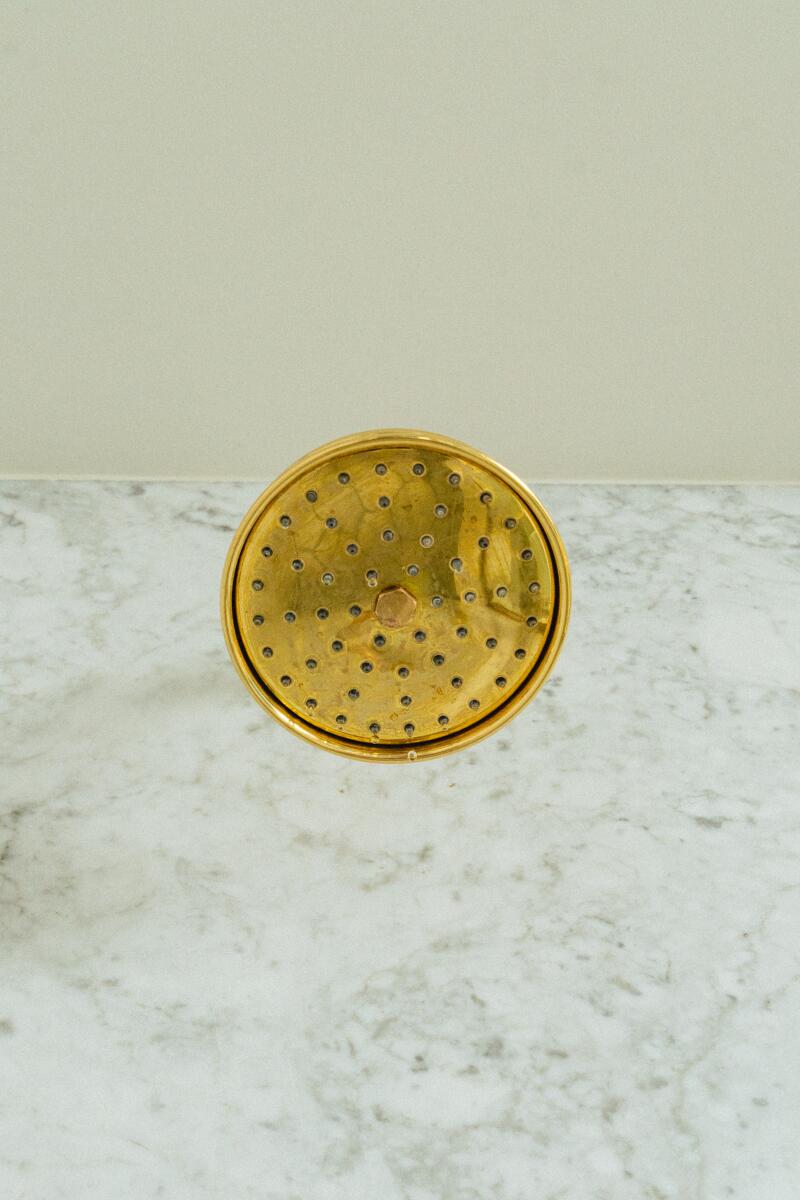
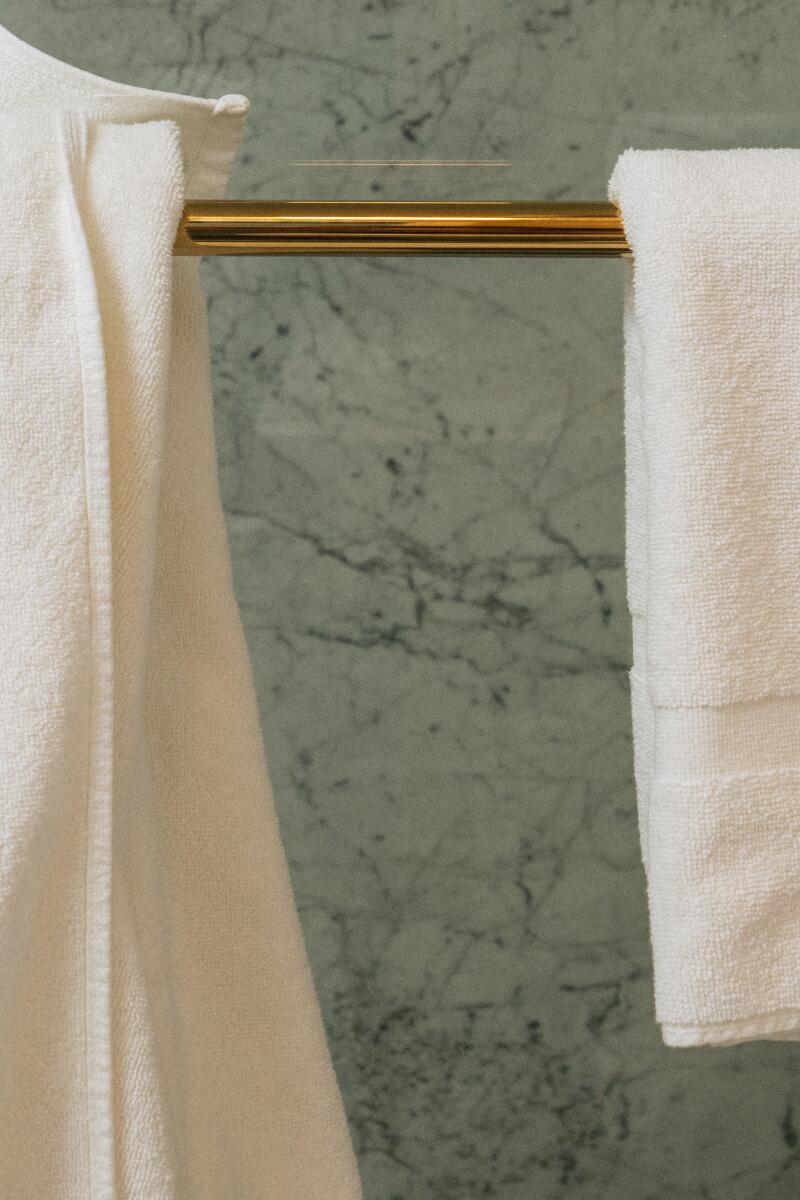
I shower — admittedly it’s the moment I am looking forward to the most, when I get to test out the little shampoos and conditioners and liquid soaps. The shower products are all lemon-scented, and the body lotion is a strong rose that takes me several strokes to blend into my skin. There is a poet named Adília Lopes who likes to use hotel bath products at home because it gives her the sensation of being in a hotel without leaving her home. The containers at Hotel 850 are too big for taking; they are not souvenirs.
Winston, the bellman, had mentioned in passing that I would be most welcome to make myself some tea at night in the shared kitchen. Since I somehow feel that this is an experience not to be missed, I go to the all-yellow kitchen to make myself rooibos tea. I am shy about being caught in my pajamas, so I wear my coat.
Maybe the moment I am looking forward to the most is actually getting in bed, slipping my bare feet under the freshly ironed sheets. I do this while I drink my rooibos tea and watch a boring episode of “Friends.” If I could steal one thing from a hotel, I think it would be the sheets.
8:30 a.m.
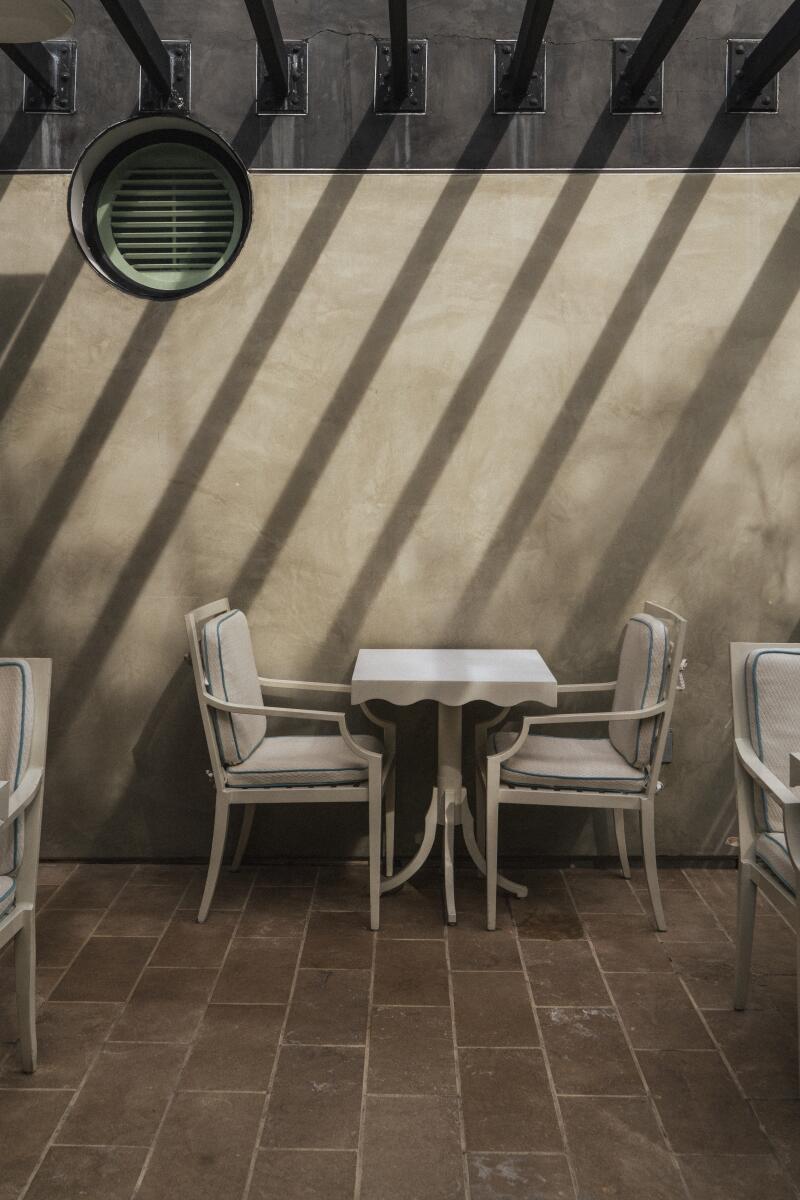

At breakfast, there are three Frenchmen. One of them is upset because he woke up at 6 a.m. While I eat my yogurt, I fantasize that if they ask me where I’m visiting from, I will lie. I decide I will tell them I am visiting from New York, that it is my first time in Los Angeles. But they never ask me. I begin to wonder what would happen if I stayed longer, what persona I would gradually adapt, what alternate life I would build.
But I have to check out and head to work. Before leaving my room, I do one last scan. I never did the yoga or ironed my clothes or drank the Cosmo.
“Safe travels,” the bellman says on my way out. I drive home.



Now you can pair your big show with dinner and a more intimate listening experience. The Hollywood Palladium, an Art Deco music venue graced by performers like Frank Sinatra, Richard Pryor, Jimi Hendrix, Lady Gaga and Jay-Z since 1940, has debuted a swanky lounge known as Vinyl Room.
Inspired by 1970s Japanese high-fidelity (hi-fi for short) listening rooms and operated by entertainment company Live Nation, it’s a space where concertgoers can have dinner, grab drinks and catch a vinyl DJ set before, during or after their ticketed event in the same venue.
With a name like Vinyl Room, you can expect to see vinyl records everywhere.
“You’re in [for] a whole night of music,” says Geni Lincoln, president of the California region for Live Nation, adding that her team put “so much thought” into the sound and design of the space, which was in development for more than two years.
“I’ve been coming to the Palladium since I was a teenager, so it’s really special to see,” she says.
Entering Vinyl Room feels like you’re stepping into a secret speakeasy for music lovers, one with iconic music memorabilia, a thoughtful food menu and premium sound quality. Want to check it out? Here are five things to know.

Everything inside of Vinyl Room is inspired by the sounds and the musicians who’ve played at the Hollywood Palladium since 1940.
1. Vinyl Room is exclusively open to members and concertgoers with an upgraded ticket
Vinyl Room is open only on Hollywood Palladium show nights, starting 90 minutes before doors open, and remains open one hour after the concert. Admission is limited to concertgoers who purchase a ticket upgrade, which starts at $35. Early reservations are recommended.
Vinyl Room also offers annual membership packages, which start at $2,000 and come with various benefits such as complimentary guest passes to Vinyl Room, access to an exclusive menu, valet parking, table reservations inside the lounge, a dedicated private entry, complimentary coat check and concert ticket credits.

Tip Dunn, also known as DJ tenSpeed, played records during opening night at Vinyl Room at the Hollywood Palladium.
2. Hi-fi is having a moment in Los Angeles — and Vinyl Room delivers on sound quality
From Common Wave Hi-Fi in Boyle Heights to Slow Jamz Gallery in the Arts District and Gold Line bar in Highland Park, hi-fi — a 1950s term used to describe the high-quality reproduction of sound — venues and experiences have been slowly popping up around L.A. over the last few years. Vinyl Room joins a short list of places where audiophiles can go to listen to music on hi-fi equipment, which many argue is the best way to experience it.
Much like the Hollywood Palladium, which is known for its top-tier sound, Vinyl Room also makes sound a priority. The lounge utilizes hi-fi sound equipment including Master Sounds Clarity-M speakers to ensure that the records sound as crisp as possible. Live DJs spin records on a set of turntables, which helps to create a richer and more analog sound that is closer to the original track than compressed versions such as MP3s.

Ruthie Embry, vice president of architecture and design at Live Nation, says the records and other memorabilia inside the space “connects you directly to the venue’s history the second you walk in the door.”
3. All of the decor ties back to music and the Hollywood Palladium’s rich history
With a name like Vinyl Room, you can expect to see vinyls everywhere. Records line most of the walls and shelves, drinks are served on vinyl-shaped coasters and tables and light fixtures are designed to the theme. There’s even vinyl wallpaper in the photo booth. In one corner of the lounge, you can dig through records under a neon sign that reads, “But have you heard it on vinyl?”
Ruthie Embry, vice president of architecture and design at Live Nation, says the records and other memorabilia inside the space “connects you directly to the venue’s history the second you walk in the door.”
Some standout items include a Red Hot Chili Peppers show flier, a Hollywood Palladium postcard signed by late musician and host Lawrence Welk and a photo of late singers Bonnie Baker and Orrin Tucker at the venue. Even the bathroom creates a memorable photo moment: The stalls are filled with photos of musicians and an “on air” studio sign lights up when a stall is occupied.

Vinyl Room’s menu, created by Chef Ryan DeRieux, is inspired by Asian flavors and includes items like the “Vinyl Roll,” which is made with spicy tuna.
4. Don’t worry about dinner plans before or after the show. Vinyl Room has got you covered
Eliminating the need to find a pre- or post-show restaurant, Vinyl Room has a full Asian-inspired menu created by Chef Ryan DeRieux.
Think sushi tots (like crispy tuna but with tater tots instead of rice), tuna poke nachos, chili crunch chicken wings and shiitake tempura burgers. There’s also a mouth-watering 10-ounce American wagyu skirt steak served with shishito peppers, pickles and charred carrots. For dessert, try the taiyaki, a popular fish-shaped Japanese street food, which is served with a delicious passion fruit cream that I wanted to take to go because I liked it so much.

Signature cocktails at Vinyl Room, inspired by popular songs, include the Superfly, Escape (if you like piña coladas) and Smoke on the Water.
5. The craft cocktails aren’t just delicious — they each have a story

Vinyl Room’s old-fashioned is made with Nikka Yoichi whisky, which is made in Japan.
The cocktail program, developed by third-generation bartender Sean Kenyon, is inspired by the songs created by musicians who’ve graced the Hollywood Palladium stage. A nod to the 1970s, the Superfly is a fizzy, citrus-forward play on Curtis Mayfield’s 1972 track and is made with Roku Gin and yuzu and sencha syrup. Other signature drinks include the rum-based Escape (if you like piña coladas) with coconut oolong syrup, pineapple juice and miso, and the tart yet sweet Smoke on the Water, which is reminiscent of Deep Purple’s 1972 song. The bar also offers an espresso martini (called the MT Joy), a signature old-fashioned (made with Nikka Yoichi whisky) and a Japanese whiskey highball (made with Hibiki Harmony whisky). The bar offers a number of non-alcoholic options as well.

A screenshot from George Mélière’s Gugusse et l’Automate. The pioneering French filmmaker’s 1897 short, which likely features the first known depiction of a robot on film, was thought lost until it was found among a box of old reels that had belonged to a family in Michigan and restored by the Library of Congress.
The Frisbee Collection/Library of Congress
hide caption
toggle caption
The Frisbee Collection/Library of Congress
The Library of Congress has found and restored a long-lost silent film by Georges Méliès.
The famed 19th century French filmmaker is best known for his groundbreaking 1902 science fiction adventure masterpiece Le Voyage dans la Lune (A Trip to the Moon).
The 45-second-long, one-reel short Gugusse et l’Automate – Gugusse and the Automaton – was made nearly 130 years ago. But the subject matter still feels timely. The film, which can be viewed on the Library of Congress’ website, depicts a child-sized robot clown who grows to the size of an adult and then attacks a human clown with a stick. The human then decimates the machine with a hammer.
In an Instagram post, Library of Congress moving image curator Jason Evans Groth said the film represents, “probably the first instance of a robot ever captured in a moving image.” (The word “robot” didn’t appear until 1921, when Czech dramatist Karel Čapek coined it in his science fiction play R.U.R..)
“Today, many of us are worried about AI and robots,” said archivist and filmmaker Rick Prelinger, in an email to NPR. “Well, people were thinking about robots in 1897. Very little is new.”
A long journey
Groth said the film arrived in a box last September from a donor in Michigan, Bill McFarland. “Bill’s great grandfather, William Frisbee, was a person who loved technology,” Groth said. “And in the late 19th century, must have bought a projector and a bunch of films and decided to drive them around in his buggy to share them with folks in Pennsylvania, Ohio, New York.”
McFarland didn’t know what was on the 10 rusty reels he dropped off at the Library of Congress’ National Audio-Visual Conservation Center in Culpeper, Va. A Library article about the discovery describes the battered, pre-World War I artifacts as having been, “shuttled around from basements to barns to garages,” and that they, “could no longer be safely run through a projector,” owing to their delicate condition. “The nitrate film stock had crumbled to bits on some; other strips were stuck together,” the article said. It was a lab technician in Michigan who suggested McFarland contact the Library of Congress.
“The moment we set our eyes on this box of film, we knew it was something special,” said George Willeman, who heads up the Library’s nitrate film vault, in the article.
Willeman’s team carefully inspected the trove of footage, which also contained another well-known Méliès film, Nouvelles Luttes extravagantes (The Fat and Lean Wrestling Match) and parts of The Burning Stable, an early Thomas Edison work. With the help of an external expert, they identified the reel as having been created by Méliès because it features a star painted on a pedestal in the center of the screen – the logo for Méliès Star Film Company.
A pioneering filmmaker
Méliès was one of the great pioneers of cinema. The scene in which a rocket lands playfully in the eye of Méliès’ anthropomorphic moon in Le Voyage dans la Lune is one of the most famous moments in cinematic history. And he helped to popularize such special effects as multiple exposures and time-lapse photography.

This moment from George Méliès’ Le Voyage dans la Lune (A Trip to the Moon) is considered to be one of the most famous in cinematic history.
George Méliès/Public Domain
hide caption
toggle caption
George Méliès/Public Domain
Presumed lost until the Library of Congress’s discovery, Gugusse et L’Automate loomed large in the imaginations of science fiction and early cinema buffs for more than a century. In their 1977 book Things to Come: An Illustrated History of the Science Fiction Film, authors Douglas Menville and R. Reginald described Gugusse as possibly being, “the first true SF [science fiction] film.”
“While it may seem that no more discoveries remain to be made, that’s not the case,” said Prelinger of the work’s reappearance. “Here’s a genuine discovery from the early days of film that no one anticipated.”

Joshua Jackson
I Got the Eye of the Tiger!!!
Published
BACKGRID
Joshua Jackson may have picked up a thing or two from “Karate Kid: Legends” … we got video of him going H.A.M. in a boxing gym with a trainer.
Watch the video … the 47-year-old actor ditched his shirt for the workout, really working up a sweat as he bobbed and weaved in the ring while throwing in some pretty impressive jabs!

He later goes to work solo on a speed bag like an old pro.
Joshua has publicly said that starring in “Karate Kid: Legends” in the role of a former boxer was a dream for him, but there’s no word on whether he’s training for another role or just really fell in love with boxing.
Either way … you’re looking great, Joshua!

Review: In ‘American Classic,’ Kevin Kline and Laura Linney deliver a love letter to theater
A secret-ish Japanese-style listening lounge just opened inside the Hollywood Palladium
Commentary: With midterm vote starting, here’s where things stand in national redistricting fight

Prep talk: Football student-athletes to be honored at annual banquets

At least nine killed after Iranian strike on Israel’s Beit Shemesh

Florida High School Football Rankings: Top 25 teams – Oct. 21

Cleary's 21 help Le Moyne down Central Connecticut State 69-64 in OT

How old is Bo Nix? What to know about Oregon quarterback ahead of 2024 NFL Draft

99th annual Pony Swim held in Virginia

Indiana Members Credit Union announced as new anchor tenant at Bottleworks District
At least nine killed after Iranian strike on Israel’s Beit Shemesh

Mass shooting at Austin, Texas bar leaves at least 3 dead, 14 wounded, authorities say

Mamdani’s response to Trump’s Iran strike sparks conservative backlash: ‘Rooting for the ayatollah’

Activists hail ‘historic’ EU’s decision on accessible abortion

A long-buried recording and the Supreme Court of old (CT+) : Consider This from NPR
-

 World3 days ago
Exclusive: DeepSeek withholds latest AI model from US chipmakers including Nvidia, sources say
-

 Massachusetts4 days ago
Mother and daughter injured in Taunton house explosion
-

 Montana1 week ago
2026 MHSA Montana Wrestling State Championship Brackets And Results – FloWrestling
-

 Denver, CO4 days ago
10 acres charred, 5 injured in Thornton grass fire, evacuation orders lifted
-

 Louisiana6 days ago
Wildfire near Gum Swamp Road in Livingston Parish now under control; more than 200 acres burned
-

 Technology1 week ago
YouTube TV billing scam emails are hitting inboxes
-

 Technology1 week ago
Stellantis is in a crisis of its own making
-

 Politics1 week ago
OpenAI didn’t contact police despite employees flagging mass shooter’s concerning chatbot interactions: REPORT