Lifestyle
Two Bit Circus is back as a Santa Monica pop-up — with a 'space elevator' from the future


Before me stands a glistening silver box — sleek, elegant and with boldly defined protruding vertical lines, giving it an ever-so-slight vintage Art Deco look. A golden vent rests at its top, the figures on its grille appearing like alien hieroglyphics. This, I am asked to pretend, is an elevator, which will take me from Santa Monica’s Third Street Promenade and into Earth’s orbit.
I step inside and stand on an assigned number. Four windows surround me, and one sits below me. They are, in actuality, OLED TVs, sitting inside oval, astronaut-white frames. Soon, I am awash in ambient, serene music. An air conditioner pumps in a cold breeze — partly there to offset the heat from the television sets, partly there to mitigate any effects of motion sickness — and then the simulation begins. Southern California disappears below me, and in moments I am gliding above Earth, enveloped in stars and the twilight-blue hues of our planet’s horizon.
Game tech Quantrel Farris plays games at Two Bit Circus at Third Street Promenade.
(Christina House/Los Angeles Times)
Typically, the experience of simulating a trip to space is the stuff of theme parks or NASA training facilities. This space elevator, however, resides inside a pop-up arcade from Two Bit Circus, which earlier this year shuttered its 40,000-plus square foot play space in downtown’s Arts District. In the precarious world of location-based entertainment — recent years have seen buzzy, game-centered, virtual reality-focused startups such as the Void and Dreamscape Immersive come and go — it was safe to assume the worst when Two Bit closed.
Had its mix of coin-op arcade cabinets, future technologies and immersive theater-inspired games joined the likes of DisneyQuest, Star Trek: The Experience and a host of other promising-yet-failed experiments? No, insists Two Bit founder Brent Bushnell, who is confident Two Bit will rise again with a permanent space. First up, however, is multi-week pop-up experience on Third Street Promenade, opening Saturday and currently slated to run through Jan. 5, although Bushnell believes an extension is likely — “we’re going to be a month-to-month kind of decision,” he says.

Space elevator at Two Bit Circus. (Todd Martens / Los Angeles Times)
Two Bit, says Bushnell, was never able to recover from the pandemic, for which its downtown business dug too deep of a financial hole to rebound from. “We brought a quarter-million people down there in 2019,” Bushnell says of attendance at the initial location, which opened in 2018. “It was literally millions of dollars. In 2020, we were doing 20% better than we did in 2019. I wonder sometimes the world we would be living in. I was closing $30 million of investments to open five more of them.”
All those plans evaporated relatively quickly. A Two Bit location in Dallas, for instance, opened in 2023 but closed in just a few months. Downtown’s Two Bit locale followed relatively suddenly in April, but Bushnell says it was clear in January that the company was going to have to regroup.
“We didn’t have the deep pockets of a ginormous corporation to ride that out,” Bushnell says of Two Bit’s COVID-19-induced closures, for which the backlog of bills eventually became too much to bear. “This is a real opportunity to be clear of that, and to start fresh.”
And more modestly. Two Bit’s Santa Monica spot, situated among Third Street Promenade’s cacophony of casual eateries and an oversized chess board, is 4,000 square feet, a fraction of the downtown location’s size. That means some Two Bit originals — digital carnival games such as a balloon-pop challenge that used screens and projections, or a train-racing game built less on speed but on synchronized corporation with friends or strangers — remain in storage. As do its so-called “story rooms,” including one that was inspired by the old tabletop game Operation, only here we performed makeshift surgery on a giant puppet, the game less about precision than silly communication.
Yet it’s clear the Two Bit mission persists.

Two Bit Circus founder Brent Bushnell.
(Christina House/Los Angeles Times)
A center bar, for instance, will sell a drink it calls the “cocktail shooter.” It’s essentially a shot, but participants will then be handed a Meta Quest 3 and asked to play a 90-second game utilizing the headset’s pass-through technology, which allows for digital creations to be overlaid into our real-world surroundings. Essentially, we’ll be firing away at giant, cowboy-hat wearing eyeballs floating around the Two Bit bar area. Similar games will unfold outside Two Bit’s doors on the Promenade, including a fantasy-inspired game in which our Quest controllers will turn into virtual wands and we’ll be wizards flinging fireballs at each other amid the Santa Monica district.
There is space, too, for group games, including a heavily participatory game show-inspired experience. Here, guests will gather around cocktail tables, each player given their own boxy video game controller with large plastic arcade buttons. They’ll compete against other guests in short, silly mini-games, some asking us to frantically press as many buttons as possible, others more quiz-like. A version of this was staged in Two Bits’ Arts District spot.
Then, finally, there is Two Bit’s assortment of stand-up games, with the emphasis, Bushnell says, on multiplayer titles — “Frogger,” “Rampage,” “Joust,” “Zoo Keeper,” “Marble Madness” among the many offerings. The pop-up will charge a $25 admission at the door, and that will include all games for the day.
And the in-demand centerpiece will no doubt be the space elevator, developed by local firm One World Immersive. The company, founded by Chris Clavio, who previously worked for Santa Fe, N.M.-based immersive art collective Meow Wolf, views the device that will rest at Two Bit as a prototype — it is, for instance, fragile, built out of the aforementioned TVs and wood cabinetry. The images in the experience are largely from NASA’s public domain collection, says Clavio, as the ultimate goal for the space elevator is to pitch it to museums and schools.

Chris Clavio, Founder and CEO of One World Immersive, shows his space elevator experience ride at Two Bit Circus arcade at Third Street Promenade.
(Christina House/Los Angeles Times)
While the floor vibrates, there is no actual lift. Such a detail, says Clavio, will hopefully be found in a future edition, but movement on the screen is slow enough to not be physically jarring and to allow for a momentary sense of disbelief. When I’m inside the space, I feel a sense of calm, basking in the wonder of thousands of twinkling stars and the peacefulness of our planet when viewed from above. The journey lasts but four minutes, yet it’s welcoming, borderline meditative and momentarily restorative.
“The whole point of this originally was to show people the majesty of the planet and how incredible the Earth was and not have it be a cheesy thrill ride,” Clavio says. “We want it to be an opportunity for reflection.”
Two Bit Circus Santa Monica pop-up
It also taps into the original conceit of Two Bit, that is merging familiar and unexpected games with immersive experiments heavy on social interaction — the Two Bit calendar, for instance, includes singles nights and gift exchanges. Bushnell, too, is excited to get guests in augmented reality glassware from Snap, as he notes Two Bit has programmed images of dinosaurs roaming the Third Street Promenade.
Ultimately, the space will be viewed as something of a test. Perhaps for a future Santa Monica location and to also see if Two Bit can draw a different audience mix than it did downtown.

Game tech Quantrel Farris works at Two Bit Circus at Third Street Promenade.
(Christina House/Los Angeles Times)
“When we were in downtown L.A., we could get adults and we could get corporate [events], but families and tourists were a little bit of a challenge,” Bushnell says. “I think the thing that’s special about Santa Monica is you could really hit all of it. So this is an exploration for us to test the waters.”
And, of course, to simulate the experience of viewing those waters from outer space.


Lifestyle
L.A. Affairs: It’s hot when a man drives to me. But would this new guy make the trek from the Valley?

I met Dan on Hinge.
He lives in Woodland Hills, and I live in Venice. In Los Angeles, this is considered a long-distance relationship. In another city it might be nothing. Here, it’s a factor.
But I believe that with the right person, you can make anything work, so I stay open. I’m a native New Yorker, and if I were living in Brooklyn and a guy lived on the Upper West Side, that would be a 45-minute subway ride, which is truly nothing in New York. So with that same logic, I try to have flexibility with men in L.A.
When we started planning our first date, Dan suggested three options: a hike on mushrooms, a wine tasting or a walk on the beach.
A hike on mushrooms is something I’d only do with someone I already trust, not someone I just met online. I don’t do first-date hikes because I don’t like feeling trapped if the guy’s a dud. So I chose the wine tasting.
Then I learned the wine tasting was in West Hills.
On a Friday night, driving there from Venice would be insane. So I said I didn’t want to meet there because of the traffic. He suggested Malibu. That was also not ideal on a Friday.
I was getting annoyed — this was a pink flag because in my dating world, the guy is supposed to come to the woman’s neighborhood in the early days. I’ve gone out with plenty of men from the Valley who effortlessly suggested they come to me. It’s not rare or impossible.
I suggested he come to the Westside. I didn’t specifically say Venice, and in hindsight, I probably should have. He landed on Brentwood, which was manageable for both of us. On our first date, we met at an Irish pub on Wilshire Boulevard. He was cuter and more interesting than I had expected, and with the Guinness flowing, we had fun.
When I got home, he texted me: “Well, I like you 🙂 Less the tik tok and the lack of rock music in your life, but it’s not a deal breaker — there are other qualities 🙂 What are your thoughts?”
I noticed the slight negativity but was mostly dazzled that a man texted immediately after the date to say he liked me. In the modern dating economy, this felt rare.
The next day, both of our evening plans fell through, so we made a last-minute date. The wine tasting he originally suggested still sounded like fun, and although it meant me driving to the Valley, I was up for it now that we’d met.
We sipped flights at Malibu Wines & Beer Garden in its airy, romantic courtyard and played a flirty version of Truth or Dare. Halfway through, he dared me to kiss him.
We ended with sushi on Ventura Boulevard and a short make-out session in his car. He invited me to Thanksgiving at his uncle’s, which felt too soon, but also sweet.
After the second date, he texted and said he had his kids that week and was also hosting an event on Thursday, so his only day to meet was Wednesday. I said great.
On Tuesday night, he checked if we were still on, and I said yes.
Then he texted: “I’m flexible on time but not on location. I have a big event on Thursday, hopefully you can come to me again.”
My stomach tightened. This again?
So I texted back: “I drove to you last time, which was a bit of an exception for me especially in the early days, but the wine tasting location sounded special. Usually guys come to my area. How about we switch it up this time?”
He replied: “I appreciate the effort! Because of my event, I’d rather be close to a computer just if needed … Here is what i offer:
— I’ll come to your area anytime next week/end
— Lunch/dinner on me
I want to continue where we stopped last time 😉 No pressure of course, but let’s snuggle”
I responded: “Ok let’s meet next week. Snuggles sound nice … let’s see what happens …”
Then he wrote: “So I won’t see you tomorrow?”
I replied: “Unless you wanna come to me and bring your laptop along, let’s rain check until you have more flexibility.”
He said: “Dang, you are hard. I’ll let you know tomorrow around midday if it’s ok.”
And then — surprise — he decided to come.
He drove to Venice for a 5 p.m. date. He said his ETA was 5 p.m., and it ended up being 5:25 p.m., typical 405 Freeway.
When he showed up, he was in a cranky mood. On our way to KazuNori in Marina del Rey, I thanked him for picking me up and told him I think it’s hot when the guy comes to the girl.
“You’re just saying that because you want me to come to you more,” he said, not playfully, but aggressively.
That was basically the end for me. But there I was, in his car, heading to dinner. So I stayed pleasant and tried to make the best of it.
I shared that in the early stages of dating, I find it’s good etiquette for the guy to come to the woman’s neighborhood. He immediately disagreed and started ranting about how dating rules are ridiculous and how they swing in women’s favor. He resented paying for dates and declared he wasn’t looking to “sponsor a woman’s life.”
“If women want equality and equal rights,” he said, “then it should apply all across the board, including dating, and the man shouldn’t have to pay.”
I said women don’t actually have equal rights because we get paid less than men and often receive lower salaries than men in the same position.
I tried to change the subject and reset the mood, but he insisted we keep hashing it out.
I tried to explain masculine/feminine dynamics: providing and protecting, giving and receiving.
“What does the man get out of this arrangement?” he asked.
It was like watching someone’s personality warp into Mr. Hyde. Then he brought up another point: He’s a single dad of two kids, so he gets tired; and because I don’t have kids, that should factor into who drives where.
At this point, I was barely engaging and focused on eating my hand rolls, and I couldn’t wait to get home.
The check came, and I happily split it, wanting nothing further from him.
In the car back to my place, he remarked: “It’s obvious we’re never gonna see each other again.”
Obvious, but did it need to be stated?
Then he showed me a Spotify playlist he’d made for me of his favorite electronic music, because he knows I like EDM.
“Oh, that’s sweet,” I said.
“Yeah, that’s how I show interest. Through things like this, not who drives to who,” he replied.
When I got out of the car, we wished each other luck, and I headed inside and shut the door.
Two hours later, he sent me the playlist. I’ve yet to listen to it.
It wasn’t the distance that ruined it. It was the resentment. I’m not looking for a man who feels burdened by the effort. I’m looking for a man who sees the value of courting a woman in the first place.
The author is a writer, comedian and former psychologist who lives in Venice. She is the creator of the new vertical series “Manfari.” She’s on Instagram: @solange_neue and @manfari.show.
L.A. Affairs chronicles the search for romantic love in all its glorious expressions in the L.A. area, and we want to hear your true story. We pay $400 for a published essay. Email LAAffairs@latimes.com. You can find submission guidelines here. You can find past columns here.

Lonnie Bunch III is the 14th Secretary of the Smithsonian. He’s pictured above in September 2017.
J. Scott Applewhite/AP
hide caption
toggle caption
J. Scott Applewhite/AP
In a memo addressed to staffers sent Tuesday, the secretary of the Smithsonian, Lonnie G. Bunch III, defended the institution after the White House issued a 162-page report that characterizes the National Museum of American History as a place which has become “subject to institutional capture by a radical, activist ideology that is fundamentally opposed to telling the noble, honest story of the great country we know and love.”
In his email, which NPR has obtained, Bunch wrote in part: “While there will always be room for improvement, this report is not a fair characterization of the work and totality of the National Museum of American History. At the Smithsonian, our work is driven by scholarship, accuracy and an uncompromising commitment to tell the fullness of America’s story. As public servants and the keepers of this institution, we are charged with helping a nation find understanding, hope and clarity and as part of that duty, we are dedicated to excellence, reflection and growth.”

He continued: “We remain focused on what grounds us: a steadfast commitment to scholarship, nonpartisanship, independence, accuracy and integrity. For nearly 180 years, the Smithsonian has worked alongside partners across government — from the White House to Congress to our governing Board of Regents — guided by our enduring mission to increase and diffuse knowledge. That purpose remains: to pursue knowledge with rigor and to serve the American public with clarity and care.”
The White House report was issued on July 4 by the Domestic Policy Council under the title “Saving America’s Story: How Ideological Capture at the Smithsonian Institution’s National Museum of American History Erases Our Heritage.”

The council faults the National Museum of American History on a multitude of fronts, saying it underemphasized the Founding Fathers and early colonial and Revolutionary history; was not sufficiently celebratory of the country’s 250th anniversary; and that it engaged in “anti-white,” “illegal alien” and transgender activism.
It also accuses the museum of trying to “indoctrinate” teachers and students through its exhibitions, programming and teaching resources.
In the report, the council also specifically criticizes museum director Anthea Hartig, who has led the National Museum of American History since 2019 and is concurrently the president of the Organization of American Historians, calling her “an activist advancing an ideological agenda contradictory to the museum’s founding purpose of fostering patriotism.”

The Trump administration has made the Smithsonian museums one of its primary targets in its efforts to reshape cultural narratives to align with its viewpoints. In August 2025, the White House requested a “comprehensive internal review” of eight Smithsonian museums, including the National Museum of American History, following an executive order issued by President Trump in March 2025 in which he called for the removal of “improper ideology” from the Smithsonian’s offerings.
According to the Smithsonian’s charter, all of its 21 museums, 14 education and research centers, and the National Zoo are meant to be run independently of the federal government. The Smithsonian is overseen by Bunch and a board of regents, which includes Vice President Vance, Supreme Court Chief Justice John Roberts and other members appointed by Congress.
In an interview with NBC’s Meet the Press on Sunday, Bunch spoke about the Smithsonian’s 250th anniversary special exhibition at the Smithsonian Castle, which is called “American Aspirations.”
He told NBC: “It’s really important for people to understand that America is much an ideal as it is a place, that it’s a series of aspirations that have really shaped who this country is. And so for me, what is so powerful is to say, ‘Let us honor the words of Thomas Jefferson and the founders, but let us use those to challenge us to be better.’”
Jennifer Vanasco edited this story.

-

 World4 minutes ago
Belgium to introduce new road tax in 2027, even for transiting drivers
-
 News29 minutes ago
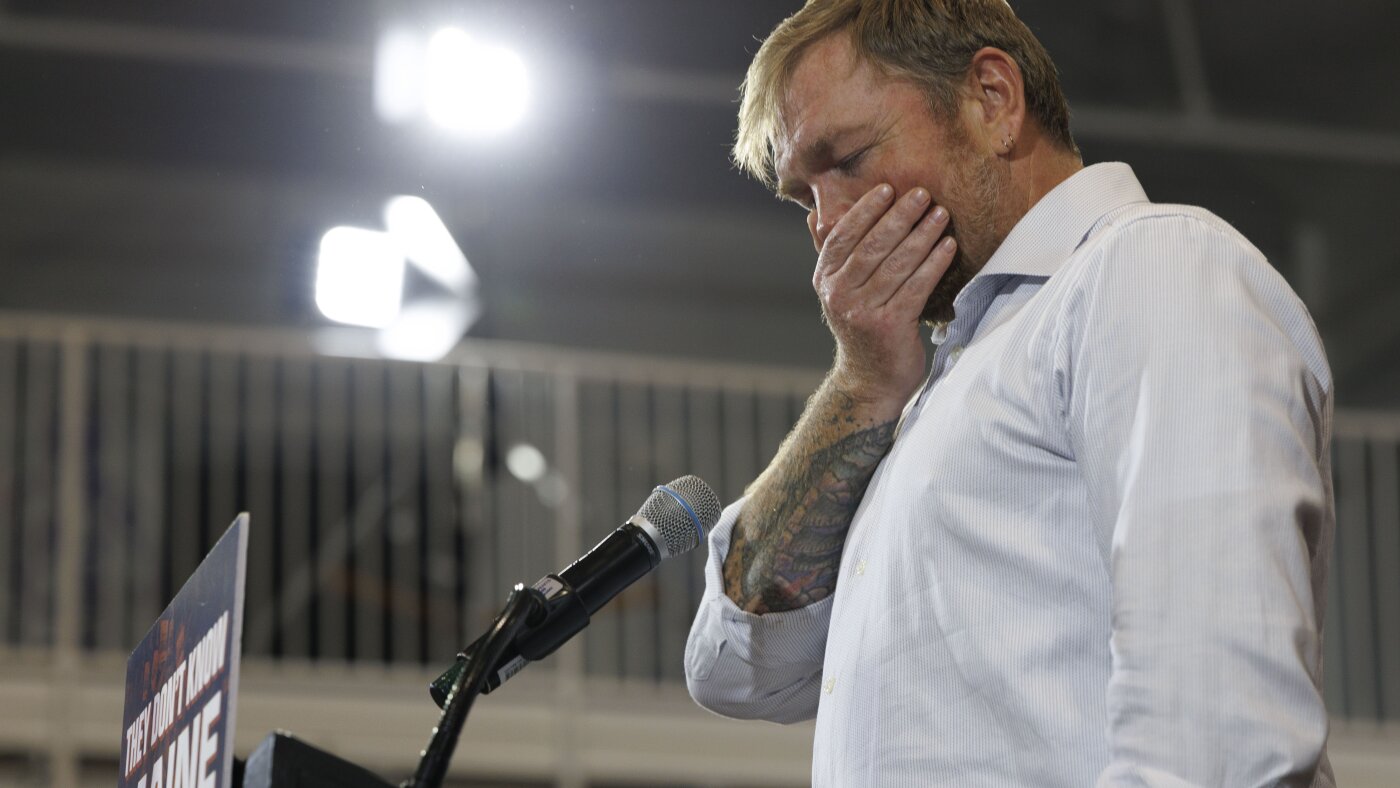
Graham Platner makes it official in Maine, submitting paperwork to leave Senate race
-

 Los Angeles, Ca2 hours ago
Knee irritation forces Shohei Ohtani out of Friday start, All‑Star game
-

 Detroit, MI2 hours ago
Detroit Evening Report: Waymo cars blocking first responders – WDET 101.9 FM
-

 San Francisco, CA2 hours ago
San Francisco Mayor Daniel Lurie Blocks Vacant Grocery Store Tax Proposal | KQED
-

 Miami, FL2 hours ago
Oregon Battling Miami, Mario Cristobal for Four-Star EDGE Recruit
-

 Dallas, TX2 hours ago
FC Dallas Forward Logan Farrington Inks Contract Extension
-

 Boston, MA3 hours ago
Red Sox face lengthy travel issues ahead of series vs. Mets

