Lifestyle
This Pilates class is harder to get into than the Magic Castle


In a cozy pool house in Holmby Hills, 33-year-old Liana Levi counts backward from 10 as I move my leg in a slow circle. “Think happy thoughts,” she says as the deceptively simple movements cause my muscles to shake on the Pilates reformer. Her distinctly Californian voice wafts over a Bad Bunny-heavy playlist. She has a deep tan in January and dainty gold jewelry. Her sweatshirt, emblazoned with the logo for athleisure brand Sporty & Rich, seems custom made for her. Underneath it are her signature washboard abs. We’re talking a Marvel movie, can’t believe it’s-not-CGI eight-pack that her 130,000-plus Instagram followers know intimately. Her secret? Her Pilates method, Forma.
Levi did not invent the movements she teaches, but with her body as a case study, she quickly became their gatekeeper. Forma Pilates elevates the fundamentals of classical Pilates with what Levi calls “athletic edge.” Rather than shouting buzzwords, Levi breaks down what it means to engage your pelvic floor or really feel your outer glutes and guides clients until they really feel it. The slightest tweak transforms a two-inch movement. The walls of Forma studios are adorned with signed rubber resistance bands that past clients have snapped in half with the strength of their thighs.
Rubber resistance bands, snapped and signed by past clients, adorn Levi’s home studio.
Los Angeles is no stranger to trendy workouts. Classes promoting Joe Pilates’ famed technique have existed in America’s fitness capital since 1972. There have been plenty of copycats, too. Faster-paced classes using supersize machines like Solidcore or the Megaformer take inspiration from Pilates, but can’t use the name. Like Champagne versus sparkling wine, Pilates is exclusive by nature. Forma is exclusive by design, an invite-only exercise community that charges $100 for semi-private reformer classes and $250 for private sessions. Forget Raya, Soho House, or even the Magic Castle — getting into one of Levi’s Forma Pilates classes might be the hardest ticket in town.
Levi grew up “very sheltered” in the manicured suburb of Holmby Hills. While a student at the elite private Jewish day school Milken, she played sports and danced competitively. At 16, she took her first Pilates class to supplement her training and was immediately hooked.
“I worked muscles that I didn’t know existed,” she said “I felt longer and taller and my core was as strong as it had ever been. I realized this is the most elegant and beautiful type of fitness out there.”
Liana Levi.
Liana Levi guides Kassia Taylor in the use of pilates equipment.
Following a handful of fashion-industry jobs in her 20s, Levi took a chance, and earned her Pilates teaching certificate. She’d long been frustrated by local Pilates classes that failed to teach correct form or emphasize the importance of “mind-body connection,” and thought she might be able to do better. In 2020, she launched Forma Pilates out of her mom’s pool house during the thick of the pandemic lockdown. With safety in mind and only room for two reformers, she had no choice but to start small. First with informal classes for friends, then friends-of-friends. Word of mouth about her rigorous technique spread from her well-connected acquaintances to a handful of celebrities. Within four months, the small business Levi began as a pandemic experiment was drawing A-listers like Hailey Bieber and Bella Hadid.
A year after launching, Levi expanded Forma to a Melrose Avenue studio in West Hollywood. Despite demand, she kept the studio intimate, at just four clients a class. Soon, The Daily Mail was running paparazzi pics of Kendall Jenner leaving the studio, and interest in Forma ballooned. Levi extended her clientele to connections up to six degrees away from herself. “I wanted to keep it exclusive and unique and niche and boutique and luxury,” she said.
In November 2023, Forma debuted heated mat pilates classes in a new Beverly Glen studio that fits 14 people. It’s the largest and least expensive of Forma’s classes. Levi calls it “more accessible,” but it remains true to the exclusivity at the core of the brand. At $50 a pop, it tops Barry’s Bootcamp ($34), SoulCycle ($34) and Solidcore ($40) in price-per-class. Like all Forma classes, referral is required. When I took a class at noon on a Friday, there were just five students. A paparazzo lurked in the parking lot.
Liana Levi, owner of Forma Pilates, chats with her students Kassia Taylor and Colleen McCabe at her home studio.
(Jason Armond / Los Angeles Times)
Today, Forma has a total of six locations across Los Angeles, New York and Phoenix. There are upwards of 3,500 approved clients who have the choice of more than 50 classes a week, taught by 16 different Levi-trained instructors. Levi, meanwhile, travels for pop-ups and teaches 10 classes weekly in L.A.
Despite the droves of followers who would happily fill a spot in Forma’s classes, those outside Levi’s charmed orbit must settle for Forma’s online platform. The $50-a-month service is updated weekly with pre-recorded mat and reformer workouts. They may not hold the mysterious allure of membership to an invite-only exercise cult, or the possibility of sweating next to Kaia Gerber. But hey, you can actually get in.






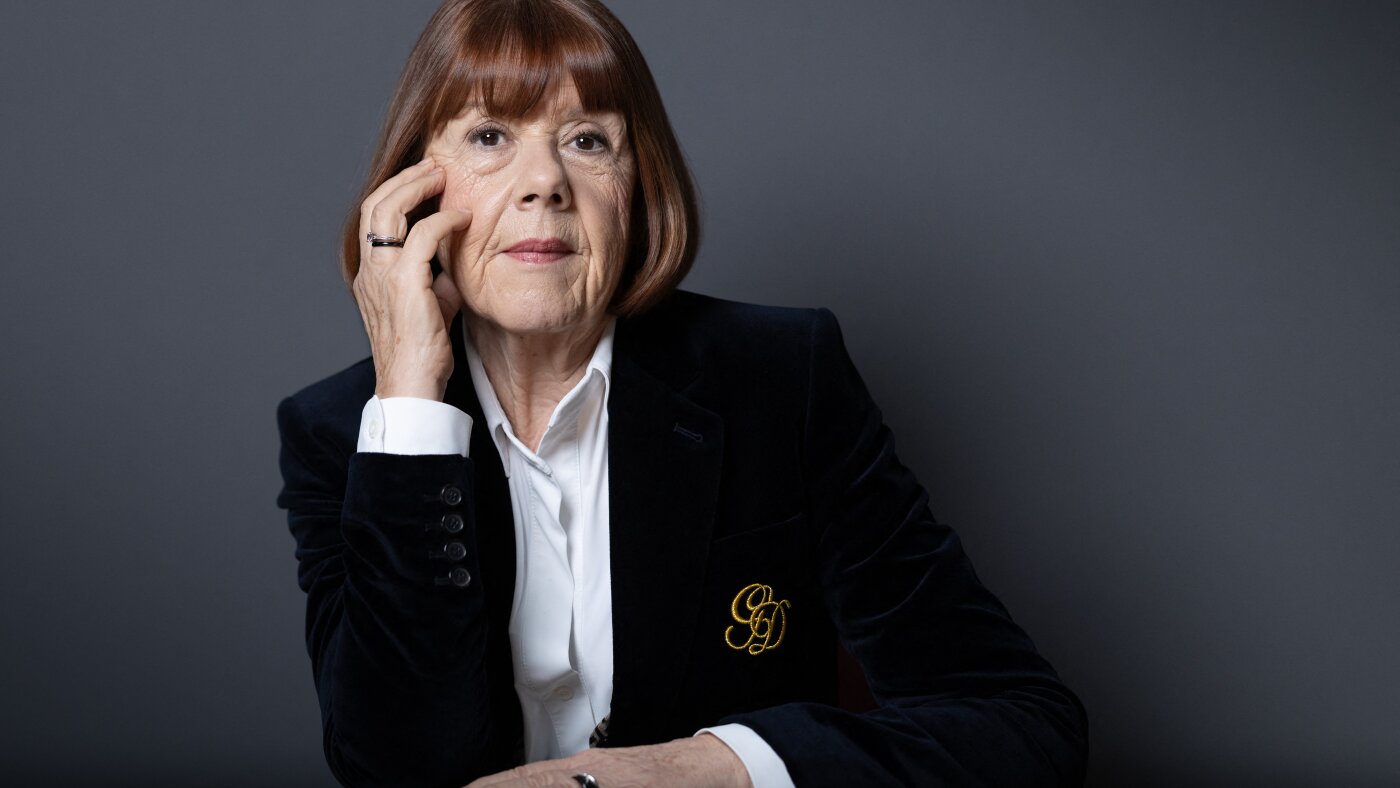
Gisèle Pelicot poses during a photo session in Paris on February 4, 2026.
Joel Saget/AFP via Getty Images/AFP
hide caption
toggle caption
Joel Saget/AFP via Getty Images/AFP
In September of 2020, Dominique Pelicot, a man in his 60s, was caught filming up women’s skirts at a supermarket in southeastern France. Reports of his behavior led to an investigation that unearthed troves of graphic videos of a heavily sedated woman being sexually abused by him and dozens of other men over the span of nearly a decade.
The woman in the video was his wife of nearly 50 years, Gisèle Pelicot. Her story made headlines around the world after Gisèle opted for a public trial — exposing both the breadth of her abuse and the identities of most of the men responsible for it.

Gisèle Pelicot’s memoir, A Hymn to Life, written by Gisèle Pelicot, with journalist and novelist Judith Perrignon, was released on February 17, 2026.
Flammarion
hide caption
toggle caption
Flammarion
In December of 2024, Dominique Pelicot was found guilty of all charges and received the maximum sentence of 20 years. The 50 other defendants were also found guilty of rape or other sex crimes. Another 20 or so men seen in the tapes were unidentifiable and remain at large.
Gisèle wrote about this experience in a new book, A Hymn To Life. She spoke with NPR’s Morning Edition host Michel Martin from Paris, France, through an interpreter.
Below are four takeaways from this conversation.
She says she “did not recognize” herself in the images
When French police called Gisèle Pelicot in to notify her of her husband’s abuse, she was confronted with graphic images of events she did not recall because her husband drugged her.
“I did not recognize that woman,” she said. “It was like some rag doll disguised and I didn’t recognize the people. Like, my brain just wouldn’t, couldn’t understand it.”
Gisèle said it took her “a long time” to use the word rape to describe what was done to her.
She says “shame needed to change sides,” when it came to having an open trial
In the lead-up to the trial against her husband and the other defendants, Gisèle Pelicot said she planned to have a closed tribunal.
Yet, “little by little,” she said the decision to make the trial public came to her.
“I said to myself that shame needed to change sides and by having the closed trial, I was giving them a gift,” she said. “All these men, their names wouldn’t have been known and what they did wouldn’t have been known.”
The trial was closely followed by international media and Gisèle was often greeted by scores of supporters who thanked her for her bravery in exposing how she had been harmed — which sparked larger conversations about rape and sex assault across the world.
She was accused of being a willing participant, but video evidence proved otherwise
“I experienced total humiliation. I was considered consenting, complicit, a suspect,” she said of having to defend herself in court and in the public eye.
Unlike many other sexual assault cases, hers was well documented thanks to the video evidence Dominique Pelicot kept for years and used to recruit other men on the dark web.
She still believes in the strength of love
In the midst of grappling with her husband’s abuse, Gisèle met a new man who she writes about in the book, sharing that he was part of her support system throughout the legal proceedings. She concludes A Hymn to Life with her thoughts on the power of love.
“I still need to believe in love. … I even believe that I knew how to give it. I now know that it comes from a deep wound within me that makes me vulnerable. But I accept that fragility, that risk, still. To fight the emptiness I need to love,” she wrote.
She closed our conversation by saying, “I think love can save the world. And I’ve just had the great fortune of being in love again. And I think if you don’t love, you don’t exist. If I don’t love, I don’t exist. And I need to keep on loving.”
For more on Gisèle Pelicot’s case, Morning Edition also spoke to Lisa Fontes, an expert in coercive control and sexual violence.
Tamara McGinnis provided the interpretation for this interview.
You can hear the full conversation with Gisèle Pelicot on NPR’s The Sunday Story.
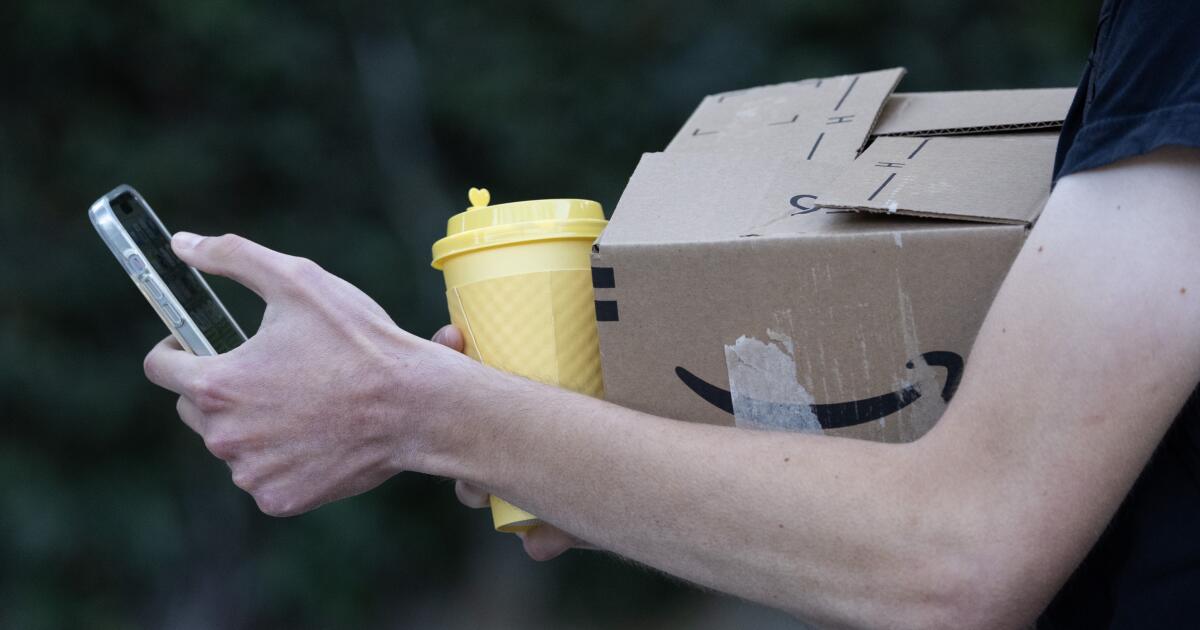
At the dawn of 2026, social media influencers at home and abroad proclaimed it the year of the “analog lifestyle,” a call to reduce digital connectivity as smart tech and screen time dominate a person’s attention span.
Selly Tan, an influencer from California, said people are “craving something real again,” and vowed to print her photos, read more books and magazines and take up hobbies that don’t need Wi-Fi.
Rosie Okatcha, an influencer from the U.K., proclaimed the year would be “The Age of Analog” with consumers swapping music streaming for iPods and vinyl records, and choosing crafting over doomscrolling.
Sanchi Oswal, an influencer from Germany, said in a post she felt going analog would reduce her “exposure and reliance on digital stimuli” and, in particular, to her phone.
For a generation that grew up in an entirely digital world, dependence on technology is a familiar habit that some are trying to break.
-
Share via
“From noon to 5 p.m., I’m looking at screens all day and then I’m going home and I’m just looking at my phone, scrolling on social media,” said Lillie Beacope, a senior at USC enrolled in a class on entertainment, marketing and culture. “I just feel like there’s not a chance for us within our day-to-day lives, to really get a break from technology.”
Spend any time outside, and you’ll see people of all ages are constantly on their smartphone or other digital devices for day-to-day tasks including communication, translation, navigation, delivery services, planning and entertainment. According to Pew Research Center data released in 2025, an estimated 91% of U.S. adults own a smartphone, up from 35% when the center first surveyed smartphone ownership in 2011.
The goal of the “analog lifestyle” trend is to wean people off constant digital connectivity by doing tangible activities that help a person reclaim their time.
But the smartphone isn’t the villain in this story, it’s a tool, said Natalia Khodayari, a postdoctoral researcher in the UC Davis Department of Psychiatry and Behavioral Sciences.
“It’s a handy tool, but this tool can be challenging to manage,” she said.
Why now?
Smartphone dependence has existed for years, but experts say it was compounded for people when the COVID-19 pandemic forced people indoors for weeks and months on end.
“People were upset, depressed and scared,” and all they had were their phones, Zoom and immediate family, said Karen North, a professor of digital social media and psychology at USC.
But years removed from the lockdowns, people are starting to notice how compelled they still are to look at their phones for information, to shop, or for nothing at all.
“It’s almost like biting your nails or another nervous habit,” North said.
Not only can the device itself be addictive, but many phone apps are designed to capture and keep a person’s attention, though people are becoming increasingly aware of this, said Dr. Anna Lembke, professor of psychiatry and behavioral sciences at Stanford.
“There are enormous opportunity costs to engagement on these platforms that suck [people] in, where they end up spending way more time than they plan to or want to,” Lembke said. “It’s very clear from survey studies that people are less happy now than they were 15 to 20 years ago.”
This, however, won’t be the first time people have tried to exit the online world, even if just temporarily.
In 2010, Mintel, a global market intelligence and research agency, promoted a “switching off” trend because it anticipated consumers would want to take significant breaks from their digital devices because modern technology had created “inescapable levels of connectivity.”
But the fear of missing out, or “FOMO,” that comes with disconnecting can be equally daunting, some say.
“It kind of sucks to be accessible all the time and having to reply to everything, but at the same time I think in the digital age where you are so readily accessible, to not respond is then to not be a part of a community,” said USC senior Maya Din.
Experts say these feelings are coinciding with the advent of the internet, digital media and this concept of 24/7 access.
People are trying to make sense of their unhappiness, which is leading them to “making a valid connection between their online lives and their overall psychological state of being, which is not good,” Lembke said.
Studies have shown a correlation between heavy digital dependence and mental health challenges including depression, anxiety and stress.
Even though the concept of stepping away from our digital lives isn’t new, North said TikTok challenges and social media trends “tell us, ‘It’s not just you, it’s everybody,’” and here’s what you can do about it.
How is the ‘analog lifestyle’ trend different?
The analog trend is a different way to kick the digital habit because by embracing old technology and spending time on crafting projects experts say people are trying to be entertained or relax in ways that don’t involve being online.
The goal of this trend “is a desire to rebalance time and energy and reduce distractability and related stress,” said Khodayari, whose research focuses on the mechanisms of attention and emotion.
Generally, it’s really easy to get distracted given the diversity and convenience modern-day life offers.
“Imagine when there exists one space which houses your work, relaxation, communication, music, daily planner and food services, it can be quite challenging for individuals to really stay present towards one activity or one goal on a day-to-day basis,” she said.
In 2018, a study published in the National Library of Medicine observed how many times 216 participants checked their smartphones over the course of 56 days. The study led by Dr. Larry Rosen, professor emeritus and past chair of the psychology department at Cal State Dominguez Hills, found that participants unlocked their phones more than 60 times a day for three to four minutes each time, which equaled a total of 220 daily minutes of use.
Not surprisingly, the analog lifestyle is being adopted by young adults and younger generations as a way to be more mindful, more intentional.
“I think that’s a really big theme here, is creating boundaries,” Khodayari said.
How to reduce your digital connectivity
There isn’t a one-size-fits-all approach to reducing or creating a boundary with your digital life. But as it happens, sometimes suggestions on how to go about it have to be spread online.
Influencers are posting about their “analog bag,” a canvas bag filled with craft supplies or purchasing a refurbished iPod to participate in this trend.
The recommendation has increased the search for “iPods” on EBay more than 1,200 times an hour globally between January and October 2025, according to the company. The iPod third-generation models saw a 50% increase in average sales price from global EBay users in 2025 compared with 2023. The iPod Nano third generation saw a 60% increase, while the iPod Classic sixth generation had a 40% increase.
In terms of crafting, Market Research Future, a global market research company, is projecting the craft supplies market to steadily grow from $42.83 billion globally in 2025 to $64.95 billion by 2035 that’s due in part to “individuals seeking creative outlets.”
You don’t have to spend money to participate in the analog lifestyle trend because making a drastic change or taking up a trendy hobby might not be helpful because it’s not something you’ll stick with long term, Khodayari said.
If you want to really stick with reducing your overall digital use, start with small adjustments to your habits, she said.
“Do something that makes a change that you really feel you can be consistent with,” she said.
Here are some common small adjustments people make to their routines to live the analog lifestyle:
- Remove your phone from view when you’re working on another task. Put it in a drawer or in another room entirely.
- Remove an app from your phone’s home screen or delete it entirely.
- Mute or stop unnecessary notifications.
- Swap your doomscrolling time on social media with another activity such as a walk, a craft, reading or cooking.
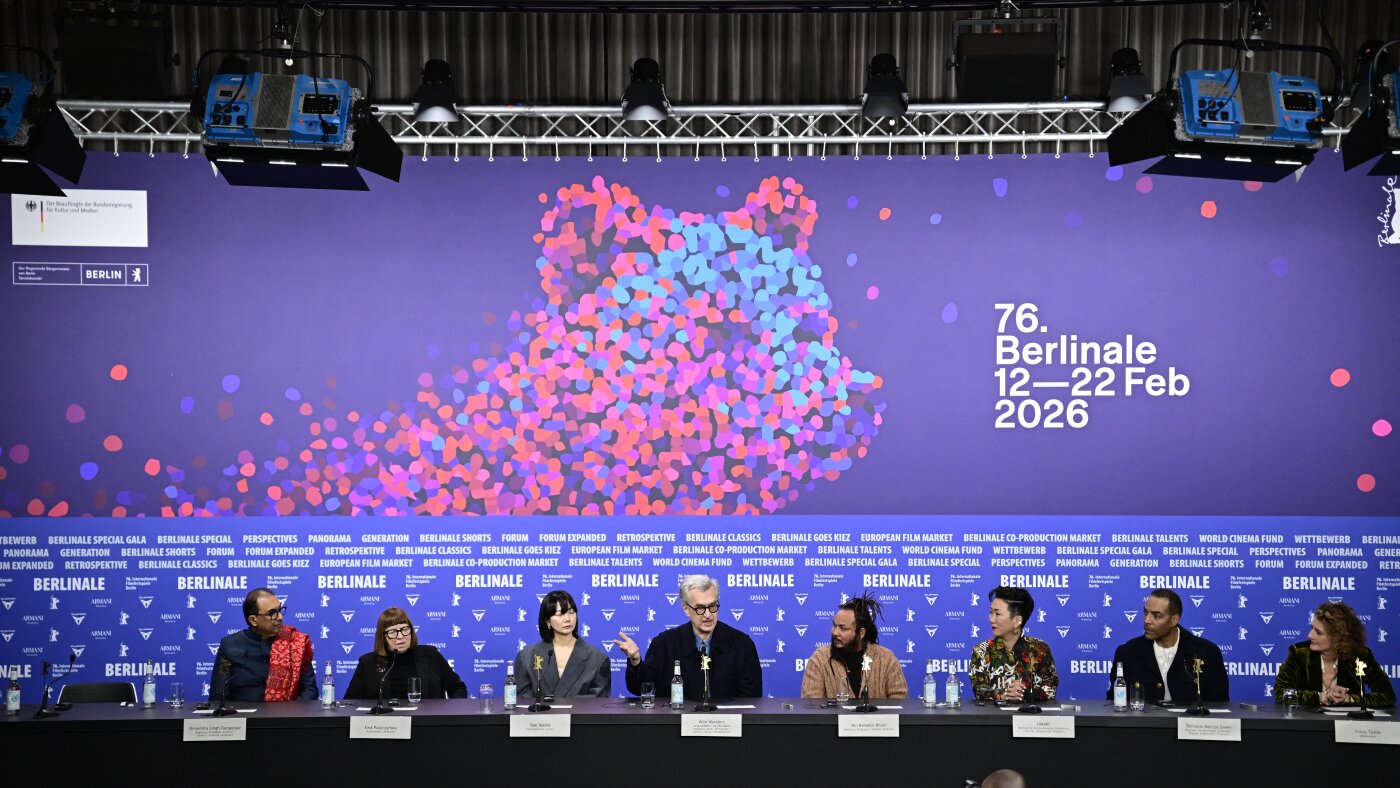
The Berlinale’s international jury at a press conference on the festival’s opening day on Feb. 12. The jury fielded questions about Gaza and, more broadly, about politics and film.
John MacDougall/AFP via Getty Images
hide caption
toggle caption
John MacDougall/AFP via Getty Images
The biggest talk at the Berlin International Film Festival in recent days wasn’t about which film would take home the prestigious Golden Bear award, but a remark made on opening day by the festival’s jury president, German filmmaker Wim Wenders. When a journalist asked the jury about human rights and Gaza, Wenders replied, “We have to stay out of politics.”
He called filmmakers “the counterweight to politics.” Over the course of the festival, multiple films pulled out of the program, citing solidarity with Palestine; author Arundhati Roy dropped out due to what she called “unconscionable statements” made by members of the jury; Kaouther Ben Hania, director of the Oscar-nominated film The Voice of Hind Rajab, refused to accept an award at a gala hosted by the Cinema for Peace Foundation.
Trisha Tuttle, the festival’s director, released a lengthy statement titled, “On Speaking, Cinema and Politics,” writing, “We do not believe there is a filmmaker screening in this festival who is indifferent to what is happening in this world, who does not take the rights, the lives and the immense suffering of people in Gaza and the West Bank, in the Democratic Republic of the Congo, in Sudan, in Iran, in Ukraine, in Minneapolis, and in a terrifying number of places, seriously.”
She wrote, “Artists are free to exercise their right of free speech in whatever way they choose.”
Still, more than 100 artists, including Tilda Swinton, Javier Bardem, and Adam McKay, have signed an open letter published in Variety condemning the Berlinale for “censoring artists who oppose Israel’s ongoing genocide against Palestinians in Gaza and the German state’s key role in enabling it.”
(The German government provides significant funding for the festival.)
In an interview with The Hollywood Reporter, Tuttle said she understood the “pain and anger and urgency” behind the letter, but rejected any allegations of censorship. “It’s not true that we are silencing filmmakers. It’s not true that our programmers are intimidating filmmakers. In fact, the opposite,” she said.

Unlike sun-drenched Cannes or the lakeside charm of Locarno, the Berlinale unfolds in the depths of winter at Berlin’s Potsdamer Platz, arriving on the heels of Sundance Film Festival. And since its founding in 1951 during the Cold War, the Berlinale has gained a reputation as the most overtly political of the major festivals, not only for its programming choices, but for its history of engaging with global crises, as in 2023, when it condemned Russia’s war on Ukraine and expressed solidarity with protesters Iran. Critics say that despite being vocal on other issues, the Berlinale has not spoken out about Gaza.
Between it all, movies at the festival spoke for themselves. This year’s slate blended the personal and the political, telling stories of bustling Lagos, 1930s Australia, and family traditions in Guinea-Bissau.
I was there for the entirety. These stories stood out.
Rose
YouTube
The best film that I saw in the festival’s competition was one that I didn’t expect. Markus Schleinzer and Alexander Brom’s black-and-white period piece is very serious, and very German, but also unexpectedly funny. Set in the early 17th century Germany, Sandra Hüller (who you’ll recognize from Anatomy of a Fall and The Zone of Interest) plays a mysterious soldier named Rose, who arrives at an isolated Protestant village claiming to be the heir to an abandoned farm. In order to build a life for herself and fit in, she disguises herself as a man. She quickly emerges as one of the community’s strongest leaders, but lives in constant fear that her secret will be exposed. Hüller’s performance is brilliant and triumphant, bringing to life a story about gender, privilege, and belonging.
Lady

Peter Okosun/Ossian International Limited
Olive Nwosu’s debut feature radiates a restless, pulsing energy — both through the thrum of Lagos and the courage of its women. The film focuses on Lady, one of Lagos’ few female cab drivers, who dreams of leaving the city. So when her childhood friend Pinky, now a sex worker, offers her a well-paying gig chauffeuring her and her friends to their nighttime appointments, it’s hard for Lady to refuse. But the experience opens up old wounds, and as Lady is drawn deeper into their orbit, she is forced to confront the ways in which their shared past looms larger than any one person’s will. Nwosu’s portrait of Lagos is filled with care and nuance, with an eye to the complicated solidarities that bind its people together.
Wolfram

Director Warwick Thornton’s latest is a sweet and tender story of redemption, set against the backdrop of a searing Australian desert landscape. The Western, a sequel to the 2017 film Sweet Country, centers two adorable Aboriginal children in colonial 1930’s Australia, who have escaped from a mining camp where they were forced to work by their white masters. In their search for safety, they are hunted by two outlaws on horseback who want nothing more than to see them dead. But Thornton is less interested in portraying his characters as victims than survivors, bound together by the strength of love and resilience.
Dao

Mike Etienne and D’Johé Kouadio.
Les Films du Worso – Srab Films – Yennenga Productions – Nafi Films – Telecine Bissau Produções – Canal+ Afrique
hide caption
toggle caption
Les Films du Worso – Srab Films – Yennenga Productions – Nafi Films – Telecine Bissau Produções – Canal+ Afrique
It wasn’t until more than halfway through director Alain Gomis’ sprawling film that I realized it wasn’t a documentary. In an on-screen process, Gomis brings professional actors and non-actors together, casting them as members of the same extended family. Spanning nearly three hours and unfolding across two ceremonies, a wedding in France and a ritual in Guinea-Bissau, Dao dissolves the boundaries between reality and fiction to offer a meditation on the cyclical nature of life, people and traditions. The question of whether the film is “truly” a documentary is by design. It is precisely this uncertainty that Gomis invites us to sit with, blurring categories so completely that the distinction begins to feel beside the point.
Two Mountains Weighing Down My Chest

Viv Li in Two Mountains Weighing Down My Chest.
Corso Film
hide caption
toggle caption
Corso Film
What does it mean to search for oneself? In her charming debut feature documentary, Viv Li turns the question inward, tracing her own coming-of-age across two sharply contrasting worlds: Berlin and China. Stuck in Berlin after the pandemic, Li oscillates between new ideas of freedom and old forms of expectations. But does the search ever truly end? Li asks. Full of vulnerability, whimsy, and surprise, Li films herself over several years, as we see her in intimate moments with friends, exploring Berlin’s queer scene, and in candid discussions with relatives in China over dinner. In the end, Li suggests that perhaps resolution is overrated — and the willingness to stay curious, no matter what, might be the only thing we need.
Chronicles From the Siege

Even when a city is under siege, survival means more than just staying alive, but also finding ways to remain fully, stubbornly human. Drawn from his own experiences during the siege of the Palestinian refugee camp of Yarmouk in Syria, Abdallah Al-Khatib’s debut film follows five interwoven stories in a city under fire. In one thread, two lovers risk everything for a fleeting moment together and in another, a former video store owner struggles simply to stay alive. Across these intersecting stories, Al-Khatib looks beyond the spectacle of war, resisting the notion that lives can be reduced to headlines and politics.
Mouse

Katherine Mallen Kupferer and Chloe Coleman in Mouse.
Go Cats Go
hide caption
toggle caption
Go Cats Go
Kelly O’Sullivan and Alex Thompson, known for their films Saint Frances and Ghostlight, have always been experts at making humanity feel precious with stories that always loom much larger than their loglines. Their newest is a festival favorite. Mouse follows two best friends, Minnie and Callie, in their senior year in North Little Rock, Arkansas. But when their friendship falters, Minnie is forced to navigate her own identity. Delicate yet heartbreaking, the film is driven by two filmmakers who understand what real life actually feels like, showing that what is big doesn’t require drama and that grief is never small, never solitary, and always different.

NASA’s Artemis II lunar mission may not launch in March after all

Firebrand conservatives set to duke it out in GOP Texas AG debate

Largest measles outbreak in recent history reported on southwestern Florida college campus

New Jersey Catholic diocese agrees to $180M settlement with survivors of alleged clergy sex abuse

Child killed in two-car crash in Detroit, police say

Florida High School Football Rankings: Top 25 teams – Oct. 21

Cleary's 21 help Le Moyne down Central Connecticut State 69-64 in OT

How old is Bo Nix? What to know about Oregon quarterback ahead of 2024 NFL Draft

99th annual Pony Swim held in Virginia

Indiana Members Credit Union announced as new anchor tenant at Bottleworks District
NASA’s Artemis II lunar mission may not launch in March after all

OpenAI didn’t contact police despite employees flagging mass shooter’s concerning chatbot interactions: REPORT

Iran demands ‘evidence’ as Trump, UN experts highlight protest killings

World reacts as US top court limits Trump’s tariff powers

Campus Radicals Newsletter: Teacher who lost job over 2-word post breaks silence, Chicago ‘racial segregation’
-

 Oklahoma4 days ago
Wildfires rage in Oklahoma as thousands urged to evacuate a small city
-

 Culture1 week ago
Romance Glossary: An A-Z Guide of Tropes and Themes to Find Your Next Book
-

 Technology1 week ago
HP ZBook Ultra G1a review: a business-class workstation that’s got game
-
![“Redux Redux”: A Mind-Blowing Multiverse Movie That Will Make You Believe in Cinema Again [Review]](https://i1.wp.com/www.thathashtagshow.com/wp-content/uploads/2026/02/Redux-Redux-Review.png?w=400&resize=400,240&ssl=1 "“Redux Redux”: A Mind-Blowing Multiverse Movie That Will Make You Believe in Cinema Again [Review]")
![“Redux Redux”: A Mind-Blowing Multiverse Movie That Will Make You Believe in Cinema Again [Review]](https://i1.wp.com/www.thathashtagshow.com/wp-content/uploads/2026/02/Redux-Redux-Review.png?w=80&resize=80,80&ssl=1 "“Redux Redux”: A Mind-Blowing Multiverse Movie That Will Make You Believe in Cinema Again [Review]") Movie Reviews1 week ago
Movie Reviews1 week ago“Redux Redux”: A Mind-Blowing Multiverse Movie That Will Make You Believe in Cinema Again [Review]
-

 Montana2 days ago
2026 MHSA Montana Wrestling State Championship Brackets And Results – FloWrestling
-

 Politics1 week ago
Tim Walz demands federal government ‘pay for what they broke’ after Homan announces Minnesota drawdown
-

 Science1 week ago
What a Speech Reveals About Trump’s Plans for Nuclear Weapons
-
News1 week ago
Second US aircraft carrier is being sent to the Middle East, AP source says, as Iran tensions high

