Lifestyle
This energetic dance party hides in a tiny L.A. bar — no cover, no line, no RSVPs


Under red lights, a man in a cowboy hat swings his partner around a crowded dance floor. House and disco music play from a makeshift DJ booth. A tattooed woman with long, red fingernails grips a Buddha-shaped beer bottle. A fashionable couple takes selfies in matching red trucker hats emblazoned with the words “Thai Angel.” They’re two of the many patrons proud to show their loyalty to the bar-restaurant hosting this lively scene. It’s late on a Saturday night in February and just a few hours earlier, there was no DJ and no dancing. Just regulars eating drunken noodles and fried rice at this unassuming spot in Koreatown.
But when Thai Angel’s tiny kitchen closes, the party starts. Through a community of devout regulars and an owner that embraces them, it’s quietly become a drama-free, all-are-welcome place to dance from 9 p.m. until last call just before 2 a.m. No RSVP, no cover, no line outside.
Bartenders Maddox and Isabella serving drinks behind the bar.
A woman indulges in a slice of pizza.
In the back of the L-shaped room, the bathroom line buzzes with strangers bonding over how they found Thai Angel and flexing how many times they’ve visited. It’s the type of conversation you’d expect somewhere like Spotlight, a dress-to-impress nightclub that recently opened in Hollywood, or at an underground warehouse party in East L.A. or downtown. But some young L.A. partygoers are tired of corporate-feeling clubs and exclusive or ticketed events. They’ve gone back to basics — favoring casual bar environments. Gen Z’s recent discovery of 100-year-old Barney’s Beanery has made the late-night roadhouse as hard to get into as the spots the new crowd was seemingly trying to avoid. Thai Angel has no glamorous Hollywood backstory or viral TikTok posts, yet its dance floor is packed.
Jamie Eich, 58, opened the first iteration of Thai Angel, named after her daughter, in 1995 as a karaoke bar in Hollywood. Eight years ago, on her daughter Salanya “Angel” Inm’s 21st birthday, Jamie asked what she wanted. “A bar,” she answered. The current Thai Angel location on Western Avenue was her birthday gift. Thai Angel is co-owned by Jamie, Angel and her brother Boss Inm, 36. After college, Angel, now 29, began working as a waitress and bartender. Boss and Jamie are behind the bar at Thai Angel every day. Angel, who also works as a reiki practitioner and model, is preparing to open an alcohol-free tea lounge upstairs.
The family never set out to make Thai Angel a nightlife hot spot. Sure, it poured strong drinks and stayed open late, but the first DJs to throw parties in the space were just regulars slurping down pad see ew at the bar.
Angel, left, Jamie and Boss, the family team steering Thai Angel.
A pulsating crowd vibes to the beats of the DJ.
Most people inside tonight found the space through a party called SOUP. In 2020, eight friends in the music industry, including Swedish pop star Tove Lo, were looking for a place to throw an informal DJ night. They looked for a venue across L.A. but couldn’t find the right fit, eventually giving up and grabbing a late-night dinner. They ended up at Thai Angel.
The first SOUP was days before the city issued pandemic stay-at-home orders in March 2020. The friends have since put on 13 events at the restaurant. Throwing dance parties at Thai Angel requires promoters to bring in their own DJ and speaker setup, but the environment is worth it.
“People have really responded to the unique feel of Thai Angel and the fun concept of SOUP’s quick DJ rotation,” says SOUP member Samuel Luria. “The setting has a lot to do with it. L.A. nightlife is filled with things worth avoiding … there are plenty of douchey clubs, trendy bars and overpriced and pretentious mixology. There are also fun spots where the owners have applied care and vision in order to create a fun and unique environment. Thai Angel is one of those spots.”
On party nights, the eight friends arrive early to enjoy an off-menu vegan tom kha soup prepared by Jamie, with plenty of leftovers for the rest of the week.
Tonight, the crowd at Thai Angel is courtesy of DJ collective Friends of Friends of Friends. Previously, they threw house parties and DJed the occasional wedding, but the trio was inspired by SOUP and began throwing events at Thai Angel last September. “Jamie immediately welcomed us as her family,” said co-founder Collin Sommers. “For a city known for its glitz and glam, there’s a lot of authenticity in the spaces below the surface. Thai Angel is just one story, amongst many in L.A., of a women-owned, family-owned business that truly foster community.”
Jamie, who is a single mother, enjoys her role as welcoming committee and secondary mom to Thai Angel patrons. Some regulars don’t know her first name and refer to her only as “Mom.” She encourages it. A handwritten note tacked to the bar displays her username for digital payments as “Thai-Mom.” The nickname was popularized by DJ and actor Ian Alexander Jr., who died by suicide at 26. Jamie credits him for throwing weekly DJ nights starting in 2018 that laid the foundation for Thai Angel to become an if-you-know-you-know nightlife spot. “He loved doing it. He’d greet me with ‘Hi, Mom, how are you?’ He made this place pop. I think that he’s still here with us,” she said.
A vibrant crowd energizes the dance floor.
Angel believes the family dynamic is responsible for the warm and welcoming environment. “It’s a very small, narrow space. It’s cozy. In my mind it really does feel like a living room, a house party. People come here and they feel at home,” she says.
In addition to this spot, Jamie owns two bars in Bangkok, also named Thai Angel. “We set goals here. Like Nike said, just do it,” Jamie says.
At midnight, a man bobs and weaves through the crowd holding a stack of giant pizza boxes. Jamie immediately waves him over to the last booth, where he begins giving out slices for free. Scotty Chappell, co-owner of Swizzle Pizza, an East Hollywood pop-up, has been coming to Thai Angel for seven years. He initially stumbled in while working at a restaurant down the street. Before opening Swizzle, Chappell and his business partners experimented with serving Thai pizzas out of the Thai Angel oven.
“Thai Angel has always been there for us. It’s a chosen family in a city where that feels so hard to find. We’re there for them too, whether it’s helping them close up on busy nights, taking out the trash, washing dishes or bringing in a ton of pizza to feed a party so they can actually have a break from cooking their delicious Thai food,” Chappell says.
At 1 a.m., the dance floor shows no signs of slowing down. Jamie has changed into a “I <3 Thai Angel” T-shirt. Angel is passing out homemade lemon bars, courtesy of a regular who calls the bar their “Cheers.” Across Los Angeles, the Saturday night crowd is waiting in line for a hot bar or racking up an Uber bill as they search for the next better party. If only they knew what was hiding in plain sight.
Follow Thai Angel on Instagram @thaiangelbar for information about upcoming events.



April may well be “the cruelest month,” as T.S. Eliot famously opined — and even a five-minute doomscroll makes it tough to deny that cruelty is riding at anything but record levels lately. But remember you do have an alternative to doomscrolling, one that’s been around much longer: cracking open a book — or doomflipping, I suppose you could call it.
Don’t get me wrong: The books expected this month don’t exactly radiate escapist good vibes, riddled as they are with anxiety, corruption, unfulfilled desire — even the occasional direct challenge to our notions of reality itself. But they do offer the opportunity to step into someone else’s shoes and get to know their own particular view of our shared world — and sometimes that’s consolation enough. Which is nice, because it may have to be this month.
Transcription, by Ben Lerner (4/7)
The jacket copy of Lerner’s novella is basically a journalist’s stress dream: Commissioned to write what may be the final profile of his mentor, an aging literary icon, Lerner’s narrator fries his only recording device just minutes before the interview by dropping his phone in the sink. What follows is a meditation on memory, art and fatherhood, expressed in a handful of conversations that we’ve got plenty of cause to find unreliable, given the circumstances. As in his previous novels, including The Topeka School, Lerner centers some version of himself in this strangely captivating blend of fiction, memoir and critical essay, shot through with humor and anxiety.
American Fantasy, by Emma Straub (4/7)
Speaking of premises that read like one of my nightmares: Straub’s novel portrays the American Fantasy cruise ship and its themed voyage dedicated to an aging boyband and their loyal superfans — at this point, mostly middle-aged women addled with nostalgia and the looming terrors of menopause. The book bounces between the perspectives of a reluctant attendee, a band member and the boat’s hypercompetent event director, who really doesn’t deserve this. It’s infused with a blend of bemused humor and abiding sympathy familiar to readers of Straub’s previous novels, All Adults Here and This Time Tomorrow.
London Falling: A Mysterious Death in a Gilded City and a Family’s Search for Truth, by Patrick Radden Keefe (4/7)
In Keefe’s previous book Say Nothing, the veteran reporter took hold of a single loose thread — a mother’s decades-old disappearance — and pulled with such tenacity that the history of an entire tumultuous era raveled into view. Here, Keefe applies a similar approach — only this time, instead of Northern Ireland’s Troubles, the context of his latest book is modern London’s obliging relationship with the international financial elite. But as before, there’s an intimately human tragedy at the heart of Keefe’s investigation: a young man’s fatal plunge into the Thames and all the uncomfortable questions British authorities appear reluctant to pursue.
The Edge of Space-Time: Particles, Poetry, and the Cosmic Dream Boogie, by Chanda Prescod-Weinstein (4/7)
“You too can have your mind altered — no drugs necessary.” This, from the book’s introduction, offers something of a promise — which Prescod-Weinstein keeps with gusto, in this jaunty affront to just about everything our senses tell us about the world. The Dartmouth physicist’s follow-up to her lauded debut, The Disordered Cosmos, draws from just about every intellectual nook and cranny — from Bantu linguistics and Star Trek, to hip-hop and gender theory — to weave an idiosyncratic illustration of the universe as physicists understand it today. It’s an accessible take on a flabbergasting subject which, to put it mildly, offers a rather different view of reality than the one I remember learning in school.
My Dear You: Stories, by Rachel Khong (4/7)
This is Khong’s third book of fiction and her first short story collection. In it, she shows off the kind of range suggested by her previous novel, the tripartite Real Americans published two years ago. Here, in the new collection, heavy subjects such as race and grief coexist with conjured spirits and a psychic cat, extraterrestrials and a God who has reconsidered the whole “human” thing — and given everyone a deadline by which they’ll need to decide what other species they’d like to be instead. Understandably, given the givens so far.
Go Gentle, by Maria Semple (4/14)
Now this, my friends, is what we call a romp. Semple is best known for funny, deceptively poignant portraits of mothers in midlife crisis — see: Where’d You Go, Bernadette, a smash best-seller with its own Hollywood adaptation. The star of her newest novel is Adora Hazzard, a divorced philosopher with a sullen teenage daughter, a job teaching morals to rich kids and a growing “coven” of friends living nearby. Hold on tight, though — this one’s plot has twists and turns in abundance, as Hazzard certainly earns her last name in a series of, dare I say, shenanigans, animated always by a subtle, irrepressible joie de vivre.
On the Calculation of Volume, Book IV, by Solveig Balle, translated from the Danish by Sophia Hersi Smith and Jennifer Russell (4/14)
Yep, it’s still November 18. This unassuming date has detained Balle’s narrator for three novels already, and is likely to continue doing so for another three after this one. I hesitate to relate any more details about where the plot of the planned septology stands at this point, for fear of spoiling it for folks who still intend to catch up. Suffice to say, change is afoot at this point for our timelocked narrator, who may not be nearly as alone in her plight as she had initially thought.
Last Night in Brooklyn, by Xochitl Gonzalez (4/21)
Gonzalez stays close to home with her third novel. A dyed-in-the-wool Brooklynite, born and bred, the author of Olga Dies Dreaming has already earned a nod as a Pulitzer finalist for her column concerning gentrification in the borough she calls home. So the departure in her latest book is less in space than time, as her latest novel deposits readers in Brooklyn in 2007, on the cusp of global financial freefall, for a story of class, race, dangerous aspirations and the looming death of a heady era, which bears unmistakable echoes of The Great Gatsby.
American Men, by Jordan Ritter Conn (4/21)
The American men referred to in the grandly sweeping title of Conn’s sophomore book of narrative journalism, in fact, number just four. Each of these men bears the mantle of masculinity differently, grappling differently with all the pressures that the label entails, but each one has also bared his experiences and innermost thoughts to Conn with equally thorough candor. From these four interspersed stories Conn does not produce any sociological claims, still less a polemic, so much as a portrait of four lives so disarmingly frank, it can be difficult to look away — and maybe we shouldn’t.
Small Town Girls: A Memoir, by Jayne Anne Phillips (4/21)
Phillips won the 2024 Pulitzer Prize in Fiction for her last book, Night Watch, a wrenching portrayal of trauma and recovery set in a West Virginia mental asylum following the Civil War. Now, Phillips (“one of our greatest living writers,” according to Michael Chabon, one of that year’s Pulitzer jurors) is returning to the Allegheny Mountains of West Virginia, not in historical fiction but in personal retrospect. It’s where Phillips grew up, where she has come to set most of fiction, and her new memoir is not so much about her life alone as it is her lifelong relationship with this place she “can never truly leave.”
The Story of Birds: A New History from Their Dinosaur Origins to Today, by Steve Brusatte (4/28)
Brusatte could not be any clearer about this, folks: Birds. Are. Dinosaurs. The American paleontologist underlines the idea, which is apparently a century and a half old, early and often in The Story of Birds. This expansive history of our fine-feathered neighbors, as scientists understand them today, traces an evolutionary thread that leads directly from landbound behemoths like the triceratops to the airborne raptors that patrol our own skies. As he has done in his previous books — which covered dinosaurs and mammals, respectively — Brusatte offers a lively, loving introduction to his topic that’s as comprehensive as it is accessible.
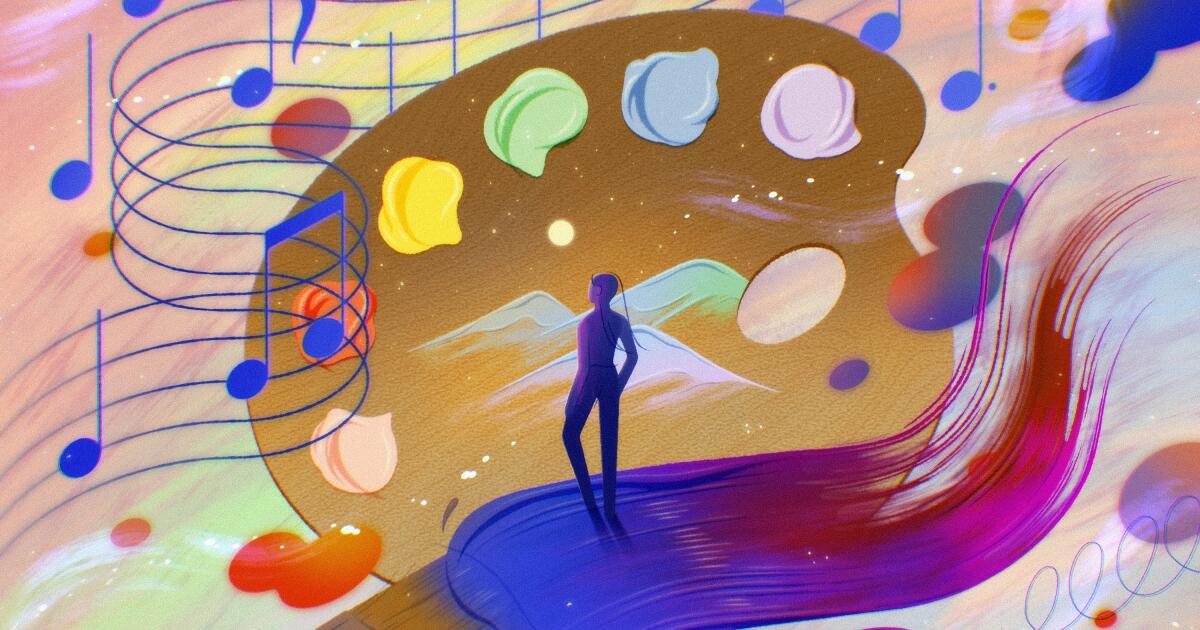
When she has time, Daisy Fancourt likes to sit at the piano and play something by Bach, Francis Poulenc or, if her children are with her, a nursery rhyme.
There’s nothing frivolous about playing or listening to music. It can reduce stress and inflammation, improve heart health, lift moods and slow cognitive decline, according to Fancourt’s book, “Art Cure: The Science of How the Arts Save Lives,” out in February. Other artistic pursuits, from painting landscapes to taking salsa lessons, have similar benefits.

Shelf Help is a wellness column where we interview researchers, thinkers and writers about their latest books — all with the aim of learning how to live a more complete life.
“I think somehow the arts are still seen as ‘fluffy,’ even though we have such strong evidence about everything they do,” says Fancourt, a professor of psychobiology and epidemiology at University College London, and director of the World Health Organization’s Collaborating Centre for Arts and Health. She calls art the forgotten fifth pillar of health, alongside diet, exercise, nature and sleep.
“With physical activity, we all take it seriously — even if people don’t do it, they know they ought to be doing it. And I think it would be wonderful to get to that same place with the arts.”

Portrait of author Daisy Fancourt.
(Tom Burton)
Despite Fancourt’s skill as a pianist (as a college student, she played for a classical radio station between taking classes at Oxford University and interning at a hospital arts program), she insists that people needn’t be master artists to improve their physical health and mental well-being. A simple visit to a museum or a live theater production can do wonders, as can a humble activity such as knitting.
Scientist that she is, Fancourt presents plenty of evidence for art as a cure to what ails us. But her main concern is helping people “see how they can apply the evidence in their daily lives and make changes that will improve their health.”
This interview has been condensed and edited for clarity.
What are some of the most important ways that the arts can make us healthier?
When we engage in the arts, we activate reward and pleasure networks in the brains, we experience the release of dopamine as a happy hormone, and we also psychologically give our brains what they need to be happy. We give our brains a sense of autonomy, control, mastery and a way of regulating our emotions, all of which are fundamental to our mental health.
Arts engagement affects nearly every region of the brain. And if we engage regularly, it actually affects the size, structure and functioning of those brain regions, which can help with the development of brains in young children. It can help with the preservation of cognition as we get older. It can even help our brain to develop new neural pathways around brain injuries.
Every system in the body is affected by art. So when we breathe through singing, we support our respiratory muscles. When we dance, we reduce our blood pressure and glucose levels. When we look at relaxing paintings, we actually activate our pain analgesic response.
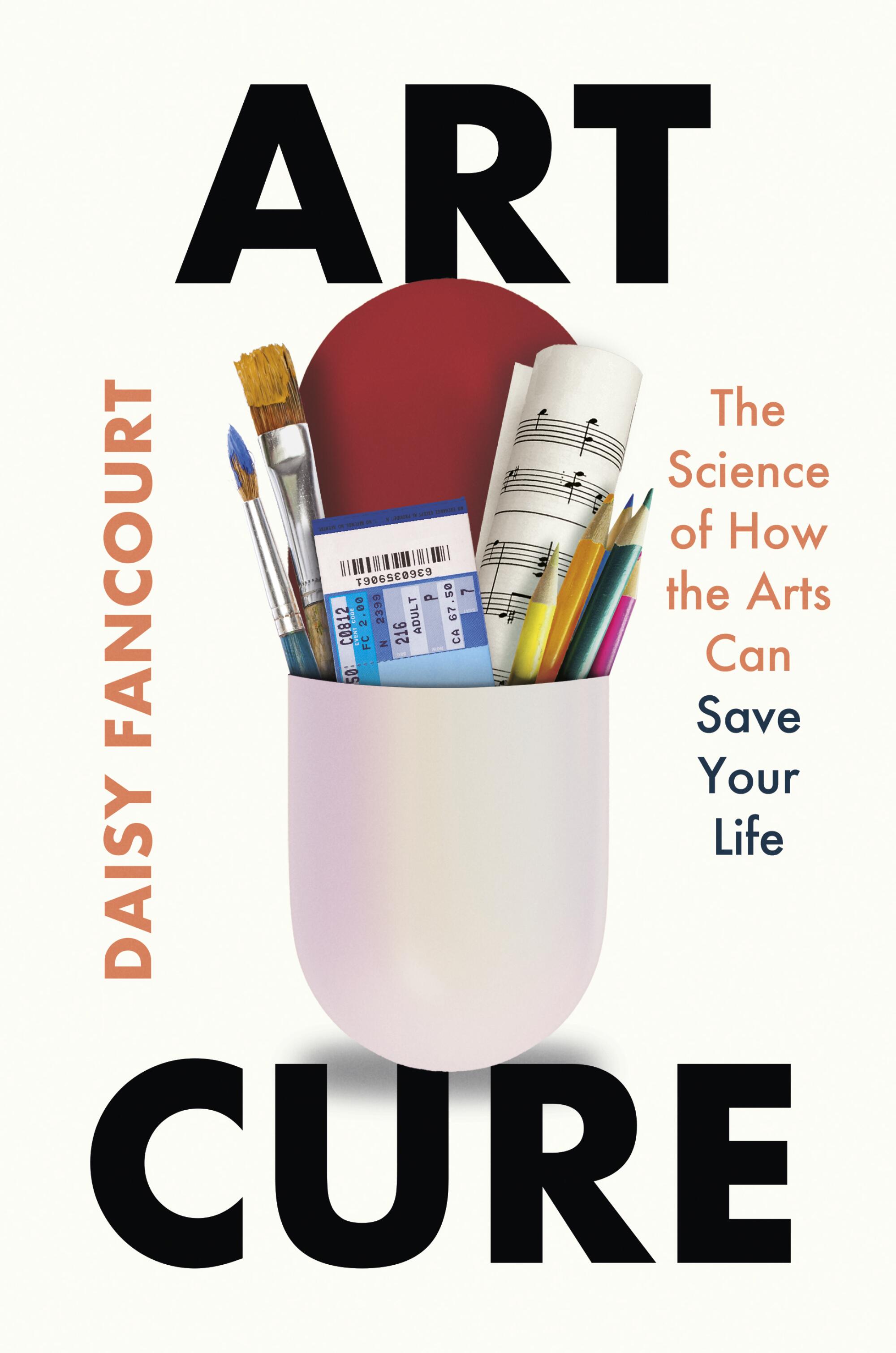
“Art Cure” by Daisy Fancourt book cover.
(Celadon Books)
In the book, you describe screen time as the “ultra-processed food” of the arts. Why isn’t watching content on screens as beneficial as experiencing the arts in person?
When we looked at people going to the cinema versus going to live theater or music gigs, we found there were no benefits to cognition from regularly going to the cinema as they got older, but they had better cognitive preservation if they were going to live performances instead. That’s not to say [engaging in the arts] online is necessarily bad for you — there are plenty of examples where it’s good. But it can dilute benefits you would get from real-life social interactions.
You point out that narratives on TV can have some benefits, but now people are migrating to even shorter videos on TikTok and Instagram. How do you think about the difference between consuming content on, say, Netflix versus scrolling on TikTok?
We know that shortened engagement just doesn’t provide the same kind of meaning that you can get from longer engagement. And it’s not just online. We’re guilty of that even when we go to museums. The average amount of time that people spend looking at artwork in museums is 28 seconds. If you really want to enjoy the arts, you have to give them your attention, whether that’s really looking at a picture properly in a gallery and thinking about your response to it, or whether it’s taking the time — not for a 30-second clip on TikTok — but a 30-minute drama that’s actually going to allow you to get into the details of storylines and characters.
So, I recently tried and failed to read “Ulysses.” People might have lofty ambitions to read a great novel or learn how to play an instrument, but at the end of the day they turn on the TV because they’re exhausted. What are some strategies to engage with the arts in a meaningful way when people have limited time and energy?
Pick the art you want to do, not the art you think you ought to do. So if “Ulysses” is what you want to be reading, then great, but don’t think that some kind of highbrow art is going to be the best for you. It’s not. You need to pick art that you think you’re going to enjoy, that speaks to you, that you have a frame of reference for. So that’s my first point. My second point is to make it equal to your energy level. If you don’t have the energy to read a book, why not turn on a concert on the radio? But don’t be on your phone. Don’t be doing anything else. Don’t multitask. Just sit and enjoy that concert and that experience.
Another thing to consider: How can you make [regularly engaging with the arts] doable? If you would normally go out and meet up with friends in the evening for a drink, well, how about going and meeting up and doing a craft activity instead? So it’s not requiring any more time. If you’d normally read the news on your way to work, swap that for a book. Those simple swaps can make it much more feasible.
TAKEAWAYS
From “Art Cure: The Science of How the Arts Save Lives”
I was fascinated by the “tragedy paradox” that you mentioned in your book. Can you talk about why art that deals with depressing and scary situations can actually make us feel happier at times?
It makes sense that happy art would make you happy. But actually, reading sad books or listening to sad songs, even watching scary films, people say that makes them feel happier. In our real lives, if we experience a sad or scary thing, then it’s sad or scary. But when we’re experiencing it through art, because it’s art, we know it’s not real, therefore there’s a detachment from it. Our brains get to use that experience almost as a learning process, to think about, “How can I regulate this emotion? How would I respond in the real world?” Also, we find that when we have negative and positive emotions together, we find events much more memorable, including arts events.
[Note: Fancourt writes in the book that sad or scary works of art that trigger negative memories from our past do not help us regulate our emotions.]
How often should we be engaging with the arts to get the full health benefit?
Think about it like you think about food. So we all need to be eating every day. We should all be doing some kinds of arts every day.

(Maggie Chiang / For The Times)

Tell us: What’s the best book you’ve ever read in a book club?

How Selfridges Plans to Lock in the 1%

Commentary: In Texas and beyond, a political impulse: If you don’t like it, leave
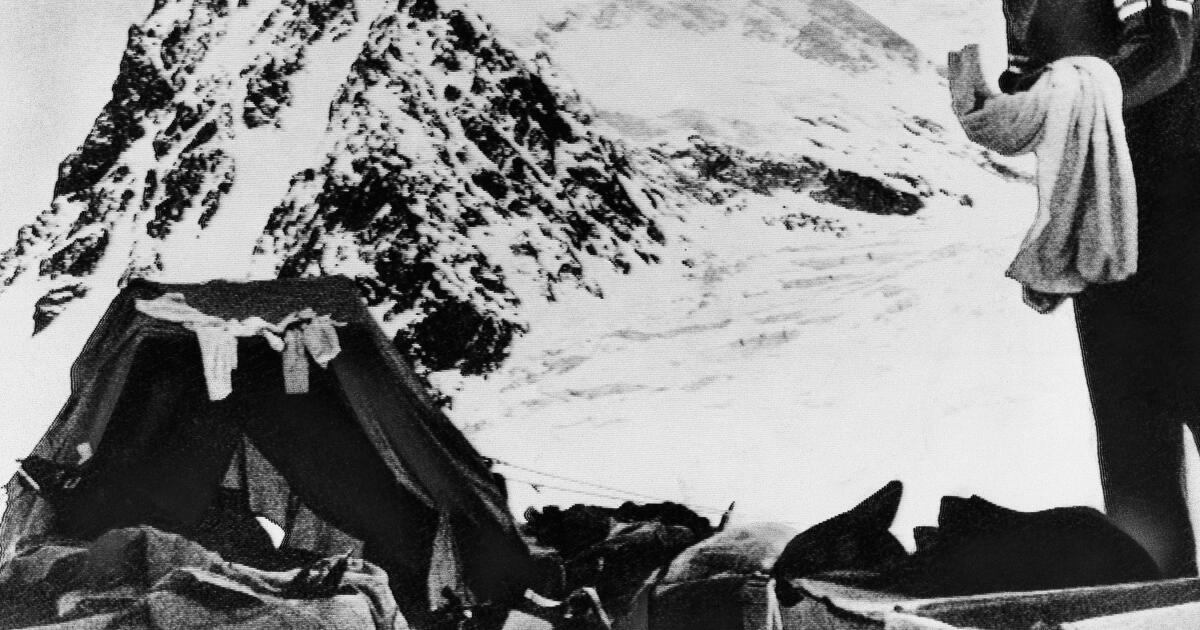
Jim Whittaker, first American climber to scale Mount Everest, has died

Newsletter: NATO holds amid fragile Iran ceasefire

Florida High School Football Rankings: Top 25 teams – Oct. 21

How old is Bo Nix? What to know about Oregon quarterback ahead of 2024 NFL Draft

Cleary's 21 help Le Moyne down Central Connecticut State 69-64 in OT

99th annual Pony Swim held in Virginia

Indiana Members Credit Union announced as new anchor tenant at Bottleworks District
Newsletter: NATO holds amid fragile Iran ceasefire
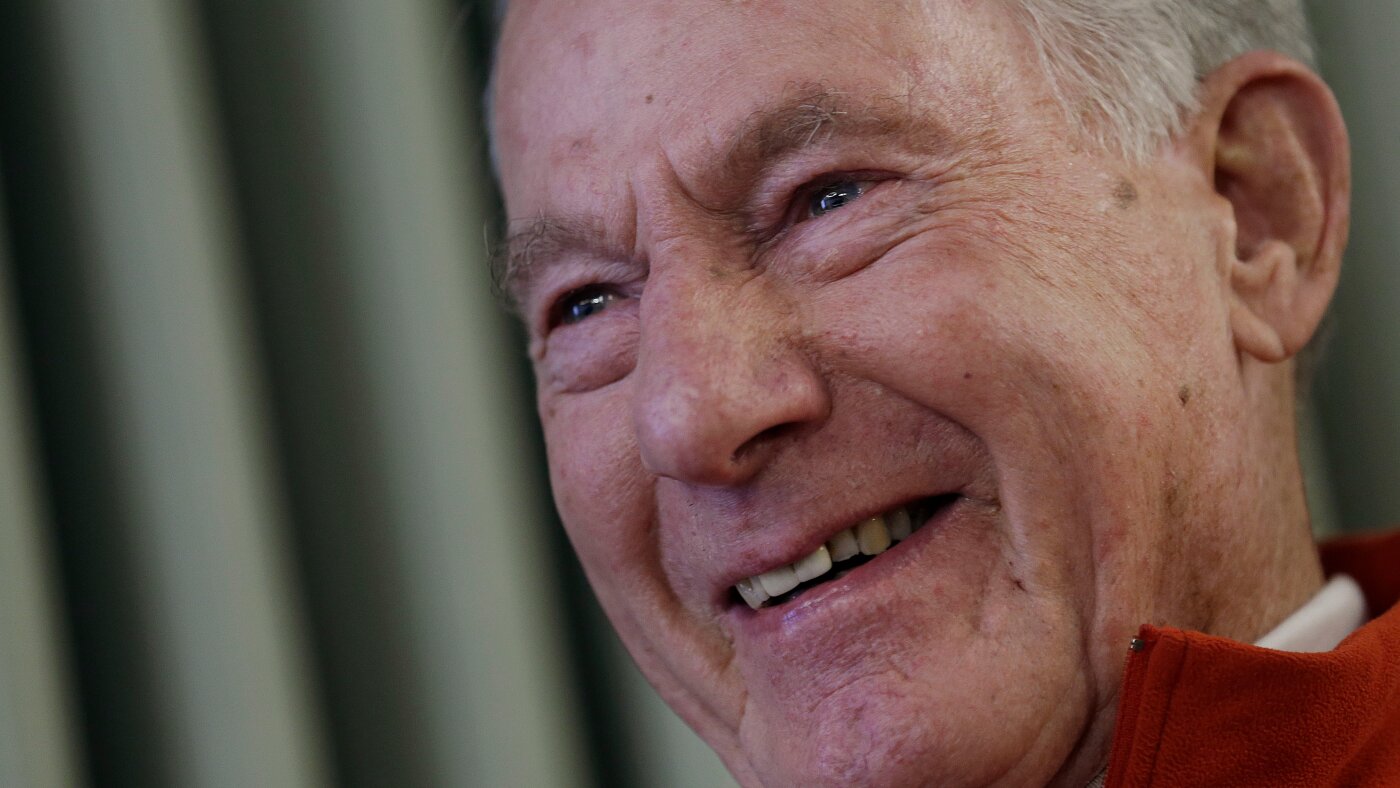
Jim Whittaker, the first American to summit Mount Everest, dies at 97

Video: Military Families Bear the Burden of War, Again

Fox News Poll: Record number say taxes are too high; government spending seen as wasteful

‘Even the street cats ran’: Inside Israel’s deadliest attack on Beirut
-

 Atlanta, GA4 days ago
1 teenage girl killed, another injured in shooting at Piedmont Park, police say
-

 Culture1 week ago
Do You Know Where These Famous Authors Are Buried?
-

 Movie Reviews7 days ago
Vaazha 2 first half review: Hashir anchors a lively, chaos-filled teen tale
-

 Georgia2 days ago
Georgia House Special Runoff Election 2026 Live Results
-

 Pennsylvania2 days ago
Parents charged after toddler injured by wolf at Pennsylvania zoo
-

 Education1 week ago
Video: We Put Dyson’s $600 Vacuum to the Test
-
 Milwaukee, WI3 days ago
Potawatomi Casino Hotel evacuated after fire breaks out in rooftop HVAC system
-
 Entertainment1 week ago
Inside Ye’s first comeback show at SoFi Stadium