Lifestyle
They cut their water bill by 90% and still have a 'showstopping' L.A. garden


Water-hungry lawns are symbols of Los Angeles’ past. In this series, we spotlight yards with alternative, low-water landscaping built for the future.
Looking out the front windows of their northeast L.A. home, Kyle Anido and Katie Cordeal say their front yard is barely recognizable from a year ago when it was a lawn.
“It’s crazy to see how lively the garden is now,” says Anido, a 37-year-old camera operator. “There is so much bee activity.”
A bee is drawn to the Bird’s-Eye Gilia in Katie Cordeal and Kyle Anido’s front yard.
“It has absolutely exploded,” adds Cordeal, 38. “It’s pretty incredible what has happened over the past 12 months. And we haven’t even watered the yard this year.”
The colorful ecosystem, which thrives without sprinklers, amendments, fertilizers, gardeners and gas-powered lawn equipment, is not lost on the couple’s 2½-year-old son, Owen.
“Bees!” he yelled with delight from the front porch, pointing to the pollinators feeding on the native California flowers in his front yard.
“Owen loves bugs,” Anido says of the boy’s vibrant playground.
When the couple purchased their first home in 2021, the front yard was an uninspired swath of Bermuda grass, an oddly placed palm that real estate agents hastily planted for staging purposes and white gravel.

Homeowners Katie Cordeal and Kyle Anido wanted a colorful, drought-tolerant landscape.
(Dania Maxwell/Los Angeles Times)
After renting an apartment in Brooklyn, the couple felt intimidated by the prospect of caring for a home and yard and decided to keep the previous owners’ gardener. They did this, they say, because it was easy, but the noise and environmental pollution from the weekly “mow and blow” proved difficult for Cordeal, who works from home as a film and television production accountant.
“We would have to close all the doors and windows because the gas-powered leaf blower was so loud,” she says. “I hated the gas smell.”
Interested in conservation and drought-tolerant plants, the couple contacted garden designer Sophie Pennes of Urban Farms L.A. after viewing her before-and-after turf transformations — and lawn rants — on TikTok.
“I identified with what seems to be Sophie’s primary drivers — to support biodiversity, revitalize natural ecosystems, and conserve water,” Cordeal says. “Also, I could tell she is educated and passionate about what she does, and I enjoyed her dry humor.”
While this year’s record-setting rainfall may feel like an excuse to reconsider the argument for removing thirsty turf, that’s ludicrous, says Pennes, who specializes in edible gardens and California native gardens.
“Tearing out your lawn is about so much more than saving water,” the landscape designer says. “You don’t need to be a scientist to see the negative impact of lawns on the native habitat in any given city or ecology. It’s obvious when you’re walking through a neighborhood, and you stand in front of a grass lawn, and then you stand in front of a native garden: you can see the wildlife. We need to engage in the places where we live.”
Before and after photos courtesy of Katie Cordeal.

Mexican marigolds repel pests and attract birds.
After agreeing on a plant palette that included lots of color, wistfulness, texture and tall grasses, the couple hired a landscape contractor to remove their lawn by hand. They then sheet mulched the front yard — smothering it in wet cardboard — and waited for three months.
When it was time to plant, Pennes installed repeat groupings of three, including ceanothus, Canyon Prince Wild Rye and penstemon. “I wanted to have a bold effect when things were in bloom,” she says of the homeowners’ request for a colorful landscape. “I didn’t want it to be casual; I wanted it to be showstopping.”
A year later, the front yard is what they had hoped for. From the street, the 1937 residence appears modest, a two-bedroom house with two large picture windows. But the garden is indeed a showstopper. “It is such a magical walk to the front door,” Cordeal says of the lupine, poppies, penstemon and sage blooming on either side of the stairs up to the house.
Pennes designed the garden so that something is always in bloom regardless of the season. The purple Showy Penstemon is starting to fade, for instance, but the clarkia flowers are ready to open. On the parking strip, Hollyleaf Cherry and hardy Canyon Prince Wild Rye counter the pink clarkias and California bluebells. “Canyon Prince Wild rye has such a beautiful gray-green color that pops against the backdrop of the gray house,” Pennes notes.
Non-native plants include African Basil, “which the bees love,” Cordeal says, as well as Meyer lemon and Hass avocado trees, which the couple feed with water from their bathtub through a graywater system installed by Greywater Corp. Pennes also planted Mexican marigold to help repel pests and attract wildlife. “The finches love it,” Pennes says. “As soon as you put the plants in, the butterflies and birds find them. It really is an ‘if you build it, they will come,’” she laughs.
The couple estimates they paid around $14,900 for the transformation, including the design, labor, plants, trees and mulch. After removing 1,150-square-feet of lawn in the front yard and the parking strip, their $5,750 turf replacement rebate from the Department of Water and Power brought the total down to $9,150. Over the past year, the couple also saw their water bill decrease by 90%. “Our June/July 2022 water bill was $210.99,” says Cordeal. Their bill for June/July 2023 water was $24.28, including the extra water used to establish the 1-gallon plants.
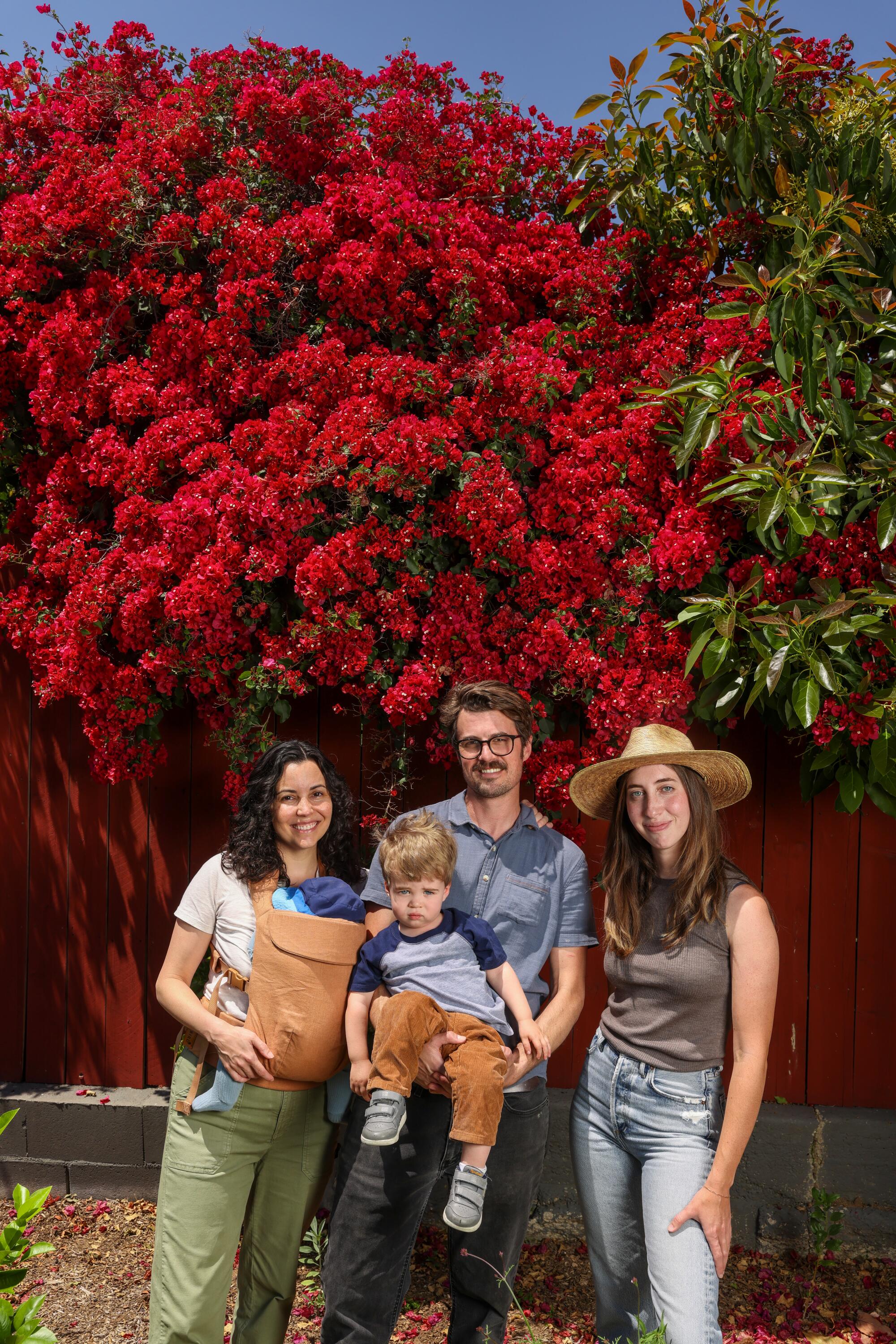
Homeowners Katie Cordeal and Kyle Anido with their newborn Felix, toddler Owen and Sophie Pennes of Urban Farms L.A., right, who helped landscape the yard.
But they are not stopping there. They are in preliminary talks with Pennes to overhaul their excessively hot backyard.
“We want to remove most of the concrete,” says Cordeal. “We want a veggie garden and another fruit tree that can use graywater. We want a lot more foliage in general to cool the backyard. We also need to figure out lots of play space for our two boys, but we’re not sure what ground cover that will be.”
You can be sure it won’t be artificial turf.
“My biggest enemy is plastic turf,” Pennes says. “Even if I get the opportunity to tear it out, it ends up being plastic garbage in a landfill.”
Cordeal says the beauty of the garden is more than just visual.
“Our front yard is an environmentally friendly site,” she says. “It’s so nice to look outside and see all the color and wildlife. I have a chair right by our front window, and when I’m nursing my 3-month-old, I can stare outside instead of at my phone. It’s a joy.”



There’s a three-story house in Baltimore that looks a bit imposing. You walk up the stone steps before even getting up to the porch, and then you enter the door and you’re greeted with a glass case of literary awards. It’s The Clifton House, formerly home of Lucille Clifton.
The National Book Award-winning poet lived there with her husband, Fred, starting in 1967 until the bank foreclosed on the house in 1980. Clifton’s daughter, Sidney Clifton, has since revived the house and turned it into a cultural hub, hosting artists, readings, workshops and more. But even during a February visit, in the mid-afternoon with no organized events on, the house feels full.

The corner of Lucille Clifton’s bedroom, where she would wake up and write in the mornings
Andrew Limbong/NPR
hide caption
toggle caption
Andrew Limbong/NPR
“There’s a presence here,” Clifton House Executive Director Joël Díaz told me. “There’s a presence here that sits at attention.”
Sometimes, rooms where famous writers worked can be places of ineffable magic. Other times, they can just be rooms.

Princeton University Press
Katie da Cunha Lewin is the author of the new book, The Writer’s Room: The Hidden Worlds That Shape the Books We Love, which explores the appeal of these rooms. Lewin is a big Virginia Woolf fan, and the very first place Lewin visited working on the book was Monk’s House — Woolf’s summer home in Sussex, England. On the way there, there were dreams of seeing Woolf’s desk, of retracing Woolf’s steps and imagining what her creative process would feel like. It turned out to be a bit of a disappointment for Lewin — everything interesting was behind glass, she said. Still, in the book Lewin writes about how she took a picture of the room and saved it on her phone, going back to check it and re-check it, “in the hope it would allow me some of its magic.”
Let’s be real, writing is a little boring. Unlike a band on fire in the recording studio, or a painter possessed in their studio, the visual image of a writer sitting at a desk click-clacking away at a keyboard or scribbling on a piece of paper isn’t particularly exciting. And yet, the myth of the writer’s room continues to enrapture us. You can head to Massachusetts to see where Louisa May Alcott wrote Little Women. Or go down to Florida to visit the home of Zora Neale Hurston. Or book a stay at the Scott & Zelda Fitzgerald Museum in Alabama, where the famous couple lived for a time. But what, exactly, is the draw?

Lewin said in an interview that whenever she was at a book event or an author reading, an audience question about the writer’s writing space came up. And yes, some of this is basic fan-driven curiosity. But also “it started to occur to me that it was a central mystery about writing, as if writing is a magic thing that just happens rather than actually labor,” she said.
In a lot of ways, the book is a debunking of the myths we’re presented about writers in their rooms. She writes about the types of writers who couldn’t lock themselves in an office for hours on end, and instead had to find moments in-between to work on their art. She covers the writers who make a big show of their rooms, as a way to seem more writerly. She writes about writers who have had their homes and rooms preserved, versus the ones whose rooms have been lost to time and new real estate developments. The central argument of the book is that there is no magic formula to writing — that there is no daily to-do list to follow, no just-right office chair to buy in order to become a writer. You just have to write.

Bruce Johnston
I’m Riding My Last Wave With The Beach Boys
Published
Bruce Johnston is riding off into the California sunset … at least for now.
The Beach Boys legend announced Wednesday he’s stepping away from touring after six decades with the iconic band. The 83-year-old revealed in a statement to Rolling Stone he’s hanging up his touring hat to focus on what he calls part three of his long music career.

“It’s time for Part Three of my lengthy musical career!” Johnston said. “I can write songs forever, and wait until you hear what’s coming!!! As my major talent beyond singing is songwriting, now is the time to get serious again.”
Johnston famously stepped in for co-founder Brian Wilson in 1965 for live performances, becoming a staple of the Beach Boys’ touring lineup ever since. Now, he says he’s shifting gears toward songwriting and even some speaking engagements … with occasional touring member John Stamos helping him craft what he’ll talk about onstage.
“I might even sing ‘Disney Girls’ & ‘I Write The Songs!!’” he teased.
But don’t call it a full-on farewell tour just yet. Johnston made it clear he’s not shutting the door completely, saying he’s excited to reunite with the band for special occasions, including their upcoming July 2-4 shows at the Hollywood Bowl as part of the Beach Boys’ 2026 tour. The run celebrates both the 60th anniversary of “Pet Sounds” and America’s 250th birthday.
“This isn’t goodbye, it’s see you soon,” he wrote. “I am forever grateful to be a part of the Beach Boys musical legacy.”
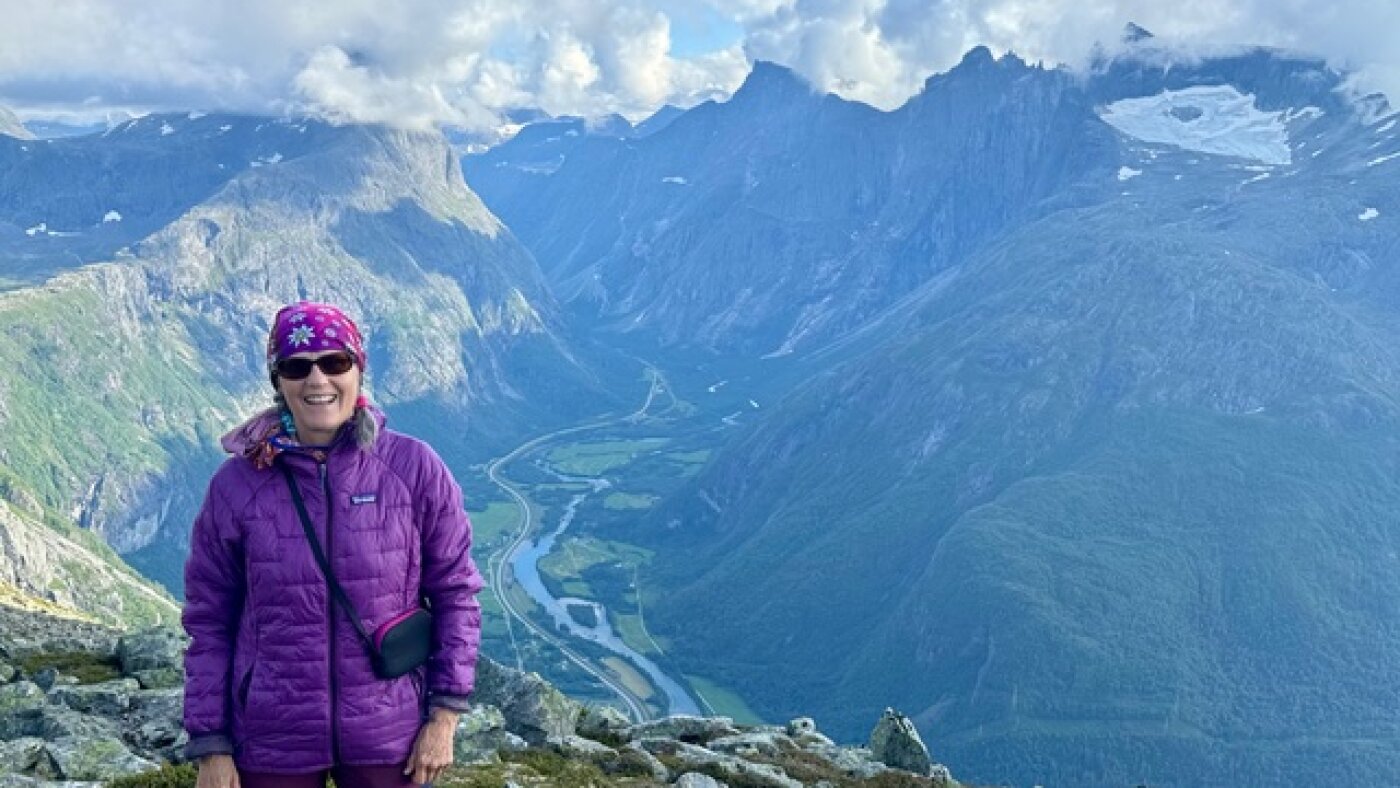
In 1982, Jean Muenchrath was injured in a mountaineering accident and on the brink of death when a stranger and his family went out of their way to save her life.
Jean Muenchrath
hide caption
toggle caption
Jean Muenchrath
In early May 1982, Jean Muenchrath and her boyfriend set out on a mountaineering trip in the Sierra Nevada, a mountain range in California. They had done many backcountry trips in the area before, so the terrain was somewhat familiar to both of them. But after they reached one of the summits, a violent storm swept in. It began to snow heavily, and soon the pair was engulfed in a blizzard, with thunder and lightning reverberating around them.
“Getting struck and killed by lightning was a real possibility since we were the highest thing around for miles and lightning was striking all around us,” Muenchrath said.
To reach safer ground, they decided to abandon their plan of taking a trail back. Instead, using their ice axes, they climbed down the face of the mountain through steep and icy snow chutes.
They were both skilled at this type of descent, but at one particularly difficult part of the route, Muenchrath slipped and tumbled over 100 feet down the rocky mountain face. She barely survived the fall and suffered life-threatening injuries.

This was before cellular or satellite phones, so calling for help wasn’t an option. The couple was forced to hike through deep snow back to the trailhead. Once they arrived, Muenchrath collapsed in the parking lot. It had been five days since she’d fallen.
”My clothes were bloody. I had multiple fractures in my spine and pelvis, a head injury and gangrene from a deep wound,” Muenchrath said.
Not long after they reached the trailhead parking lot, a car pulled in. A man was driving, with his wife in the passenger seat and their baby in the back. As soon as the man saw Muenchrath’s condition, he ran over to help.
”He gently stroked my head, and he held my face [and] reassured me by saying something like, ‘You’re going to be OK now. I’ll be right back to get you,’” Muenchrath remembered.
For the first time in days, her panic began to lift.
“My unsung hero gave me hope that I’d reach a hospital and I’d survive. He took away my fears.”
Within a few minutes, the man had unpacked his car. His wife agreed to stay back in the parking lot with their baby in order to make room for Muenchrath, her boyfriend and their backpacks.
The man drove them to a nearby town so that the couple could get medical treatment.
“I remember looking into the eyes of my unsung hero as he carried me into the emergency room in Lone Pine, California. I was so weak, I couldn’t find the words to express the gratitude I felt in my heart.”

The gratitude she felt that day only grew. Now, nearly 45 years later, she still thinks about the man and his family.
”He gave me the gift of allowing me to live my life and my dreams,” Muenchrath said.
At some point along the way, the man gave Muenchrath his contact information. But in the chaos of the day, she lost it and has never been able to find him.
”If I knew where my unsung hero was today, I would fly across the country to meet him again. I’d hug him, buy him a meal and tell him how much he continues to mean to me by saving my life. Wherever you are, I say thank you from the depths of my being.”
My Unsung Hero is also a podcast — new episodes are released every Tuesday. To share the story of your unsung hero with the Hidden Brain team, record a voice memo on your phone and send it to myunsunghero@hiddenbrain.org.
Mundane, magic, maybe both — a new book explores ‘The Writer’s Room’

Did Live Nation punish a venue by taking Billie Eilish away?

Millions lose power across Cuba as Trump sanctions continue to fuel ongoing energy crisis

DHS defends McLaughlin against allegations husband’s company profited millions from ad contracts: ‘Baseless’

Origin of deadly cancer affecting young adults revealed in alarming report

Florida High School Football Rankings: Top 25 teams – Oct. 21

Cleary's 21 help Le Moyne down Central Connecticut State 69-64 in OT

How old is Bo Nix? What to know about Oregon quarterback ahead of 2024 NFL Draft

99th annual Pony Swim held in Virginia

Indiana Members Credit Union announced as new anchor tenant at Bottleworks District
DHS defends McLaughlin against allegations husband’s company profited millions from ad contracts: ‘Baseless’

Sánchez defies Trump in political gamble as Madrid say no to war

Satellite images show Iran school strike hit more buildings than earlier reported

US submarine sinks Iranian warship by torpedo in a first since World War II

Which oil and gas facilities in the Gulf have been attacked?
-

 World1 week ago
Exclusive: DeepSeek withholds latest AI model from US chipmakers including Nvidia, sources say
-

 Massachusetts1 week ago
Mother and daughter injured in Taunton house explosion
-

 Wisconsin3 days ago
Setting sail on iceboats across a frozen lake in Wisconsin
-

 Denver, CO1 week ago
10 acres charred, 5 injured in Thornton grass fire, evacuation orders lifted
-

 Maryland4 days ago
AM showers Sunday in Maryland
-

 Louisiana1 week ago
Wildfire near Gum Swamp Road in Livingston Parish now under control; more than 200 acres burned
-

 Florida4 days ago
Florida man rescued after being stuck in shoulder-deep mud for days
-

 Oregon5 days ago
2026 OSAA Oregon Wrestling State Championship Results And Brackets – FloWrestling