Lifestyle
There’s a jazz renaissance happening in Los Angeles. Why now?


From top to bottom: Bobby Hutcherson, Dexter Gordon, Esperanza Spalding, Abbey Lincoln, Herbie Hancock and Charles Mingus.
(Getty Images)

Backstage at the Blue Note L.A., Herbie Hancock and Wayne Shorter’s widow, Carolina, have come, along with me and a friend, to see Esperanza Spalding between sets one late summer Sunday. The club is new and the dressing room feels more humane than most, like a hotel banquet room. Esperanza makes an altar on the vanity and prepares the space for chanting, a prayer meeting but more unapologetic, ritualistic and communal. We make an impromptu jazz orchestra in clipped Sanskrit, and my mind wanders to the first time I heard this Lotus Sutra, when Tina Turner performed it on CNN’s “Larry King Live,” explaining that it’s how she got into her transcendent mode when she still lived with Ike in Inglewood — her means of escaping him in spirit before she ran away physically. When she finally left, she hid from Ike at Wayne Shorter’s home. With my mind on Turner, I do transcend; I feel so emboldened I could leave anything behind in peace after the session. On the way to the car, we pass Turner’s star on the Walk of Fame. Think it not strange; one perfect improvisation leads to another, jazz music is a way of life, collective improvisation is — one note calls to another, one star lights another. One runner in need of sanctuary clears another’s path, and every jazz club is half house of worship and rebellion that way.
There’s an ongoing jazz renaissance in Los Angeles, one loosely rooted in the genre’s prematurely and cyclically proclaimed death — the same way the city’s celebrities tend to become franchises in the afterlife, worth more dead than alive. Jazz haunts with debts owed to its creators, and has a knack for revivals, collectives, new venues in the old forms, and stalwart clubs revivified by benefactors and grant funding. The West Coast Blue Note to complement the one in New York’s West Village opened on Sunset Boulevard last August, enticing tourists and supper club enthusiasts. Leimert Park’s World Stage just received substantial Mellon funding. There are musicology programs, like the one at UCLA helmed by Herbie Hancock, and local hip-hop producers like Madlib (nephew of a jazz trumpeter) and the Alchemist who have been sampling and looping jazz records until they’re part of a canon beyond themselves.
Why there is renewed interest in the genre now is the question. What about the ecosystem or nervous system of Los Angeles is baiting jazz music out from its malleable shadow into a renewed prominence and even granting it rank in the clout economy? I think it has to do with the genre’s ability to orient and organize social life through collective improvisation, the fact that hip-hop, now in its 50s, is aging out of the night club and needs to highlight its proximity to jazz to reinvent aspects of its image as more subdued and inviting, less reminiscent of Diddy parties and more chanting wholesomely with elders backstage. Ultimately, the desire for a new jazz age is a wish for a new national identity as glamorous and unassailable as old Hollywood. Jazz is diplomatic yet just elitist and gatekept enough to feel like it belongs to the state and the people alike, it’s democratic with hints of classist rhetoric in some of its spheres and jazz is Black music, but that has never stopped borderline-racists from appropriating and loving it.
Jazz lore is concentrated in New York, Chicago and New Orleans, however, and even finds Paris, Antibes, Milan and Tokyo before it settles into the elements of its reputation that include L.A.-born, -raised or -influenced players and scenes. As is common for Los Angeles, the sense of exile and wasteland here makes it an overlooked frontier, a place where new worlds incubate undetected and experts are mistaken for philistines in the glare of year-round sunshine and casualness conflated with lack of rigor. L.A. and its music scenes tend to be fervently, rigorously casual — daylight blinds the spotlight as the preferred illumination for concerts and parties. And we would be right to laugh or clap back more often, retaliating against those towns that take themselves too seriously. If we had a public transportation system that didn’t induce depression, alienation and self-loathing and meaningfully breached the seemingly willful segregation covenants between neighborhoods and zones here, you could take a jazz tour of L.A. that would be heartbreaking in its range. As it is, the durability and versatility of a Los Angeles jazz consciousness depends as much on real estate as on fans and musicians; it’s as territorial and precarious as the land, which burns, trembles or courts dysfunction on a whim indiscriminate of season and somehow remains photogenic and certain of its appeal. There are awards season, fire season and season of the witch, and beneath the intersection of Kendrick and Flying Lotus, of laid-back rap and half-hippie psychedelia, jazz is each season’s encrypted soundtrack, it scores our city.

A roll call of local jazz heroes raised here: There are Charles Mingus and Eric Dolphy in Watts, coming of age together. There’s Dexter Gordon, son of a Black doctor who treated Duke Ellington whenever he was in L.A. One Christmas, Ellington and Dexter’s dad had plans to meet at the Dunbar Hotel on Central Avenue, then the city’s primary jazz mecca, a West Coast version of Manhattan’s 52nd Street, lined with venues and shops carrying an attitude that matched the textures of the music. Dr. Gordon didn’t show; he died that night of a heart attack. Dexter went from sheltered son of a doctor to brooding child hipster who left home early to tour with big bands. There is the It Club, owned by a Black gangster and visited by everyone from Miles to Coltrane to Monk, who recorded an album there. There’s Hampton Hawes, born in L.A. the same year as Dolphy, imprisoned for heroin possession after serving in Japan and eventually pardoned by Kennedy. His style on the piano carries the relaxed tension of a man for whom syncretism comes naturally, East and West, sun and sorrow. Then, there’s Abbey Lincoln, escaping to Los Angeles to pursue theater and film alongside music. There’s Dial Records, founded by Glendale-born Ross Russell, which recorded Charlie Parker and Django Reinhardt. There’s vibraphonist Bobby Hutcherson, trumpeter Don Cherry, and Ornette Coleman, who came through L.A. and worked as an elevator operator while developing bands with locals like Bobby Bradford. I interviewed Bradford a couple months back and he emphasized how modest their band-building had been. Conversations during day jobs at department stores led to woodsheds and studio recordings.

American Jazz musician Ornette Coleman (1930–2015) plays saxophone as he performs onstage at the University of Illinois, Chicago, Illinois, May 1982.
(Steve Kagan/Getty Images)

Portrait of American blues singer Ella Fitzgerald. She is shown posing in a studio in a sequined dress. Undated photo circa 1940s.
(Bettmann Archive/Getty Images)
There was less glamour in the way of the making of an avant-garde in L.A., less of a hip reputation at stake, so that these bands ended up innovating more than those in New York in some cases. Horace Tapscott built a whole hyperlocal arkestra exemplary of this freedom. And there’s Chet Baker’s sound, there’s Ella Fitzgerald returning to Beverly Hills, Miles in Malibu, who also delivered his final performance at the Hollywood Bowl. L.A. eventually became a refuge for those who became too famous or comfortable elsewhere, as it still is now. But most of the jazz world ended up moving in the other direction, fleeing to New York and Paris and never looking back as if chasing elite romance, and this was as valid an impulse as chasing the sun. Decades passed, some L.A.-reared jazzmen died young or in middle age, and then the exodus yielded a return, not always physical, but in the spirit of relentlessly laid-back improvisers who refuse to feel inferior to their East Coast counterparts.
In the belly of a whale at a jazz venue in Little Tokyo, early 2014, I gathered with Fred Moten, Kima Jones and others to memorialize Amiri Baraka a week or so after his death. I was visiting from New York at the time, Fred lived here then and taught at UC Riverside, and I emailed the owner of the Blue Whale explaining that we should be on the East Coast at Baraka’s funeral but because we were here, we had to do something to celebrate him, it was urgent. The owner, Joon Lee, responded in kind and gave us a Monday night to improvise our grief; we read Baraka’s poems to one another and told stories. It’s what he might have done if stranded in Los Angeles on the week of his death, or what he would have joined us to do, and had, while alive. A few years later, having moved back to L.A., I went to Blue Whale to see Jason Moran with his band, and it felt close to being back at the Village Vanguard hearing them, close to a real night out. In 2021 Blue Whale closed after the year in the dark we’d all had, leaving jazz in the city barren and institutionally driven. Clubs nationwide were folding, but in L.A., if one or two music venues went under, it meant monopoly by Goldenvoice-owned spaces and well-intentioned hipster havens like Zebulon, gentrifying both neighborhoods and music.
At Zebulon I can see a Black jazz performance and be one of three Black people in the audience. At World’s Stage you can see local acts with a Black crowd but fewer out-of-town groups are invited because it’s exceedingly expensive to fly a band out and lodge them for days for shows. At Catalina’s, an older crowd with less current tastes convenes. At Hollywood Bowl, you have to be ready for an Event, not just a concert or show and not quite a festival. At Sam First, you’re so far into the Westside it feels conniving and like a tech monster might hold you hostage until you give up all your data. At the new Blue Note, you’ll see blockbuster acts in the jazz world but be rushed out to make room for the next set’s crowd as if on a ride called jazz at an amusement park. The wayward party “Jazz Is Dead” has turned the hype of that phrase into a brand that angers so many of the genre’s elders and angels, to sell jazz’s death and displacement back to you as big concerts with legends like Stanley Cowell, Azymuth and Sun Ra’s Arkestra.
The true renaissance is annexed to hidden places and in our collective will to excavate them: house and private parties, venues that go under the radar and book jazz avant-gardists sans fanfare, archival interest in jazz migration to and from Los Angeles, and the fact that more young people want to find ways to hear jazz music in defiance of how they’re told to access it — in backyards and nontraditional venues. The venues are like decoys, real estate ventures that would find a way no matter the acts or genre, it turns out. I cannot be visited by the ghost of Tina Turner by way of Herbie Hancock, Esperanza and the Lotus Sutra while scrolling, and nothing in the live sets will be identical to what’s on their albums even if they play the same songs in name. What’s really making a comeback with unlimited momentum is our collective will toward experiences that can only happen live, which is what makes jazz important beyond any institutional, cultural or regional capture. In a city that feels rigid with concern about its own image projection, jazz is the only music that demands we abandon script.

American jazz musician Don Cherry (1936–1995) plays a pocket trumpet at a World Music Institute ‘Improvisations’ concert at Symphony Space, New York, New York, June 8, 1991.
(Linda Vartoogian/Getty Images)


Inde Navarrette and Michael Johnston in Obsession.
Focus Features
hide caption
toggle caption
Focus Features
Two big horror films, Obsession and Backrooms, just smashed all box office expectations. So much of their success has been driven by Gen Z, which is now the biggest moviegoing demographic. But what makes a movie a Gen Z movie? Today we’re bringing you an episode of NPR’s It’s Been a Minute. Host Brittany Luse talks about this trend with Sam Adams and Reanna Cruz.
If you want to hear more about these movies, check out these episodes:
In ‘Obsession,’ love hurts. It really, really, really hurts.
‘Backrooms’ brings YouTube horror to the big screen
Zendaya brings ‘The Drama,’ we bring the spoilers
Connect with Pop Culture Happy Hour:
Letterboxd / Facebook
Our weekly newsletter
Support Pop Culture Happy Hour+

I regret to inform you I’ll need to keep this introduction brief. Not because there’s any lack of things to say about July’s crop of notable new releases; it features award-winning journalists and several different flavors of anxiety about our bleak ecological future and data-dominated present, as well as the welcome returns of several beloved novelists.
No, these books certainly deserve some love, dear readers. It’s just that I’m finding it a bit tough to type while bearhugging a box fan. And since it seems that may be my last best chance to get through this latest U.S. heat wave here on the east coast without sweating through my shirt, I feel some urgency to get back at it.
So enough with the ado. With any luck, you’ll soon be cracking open one of these great reads on the beach — or in front of a decent air-conditioning unit, at any rate.
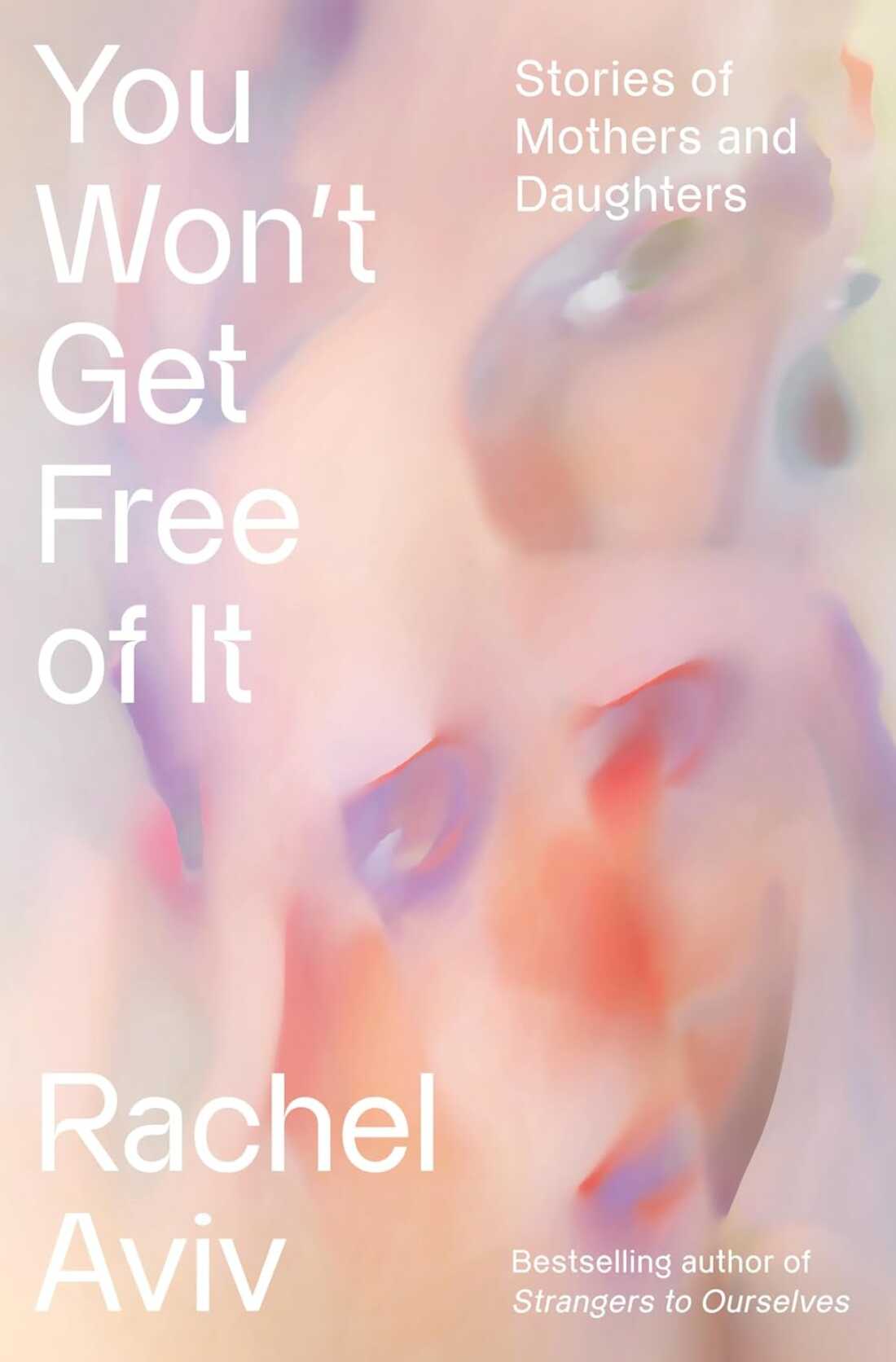
You Won’t Get Free of It: Stories of Mothers and Daughters, by Rachel Aviv (July 7)
Aviv, New Yorker staff writer and finalist for this year’s Pulitzer Prize, has a fairly extensive purview in her role as reporter at large. Still, when reviewing her latest work, Aviv noticed a crucial throughline: “I realized that, to some degree, I’d been writing about mother-daughter pairs for the last decade,” she explained to the Paris Review. Seeing this, she decided to collect and revise half a dozen of those stories, which cover ground from a daughter’s troubling fugue states to the immigrant nannies who must leave their own children behind, to Alice Munro’s daughter, whose claims of sexual abuse went unheeded yet regularly resurfaced in her mother’s fiction.
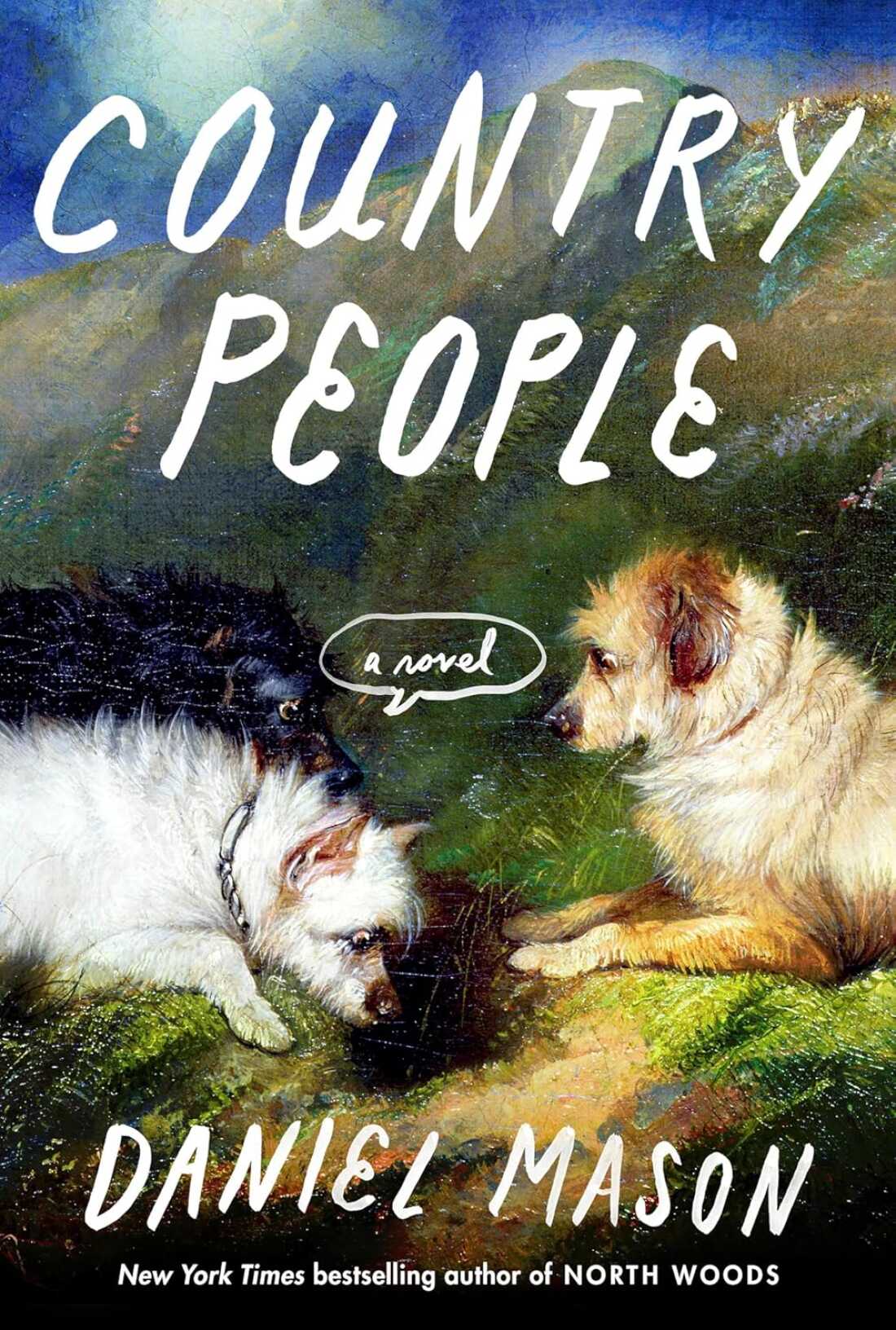
Country People, by Daniel Mason (July 7)
In Mason’s first novel since North Woods, 2023’s critical darling and book club stalwart, readers are plopped right back in the New England woods but the time scale has shrunk considerably. Whereas North Woods spanned centuries, his new novel confines itself to a single year, during which Miles, loving family man and lackadaisical Ph.D. candidate, plans to finally buckle down on that derelict degree of his and reassert his worth to one and all! At least, that’s the idea. But plans don’t stand much of a chance when there are eccentric neighbors to befriend and mysterious local legends to investigate.

Catch the Devil: A True Story of Murder, Deception, and Injustice on the Gulf Coast, by Pamela Colloff (July 14)
This is the first book from Colloff, a veteran investigative journalist for ProPublica and The New York Times Magazine. She has won multiple National Magazine Awards for stories focused on miscarriages of justice – such as her 2019 piece about Paul Skalnik, a grifter, fabulist, sexual predator and snitch, whose fabrications can be linked to dozens of wrongful convictions in Florida, including some sending the innocent to death row. Here Colloff expands upon that investigation, which gets a lot more room to breathe in the transition from magazine article to full-length book. What emerges in this disturbing account is a portrait of one man’s callous cruelty, and the law enforcers who had no problem tolerating a deal with the devil, provided it kept juicing the conviction rate.

Cloudthief, by Nathaniel Rich (July 14)
Though it’s his fiction we’re discussing here, it’s important to note Rich’s reporting has earned plaudits, too, as well as a few film adaptations. No matter the medium, climate change is usually on his mind, as well as the blunt, rather bleak, prognosis he offered on Fresh Air in 2019: “There’s a huge range of outcomes … ranging from the not very good to the apocalyptic.” Which is to say I’m surprised to find myself describing his newest response to global catastrophe as a rollicking good time – and not just because I’ve never said those words, in that order, in my life. This spry, funny caper features a freelance environmental reporter who inadvertently breaks bad, careening under the influence of lust and a light wallet toward the novel’s big centerpiece: the planned heist of a massive data center.

Data Empire: The Power of Information to Organize, Control, and Dominate, by Roopika Risam (July 14)
And now, for another book centered on data – albeit from a rather different angle. This illuminating history from Risam, a Dartmouth professor, traces the practice of collecting information – and the power conferred by possessing it – from the bones that were humans’ first archives, to the omnipresent systems that shape (or outright determine) life today. As Risam asks, “What has it meant – and what will it mean – when records that once served only to help us remember, come to rule?” A pressing question (see: those data centers), which you’re probably better served trying to answer with the help of Risam than, say, Alexa or Claude.

It Will Come Back to You: Stories, by Sigrid Nuñez (July 14)
For someone with nine novels to her name, Nuñez got a later start than you might expect, having published her first book when she was already in her mid-40s. More than three decades later, now a spry 75 years old, the National Book Award winner has gotten around to publishing her first collection of short stories. The 13 stories here have been culled from across her career, but each one resonates clearly with the warm timbre of her voice: simple, unadorned prose and mundane setups, from which she consistently manages to tease out glimpses of truth, elusive and profound.

They Stole a City: Wilmington’s White Supremacist Coup and the Families Who Live with Its Legacy, by Lauren Collins (July 14)
The only coup d’etat to succeed on U.S. soil is, at most, a distant historical afterthought these days. To be honest, I can’t recall reading a single textbook entry that even remarked on the 1898 race massacre in Wilmington, N.C., an action led by white supremacists that left many (historian estimates say up to 300) Black Wilmingtonians dead and permanently scarred a community newly aware of its simmering animus and vulnerability to violent overthrow. So I’m grateful for Collins’ new chronicle of the infamous event, which fills in some serious gaps in the American collective memory and explains how its perpetrators cultivated the disorienting silence that persists in the historical record today.

Yellow Pine, by Claire Vaye Watkins (July 21)
I don’t think I’ve ever actually laid eyes on the Mojave Desert but after reading Watkins’ latest novel, it feels like I can picture it more vividly than some streets I’ve actually lived on. No, it’s “not a beginner’s wilderness,” as Watkins concedes in Yellow Pine, but this landscape so redolent of death is also deceptively robust with life, if only you’re patient enough to find it. Too bad, then, that it’s also on fire. And choked by drought, irradiated by military test sites and soon to be sacrificed to a massive new solar array named, inexplicably, Yellow Pine. But those aren’t the only complications confronting the book’s main character, Rose, whose aspirations of becoming a kind of climate hermit warp a bit under the pressure of a rekindled love and the pendulum swing of rage and despair at the state of the world.

Cool Machine, by Colson Whitehead (July 21)
Ray Carney is back, for what regrettably appears to be the last time. The lifelong Harlemite, hard-luck furniture dealer and ambivalent crook starred previously in Harlem Shuffle and its sequel, Crook Manifesto. His perspective is our window on the changing eras of the historically Black neighborhood, from the mid-1950s on. In this, the final installment in Whitehead’s brisk, exceedingly entertaining Harlem Trilogy, readers catch up with Carney around the start of the 1980s, following him deeply into Reagan’s decade. The novel also represents the end of an era for Whitehead, whose attention has been exclusively occupied with these characters since he won Pulitzer Prizes for consecutive novels, The Underground Railroad and Nickel Boys.

Beginning Middle End, by Valeria Luiselli (July 28)
The gifted young Mexican writer returns this month with her fourth novel, the second she has written in English and her first since Lost Children Archive launched to widespread plaudits more than seven years ago. Her new book, like her previous one, also concerns the travels of a small family – only this time, the road leads not through the American Southwest but Sicily. And the history sought by its mother-daughter main characters is not a record of bureaucratic cruelty but something much more intimately personal: the links shaped and tested by generations of shared heritage and experience.



-

 Detroit, MI17 minutes ago
Child shot while riding bike outside home on Detroit’s west side, police say
-

 San Francisco, CA29 minutes ago
Bay Area restaurant has strict policy on acceptable children behavior
-

 Dallas, TX32 minutes ago
Detroit Pistons trade Marcus Sasser to Dusty May’s Dallas Mavericks
-

 Miami, FL37 minutes ago
The offseason has been a massive success for the Miami Heat
-

 Boston, MA44 minutes ago
Can’t afford Boston’s priciest restaurants? Try these instead. – The Boston Globe
-

 Denver, CO47 minutes ago
City of Denver says images of piling waste a case of illegal dumping
-

 Seattle, WA52 minutes ago
14-year-old dies in electric motorcycle crash at Seattle bike park
-

 San Diego, CA59 minutes ago
Serial sex abuser sentenced to over 300 years for crimes against young relatives

