Lifestyle
The 'food' you see on-screen often isn't real food. Not so, in 'The Taste of Things'


Eugénie (Juliette Binoche) and Dodin Bouffant (Benoît Magimel) love food (and one another) in The Taste of Things. Director Tran Anh Hung aimed for authenticity — from the menu to the movements in the kitchen — and enlisted three-star chef Pierre Gagnaire to help.
Stéphanie Branchu/IFC Films
hide caption
toggle caption
Stéphanie Branchu/IFC Films
Plenty of critics have warned: don’t see the new French movie The Taste of Things on an empty stomach. Juliette Binoche plays a longtime personal cook to a man who’s a gourmand. They share a passion for food – and for each other — but she refuses to marry him. Filled with gorgeous meals, the film celebrates food, and all the work and love that goes into making it.
When you see a delicious meal in a movie or an ad, chances are, it’s inedible. Food stylists have been known to substitute glue for milk, shaving foam for whipped cream, and coating meat with motor oil so it glistens.

Chef Pierre Gagnaire, who consulted on The Taste of Things, says the food images in the film are both “authentic” and “elegant.”
IFC Films
hide caption
toggle caption
IFC Films
All that was a big ‘Non’ for Vietnamese French director Tran Anh Hung.
He says he wanted “everything” in The Taste of Things “to be real,” from the raw ingredients to the menu to the way the cooks move in the kitchen.
Rather than go for “beauty shots,” Tran says he prefers “to see men and women at work doing their craft in the kitchen. And when this feeling is right, then everything will look beautiful. Not beautiful like a picture. It’s beautiful like something that is real.”
A 19th century taste test.
Carole Bethuel/IFC Films
hide caption
toggle caption
Carole Bethuel/IFC Films
A 19th century taste test.
Carole Bethuel/IFC Films
Easier said than done. Real food can’t always handle multiple takes. Plus Tran needed to show dishes at different stages of preparation. So he needed a lot of everything. For the classic French stew pot-au-feu “we needed 40 kilos of meat for the shooting.”
That’s almost 90 pounds.
He also had to find vegetables that looked like they were harvested in the 19th century. “They are not as beautiful as today,” he says, “They are not straight, you know, and they have a lot of spots on the skin.”
“In life we have two sources of sensuality. It’s love and food,” says Tran.
Carole Bethuel/IFC Films
hide caption
toggle caption
Carole Bethuel/IFC Films
“In life we have two sources of sensuality. It’s love and food,” says Tran.
Carole Bethuel/IFC Films
‘Crazy sensuality’
One of the must stunning creations in The Taste of Things is a seafood vol-au-vent, a large pastry shell filled with a thick sauce of crayfish and vegetables. The image of it being sliced for the guests is “absolute beauty” and “crazy sensuality,” says three-star chef Pierre Gagnaire who consulted on the film.
After doing extensive research into the the history of French cuisine and working with a historian, Tran enlisted Gagnaire to make sure the menu he’d come up with worked in real life.
“He found that some recipes are not good. So he changed it for me,” Tran remembers.
Gagnaire also cooked for Tran for five days so the director could study his movements in preparation for filming. Tran says watching Gagnaire move around the kitchen taught him that “simplicity is important and you don’t need to have the perfect gesture for this or that. You need only to, you know, to be very free … and improvise.”
In addition to consulting on The Taste of Things, chef Pierre Gagnaire also has a small part in the film.
Stéphanie Branchu/IFC Films
hide caption
toggle caption
Stéphanie Branchu/IFC Films
Gagnaire says the movie feels like a gift: “It’s an homage to my technique, to my creativity,” he says. The renowned chef agreed to take a small part in the film, the Prince of Eurasia’s culinary officier de bouche.
‘When I say cut, they always keep on eating’
Had the cuisine in the movie been doctored by a food stylist, it likely wouldn’t have been edible. Tran Anh Hung says The Taste of Things crew took home doggie bags for dinner and the actors, “When I say cut, they always keep on eating.”
It got to the point where they needed to shoot some scenes “unbuttoned” he laughs, “because there was no more room for the costume to enlarge them.”
“I didn’t want to have a food stylist on the movie because I wanted everything to be real,” says Tran.
IFC Films
hide caption
toggle caption
IFC Films
The Taste of Things does not have much dialogue. The action — and the intimacy — is in the kitchen. Binoche’s character is quiet and focused. She’s less interested in romance than she is in a creative, culinary partnership.
Gagnaire says he relates. He started working in kitchens as a teenager and he didn’t like it. He was shy and reserved. But when he realized he had a special talent for the profession, it became his way to socialize.
“By feeding people and making them happy,” he says, “cooking helped me connect with society. And develop real relationships.”
The Taste of Things is the opposite of a big, super hero action movie. Gagnaire believes people need that right now.
“We’re bombarded with vulgarity and brutality,” he says, “When you leave this film, you feel calm … because instead of violence, there’s tenderness.”
For Tran, the pleasures of a good meal are essential. “In life we have two sources of sensuality. It’s love and food,” he says.
The Taste of Things brings those two sources together in the kitchen.
This story was edited for broadcast and digital by Rose Friedman. The web story was produced by Beth Novey.

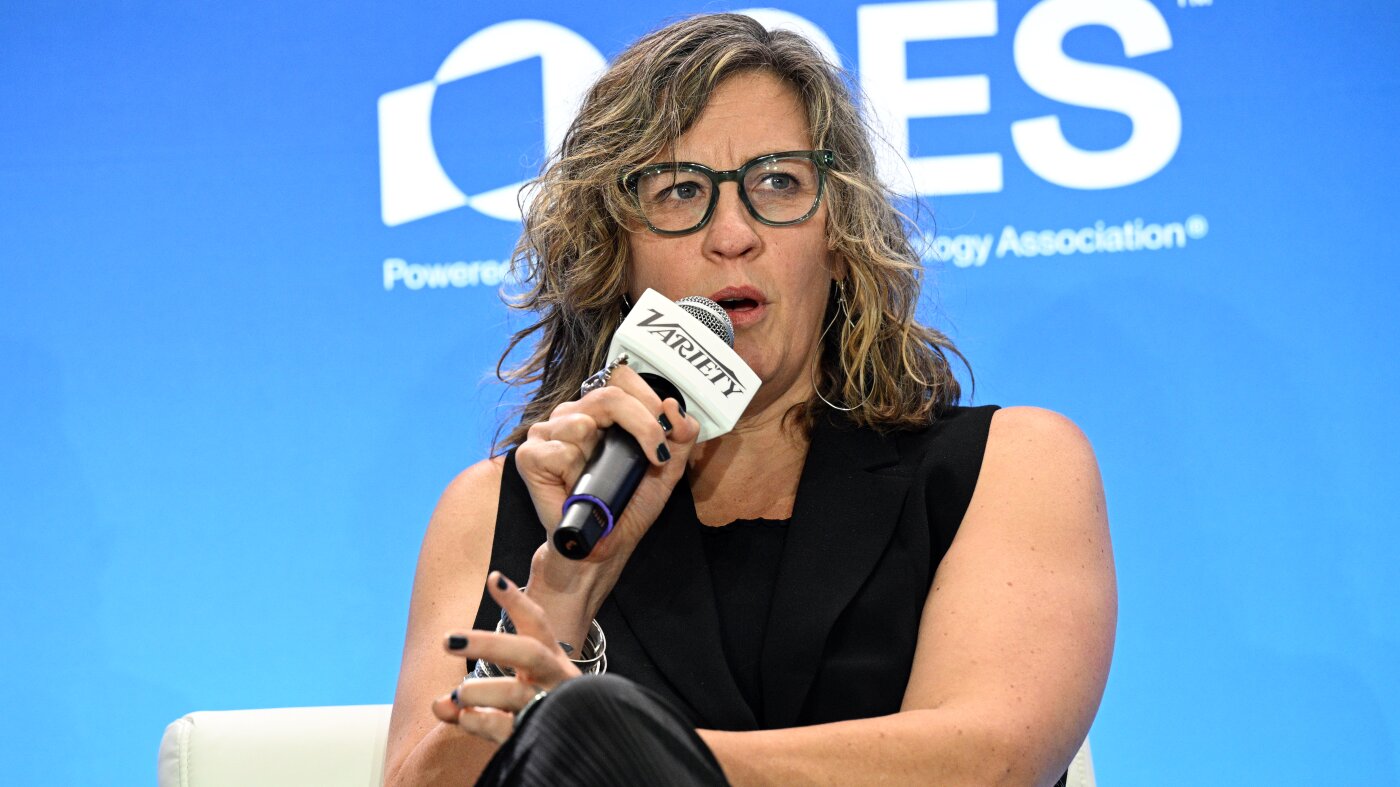
NPR has hired Nadine Zylstra to be its chief content officer. She is a veteran of Pinterest, YouTube and Sesame Workshop.
Variety via Getty Images/Variety
hide caption
toggle caption
Variety via Getty Images/Variety
NPR has hired a new chief content officer less than two weeks after overhauling its newsroom. Nadine Zylstra is tasked with expanding audiences for the public radio network’s news, entertainment and music in an increasingly digital world.
Zylstra comes to NPR from Pinterest, where she was the global programming chief. She previously was the global head of YouTube Originals and a top programming executive for Sesame Workshop, the nonprofit parent and producer of Sesame Street. She currently sits on the board of directors of PBS SoCal.
A native of South Africa, Zylstra says her first job in the U.S. was as a producer for the cable music channel VH-1 on celebrity news and wanted something different. She has since been hailed for her work promoting understanding across racial and ethnic divides for Sesame Street and programs for women at YouTube.
“I really feel like I’ve been training for this job my whole life,” Zylstra says in an interview. “I really do care about making the world a better place. When I am at my best, it’s when that connection between what I do and what I care about really comes together.”
NPR President and CEO Katherine Maher praised Zylstra, noting her work at Sesame and Pinterest’s reputation as a rare corner of relative kindness in the often harsh world of social media.
“In Nadine, we found somebody who comes out of public media… who understands the importance of media with a mission and a purpose, and as a tool for civic engagement,” says Maher in an interview. She says Zylstra will evaluate NPR’s portfolio of broadcast shows and podcasts in terms of whether they are fully reaching and serving audiences, and what might be missing from NPR’s offerings.
Additionally, Maher says, Zylstra understands the role of “joy and humor” in NPR’s programming, and how to create fresh content for new audiences as habits shift rapidly.
Zylstra will start in July and be based at NPR’s Culver City, Calif., office but come to NPR’s headquarters in Washington, D.C. at least once a month.
Gary Knell, a former chief executive of Sesame Workshop and NPR, calls Zylstra a dynamic figure who attracts brilliant colleagues.
“She’s a creative magnet for talent,” Knell says. “She has positive vibes.”
Knell says Zylstra came to work at Sesame in New York City after she collaborated with the company to develop a multiracial children’s show in her native South Africa. She later helped to create shows in tough spots, such as Kosovo, for the production company.
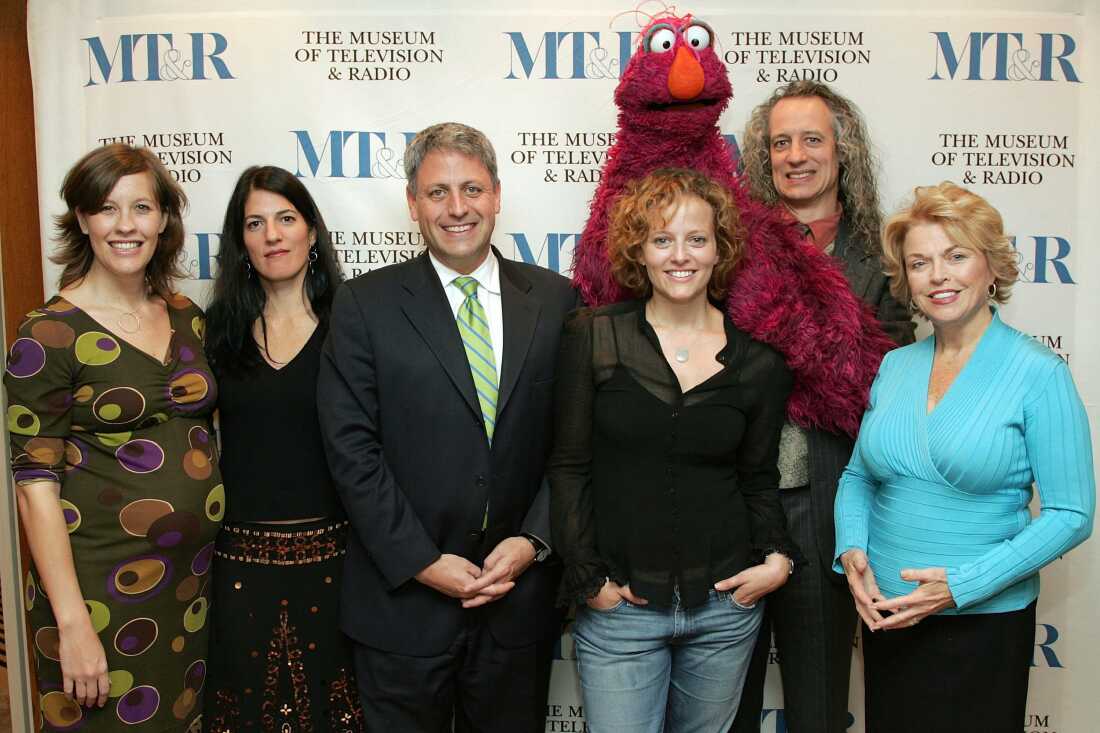
In this 2006 photo, Nadine Zylstra stands on the left, with filmmaker Linda Goldstein Knowlton, President and CEO of the Sesame Workshop Gary Knell, filmmaker Linda Hawkins Costigan, puppeteer Marty Robinson and President and CEO of the Museum of Television & Radio Pat Mitchell at the premiere of “The World According To Sesame Street.”
Bryan Bedder/Getty Images/Getty Images North America
hide caption
toggle caption
Bryan Bedder/Getty Images/Getty Images North America
“I would imagine this is an NPR move to bring in someone who is very familiar with social media platforms and YouTube content and is very able to drive content,” Knell says.
Pivotal moment for public media
Zylstra will oversee the leaders of NPR’s newsroom, music department, podcasts and related departments. But Maher stresses that Zylstra will not be involved in news decisions. While NPR Editor-in-Chief Tommy Evans will report to Zylstra on strategic matters, he will remain in charge of the journalism, Maher says. He will also remain part of Maher’s executive cabinet.
“I felt as though NPR’s journalism is rock solid and we’ve got great editorial leadership, and it was not probably the place where we needed additional layers,” Maher says. “I wanted someone who was really thinking about the expansiveness of public media’s mission and how we serve our audiences, how we encourage the innovations.”
NPR remains one of the most prestigious and wide-reaching outlets in broadcast news. More than 42 million people rely on it each week, on all its platforms, though that figure represents a drop from previous levels.

It continues to win awards for its news coverage, often conducted in concert with member stations around the country. NPR’s Planet Money has just spun off a best-selling book. NPR’s video series Tiny Desk Concert has 12 million subscribers on YouTube alone. The network created a weekly radio show around it and sold the rights to the format in Japan and South Korea.
Maher recently landed a pair of gifts totalling more than $113 million to improve NPR’s tech and distribution channels, strengthen its ties with member stations and market itself more effectively.
And yet, this is a daunting moment for NPR. Broadcast audiences are down throughout commercial and public media. News fatigue has set in. While NPR remains a top podcast producer, it lost its preeminent slot as iHeartRadio created hundreds of podcasts simply by repackaging all its radio shows. And then there’s the political backdrop.
President Trump and his allies have rallied supporters by accusing NPR and PBS of bias, a charge the networks deny. Last summer, the Republican-led Congress pulled funding from public media at Trump’s urging.
Before that happened, NPR received between 1 to 2% of its annual budget directly from the federal government. Its member stations had relied far more heavily on federal funds; They were, on average, roughly 10% of the stations’ revenues.
After losing the funds, layoffs rippled through public media. And because local public radio stations pay NPR to broadcast its shows, such as Morning Edition and All Things Considered, NPR recently determined it must cut about 30 newsroom positions through buyouts and layoffs. Greater cuts were forestalled in part by an anonymous $33 million gift — one of the two announced earlier this year.
The ferocity of changes buffeting the media industry is an opportunity Zylstra says she intends to embrace.
“Part of what’s exciting about the moment is putting the user at the center of the experience,” Zylstra says.
NPR’s track record with chief content officers
The position of chief content officer has a choppy record at NPR. Kinsey Wilson, an innovator in online news, was the first to hold the role nearly two decades ago. Wilson urged NPR to invest in digital content, acknowledging consumption of broadcast news was sliding.
Shortly after becoming NPR’s CEO in 2014, Jarl Mohn eliminated the job. He said at the time that he wanted to quell tensions between the radio and digital sides of the public media network. He also thought it important to strengthen relationships more directly with listeners. Mohn made clear he would be his own chief strategist.

His successor, the late John Lansing, sought to revive the chief content officer position but NPR struggled to fill the role. In 2023, Lansing named Edith Chapin, then NPR’s editor in chief, to become acting chief content officer, as well.
Chapin stepped down last summer just days after the Congressional vote to undo more than a half-century of supporting public media. She said the burden of simultaneously performing two grueling top-level jobs for two years had ground her down.
The way Zylstra sees it, content creation and distribution must go hand in glove.
“If somebody is searching for you, you’ve got to be there. And all the same, you’ve got to understand why are you there. How does that fulfill your mission? Who are you making this for and how are they experiencing it?” she says. “I think that’s how I can help our teams connect the dots across their individual workstreams that move us forward.”
Disclosure: This story was written and reported by NPR Media Correspondent David Folkenflik and edited by NPR Deputy Business Editor Emily Kopp and Managing Editors Vickie Walton-James and Gerry Holmes. Under NPR’s protocol for reporting on itself, no corporate official or news executive reviewed this story before it was posted publicly.

After stops in Dallas-Ft. Worth and the Bay Area, FuelFest, a global car-enthusiast festival, will cruise into the OC Fair & Event Center in Costa Mesa on June 13.
Those in attendance will get to watch the rubber hit the road on a drift course, gawk at more than 700 performance-built cars on display and behold some of the vehicles that introduced Japanese tuner cars to the American market in “Fast and Furious.”
“FuelFest is where good people, car-culture people, come to meet one another because they share a common interest, a common passion,” said Cody Walker, founder of FuelFest and the brother of late actor Paul Walker, who was known for his role in Universal Studio’s “Fast and Furious” franchise.
Audience members get to ride in the passenger seat of a professional driver’s drift car.
(FuelFest)
Organizers expect thousands of people to flock to the OC Fair & Event Center for FuelFest, moved not just by the sight and sounds of muscle cars, but by what surprises are in store to celebrate the 25th anniversary of the first “Fast and Furious” movie.
“This is a love letter to the city of Los Angeles and Orange County,” “Fast and Furious” actor Tyrese Gibson, a co-sponsor of the event, said on a recent video call about FuelFest.
The event will be something of a homecoming for Walker, Gibson and the “Fast” franchise. Walker, raised in the Sunland-Tujunga area, said the event will include tributes to cars made popular by the seminal Southern California car scene, including a lowrider and exotic car display.
Of course, FuelFest is also a tribute to Paul Walker. To continue his brother’s legacy, Cody Walker quit his job as a paramedic and took charge of Reach Out Worldwide, a disaster-relief charity founded by Paul in 2010, and he created FuelFest as a means to raise money for his brother’s initiatives.
“[Paul] was 40 years old, and we thought he had about 70 to go,” Walker said on a video call, referring to his brother’s fatal car crash in 2013. “He didn’t care about being this significant person; he didn’t see himself that way. The charity is the kind of stuff he cared about.”
As for this edition of FuelFest, Walker and Gibson said they didn’t want to spoil all of the surprises, but here are six things to know before you head to the event.
1. ‘Fast and Furious’ cars will be on display
Some of the Japanese Domestic Market and American muscle staples seen in the “Fast and Furious” films will be at FuelFest.
Gibson might not know specs like RPMs or cylinders, but he said he appreciates the “Fast and Furious” characters’ gorgeous cars, including Dominic Toretto’s 1970 Dodge Charger and Brian O’Connor’s late ’90s Mitsubishi Eclipse. Those cars and other iconic “Fast” wheels will be at the fest.
“It was because of these films that people in the United States became familiar with the tuner culture of Japan, which was super niche up until that point,” Walker said. “We’re talking about 25 years. There’s iconic cars from the franchise, from a bunch of the movies that will be there.”
2. Children age 12 and under get free admission
As children, Cody and Paul Walker were practically programmed to love cars. Their maternal grandfather was a race-car driver and mechanic, and their father was a photographer for Street Chopper Magazine. An event like FuelFest, Walker said, can be formative in fostering a lifelong passion and creative outlet for car-curious children.
Gibson said organizers wanted to make tickets free for children so that entire neighborhoods in the Los Angeles and Orange County areas could have a low-cost day out. Therefore, a general admission ticket for SoCal FuelFest costs $58.24 including tax and fees, but children age 12 and under get in free with a ticketed adult.
“If you’re a single mother and you have three kids all under 12 and you want to bring your friends in the neighborhood with you, whether they’re you’re kids or your neighbors, they’re getting in for free,” Gibson said.
If you want to splurge, there’s a meet-and-greet with Gibson plus VIP Platinum admission for $739.38, including tax and fees.

At FuelFest, a global car-enthusiast festival, more than 700 cars will be on display.
(FuelFest)
3. Performances by DJ Quik, Flesh-n-Bone and more
In addition to DJ sets and live performances, ’90s rap legends DJ Quik and Flesh-n-Bone will host an evening concert on the festival stage.
Walker and Gibson are mum about who else might show up during the concert, but they promised that audiences driving in from L.A. will find the trip down to Orange County worth it.
“There are no limits to the West Coast friends that DJ Quik has,” Gibson said.

During FuelFest, ’90s rap legends DJ Quik and Flesh-n-Bone will host an evening concert on the festival stage.
(FuelFest)
4. A Lucha Libre sideshow
If that’s not enough, there will also be a Lucha Libre show with, according to Walker, a “full-blown” story that has extended across FuelFest locations.
Lucha Libre Voz, an independent professional wrestling company based in California and Arizona, will host its worldwide championship match between Tigre Uno and Septimo Dragon.
“It’s gonna be insane,” Walker said. “Best show of the year.”
5. Ride passenger in a drift car (with a helmet)
After signing a waiver, strapping on a helmet and paying a $30 fee, audience members can ride along in the passenger seat of a professional driver’s drift car. Walker calls it: A “full-blown throttle therapy session.”
Reservations for the drift car ride-along will be handled on-site. Pro tip: Get there early to beat the lines.
6. Reach Out Worldwide’s event goal
A portion of the revenue from the event, mostly from on-site activities such as the drift car ride-along, will go to charitable efforts at Reach Out Worldwide, which has assisted with cleanup, repair and resource efforts for victims of natural disasters, including Hurricane Melissa in Jamaica and the Los Angeles County fires in 2025.
FuelFest has raised about $1 million for Reach Out Worldwide since the charity resumed in 2024, more than a decade after Paul Walker’s death paused the group’s work. Cody Walker predicts the revenue from the SoCal show will help Reach Out Worldwide pass the $1-million milestone.
“I gave up everything to make sure that Reach Out Worldwide could function,” Walker said. “FuelFest started as this simple idea, but now we’ve held over 30 events and we’re in 11 markets. … Paul would be very happy with where this has all gone.”
Festival
2026 FuelFest Southern California
When: 2 to 9 p.m. June 13
Where: OC Fair & Event Center, 88 Fair Drive, Costa Mesa
Tickets: Prices for general admission and VIP Platinum vary. Children age 12 and under are free.
Parking: $15
Info: fuelfest.com

Singer-songwriter P!nk hosted The 79th Tony Awards on Sunday at Radio City Music Hall in New York.
Charles Sykes/Invision/AP
hide caption
toggle caption
Charles Sykes/Invision/AP
The 79th Annual Tony Awards celebrated the best of Broadway performances on Sunday in New York City, but the night was stolen by a performer who’s never starred in a Broadway show at all: the singer-songwriter P!nk.
P!nk, who hosted the evening, started the show dressed like Peter Pan, swinging from the ceiling, but soon donned a pink bustier to sing a raucous version of “Lady Marmalade” that celebrated women in theater. She was joined by Megan Thee Stallion, Broadway stars, and a cast of about 170 others stretching across the huge stage at Radio City Music Hall. That opening number was written by Dear Evan Hansen‘s Benj Pasek and Justin Paul, plus Mark Sonnenblick, who wrote songs for KPOP Demon Hunters.
There was no big winner this year. Instead, awards were spread among several shows — best new musical went to Schmigadoon!, which won four awards; best play revival and direction went to Death of a Salesman (it won six Tonys in all.)
Plenty of celebrities showed up to share the stage, including cameos from former hosts Neil Patrick Harris and Ariana DeBose, plus presenters Sting, Paul Rudd, Billy Crystal, Bernadette Peters and Adrien Brody.
Later, P!nk sang “All That Jazz” from the long-running musical Chicago, along with the current Broadway cast. Other performances that received rapturous receptions from the crowd included The Rocky Horror Show cast singing “Time Warp” and a number from CATS: The Jellicle Ball — a musical that brings Andrew Lloyd Webber’s show into the world of drag ballroom. Members of the audience were given branded fans from the production, and they snapped them happily.
The ceremony also offered a few surprises, like best new play going to Bess Wohl’s Pulitzer-winning Liberation, beating out Giant, about Roald Dahl. Wohl’s win was the first by an American woman playwright in 37 years.
The design awards were given out in the pre-show on Pluto TV, which made room for the CBS broadcast to focus primarily on performances of new and longer-running shows. In the pre-show, Qween Jean, who won for best costume design for CATS: The Jellicle Ball, became the first openly transgender woman to win a Tony. In 2023, J. Harrison Ghee and Alex Newell were the first nonbinary actors to win Tonys.
The full list of winners is below.
Best New Musical
WINNER: Schmigadoon!
The Lost Boys
Titaníque
Two Strangers (Carry a Cake Across New York)
Best New Play
WINNER: Liberation
The Balusters
Giant
Little Bear Ridge Road
Best Revival of a Musical

WINNER: Ragtime
CATS: The Jellicle Ball
Richard O’Brien’s The Rocky Horror Show
Best Revival of a Play

WINNER: Arthur Miller’s Death of a Salesman
Becky Shaw
Every Brilliant Thing
Fallen Angels
Oedipus
Best Performance by an Actor in a Leading Role in a Musical
WINNER: Joshua Henry, Ragtime
Nicholas Christopher, Chess
Luke Evans, Richard O’Brien’s The Rocky Horror Show
Sam Tutty, Two Strangers (Carry a Cake Across New York)
Brandon Uranowitz, Ragtime
Best Performance by an Actress in a Leading Role in a Musical
WINNER: Caissie Levy, Ragtime
Sara Chase, Schmigadoon!
Stephanie Hsu, Richard O’Brien’s The Rocky Horror Show
Marla Mindelle, Titaníque
Christiani Pitts, Two Strangers (Carry a Cake Across New York)
Best Performance by an Actor in a Featured Role in a Play
WINNER: Alden Ehrenreich, Becky Shaw
Christopher Abbott, Arthur Miller’s Death of a Salesman
Danny Burstein, Marjorie Prime
Brandon J. Dirden, Waiting for Godot
Ruben Santiago-Hudson, August Wilson’s Joe Turner’s Come and Gone
Richard Thomas, The Balusters
Best Performance by an Actress in a Leading Role in a Play

WINNER: Lesley Manville, Oedipus
Rose Byrne, Fallen Angels
Carrie Coon, Bug
Susannah Flood, Liberation
Kelli O’Hara, Fallen Angels
Best Performance by an Actor in a Featured Role in a Musical
WINNER: Ali Louis Bourzgui, The Lost Boys
André De Shields, CATS: The Jellicle Ball
Bryce Pinkham, Chess
Ben Levi Ross, Ragtime
Layton Williams, Titaníque
Best Performance by an Actress in a Featured Role in a Musical
WINNER: Shoshana Bean, The Lost Boys
Hannah Cruz, Chess
Rachel Dratch, Richard O’Brien’s The Rocky Horror Show
Ana Gasteyer, Schmigadoon!
Nichelle Lewis, Ragtime
Best Direction of a Play
WINNER: Joe Mantello, Arthur Miller’s Death of a Salesman
Nicholas Hytner, Giant
Robert Icke, Oedipus
Kenny Leon, The Balusters
Whitney White, Liberation
Best Direction of a Musical
WINNER: Zhailon Levingston and Bill Rauch, CATS: The Jellicle Ball
Michael Arden, The Lost Boys
Lear deBessonet, Ragtime
Christopher Gattelli, Schmigadoon!
Tim Jackson, Two Strangers (Carry a Cake Across New York)
Best Performance by an Actress in a Featured Role in a Play
WINNER: Laurie Metcalf, Arthur Miller’s Death of a Salesman
Betsy Aidem, Liberation
Marylouise Burke, The Balusters
Aya Cash, Giant
June Squibb, Marjorie Prime
Best Performance by an Actor in a Leading Role in a Play
WINNER: John Lithgow, Giant
Will Harrison, Punch
Nathan Lane, Arthur Miller’s Death of a Salesman
Daniel Radcliffe, Every Brilliant Thing
Mark Strong, Oedipus
Best Book of a Musical
WINNER: Schmigadoon!, Cinco Paul
The Lost Boys, David Hornsby and Chris Hoch
Titaníque, Marla Mindelle, Constantine Rousouli and Tye Blue
Two Strangers (Carry a Cake Across New York), Jim Barne and Kit Buchan
Best Original Score (Music and/or Lyrics) Written for the Theatre
WINNER: Schmigadoon!, Music & Lyrics: Cinco Paul
Arthur Miller’s Death of a Salesman, Music: Caroline Shaw
August Wilson’s Joe Turner’s Come and Gone, Music: Steve Bargonetti
The Lost Boys, Music & Lyrics: The Rescues
Two Strangers (Carry a Cake Across New York), Music & Lyrics: Jim Barne and Kit Buchan
Best Scenic Design of a Play
WINNER: Chloe Lamford, Arthur Miller’s Death of a Salesman
Hildegard Bechtler, Oedipus
Takeshi Kata, Bug
David Korins, Dog Day Afternoon
David Rockwell, Fallen Angels
Best Scenic Design of a Musical
WINNER: Dane Laffrey, The Lost Boys
dots, Richard O’Brien’s The Rocky Horror Show
Soutra Gilmour, Two Strangers (Carry a Cake Across New York)
Rachel Hauck, Cats: The Jellicle Ball
Scott Pask, Schmigadoon!
Best Costume Design of a Play
WINNER: Jeff Mahshie, Fallen Angels
Brenda Abbandandolo, Dog Day Afternoon
Qween Jean, Liberation
Emilio Sosa, The Balusters
Paul Tazewell, August Wilson’s Joe Turner’s Come and Gone

Qween Jean, who won for best costume design for CATS: The Jellicle Ball, is the first openly transgender woman to win a Tony in any category.
Theo Wargo/Getty Images for Tony Awards Productions
hide caption
toggle caption
Theo Wargo/Getty Images for Tony Awards Productions
Best Costume Design of a Musical
WINNER: Qween Jean, CATS: The Jellicle Ball
Linda Cho, Ragtime
Linda Cho, Schmigadoon!
Ryan Park, The Lost Boys
David I. Reynoso, Richard O’Brien’s The Rocky Horror Show
Best Lighting Design of a Play
WINNER: Jack Knowles, Arthur Miller’s Death of a Salesman
Isabella Byrd, Dog Day Afternoon
Natasha Chivers, Oedipus
Stacey Derosier, August Wilson’s Joe Turner’s Come and Gone
Heather Gilbert, Bug
Heather Gilbert, The Fear of 13
Best Lighting Design of a Musical
WINNER: Jen Schriever and Michael Arden, The Lost Boys
Kevin Adams, Chess
Jane Cox, Richard O’Brien’s The Rocky Horror Show
Donald Holder, Schmigadoon!
Adam Honoré, CATS: The Jellicle Ball
Adam Honoré and Donald Holder (Lighting Design) and 59 Studio (Projection Design), Ragtime
Best Sound Design of a Play
WINNER: Mikaal Sulaiman, Arthur Miller’s Death of a Salesman
Justin Ellington, August Wilson’s Joe Turner’s Come and Gone
Tom Gibbons, Oedipus
Lee Kinney, The Fear of 13
Josh Schmidt, Bug
Best Sound Design of a Musical
WINNER: Kai Harada, Ragtime
Kai Harada, CATS: The Jellicle Ball
Adam Fisher, The Lost Boys
Brian Ronan, Richard O’Brien’s The Rocky Horror Show
Walter Trarbach, Schmigadoon!
Best Choreography
WINNER: Omari Wiles and Arturo Lyons, CATS: The Jellicle Ball
Christopher Gattelli, Schmigadoon!
Ellenore Scott, Ragtime
Ani Taj, Richard O’Brien’s The Rocky Horror Show
Lauren Yalango-Grant and Christopher Cree Grant, The Lost Boys
Best Orchestrations
WINNER: Doug Besterman and Mike Morris, Schmigadoon!
Ethan Popp, Kyler England, Adrianne “AG” Gonzalez and Gabriel Mann, The Lost Boys
Lux Pyramid, Two Strangers (Carry a Cake Across New York)
Brian Usifer, Chess
Andrew Lloyd Webber, David Wilson, Trevor Holder and Doug Schadt, CATS: The Jellicle Ball

-

 Culture3 minutes ago
Do You Recognize These Lines From Popular Science Fiction?
-
Lifestyle6 minutes ago
NPR’s new chief content officer: ‘I’ve been training for this job my whole life’
-

 Technology18 minutes ago
WWDC protesters want Apple to ban Elon Musk’s apps
-

 World21 minutes ago
‘You’re destroying your countries’: Is Europe finally heeding Trump’s warning on illegal immigration?
-

 Politics26 minutes ago
Platner calls Fetterman ‘a–hole’ at town hall as Democratic feud heats up
-

 Health33 minutes ago
Study reveals hidden gut factor that may make some people more susceptible to sepsis
-

 Sports36 minutes ago
2025-26 NBA Finals MVP Odds: KAT Chasing Brunson Atop Board
-

 Technology41 minutes ago
Why your VPN keeps getting blocked and the simple fix

