Lifestyle
The Emmys are confusing this year, so here's a guide to what is and isn't eligible


We pull back the curtain on Emmy eligibility and explain why the seasons you’d think are up for awards just … aren’t.
Robyn Beck/AFP via Getty Images
hide caption
toggle caption
Robyn Beck/AFP via Getty Images

We pull back the curtain on Emmy eligibility and explain why the seasons you’d think are up for awards just … aren’t.
Robyn Beck/AFP via Getty Images
Here we sit in January 2024 and the Emmys are nigh — the ceremony that should have taken place in September was postponed due to the Hollywood strikes. Now, some of the Emmy contenders you’ll see Monday night aired well over a year ago – as far back as June 2022. How, exactly, did that happen? Skip ahead to see what’s eligible in outstanding drama and comedy. Or, gather ’round for a little history:
Some of us are old enough to remember a time before streaming, before cable, when there were just the three television networks. Back then, during the Cretaceous, as ichthyosaurs swam the turbid seas, there was a system that every network followed: Television series premiered in the fall and had their season finales in the spring; the summer was given over to reruns.
From the mid-1970s on, the Emmys ceremony always took place in late August/early September, which made sense – they were, after all, largely a promotional tool to herald the new television season by honoring the one that came before. They were part of the hype surrounding the networks’ launches of their new fall line-ups, which used to be surprisingly glitzy affairs, replete with earwormingly cheesy theme songs.
But then came cable, and streaming, and the gradual phasing out of the hoary 22-episode season, even on broadcast networks. Today, television seasons start and end at will, yet the Television Academy has maintained a white-knuckle grip on the Old Ways: The Emmys ceremony takes place in September, and it honors shows that aired in the window between the start of summer of the previous year and the spring of the current one.
Other awards that honor television make it simpler. The Golden Globes ceremony, for example, takes place in January, and any television show that aired any time in the previous calendar year is eligible.
As prestige streaming services started lapping up greater and greater shares of Emmys, the Television Academy’s antiquated adherence to the notion of a September ceremony made it difficult to keep track of which seasons of a streaming series were eligible in any given year.
This year, that confusion is compounded by the fact that the Hollywood strikes caused the Academy to delay the Emmys ceremony. For the first time since the 1950s, Emmys will be handed out in January – this Monday night, in fact.
Yet the Emmys’ eligibility window hasn’t changed. This year’s ceremony will only honor shows that aired between June 1, 2022 and May 31, 2023. That’s a long time ago, and it means that several nominated shows have had time to produce and air full seasons beyond the ones that are currently nominated.
Given all that, it’ll be useful, come Monday night, to keep straight which specific seasons and which performances are actually in the running. So here’s a handy guide.
Outstanding drama series
Andor, Season 1, Disney+
This one’s easy – we’re talking the first and only season (so far) of Andor, the Star Wars series that eschewed lightsabers, lore and lyricism for a refreshingly grounded tale of rebellion, sabotage, incarceration and (most marvelously!) the petty office politics that drive the engine of the evil Galactic Empire.
Better Call Saul, Season 6, Part 2, AMC
For those of us, like me, who’d prematurely resigned ourselves to a world where Better Call Saul ended without the Emmys ever recognizing the outstanding work of Bob Odenkirk and Rhea Seehorn, good news. The series intentionally divided its sixth and final season so that its last six episodes would air during this ceremony’s eligibility window. So we’re talking about the episodes that take place in the immediate aftermath of a major character’s death, and that portray the resolution of the Nebraska flash-forward, involving a hilarious mall heist, and Saul Goodman’s final fate. That means those of us who’ve been pulling for this show and these actors for years are gonna get still another chance to get our hearts broken one last time.
The Crown, Season 5, Netflix
Take note: We’re not dealing with the most recent, bifurcated final season, but the one before it, which introduced a new raft of cast members, most notably Imelda Staunton’s Elizabeth, Elizabeth Debicki’s Diana and Dominic West’s Charles. The season mostly tracked the implosion of the Charles-Diana marriage; it ended with the handover of Hong Kong and the ascension of Tony Blair. (Last weekend, Debicki’s performance as Diana won her the Golden Globe for best actress in a television drama — but that award was for her work in the first half of the show’s final season. Got it? Still with me?)
House of the Dragon, Season 1, HBO/Max
Again, no confusion here: This is the only season of HBO’s Game of Thrones prequel that’s aired so far. All those characters with their irritatingly similar names (Rhaenys! Rhaenyra!), all those dragons, all those ghastly kids being even ghastlier jerks to each other. The series is a huge investment for HBO/Max, so the execs will be looking for some love Monday night. (It’s probably churlish to note the conspicuous absence, in these nominations, of another hugely expensive fantasy series from another major streaming service, so let’s just give Lord of the Rings: The Rings of Power some time alone to lick its wounds.)
The Last of Us, Season 1, HBO/Max
This twisty fungus-among-us post-apocalyptic series has only aired its first season, but that season was meaty as a portobello. Pedro Pascal and Bella Ramsey are in the running, and Nick Offerman took home the Emmy for guest actor in a drama category for his heartbreaking work in episode 3.
Succession, Season 4, HBO/Max
The series’ turbulent and triumphant final season ended juuuust under the wire. That surprising character death, and all the venal, grasping, desperate jockeying for position it kicked into motion, all took place during the Emmy eligibility window: The series finale aired on May 28 of last year, and the window closed just three days later; they knew what they were doing. Brian Cox gets his one last shot at an Emmy for the role of Logan Roy, but he’s up against fellow actors Kieran Culkin (who hasn’t won for his portrayal of Roman Roy) and Jeremy Strong (who took home an Emmy for his performance as Kendall Roy back in 2020).
The White Lotus, Season 2, HBO/Max
Yes, this is Season 2 – the Italy season. Sex workers, Vespas, villas, “These gays are trying to murder me,” the whole sun-baked Sicilian schmear. Pretty much the entire ensemble cast is up for acting Emmys; root against Jennifer Coolidge at your peril.
Yellowjackets, Season 2, Showtime
The furious (you’ll forgive me) buzz around this time-hopping series cooled a bit in its second season, which earned it fewer Emmy nominations. But Melanie Lynskey’s fearless and funny performance as a survivor of a group of athletes stranded in the Canadian wilderness years before earned her her second Emmy nom for the role.
Outstanding comedy series
Abbott Elementary, Season 2, ABC
This raft of nominations are for the show’s sophomore season. The show’s first season earned it a win for outstanding writing for a comedy series, outstanding casting for a comedy series, and a win for Sheryl Lee Ralph. It’s up for all three of those again, along with repeat acting noms for creator Quinta Brunson, Janelle James and Ralph. New this year: acting nominations for guest Taraji P. Henson and series regular Tyler James Williams.
Barry, Season 4, HBO/Max
Barry’s fourth and final season just beat the eligibility buzzer: Its harrowing/hilarious final episode aired three days before the window closed. This is the season where everything catches up to Barry at last, even as he escapes prison, and lives off the grid before returning to LA for a final reckoning.
The Bear, Season 1, FX
Cast your mind back, back to June of 2022, when all of a sudden your most TV-savvy friends started talking about this riveting, funny, stressful show about a sandwich place in Chicago. It’s hard to remember, now that The Bear is widely considered one of the best shows on television, what it was like to discover how raw and real and refreshing it was back then. But Monday night is the first chance the Emmys will have to recognize this show – all of the nominations are for Season 1, when it was still a scrappy underdog that could all too easily have disappeared into the glut of the cable grid. Rest assured: There will come a time for Season 2’s brilliant, cameo-studded Christmas dinner episode to receive its due – but that’s next year’s concern. This is the first chance The Bear‘s stars, writers, directors and producers will be able to step into the Emmy spotlight.
Jury Duty, Season 1, FreeVee
This one’ll be easy to keep straight. There’s only been one season of this fake reality series that cast a good-natured real guy as a jury member, surrounded him with actors, and had him sit through a fake trial. It’s hugely unlikely that a second season is even possible, now that the game’s been revealed.
The Marvelous Mrs. Maisel, Season 5, Prime Video
The fifth and final season of Amy Sherman-Palladino’s profile of a fictional female comic took real chances, offering teasing flash-forwards that threw the show’s (too-comfortable) status quo into disarray. In the main storyline, meanwhile, Midge got a writing gig on a talk show, and chafed against its demands. The Emmys showered the show with awards in its opening seasons; it remains to be seen if the series’ gratifying willingness to shake things up in the home stretch will turn their heads again.
Only Murders in the Building, Season 2, Hulu
Don’t get it twisted – these nominations aren’t for the most recent season of Hulu’s comedy mystery series, which widened out the world of the show into musical theater, and featured guest stars Paul Rudd and Meryl Streep. No, we’re talking about Season 2, which stuck to the murderous goings-on within the tony Upper West Side apartment building referenced in the title. RIP Bunny.
Ted Lasso, Season 3, AppleTV+
The third and final season may have its detractors, and the show never recaptured the cultural cachet it enjoyed when it debuted, but never mind. Season 3 has got plenty of chances to win something Monday night. It alone ate up half of the slots in the guest actress in a comedy series category, though that award ended up going to Judith Light for her work in Poker Face.
Wednesday, Season 1, Netflix
A huge hit that likely owed more to star Jenna Ortega’s pitch-perfect deadpan delivery and less to its setting (another school for outcasts) or its plotting (a clunky love triangle). But a hit it was, and it stands poised to soak up a lot of Emmy love on Monday night, albeit mostly for technical awards.



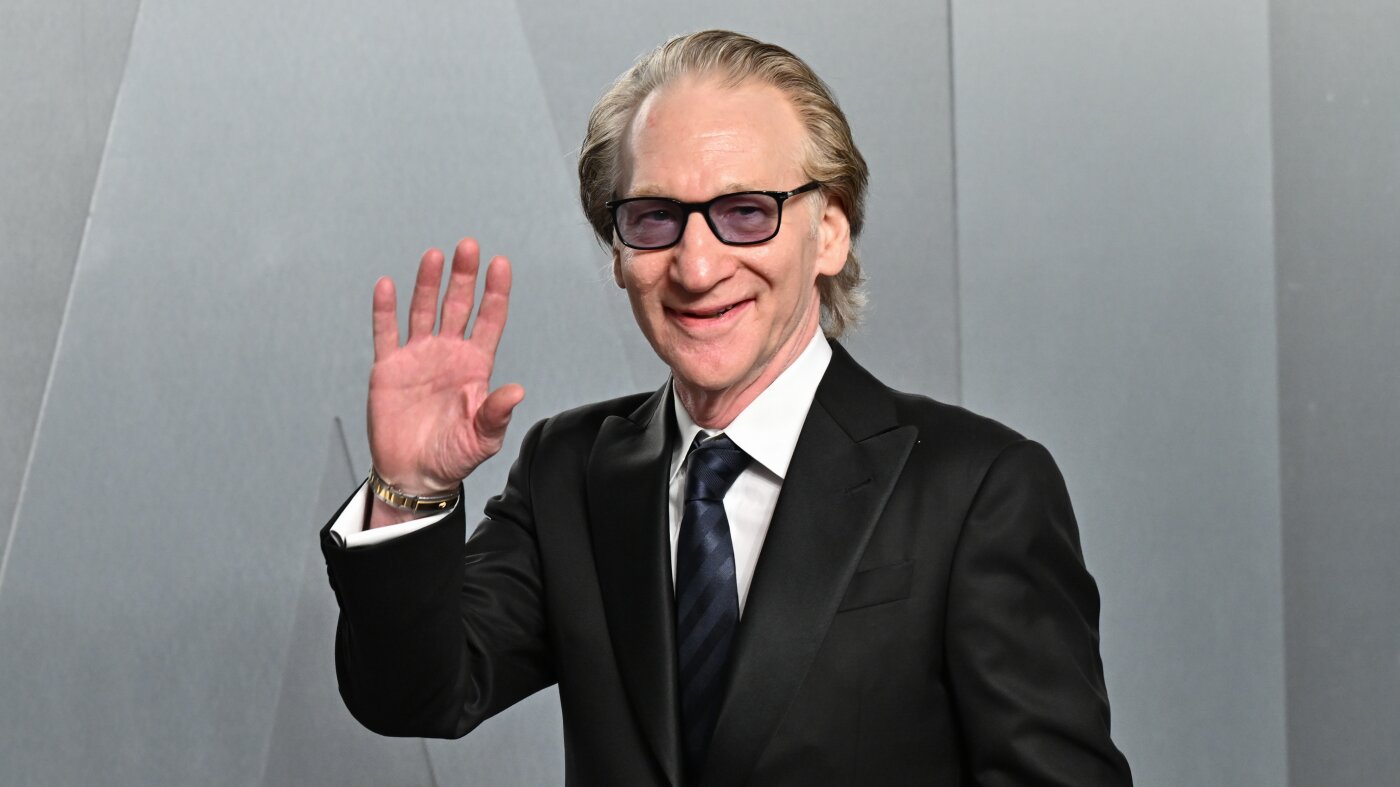
Satirist Bill Maher is this year’s recipient of the Mark Twain Prize for American Humor. Maher will receive the award at the Kennedy Center on June 28th. The show will stream on Netflix at a later date.
Evan Agostini/Invision/AP
hide caption
toggle caption
Evan Agostini/Invision/AP
Bill Maher will be receiving the Mark Twain Prize for American Humor after all.
There’s been some confusion about whether the comedian and longtime host of HBO’s Real Time with Bill Maher would, indeed, be getting the top humor award. After The Atlantic cited anonymous sources saying he was, White House press secretary Karoline Leavitt called it “fake news.” But today the Kennedy Center made it official.
“For nearly three decades, the Mark Twain Prize has celebrated some of the greatest minds in comedy,” said Roma Daravi, the Kennedy Center’s vice president of public relations in a statement. “For even longer, Bill has been influencing American discourse – one politically incorrect joke at a time.”
Is President Trump, chair of the Kennedy Center’s board, in on the joke?
Maher once visited Trump at the White House and he tends to be more conservative than many of his comedian peers but after their dinner Trump soured on Maher, calling him a “highly overrated LIGHTWEIGHT” on social media.
Maher’s acerbic wit has targeted both political parties and he’s been particularly hard on Trump recently, criticizing his decisions to wage a war with Iran and his personnel choices.
“Trump said, ‘when oil prices go up, we make a lot of money.’ Um, who’s ‘we?,’” Maher said in a recent monologue.
Past recipients of the Mark Twain Prize include Conan O’Brien, Dave Chappelle, Jon Stewart, Julia Louis-Dreyfus, Tina Fey, Eddie Murphy and Carol Burnett.
In a statement released through the Kennedy Center, Maher said, “It is indeed humbling to get anything named for a man who’s been thrown out of as many school libraries as Mark Twain.”
Maher will receive the Mark Twain Prize at the Kennedy Center on June 28. The show will stream on Netflix at a later date.


Workers react to the media after updating signage outside the Kennedy Center on Dec. 19, 2025, in Washington, D.C.
Jim Watson/AFP via Getty Images
hide caption
toggle caption
Jim Watson/AFP via Getty Images
Rep. Joyce Beatty of Ohio is asking a federal court in Washington, D.C., to force President Trump and the board and staff of the Kennedy Center to revert to calling the arts complex The John F. Kennedy Center for the Performing Arts.
The motion, which Beatty filed on Wednesday, asks a federal circuit court judge to reverse the Trump administration and the center’s current board and staff’s decision to call the complex “The Trump-Kennedy Center.”
In the filing, Beatty’s attorneys wrote: “Can the Board of the Kennedy Center — in direct contradiction of the governing statutes — rename this sacred memorial to John F. Kennedy after President Donald J. Trump? The answer is, unequivocally, ‘no.’ By renaming the Center — in violation of the law — Defendants have breached the terms of the trust and their most basic fiduciary obligations as trustees. Shortly after President John F. Kennedy’s assassination, Congress designated the Kennedy Center as the ‘sole national memorial to the late’ President in the nation’s capital.”

In a statement emailed to NPR Thursday, Roma Daravi, the vice president of public relations for the Kennedy Center, wrote: “We’re confident the court will uphold the board’s decision on the name change and the desperately needed renovations which will continue as scheduled.” NPR also reached out to the White House for comment, but did not receive a reply.
In December, White House press secretary Karoline Leavitt announced that the complex would heretofore be called “The Trump-Kennedy Center.” Although the new moniker was never approved by Congress, the Center’s website and publicity materials were immediately updated to reflect the administration’s chosen name, and the same day as Leavitt’s announcement, Trump’s name went up on the signage of the complex’s exterior, over that of the slain President Kennedy.
Later that month, Rep. Beatty who serves as an ex-officio member of the Kennedy Center’s board of trustees, sued Trump, members of the Kennedy Center board appointed by Trump, and some ex-officio members, arguing that the complex’s name had been legislated by Congress in 1964. Wednesday’s motion is part of that lawsuit.

In a press release sent to NPR on Wednesday, Rep. Beatty said: “Donald Trump’s attempt to rename the Kennedy Center after himself is not just an act of ego. It is an attempt to subvert our Constitution and the rule of law. Congress established the Kennedy Center by law, and only Congress can change its name.”
For many patrons, artists and benefactors of the Kennedy Center, the name change was the last straw in politicizing the performing arts hub. Following the White House announcement of the new name, many prominent artists withdrew planned performances there, including the composer Philip Glass (a Kennedy Center Honors award recipient, who received his prize during the first Trump administration), the famed Broadway composer and lyricist Stephen Schwartz and the 18-time Grammy-winning banjo master Béla Fleck.
The Washington National Opera (WNO), which had been in residence at the Kennedy Center since 1971, also severed its ties in January after ticket sales dropped precipitously. Earlier this month, WNO artistic director Francesca Zambello told NPR, “We did try as best as we could to encourage [the patrons] that we are a bipartisan organization, but people really voted with their feet and with their pocketbooks. And so we realized that there was really no choice for us.”

On Monday, a coalition of eight architecture and cultural groups also sued Trump and the Kennedy Center board in federal court over the complex’s scheduled closing in July for unspecified renovations. Their suit seeks to have the White House and board members comply with existing historic preservation laws, and to secure Congressional approval before moving ahead with the renovation plans.

This Day in Alaska History-March 27th, 1964

Make-A-Wish Arizona creates sea turtle adventure for San Tan Valley boy

What John Calipari said about Dairus Acuff after Arkansas basketball’s Sweet 16 exit

California ‘jungle’ primary could hand governor’s race to Republicans

Colorado residents face earliest water restrictions ever — a harbinger of worse to come

Florida High School Football Rankings: Top 25 teams – Oct. 21

How old is Bo Nix? What to know about Oregon quarterback ahead of 2024 NFL Draft

Cleary's 21 help Le Moyne down Central Connecticut State 69-64 in OT

99th annual Pony Swim held in Virginia

Indiana Members Credit Union announced as new anchor tenant at Bottleworks District

Video: Will ICE Change Under Its New Leader?

DHS shutdown breakthrough comes at cost for Republicans as funding fights nears end

Rubio joins crucial G7 talks as Iran war set to dominate second day

A surprise resignation could open the door for an independent to win a Montana Senate seat

Video: Savannah Guthrie Says She Believes Her Mother Was Taken for Ransom
-

 Detroit, MI1 week ago
Drummer Brian Pastoria, longtime Detroit music advocate, dies at 68
-

 Science1 week ago
How a Melting Glacier in Antarctica Could Affect Tens of Millions Around the Globe
-
 Science1 week ago
I had to man up and get a mammogram
-

 Movie Reviews1 week ago
‘Youth’ Twitter review: Ken Karunaas impresses audiences; Suraj Venjaramoodu adds charm; music wins praise | – The Times of India
-

 Sports6 days ago
IOC addresses execution of 19-year-old Iranian wrestler Saleh Mohammadi
-

 New Mexico5 days ago
Clovis shooting leaves one dead, four injured
-
 Business1 week ago
Disney’s new CEO says his focus is on storytelling and creativity
-

 Texas1 week ago
How to buy Houston vs. Texas A&M 2026 March Madness tickets