Lifestyle
So long, skinny jeans. See you in the next cycle


There is some reasoning behind the life and death of a fashion trend.
Image by Alicia Zheng/NPR
hide caption
toggle caption
Image by Alicia Zheng/NPR

There is some reasoning behind the life and death of a fashion trend.
Image by Alicia Zheng/NPR
When Moe Black was a teenager, you could wear only one style of pants.
“If you wore anything besides skinny jeans, you were, like, weird,” said Black, now a 29-year-old fashion content creator. At the time, skinny jeans had fashion and pop culture in a stretch-denim chokehold.
Black recalled taking style cues from the stars she saw on MTV and VH1, telling NPR she looked to bands like Green Day.
“A lot of these bands were anti-government, anti-war,” she said. “And I felt like the way that they dressed was such a symbol of what they believed.”
Her uniform: dyed hair in a side part, oversize graphic tee, checkerboard Vans and jeans so tight they looked painted on. But as ubiquitous as they once were, skinny jeans are out. And looser, 1990s-inspired styles are in.
So, what happened?
It’s not just pants that come and go. Everything from shoes to color palettes to entire aesthetics cycle in and out of style. And keeping up with it all can feel dizzying. But there is some logic to how it all works.
The life and death of a trend
The life of a trend starts with a trendsetter.
“It’s traditionally started with designers and the people that are making the clothes for us to purchase,” said Ashlyn Greer, CEO and founder of Fashivly, a personal styling company.
In the first year of the trend life cycle, a new style is invented — that could be by subcultures in music or art or by fashion designers experimenting with new shapes or drawing from the archives.
Model Shalom Harlow walks down the runway wearing fashion from the Marc Jacobs grunge-inspired collection for the Perry Ellis label in November 1992.
Thomas Iannaccone/WWD via Getty Images
hide caption
toggle caption
Thomas Iannaccone/WWD via Getty Images
Model Shalom Harlow walks down the runway wearing fashion from the Marc Jacobs grunge-inspired collection for the Perry Ellis label in November 1992.
Thomas Iannaccone/WWD via Getty Images
Take grunge, for example. In 1992, fashion designer Marc Jacobs released a collection for Perry Ellis paying homage to the alternative rock movement of the Pacific Northwest.
That collection put the style’s slouchy silhouettes and plaid flannels on the fashion map, Greer said.
“And then now all of a sudden, there’s a Vogue editorial about grunge dressing,” she said. “And now all these other people in mainstream culture start to adopt that.”
Media and early adopters of a trend — like celebrities, influencers or your fashionable friend — spread the trend to the masses. At this point, retailers scramble to produce the clothes consumers want.
Then, once enough people catch on to the trend, it’s not cool anymore.
Until the trend repeats, and what’s old feels new again.
Fashion imitates life
“Novelty is both the essence of fashion and its economic engine,” said fashion historian and journalist Kimberly Chrisman-Campbell. “It’s what keeps us buying clothes even when we have more clothes than we need.”
Yet novelty isn’t enough to explain what goes in and out of style, Chrisman-Campbell said. She theorizes the trends that catch on resonate in a deeper way.
Skinny jeans are on display in San Francisco in 2015.
Kimberly White/Getty Images for Levi’s
hide caption
toggle caption
Kimberly White/Getty Images for Levi’s
Skinny jeans are on display in San Francisco in 2015.
Kimberly White/Getty Images for Levi’s
“I think there has to be a different emotional, or economic, or perhaps just social factor there beyond ‘it looks good’ or ‘I want to be like X person in the media,’” she said.
Jesica Wagstaff is a fashion content creator and writes A Sunday Journal, a newsletter about fashion theory. She points to the quiet luxury trend as an example of how socioeconomic conditions influence what people want to wear.
Google searches for “quiet luxury” — the trend characterized by luxurious knits and high-quality, minimalist pieces — hit a peak in the spring of 2023. This was around the time that HBO dropped the fourth season of Succession and the internet was obsessed with decoding the wealthy aesthetics of the Roy family.
“And so we started to see people have quiet luxury hauls from fast-fashion brands in order to emulate the overall style that we saw from people who were shopping at incredibly expensive stores,” Wagstaff said.
Wagstaff thinks that this trend spoke to consumers because it signaled wealth and success at a time when people were feeling the economic impact of the COVID-19 pandemic.
Putting it all together
If you take all these factors into account — the life cycle of a trend, consumer psychology and the socioeconomic conditions of the day — you can begin to explain the big-pant revival.
A model wears a creation by Comme des Garçons Homme Plus during Men’s Fashion Week in Paris in 2016.
Patrick Kovarik/AFP via Getty Images
hide caption
toggle caption
Patrick Kovarik/AFP via Getty Images
A model wears a creation by Comme des Garçons Homme Plus during Men’s Fashion Week in Paris in 2016.
Patrick Kovarik/AFP via Getty Images
According to Fashivly’s Greer, skinny jeans hit peak popularity sometime in the 2010s, meaning the time was ripe for something new. And that’s exactly what was happening on runways. Greer points to loosening silhouettes in collections from the likes of Marc Jacobs, Comme des Garçons and others around 2016.
Then, Chrisman-Campbell theorizes, as the reign of skinny jeans came to an end, pandemic lockdowns accelerated the spread of wide pants. People stuck at home opted for comfort.
Of course, this is a tidy story, and Chrisman-Campbell points out that making sense of trends isn’t an exact science. But whether you’re watching runway shows from your laptop or don’t care about clothes much at all, it matters.
“Dress is a form of communication, and I think we neglect it at our peril because we are communicating to other people whether we mean to or not,” said Chrisman-Campbell.
And understanding that communication is essential, said Wagstaff.
“Then we can give ourselves a little bit more peace, grace and just flexibility to present ourselves in a more authentic way,” she said.



Natalie Cole and music producer Nolan Williams, Jr. with the Let Freedom Ring Celebration Choir at the Kennedy Center in January 2015.
Lisa Helfert/Georgetown University
hide caption
toggle caption
Lisa Helfert/Georgetown University
Let Freedom Ring, an annual concert in Washington, D.C., celebrating the life of Martin Luther King Jr., has been a signature event at the John F. Kennedy Center for the Performing Arts for more than 20 years. Aretha Franklin, Gladys Knight and Chaka Khan have performed, backed by a choir made up of singers from D.C. area churches and from Georgetown University, which produces the event.
But this year’s event, headlined by actor and rapper Common, will not be held at the Kennedy Center.
Georgetown University says it is moving Let Freedom Ring to D.C.’s historic Howard Theatre in order to save money.
For Marc Bamuthi, it wouldn’t make sense to hold it at the Kennedy Center this year.

Until March 2025, Bamuthi was the Kennedy Center’s artistic director for social impact, a division that created programs for underserved communities in the D.C. region. He regularly spoke at the MLK Day event. “I would much rather that we all be spared the hypocrisy of celebrating a man who not only fought for justice, but who articulated the case for equity maybe better than anyone in American history … when the official position of this administration is an anti-equity position,” he said.
President Trump has criticized past programming at the Kennedy Center as “woke” and issued executive orders calling for an end to diversity in cultural programming.
In February 2025, Trump took over the Kennedy Center and appointed new leadership. Shortly thereafter the social media division was dissolved. Bamuthi and his team were laid off.
Composer Nolan Williams Jr., Let Freedom Ring‘s music producer since 2003, also says he has no regrets that the event is moving.

“You celebrate the time that was and the impact that has been and can never be erased. And then you move forward to the next thing,” said Williams.
This year, Williams wrote a piece for the event called “Just Like Selma,” inspired by one of King’s most famous quotes, “The arc of the moral universe is long, but it bends towards justice.”
Williams says sometimes the quote is “interpreted in a passive way.”
“The arc doesn’t just happen to move. We have to be agents of change. We have to be active arc movers, arc benders,” said Williams. “And so throughout the song you hear these action words like ‘protest,’ ‘resist,’ ‘endure,’ ‘agitate,’ ‘fight hate.’ And those are all the action words that remind us of the responsibility that we have to be arc benders.”
YouTube
The Kennedy Center announced Tuesday that its celebration of Martin Luther King Jr. next week will feature the Missionary Kings of Harmony of The United House of Prayer for All People’s Anacostia congregation.
The audio and digital versions of this story were edited by Jennifer Vanasco.

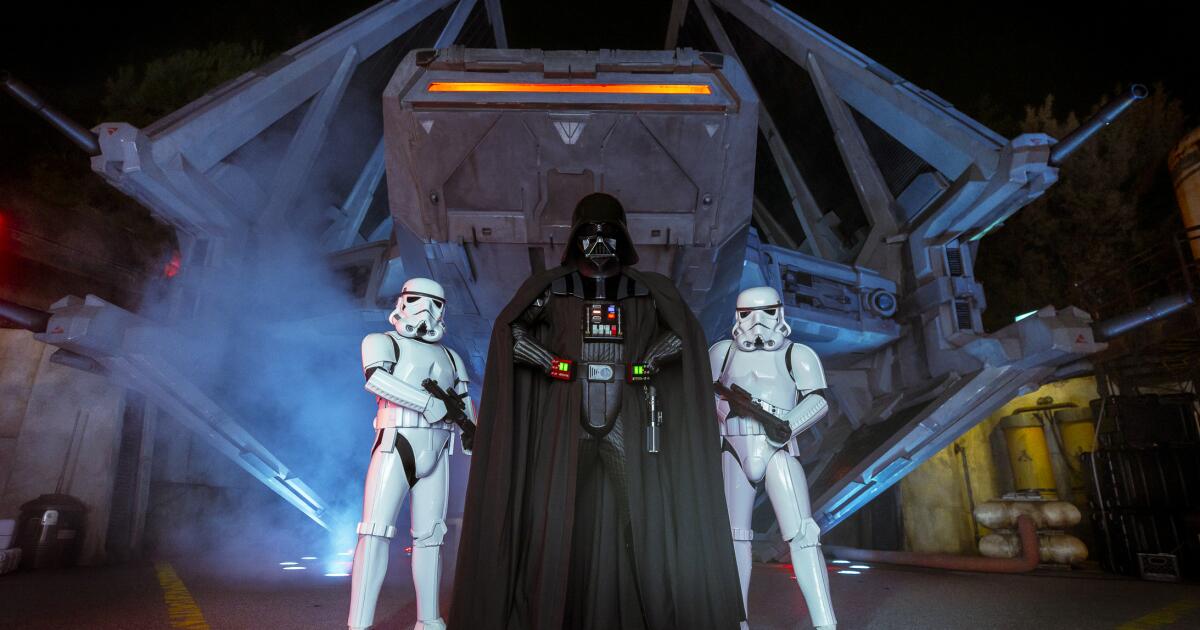
Disneyland’s Star Wars: Galaxy’s Edge is turning back the clock.
In a shift from its original ambitions, the land will no longer be primarily set in the time period of the recent “Star Wars” sequels. That means modern villain Kylo Ren will be out, at least as a walk-around character, while so-called “classic” characters such as Darth Vader, Luke Skywalker, Han Solo and Princess Leia Organa will make their way into the fictional galactic town of Black Spire Outpost.
The changes, for now, are specific to Disneyland and are not currently planned to come to Walt Disney World’s version of the land, according to Disney. They also mark a significant tweak from the intent of the land, which was designed as an active, play-focused area that broke free from traditional theme park trappings — character meet and greets, passive rides and Mickey-shaped balloons. Instead of music, guests heard radio broadcasts and chatter, as the goal was to make Black Spire Outpost feel rugged and lived-in.
-
Share via
It was to be a place of living theater, where events unfolded in real time. That tone will now shift, as while the in-land radio station won’t go away, Disneyland will soon broadcast composer John Williams’ “Star Wars” orchestrations throughout the area. The changes are set to fully take effect April 29, although Disney has stated some tweaks may roll out earlier.
The character of Rey, introduced in “Star Wars: The Force Awakens,” will still appear in the land, although she’ll now be relegated to the forest-like area near the attraction Star Wars: Rise of the Resistance. While the latter is due for refurbishment beginning Jan. 20, park representatives said it’s routine maintenance and no changes are planned for the land’s showcase ride, which will still feature Kylo Ren and the First Order.
Guests will also soon be able to find the Kylo Ren character at a meet and greet in Tomorrowland. Other personalities previously introduced to Galaxy’s Edge, including Chewbacca, Ahsoka Tano, the Mandolorian, Grogu and droid R2-D2, will still be featured in the land.
Taken as a whole, the moves turn Galaxy’s Edge into something more akin to a “Star Wars” greatest hits land. When the area opened in 2019, the hope was guests would feel as if they were protagonists able to choose their own adventure. Galaxy’s Edge came with its own vernacular, and an elaborate game in the Play Disney mobile app that was designed to track a guest’s reputation and be used in the land. It was once said, for instance, that Disney’s cast members — staff, in park parlance — would be able to recognize if someone’s personality leaned resistance, First Order or rogue. Such aspirations never materialized.

When Galaxy’s Edge opened in 2019, it was designed to feel rugged and lived-in.
(Allen J. Schaben / Los Angeles Times)
Galaxy’s Edge was a theme park experiment, asking how deeply guests would want to engage in physical spaces. But it came with challenges, namely that as these lands evolve to feel more like locations where action is unfolding in real time, the level of activity needed to maintain the illusion increases. And Galaxy’s Edge forever lacked some of its teased and hyped elements — there were no smugglers, for instance, tapping you on the shoulder in the cantina. When a land is designed to speak to us, we notice when it’s quiet.
Theme parks are also evolving spaces, responding to shifts in creative direction as well as guest feedback. In an online press conference announcing the move, Disney didn’t allow for deep questioning, but a reworking of the land to incorporate the franchise’s classic (and arguably more popular) characters feels in some part an acknowledgment that theme park visitors likely crave familiarity over ongoing narratives designed to play make-believe. Or at least that such a direction is easier to maintain.
“Since the very inception of Star Wars: Galaxy’s Edge, we really always imagined it as a platform for storytelling,” said Asa Kalama, a creative executive with Walt Disney Imagineering, the company’s arm devoted to theme park experiences, at the media briefing. “That’s part of the reason we designed this neutral Wild West space town because it allowed it to be a framework in which we could project different stories.”

Galaxy’s Edge on April 29 is dropping its fixed timeline and will soon incorporate more characters, including Darth Vader.
(Christian Thompson / Disneyland Resort)
Kalama pointed to next year being the 50th anniversary of the initial “Star Wars” movie and this May’s theatrical film, “The Mandalorian & Grogu,” as to why this was the opportune time to shift the direction of the land. To coincide with the release of the latter, the attraction Millennium Falcon: Smugglers Run will receive a new mission May 22, which will also mean the land’s two rides will soon be set in different “Star Wars” time frames.
The ride makeover will feature three new locations from the “Star Wars” films — planets such as the urban Coruscant or gas realm of Bespin, as well as the wreckage of the second Death Star near Endor. Each flight crew will determine the destination. Additionally, those seated in the ride’s “engineer” positions will be able to communicate with Grogu, colloquially referred to as “baby Yoda.”
Star Wars: Galaxy’s Edge was meticulously designed to be set between episodes eight and nine of the core saga, with its ships modeled after the most recent films. When guests encountered characters, for instance, they would speak to them as if they were visitors on the fictional planet, often trying to suss out someone’s allegiance. It was indicated by Michael Serna, executive creative director with Disney Live Entertainment, that such a level of playfulness would continue.
Darth Vader, for instance, is said to be on the planet of Batuu seeking to hunt Luke Skywalker. Luke, for his part, is described as roaming the land looking for Force artifacts, while Leia and Han will be spotted in areas near the Millennium Falcon and Oga’s Cantina, the latter tempting Han while Leia will serve the role of a recruiter. Timelines for the land’s bar and shops will also be dialed back to better reflect the the classic characters, although “Star Wars” die-hards maybe shouldn’t think too hard about it as an animatronic figure such as Oga’s robotic DJ “Rex” is best known for a different role during that era.

The character of Rey, introduced in “Star Wars: The Force Awakens,” will still meet with guests in Galaxy’s Edge, although she will be stationed near the ride Star Rise: Rise of the Resistance.
(Allen J. Schaben / Los Angeles Times)
Galaxy’s Edge had been moving in a more populist direction for some time. The reframing of the ride Smugglers Run was the first major indication that Disney would pivot from the land’s initial design intent. Luke, meanwhile, was introduced to the land for limited appearances in 2025, and that character followed the arrival of the Mandalorian and Grogu. And the lack of Williams’ score in the land has long been a common guest complaint. The film’s “Main Title,” as well as “Han Solo and the Princess,” “The Desert and the Robot Auction,” “The Emperor” and other Williams selections will now be heard in the land.
While the vibe and tenor of Galaxy’s Edge will shift, Serna stressed it’s still designed as a place for guest participation. “It’s still an active, living land, if you will,” he said.
And if Galaxy’s Edge is now a mesh of timelines and characters, that simply makes it more in-line with what already exists at the resort. To put it another way: No one has been confused that New Orleans Square has ghosts and pirates next to a cozy place for beignets. Likewise, we don’t wonder why “Cars” character Doc Hudson is dead in the current timeline of the films but alive on the ride — and then memorialized via an ofrenda during the land’s Halloween makeover.
Theme parks remain a place where imagination reigns.

The Ides of January are already upon us. Which means that by now, most of the sweetly misguided pollyannas who made New Year’s resolutions have already given up on that nonsense. Don’t beat yourself up about it! Travel and exercise would only have hogged your precious reading time anyway.
And boy, is there a lot of good stuff to read already. This week alone, a reader with an active imagination may pay visits to Norway and Chile, China and Pakistan. Later this month brings new releases from big names on either side of the Atlantic Ocean.
(By the way, this year the Book Ahead is transitioning from weekly posts to monthly, for a broader lens on the publishing calendar.)
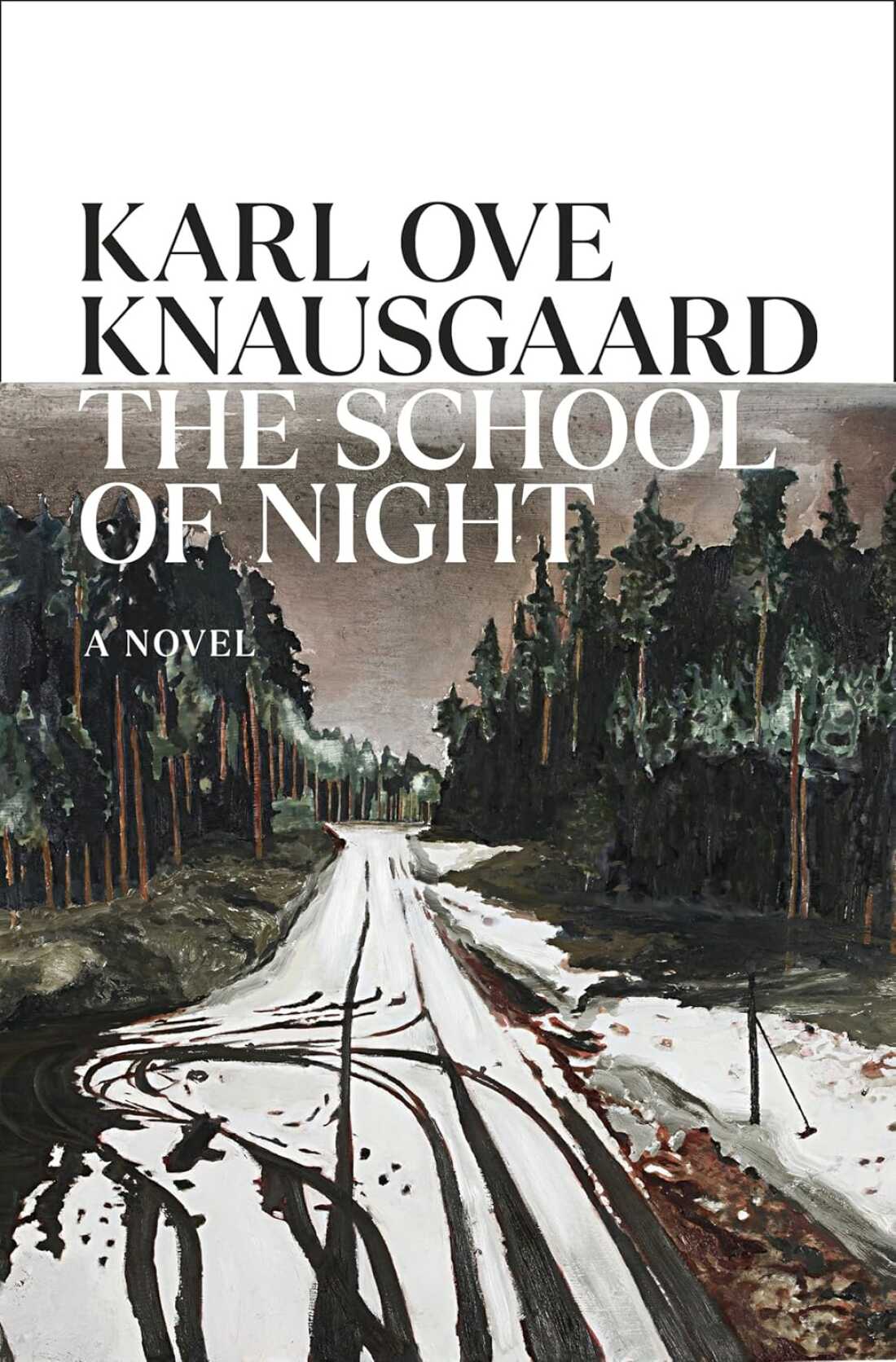
The School of Night, by Karl Ove Knausgaard, translated by Martin Aitken (Jan. 13)
Knausgaard is an alchemist. The prolific Norwegian consistently crafts page-turners out of the daily drudgery you’d usually find sedative rather than thrilling. The same inexplicable magic permeates his latest series, which began with The Morning Star and here gets its fourth installment. Only, unlike projects such as his autofictional My Struggle, Knausgaard here weaves his interlinked plots with actual magic – or supernatural horror, at least, as a vaguely apocalyptic event loosens the tenacious grip of his characters’ daily cares. The School of Night features Kristian Hadeland, an eerie figure in previous books, whose faustian bargain promises to illuminate this mystery’s darkest corners.

This Is Where the Serpent Lives, by Daniyal Mueenuddin (Jan. 13)
The setting in Mueenuddin’s debut novel — a modern Pakistan rife with corruption, feudalism and resilience — thrums with such vitality, it can feel like a character in its own right. But the home of this sweeping saga of class, violence and romance can also be seen as a “distorting mirror,” says Mueenuddin, whose short stories have earned him nods for the Pulitzer Prize and National Book Award. “Without a doubt,” he told NPR’s Weekend Edition, “I’ll have failed miserably if readers don’t see in this a great deal of themselves and of their communities.”

Pedro the Vast, by Simón López Trujillo, translated by Robin Myers (Jan. 13)
It won’t take long to finish this hallucinatory vision of ecological disaster. Getting over Trujillo’s disquieting novella, however, is another matter. The eponymous Pedro is a eucalyptus farmer who has worked the dangerous, degrading job all his life, so it’s to be expected when he’s among the workers who pick up a bad cough from a deadly fungus lurking in the grove. Less expected is the fact that, unlike his colleagues, Pedro does not die but wakes up changed, in ways both startling and difficult to comprehend. This is the Chilean author’s first book to be translated into English.

Fly, Wild Swans: My Mother, Myself and China, by Jung Chang (Jan. 13)
Chang began this story more than 34 years ago, with Wild Swans, a memoir that viewed 20th century Chinese history through the prism of three generations of women — and remains banned in China still. Now, Jung picks up the story where she left off, in the late 1970s when Chang’s departure set her family’s story on heartbreakingly separate paths — her own, unfolding in the West, and that of the family she left behind in China. Jung applies a characteristically wide lens, with half an eye on how the past half-century of geopolitical tumult has upturned her own intimate relationships.

Crux, by Gabriel Tallent (Jan. 20)
It’s been the better part of a decade since Tallent published his debut novel, My Absolute Darling, a portrait of a barbed father-daughter relationship that NPR’s reviewer described as “devastating and powerful.“ In his follow-up, Tallent returns to that adolescent minefield we euphemistically call “coming of age,” this time focusing on a complicated bond between a pair of friends living in the rugged Mojave Desert. It’s an unlikely friendship, as sustaining as it is strained by their unforgiving circumstances, as the pair teeter precariously on the cusp of adulthood.

Departure(s), by Julian Barnes (Jan. 20)
The winner of the 2011 Booker Prize (and finalist for several more) returns with a slim book that’s a bit tough to label. You’ll find it on the fiction shelf, sure, but also, it’s narrated by an aging British writer named Julian who is coping with a blood cancer diagnosis. The lines aren’t easy to find or pin down in this hybrid reflection on love, memory and mortality, which is as playful in its form as its themes are weighty.

Half His Age, by Jennette McCurdy (Jan. 20)
“If I could have shown myself where I am now, I would not have believed it when I was little,” McCurdy told WBUR in 2023. The former child star certainly has undergone a dramatic transformation in recent years — from noted Nickelodeon alum to a writer whose best-selling memoir, I’m Glad My Mom Died, made a pretty compelling case why kid actors “should not be allowed to go anywhere near Hollywood.” Now she’s stepping into fiction, with a debut novel that features a provocative, at times puzzling, courtship and the same black humor that shot through her previous work.

Vigil, by George Saunders (Jan. 27)
One of America’s most inventive stylists returns with his first novel since the Booker Prize-winning Lincoln in the Bardo. It’s hard not to hear some echoes of A Christmas Carol in this one, which also finds a mean old magnate in need of some supernatural bedside attitude therapy. But don’t expect a smooth show from narrator Jill “Doll” Blaine, the comforting spirit assigned to dying oil baron K.J. Boone. For one thing, the unrepentant fossil fuel monger can expect more than just three visitors in this darkly funny portrait of a life ill-lived.

Cold patrols scheduled as dangerous cold moves into Middle Tennessee

Texas Tech softball coach rejects ‘rat poison’ preseason No. 1 ranking

Longtime Utah Valley University President Astrid Tuminez is stepping down

Vermont medical cannabis patients on the rise

Don Scott re-elected as Speaker of Virginia House of Delegates

Florida High School Football Rankings: Top 25 teams – Oct. 21

Cleary's 21 help Le Moyne down Central Connecticut State 69-64 in OT

How old is Bo Nix? What to know about Oregon quarterback ahead of 2024 NFL Draft

99th annual Pony Swim held in Virginia

Video: ‘It Didn’t Have to Happen This Way:’ U.Va. Faculty Call for Review of Police Response to Protests

Republicans light cigars, cigarettes on burning photos of Khamenei to show support for Iranian protesters

EU Parliament questions defence loan’s ‘€17 billion gift’ to Hungary

Trump administration sends letter wiping out addiction, mental health grants

Video: Clashes With Federal Agents in Minneapolis Escalate

Venezuela releases multiple American citizens from prison following military operation
-

 Montana4 days ago
Service door of Crans-Montana bar where 40 died in fire was locked from inside, owner says
-

 Technology1 week ago
Power bank feature creep is out of control
-

 Delaware5 days ago
MERR responds to dead humpback whale washed up near Bethany Beach
-

 Dallas, TX6 days ago
Anti-ICE protest outside Dallas City Hall follows deadly shooting in Minneapolis
-

 Dallas, TX1 week ago
Defensive coordinator candidates who could improve Cowboys’ brutal secondary in 2026
-

 Virginia4 days ago
Virginia Tech gains commitment from ACC transfer QB
-

 Iowa1 week ago
Pat McAfee praises Audi Crooks, plays hype song for Iowa State star
-

 Education1 week ago
Video: This Organizer Reclaims Counter Space