Lifestyle
Paige DeSorbo, Carol Lim and Other Fashion Tastemakers Share Where They Love to Shop


Ina, Manhattan (Chelsea) A plethora of secondhand designer merchandise to choose from. All the items — dresses, suits, blouses, shirts, ties, clutches, shoes — are in top-notch condition. Plenty are unique or hard to find. Whether you are buying or simply browsing, the staff are most civilized. They keep their distance and remain friendly. An airy shop (and one of three in Manhattan), it is well lit — not too bright, not too dim, just smooth and easy on the eye.
Natty Adams, New Orleans Natty Adams’s custom and ready-to-wear clothes are as natty as his first name (no pun intended). A New Yorker, he has set up shop in the heart of New Orleans’s French Quarter, a stone’s throw from the former residence of the playwright Tennessee Williams. Graced with a courtyard and a flowering garden, his shop has the best qualities of Paul Smith, Paul Stuart and Ralph Lauren with a youthful vigor all his own.
Crowley Vintage, Brooklyn (Dumbo) Sean Crowley, who formerly designed for Ralph Lauren, caters to gentlemen invested in unimpeachable elegance — those who are always in search of the perfect fit, the perfect fabric, the perfect shirts, trousers, shoes, scarves, ties and Mackintosh coats. All items are vintage, with innumerable more decades of wear left in them.
Dover Street Market, Los Angeles Everybody in the store, the clientele and the sales people, are all hipper than you. Mostly dressed in black, they look like glamorous characters in an Italian movie. It’s very aspirational: If you just spent enough money, you too could be an artistic interesting person with a bohemian life.
The Los Angeles store (one of a few worldwide) is huge! You could get lost in it for days. Fortunately, I have a capable salesperson, Nathaniel, who looks like a stylish vampire and glides elegantly through the maze of fashion, always emerging with something surprising and unexpected for me to try on.
Buoyed by the seductive promise of Dover Street, I have purchased the most unlikely items. A Balenciaga coat that drags on the ground, a tiny Stephen Jones hat with a bright daisy blooming behind black voile and a furry Simone Rocha purse the size of a large dog.
I have not worn any of these items. I hoard them greedily in my closet waiting for the day when my fantasy life begins and I emerge grandly, my tiny daisy hat balanced precariously on my head, clutching my giant dog purse and Balenciaga trailing behind me.
James Veloria, Manhattan (Chinatown) Some of the most insane vintage — think archive Jean Paul Gaultier and Tom-Ford-era Gucci. A place to go to for something one of a kind. The New York store (there’s another in Los Angeles) is on the second floor of a very unassuming shopping mall under the Manhattan Bridge. People are sometimes confused by the location at first, but once you arrive, you understand why you made the journey.
ESSX NYC, Manhattan (Lower East Side) The curation of designers and selection is so sharp. It’s catered toward downtown types who love fashion and aren’t afraid to stand out. I don’t shop in person very often. This is one of the few stores that I genuinely enjoy.
Just One Eye, Los Angeles Worth a visit even if you don’t buy anything. Fashion from brands like The Row and Prada sits alongside Damien Hirst artworks and Franco Albini furniture. When I was growing up in Los Angeles, I couldn’t dream of affording anything, but I would still stop by and leave inspired.
Desert Vintage, Manhattan (Lower East Side) One of the most tastefully curated vintage stores. You can find special pieces that no one else will be wearing. Upon walking in, you will want to become a person who can effortlessly throw on a caftan to run to the bodega for a bacon egg and cheese.
Ted Muehling, Manhattan (TriBeCA) Mesmerizing jewelry and objects. You can’t stop yourself from wanting to touch and hold everything. The “rice” and “berries” earrings are the perfect gift — for yourself or for anyone.
Staklena Kuća, Los Angeles Shopping here is like looking through a well-assorted closet: You might like half of everything in it, and half of it might not be for you (this time). The store strikes the hard balance between over-curated and overwhelming. Vintage tees, embroidered satin slippers — this place has those and more.
Drop Your Jeans, Covina, Calif. An excellent selection of vintage work wear, from Levi’s cutoffs to dead-stock Dickies to worn-in Carhartt jackets. A large poster selection is another reason to go.
Bliss’ Department Store, Shelter Island Heights, N.Y. A seriously vintage jolt of Americana. The store is aptly named. Its third-generation family owner purveys the blissful necessities of life. Recently bought there by me: water bootees, a hoodie, sewing supplies, a jaunty hat and super glue.
Modern Appealing Clothing, San Francisco The merch edit is primo and eccentric, but also wearable. We’re talking Comme des Garçons, Sacai, Walter Van Beirendonck and many other avant-gardists, plus a plethora of strange footwear. The brother-and-sister owners have built a loyal following by treating every customer like an old pal. Clothes sold here will make you appear more interesting than you are, which should always be the primary goal of fashion.
J.C. Western Wear, West Palm Beach, Fla. A family-owned vestige of “Old Florida” with a staggering selection of nonchalant head-to-toe cowboy duds: jeans, boots, cowboy hats and belts and buckles for men, women and children. Another (larger) location in Jupiter is across the street from Dune Dog Café, an old-school alfresco Florida eatery.
Maxfield, Los Angeles A store that all others watch, it specializes in audacious new ideas and strange vintage artifacts. It has maintained its mystique for half a century, a gob-smacking accomplishment for any store, with an exquisite edit of every headline making designer — from Rick Owens to The Elder Statesman to Willy Chavarria — and exclusive sneaker and jewelry collaborations.
Stand Up Comedy, Portland, Ore. An under-the-radar women’s wear institution with a chic but unwaveringly funky vision. It’s stocked with independent designers whose work verges on art practice: Bless, Julia Heuer and Martine Rose, to name a few. Walking into the space — a former jewelry store that was barely altered, with plush blue carpeting and glowing vitrines — feels a little like being on the set of a David Lynch movie.
Rennes, Philadelphia Rennes often gets rare artisan lines from Europe and Japan before any other shop in North America. Spindly-legged tables inside the light filled space in Philadelphia’s Old City neighborhood hold stacks of Japan-made socks, and exquisite linen dresses hang from Shaker-style pegboards lining the walls. It could feel precious, but it’s not.
Slash Denim, Berkeley, Calif. The most magical pant-buying experience. Go around the main storefront into the basement entrance in the back. There, among the musky piles of vintage Levi’s, you will be confronted by three denim witches — or veteran saleswomen — not unlike the witches in “Macbeth.” They will look you up and down, converse with each other in Levi’s-ese (514 or a 551?) and conjure a perfect pair of jeans for you.
Bungee Space, Manhattan (Lower East Side) The shop feels funky and haphazard, like rifling through your cool cousin’s dorm room. It’s a bookstore, a zine distributor, an events center and one of my favorite places to discover new and emerging designers. You’re just as likely to pick up an SC103 handbag or a Comme des Garçons shirt as you are to learn about a couturier who makes dresses from T-shirts or an artisanal women’s wear collective from Guatemala. You feel absolutely welcome to try on clothes, leaf through books, buy a cup of tea or maybe have a conversation.
Front General Store, Brooklyn (Dumbo) The curation is irresistible: vitrines of sterling silver jewelry, racks of vintage French chore coats and Issey Miyake Pleats Please, rows of colorful pens and milk glass mugs. A very very back room is where they keep cowboy shirts from the 1920s, Aloha shirts from the 1940s, all kinds of rare military surplus and souvenir jackets. If a garment looks like it has a story behind it, just ask one of the very kind shopkeepers. They’ll tell you.
Ven. Space, Brooklyn (Carroll Gardens) It carries some of the best men’s designers from around the world, some established (Dries Van Noten), some emerging (Auralee), some medium-size (Lemaire), some tiny (Unkruid). The store has not merely managed without e-commerce, but thrived. Pop in on a Thursday at 3 p.m. and the place will be full. Small touches speak to a broader philosophy at work: For instance, custom hanger covers that hide clothes’ tags, so that you focus on the garment before you know who made it.
Evan Kinori, San Francisco As a designer, Evan Kinori works slowly and carefully, refining a small set of minimalist designs that tend not to change much from season to season. He uses very special fabrics, many of them developed custom with Japanese mills and dye-houses, and the result is clothes that look cool in photos but truly come alive in person. He sells them at an airy store on the southern edge of the Mission district, along with ceramics and hand-loomed textiles.
Funky Finds, Des Moines, Iowa It’s two floors. Browsing feels like stepping back in time: There’s an expansive collection of home goods and records, but the vintage clothes really stand out. Men’s, women’s, kids — everything on the racks is in exceptional condition and priced very affordably. I bought my senior prom dress here over a decade ago.
Old Gold, Burlington, V.T. Organized, affordable vintage denim. You won’t get the hands-on experience that some vintage retailers offer these days, but it’s not too overwhelming — light curation, approachable prices and a clean setting.
Westerlind, Millerton, N.Y. An insane curation of heritage brands, stunning design and, at this location (one of six), a darling pantry section in the back. Sales associates are kind and extremely knowledgeable about the area. I found a new real estate agent here while my husband was trying on pants.
Ontario Mall Antiques, Farmington, N.Y. A great antique mall with an excellent jewelry collection, ranging from costume to fine.
Departamento, Los Angeles Great for discovery, with brands I have often never heard of alongside established names like The Row and Wales Bonner. It might have the best men’s buy in America. What I am most interested in when I go into a shop is organization and presentation. Are the products laid out in a thoughtful way? Departamento takes the cake in terms of design.
Scully & Scully, Manhattan (Upper East Side) It’s like Disneyland for refinement. The Park Avenue shop, founded in 1934, sells everything from silver money clips to horse head cuff links to diamond necklaces. It has a doorman and the shopkeepers are as refined as the merchandise. I shop for canes here — the most ornate canes, made with silver duck, fox and owl handles. When I’m walking with one in New York, as tough a city as it is, people become tender to me.
JJ Hat Center, Manhattan (Midtown) One of the city’s oldest hat shops, it’s a narrow store with chandeliers and hats stacked atop each other everywhere you look — fedoras, homburgs, Stetsons, trilbies. There are always people in front of mirrors trying hats on, this way and that, like Humphrey Bogart. Even if you don’t wear hats, you can be initiated into the hat world here. I’ve been buying hats here for 30 years.
Fashion Full Circle, West Hollywood, Calif. A vintage and consignment shop with a large clothing section. But I go for the shoes. Hundreds of heels, bootees, sneakers — you can find fun and unique footwear here.
Aralda Vintage, Los Angeles A funky, tried-and-true vintage store started by a former model. A great selection, especially of dresses — some outfits from the TV show “Euphoria” were sourced here. The space’s bright orange walls and neon signs make shopping feel a bit like a game.
Allens Boots, Austin I never considered wearing cowboy boots until visiting this place (which has two locations). Thousands of styles line the walls and racks. I bought a black pair with white stars. They make me feel powerful.
Circa, New Bedford, Mass. Walking in for the first time felt like walking into a 1930s Coney Island fun house with mannequins in old costumes and the most beautiful old outfits everywhere. I wasn’t sure if you were supposed to buy the clothes or just admire them. The owner was incredibly friendly.
The Quality Mending Co., Manhattan (East Village) It’s what you’d imagine a New York City vintage store to look and smell like — the CBGB of vintage stores. Old Levi’s, worn-in tees, tinted sunglasses, lots of attractive people shopping. The best selection of vintage punk t- shirts. Most are out of my price range, but they’re such beautiful relics of the past.
Just One Eye, Los Angeles Stepping inside the bright airy space is exciting and inspiring. I’ve found some of my favorite pieces here. It’s like walking into an art gallery or museum, except you’re allowed to touch. The clothing, jewelry and housewares are beautifully curated — unique items from local artisans, along with clothing and shoes from big-name brands.
The Webster, Manhattan (SoHo) It’s big enough that you feel like you are shopping around, but still small enough that it feels quaint (there are 13 locations). Right when you walk in, you get hit with the store’s signature scent. It is the best smelling scent.
Heart and Lou’s, Manhattan (Lower East Side) A woman-owned vintage shop — I love the shoes.
Lucia Boutique, Saratoga Springs, N.Y. The cutest little women’s clothing store outside Albany, my hometown.
A’maree’s, Newport Beach, Calif. It’s in an impressive building on the water: You can pull up in a boat, dock and come inside for some shopping and a cocktail. The selection is upmarket — the Row, Alaïa, Gabriela Hearst — and is merchandised in a loose, fun way.



Kevin Kline plays actor Richard Bean, and Laura Linney is his sister-in-law Kristen, in American Classic.
David Giesbrecht/MGM+
hide caption
toggle caption
David Giesbrecht/MGM+
American Classic is a hidden gem, in more ways than one. It’s hidden because it’s on MGM+, a stand-alone streaming service that, let’s face it, most people don’t have. But MGM+ is available without subscription for a seven-day free trial, on its website or through Prime Video and Roku. And you should find and watch American Classic, because it’s an absolutely charming and wonderful TV jewel.
Charming, in the way it brings small towns and ordinary people to life, as in Northern Exposure. Wonderful, in the way it reflects the joys of local theater productions, as in Slings & Arrows, and the American Playhouse production of Kurt Vonnegut’s Who Am I This Time?
The creators of American Classic are Michael Hoffman and Bob Martin. Martin co-wrote and co-created Slings & Arrows, so that comparison comes easily. And back in the early 1980s, Who Am I This Time? was about people who transformed onstage from ordinary citizens into extraordinary performers. It’s a conceit that works only if you have brilliant actors to bring it to life convincingly. That American Playhouse production had two young actors — Christopher Walken and Susan Sarandon — so yes, it worked. And American Classic, with its mix of veteran and young actors, does, too.

American Classic begins with Kevin Kline, as Shakespearean actor Richard Bean, confronting a New York Times drama critic about his negative opening-night review of Richard’s King Lear. The next day, Richard’s agent, played by Tony Shalhoub, calls Richard in to tell him his tantrum was captured by cellphone and went viral, and that he has to lay low for a while.
Richard returns home to the small town of Millersburg, Pa., where his parents ran a local theater. Almost everyone we meet is a treasure. His father, who has bouts of dementia, is played by Len Cariou, who starred on Broadway in Sweeney Todd. Richard’s brother, Jon, is played by Jon Tenney of The Closer, and his wife, Kristen, is played by the great Laura Linney, from Ozark and John Adams.
Things get even more complicated because the old theater is now a dinner theater, filling its schedule with performances by touring regional companies. Its survival is at risk, so Richard decides to save the theater by mounting a new production of Thornton Wilder’s Our Town, casting the local small-town residents to play … local small-town residents.
Miranda, Richard’s college-bound niece, continues the family theatrical tradition — and Nell Verlaque, the young actress who plays her, has a breakout role here. She’s terrific — funny, touching, totally natural. And when she takes the stage as Emily in Our Town, she’s heart-wrenching. Playwright Wilder is served magnificently here — and so is William Shakespeare, whose works and words Kline tackles in more than one inspirational scene in this series.
I don’t want to reveal too much about the conflicts, and surprises, in American Classic, but please trust me: The more episodes you watch, the better it gets. The characters evolve, and go in unexpected directions and pairings. Kline’s Richard starts out thinking about only himself, but ends up just the opposite. And if, as Shakespeare wrote, the play’s the thing, the thing here is, the plays we see, and the soliloquies we hear, are spellbinding.
And there’s plenty of fun to be had outside the classics in American Classic. The table reads are the most delightful since the ones in Only Murders in the Building. The dinner-table arguments are the most explosive since the ones in The Bear. Some scenes are take-your-breath-away dramatic. Others are infectiously silly, as when Richard works with a cast member forced upon him by the angel of this new Our Town production.
Take the effort to find, and watch, American Classic. It’ll remind you why, when it’s this good, it’s easy to love the theater. And television.


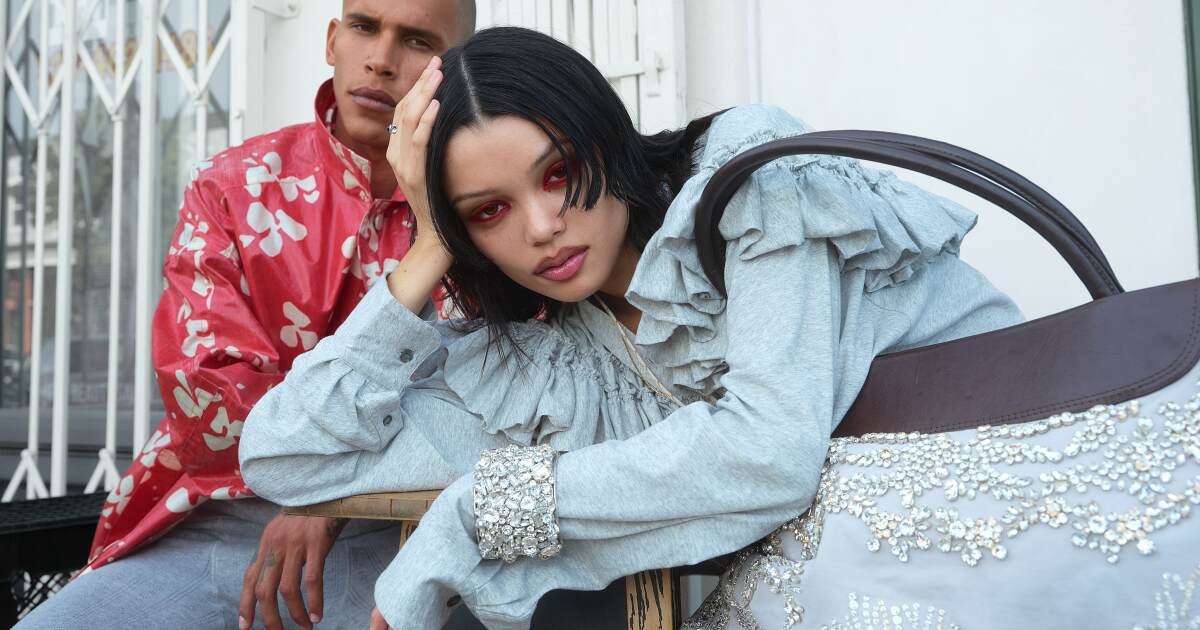
The ritual of meeting up and hanging out at a coffee shop in L.A. is a showcase of style filled with a subtle site-specific tension. Don’t you see it? Comfort battles formality fighting to break free. Hiding out chafes against being perceived. In the end, we make ourselves at home at all costs — and pull a look while doing it.
It’s the morning after a night out. Two friends meet up at Chainsaw in Melrose Hill, the cafe with the flan lattes, crispy arepas and sorbet-colored wall everybody and their mom has been talking about.
Miraculously, the line of people that usually snakes down Melrose yearning for a slice of chef Karla Subero Pittol’s passion lime fruit icebox pie is nonexistent today. Thank God, because the party was sick last night — the DJ mixed Nelly Furtado’s “Promiscuous” into Peaches’ “F— the Pain Away” and the walls were sweating — so making it to the cafe’s front door alone is like wading through viscous, knee-high water. Senses dull and blunt in that special way where it feels like your brain is wearing a weighted vest. The sun, an oppressor. Caffeine needed via IV drip.
The mood: “Don’t look at me,” as they look around furtively, still waking up. “But wait, do. I’m wearing the new Dries Van Noten from head to toe.”

Daniel, left, wears Dries Van Noten mac, henley, pants, oxford shoes, necklace and socks. Sirena wears Dries Van Noten blouse, micro shorts, sneakers, shell charm necklace, cuff and bag and Los Angeles Apparel socks.


If a fit is fire and no one is around to see it, does it make a sound? A certain kind of L.A. coffee shop is (blessedly) one of the few everyday runways we have, followed up by the Los Feliz post office and the Alvarado Car Wash in Echo Park. We come to a coffee shop like Chainsaw for strawberry matchas the color of emeralds and rubies and crackling papas fritas that come with a tamarind barbecue sauce so good it may as well be categorized as a Schedule 1. But we stay for something else.
There is a game we play at the L.A. coffee shop. We’re all in on it — the deniers especially. It can best be summed up by that mood: “Don’t look at me. But wait, do.” Do. Do. Do. Do. We go to a coffee shop to see each other, to be seen. And we pretend we’re not doing it. How cute. Yes, I’m peering at you from behind my hoodie and my sunglasses but the hoodie is a niche L.A. brand and the glasses are vintage designer. I wore them just for you. One time I was sitting at what is to me amazing and to some an insufferable coffee shop in the Arts District where a regular was wearing a headpiece made entirely of plastic sunglasses that covered every inch of his face — at least a foot long in all directions — jangling with every movement he made. Respect, I thought.
Dries Van Noten’s spring/summer 2026 collection feels so right in a place like this. The women’s show, titled “Wavelength,” is about “balancing hard and soft, stiff and fluid, casual and refined, simple and complex,” writes designer Julian Klausner in the show notes. While for the men’s show, titled “A Perfect Day,” Klausner contextualizes: “A man in love, on a stroll at the beach at dawn, after a party. Shirt unbuttoned, sleeves rolled up, the silhouette takes on a new life. I asked myself: What is formal? What is casual? How do these feel?” What is formal or casual? How do you balance hard and soft? The L.A. coffee shop is a container for this spectrum. A dynamic that works because of the tension. A master class in this beautiful dance. There is no more fitting place to wear the SS26 Dries beige tuxedo jacket with heather gray capri sweats and pink satin boxing boots, no better audience for the floor-length striped sheer gown worn with satin sneakers — because even though no one will bat an eye, you trust that your contribution has been clocked and appreciated.

Daniel wears Dries Van Noten coat, shorts, sneakers and socks. Sirena wears Dries Van Noten jacket, micro shorts and sneakers.


Back at Chainsaw the friends drink their iced lattes, they eat their beautiful chocolate milk tres leches in a coupe. They’re revived — buzzing, even; at the glorious point in the caffeinated beverage where everything is beautiful, nothing hurts and at least one of them feels like a creative genius. The longer they stay, the more their style reveals itself. Before they were flexing in a secret way. Now they’re just flexing. Looking back at you looking at them, the contract understood. Doing it for the show. Wait, when did they change? How long have they been here? It doesn’t matter. They have all day. Time ceases to exist in a place like this.


Daniel wears Dries Van Noten tuxedo coat, pants, scarf, sneakers and necklace and Hanes tank top. Sirena wears Dries Van Noten jacket, micro shorts, sneakers and socks.


Creative direction Julissa James
Photography and video direction Alejandra Washington
Styling Keyla Marquez
Hair and makeup Jaime Diaz
Cinematographer Joshua D. Pankiw
1st AC Ruben Plascencia
Gaffer Luis Angel Herrera
Production Mere Studios
Styling assistant Ronben
Production assistant Benjamin Turner
Models Sirena Warren, Daniel Aguilera
Location Chainsaw
Special thanks Kevin Silva and Miguel Maldonado from Next Management
Lifestyle
Nature needs a little help in the inventive Pixar movie ‘Hoppers’ : Pop Culture Happy Hour

Piper Curda as Mabel in Hoppers.
Disney
hide caption
toggle caption
Disney
In Disney and Pixar’s delightful new film Hoppers, a young woman (Piper Curda) learns a beloved glade is under threat from the town’s slimy mayor (Jon Hamm). But luckily, she discovers that her college professor has developed technology that can let her live as one of the critters she loves – by allowing her mind to “hop” into an animatronic beaver. And it just might just allow her to help save the glade from serious risk of destruction.
Follow Pop Culture Happy Hour on Letterboxd at letterboxd.com/nprpopculture
Subscribe to Pop Culture Happy Hour Plus at plus.npr.org/happyhour

Grocery Outlets to close in Idaho Falls, Pocatello after company announces poor earnings – East Idaho News

Central Illinois could see tornadoes tonight. How to sign up for alerts

Severe storm risk into tonight through early Wednesday morning

NCAA Wrestling Championships at-large bids announced

Glendale, KY, residents mourn death of solider killed in Iran conflict

Florida High School Football Rankings: Top 25 teams – Oct. 21

Cleary's 21 help Le Moyne down Central Connecticut State 69-64 in OT

How old is Bo Nix? What to know about Oregon quarterback ahead of 2024 NFL Draft

99th annual Pony Swim held in Virginia

Indiana Members Credit Union announced as new anchor tenant at Bottleworks District

Map: 2.3-Magnitude Earthquake Reported North of New York City

Trump stirs GOP primary drama with visit to Massie’s Kentucky home turf

Israeli air strike targets building in south Lebanon

Ed Martin, outspoken Justice Department lawyer, is formally accused of ethical violations | CNN Politics

Trump reveals top issues GOP should focus on to secure midterms victory: ‘I’ve never been more confident’
-

 Wisconsin1 week ago
Setting sail on iceboats across a frozen lake in Wisconsin
-

 Massachusetts1 week ago
Massachusetts man awaits word from family in Iran after attacks
-

 Maryland1 week ago
AM showers Sunday in Maryland
-

 Pennsylvania5 days ago
Pa. man found guilty of raping teen girl who he took to Mexico
-

 Florida1 week ago
Florida man rescued after being stuck in shoulder-deep mud for days
-

 Sports6 days ago
Keith Olbermann under fire for calling Lou Holtz a ‘scumbag’ after legendary coach’s death
-

 Detroit, MI4 days ago
U.S. Postal Service could run out of money within a year
-

 Miami, FL6 days ago
City of Miami celebrates reopening of Flagler Street as part of beautification project