Lifestyle
New poetry stresses that our stories are more precious and urgent than ever

Editor’s Note: This review discusses suicide.
How can poetry help us now, when practically every morning brings a fresh assault on knowledge, wisdom and safety? Amid the cruel political discourse horrifying headlines that seem to envelop everything, where is there a place for poetry? What can a bunch of artfully arranged words do?
A lot, I’d argue.
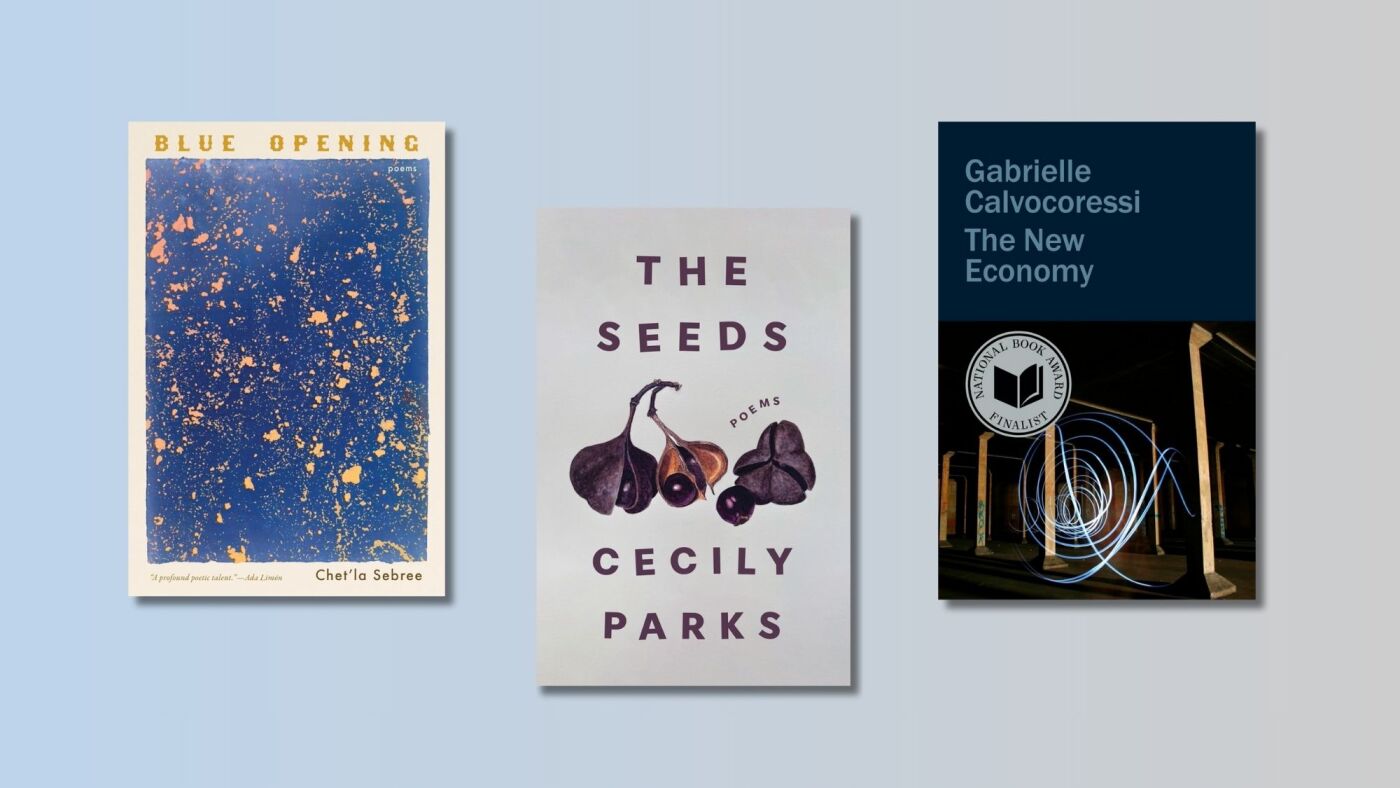
Words are among the many things under attack. Our stories, the ways that we fill our words with our own meanings, are more precious and urgent than ever, as three new books this fall by poets in – or entering – mid-career make clear. They lay claim to stories of identity, suffering and hope, to a kind of collective subjectivity, to the inner life of a country in the throes of deep pain and uncertainty. Here’s a look:
Blue Opening by Chet’la Sebree
Chet’la Sebree’s third book begins with the thwarted wish to have a child: “Many in my family have been plagued/ by menorrhagia in early middle age–/ fibrinous weeds causing their bodies to bleed streams,/ flooding lands no longer suitable for plants.”
What follows is a rapidly paced, heart-stricken coming to terms with a body and a future suddenly altered by autoimmune disease, with the meanings of motherhood and daughterhood, and with the stunned language required to describe it all when there is “no one to know/ my body’s vernacular, that it would mistake me for foreigner.”
Blindingly clear and unornamented, these poems have all their cards on the table, “pregnant with grief—/ it’s bloated, black, a matted thatch.” If the body is in revolt — “I am not the owner of this vessel I thought I owned, implies the man trying to sell it to me” — then it is through language that Sebree can lay claim to herself, to her story, and take it back.
The lexicons of motherhood and illness (“I accept this list of words:// necrotizing lymphadenitis and swell-scrambled nerves”) become a vocabulary of grief and profound disappointment with what may and may not be possible. Sebree searches for language to carry the grief and to promise some kind of hope and inner rebirth; she finds a surprising kind of peace and power “when a centrifuge spins/ my blood 3,000 revolutions per minute/ to render me perhaps anew to me again.” A new kind of creation becomes possible, as well, through poetry.
The Seeds by Cecily Parks
With The Seeds, her third book, Cecily Parks comes into her full powers. These poems are dark, lavish, far-reaching and subtly layered, making a harsh and rich mirror of the pastoral and the domestic. Parks reckons with the compromises that every life demands, that motherhood and art demand, that a country where violence and cruelty are suddenly triumphant require: “now I think of hope// as a swing chained to a branch./ it can be used until/ the branch sweeps the ground/ with a shush shush because/ it cannot bear/ so much weight and still loft through/ the dream-trafficked air.”
Parks’ powers of description are breathtaking, not only because one feels transported but also because, as in the poems of Elizabeth Bishop, the emotion, the domestic or personal story, is interwoven into – always an undercurrent of, a reason for – the description. But somehow, the world as described also feels like the world, not a projection. In these poems, Parks feels with her eyes.
The writing is simply beautiful: “the grackles plummet down to pierce the lawn/ for seeds and fat brown live oak acorns.” The words dart in and out of the rhythm like the grackles’ dark beaks, making gentle animals of a mother and her “ravenous daughters.” This book is a delight, a feast of grief and determined celebration. A fallen world this lovingly observed must be at least somewhat redeemed.
The New Economy by Gabrielle Calvocoressi
Hopelessness is a beloved enemy in these poems, a necessary muse. So are grief and fear. “The days I don’t want to kill myself/ are extraordinary,” begins the most affirming poem about suicide I’ve ever read. But these are not merely affirming poems (though one of them is titled “Affirmation Cistern When I Let Go of My Fear Life Becomes Magical”). Calvocoressi is at home in the dark, they live there, even if light is their element. They’re wise because they’re wary: “every being will slaughter/ their neighbor if they’re hungry,/ and enough.”
All of our violence, they assert – with a compassion so pure it feels out of step with the times – is born of fear: “when I was little I wanted/ to be tough to beat people up to own a gun./ wanted the boy body that would keep my body/ from being so scared.” Violence begins in each of us, is always inflicted first upon ourselves. And yet, we persist, try to do better – we must.
A series of “Miss You” poems, high-energy elegies for loved ones who have died, celebrate life emphatically by not quite letting go of the past: “miss you in your puffy blue jacket./ They’re hip now. I can bring you a new one/ if only you’ll come by. Know I told you /it was okay to go. Know I told you it was okay/ to leave me./ Why’d you believe me?” Why let the past go? Where else do we live but our stories? Where else can we rest from the terrors of the present? Where else can we remind ourselves of the beauty of the world?
If you or someone you know may be considering suicide or is in crisis, call or text 9 8 8 to reach the Suicide & Crisis Lifeline.


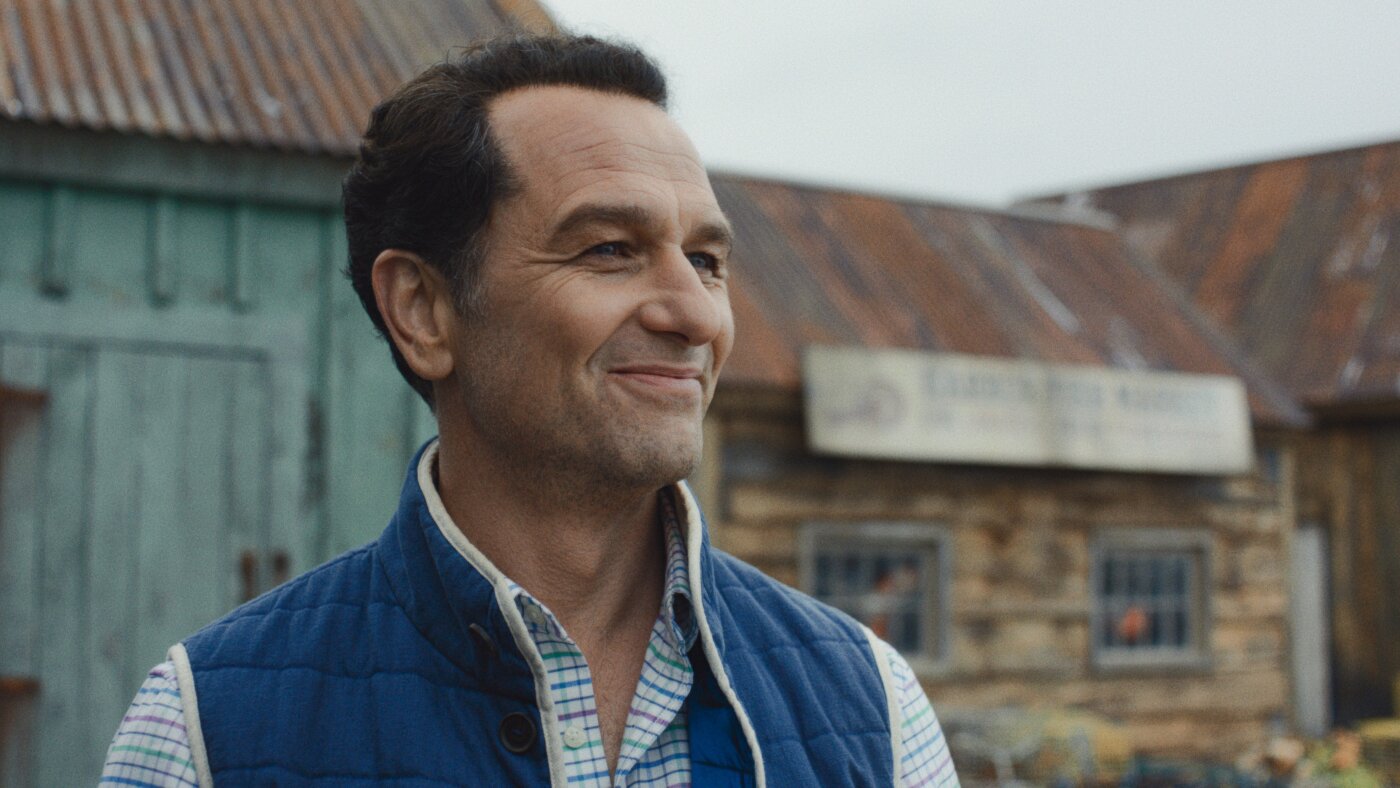
Matthew Rhys was nominated for his role in Widow’s Bay.
Apple TV
hide caption
toggle caption
Apple TV
The 2026 Emmy nominations are here. We’re unpacking the record-breaking nominations for Hacks, plus a big day for Widow’s Bay, The Pitt, and The Bear. We’ll also talk about the snubs and make some early predictions of who will win.
Connect with Pop Culture Happy Hour:
Letterboxd / Facebook
Our weekly newsletter
Support Pop Culture Happy Hour+


Can you say no to a friend’s wedding?
Getty Images/Getty images
hide caption
toggle caption
Getty Images/Getty images
Are we spending too much on other people’s weddings?
Going to a friend’s weddings can be so fun and meaningful… but it can also really hurt your wallet. A survey by LendingTree found that 31% of people who had been to a wedding in the past five years had accrued debt to attend. So what’s driving up the cost of weddings for guests? And what makes it so hard to say no to these expenses?
Brittany breaks it down with Allyson Rees, senior analyst at trend forecasting firm WGSN, and Annie Joy Williams, assistant editor at The Atlantic.
This episode was produced by Liam McBain, with additional support from Corey Antonio Rose. It was edited by Neena Pathak. Our Supervising Producer is Cher Vincent. Our Executive Producer is Barton Girdwood. Our VP of Programming is Yolanda Sangweni.
-

 Georgia4 minutes ago
Co-owner of Yurezz Home Center in Greeneville arrested in Georgia
-

 Hawaii11 minutes ago
Hawai‘i Fire Department responds to brush fire in North Kona | Big Island Now
-

 Idaho14 minutes ago
Idaho man bit by rattlesnake in Northern California recovering
-
 Illinois19 minutes ago
Cash App parent company agrees to $45 million settlement with Illinois, 44 other states
-
 Indiana26 minutes ago
Indiana sees significant drop in number of homeless veterans
-

 Iowa29 minutes ago
Iowa High School Looking To Consolidate In More Sports After Canceling Football Season
-

 Kansas34 minutes ago
Kansas Basketball Makes the Cut for 5-Star SF Demarcus Henry
-

 Kentucky41 minutes ago
Cyclospora parasite cases in Kentucky, health officials warn

