Lifestyle
My best friend is 30 years my senior. Here's what she's taught me about life


She was 63.
I was 33.
We shared cocktails at a rooftop bar overlooking Sunset Boulevard during golden hour. And the connection was palpable.
No, this isn’t the start to an “L.A. Affairs” romance column. But it is about a love affair of sorts. My best girlfriend of the last two decades is 30 years older than me.
I met Loraine in 2001. I was newly married and working as an associate arts editor at L.A. Weekly, where I was writing book reviews and covering the arts. A friend introduced us at a literary salon one evening. It was a brief business exchange. We were sitting on the floor of the now-shuttered French-Vietnamese restaurant Le Colonial, cross-legged on silk pillows awaiting the start of the readings. Loraine leaned over and gave me her card, mentioning she had just published a debut novel.
“It’s about marriage, adultery and regular church attendance,” she whispered, clearly pleased with her pithy elevator pitch. I stuffed the card in my purse.
A few weeks later Loraine convinced me to meet her for apple martinis at a rooftop restaurant on Sunset Boulevard. I had been hesitant to spend a free evening with a relative stranger who was a generation-plus older than I and with whom I assumed I had little in common. My friends at the time were all raucous creative types in their 20s and early 30s. Clichés raced through my head: Would she be stuffy or old-fashioned? Would we have anything to talk about? I’d have to watch my manners.
“I’ll be home within the hour,” I told my husband, determined to keep the meeting quick and cordial, a professional nicety.
But our conversation stretched on and on. I learned Loraine had grown up in a small town just north of New Orleans, one of the only Jewish families there at the time. She’d studied art in Paris during college — and she regaled me with stories of ill-fated romances she’d had there — before breaking into Hollywood as a TV writer in the 1970s. She penned what many consider the single most iconic TV show in pop culture history in 1980, the “Who Shot J.R.?” episode of “Dallas.”
“Then I made a pivotal mistake in my career,” she told me.
“What?!” I was rapt.
“I turned 50. That was it. Hollywood stopped calling,” she said, shrugging matter-of-factly. “So I turned to writing novels instead.”
“The Scandalous Summer of Sissy LeBlanc” would go on to become a national bestseller.
Loraine Despres Eastlake in 2021.
(Wendi Weger)
It was one of those mysterious, pivotal nights. Seemingly benign at the time, it proved to be life-changing in hindsight. Loraine’s resilience and joie de vivre was inspiring. I didn’t for a minute notice the age gap — and haven’t to this day.
Sure, Loraine has curly, silver hair and oversized glasses and, at 86, now walks a tad more gingerly than she used to. But I don’t see an older woman when I look at her; I see the essence of a person, timeless and ageless, housed in a corporeal shell (one that’s in pretty darn good shape, I should add). I see a teenage girl, still ever-curious about the world around her. I see a 20-something women, still evolving through new creative pursuits, most recently poetry writing. I see an accomplished power player in midlife at the peak of a highly successful TV writing career, self-satisfied and oozing with agency. I see a woman, late in life, struggling to unearth new pathways toward creative and intellectual relevance — and succeeding.
Suffice to say: My editor ended up passing on the book review, but Loraine got me instead.
As our friendship blossomed I learned that Loraine was all kinds of fabulous. She was part New York intellectual, part West Coast hippie, part Hollywood elite. Her closet was stuffed with expensive designer clothes, which she often passed over for unassuming yogawear. She drank Prosecco and swam naked in her cobalt-tiled pool. She once convinced me to spend the entire afternoon lying on our backs, in the dirt, beneath an old and glorious oak tree in Franklin Canyon Park, the sun glimmering through the leaves.

Loraine Despres Eastlake, left, and Deborah Vankin lie on the ground under a tree in Franklin Canyon Park in 2022.
(Deborah Vankin)

The sun shimmering through tree leaves provided the afternoon’s entertainment.
(Deborah Vankin)
She knew so much about art, an interest we bonded over and which would become a throughline of our friendship. When I began covering art for The Times, she became one of my go-to plus-ones for museum and gallery openings. We’ve taken that interest abroad too, touring art studios in Cuba, visiting museums in Vienna and, most recently, journeying to Japan’s art island, Naoshima.
I suppose this is where I relay how the three-decade age gap has provided illuminating pearls of wisdom during divorce, career changes and aging woes. But honestly? That’s not been the case. Loraine is there for me in an emergency, but she isn’t the motherly, advice-dispensing type.
Rather, Loraine teaches by example. She’s living proof that fabulousness is about attitude, not age. And that vitality has less to do with hip mobility than it does a sustaining lust for life and unrelenting curiosity about the world. I wonder: Had I not met Loraine, would I be aging, now, with as much ease and universality? Would I be more susceptible to the rigid and relentless stereotypes with which society brands women of a certain age? Loraine is, above all else, a writer. And the narrative she’s crafted for herself — a feminist art scholar turned advertising copywriter and single mother turned happily remarried TV writer turned novelist turned poet — bucks society’s expectations. I hope to continue writing it.
“Oh, it’s so nice you have a surrogate mother in L.A.,” my own mother would often say of Loraine when she visited from the East Coast. Loraine is older than my mom and the fact that I had a “kind of aunt-like person” living nearby brought her comfort.
Loraine would bite her lip whenever my mom said that; but afterward, we’d marvel at the mischaracterization of our friendship. Our conversations are devoid of motherly energy; instead they range from our romantic lives to clothes to books and contemporary art. Our recent Japan trip included several nights at a yurt camp by the sea (which we abandoned due to mold).
Last July Fourth we climbed atop an Echo Park hillside, took edibles and watched the fireworks melting across the sky.
“Really, where do you think we go when we die?” I asked in a haze.
“Beats me,” she said, chuckling. “Pass the nuts, will you?”
Then we burst out laughing.
The beginning of the 2020 pandemic was the first time I ever felt our age gap. Our experiences sheltering in place were very different. I was batch-cooking soup and binge-watching FX’s “Better Things,” relishing what felt like a rare solitude. Loraine became low-level depressed and, as the months of the pandemic turned to years, tinged with bitterness. It was a rare mood for the typically happy-go-lucky Loraine.
“It’s like being robbed of the last years you have left,” she’d say on the phone. “I’m withering here at home.”
Recently, Loraine’s taken to repeating herself, as is the case with almost anyone her age.
“So what are you up to this weekend?” she’ll ask me on the phone, minutes after I answered the question already.
I just politely repeat myself, resigned to a sort of linguistic meditation, learning to enjoy the same conversation threads over and over again.
When we broached the issue recently, she told me, sighing: “I suffer from CRS.”
I braced myself for what that meant.
“Can’t Remember Shit,” she said, laughing — one of her long, loose chuckles that trails off with a cheery whine, as if she were a flapper wielding a cigarette holder in the air, head tossed back in the wind. “It is what it is.”
I’ve found myself using that phrase a lot lately: It is what it is. Loraine may not overtly mentor me in life, but her open embrace of whatever life offers reminds me to be present, to live in the moment.
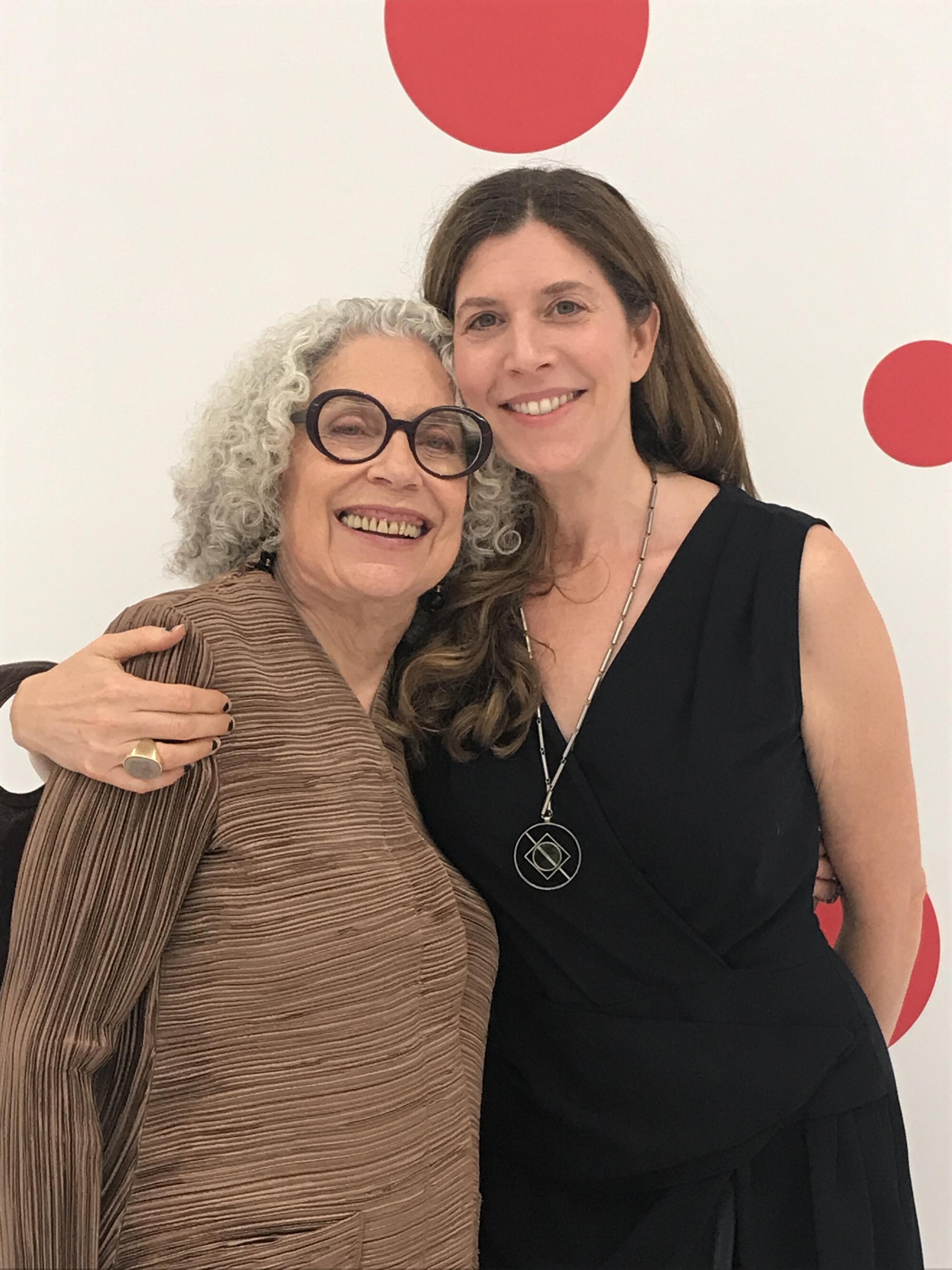
Loraine Despres Eastlake, left, and Deborah Vankin in a Yayoi Kusama art installation in 2018.
(From Deborah Vankin)
Thinking about our friendship, I see a supercut of us: the time Loraine and I danced on a cafe rooftop in Cuba to live music; when we sailed through the air on trampolines on my 45th birthday with ’80s music playing over the loudspeaker; the New Year’s Eve we posed for selfies in wigs at a friend’s house; Loraine chasing a flying cockroach around our Miami hotel room as I squealed from atop the bed; her pure, unabashed joy when we rounded a corner in a Naoshima museum recently and she found a Cy Twombly work on display.
We were, in all those moments, 16 and 35 and 86. We meet somewhere in the middle, in the universal mind meld that is true friendship. And I’m grateful for every year of it.



Emma D’Arcy (Rhaenyra).
Ollie Upton/HBO
hide caption
toggle caption
Ollie Upton/HBO
This is a recap of the most recent episode of HBO’s House of the Dragon. It contains spoilers. That’s what a recap is.
Credits! As you’d expect, last week’s Battle of the Gullet earns some new thread in the Die, You! Tapestry — there’s Sharako and Corlys goin’ at it. And there’s poor dead Jacaerys, looking for all the world like your gramma’s tomato pincushion. (I’ve only just realized that when you see blood pooling around a figure in the tapestry, it means they’re dead. Both Sharako and Jacaerys get scarlet blooms — but not Corlys. Hunh.)
We open on the smoking aftermath of the sea-battle, and then we see Rhaena, whose attempt to help Team Black turned into a big ol’ whoopsiedoodle, tearing away on Sheepstealer looking well and truly freaked. (To be clear, Rhaena’s the one who looks freaked; Sheepstealer’s just like, “Welp, my work is done here. Gotta be hitchin’ a ride on the wiiiiind.”)
They don’t close-caption a character’s internal monologue, but from the expression on her face, Rhaena’s would read something along the lines of “Ohcrapohcrapohcrapohcrapohcrap.”

Rhaena (Phoebe Campbell).
Theo Whiteman/HBO
hide caption
toggle caption
Theo Whiteman/HBO
On Dragonstone, the dragonkeepers receive Jacaerys’ corpse and sort of crowd-surf it into the castle like he’s Peter Gabriel during “Lay Your Hands On Me.” Sir Lorent Marbrand, Rhaenyra’s less-than-loyal royal guard, asks a shaken Baela: “The battle?” to which she responds, shakily, “T’is won.”
Which is helpful to know, because from where I’m sitting it looked like a pretty unilateral, omnidirectional clustermess.
If you thought the creators of the show were gonna spare us seeing Rhaenyra’s reaction to Jacaerys’ death (and duly supply Emma D’Arcy with their Emmy clip in the process), you were much mistaken. It’s pretty wrenching stuff. And speaking of wrenching: When Ser Lorent attempts to pull Rhaenyra away from her son’s body, she wrenches out of his grip and turns on him, along with the rest of her Small Council, which has shrunk to just two dudes so now must technically be referred to as her Tiny Council.
On the island of Driftmark, which was sacked by the Triarchy last episode, the Blacks storm the beach to set about … unsacking it. Alyn and Baela talk wistfully about Corlys and their respective daddy/great uncle issues in yet another feelings-y conversation that really seems it belongs in an earlier season, when things were a little less Guys There’s A War On Can We Maybe Focus, Please?
Addam, flying on Seasmoke, somehow locates Corlys, who just seems a bit winded. Let’s pause to unpack that sentence for a second.
Both the clauses “somehow locates Corlys” and “just seems a bit winded” describe a set of circumstances that are equally and wildly unlikely. Credulity-straining. Even flatly preposterous. But given that they immediately follow a phrase describing a dude flying around on a dragon, we kind of have to let them both go, you know? Funny how it works, the fantasy genre.

Baela (Bethany Antonia) and Alyn (Abubakar Salim).
Theo Whiteman/HBO
hide caption
toggle caption
Theo Whiteman/HBO
Rhaena’s made it back to the Vale, but Lady Jeyne Arryn wants nothing to do with her. Phoebe Campbell’s wiry, wild-eyed performance as Rhaena is turning into one of this show’s stealth comic highlights — she’s giving Scrat from Ice Age, and I can’t get enough. Lady Arryn reluctantly agrees to let Rhaena crash in the Vale, but otherwise washes her hand of the girl, who has clearly skipped every installment of the venerable How to Drain Your Dragon franchise.
The only thing missing was a turkey leg
Near the Gods Eye lake, Daemon and his riverlords celebrate their victory over the Lannisters that is officially known as The Battle by the Lakeshore but which the soldiers have taken to calling the Fishfeed (because the Lannister host was driven into the lake and slaughtered there among the reeds). They celebrate with a bawdy song, like the uncouth Shakespearean rustics they are. You know: There’s lots of assorted “Huzzah!”s and mead spilling out of tankards and whatnot. Full Ren Faire vibes. Ye Olde Partye-ing.
My guy Ser Simon Strong shows up, only to receive a snooty reception from Daemon, which is classic Daemon but still makes me mad because Simon deserves better — the man brought a cask of wine! Little thing called the social contract, Daemon, look it up. Do the minimum.
Simon brings a note from the Queen informing Daemon of Jacaerys’ death and summoning him to King’s Landing to help her take back the Iron Throne. He orders the riverlords to march there, but to leave a small garrison at Harrenhal. This will be important later.

Before he ducks out, Daemon meets with Alys Rivers one last time, and pithily sums up my feelings about all their scenes together last season: “I would thank you for your help but I’m not sure yet what your purpose has been.”
Alys wants Harrenhal for herself. Daemon smirks at this, then snoots, then sneers, and then departs, leaving only a thick cloud of condescension in his wake. I can’t imagine that’s a series wrap on Alys, though. Homegirl’s got way too much creepy main character energy to have her plotline pruned in such a perfunctory manner.
The thugs who captured Aegon and Larys’ wagon last week get attacked by the Triarchy. Aegon pulls an arrow from one dead body and uses it as a shiv to create another dead body. It’s a nice comedic visual, because you can’t really cut a dashing kingly figure if you’re hunched over a dude poking him with a glorified spork. He and Larys steal away from the ambush, and Aegon insists they head to Rook’s Rest where, you will perhaps recall, Aegon’s dragon Sunfyre was last seen, missing presumed broasted.
Alicent, in full-on scheming mode, visits the Gold Cloaks (read: the City Watch). (This whole bit? With Alicent working behind the scenes to effect the change she wants to see in the world? Is a show invention, and a good one. It gives her a lot more to do than she managed back in Season 2, when she just sort of … went for a swim.)
At City Watch HQ, we get what is essentially a locker room scene, because the HBO butt-quota must be met. She tries to sell their commander Ser Luthor Largent on the lie that Queen Helaena is ordering the soldiers to stand down and let Rhaenyra take the throne. She and Ser Luthor just sort of regard each other warily for a bit, and then the scene cuts. Drama! Tension! Or their relative lack, depending on how generous you’re feeling!
The Daemon download
Daemon has made it back to Dragonstone and gets caught up on all the stuff he missed last season, which turns out to be a tremendous lot. First, he finds Ulf and Hugh lounging around playing Mario Kart in the rec room. He’s angry that they left his garrison at Harrenhal undefended against Aemond and Vhagar. They mention Alys, who told them to fly back to Dragonstone, and Daemon is taken aback, realizing that Alys has been playing them all. (Told you! More to come from the Harrenhal Stevie Nicks, I’ll warrant!)
He’s surprised to see Mysaria there, as you might imagine. They trade barbs, but soon settle into a good old fashioned gossip session that includes the line, “Not everything is about you, Daemon,” which let’s stipulate is just a very 21st-century Earth thing — both the sentiment and its phrasing — to put into the mouth of a medieval fantasy character. But no matter! We’re all of us firmly ensconced in our new, much healthier Letting Things Go Era, right gang?
Daemon tries to comfort Rhaenyra, who’s processing that two of her sons are very dead. He does manage to cheer her up a bit by saying he believes her about the prophecy — the Song of Ice and Fire, all of it. I’m on record as not loving this device, which is another show invention. It strikes me as the writers’ attempt to attach House of the Dragon to the hugely hugely successful monoculture phenomenon that preceded it, which is fine. But all those visions of White Walkers and Daenerys and whatnot do not and cannot affect the story this show is trying to tell, so the only purpose they ever manage to serve is to nudge us in the ribs and say, “Hey. ‘Member those blue-eyed guys? And the three-eyed raven? And the lady with the three dragons? ‘Member them?” It’s world building as The Chris Farley Show, and it’s a mighty thin gruel.
Back at the Red Keep, Ser Jasper Wylde, the repugnant master of laws on Aegon’s (now Aemond’s) Small Council, shoves his way into Alicent’s chamber and informs her that he knows about her plans to let Rhaenrya take the throne. And then, to remind us that a: Ser Jasper is indeed hella repugnant and b: that we’re watching a George R.R. Martin IP, he attempts to sexually assault her. Grand Maester Orwyle breaks in before that can happen, and has Wylde arrested.
Meanwhile, Rhaenyra, Daemon, Ulf and Hugh fly from Dragonstone to King’s Landing, ignoring the protests and warnings of her By Now Itty Bitty Council.
Alicent, I know the world is killing you
In the courtyard of the Red Keep, Alicent fetches Helaena, who’s studying bugs, as is her wont, and saying something that’s probably supposed to be meaningful (“This is strange … it isn’t the season,”) but dammit we can’t be wasting time parsing your vague oracular mumblings now, woman! There’s a war on!

Helaena (Phia Saban) and Alicent (Olivia Cooke).
Ollie Upton/HBO
hide caption
toggle caption
Ollie Upton/HBO
As they walk together to instruct the Red Keep’s guards to stand down and let Rhaenyra in, we get the full confession from Alicent — she knows she misunderstood King Viserys’ final words, and should not have installed Aegon on the Iron Throne. Which is interesting, if not surprising.
Fire & Blood, the book on which this series is based, consists of differing historical accounts of this war, deliberately leaving questions about various characters’ motivations and intent up to the reader. The show has never bothered with that, and has always asked us to side with Rhaenyra. So while Alicent’s confession and remorse isn’t surprising, it’s easily the most explicit and definitive statement we’ve gotten yet on that score. And it makes me wonder if, just to keep things interesting and balanced story-wise, the cracks in Rhaenyra’s composure we’ve been seeing lately aren’t due to widen into gaping fissures.
This scene on the battlements with the guards gives us an episode MVP moment from Phia Saban’s Helaena, when she takes the cue from Alicent to say something Queenly and imperious to the dubious guard, and promptly declaims, “I will not have any beast harmed,” and then looks really pleased with herself.

Criston Cole (Fabien Frankel), Gwayne Hightower (Freddie Fox) and co.
Theo Whiteman/HBO
hide caption
toggle caption
Theo Whiteman/HBO
Somewhere near Harrenhal, Criston Cole and Gwayne Hightower see that Vhagar and Aemond have finally shown up to the freaking party, which pleases them. There is much Huzzah-ing.
And indeed, as they fly over Harrenhal, Aemond and Vhagar make short work (short rib work, more like) of the small garrison Daemon left behind. Aemond enters the castle, slicing through what little resistance he meets like a hot knife through lightly armored butter.
He arrives in the hall where the hobbity Ser Simon Strong and his hobbity sons are eating dinner, hobbitishly. Simon, bless his Falstaffian, arteriosclerotic heart, attempts to placate Aemond in exactly the same way he placated Daemon last season, with kind words of supplication and flattery. But no — they can’t see eye-to-eye (heh), and Aemond takes out my poor, sweet, avuncular Ser Simon, and his sons.
In the process, he takes a dagger to the side and starts losing gouts and gouts of blood, just as Alys Rivers shows up.
I’m sure that will work out well for him.

Ser Simon Strong (Simon Russell Beale).
Ollie Upton/HBO
hide caption
toggle caption
Ollie Upton/HBO
At the Red Keep, a remarkably similar scenario to Aemond’s plays out for Rhaenyra and Daemon. While most of the guards have hung up their shields, they meet some resistance on their way to the throne room, which Daemon easily dispatches. His Valyrian steel goes snicker-snack.
As they approach the Iron Throne, the Kingsguard (aka White Cloaks) show up to defend it. But then the City Watch (aka the Gold Cloaks) show up to side with Rhaenyra and Daemon, and the balance of power shifts back. (Daemon used to run the Gold Cloaks, back in the day, so there’s some bro-y business between him and the Ser Luthor Largent).
Then someone shouts, “Seize them!” which is a phrase that makes any situation empirically better — try it out at your next church potluck! — and the White Cloaks get fully seized.
But Rhaeyra doesn’t plop her butt on the Iron Throne just yet — she wants Aegon the Usurper brought to her. (“Bring him to me!” being another great phrase that we don’t get to bust out often enough, in this our sad, fallen, denuded world.)
Meanwhile, Alicent and Helaena, dressed in richly appointed, vibrantly hued cloaks, attempt to blend into the drab colorless burlap-clad rabble of King’s Landing in exactly the same way that a pair of drag queens would blend into an Apple store.
Subscribe to his Only-Ifans
In King Aegon’s chambers, Daemon finds only Grand Maester Orwyle, who promises fealty to Rhaenyra — and to give up someone who might satisfy the Queen’s thirst for vengeance.
He’s thinking of Jasper Wylde, but when Daemon goes to visit Wylde’s cell, the jailer informs him that Larys Strong left him “a gift” in case he ever returned. Turns out it’s way better than boring old repugnant Jasper Wylde — it’s Otto Hightower himself.
Oh, Rhys Ifans, how we missed you, and how Westeros has missed Otto’s sagacious, cool-headed approach to ruling a kingdom. Ifans doesn’t get a lot to do in his final scene, but he makes the most of it. He’s dragged before the Rhaenyra, who — after some dithering, and one sinew-slicing false start — lops off his head with Daemon’s sword Dark Sister. Ditto Daemon to Jasper Wylde, and good riddance.
Then and only then she climbs the Iron Throne, and sits. If her subjects notice that flop-sweat on her brow, and how generally shaky she seems, they tactfully pretend not to.
Parting thoughts
- OK I was kidding — we do, in fact, have to try to parse Helaena’s words. “That’s strange — it’s not the season.” That indicates something happening before its proper time — Rhaenyra on the Iron Throne, probably? Or Helaena and Alicent leaving the Red Keep?
- Operation Daeronwatch: No updates. Kid still MIA.
- HBO has clarified for us that last week’s scene with Ulf, Hugh, Addam and Alys — and this week’s scene between Daemon and Alys — do not take place on the Isle of Faces, as I and many others inferred, but just on the shores of the Gods Eye. Despite the fact that we saw a Green Man, one of the guardians of the Isle of Faces. Guess he was just … nipping into town for groceries?
- Last season, on one of Daemon’s interminable dream/vision midnight walkabouts, he saw himself dressed as Aemond — down to the eyepatch. I chalked it up to pointless mystic goof-juicery then, but the show now seems to be drawing direct parallels between the two characters. To what end, exactly, I still can’t say.
- Pour one out for Ser Simon Strong, the most relatable character in the whole dang series if, like me, you are a soft sort who’s more about eating and drinking than fighting. And keep pouring it out for Sir Simon Russell Beale, who invested a fairly stock character with human warmth and humor and — it bears repeating — softness. Westeros is a cruel, hard place for us indoor kids.

Sunday Puzzle
NPR
hide caption
toggle caption
NPR

On-air challenge
Today’s theme is “hot.” Every answer is a familiar two-word phrase in which the first word starts HO- and the second word starts with T-.
Ex. Rowdy bar with country music, in slang –> HONKY TONK
1. Guided walkthrough of a property
2. Any member of the N.H.L.
3. Lone Star State metropolis that’s the fourth-largest city in the U.S.
4. Like an animal with its four legs bound (hyph.)
5. Instruction manual (hyph.)
6. A little pompous and arrogant, informally (hyph.)
7. Punny greeting from a magician
8. Someone who steals animals from a stable
9. Congestion that drivers encounter around July 4th, say
10. Acquisition of a company against its will.
11. Exclamation for “wow!” on TV’s “Batman”
Last week’s challenge
Last week’s challenge comes from Evan Kalish, of Bayside, N.Y. Take the name of a nocturnal creature, in two words. The first word is a spooky sound. Move the last letter of the first word to the start of the second word and you’ll get another spooky, nocturnal sound. What is the creature and what are the sounds?
Answer: Screech owl –> howl
Winner
Dan Sadoff of St. Paul, Minnesota
This week’s challenge
This week’s challenge comes from Rawson Sheinberg. of Plymouth, Mich. Think of a U.S. city with a two-word name. Add a letter to the first word, without rearranging letters, to name a country. Then, without adding a letter, rearrange the letters of the second word to name another country. What places are these?
If you know the answer to the challenge, submit it here by Thursday, July 2 at 3 p.m. ET. Listeners whose answers are selected win a chance to play the on-air puzzle. Important: include a phone number where we can reach you.

If you’re struggling to use up leftovers like a half-eaten rotisserie chicken, turn the assignment into a creative exercise, says chef Margaret Li. It’ll make the cooking process more fun and less guilt-driven.
Pulse/Getty Images/Corbis RF Stills
hide caption
toggle caption
Pulse/Getty Images/Corbis RF Stills
On a recent weeknight, I opened up my fridge and found an assortment of half-eaten or ignored food.
That included takeout that I didn’t find appetizing enough to eat for lunch. A rotisserie chicken with most of the meat picked off. A couple of raw vegetables from the farmers market that were starting to wilt.
“There’s nothing to eat,” I told myself. Yet even I knew that was ridiculous. There was plenty of food in my fridge. I just didn’t feel inspired to cook with it.
So I asked some chefs for guidance. How could I more consistently use leftovers and the other ingredients I tend to overlook?
Start with a mindset shift, says Margaret Li, chef and co-author of the cookbook Perfectly Good Food: A Totally Achievable Zero Waste Approach to Home Cooking. Think about cooking with leftovers as a creative, experimental exercise, not a guilt-driven one.
“It ends up being this fun game where you are creating something from what seems like nothing and solving this puzzle, and then you get to eat it,” she says.
There are other good reasons to use up your food scraps. Nationally, about a quarter of food products go to waste, according to the nonprofit ReFED. In my own household, where we spend about $200 a week on groceries, that means I might be throwing out the equivalent of $50 of food — an unnecessary burden on my wallet, not to mention the environment.
The chefs I spoke to had some practical tips about using up more of the food we buy. Here are a few that I put to the test.
Find your “hero recipes”
Build up an arsenal of go-to recipes that are flexible enough to use up just about any ingredient. Li calls them “hero recipes.”
I tried one of these from her cookbook, called “Make-It-Your-Own Stir-Fry.” (Scroll down for the recipe.) It includes loose ingredients like “1 pound crisp-crunchy vegetables” or “4 cups leafy greens.”
In the spirit of the recipe, I pulled vegetables out of my fridge at random and did not measure them out. The sauce was a simple mixture of soy sauce, vinegar, sugar and water. By the time I topped my bowl with chopped scallions, the dish looked like a gourmet meal, not an afterthought.

Other ideas: “You could put anything in a frittata, and it’ll be great,” says Tamar Adler, chef and author of The Everlasting Meal Cookbook: Leftovers A-Z.
Or, if you have day-old rice on hand, cook it alongside other ingredients to make fried rice. “Saute some aromatics — ginger, garlic, onion — in oil,” Adler says. Then add your rice and whatever leftover bits you have, like the rotisserie chicken and older produce I had in my fridge.
“Just take the approach of making it more flavorful and crispy and then spicy, and then usually adding a squeeze of lemon,” Adler says.
Label your leftovers
Keep a permanent marker and painter’s tape in your kitchen to label and date your leftovers, Li says. “That is a classic chef’s method for knowing what something is and when it was made. That saves you the guessing game.”
Adler takes the concept a step further and labels her leftovers with their intended use. Leftover blueberries are labeled “muffins-to-be on Tuesday,” she says. “I really like doing that — assigning the destiny of the food.”

So after a night of Ethiopian takeout, when we ended up with an entire container of leftover injera, I followed Adler’s advice and thought about what it might become in the future.
I imagined scrambling the spongy, tangy bread with eggs, akin to scrambling matzo into matzo brei. “Injera for eggs,” I wrote on the container. Sure enough, their destiny was fulfilled the following morning.

Li keeps a dedicated bag in her freezer just for scraps from which to make chicken or vegetable stock. That bag houses carrot peels, the ends of onions, extra garlic cloves and chicken bones.
Flavia Morlachetti/Getty Images/Moment RF
hide caption
toggle caption
Flavia Morlachetti/Getty Images/Moment RF
Don’t forget your odds and ends
Adler encouraged me to never, ever throw away the stems of herbs. Stems don’t get as much glory as tender, pretty leaves, but they still have the same herby taste.
“I’m going to chop these herbs up or stick them in a blender with a clove of garlic,” she says. Then add olive oil. “And then it’s just gonna be my base sauce for everything.”
So I foraged a few varieties of half-cut herbs from my refrigerator drawers, most of them sad looking and unidentifiable.
I threw out the stems that had turned brown and gooey and put the rest in a blender. I added garlic on Adler’s instructions, nuts and kale for bulk, and plenty of olive oil and salt. Then, on a whim, I added a splash of olive juice for brightness.
The result was somewhere between a pesto and a chimichurri, and it elevated that night’s otherwise routine dinner. And Adler was right: Once the stems were blended, it tasted exactly the same as the leaves. (The same idea applies for broccoli stems in a cheesy broccoli soup, Li says.)
Li likes to keep her odds and ends organized with an “Eat Me First” box in her fridge. That’s where she keeps half-used lemons, leftover coconut milk or produce that’s starting to get wrinkly. “You kind of have an idea for, OK, here’s where you look first,” she says.
Don’t strive for perfection
Cooking these meals did feel like a game, as Li had suggested. It brought me unexpected joy to use up as many existing ingredients as possible — to the point where I often spent much longer in the kitchen because I kept thinking of new ideas: If I turn these wrinkly sweet potatoes into a soup, then I can caramelize this half-cut onion for a topping, and then I can use the leftover soup as a sauce tomorrow …
Did I cook more often, though? Probably not. My cooking energy burned brighter but fizzled out after a few nights, at which point I ordered takeout.
So I was glad to hear Li’s take: If you’re too hard on yourself, you’re not going to enjoy it at all. “ I try not to be too obsessive about eating absolutely everything,” she says. If my takeout was truly terrible, I’m allowed to toss it or, better yet, compost it.
If you really want to use up everything, you can always chuck ingredients into the freezer. Li has dedicated freezer bags for different dishes, like vegetable scraps for soups or fruit discards for smoothies. (She labels them, of course.)
And how does that smoothie taste? It’s “delicious,” she says, “even if it’s made up of all the things that have been rejected in the past,” she says.
Recipe: Make-It-Your-Own Stir-Fry
Excerpted from Perfectly Good Food: A Totally Achievable Zero Waste Approach to Home Cooking. Copyright ©2023 by Irene Li and Margaret Li. Used with permission of the publisher, W. W. Norton & Company, Inc. All rights reserved.
Sauce
- 1 tablespoon soy sauce
- 1 tablespoon water
- 1 teaspoon sugar
- 1 teaspoon black vinegar, rice vinegar, lime juice, or other acid
- 1 tablespoon neutral oil, or enough to lightly coat the bottom of your wok or skillet
- 1 garlic clove, thinly sliced or minced, or more as desired
- ½-inch piece fresh ginger, minced or grated (optional)
- Pinch chili flakes or 1 small chile pepper, diced (optional)
- 4 cups leafy greens, torn into bite-size pieces, or 1 pound crisp-crunchy vegetables, cut into chunks
- Kosher salt
Stir the sauce ingredients together in a small bowl and set by the stove.
Heat a wok or large skillet over high heat until just smoking, then add the neutral oil and tilt to coat the bottom of the pan.
Add the garlic, ginger (if using), and chili flakes (if using) and stir-fry for 10 seconds. Add the greens and/or vegetables, in stages as necessary, and toss in the garlicky oil, then add the sauce and cook to your liking, stirring frequently.
Vegetable chunks may need 4 to 7 minutes — if you want to speed up the process, cover the pot so the vegetables steam for a minute or two, then uncover and toss again. Sturdy greens may need 3 to 5 minutes to get tender (we like to let them sit for a bit and char for extra texture).
Lighter leaves will need less than a minute to wilt down. Stir in a spoonful of any additional sauce you like, season with salt to taste, then sprinkle with your favorite garnishes and a generous drizzle of sesame oil.
A sprinkle of crunch is a great way to finish a stir-fry. Our favorites include crushed cashews or peanuts, toasted sesame seeds, thinly sliced scallions, and fried onions or shallots.
Your turn: What are your favorite go-to leftover recipes?
We’d love to hear from you! Share your recipe with us at lifekit@npr.org with your full name. We may publish it on NPR.org.
The story was edited by Malaka Gharib. The visual editor is CJ Riculan. We’d love to hear from you. Leave us a voicemail at 202-216-9823, or email us at LifeKit@npr.org.
Listen to Life Kit on Apple Podcasts and Spotify, and sign up for our newsletter. Follow us on Instagram: @nprlifekit.
-

 Detroit, MI17 minutes ago
On the front lines of chronic absenteeism: What Detroit’s Health Hubs do to get kids to school
-

 San Francisco, CA27 minutes ago
S.F. police arrest 20 at 300-person SoMa block party during Pride
-
Dallas, TX32 minutes ago
CJ Goodwin announces retirement after 8 seasons with Cowboys
-

 Miami, FL34 minutes ago
Several people reportedly hurt in ‘mass casualty’ crash near Miami Gardens – WSVN 7News | Miami News, Weather, Sports | Fort Lauderdale
-

 Boston, MA39 minutes ago
Inside Britten’s Record-Breaking Boston Waterfront Activation
-

 Denver, CO42 minutes ago
Denver area events for June 29
-

 Seattle, WA47 minutes ago
Seattle Mariners acquire INF Buddy Kennedy from San Francisco
-

 San Diego, CA54 minutes ago
Feds Will Finally Help Oceanside 73 Years After Admitting Fault for Its Disappearing Beaches

