Lifestyle
Lonely and depressed at 50, I launched my own midlife reboot

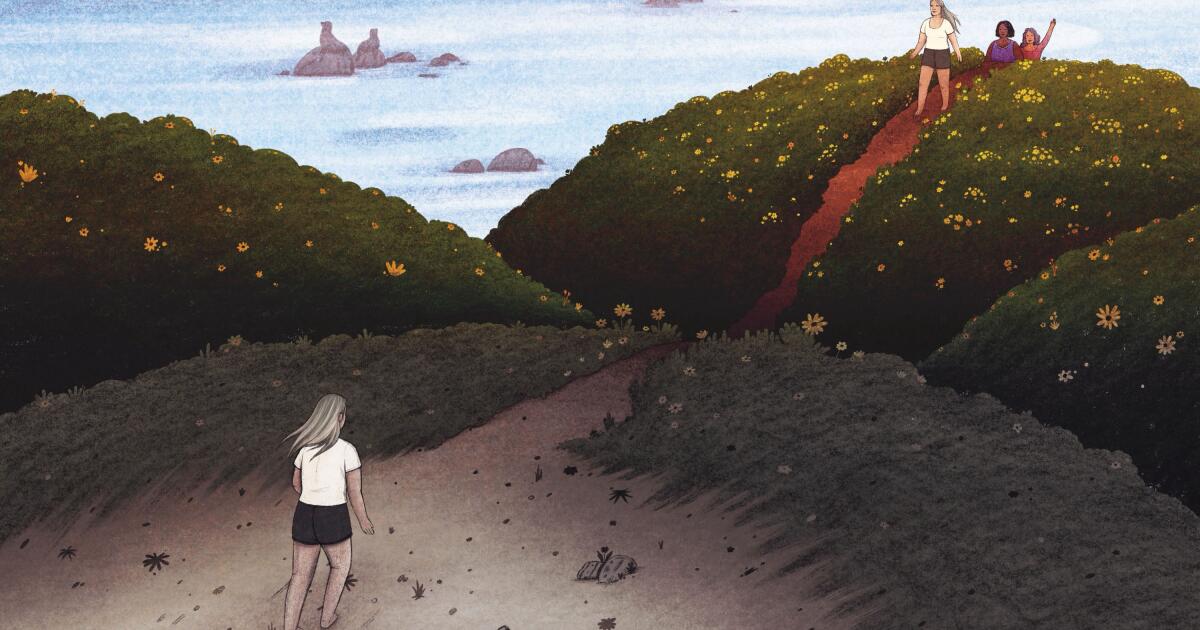
“Are you leaving again? ” I asked my husband, Rob, as he packed for his second trip with the guys in three weeks.
“Only for a few days.”
I could sense the elation he felt in escaping. He was heading out to chase ski runs, and I was staying home, taking care of the dogs and eating “girl dinners” alone. I hated that I wasn’t having fun adventures anymore. I didn’t give myself permission to pursue what interested me, partly because I had no idea what to pursue. How did people figure out what to do when their nests emptied out?
When I turned 50 in 2018, I was struggling with depression and any sense of feeling good in my body had been turned upside down. I was recovering from open-heart surgery, menopause was looming and I was losing a sense of purpose. For years I had set aside the writing goals I held dear and opted to put Rob and our blended family first, but in the quiet moments, I felt empty. Although I was tremendously grateful to have a spouse whose paycheck covered our needs, I felt there was something missing in my own personal development. I attempted to fill that emptiness through overeating or shopping, which left me feeling worse.
“I didn’t give myself permission to pursue what interested me, partly because I had no idea what to pursue. How did people figure out what to do when their nests emptied out?”
With my daughter in high school and entering a highly independent phase and Rob’s kids launched (this was a second marriage for us both), I wondered what was next. Suddenly it seemed like the built-in social structures I had leaned on in my 30s and 40s were evaporating in midlife. Volunteering at my daughter’s school was a thing of the past and the mom groups had long disbanded. My daughter needed me much less — and spent half her time at her dad’s. I realized that part of what I was feeling was loneliness.
It’s well known that loneliness can increase the risk of heart disease, dementia, stroke, anxiety and depression in older adults, but its negative effects are not limited to seniors. The surgeon general declared loneliness a nationwide epidemic last year. But for older generations in particular, research shows that friendship is important for slowing cognitive decline and has a host of other health benefits.
I wasn’t sure where to start, because it felt like so many shifts were happening at once, but I knew that being married wasn’t an automatic cure for loneliness. The relationship dynamics between Rob and me began to shift with age. Rob was a high achiever who worked hard and played hard, while I struggled to find my footing as a part-time writer. When I was younger, it felt natural to prioritize him and his needs as the breadwinner. But that got harder as I hit my late 40s.
In some ways I had stunted my own development in order to make my marriage succeed. I chose not to pursue work that might have been too demanding or taken me away from my family. Those choices felt like the right thing to do at the time, but I had no economic power. In counseling our couples therapist told me, “You need to do something about this inequality. Sometimes you need to grow apart before you can grow together.”
So I did something about it. I launched my own midlife reboot.
Tara Ellison volunteering at California Wildlife Center. Hand feeding offers care givers an opportunity to examine the sea lion and elephant seal pups without the stress of handling.
(California Wildlife Center)
Midlife occupies the intersection between how you’ve lived in the past and how you want to proceed going forward. In recent years, women have begun to rework the narrative around menopause, reimagining it as a type of coming home to oneself. The upside is the moment offers a chance for reinvention, an opportunity to chart a new course. I might have been up against a changing body and wacky hormones, plus a side of loneliness, but I was determined to rework that hand into something more favorable — even if I had no idea how.
I had to make peace with my body and better understand its needs. A prescription for more fresh air and sunshine, going for walks became essential for my mental health (especially during COVID). In order to feel my best, I paid closer attention to my hormones and hunted for a gynecologist interested in what happens to women beyond child-bearing years. That proved harder than I imagined, considering that menopause happens to half the population. Years ago, when I entered perimenopause, there weren’t resources for women on social media. The stigma attached to perimenopause meant nobody was going to own up to being on a downward slope (especially not in L.A.!) I had to learn to advocate for myself — and be a guinea pig — in order to manage my symptoms. It was a maddening journey but I learned a lot.
With the goal of meeting other women my age, I began attending book signings, workshops or menopause symposiums solo so that I would be forced to work through my social anxiety and make conversation. It’s fun to hear what other people are up to, and it turns out indulging in creative passions is high on their lists. One woman I know rediscovered her love of playing the piano; another spends her free time painting.
Sometimes it’s not as easy as falling back into an old hobby. “I spent all this time caring for my family and now I get time for myself — I just don’t know what to do with it,” one of my girlfriends in her 60s confided. Another friend shared that two years before her retirement she started carrying a notebook to which she added a note every time she found something she was interested in exploring. Once she retired, she started working her way through that list. Through these conversations I realized that, contrary to what society wants you to believe, the oldest women in the room are often the most interesting.
“Contrary to what society wants you to believe, the oldest women in the room are often the most interesting.”
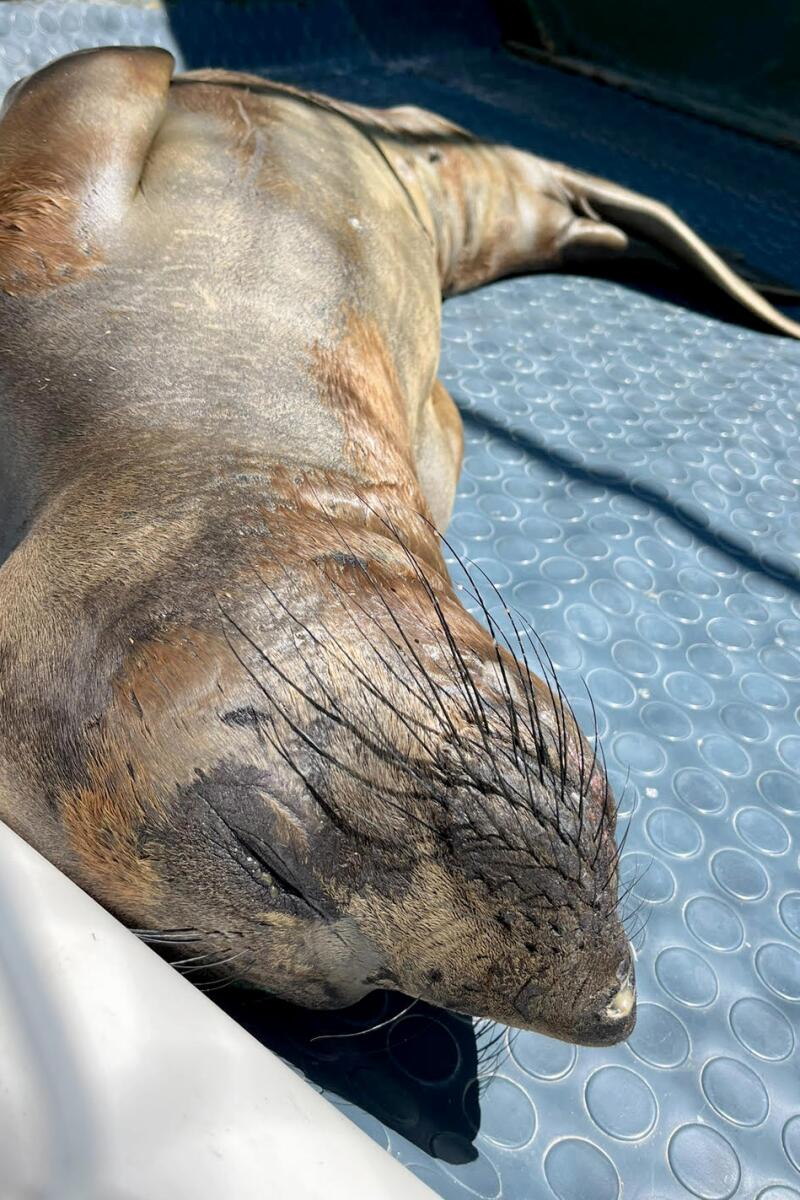
Creativity was an important part of my reboot, but I also wanted to devote my time to something larger. Studies have confirmed that being of service or volunteering can be a vital step on the path to happiness and satisfaction. After discovering an injured sea lion on a beach in Malibu, I met Heather Henderson, the marine program manager at California Wildlife Center in Calabasas, and began volunteering with its marine mammal rescue division. The organization rescues and rehabilitates sea lions and elephant seal pups. The pups arrive skinny and malnourished, receive care and medical treatment and are released.
“It’s not glamorous work; you might not like it,” one of the volunteers warned me in the beginning. He was right; some of it is really gross. But sometimes you don’t know what you’re made of until you’re tested. There’s a lot of cleaning equipment, chopping frozen fish for fish smoothies and scrubbing slimy pinniped poop out of the pens. It’s now a normal occurrence for me to find fish scales buried in my sports bra. But I’ve found that some of the mundane chores are relaxing and make me feel more present. I stop worrying about the declining health of my mother and other pressing issues when faced with the task of hand-feeding a young elephant seal.
1
2
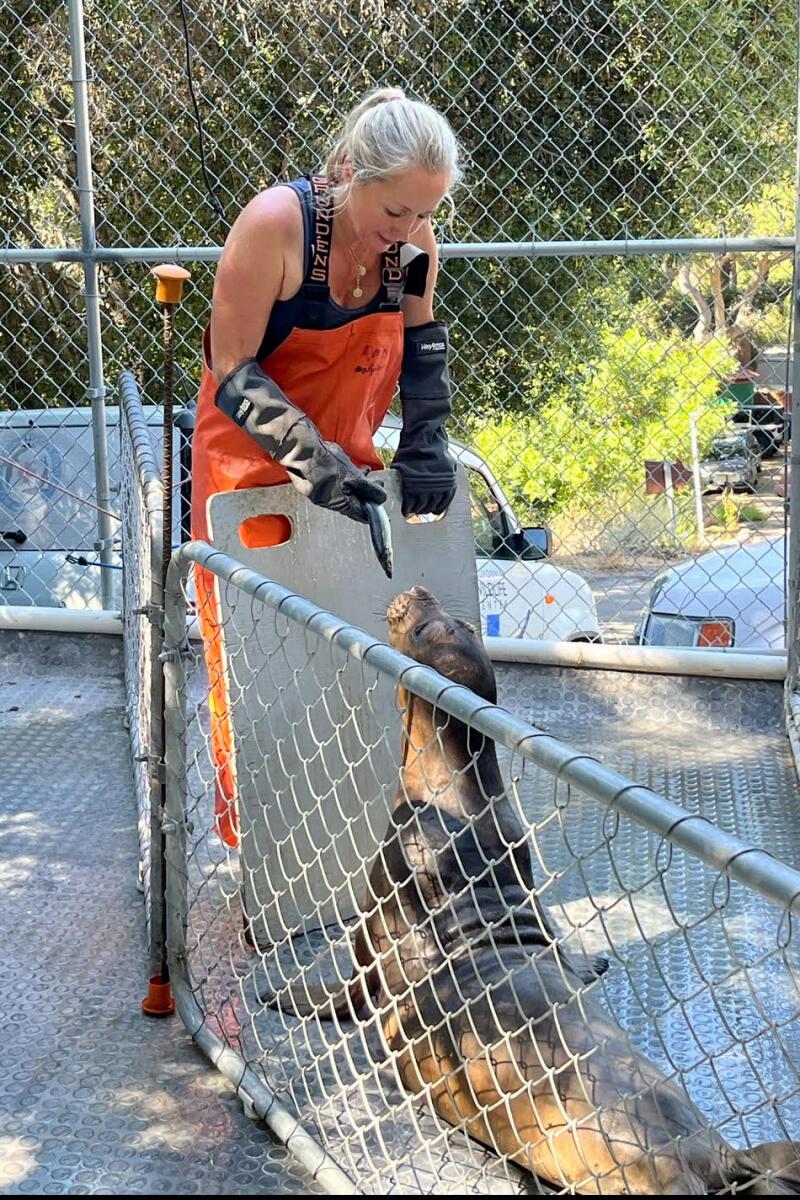
1. Resting in the sun promotes healthy skin. (Tara Ellison) 2. Once swallowing well, the elephant seal patients are ready to start feeding in the pool. (California Wildlife Center)
I was surprised to find that many other volunteers also were middle-aged.
“Due to the physical nature of the job, there is a common misconception that to be successful one must be young,” said Henderson. She estimates about 35% of the active rescue and rehabilitation team are 45 years plus.
“It has been rewarding to know that I remain relevant and necessary beyond the needs of my family,” one of my fellow volunteers, Debra Loggia, told me. At 64 she estimates she’s one of the oldest volunteers at CWC, but she takes pride in knowing she’s also one of the strongest. I understand what she means. Doing this work for six seasons has given me a new confidence, plus a sense of purpose and community.
Now, six years into this reboot, I occupy a completely different emotional space. I’m far less dependent. Through identifying my interests, expanding my community and pursuing new work opportunities, I’ve effectively outsourced my happiness.
Without the weight of expectation, my relationship has thrived. I’m more engaged in what I’m doing. On volunteer days I come home full of stories of tube-feeding elephant seals. Because work has picked up — I’m in the process of writing a book and a screenplay — I sometimes have to prioritize those deadlines, even when it’s inconvenient. Rob has been supportive throughout this process, largely because I’m a lot more fun. By pushing through a stretch of listless loneliness and embracing my fears, this midlife crisis ended up blooming into a midlife renaissance.
It’s not all perfect. I still get lonely and have days when I’m down, or need to lower my expectations. There’s a certain amount of melancholy about aging that I can’t simply jettison. But it doesn’t upend me anymore — I still surprise myself.
“You’re leaving me,” Rob said as he watched me pack for a short trip with a girlfriend.
“It’s only for two nights,” I said. “I’ll be back before you know it.”
“I’ll still miss you,” he said. And I believed him.
Tara Ellison writes about relationships and the challenges and triumphs of midlife. She’s currently working on a memoir.

Matthew Rhys was nominated for his role in Widow’s Bay.
Apple TV
hide caption
toggle caption
Apple TV
The 2026 Emmy nominations are here. We’re unpacking the record-breaking nominations for Hacks, plus a big day for Widow’s Bay, The Pitt, and The Bear. We’ll also talk about the snubs and make some early predictions of who will win.
Connect with Pop Culture Happy Hour:
Letterboxd / Facebook
Our weekly newsletter
Support Pop Culture Happy Hour+


Can you say no to a friend’s wedding?
Getty Images/Getty images
hide caption
toggle caption
Getty Images/Getty images
Are we spending too much on other people’s weddings?
Going to a friend’s weddings can be so fun and meaningful… but it can also really hurt your wallet. A survey by LendingTree found that 31% of people who had been to a wedding in the past five years had accrued debt to attend. So what’s driving up the cost of weddings for guests? And what makes it so hard to say no to these expenses?
Brittany breaks it down with Allyson Rees, senior analyst at trend forecasting firm WGSN, and Annie Joy Williams, assistant editor at The Atlantic.
This episode was produced by Liam McBain, with additional support from Corey Antonio Rose. It was edited by Neena Pathak. Our Supervising Producer is Cher Vincent. Our Executive Producer is Barton Girdwood. Our VP of Programming is Yolanda Sangweni.
-

 Tennessee2 minutes ago
Data centers driving up Tennessee power bills, report finds
-

 Texas7 minutes ago
Family demands investigation after US man killed by ICE agent in Texas
-

 Utah14 minutes ago
Turn your miles into meals
-

 Vermont17 minutes ago
Poll: Most young Vermonters say they’re likely to leave state amid affordability concerns – VTDigger
-

 Virginia22 minutes ago
MEOC Organization hosts annual summer picnic for Southwest Virginia seniors
-

 Washington30 minutes ago
Future uncertain for site of former Mount Washington church destroyed in massive fire
-

 Wisconsin32 minutes ago
South Milwaukee, Wisconsin, officials in standoff with homeowner over year-round skeleton display
-

 West Virginia38 minutes ago
West Virginia coach Rich Rodriguez wants to save college football. Here’s his pitch:

