Lifestyle
Lewis Hamilton Goes Undercover As Lululemon Store Employee For Surprise Shift | Celebrity Insider


Instagram/@lewishamilton
The transition of Lewis Hamilton, the reigning world champion in Formula 1, from the racetrack to the retail store as a Lululemon store educator was completely unexpected. The Lululemon‘s official account released a short video of the undercover operation, where the driver mingled with the customers and the staff trying to remain inconspicuous at the same time. The stunt reveals the duality of the sportsman as a brand supporter and his willingness for unanticipated and direct de facto experiences.
Advertisement
The clip depicts Lewis Hamilton wearing Lululemon’s casual wear, greeting customers, and assisting them in product selection. His voice can be heard acknowledging, “I’m going undercover as a Lululemon store educator,” even though his world-renowned status made the disguise quite tricky. The film portrays him as somewhat tense saying, “I am a little bit nervous,” and then expressing his understanding of retail workers, he states, “I got massive respect for people that work in these spaces.”
Instantly and humorously, viewers commented on Hamilton’s operation, which was almost too much to take. One person pointed out the irony saying, “‘Im going undercover’ and by undercover, he meant not wearing his racesuit.” The statement precisely brought out the soft absurdity of a star athlete trying to be a common man. Moreover, a third person joined in with almost the same idea, saying he deserved to be granted some prize for being the most pleasant and kindest F1 driver.
The reactions of the most honest and true customers came through the interactions recorded in the video. At one point, a customer could be heard whispering, “I heard he’s got money,” and that particular line ignited a firestorm of discussions in the comments. The original comment had an immense impact, and one user jokingly insinuated that “Things at Scuderia Ferrari have gotten so bad that Lewis Hamilton had to take a retail job.” This was a playful remark directed at Hamilton’s recent team change, the joke was widely shared and liked.
A lot of comments were about the disbelief of the video shoppers being so cool and calm. “How are people so calm? It’s Lewis Hamilton for heaven’s sake,” was one comment and it was exacting the opinion of many. I would just die,” was one dramatic statement and it was such a universally accepted one. The fainting with excitement scenario was very popular and one person said, “I would literally pass out.”
The video followers also engaged in witty puns. One of the funniest comments was “Lew Lew in Lulu, am I delulu?” The brand’s Instagram account replied with “We’ve got the solulu,” which turned the situation into a joke among friends. This clever and playful interaction between the brand and its followers not only drew praise for the creativity involved but also for the brand’s engagement with the audience.
However, apart from the laughter, a considerable part of the reaction was directed toward Hamilton’s character. The viewers kept on tagging him as “nice,” “down to earth,” and “a sweetheart.” One viewer pointed out his awkward shyness, commenting, “This is sooo cute he was so shy lol.” Another one saying, “He’s such a sweetheart,” gets rejoined, “Proof that kind souls create the best moments.” The continuity of the kind words overshadowed the public’s view of Hamilton as a champion on and off the racecourse.
For the mass, this was nothing short of the ultimate “what if” situation. “Imagine not coming to work that day,” one person voiced, picturing the misery of missing up the shift with the F1 star. Another user wished, “Can you please send him to Lululemon Melbourne,” hoping for such occurrences in their city. The mutual daydream of encountering Hamilton in a normal setting was a significant reason for the video’s popularity.
Advertisement
The unexpected move of Lewis Hamilton at Lululemon became an effective brand activation that combined the power of a celebrity with the sometimes even relatable content strategies. He was the master of moment-sharing, as he conquered the super-long-fame barrier and melted into the character of an ordinary teacher, plus everyone else’s reactions were very genuine and often hilarious, not to mention the huge moment that connected so deeply the fans of both his and the brand. This reminds many of his mother Carmen‘s influence on his character. Ultimately, the incident solidified his image as a global and still open and kind star. His performance in the Mexican Grand Prix showed similar determination, though his qualifying plea at another event ended less favorably.



Lifestyle
L.A. Affairs: After losing our spouses, we found love again. But were we cheating on our children?

We’d progressed from walking in the park to perching across from each other in my living room to sitting side by side on the family room sofa. It was grief that drew us. A year earlier we’d both lost our beloved, vibrant spouses to cancer. Though his wife and I had been in the same women’s book group, I’d known Eric only through the wry gripes we’d all made about our husbands.
Now he took my face in his hands. Here it comes, I thought. Was I ready for this? Looking deep into my eyes he asked, “Would you nap with me?”
Apparently, this was what dating looked like in one’s 60s. As he snored companionably, I wondered how I’d handle our next progression, whatever that would be. My husband had devotedly nursed me through my own illness, only to be hit by one far worse. We and our two sons had been the closest of families, their father their best friend. As much as I knew they needed me, I was racked by survivor’s guilt — ashamed still to be alive. If I was mortified just to breathe, how could I even think about loving another man?
For months, Eric and I lurked about. Although he lacked the sense I had that we were cheating on our spouses, we both felt we were somehow cheating on our children. That his one child and my two were often at our respective homes made for tricky logistics. So we leased new life from the city.
Guided by Eric, we watched planes from the viewing deck at the Santa Monica Airport, where he explained Bernoulli’s principle. We wandered the Mar Vista Farmer’s Market, where he introduced me to the vendors he’d known for decades and taught me to top berry trays with tiny nets he’d made to hold the fruit in place. We saw L.A. Theater Works record plays at UCLA’s Melnitz Hall, where the primal storytelling of actors reading lines and Foley artists adding sounds riveted me more than a Broadway spectacle. On these outings, I learned not just about flight, farm-to-table and fabulism, but about Eric. He was a man fully engaged in life.
Guided by me, we took classes at Santa Monica Yoga, Eric treating himself afterward to a sandwich at Bob’s Market from the deservedly self-proclaimed Deli Lama. We walked our way through my L.A.-on-foot book, from Castellammare and Leimert Park to Pasadena, delighting in the architectural mashup Nathanael West derided in “The Day of the Locust” as “Mexican ranch houses, Samoan huts, Mediterranean villas” and “Egyptian and Japanese temples.” Eric especially admired the Witch’s House in Beverly Hills, the Shakespeare Bridge in Franklin Hills and the stained glass windows in Carthay Circle. He learned not just about poses, pastrami and parapets, but about me. I was a woman fully engaged in life.
We also learned we were both determined to seize the day after seeing the rest of our spouses’ days seized from them. My guilt persisted. But this good man had found a route from the sofa to the city to my heart.
We finally met each other’s children. The days we seized became weeks, months and years. Our sons, though forever brokenhearted, thrived. Mine had children of their own, all with names that begin with “A” to honor their father. The oldest, at four, understands from photos that she has another grandpa, understands that the man in the picture is her daddy’s daddy. Her parents and I tell her about him: his kindness, grace, humor, wisdom. “I wish I could have known him,” she says.
“I do too,” I say, “more than anything.” When the others are old enough, we’ll tell them, too, about him. They’ll feel his essence because their fathers are just like him. He’ll stay, this way, in and around us.
Ever-gracious, Eric holds this space for him, as I try to do for his wife with their son. But becoming a grandmother only increased my guilt. My husband, consummate family man, was born to be a grandfather. Yet here I was, without him, flying high on the joy of grandparenting. What could I do besides love the children and grandchildren fiercely and be grateful for the privilege?
I could do this: recognize that if it takes a village to raise a child, the more villagers who love the child the better. My lucky grandchildren will feel their grandfather’s love by proxy and Eric’s love firsthand. They can even enjoy the love of Eric’s son, who patiently helps them build Lego worlds and cooks them their favorite soup.
Even as he holds space for my husband, Eric affectionately fills his own. He’s a tall man with a deep voice, an easy laugh and a warm embrace. He marvels at the latest evidence of the grandchildren’s genius, like any grandfather should, and spoils them with treats and toys. He’s so handy around their houses that my grandson greets him with, “What’re you gonna fix today?”
His most recent project involved the crib my husband and I had saved from our sons’ infancy with the hope that grandchildren would one day use it. Since the distance between slats was now deemed unsafe, Eric transformed the crib into blocks. “I wanted to honor the spirit of what you’d both wished for,” he said.
Then and now. Loss and gain. Selfless love.
For years now, Eric and I have both lived in my house. There are still naps, but more bustle. Our sons live close enough that we’re together a lot, and my house tends to be the happy hub. The grandchildren play near photos of their grandpa. Their “A” names ring out in this home where we raised their fathers. Meanwhile, Eric pulls them around on a rug he rigged as a magic carpet and helps stack the blocks into towers. When the grandchildren leave, he hugs them tight. My guilt remains, like pain in a phantom limb, but the sofa holds us all.
The author is a law school professor, researcher and author of an upcoming book on the scientifically proven neural superpowers of grandmothers. She lives on the Westside. She’s on Instagram @rondafoxwrites, and her website is rondafox.com.
L.A. Affairs chronicles the search for romantic love in all its glorious expressions in the L.A. area, and we want to hear your true story. We pay $400 for a published essay. Email LAAffairs@latimes.com. You can find submission guidelines here. You can find past columns here.
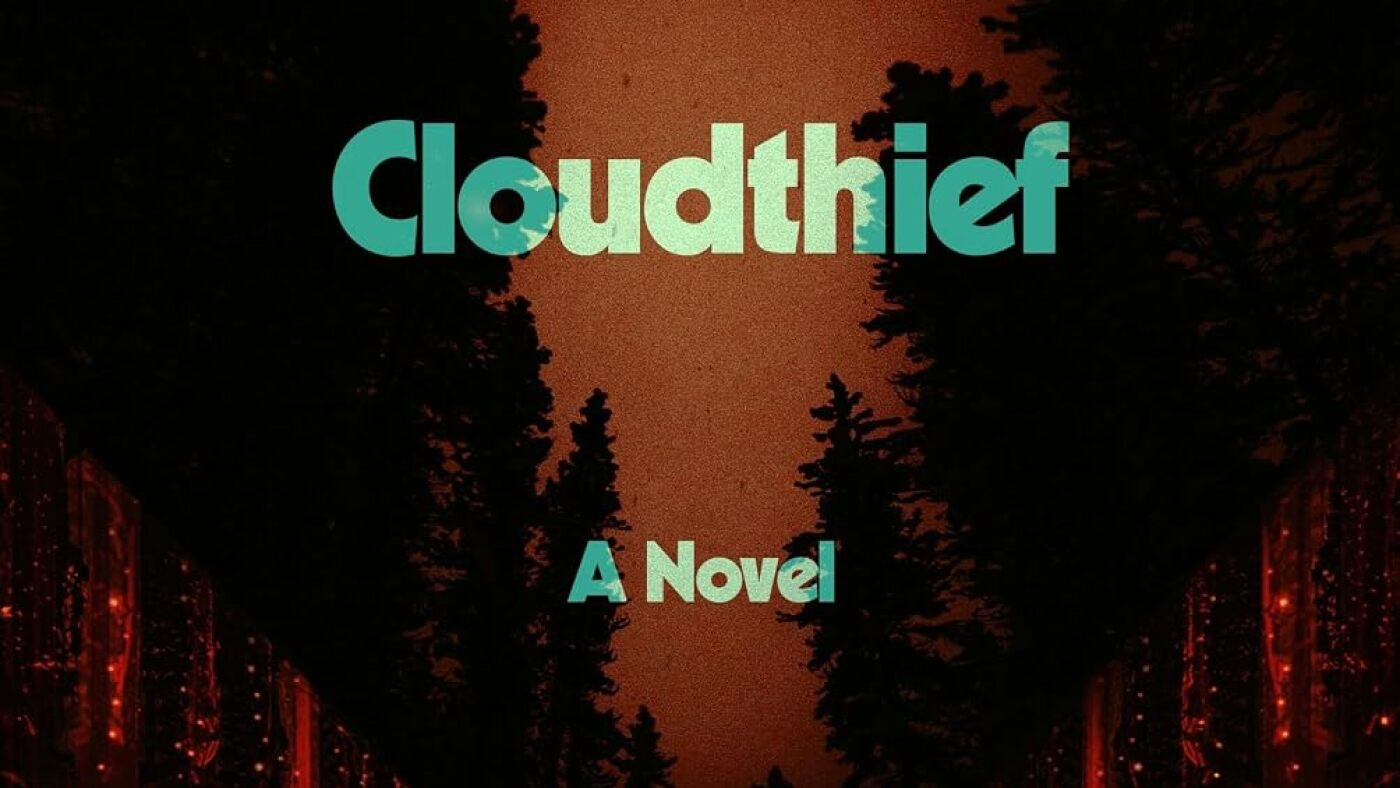
George Orwell famously wrote that it takes a constant struggle to see what’s in front of one’s nose. That may be truer than ever. These days we barely register things that 20 years ago would’ve seemed downright bizarre — like people staring down at their phones in busy crosswalks. The unnatural comes to seem natural.
Until it doesn’t. This has happened with the proliferation of data centers all over America. After years of ignoring their mushrooming growth — there are over 4,000 in the U.S. — the public now sees them clearly and doesn’t like what they represent, be it soaring energy bills or the advent of job-killing AI. People now oppose having data centers in their communities. In real life — and in movies like Eddington — politicians are now pulled between their constituents’ desires and the devouring needs of Big Tech.
The hatred of data centers ignites the action in Cloudthief, a boisterous new novel that’s equal parts heist thriller and cry in the digital wilderness. It was written by novelist Nathaniel Rich, who may be best known for ecological non-fiction such as his 2019 book Losing Earth. Setting his story back in 2014 — when tech billionaires were still considered visionaries, not bullying moguls — Cloudthief centers on a brainy young man who, like the guy in the Leonard Cohen song, is just some Joseph looking for a manger.
Our narrator “Tim” — a pseudonym he says — is a freelance writer who’s gone broke doing magazine articles about climate change. He’s lonely and lost until he stumbles upon Virginia (also not her real name), who could be the American cousin of dragon-tattooed Lisbeth Salander.

Tech-savvy and paranoid and scarily elusive, Virginia lives off the grid in a Manhattan mini-storage unit and has plans for a blow against Big Tech. Evidently, Tim has never seen a noir movie because he doesn’t merely fall for this 21st-century fantasy of a femme fatale, he dreamily goes along with her plans to rob a data center in Pryor, Okla., and make off with the sellable information their servers contain.
Once they drive off to Pryor — Rich describes their road trip wonderfully — Cloudthief kicks into high gear, serving up the juicy stuff that we all love in a heist story. We see the baroque planning. We watch them case their target, a silver-smoke spewing behemoth that has the majestic size of two futuristic airport terminals but is actually as tacky as a boondocks mini-mall.
And we learn how things work. While data centers contain the records of major corporations and government departments — each building contains tens of thousands of servers fat with documents — they’re protected by a smattering of minimum wage guards.
“Nobody knows about them,” Tim says of these gigantic repositories. “But they are the foundation of life on earth. … If every data center went dark tomorrow, we would be plunged into the Middle Ages.”
As Virginia and the lovestruck Tim prepare for the robbery, Cloudthief is a blast. They philosophize, have sex, don silly disguises, bristle with suspicion and constantly argue, often quite wittily — she’s aghast at his amateur mistakes that could get them caught. They often seem like teenagers playing at committing a crime. But commit it they do.
Of course, if you’ve ever read or watched a heist tale, you know that things never go as planned, and that the setup is more fun than the aftermath. And so it is here. But rather than spoil things, I’ll merely note that Rich’s ending earnestly tells us what we already know.
No matter. Filled with sharp descriptions and terrific dialogue, Cloudthief stuck with me. I’ve read no other novel that captures so neatly what it means to be a data-center nation — the blighting of the physical landscape, the voracious use of fossil-fuel energy, the way that these huge, bland buildings, owned by private companies like Google and Amazon, now house, and thereby control, nearly all aspects of all our lives.
Leading a life of garrulous desperation and powerless analysis — he’s the very soul of defeated idealism — Tim can kid himself into believing that robbing the Pyror data center might be a meaningful gesture. In fact, he’s just chasing a woman — and trying to escape his own thwarted life. But his blindness helps us see our world.
Early in the novel, Tim ruminates on “the Cloud,” a term whose vague innocence seduces us into not thinking about its power. “The goal of any technology,” he says, “is to make itself both essential and invisible, like air.” In Cloudthief, Rich does the opposite. He helps us see the actual, earthbound workings of the magical-sounding cloud, and he gets us thinking about the perils of our needing it so badly.

Nephi Craig’s mother is White Mountain Apache and his father is Diné Navajo. He grew up on both reservations.
Ari Carter Craig/Penguin Random House
hide caption
toggle caption
Ari Carter Craig/Penguin Random House
Nephi Craig, the founder of the Native American Culinary Association, credits eating, cooking and teaching about Indigenous food with saving his life.
Craig became addicted to alcohol and drugs at an early age. After his first DUI, the judge gave him the option of three months’ probation if he agreed to get a job or go to college. That’s when he enrolled in cooking classes at Scottsdale Community College.
Craig says he initially felt like an “oddball” in the classes because he was unfamiliar with terms like “bistro” and “vichyssoise.” But he also credits the classes with igniting his interest in cooking — and teaching him more about Native foods, including the tomato.

“[When] I came across this info that [the tomato] was native to the Americas, it just brought this really big smile to my face,” Craig says. “As a Native American in Arizona, you don’t really see yourself represented in really anything, let alone cookbooks and culinary school curriculum. So that was a neat point of validation for me that grew into many other interests.”
Craig eventually landed a job at one of Phoenix’s top fine dining restaurants, a goal he’d been working towards for years. But after a period of sobriety, a relapse ultimately cost him the job. He wound up in jail, where he worked in the kitchen and learned to design meals with whatever food was on hand.
“I was bunched in with the other Native Americans. And in jail, we call ourselves ‘chiefs,’” he says. “Banding together to feed, I think it was 7,800 inmates a day, was really eye-opening. It showed me that I was not above or below any style of cooking.”
Over the years, Craig completed nine rehabs and ran away from five others. Now sober, he works as the nutritional recovery program coordinator at the White Mountain Apache tribe-owned Rainbow Treatment Center in Whiteriver, Ariz., which serves people recovering from substance abuse. In 2021, he opened Café Gozhóó, a restaurant on the reservation that’s a place for the community to eat and talk. His new memoir is Our Knives Will Save Us: Dispatches from a White Mountain Apache Chef.
Interview highlights

On the ubiquity of Native American food
For major American holidays like Thanksgiving, everyday staples like turkey, corn, squash and cranberries — those are all important Indigenous foods. And when people ask me what recipes or what ways do we prepare Native foods differently, or the question comes up, how come I haven’t heard of a Native American restaurant, or why are there no Native American cookbooks? I usually will say, “Well, you’ve been eating Native American foods and cuisine since as long as you can remember. It’s just that the stories are not told.”
All of American cuisine, every region in the United States is built on the landscapes or the ancestral terroir of Native American food and food traditions. So you can say Boston baked beans, barbecue in the American Southwest. … The hunting and fishing and agricultural bounty of the Northwest. All of these landscapes inform our diets as everyday Americans. So when we think about how we prepare different ingredients, I think it’s pretty straightforward and simple. We like to roast them, simmer them, turn them into pies just like everyone else sometimes. But Native foods have been there the whole time.
On why frybread isn’t Indigenous
It’s not an Indigenous food. It has this lasting legacy with us and when you study how foods were distributed once people were imprisoned, and foods that were distributed required a ration card, and you might get flour, some dried beef, maybe some rice and potatoes, maybe some coffee and sugar. Ration lists varied from place to place, but they were pretty much always going to contain flour and lard, and so frybread emerges, some say in the Southwest. And there’s big debates about where and who did it first, but if you look across all of Native America from Florida to New York to the Great Plains to the Midwest to the Pacific Northwest and the American Southwest, every tribe has frybread as a result of military food rations and that grows into these food traditions that are a part of our reality today. I teach it in a way that hopefully can promote responsibility and food choices, not to take it away, but to be aware.
On working at Mary Elaine’s, a high-end French restaurant in Phoenix
That place really built me up into a very strong, young chef. I was an entremetier on the meat station, which means I cook all the vegetables and do all the garnishes. And I became the saucier and the guy that cooks the meat on the meat station. And to be in Arizona, a very meat and potatoes state, it was the busiest station in that kitchen. And I realized how strong I was. And it was beautiful, best of everything. … So it really meant a lot to me. And when I lost that opportunity because of a relapse that crept in and took over, it was heartbreaking. I did not have the words to say it then, but it was a debilitating loss. That I took maybe five, 10, 15 years to process.
On selling his prized Japanese knives for alcohol
Addiction strips away everything slowly. It’s this terrible, terrible affliction that just causes you to devalue yourself and all of your belongings. … These knives were special because I had got them on a trip to Japan in 2007, where I prepared a seven-course tasting menu of Western Apache cooking and cuisine at the Imperial Hotel of Osaka. So I cherished these knives because they were like samurai swords. They were made by a knife maker whose ancestors made samurai swords and were samurai. And I brought them back to the States with me and I still have one of them with me, but I sold those other ones and it was terrible.
On experiencing sexual abuse as a kid
I included this part of my life not as the sole cause of addiction and dependency but a contributing factor. … I never told anyone about the sexual assault I encountered when I was 10 years old. I was just a little kid. My worldview was that it happened to me and it was my fault. My worldview is that no one’s going to believe me. So I just kept it in. And when I kept it, it festered and grew into this rage and anger and shame. And so when I talk about sexual abuse in my story, it’s not to point the finger at it, but I had to really take a long time to come to terms that I was a victim of that, and it doesn’t determine who I am.
On seeing a lot of alcohol addiction on Native reservations
As Indigenous people, we experience oppression differently. We experience being an American citizen differently. We experience capitalism, imperialism and colonialism differently. The systems that enable those three monsters were not designed and built by us. And as Native American peoples, we’ve inherited a legacy of historical trauma and colonial violence. So it’s not that we are different biologically, it’s that we have a different legacy in encounters with colonial violence in America. That’s what I feel is one of the root causes of this multi-dimensional monster that is addiction.
On why he has a Mormon name (Nephi)
All my life, I always encounter these really big, complicated web of American history and our lifelines as Native American people. So how my family encounters organized religion and the LDS Church is when they were small, my dad is out in the Navajo Nation, there were Mormon missionaries trying to convert people all over the Southwest and on the Navajo Nation, and the same thing in Whiteriver on the Apache rez. And so my parents were both placed on the placement program, which is where in the ’50s and ’60s and into the ’70s, young Native American kids were taken from their homes and placed in Mormon homes in Idaho, Utah, Nevada, Colorado, anywhere there was a high population of Mormon families. And my parents were essentially raised in the Mormon church in a Mormon community till they graduated high school. And that’s a big part of our life. And so when the three of us, me and my brothers come, into the picture, they decide to name me Nephi. … It’s a lot of complicated elements in how identity forms and for me that’s one dimension of how it contributes to substance use but also freeing myself from it, too.
Anna Bauman and Joel Wolfram produced and edited this interview for broadcast. Bridget Bentz, Molly Seavy-Nesper and Meghan Sullivan adapted it for the web.
-

 Technology12 minutes ago
Apple’s plot to crush OpenAI
-

 World18 minutes ago
Leaked Iran report finds record public anger as regime focuses on holding power
-

 Politics24 minutes ago
White House dishes out new election security jab over Olive Garden’s pasta pass ID policy
-

 Health30 minutes ago
Doctors warn your ‘stomach bug’ may actually be a parasite that’s harder to detect
-

 Sports36 minutes ago
AEW star Kenny Omega blasts social media user over Charlie Kirk comment
-

 Technology42 minutes ago
New bank scam laws could stop suspicious payments
-
 Business48 minutes ago
Environmental groups press to halt Imperial Valley lithium venture
-
 Entertainment54 minutes ago
Netflix stock plunges to 52-week low following mixed earnings report

