Lifestyle
L.A. Affairs: He brought paper bags on our date. ‘We may need these if we hyperventilate’

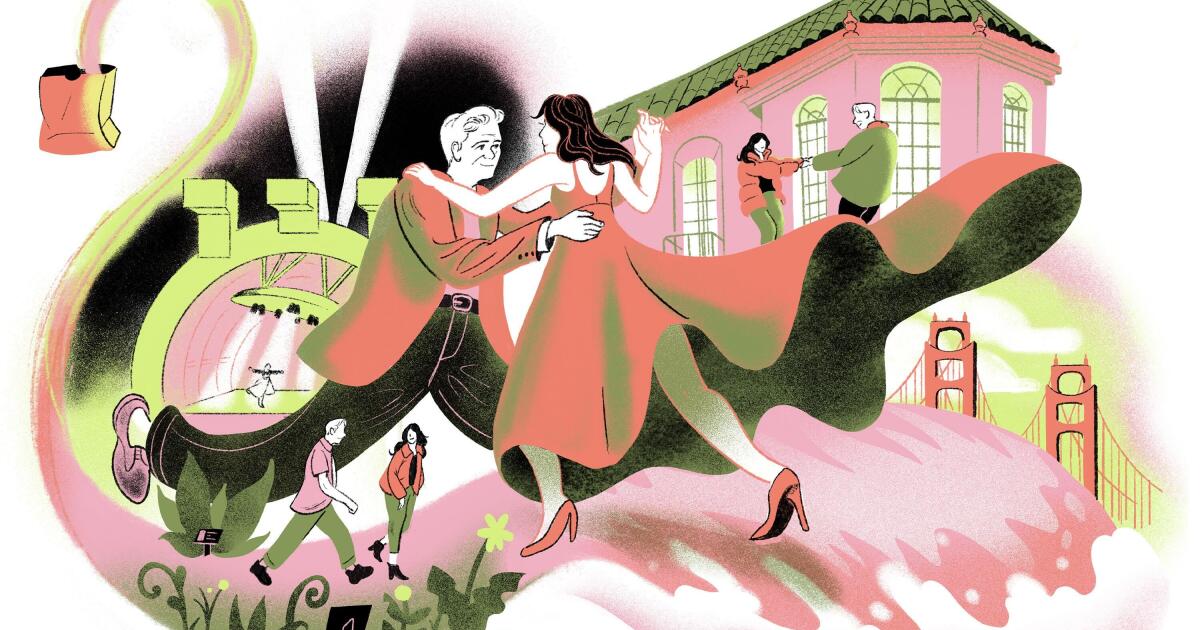
He handed me a brown paper bag — mind you, just a regular lunch-size kraft paper bag that was still flat and folded — and in all seriousness said, “Just in case you need it.”
Turning to look at him — an almost-stranger I was about to embark on a coffee date with — I asked, “Is this in case I get nauseated?”
“That too,” he grinned sheepishly. “But I was thinking something more like this …”
As his voice trailed off, I watched wide-eyed as he pulled out a paper bag, snapped it open, covered his mouth and forced it to open and closed with controlled breathing. “We’re both so nervous,” he explained matter-of-factly. “We may need these if we hyperventilate.”
Like a released champagne cork, laughter exploded and bubbled over, and the chemistry in the car changed from frigid temps to cozy and comfortable. We chatted like old friends as we hopped on the 57 freeway headed to the Orange Circle, where we talked over coffee at the Pie Hole, strolled with our hands stuffed in our pockets and planted the beginning seeds of friendship.
I had recently muddled through a marathon seven-year divorce that left me shattered and devastated, and my family, friends and children knew that I would never date again — and without a doubt, I’d never get married. I had only agreed to go to coffee because I knew of him through our 19-year-old boys. Their inseparable friendship during their junior high years had caused our paths to cross. We shared numerous drop-offs and pickups as I mustered through divorce paperwork and he navigated a grief-stricken home with the death of his wife.
But now, years later, as he walked me to the door, he asked, “Can I see you again?”
On our second date, he took me to “The Sound of Music” at La Mirada Theatre for the Performing Arts. Tears streamed down my face the whole night because of his cologne and my allergies. When we said goodbye at the door, I cautiously admitted, “I don’t think I can see you again. I’m terribly allergic to you.”
Surprised, he said, “I thought you were moved by the singing!” That night he texted me a photo of a hammer crushing his cologne bottle.
A few days later, we strolled by the Muckenthaler Cultural Center in Fullerton and heard live music floating through the park. Our curiosity got the best of us, and we rambled onto the grounds to find an intimate wedding reception taking place in the courtyard below. Suddenly, he grabbed my hand, and we were dancing under the moonlight while the trees twinkled with floating bulbs and antique street lamps lit up as if on cue. It was as if we were on the set of “La La Land” — something magical and unforgettable. This was the night he said he fell in love with me.
As partners in crime, we began planning surprise adventures for each other over the course of two years: an enchanted night walk through the botanical gardens of Palos Verdes; a day trip to San Francisco to eat at Red’s Java House and watch the Giants play ball; ice skating at the Hotel del Coronado in San Diego and a caroling trolley ride; “The Lion King” at the Pantages in Hollywood; dinner downtown at Perch prior to the closing performance of “Peter Pan Goes Wrong” with Neil Patrick Harris at the Ahmanson Theatre; a day at the Getty Villa in Pacific Palisades; and an enchanting dinner in a private cabana at the Firefly in Studio City.
So it was no surprise when he texted, “Are you available all day on Sept. 21?”
I wrote back, “It’s my day off. Absolutely!”
He arrived early and whisked me off to the Huntington Library, Art Museum, and Botanical Gardens in San Marino. We spent hours lingering in the Chinese gardens, eating in the glass tea house and gazing over the koi-filled pond. We strolled through rose gardens, exhibitions and the never-ending gift shop. By the time 3 p.m. came around, we collapsed satisfied and exhausted on a shaded park bench.
“We can call it a day if you like,” I said, yawning. “It’s already been amazing.”
According to my event coordinator, the day was just getting started. Our next stop was Culver City, where he gave me a music box that played “Edelweiss.” It was a clue to our next destination: the Hollywood Bowl for “Rodgers & Hammerstein’s The Sound of Music Sing-A-Long.” But first we had to eat at Lustig, an Austrian restaurant where we ordered schnitzel with noodles (otherwise known as spaetzle), sausages and a bowl of divine butternut squash soup recommended by our uber-friendly waiter.
At the Hollywood Bowl, we hissed at the Baroness, booed at the Nazis and shot off confetti poppers when Maria got her first kiss. When Captain von Trapp sang “Edelweiss” to his children, the whole amphitheater joined their voices together, flooding the Hollywood Hills with a surprisingly heartwarming sound of music.
I fell asleep contentedly on the drive home but awoke as we pulled into our favorite spot at the Muckenthaler.
“You want to take a walk?” he asked. Sleepily I followed him to a picnic bench glowing amber in the lantern light.
“I want to give you the same gift I gave you on our very first date ….”
Puzzled, I challenged him: “You didn’t give me a gift on our very first date.”
Slowly he handed me a brown paper bag — mind you, just a regular lunch-size kraft paper bag, still flat and folded. “Remember this?” he smiled nervously. “I’m guessing you’re going to need it right now.”
And he was right, because at that moment he dropped to one knee.
The author is a librarian for the Fullerton Public Library system. On her days off, she explores new places and embarks on all-day adventures with her partner in crime and newly acquired fiancé. In her spare time, she also enjoys reading, baking, writing, spending time with her family and her latest hobby — planning a wedding and honeymoon.
L.A. Affairs chronicles the search for romantic love in all its glorious expressions in the L.A. area, and we want to hear your true story. We pay $400 for a published essay. Email LAAffairs@latimes.com. You can find submission guidelines here. You can find past columns here.



Actor TK Carter arrives for the premiere of “The LA Riot” at the Tribeca Film Festival, Monday, April 25, 2005, in New York.
Mary Altaffer/AP
hide caption
toggle caption
Mary Altaffer/AP
DUARTE, Calif. — Veteran actor T.K. Carter, who appeared in the horror film “The Thing” and “Punky Brewster” on television, has died at the age of 69.
Carter was declared dead Friday evening after deputies responded to a call regarding an unresponsive male in Duarte, California, according to the Los Angeles County Sheriff’s Department.
Police did not disclose a cause of death or other details, but said no foul play was suspected.
Thomas Kent “T.K.” Carter was born Dec. 18, 1956, in New York City and was raised in Southern California.
He began his career in stand-up comedy and with acting roles. Carter had been acting for years before a breakthrough role as Nauls the cook in John Carpenter’s 1982 horror classic, “The Thing.” He also had a recurring role in the 1980s sitcom “Punky Brewster.”
Other big-screen roles include “Runaway Train” in 1985, “Ski Patrol” in 1990 and “Space Jam” in 1996.
“T.K. Carter was a consummate professional and a genuine soul whose talent transcended genres,” his publicist, Tony Freeman, said in a statement. “He brought laughter, truth, and humanity to every role he touched. His legacy will continue to inspire generations of artists and fans alike.”

Kylie Jenner
Cosmic Cleavage …
Flaunts Boobs While Pushing New Fragrance
Published
Kylie Jenner‘s full-bodied new fragrance is out … and, she’s using her bust to promote it — pushing up her cleavage for the ad.
The model posed in the sleeveless red leather top which perfectly matched the fragrance bottle she held against her head.
Waiting for your permission to load the Instagram Media.
The star’s looking away from camera … though we imagine if she could see fans looking at the pic, she might tell them her eyes were up about a foot or so!
She captioned the post by telling fans the new smell is called COSMIC INTENSE … a spin-off of her original “COSMIC” which feels “warmer, creamier, and even more addictive.”

KJ’s gotta promote the perfume now because she’s not going to have much time to work on her business in upcoming weeks … as we imagine she’ll attend every awards show with her man, Timothée Chalamet.
As you know … Chalamet got handsy with Jenner shortly after winning the Critics Choice Award for Best Actor — grabbing her backside while sitting in the audience. He’d just said he loved her in his acceptance speech as well.
Maybe Chalamet will grab a bit of her cosmic cleavage if he wins a Golden Globe this weekend!

A view of the John F. Kennedy Center for the Performing Arts, which the current board is calling the Trump Kennedy Center, in Washington, DC, on Dec. 26, 2025.
Brendan Smialowski / AFP via Getty Images
hide caption
toggle caption
Brendan Smialowski / AFP via Getty Images
The Washington National Opera is leaving the John F. Kennedy Center for the Performing Arts, its home since 1971.
Friday’s news, shared with NPR in a statement via email from the opera company, comes in response to new policies which the 70-year-old performing arts group said strain its financial model.
The Washington National Opera stressed the “amicability” of its decision to end its longtime residency at the Kennedy Center. But it said the center’s new business model, which requires productions to be fully-funded in advance, is incompatible with the usual mix of ticket sales, grants and donations that cannot all be secured ahead.
“Opera companies typically cover only 30-60% of costs through ticket sales, with the remainder from grants and donations that cannot be secured years ahead when productions must be planned,” the statement said.
The company added the model also does not accommodate its artistic mission, which aims to balance popular works such as West Side Story, slated for May 2026, with more obscure and experimental operas, such as the little-known Scott Joplin work, Treemonisha, scheduled for March. “Revenue from major productions traditionally subsidizes smaller, innovative works,” the statement said.
Artistic director Francesca Zambello, who has led the company for 14 seasons, shared her regrets in a statement with NPR, while also looking to the future.
“I am deeply saddened to leave the Kennedy Center,” Zambello said. “In the coming years, as we explore new venues and new ways of performing, Washington National Opera remains committed to its mission and artistic vision. Our repertory will continue to include diverse offerings, from monumental classics to more contemporary works, presented in bold visual productions with first-class musical values.”
In addition to a continued presence for now on the Kennedy Center website, the opera company launched its new independent website within a few hours of its announcement.
“After careful consideration, we have made the difficult decision to part ways with the Washington National Opera due to a financially challenging relationship,” the Kennedy Center wrote in an email to NPR on Friday. “We believe this represents the best path forward for both organizations and enables us to make responsible choices that support the financial stability and long-term future of the Trump Kennedy Center.”
On social media, Kennedy Center executive director Richard Grenell said it was the center’s decision to sever ties with the opera company — and not the other way around.
“The Trump Kennedy Center has made the decision to end the EXCLUSIVE partnership with the Washington Opera so that we can have the flexibility and funds to bring in operas from around the world and across the U.S.” Grenell said. “Having an EXCLUSIVE relationship has been extremely expensive and limiting in choice and variety.”
Grenell reposted his message on Saturday after he was alerted that his X.com account had been hacked and the original message had been removed.
President Donald Trump was named chairman of the Kennedy Center’s board in February 2025. His name was added to the Kennedy Center in December following a vote by the Trump-appointed members of its board. Since the power of the venue’s board to rename the center is currently in dispute, NPR continues to refer to the Kennedy Center using its legal name.
A string of exits
The Washington National Opera’s departure is the latest and perhaps most significant in a string of artist exits from the cultural institution since Trump took over the institution.
Backlash from ticket-buyers, slated performers, and certain board members—including Shonda Rhimes—was swift.
Artists are continuing to cancel performances. But one of the first to do so was a touring production of the musical Hamilton. In a statement on X in March 2025, producer Jeffrey Seller said he opposed the Trump administration’s ousting of many Democratic board members.
“The recent purge by the Trump Administration of both professional staff and performing arts events at or originally produced by the Kennedy Center flies in the face of everything this national center represents,” wrote Seller.
Actress and writer Issa Rae followed suit with a post on Instagram, cancelling her sold-out March performance.
A slew of additional artists and performance companies canceled after the board’s vote to rename the center “The Donald J. Trump and The John F. Kennedy Memorial Center for the Performing Arts.” Congress has not yet authorized the name change.
Grenell has responded to many cancellations on social media, condemning the artists. After Banjo player Béla Fleck canceled his performance because he said the center had become “political,” Grenell wrote on X, “You just made it political and caved to the woke mob who wants you to perform for only Lefties.
“This mob pressuring you will never be happy until you only play for Democrats. The Trump Kennedy Center believes all people are welcome—Democrats and Republicans and people uninterested in politics. We want performers who aren’t political—who simply love entertaining everyone regardless of who they voted for.”
Find a running list of these cancellations below.
Sonia De Los Santos
On Jan. 8, singer-songwriter Sonia De Los Santos announced on Instagram that she was canceling her upcoming February concert at the Kennedy Center. “As an artist,” wrote De Los Santos, “I treasure the freedom to create and share my music, and for many years I have used this privilege to uplift the stories of immigrants in this country.”
De Los Santos, who was nominated for a Latin Grammy for best children’s album in 2018, stated that “I do not feel that the current climate at this beloved venue represents a welcoming space for myself, my band, or our audience.”

Béla Fleck performs onstage during the 67th Annual Grammy Awards Premiere Ceremony at Peacock Theater on Feb. 2, 2025 in Los Angeles.
Leon Bennett/Getty Images for The Recording Academy
hide caption
toggle caption
Leon Bennett/Getty Images for The Recording Academy
Béla Fleck

Performing at the Kennedy Center “has become charged and political, at an institution where the focus should be on the music,” wrote American banjo player Béla Fleck about his scheduled appearance with the National Symphony Orchestra in an official statement posted to Instagram on Jan. 7. “I have withdrawn from my upcoming performance with the NSO at The Kennedy Center,” he wrote. “I look forward to playing with the NSO another time in the future when we can together share and celebrate art.”
The 18-time Grammy winner has performed at the Kennedy Center in the past.
Stephen Schwartz
The composer and lyricist for the beloved musicals Wicked, Godspell and Pippin was expected to host a gala fundraiser for the Washington National Opera in May 2026. On Jan. 2, Schwartz announced his withdrawal. According to NBC News, Schwartz reflected that the Kennedy Center was “founded to be a political home for free artistic expression for artists of all nationalities and ideologies.” Today, he said, making an appearance “has now become an ideological statement.”
Richard Grenell quickly responded to Schwartz’s withdrawal, calling it a “bogus” report in a statement posted on X and saying reporters were plagiarizing a “fake @RollingStone story.” Schwartz was “never signed,” Grenell wrote.
Reports from NBC and other outlets, including Variety, have refuted this claim, publishing screenshots showing that Schwartz was promoted on the Kennedy Center’s website prior to his cancellation.

Stephen Schwartz attends the 2025 Songwriters Hall Of Fame Induction Ceremony at Marriott Marquis Times Square on Jun. 12, 2025 in New York City.
Theo Wargo/Getty Images for Songwriters Hall Of Fame
hide caption
toggle caption
Theo Wargo/Getty Images for Songwriters Hall Of Fame
The Cookers
The seven-piece band of veteran jazz musicians announced shortly before Dec. 31 that they would not perform at the Kennedy Center for “A Jazz New Year’s Eve:”
“We know this news is disappointing,” reads the statement on their website. “We are not turning away from our audience, and do want to make sure that when we do return to the bandstand, the room is able to celebrate the full presence of the music and everyone in it. Our hope is that this moment will leave space for reflection, not resentment.”
The statement went on to say, “We remain committed to playing music that reaches across divisions rather than deepening them.”
Chuck Redd
The American jazz drummer and longtime host of the Kennedy Center’s annual Christmas Jazz Jam chose to cancel his 2025 appearance when he “saw the name change on the Kennedy Center website and then hours later on the building,” according to a statement sent to the Associated Press.

On Dec. 27, the Kennedy Center announced its plan to file a $1 million lawsuit against Redd. “Any artist canceling their show at the Trump Kennedy Center over political differences isn’t courageous or principled—they are selfish, intolerant, and have failed to meet the basic duty of a public artist: to perform for all people,” said Kennedy Center spokesperson Roma Daravi.
In a letter shared with NPR, Richard Grenell condemned Redd: “Regrettably, your action surrenders to the sad bullying tactics employed by certain elements on the left, who have sought to intimidate artists into boycotting performances at our national cultural center.”
Doug Varone and Dancers
“The renaming for me has kind of pushed me off a cliff,” said choreographer Doug Varone on Dec. 31, when he spoke with NPR’s Morning Edition. Varone, who was set to showcase members of his Doug Varone and Dancers company at the Kennedy Center in April 2026, pulled the performance.
John F. Kennedy, for whom the Kennedy Center was established as a living memorial, “believed in the arts as kind of the beating heart of our nation,” said Varone.
“I believe that the level of artistry has dropped drastically since the administration change, and the employees that were responsible for the quality of the work at the center have all been let go.”
After canceling, the company started a crowdfunding campaign to help offset its financial loss. It raised over $42,000, exceeding its $40,000 goal.
Magpie
In a statement posted to Facebook on Jan. 5, Greg Artzner of the American folk duo Magpie announced the decision to pull their Feb. 28 concert, set to play on the Kennedy Center’s Millennium Stage.
“There isn’t really anything defensible” about Trump, said the statement from Artzner and Magpie’s Terry Leonino. Although they had planned an evening of songs with messages of unity and hope, “We are personally and philosophically in agreement with the belief underlying the growing boycott,” they said. “The stand being taken by fellow artists we respect and admire has created a moral picket line. We stand with them in solidarity.”
An update on Jan. 9 said that Magpie would now be performing a longer version of that concert on Feb. 21 at Seekers Church in Washington, D.C., now called, “The Traveling John F. Kennedy Center for the Performing Arts Restoration Roadshow.”
Kristy Lee
Folk singer Kristy Lee canceled her Jan. 14 Kennedy Center performance due to “recent efforts to impose political branding on the Center,” according to a statement posted on her website.
“Public arts spaces should be free from political influence,” Lee said in her statement. “I step back out of respect for artistic freedom and the Kennedy Center’s founding mission, not in opposition to its staff, artists, or audience.”
On Jan. 14, Lee plans to host a live-streamed concert instead, titled “Showing Up: From the Kennedy Center to the Couch.”
Low Cut Connie
Philadelphia rock and roll band Low Cut Connie pulled their concert, set for February 2025, “Upon learning that this institution that has run non-partisan for 54 years is now chaired by President Trump himself and his regime,” according to a statement posted on their Facebook page.
“Maybe my career will suffer from this decision,” wrote band frontman Adam Weiner, “but my soul will be the better for it.”
Rhiannon Giddens

In Feb. 2025, folk singer Rhiannon Giddens announced her departure from the Kennedy Center lineup in a social media statement. “I cannot in good conscience play at The Kennedy with the recent programming changes forced on the institution by this new board,” wrote Giddens.
Giddens transferred her May 11 concert, “Old-Time Revue,” to The Anthem concert hall, also in Washington, D.C.
Balún
The Puerto Rican band, based in Brooklyn in New York City, canceled their Kennedy Center performance, which had been set for Feb. 27, 2025.
According to a statement posted to Balún’s Instagram account, “recent events made it clear that the space no longer aligns with our values. Our safety, integrity, and commitment to justice come first.”

Issa Rae attends HBO’s final season premiere of “Insecure” at Kenneth Hahn Park on Oct. 21, 2021 in Los Angeles, California.
Kevin Winter/Getty Images
hide caption
toggle caption
Kevin Winter/Getty Images
Issa Rae

“Thank you so much for selling out the Kennedy Center for ‘An Evening With [Me],’” wrote Issa Rae, the acclaimed star and creator of HBO’s Insecure, on her Instagram stories page in Feb. 2025. “Unfortunately, due to what I believe to be an infringement on the values of an institution that has faithfully celebrated artists of all backgrounds through all mediums, I’ve decided to cancel my appearance at this venue.”
“Hamilton”
In March 2025, Hamilton producer Jeffrey Seller announced on X that the Tony-award winning musical phenomenon would no longer run as scheduled at the Kennedy Center. According to the statement, the decision was made both for political and for business reasons. Not only was there “a new spirit of partisanship,” the statement read in part, but “it would be “financially and personally devastating to the employees of Hamilton if the new leadership of the Kennedy Center suddenly canceled or re-negotiated our engagement. The actions of the new Chairman of the Board in recent weeks demonstrate that contracts and previous agreements simply cannot be trusted.”

The Kennedy Center was swift to respond to Hamilton‘s cancellation. On X in a now-deleted post, Richard Grenell accused Hamilton star and creator Lin Manuel-Miranda of being “intolerant of people who don’t agree with him politically,” and stated that the decision was “a publicity stunt that will backfire.”
In the months since the show’s cancellation at the Center, Hamilton has continued to sell out theaters on Broadway and in venues nationwide who host its North American touring company.
U.S. Marine Band
The U.S. Marine Band announced in February 2025 that the Marine Band would not perform in the Equity Arc Wind Symphony event, a collaboration between Marine Band members and selected high school musicians.
The U.S. Marine Band, known also as “The President’s Own” was founded by an Act of Congress in 1798, making it the country’s oldest professional music organization.
Composer Kevin Charoensri, whose music had been scheduled to be performed by the band at the event, stated in a Facebook post that Diversity, Equity, and Inclusion (DEI) orders resulted in the cancellation of the Equity Arc concert:
“It has come to my attention that the program, one based on equity and diversity of voices, is no longer supported at the federal level under this administration,” Charoensri wrote. “It was for this reason that the program and performance were canceled.”

The U.S. Marine marching band performs in the 120th Tournament of Roses Parade January 1, 2009 in Pasadena, California.
Alberto E. Rodriguez/Getty Images
hide caption
toggle caption
Alberto E. Rodriguez/Getty Images
Jennifer Vanasco edited this story.

See how much homes prices fell in Sussex County recently

Winner and Loser of the Week in Florida politics — Week of 1.4.26

Georgia Men Defeat Florida State; Women Take Down Florida State and Arkansas

Community memorial service for Kazuo Todd today in Hilo – West Hawaii Today

Idaho is in for a streak of clear skies next week

Florida High School Football Rankings: Top 25 teams – Oct. 21

Cleary's 21 help Le Moyne down Central Connecticut State 69-64 in OT

How old is Bo Nix? What to know about Oregon quarterback ahead of 2024 NFL Draft

99th annual Pony Swim held in Virginia

Video: ‘It Didn’t Have to Happen This Way:’ U.Va. Faculty Call for Review of Police Response to Protests

Trump says Venezuela has begun releasing political prisoners ‘in a BIG WAY’

Somali minister says Israel plans to displace Palestinians to Somaliland

Slow-moving prisoner releases in Venezuela enter 3rd day after government announces goodwill effort

Video: Raising a Baby in Altadena’s Ashes

Trump signs order to protect Venezuela oil revenue held in US accounts
-

 Detroit, MI1 week ago
2 hospitalized after shooting on Lodge Freeway in Detroit
-

 Technology5 days ago
Power bank feature creep is out of control
-

 Dallas, TX2 days ago
Anti-ICE protest outside Dallas City Hall follows deadly shooting in Minneapolis
-

 Dallas, TX6 days ago
Defensive coordinator candidates who could improve Cowboys’ brutal secondary in 2026
-

 Delaware2 days ago
MERR responds to dead humpback whale washed up near Bethany Beach
-

 Iowa5 days ago
Pat McAfee praises Audi Crooks, plays hype song for Iowa State star
-

 Health7 days ago
Viral New Year reset routine is helping people adopt healthier habits
-

 Nebraska4 days ago
Oregon State LB transfer Dexter Foster commits to Nebraska