Lifestyle
'Kidnapped' tells the historical horror story of an abducted Jewish child


Enea Sala (center) plays the young Edgardo in Kidnapped: The Abduction of Edgardo Mortara.
Anna Camerlingo/Cohen Media Group
hide caption
toggle caption
Anna Camerlingo/Cohen Media Group
We’re living through days of powerful, often violent religious feeling — stories that might have felt like old dead history now take on a stinging new relevance.
That’s the case with Kidnapped: The Abduction of Edgardo Mortara, the ferocious true story of a young Jewish boy forcibly taken from his parents by emissaries of the Pope in 1858. It was made by Marco Bellocchio, the great Italian filmmaker who first burst on the scene 59 years ago with his scorched-earth debut Fists in the Pocket.
Now 84 but still far from mellow, Bellocchio takes us back to the 19th century to tell a historical horror story steeped in Roman Catholic antisemitism.
The action begins in 1850s Bologna, which was then under the rule of the unpopular and highly conservative Pope Pius IX. The just-born Edgardo is the sixth son of a Jewish Bolognese family, whose housemaid, unbeknownst to them, baptizes the baby to save his soul.
When the Church’s inquisitor in Bolgona learns of this baptism six years later, he declares Edgardo a Christian. And because it’s illegal for non-Christians to raise a Christian child, he grabs the 6-year-old boy away from his agonized parents and ships him to Rome. There, as he yearns for his mother, Edgardo’s put into a boarding school for the children of converted Jews, where he’s surrounded by images of the crucifixion.
Naturally Edgardo’s parents are shattered and do everything they can to get him back — even waging a huge international PR campaign. Going to Rome, they make heartrending appeals to stony-faced priests who say they understand their sadness but can do nothing to alleviate it. After all, they are helping the boy become a proper Christian.
To avoid seeming politically weak, Pius IX refuses the world’s calls for Edgardo’s freedom. In fact, he doubles down on the kidnapping, personally guiding the boy’s Catholic education and having him baptized a second time.
Although Kidnapped is a straightforward historical drama about religious oppression, Edgardo’s tale is filled with startling twists and turns, especially when, in 1860, nationalist rioters overthrow Pius IX’s rule in Bologna. With new people in charge, the Bologna inquisitor is arrested for the kidnapping and we see how Edgardo has fallen through one of the trap doors of history. Had he simply been born a few years later, he wouldn’t have been taken from his Jewish home and forcibly made a Christian.
Even as the rebels go after the pope, we keep worrying about Edgardo’s fate in Rome. What happens to a young Jewish boy who’s cut off from his family and trained not just to be a good Catholic but to become a priest? What core of the original Edgardo remains? Who does he become as he moves into manhood? The answers are unsettling.
Now, at moments Kidnapped feels old-fashioned. Yet Bellocchio never falls into boring costume drama realism. Working in a painterly style, he pushes things toward the operatic — laying on surging music and endowing Edgardo with innocent good looks that border on the angelic. Actor Paolo Pierobon plays Pope Pius as a kind of opera buffa figure, hammy in a Marlon Brando sort of way — at once silly and creepy and sinister. In one of the film’s best scenes, Edgardo has a hallucinatory encounter with a crucifix that directly answers the falsehood that the Jews killed Christ.
Like me, Bellocchio was raised a Roman Catholic and is clearly appalled by the Church’s cruelty to the Mortara family and to all Jews, whom they treated as inferiors who must literally kiss the pope’s feet for decent treatment. He wants us to be appalled and angry, too.
Yet what gives the movie its timely resonance is not merely its depiction of antisemitism but what it shows about the dangerous politics of religious belief. Although religion officially deals in timeless universal truths, Kidnapped reminds us that these timeless universals are always bound up with historical questions of power. And where there’s power, there will be abuse.




A young environmental activist becomes a beaver and integrates into a forest community in Pixar’s Hoppers.
Disney/Pixar
hide caption
toggle caption
Disney/Pixar
We’re long past the days when the Pixar brand was a reliable indicator of quality, when every other year or so would bring a new masterwork on the level of The Incredibles, Ratatouille and WALL-E. In recent years, the Disney-owned animation studio has succumbed to sequelitis; I didn’t much care for Inside Out 2 or the Toy Story spinoff Lightyear, and even ostensible originals like Soul and Elemental have felt like high-concept disappointments.
So it’s a relief as well as a pleasure to recommend Pixar’s wildly entertaining new movie, Hoppers, without reservation. Directed by Daniel Chong from a script by Jesse Andrews, this eco-themed sci-fi farce may not be vintage or all-time-great Pixar. But its unhinged comic delirium is by far the liveliest thing to emerge from the company in years.
The movie stars Piper Curda as the voice of Mabel Tanaka, a plucky 19-year-old college misfit and environmental activist who lives in the woodsy suburban town of Beaverton. Mabel is more of an animal lover than a people person. She inherited a love of nature from her late grandmother, and she wants nothing more than to protect her favorite place, a forest glade.
The town’s popular mayor, Jerry — amusingly voiced by Jon Hamm — is trying to ram a highway through the area. But to Mabel’s alarm, the busy beavers who made the glade a haven for local wildlife have inexplicably vanished, and they seem to have taken all the other forest critters with them.
While investigating this disturbing situation, Mabel stumbles on a high-tech experiment that’s being conducted by her biology professor, Dr. Sam, voiced by Kathy Najimy. Dr. Sam calls the program Hoppers, because it allows a single human mind to enter, or “hop,” into the body of a robot animal, which can then pass itself off as an actual animal and communicate with real creatures in the wild.
Against Dr. Sam’s wishes, Mabel hops into the robot beaver and makes her way deep into the forest, where she hopes to convince a real beaver to return to the glade — and bring all the other animals back with it.
What Mabel discovers in the forest, though, is not at all what she expected. She encounters a community that includes birds, bunnies, racoons, a very grumpy bear and, of course, other beavers, including the friendly, somewhat naïve beaver king, George, endearingly voiced by Bobby Moynihan. (The movie takes the idea of the animal kingdom quite literally; the enormous vocal ensemble includes the late Isiah Whitlock Jr. as a royal goose, and Meryl Streep as the most imperious monarch butterfly imaginable.)

Mabel Tanaka (voiced by Piper Curda) is a plucky 19-year-old college misfit and environmental activist.
Disney/Pixar
hide caption
toggle caption
Disney/Pixar
George has no idea that Mabel isn’t a real beaver, and he quickly takes a liking to her, even though her efforts to learn why the animals left the glade have a way of getting her and everyone into hot water.
None of this may sound too odd, especially coming just a few months after Zootopia 2. But Hoppers is just getting started; the movie gets funnier, stranger, and more surreal as it goes along. The mind-bending, body-swapping premise has obvious shades of Avatar, which Andrews’ script knowingly shouts out early on.
There are also references to classic horror films like The Birds and Jaws, and for good reason. Hoppers asks the question: What would happen if animals were fully aware of what humans have done to the planet — and suddenly in a position to do something about it? In the final stretch, the film almost becomes a body-snatcher movie, with a level of creepiness that may scare the youngest in the audience, though my 9-year-old laughed far more than she screamed.
I laughed a lot, too; Hoppers is full of funny throwaway lines and oddball non-sequiturs that I expect I’ll hear a hundred more times when it finally makes its way into our streaming rotation. The movie occasionally flirts with darkness, but even Pixar’s daring can only go so far, and its environmental advocacy ultimately lands on an unobjectionable message about how humans and animals can coexist.
That may sound conventional, but it’s borne out beautifully by Mabel and George’s unlikely friendship, which happily continues even after Mabel is no longer a beaver. There’s something fitting about that: for Pixar, Hoppers is nothing short of a return to form.


Jordan Chiles is always in motion.
The decorated gymnast and two-time Olympian recently competed in the latest season of “Dancing With the Stars,” finishing in third place alongside her partner Ezra Sosa. She’s an ambassador for brands including Nike and Hero Cosmetics. In August, she launched a mentorship program called SHERO Athlete Collective for young athletes.
And in the midst of all of that, she’s finishing up her senior year at UCLA.

In Sunday Funday, L.A. people give us a play-by-play of their ideal Sunday around town. Find ideas and inspiration on where to go, what to eat and how to enjoy life on the weekends.
“I’m happy, but I’m also sad,” the 24-year-old says about her final year as a Bruin, adding, “It’s pretty cool to know that my dream school has become my legacy.”
Chiles is also in the thick of a legal battle to reclaim the bronze medal she won, then was stripped of, at the 2024 Paris Olympics. In January, the Swiss Federal Supreme Court granted her an appeal to reexamine the matter. “I’m going to stand for what is right,” she says. “I am doing the things to make sure no other athlete has to go through what I had to go through.”
With the Olympics arriving in Los Angeles in 2028, the question of whether Chiles will participate is top of mind for many fans. Her response?
“Right now, it’s just me and my college career,” she says, flashing a bright smile. “I think right now just being able to be a part of UCLA for my last season and then seeing from there on, from April until the next year, we’ll see what happens.”
Chiles trains every day except Wednesdays and Saturdays, but on her perfect Sunday, she’d skip the gym to hang out with her dogs, take a trip to the mall and binge-watch her favorite shows.

9 a.m.: Gospel music to start the day
I feel like waking up at 9 a.m. is the perfect time because it gives you enough time in the day to do whatever, but also you didn’t wake up too early. The first thing I’d probably do aside from washing my face and brushing my teeth, is put on gospel music or listen to anything that can put my mind at ease. If I don’t have practice, then that’s typically what I’m doing, cleaning my house and starting to rejuvenate my body differently. I’d take my dogs out. I have an Aussie doodle, a teacup poodle and a maltipoo. Their names are Versace, Chanel and Dolce Gabbana. Very bougie dogs.

9:30 a.m.: Breakfast with a side of “Chicago Fire”
I’d cook for myself. I like typical scrambled eggs, bacon, avocado toast and sometimes a bagel. To get in some fruit, I’d drink some apple juice to make it feel like, “OK, this was a great, healthy breakfast.” Then I’d most likely sit on my couch and start binge-watching something. This is where lazy Jordan comes in. Like I got up, I did this, I ate, so now it’s time to relax. I’ve recently been watching all of the Chicago [shows] like “Chicago Fire,” “Chicago PD” and “Chicago Med.” I also recently started rewatching “Pretty Little Liars.”
12:30 p.m. Shop for athleisure and other goodies
This is typically when Jordan feels like she needs to go shopping. I’d put my dogs up and go to the mall. I deserve to go shop. I deserve to go splurge. I like going to the Topanga mall. I really, really like Jamba Juice and there’s one in the Topanga mall. I used to know the secret menu by heart before they started putting it on the actual menu. My go-to is the White Gummi smoothie.
I love streetwear, so if there’s sneaker stores around, I’d check that out. I sometimes end up in an Apple Store, don’t ask me how or why. It just always ends up like that. If I need to get athleisure wear, I always go to Nike. You can never have too many Nike Pros. If I need to get my eyebrows threaded or my nails done, I can do everything at the mall while I’m shopping.

4 p.m.: Time for homework
I’m heading back home so I can beat traffic and let my dogs out. I’d probably sit on my couch, scrolling on Pinterest, trying to figure out what I’m going to eat. Then I’d start doing my homework. Since I am still in college, I’d start whatever I need to do for that week. I try to stay as organized as best as I can because it is hard being a businesswoman and still being a college student. I’d probably do homework for about 2 ½ hours.
7 p.m.: Domino’s pizza and more binge-watching
I’d turn whatever show I’m watching back on, then I’d either cook or sometimes I’ll order in. It honestly depends on what Sunday it is. If it’s football Sunday, you know I have the wings and the typical Sunday vibes. But if it’s not, I might make tacos or Alfredo, or order off Uber Eats. I know this is probably crazy but I really, really, really, really love Domino’s. I am a pizza person. My Domino’s order is a small pepperoni, pineapple, olives and sausage slice … hand tossed, cheesed up, and then I will get a side of garlic knots and a side of buffalo wings with ranch.
If it’s not Domino’s, then I either will do Shake Shack or Wendy’s. I know it’s probably crazy and you’re like “Jordan, you’re an athlete,” but sometimes a girl just has to go in that direction. I like teriyaki food and hibachi places, so I’d either order from a place called Blazed N Glazed or Teriyaki Madness, or this place on campus called Hibachi Papi.

9 p.m. Video games before bed
I have an Xbox and a PlayStation, so sometimes I will go into my game room and just literally sit in my chair and play “Call of Duty” or “Halo.” Other than that, I have no night rituals. I will just make sure my dogs are fed. I always pray before I go to bed and my skincare is legit all Medicube, but I always make sure to do a face mask every other day before I go to bed.

10:30 p.m.: Prepare for an early practice
Since I probably have to wake up the next morning for an early practice, I feel like 10:30 p.m. is a good time to go to sleep. Unless I’m doing something with my friends and we don’t get back until like 11:30 p.m., but other than that, I’m in my bed or at least on my couch just relaxing.
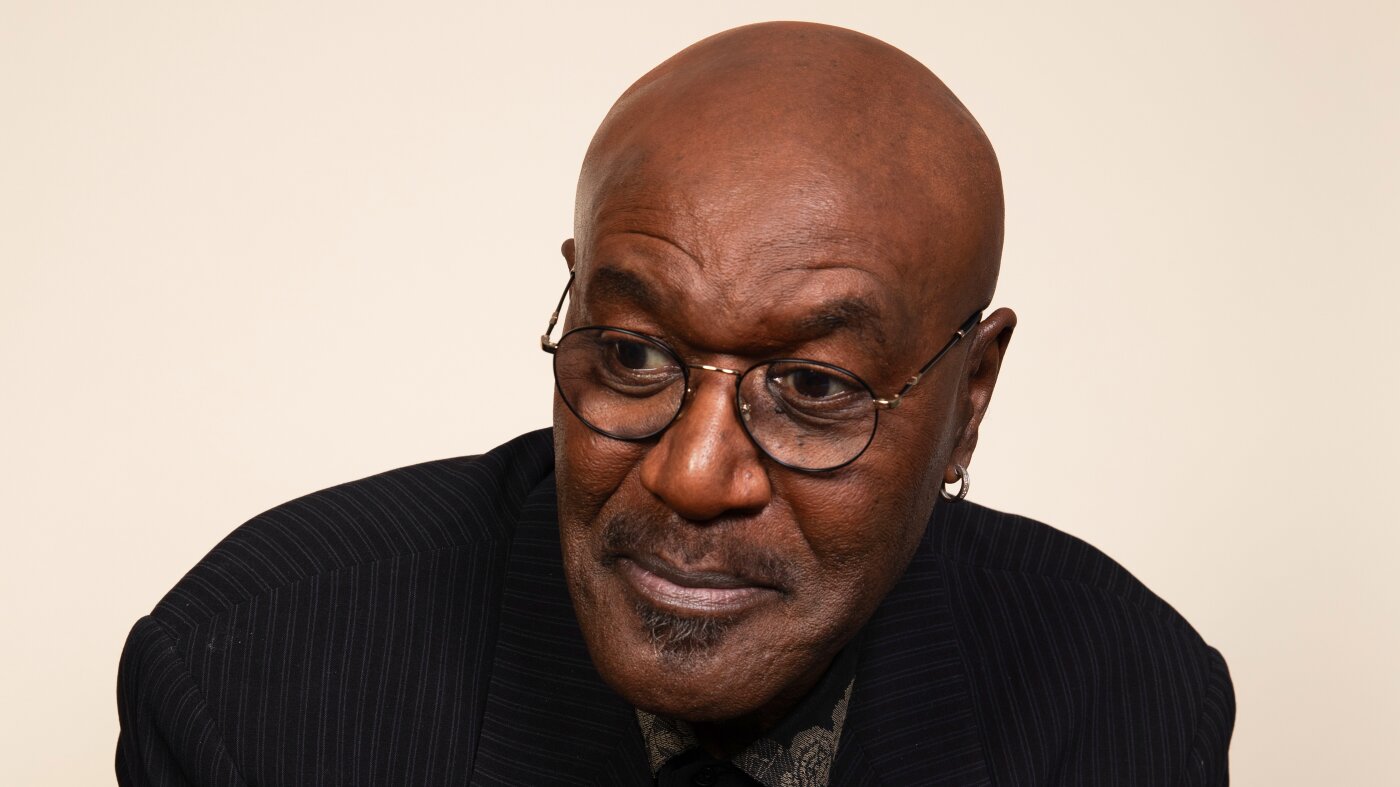
Delroy Lindo is nominated for an Oscar for best supporting actor for his role in Sinners.
Rebecca Cabage/Invision/AP
hide caption
toggle caption
Rebecca Cabage/Invision/AP
Over the course of his decades-long career on stage and in Hollywood, Sinners actor Delroy Lindo has experienced firsthand what he calls the “disappointments, the vicissitudes of the industry.”
On Feb. 22, at the BAFTA awards in London, Lindo and Sinners co-star Michael B. Jordan were the first presenters of the evening when a man with Tourette syndrome shouted a racial slur.
Initially, Lindo says, he questioned if he had heard correctly. Then, he says, he adjusted his glasses and read the teleprompter: “I processed in the way that I process, in a nanosecond. Mike did similarly, and we went on and did our jobs.”
Lindo describes the BAFTA incident as “something that started out negatively becoming a positive.” A week after the BAFTAs, he appeared with Sinners director Ryan Coogler at the NAACP awards.
“The fact that I could stand there in a room predominantly of our people … and feel safe, feel loved, feel supported,” he says. “I just wanted to officially, formally say thank you to our people and to all of the people who have supported us as a result of that event, that incident.”
Sinners is a haunting vampire thriller about twins (both played by Jordan) who open a juke joint in 1930s Mississippi. The film has been nominated for a record 16 Academy Awards, including best actor for Jordan and best supporting actor for Lindo, who plays a blues musician named Delta Slim.

This is Lindo’s first Oscar nomination; five years ago, many felt his performance in the Spike Lee film Da 5 Bloods deserved recognition from the Academy. When that didn’t happen, Lindo admits he was disappointed, but he had no choice but to move on.
“I have never taken my marbles and gone home,” he says. “And I want to claim that I will not do that now. I will continue working.”
Interview highlights
On his preparation to play Delta Slim

Various people have mentioned … [that] my presence reminds them of an uncle or their grandfather, somebody that they knew from their families, and that is a huge compliment, but more importantly than being a compliment, it’s an affirmation for the work. My preparation for this started with Ryan sending me two books, Blues People, by Amiri Baraka — who was [known as] LeRoi Jones when he wrote the book — and Deep Blues, by Robert Palmer.

Lindo, shown above in his role as Delta Slim, says director Ryan Coogler “created a sacred space for all of us” on the Sinners set.
Warner Bros. Pictures
hide caption
toggle caption
Warner Bros. Pictures
In reading those books and then referencing those books, continuing to reference those throughout production, I was given an entrée into the worlds, the lifestyles of these musicians. There’s a certain kind of itinerant quality that they moved around a lot. The constant for them is their music, so that there is this deep-seated connection to the music.
On being Oscar-nominated for the first time — and thinking about other Black actors, including Halle Berry and Lou Gossett Jr., who had trouble getting work after their wins
I will not view it as a curse, because I am claiming the victory in this process, no matter what happens. … In terms of this moment, I absolutely am claiming, as much as I can, the joy of this moment. I’m not saying I don’t have trepidation, I do. It’s the reason I was not listening to the broadcast this year when the nominations were announced. I did not want to set myself up. But I’m … attempting as much as I can to fortify myself and know in my heart that I will continue working as an actor. I absolutely will.
On being “othered” as a child because of his race
Because my mom was studying to be a nurse they would not allow her to have an infant child with her on campus, so as a result of that, I was sent to live with a white family in a white working class area of London. … I was loved, I was cared for, but as a result of living with this family in this all-white neighborhood, I went to an all-white elementary or primary school. And I was literally the only Black child in an all-white school.
So one afternoon, after school had ended, I was playing with one of my playmates … And at a certain point in our game, a car pulls up, and this kid that I was playing with goes over to the car and has a very short conversation with whomever was in the car, which I now know was his parent, his father. He comes back and he … says, “I can’t play with you.” And that was the end of the game.
On the experience of writing his forthcoming memoir
It’s been healing, actually. I’m not denying that it has opened me up. I’ve been compelled to scrutinize myself. I’m using that word very advisedly, “scrutinized.” It’s a scrutiny, it’s an examination of oneself. But in my case, because a very, very, very significant part of what I’m writing has to do with re-examining my relationship with my mom. And so my mom is a protagonist in my memoir. I’m told by my editor and by my publisher that one of the attractions to what I’m writing is that it is not a classic “celebrity memoir.” I am examining history. I’m examining culture. I’m looking at certain passages of history through the lens of the “Windrush” experience [of Caribbean immigrants who came to the UK after World War II].
On getting a masters degree to help him write his mother’s story
My mom deserved it. My mom is deserving. And not only is my mom deserving, by extension, all the people of the Windrush generation are deserving. Stories about Windrush are not part of the global cultural lexicon commensurate with its impact. The people of Windrush changed the definition of what it means to be British. There are all these Black and brown people, theretofore members of what used to be called the British Commonwealth. And they were invited by the British government to come to England, the United Kingdom, to help rebuild the United Kingdom in the aftermath of the destruction of World War II. My mom was part of that movement. They helped rebuild construction, construction industry, transportation industry, critically, the health industry, the NHS, the National Health Service. My mom is a nurse.
The reason that I went into NYU was because my original intention was to write a screenplay about my mom. I wanted to write a screenplay about my mom because I looked around and I thought: Where are the feature films that have as protagonist a Caribbean female, a Black female, where are they? … I wanted to address that, I wanted to correct that, what I see as being an imbalance.
Ann Marie Baldonado and Susan Nyakundi produced and edited this interview for broadcast. Bridget Bentz, Molly Seavy-Nesper and Beth Novey adapted it for the web.

US immigration authorities arrest Spanish-language news reporter in Tennessee

Pro-gambling interests fail to gain ground in Texas primaries as legislative roadblocks remain

The calculus of charity: 20,000-pound LDS donation equals 15,000 meals for 9,000 people

Girls Vermont Varsity Insider Athlete of the Week winner powered by Delta Dental

13News Now

Florida High School Football Rankings: Top 25 teams – Oct. 21

Cleary's 21 help Le Moyne down Central Connecticut State 69-64 in OT

How old is Bo Nix? What to know about Oregon quarterback ahead of 2024 NFL Draft

99th annual Pony Swim held in Virginia

Indiana Members Credit Union announced as new anchor tenant at Bottleworks District

Appeals court declares DC ban on certain gun magazines unconstitutional

‘No deal with Iran except unconditional surrender,’ Trump says

A dead woman’s key fob and two grisly crime scenes: How the Utah triple-murder suspect was tracked across state lines | CNN

DOJ continues Biden autopen probe despite former president unlikely to face charges
Fact check: Did French border guards mock influencers returning from Dubai amid Iran war?
-

 World1 week ago
Exclusive: DeepSeek withholds latest AI model from US chipmakers including Nvidia, sources say
-

 Wisconsin5 days ago
Setting sail on iceboats across a frozen lake in Wisconsin
-

 Massachusetts3 days ago
Massachusetts man awaits word from family in Iran after attacks
-

 Massachusetts1 week ago
Mother and daughter injured in Taunton house explosion
-

 Maryland5 days ago
AM showers Sunday in Maryland
-

 Florida5 days ago
Florida man rescued after being stuck in shoulder-deep mud for days
-

 Denver, CO1 week ago
10 acres charred, 5 injured in Thornton grass fire, evacuation orders lifted
-

 Oregon1 week ago
2026 OSAA Oregon Wrestling State Championship Results And Brackets – FloWrestling