Lifestyle
'I have more say': Why Kathryn Hahn feels more powerful than ever


Kathryn Hahn says she feels more powerful now than when she was in her twenties.
Frederic J. Brown/AFP via Getty Images
hide caption
toggle caption
Frederic J. Brown/AFP via Getty Images
A note from Wild Card host Rachel Martin: I have developed affinities for certain actors to the point where it doesn’t matter what they’re in. If their name is attached to it, a leading role or cameo, I’m watching it. Kathryn Hahn is one of those actors. I first saw her in Transparent. She played Rabbi Raquel and stole every scene she was in.
But that’s the beauty of a Kathryn Hahn performance. She sneaks up on you, whether she’s playing a best friend, sidekick or a leading role. Her characters, in everything from Parks and Recreation to Step Brothers, often start small. But before you know it, they are center stage. And you can’t remember when it wasn’t so.
Hahn is now starring as Agatha Harkness in the newest Marvel show, Agatha All Along.
The trailer for ‘Agatha All Along.’
YouTube
This Wild Card interview has been edited for length and clarity. Host Rachel Martin asks guests randomly-selected questions from a deck of cards. Tap play above to listen to the full podcast, or read an excerpt below.
Question 1: What period of your life do you often daydream about?
Kathryn Hahn: Right now, as my son is turning 18 on Friday, I think it is that period of his preschool and before. I’m back in that place of just playing with him until dinner. Like, that weird post-nap, before-dinner, the sun’s kind of going down, you’re trying to find things to do. But, like, you also can’t believe it’s another night you have to go through.
Rachel Martin: I know. Those hours were really hard for me, and, when I think about them, beautiful.
Hahn: Yeah. Literally the witching hour. Like, the sun would go down and we’d be like, “No. No! We have to do it again!” But that little time before dinner, sometimes you would walk into it dreading it. But now, of course, I’m so nostalgic.

Martin: What was the thing that you would do? What was your go-to?
Hahn: We would look for bugs in the front yard. We made a little fairy village by the tree in the back. We would try to play catch, but we were on one of those deep Silver Lake houses, so we lost maybe two out of three balls.
It was just the best. And again, when you’re in the middle of it, you’re like, “Ugh.” But those moments now are coming to the surface. And it gets so weepy because you cannot believe you’re not going to hear him, like, running down the stairs late in the morning and all that stuff. It’s just – that noise is going to become like memory, which is – you can’t believe it.
Question 2: What life transition has been challenging?
Hahn: Oof! Well, I was going to say the one I’m in right now. This particular chapter in a woman’s life through the next portal where, you know, she’s not as fertile in the literal sense has been a very unexpectedly challenging time.
Martin: We’re talking about menopause.
Hahn: Yes. No one talks about it, so you kind of walk into it blind. And I was in perimenopause — this is a hilarious thing to talk about — for a very long time. So I was like, “Oof. Do I feel like myself? Like, who is this? Like, who’s coming through right now?” Like, my moods, my like, everything —
Rachel: Right. And how much of it is you and how much is the thing —
Kathryn: Is the hormones! And I think somewhat [Agatha All Along] is also kind of a metaphor for that. Of like, breaking through as a woman to find your power, looking for your power at the end of the road. Not that menopause is the end of the road, but the end of the road of what we —
Martin: One version of you.
Hahn: One version.

Martin: I imagine for actors in Hollywood, it is doubly complicated because you start getting people — the producers — see you in a different light. And, to them, you’re losing your power, you’re losing your virility, your sexuality or charisma or something. And this doesn’t feel like that. This role feels like an affirmation of those things.
Hahn: 100%. All the women are over 40. So it does feel like a really radical thing that we’ve been able to pull off. Though, because my currency in this business wasn’t my sex appeal, I feel like I’ve been able to just kind of walk into more complicated parts, and I am eternally grateful for that.
I really don’t feel powerless. I feel actually more powerful than I did in my twenties or early thirties in this business. I definitely feel I have more control over my choices. I have more say. I’m definitely not as afraid to say it, which is really freeing.

Kathryn Hahn appears at the Disney Entertainment Showcase in California in August.
Araya Doheny/Getty Images
hide caption
toggle caption
Araya Doheny/Getty Images
Question 3: Have you ever had a premonition about something that came true?
Hahn: I definitely have had them. There have been times where the phone rings and I know what it’s about before I pick it up. Like, my dad passed away this spring, and it was a random phone call on, like, a Monday night. And I saw a 216 number, which is the area code from Cleveland. I didn’t recognize it as my uncle’s. And I was like, “Mm hmm. OK.”
And he’d been doing OK. It wasn’t like I was always expecting this call. I mean, I guess you, in a sense, always do when your parents are getting up there and you’re not living with them. But I just had a feeling.
Martin: Yeah. It’s definitely happened to me before. But it always, strangely — even when they’re hard things — it makes me feel, I don’t know, more … more connected.
Hahn: That is exactly the word I was going to say. I took it as our, like, higher powers were connected. I was able to be there when he passed, which meant so much. And he passed away like three hours after we got there. So it was all supposed to unfold exactly as it was. But I think those moments do reveal that subconscious connection you have to a loved one.

For Iris van Herpen, couture is a laboratory as much as a runway. Our chief fashion critic, Vanessa Friedman, takes us inside this Dutch designer’s latest Paris show — from sci-fi-inspired gowns to an audacious attempt at a dress made of charged plasma.
Lifestyle
The BoF Podcast | Decoding Paris Haute Couture: Wonder, Restraint and the Call of the Void


-

 San Francisco, CA4 minutes ago
Classical music series helps reconnect downtown San Francisco community
-

 Dallas, TX9 minutes ago
Dallas police officers, paramedics recall saving woman stuck in a ravine for days;
-

 Boston, MA19 minutes ago
Red Sox win 7th straight game just hours after landing in New York
-
 Denver, CO24 minutes ago
One tree at a time: Denver nonprofit works to close shade gap as heat dome threatens neighborhoods
-

 Seattle, WA31 minutes ago
VIDEO: West Seattle Summer Fest 2026 day 1, evening report
-

 San Diego, CA34 minutes ago
The World’s Number One Wellness Retreat is Right in Our Backyard
-
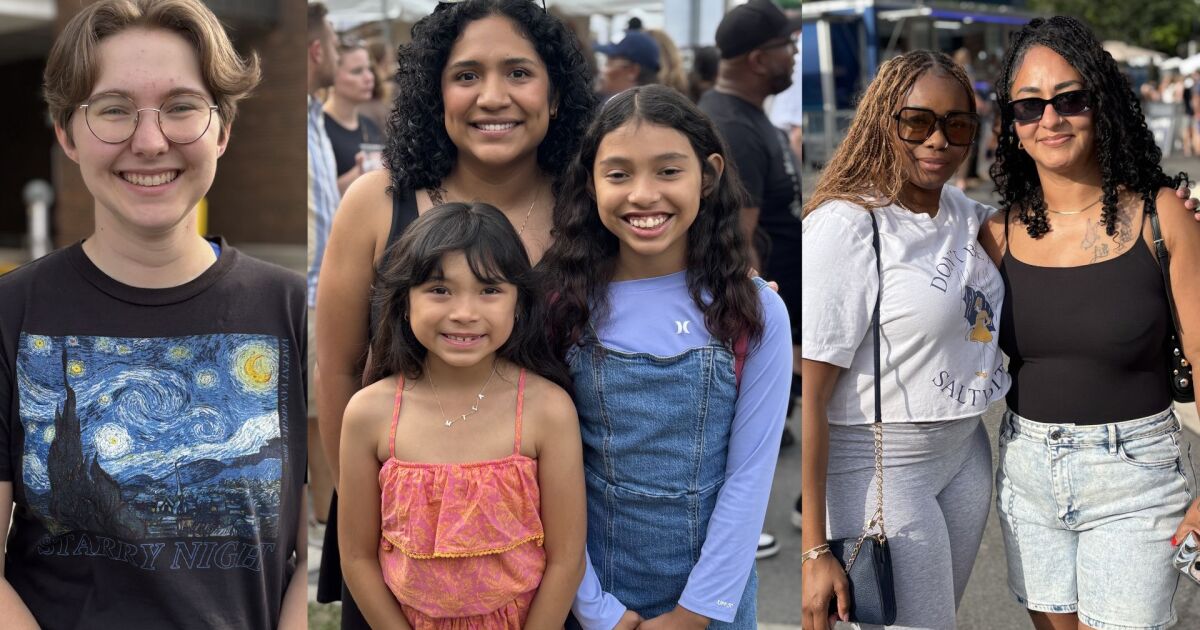 Milwaukee, WI39 minutes ago
Festivalgoers say Milwaukee’s summer events fill a gap in downtown entertainment
-

 Atlanta, GA46 minutes ago
Atlanta mentoring program brings ‘Save Our Sons Tour’ to Jacksonville’s Duval Day

