Lifestyle
Haider Ackermann Leads Tom Ford Into a New Era


One evening in late January, Haider Ackermann, the new designer at Tom Ford, was tucked into a velvet banquette at La Reserve, the discreet, tryst-worthy hotel not far from the Élysée Palace in Paris. He was doing his best impression of Tom Ford, the man.
“Hello, Haider,” Mr. Ackermann purred, his voice dropping an octave and taking on a sultry tone. He was acting out a phone call he had received. “It’s Tom.” He paused to take a breath, as if he were tasting the air. “Call me,” he said, making it sound like “come here.”
Then, his voice back to normal, he added, “Of course I did.”
That was about eight months ago. It turned out Mr. Ford, who had sold the company that bears his name to Estée Lauder in 2022, had a proposition for Mr. Ackermann. After only a year, the new owners — Lauder and Ermenegildo Zegna — had decided that Mr. Ford’s immediate successor, Peter Hawkings, was not the right man for the brand.
To replace him, they had only one name on their list, “and that name was me,” Mr. Ackermann said. Though he had recently taken a job as creative director of the outdoor company Canada Goose and was in the midst of negotiations to become the designer of a big French fashion house, Mr. Ackermann started fantasizing about Tom Ford.
“I was immediately thinking about what I should do,” he said. “What I would do.”
Now, after multiple conversations with Mr. Ford, Mr. Ackermann is on the verge of introducing a new Tom Ford collection for men and women. The goal is to do what Mr. Hawkings could not and redefine Tom Ford for the post-Tom Ford era.
Mr. Ackermann has moved the fashion show to Paris from Milan and is in the process of moving the company headquarters from London. He has teased his new look on his friend Timothée Chalamet, who wore custom Tom Ford by Haider Ackermann on the red carpet at the Golden Globes in January: a skinny, rhinestone-speckled black suit with a sky blue polka-dot silk scarf slung around his neck. But he is still trying to find “the thread between what I call sensuality and what Mr. Ford called sexuality,” he said.
“The exercise is more difficult than I thought it would be,” Mr. Ackermann said, noting that he had not made a knee-length pencil skirt, a Tom Ford signature, in his entire career. But, he went on, “the man, the woman, they are not strangers to me. I know we will get together, but it takes time.”
Especially because it turns out this particular relationship is kind of a throuple.
The Ghost in the Machine
“The complexity of this story is that the house of Tom Ford is Mr. Ford,” Mr. Ackermann said. “There’s no other ambassador than Mr. Ford.” Tom Ford is his ghost in the machine.
Plenty of designers have taken over houses that still bear the names of the designers who founded them: Dior, Chanel, Givenchy, Gucci, Saint Laurent — these were all real people. That’s where the idea of brand “DNA” originates.
But at a certain point, a brand can become so divorced from its founder that the name is just an abstraction. Once enough other designers have inherited the title, it’s hard to remember that clients were once loyal to a specific silhouette or design. That opens up the possibility for new creative directors to make the house their own.
A house like Tom Ford is somewhat different. That’s because it’s only 20 years old, and, whatever his official status, Mr. Ford still seems very much around.
Founded by Mr. Ford and his business partner, Domenico De Sole, in 2005, Tom Ford-the-brand was a kind of test case: Would Mr. Ford, who had become a celebrity by remaking Gucci and creating Gucci Group (the seed of the conglomerate that eventually became Kering) before leaving in 2004 to make movies, have enough name recognition to build a label from scratch on the mere power of his stubbly, unbuttoned-shirt appeal?
The partners started by licensing fragrance (to Lauder), then eyewear and then expanded into men’s wear (with Zegna) and women’s wear. But while the beauty line became a smash hit, and the suiting did fine, the women’s line always seemed more of a red-carpet indulgence than an actual business.
Nevertheless, just over two years ago, after Mr. Ford’s husband died and he decided to focus on filmmaking (again), Estée Lauder paid $2.8 billion to buy the house, enlisting Zegna to handle the fashion side. Mr. Hawkings, who had worked with Mr. Ford for 25 years, was named designer. He was, Mr. Ford said in an Instagram post, “the perfect creative director.”
It did not take long, however, before rumor had it that Mr. Ford was not happy with comments Mr. Hawkings had made that seemed critical. The reception of Mr. Hawkings’s first collections was mixed, and Mr. Ford, in what seemed like a very public repudiation, wore Saint Laurent to last year’s Met Gala. By July, Mr. Hawkings was out. Soon after, Mr. Ford was on the phone with Mr. Ackermann.
“Mr. Ford and I, we had always been flirting with each other professionally,” Mr. Ackermann said. When Mr. Ackermann was fired from a previous job as creative director of Berluti in a designer reshuffle, Mr. Ford “wrote me such a beautiful letter,” Mr. Ackermann said. “Karl Lagerfeld was the first, and he was the second. It was so moving.”
Haider and the Big Ts
Mr. Ackermann, 52, is something of a fashion designer’s designer. A Colombian orphan who was adopted by a French couple, he spent his childhood moving around the world with his cartographer father before his parents settled in the Netherlands. He attended the Academy of Fine Arts in Antwerp but was kicked out before graduation. (If he did not feel he had anything to say to a teacher, he said, he just did not go to class.) He started his own namesake label in 2003.
His work was characterized by an extraordinary facility with color and decadent romance; he calls his aesthetic “bohemian dreamer.” At one point, Mr. Lagerfeld was enchanted enough to suggest that Mr. Ackermann succeed him at Chanel.
He spent two years at Berluti, but after a dispute with his backer, he lost control of his label and name. Though he has since regained ownership of that name, he was off the runway for a time, save for a much lauded one-off stint as a guest designer for Jean Paul Gaultier couture and the occasional custom order from his famous friends, Mr. Chalamet (whom he has been dressing since 2017) and Tilda Swinton. He calls them “the big Ts.”
As Ms. Swinton tells it, they met in 2004. He sent her a gown for the Cannes Film Festival, but he did not show up for the fittings because he had promised his partner at the time a trip to India. Later, he said, she called and invited him for a patisserie and asked him why he had not been there, and they bonded over the idea of putting relationships over business. She has worn his designs ever since, and they speak, she said, “several times a week.”
“He’s a proper romantic and proper punk, which is the best combination,” Ms. Swinton said, describing his work as “ancient and supersonic at the same time.”
Daphne Guinness, the artist and collector, said Mr. Ackermann was “a Saint Laurent for the space age.” At this point, she calculated that she had about 40 Ackermann pieces in her wardrobe, including the first four looks of his Gaultier couture collection.
During his time away from the runway, Mr. Ackermann did a collaboration with Fila. Then Canada Goose got in touch. “It was very interesting,” he said, going from “being this very niche designer to talking to thousands of people. I had never worn a parka before. Now, I love it. But somebody told me recently that it made my legs look very short.”
Mr. Ackermann has been converted to the joys of camping instead of clubbing. He is a famously good dancer — “incredible,” Ms. Swinton said — and his favorite haunt used to be a club in Rotterdam where, he said, “I was the only boy who didn’t have a shaved hair.” His last summer vacation, however, was spent in a tent in British Columbia. It’s good for perspective.
That’s when he realized that the “massive failure” of losing his own brand “brought me to today, where I understand what I do and why I’m doing it.”
Serving the House
It also brought him to Tom Ford. Gildo Zegna, the chief executive of the Ermenegildo Zegna Group (which also owns Zegna and Thom Browne), described meeting Mr. Ackermann in Paris. “We clicked,” Mr. Zegna said. “We had two long days together, walking around, sitting in the garden, and the social part, the friendly part, was as important as the business part.”
Well, that and the fact that, Mr. Zegna said, “he had the support of Tom Ford, which was very important.”
Which raises the question of what Mr. Ford was doing pulling the strings of a brand he supposedly had nothing to do with. Though Mr. De Sole is on the board of Zegna, Mr. Ford has had no official role in the company since the sale. He declined to comment for this piece, and Mr. Zegna was quick to de-emphasize his role, even as he acknowledged that Mr. Ackermann was Mr. Ford’s idea. But it further raises the stakes for Mr. Ackermann.
“The moment that you work for a house, you have to know your place,” Mr. Ackermann said. “It’s not about you. It’s about you at the service of the house.”
“I didn’t think it was going to be easy to take the role, knowing that somebody has been kicked out in a violent way,” he continued, referring to the departure of Mr. Hawkings. “I’ve been through it. I know what rejection can feel like.”
He is very careful to use the honorific “Mr.” when he speaks of Mr. Ford. (He calls him Tom when they meet in person, he said.) Even as he added: “If people are expecting hot sex, no, you will not see it from me. I don’t have that talent, to be very provocative or very avant-garde. I have different codes. I’m not there to continue exactly the past.”
No More Hot Sex
“We had an appointment in London for lunch one time,” Mr. Ackermann said, describing a meeting with Mr. Ford when they were in the wooing stages. “I arrived earlier, and when he entered the restaurant, he didn’t see me standing in the corner, so I could just observe him. The way he entered the room — the security, the audacity he had in his posture — everyone in the room was looking. It intrigued me. Perhaps, coming from a very Catholic background, I could not be this person. But perhaps, somewhere deep inside, I would like to be this person. To have that kind of freedom.”
That, Mr. Ackermann said, is what his Tom Ford man represents. As for the woman: “I don’t believe in big words like glamour and power. The power of women is not big shoulders. The power of women is what she’s got inside her, the fragility that she eventually wants to show.”
It was two weeks before the Paris show, and he was sitting in his atelier with a vase of white calla lilies behind him. “They are a little more pure than Black Orchid,” he said, referring to one of Mr. Ford’s signature perfumes. “But I think still poisonous and dangerous.” He had decided that his connection to the brand was more about his own memories than any specific silhouette.
“Like in 2012, I went to the Met Gala,” he said. “I was really nervous. I was like, ‘Oh my God, what am I going to wear?’ I’m too shy. But Anna Wintour said: ‘You’ve got no choice. You have to come.’”
So Mr. Ackermann went to a Tom Ford shop and bought a black suit with black dots. And when he was on the Met red carpet, he bumped into Mr. Ford. “He looked at me and said, ‘Oh, you look so smart,’” Mr. Ackermann said. “I was so happy. Then I realized he was not looking at me. He was looking at his suit. So obviously, you will see black dots in the show.”
There will also be knee-length skirts, though Mr. Ackermann was still “trying to find the right line that doesn’t feel too vulgar or too much secretary. I’m challenging myself for sure.”
Mr. Zegna said he believed growth would come for women’s wear, accessories and the European business. Because of the Hawkings issue, the owners are a year behind in their strategic plan. The turnaround has to happen “fast,” he said. “We have not invested to not get returns.”
That’s partly why Mr. Ackermann moved the show to Paris: to signal an ambition to compete at the highest level. Also, he said, “I don’t think Mr. Ford had the easiest time in Paris,” a reference to the period when Mr. Ford appointed himself head of Saint Laurent, to the public criticism of Pierre Bergé and Yves Saint Laurent.
“For me, it was a way to say thank you for trusting me, giving me the honor to continue your story,” Mr. Ackermann said. “I want the world to look at Tom Ford in Paris. The name deserves it, and you deserve it.”
Only 200 people are invited to the show, including Mr. Ford and Mr. De Sole. “I wanted to have something intimate,” Mr. Ackermann said. “I believe that’s what luxury is. It shouldn’t be accessible to everything and everyone. I think the world needs less of a circus. I want it to feel rich, and I want it to feel noble, but I also want it to be quiet. To command attention without screaming.”
Mr. Ackermann has scattered the collection with Easter eggs for Mr. Ford — “things,” he said, “where he will be the only one to see it.”
“If it goes wrong, it goes wrong,” he continued. “But I have no fear. If, after the 5th of March at 7:30, Mr. Ford can say, ‘I made the right choice,’ if I make Mr. Zegna and Mr. Lauder proud, then, OK. Let’s go for it. I’m going to a secret place with the team members and my friends, and we’re going to dance the hell out of it.”



Fresh Air critic Justin Chang says All of a Sudden (starring Tao Okamoto and Virginie Efira) was his favorite movie at the 2026 Cannes Film Festival.
Courtesy of the Cannes Film Festival.
hide caption
toggle caption
Courtesy of the Cannes Film Festival.
The first Cannes Film Festival I ever attended, in May 2006, was a deliriously star-studded affair. Penélope Cruz, Ethan Hawke and Kirsten Dunst walked up the red-carpeted steps. Future Oscar hopefuls like Volver, Babel and Marie Antoinette competed for the Palme d’Or, the festival’s top prize. There were world premieres of blockbusters like The Da Vinci Code and X-Men: The Last Stand — terrible movies, but great photo ops. And near the end of the festival, I walked into a film I knew nothing about called Pan’s Labyrinth and emerged knowing I’d seen a classic.
This year’s Cannes kicked off with a 20th-anniversary screening of Pan’s Labyrinth, but otherwise, there wasn’t much of that 2006-era razzle-dazzle. The major Hollywood studios tightened their belts and stayed home, perhaps with still-fresh memories of the stinging Cannes reception for the last Indiana Jones movie back in 2023.
But there were stars here and there. Demi Moore and Stellan Skarsgård were on this year’s jury. Adam Driver and Miles Teller showed up for the world premiere of James Gray’s terrific 1986-set crime drama, Paper Tiger, in which they play brothers who unwisely go into business with the Russian mob. Driver and Teller are outstanding, and Scarlett Johansson is heartbreakingly good as a family member forced to deal with the fallout.
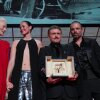
Paper Tiger deserved a prize, but it left the festival empty-handed. Instead, the jury awarded the Palme d’Or to the gripping and sometimes infuriating small-town drama Fjord. It’s the second Palme win for the Romanian filmmaker Cristian Mungiu; he won his first in 2007 for the movie 4 Months, 3 Weeks and 2 Days.
In Fjord, Sebastian Stan and Renate Reinsve are almost unrecognizable as an evangelical Christian couple who have recently moved from Romania to a small Norwegian town with their five children. When the couple are accused of child abuse, Fjord becomes a fierce battle between the forces of religious conservatism and secular liberalism. It may be set in Norway, but it’s likely to resonate with American audiences when it opens later this year.
I hope there will also be robust turnout for Minotaur, a perfectly chilled tale of adultery and murder that won the Grand Prix, or second place. It’s a remake of the 1969 Claude Chabrol drama La Femme Infidèle, this time set in Russia, not long after the 2022 invasion of Ukraine. The director of Minotaur, Andrey Zvyagintsev, nearly died of COVID during the pandemic, and it was moving to see him back in Cannes with a film this powerful and uncompromising in its critique of the Putin regime.
One of the buzziest out-of-competition titles was Club Kid, a hugely enjoyable comedy directed by the actor, writer, comedian and social-media star Jordan Firstman. He plays a gay New York City club promoter who’s sent reeling when he learns that he has a 10-year-old son. The result is basically a ketamine-laced version of every adult-bonds-with-cute-kid movie you’ve ever seen, but Firstman is a real talent.
Firstman’s also one of several queer filmmakers who made a bold impression at the festival this year. Jane Schoenbrun, the director of the inventive transgender allegory I Saw the TV Glow, came to Cannes with their third feature, Teenage Sex and Death at Camp Miasma. Starring a very game Hannah Einbinder and Gillian Anderson, the movie is a clever homage to, and deconstruction of, ’80s and ’90s slasher thrillers, digging deep into the often-unspoken connections between our love of pop culture and our hang-ups about sex and desire.
Along with Paper Tiger, Club Kid and Camp Miasma were welcome reminders that American cinema isn’t close to dead, at Cannes or anywhere else. Even so, I can’t say that I minded the general absence of Hollywood at the festival this year. One of the reasons I keep returning to Cannes is that it shows interesting movies from all over the world — movies like the gorgeous and moving Rwanda-set drama, Ben’Imana, about efforts to bring about truth and reconciliation years after the 1994 genocide. The film earned its director, Marie-Clémentine Dusabejambo, the Caméra d’Or prize for best debut feature.
My favorite film at Cannes this year was All of a Sudden, from the Japanese director Ryûsuke Hamaguchi. Set in and around a Parisian elder-care home, it uses the close bond between two women — one French and one Japanese — to raise haunting questions about how we live, how we die, and most of all, how we talk to each other. Like Hamaguchi’s Oscar-winning Drive My Car, All of a Sudden is a reminder that something as simple as a conversation between friends can make for sublimely moving cinema. I can’t wait to see it again, and I can’t wait for you to see it, too.

Cary Elwes may not have been born in Los Angeles, but it’s probably fair to consider the native Brit an honorary Angeleno. The “Princess Bride” star was born in and spent his formative years kicking around London; he moved to L.A. in 1990, on his brother’s recommendation. He met his wife, photographer Lisa Marie Kurbikoff, at a cookoff in Malibu about a year later and the two married in 2000. A daughter, Dominique, arrived in 2007.
In Sunday Funday, L.A. people give us a play-by-play of their ideal Sunday around town. Find ideas and inspiration on where to go, what to eat and how to enjoy life on the weekends.
Elwes has spent his years in California not just establishing his family life, but also further enmeshing himself in Hollywood. He’s appeared in everything from “Saw” to “Ella Enchanted,” and played a corrupt government agent in a couple of “Mission Impossible” movies. His latest role is as a former cop turned private detective in Peacock’s new crime thriller, “M.I.A.,” streaming now.
“I’ve been out here for quite a bit now and while [2025’s] fires were pretty devastating — changing a lot of the landscape and people’s lives in ways that none of us could have imagined — I’m hopeful,” Elwes says. “I feel like we’re going to build back stronger and better. Things can seem dark sometimes, but I still have a spark of hope in my heart.”
Here’s how Elwes would spend his perfect, hopeful Sunday in Los Angeles.
This interview has been edited for length and clarity.

10 a.m.: Coffee and a chat
We wake up around 10 a.m., which is kind of late for me. Then we’ll have our coffee. I tend to lean toward Gelson’s beans, which I find have a particular flavor I tend to like. I do like my coffee. It’s probably the only addiction I really have.
Anyway, after I finish up my coffee, I’ll typically ask my wife and daughter what they’d like to do for the day. My daughter is 19, and she’s terrific. I always tell my wife she’s the best production we’ll ever do together.
Noon: Leisurely lunch
My wife is very fond of this Italian restaurant in Woodland Hills called Casaléna. It’s right off Ventura Boulevard and it’s terrific. Even their salads are extraordinary. It’s fairly new, too, but it’s always booked out solid so you really have to make a reservation in advance. Luckily, my wife and daughter are organized, so if they want to go there, they’ll have planned ahead.

2 p.m.: Head to the movies
We like to go see movies at the Imax at Universal CityWalk. The quality of that theater is very, very good and seeing films on the biggest screen possible is important to us.
My wife and I went on a date to see “Michael” in Imax, which was sold out and it was phenomenal. Antoine Fuqua did a great job and our friend Colman [Domingo] was honestly transformative as Joe Jackson. And Jaafar Jackson, who’s Michael’s nephew, is remarkable. It’s an extraordinary film, but sold out with people cheering and dancing? That made it a phenomenon. People were interacting with the movie as it played and it was remarkable.
If we’re not interested in whatever’s playing at the time, we might go for a hike in Tapia Park. I grew up watching “MASH” as a kid and when I realized they filmed there, I thought “How blessed am I to be living just a few miles from where such an iconic series was made?”
It’s a really beautiful park too. If you take a long hike, you’ll see waterfalls and lots of wildlife. On a nice afternoon, taking the dog out there for a walk? You can’t beat it.
There’s so much rich history here. I remember going on the Universal Studio Tour for the first time when I visited L.A. as a kid. They had a thing where they’d pick a couple of tour guests and the guide would put you on camera in front of a blue screen and you’d reenact a scene from a movie. The tour also took you by the “Jaws” shark coming out of the water and through an old western town, and I found out years later that a director friend of mine had been making westerns there when I was a kid and I didn’t even know it.
That tour was fantastic. With parting the sea for “The Ten Commandments” and then the boulders coming down the hill during the rockslide? Absolutely magnificent.

5 p.m.: Pick a Getty, any Getty
Depending on what time our movie ends or if we just end up going for a walk instead, we might go over to the Getty Center. We love it there. Usually we’ll go in the afternoon — maybe we’ll have a late lunch up there — and sometimes we’ll go to the Getty Villa instead, which luckily survived the Palisades fire.
We just love being around art. We’ll walk through the entire collection, plus whatever exhibit they have on at the time. We’ll go to LACMA sometimes, too, or even the Academy Museum to see whatever new exhibits they have.
Culturally, we really try to keep busy. Sometimes we’ll want to sit at home and play Spite and Malice or watch a show on TV, but mostly I try to go out and encourage my family to do the same, especially because we live in such a wonderfully diverse, cultural city.
7 p.m.: Taco time
I always leave meal decisions up to the girls, and sometimes they like to go out and get tacos. We like the fish tacos at Escuela. It’s pretty close to Quentin Tarantino’s movie theater, the New Beverly Cinema, which we like to go to as well. I took my daughter to see “Jaws” there, in fact, which she loved.

9 p.m.: More movies
I’m trying to educate my daughter in the films and TV shows that I watched growing up. She’s taking a film history class in school. She wants to be an actor as well, so I want her to have an understanding of the history of film and history of performance, so I show her the great performances that inspired me as a kid and encourage her in that way.
When I grew up in England, we literally had two channels, both in black and white. Young people can’t quite wrap their heads around that now, but it really did make you pay attention because you had to be sitting in front of the television to catch a show or movie you wanted to watch.
I remember that the BBC, particularly on weekends, would have matinee screenings of movies. We actually had pretty good quality TV in England growing up, but they’d also heavily focus on British films from the ‘40s all the way through to the ‘60s so I got my education from that particular style of films, like the postwar films, ‘50s films, and the Ealing comedies. David Lean and Laurence Olivier, Ralph Richardson … a lot of the films they were in or directed really helped shape who I am today.
Alec Guinness and Peter Sellers had a very strong influence on me as a kid, too, so I really want to try to share with my daughter why these films meant so much to me.

10:30 p.m.: Books in bed
I’m not really a late-night person anymore. I used to be when I was a kid, but now, unless we’re out on a date, my wife and I are homebodies.

Julia Demaree Nikhinson/AP
A federal judge has blocked President Trump from adding his name to the Kennedy Center, saying that the Washington, D.C. arts complex was named for the late president John F. Kennedy. In a ruling on Friday, the judge also temporarily blocked the administration from closing the Kennedy Center for a planned two-year renovation that was slated to begin in July.
U.S. District Court Judge Christopher Cooper wrote in his ruling that: “The Kennedy Center’s organic statute makes crystal clear that the Center is to be named for President Kennedy, and it cannot bear any other formal name or public memorial based on the Board’s unilateral say-so. Congress gave the Kennedy Center its name, and only Congress can change it.”
A Kennedy Center spokesperson told NPR in an email Friday afternoon that it will appeal the decision. Roma Daravi, vice president of public relations for the complex, wrote: “We will review the decision carefully though the reality remains — the Center requires an urgent and significant restoration – a truth that even the plaintiff acknowledges. With $257 million secured by President Trump and approved by Congress, the resources are in place and we remain committed to pursuing every lawful avenue to ensure the Trump Kennedy Center is restored as a national cultural landmark for all Americans to enjoy.”
NPR has requested comment from the White House, but did not receive an immediate reply.

As part of his ruling, Judge Cooper ordered that all signage and online materials referring to the “Donald J. Trump and John F. Kennedy Memorial Center for the Performing Arts,” the “Trump Kennedy Center,” or anything similar must be removed within 14 days.

The judge also blocked, for now, plans to close the Kennedy Center for two years of renovations. Trump and the center’s current voting board members – all of whom were selected by the president, who also became chairman of the center last year – had planned to start the renovations in early July, just after the 250th anniversary celebrations. In his 94-page ruling, Judge Cooper called the renovation plans “murky,” and wrote: “None of the board members had sufficient information in advance of the March 16 meeting to make a well-considered decision to close the center.” The center has been winding down its programming and has already dismissed most of its programming staff.
Referring to a Truth Social post written by President Trump in February, the judge also wrote: “There was no ‘one year review of the Trump Kennedy Center, that has taken place with Contractors, Musical Experts, Art Institutions, and other Advisors and Consultants, deciding between’ complete and partial closure, as President Trump claimed.”
Cooper’s ruling resulted from a lawsuit filed in March by Rep. Joyce Beatty of Ohio, an ex-officio member of the Kennedy Center board whose voting rights there were stripped last year.
The ruling does not prevent the Kennedy Center’s board from a future closure, but the judge said that it should do so only after the board has “sufficient information to make a considered, independent decision, taking account of its obligation to both maintain and operate a premiere arts venue and its solemn duty to memorialize a fallen President.”
-

 Los Angeles, Ca1 hour ago
Man stabbed to death after violent dog attack on Hollywood Walk of Fame
-
Detroit, MI2 hours ago
Black Legacy Day to be celebrated May 30th in Detroit
-

 San Francisco, CA2 hours ago
A 1906 fire burned 200,000 books. More than a century later, one was returned | CNN
-

 Dallas, TX2 hours ago
Cowboys news: More moves that Dallas could make this offseason
-

 Miami, FL2 hours ago
Here’s a guide to the seven World Cup teams (and their fans) headed to Miami | Honolulu Star-Advertiser
-

 Boston, MA2 hours ago
Stormy Saturday, slightly sunnier Sunday – Boston News, Weather, Sports | WHDH 7News
-
 Denver, CO2 hours ago
Storm threat for northeastern Colorado Saturday; sunny and warmer Sunday
-

 Seattle, WA2 hours ago
WEST SEATTLE SATURDAY: 33 options!


